This article originally appeared on the Guardian website.
The self-epublishing bubble
In August 2011, Ewan Morrison published an article entitled Are Books Dead and Can Authors Survive?. Here, he tracks the self-epublishing euphoria of the last five months and argues that we are at the start of an epublishing bubble
by Ewan Morrison
 The internet is full of ironies. I, for one, could never have guessed that writing about the end of books would generate more income for me than actually publishing the damn things. I’ve been on an End of Books reading tour since August and it turns out that what the internet gurus say about consumers being more willing to pay for events, speeches and gigs, rather than buying cultural objects, is now becoming true.
At the other end of the political spectrum from me, among the epublishing enthusiasts and digital fundamentalists, similar ironies are playing out: there is now a boom industry in “How to get rich writing e-books” manuals, as well as a multitude of blogs offering tips and services, and a new breed of specialists who’ll charge you anything from $37 to $149 to get your e-book into shape.
This all seems like a repeat of the boom in get-rich-quick manuals and “specialists” that appeared around blogs and e-trading. Did anyone actually get rich from writing blogs, you may ask? Well, according to Jaron Lanier (author of You are not a Gadget) there are only a handful of people in the world who can prove that they make a living from blogging: it’s entirely possible that more money was made by those who wrote and sold the how-to manuals than by the bloggers themselves. But who cares, right? It’s all part of the euphoria of digital change, and technological innovation is as unstoppable a force as fate. Reports show that paper book sales are “tanking” – down a massive 54.3% while e-book sales are up triumphantly by 138%. The revolution will be e-published, and we’re all going to be part of it.
All of this e-book talk is becoming a business in itself. Money is being made out of thin air in this strange new speculative meta-practice: there are seminars, conferences and courses springing up everywhere, even at the Society of Authors (a writers’ union which, until recently, was largely against e-publication). Television and radio programmes are being made about self-epublishing (I’ve personally been asked to speak about it on 12 occasions since August). Everyone can be a writer now: it only takes 10 minutes to upload your own e-book, and according to the New York Times “81% of people feel they have a book in them … And should write it”
But all of this gives me an alarming sense of deja vu. There’s another name for what happens when people start to make money out of speculation and hype: it’s called a bubble. Like the dotcom bubble, the commercial real estate bubble, the subprime mortgage bubble, the credit bubble and the derivative trading bubble before it, the DIY epublishing bubble is inflating around us. Each of those other bubbles also saw, in their earliest stages, a great deal of fuss made over a “new” phenomenon, which was then over-hyped and over-leveraged. But speculation, as we’ve learned at our peril, is a very dangerous foundation for any business. And when the e-pub bubble bursts, as all previous bubbles have done, the fall-out for publishing and writing may be even harder to repair than it is proving to be in the fields of mortgages, derivatives and personal debt. Because this bubble is based on cultural, not purely economic, grounds.
How do we know if we’re in a bubble?
To answer that we have to turn to respected economist Hyman Minsky. Minsky (1919-1996) studied recurring instability in markets and developed the idea that there are seven stages in any economic bubble (the following terminology is adapted from his Financial Instability Hypothesis [PDF]):
Stage One – Disturbance
Every financial bubble begins with a disturbance. It could be the invention of a new technology; it may be a shift in laws or economic policy, or a reduction in interest rates or prices, or the expansion of a market into an area that has not been open before. Usually several factors come together to make the change – and as a result, one sector of the economy goes through a dramatic transformation.
This has certainly occurred with epublishing. Over the last decade, Amazon has undercut the big global publishing houses through a radical new structural approach to storage and distribution and grown so quickly that it forced them to renegotiate their pricing policies. Then in opening up the long tail market and making hundreds of thousands of lost titles available again for resale, it reinvented bookselling. The creation of Kindle led to a new generation of e-readers which, with Apple, launched an economic boom in a previously non-existent market. It has already become a cliché in all media that digital self-publishing is a revolution comparable to the invention of the printing press. That is a lot of disturbance in a short space of time.
Stage Two – Expansion/Prices Start to Increase
Following the disturbance, prices in that sector start to rise. Initially, the increase is barely noticed. Usually, these higher prices reflect some underlying improvement in fundamentals. As the price increases gain momentum, more people start to notice. Speculation thrives.
On first inspection, e-publishing doesn’t appear to fit the model here, as it’s clear that the prices of ebooks are falling drastically (in the week of Jan 1, 28% of the top 100 e-books on Amazon were 99p or under, and 48% were under £2.99). But that’s because we’re looking at this the wrong way round – from the perspective of the consumer. The e-book explosion is coupled with the rise of the e-reader, and the profits there are in the hands of the manufacturers. There has also been a fast turn around in these new technologies from Kindle to Kindle Fire, from iPad to iPad 2; and a brand new market of consumers for these products has appeared from nowhere. The change to cheap ebooks and self-published ebooks is a “change in underlying fundamentals”.
Stage Three – Euphoria/Easy Credit
1. Increasing prices/sales do not, by themselves, create a bubble. Every financial bubble needs fuel; cheap and easy credit is that fuel. Without it, there can be no speculation and the sector returns to a normal state. Speculation takes over and there is a rush to “get in” as newcomers become involved “cheaply” 2. When a bubble starts, the sector involved pushes stories into the media, and is suddenly inundated by outsiders; people who normally would not be there.
1. “Easy credit” in this case relates to the plummeting costs of digital content. In fact, there is an inverse correlation between the cheapness of digital content and the high cost of e-readers and smart technology. The more ‘free’ or nearly-free content is available online, the more appealing expensive e-reader and iPad technologies have become. Furthermore, “cheaply” here refers to the ease with which someone can now self publish. A decade ago, self publishing could costs thousands of pounds for a mere 100-book print run. Now it is free or almost free.
2. The whole point of self-epublishing is that the market “brings in people who would not normally be there”. Like the promise that we can all have an affordable home with a cheap mortgage, we are being told constantly by digital businesses and the media that we can all be writers and even be successful as writers. Even the tabloids are generating hype, telling the masses that they each can make millions through self-epublishing. The more traffic there is in self-epublishing the more the hype has ‘evidence’ to support it. According to USA today, “it’s a gold rush…get out there”.
Stage Four – Over-trading/Prices Reach a Peak
1. As the effects of cheap and easy credit dig deeper, the market begins to accelerate. Overtrading lifts up volumes and spot shortages emerge. Prices start to zoom, and easy profits are made. This brings in more outsiders, and prices run out of control. 2. This is the point that amateurs – the foolish, the greedy, and the desperate – enter the market. Just as a fire is fed by more fuel, a financial bubble needs a mass of people involved in mass behaviour to fuel it.
1. Since epublishing started, the race to undercut competitors has accelerated at unforeseen speed. Blogs now give advice to start-up writers, telling them to give their work away for free to gain audience share and get reviews, and only then attempt to raise their prices. The zooming prices here refers to the zooming down of prices. For example self-epublishers are now giving books away for free – see the Kindle Top 100 Free books. Furthermore, in this ecstatic push to self-epublish, there are hundreds of thousands of new ebooks for which there are almost no readers at all because they have zero visibility.
2. Over the last six months there has been a huge growth in the number of people with no former experience who have entered self-epublishing. Taking myself as a representative slice of the public, I can attest, from recent personal experience, to the following: People I know who have been rejected by mainstream publishers have brought out their first ebooks on Kindle; people I didn’t even know had novels under their beds have done the same; friends of friends on Facebook have announced that they too have novels and short stories available on Kindle, Nook, Kobo, iPad and Sony Reader. Locally, I have seen two new digital publishing houses born from nothing and paying no advances, operating on “spec” writing. And all of these people are self-promoting their work on what platforms they have: Twitter, Facebook and their blogs. All of this is evidence of a “desperation to enter the market”. I know this because I also felt the pressure to try it (and did: I self re-epublished what was my first book).
People who are self-epublishing for the first time are also buying their first iPads and Kindles, so as to better understand the e-pub technologies and to further promote their ebooks. They may be giving their ebooks away for free but they’re spending between £100-400 on single items of new technology – more than they ever actually spent on books in a year.
Stage Five – Market Reversal/Insider Profit Taking
Warnings sound that the boom will turn to bust; that the models on which success is based are unrealistic and overblown. These arguments are ignored by those who justify the now insane prices with the euphoric claim that the world has fundamentally changed and cannot change back. The fact is that insiders have been pulling the strings all along, capitalising on the hype created by the ill-informed newcomers to the market.
The model of e-book success that’s held up for everyone to copy is based on half-truths. Even those who are seen as e-book stars are actually transitional figures straddling the digital self-publishing and the mainstream camps.
Take for example digital guru, free culture activist (former European director of the Electronic Frontier Foundation) and author Cory Doctorow – an SF celebrity and aggressive exponent of self-epublishing who gives his books away for free under a creative commons license (with optional payment). It turns out that Doctorow isn’t just any old novelist: the subjects he and his characters talk about are file sharing, the digital revolution, digital rights management and the oppressive old gatekeepers of the mainstream. His kudos comes from the fact that we are in a transitional period in which “free digital culture” is still an issue. Ironically, if and when self-epublishing becomes the norm, his subject matter will no longer seem so radical and no doubt his reader base will diminish.
Or take Amanda Hocking, the paradigmatic example of epublishing success, who has made $2.5m from selling her own ebook. Hocking writes about the supernatural and teenagers, and her success is due in no small part to what the industry calls “piggybacking” on a mainstream success. Without Twilight, and the popularisation of the teen-romantic-horror genre, it is doubtful that Hocking would have a foothold in the industry, or that many people beyond her internet friends would have bought My Blood Approves (retailing at £0.72 on Amazon).
The models of Doctorow or Hocking are misleading to say the least. For the hundreds of thousands of newcomers to self-epublishing to believe that they can become as successful as these role models is a dangerous delusion, and one capitalised on by companies who have an interest in maximizing internet traffic and selling e-readers and internet advertising.
The crisis that’s looming is that while the price of e-books is pushed to almost zero by the rush of frantic amateur self-publishing activity, the established publishing businesses will be forced into life-saving cost-cutting. Again, this is something from which those who have an interest in maximizing internet traffic and selling e-readers and internet advertising will benefit. For a while, all those new Kindle owners will find it liberating to see the prices of all e-books fall, allowing them to vastly expand their libraries, while at the same time, paradoxically, they will wait anxiously for someone to buy their own literary e-offerings online.
Stage Six – Financial Crisis
Just as the euphoria consumes the outsiders, the insiders see the warning signs, lose their faith and begin to sneak out the exit. Whether the outsiders see the insiders leave or not, insider profit-taking signals the beginning of the end.
Already the stars of self-epublishing are leaving the system that launched them. Hocking signed a deal with Macmillan that gave her a $500,000 advance on four separate books in a series – a total reversal from the way self publishing is done (with zero advances being paid and all work being done on “spec”). The self-epublished author has left the glass-ceiling world of .79 cents e-book sales (to embrace the old mainstream model, believing that it is the only system that can elevate her to a higher profile and bring her into an arena where her books can by “synergised” with tie-in products such as films, TV serials, even toys) and the door of opportunity closes behind her as she exits, leaving hundreds of thousands of self-epublishing authors without a model to aspire to.
Meanwhile the mainstream publishing houses have suffered huge losses and now can only publish authors who seem to offer a guaranteed return. The entire field of publishing has shrunk, beneath what seemed on the surface like an infinite expansion. Publishers have been forced to launch their own e-publishing sites in the attempt to join in the bubble and gain kudos, but they are too late and are wasting resources, and further undermine their old status as market leaders. They in fact turn to the new model of the self-epublishing “star” to get them out of the doldrums. This is the point at which self-epublishing becomes a hall of mirrors and speculation runs in circles.
And what has happened to all those new authors who were told they could make money from e-publishing? Well, they are working entirely for free (on spec) on the promise of those big 70% royalties on future sales. They write their books, they blog, they net-network and self-promote; they could put in as much as a year’s work, all without payment. So much writing-for-free is going on that it upsets the previous paradigm: people start to ask, why should any writers get paid at all? Why should “professional” writers get a wage or advance, when I’ve had to do all this work on my self-published e-book for free?
And then comes the collapse – if you work for free and have to slash your costs to be competitive – to, say, undercut the vast 99p market by going down to 45p or 15p – then your chances of ever seeing a return on all the free labour you’ve put in diminish accordingly. Add to this the fact that hundreds of thousands of others are competing with you in this pricing race to the bottom and the possibility of any newcomers making any money from self-epublishing vanishes. The bubble bursts.
Stage seven – Revulsion/Lender of Last Resort
Panic starts and euphoria is replaced with revulsion. Outsiders start to sell, but there are no buyers. Panic sets in, prices start to tumble downwards, credit dries up, and losses start to accumulate. The market is forced back to pre-bubble levels, with major destruction to its infrastructure. The “Lender of the Last Resort” may step in to save what is left.
1. After a long year of trying to sell self-epublished books, attempting to self-promote on all available networking sites, and realising that they have been in competition with hundreds of thousands of newcomers just like them, the vast majority of the newly self-epublished authors discover that they have sold less than 100 books each. They then discover that this was in fact the business model of Amazon and other e-pub platforms in the first place: a model called “the long tail”. With five million new self-publishing authors selling 100 books each, Amazon has shifted 500m units. While each author – since they had to cut costs to 99p – has made only £99 after a year’s work. Disillusionment sets in as they realise that they were sold an idea of success which could, by definition, not possibly be extended to all who were willing to take part.
The now ex-self-epublished authors decide not to publish again (it was a strain anyway, and it was made harder by the fact that they weren’t paid for their work and had to work after hours while doing another job – and they realised that self-promoting online would have to be a full-time job.) They come to see self-epublishing as a kind of Ponzi scheme – one created by digital companies to prey on the desires of an expanding mass of consumers who also wanted to be believe they could be “creative”. They also become disillusioned with their e-readers, which are now out of date anyway. And so they return to the mainstream publishers to look for culture. Unfortunately, as a result of the e-book market implosion it is impossible for publishers to push their prices back up to pre-bubble levels (from 99p to £12.99), and so their infrastructure continues to decline. And since they have decided to look for new talent in self-epublishing, they are trapped in the very same bubble that everyone else is trying to get out of.
2. The “Lender in the Last Resort” cannot really step in to save the “investors”, as these are the hundreds of thousands of hopeful and now-disappointed first-time e-publishers. Instead, the government (if we’re lucky) steps in to bail out the publishing industry, and to regulate the digital companies that created the bubble in the first place. Or the government could continue to subsidise these companies, as it does just now, and in so doing create the next bubble.
Of course, none of this might come to pass. Perhaps self-epublishing wont take off, and perhaps people will continue to pay more than 99p for ebooks and paper books. And perhaps hundreds of thousands of new writers will actually taste success. But this, again, is mere speculation.
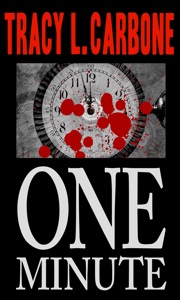 Her second offering, One Minute, is a Twilight Zone-esque tale about three people in a love triangle discovering “the cruel irony that all life can change in just one minute.”
 Hall also released Feast of Fear, which contains four horrifying tales and the first four chapters of his upcoming novel, Soul Thief.

 Jason Harris Promotions