New Film Appropriate for the Times

Actor and Director Talk about Their New Film by Jason Harris

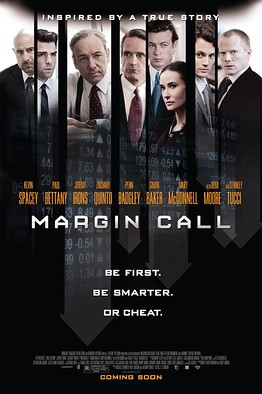
Actor Zachary Quinto (2009’s Star Trek, Heroes) started his production company, Before the Door, in 2008 and its first film, Margin Call, is being released Friday.

The film is a thriller entangling the key players at an investment firm during one perilous 24-hour period in the early stages of the 2008 financial crisis. Entry-level analyst, Quinto’s Peter Sullivan unlocks information that could prove to be the downfall of the firm; a roller-coaster ride ensues as decisions both financial and moral catapult the lives of all involved to the brink of disaster.

Quinto said the script was “fantastic.” He also liked how the film “handled the subject matter.”

“I liked how it drew me in,” Quinto said. “I thought it was really compelling material.”

Margin Callis written and directed by J.C. Chandor, his first feature film. He doesn’t know if the timing of the film’s release during the Occupy Wall Street movement will help the film’s marketing efforts.

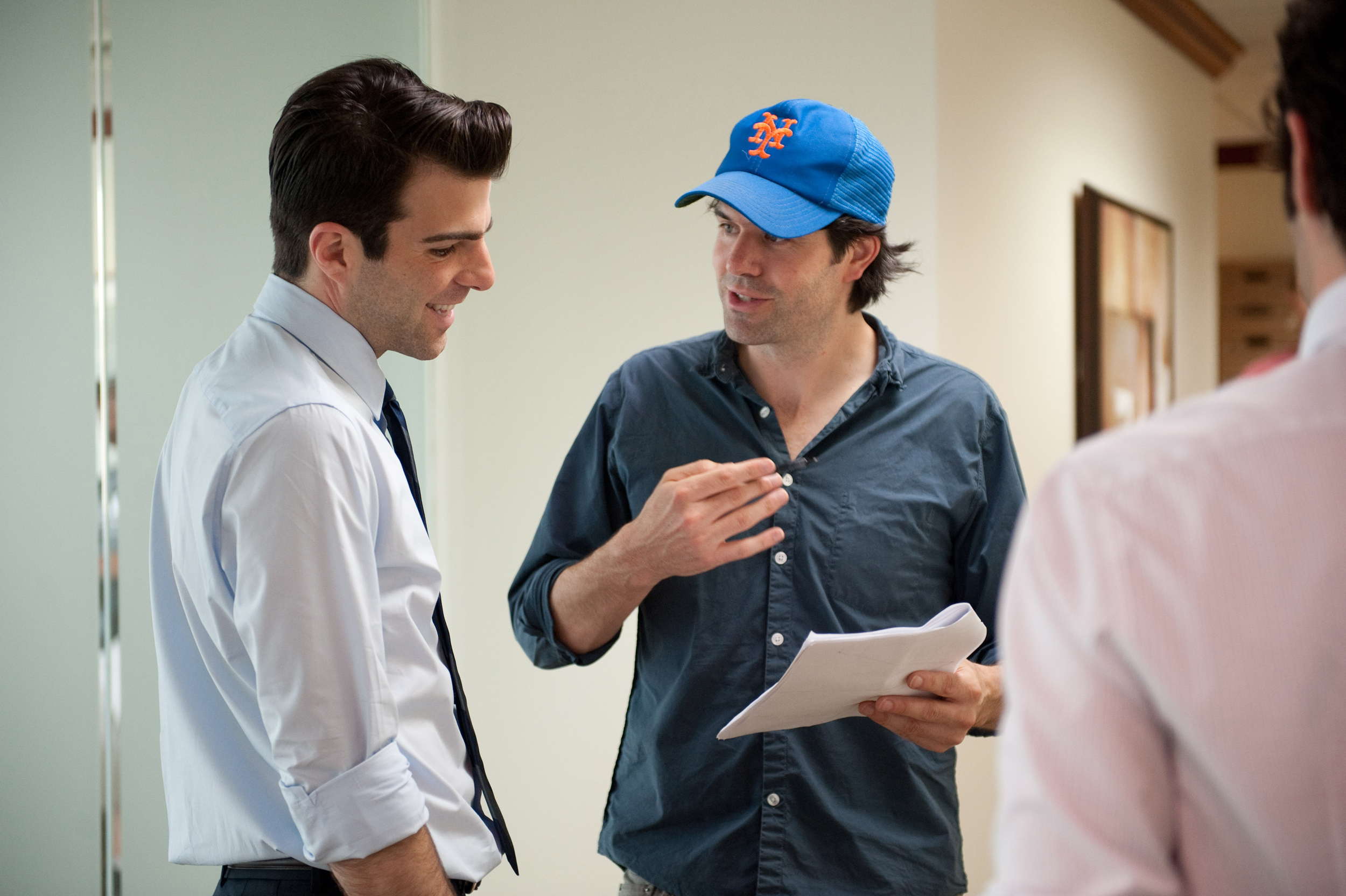
Zachary Quinto and J.C. Chandor on the set of Margin Call

“It’s certainly rewarding,” Chandor said. “It takes many years to make a film. To be able to introduce a film into that environment is very rewarding.”

Chandor said he has visited the New York City Occupy Wall Street site.

“It’s very inspiring that people are actually out in the street having their opinions heard,” Chandor said.

Chandor said he will have to wait and see if the movement helps the film at the box office.

“We wanted to give the viewer an entertaining look into this field,” Chandor said. “Hopefully it will give the viewer a greater understanding of who we’re protesting against.”

Chandor doesn’t think it will be a challenge marketing a film about an unsympathetic company taking advantage of people.

“You don’t have to like everyone in the movie,” Chandor said. This is about coming into a world where you really aren’t supposed to like everyone in it. Every character is human. In the same way a horror movie can be entertaining and fun, you are with these people in their every day professional lives. You see it from a different point of view.”

Chandor mentioned two reasons for people to see the film.

“I would say a reason to see Margin Call is hopefully it entertains you for an hour and a half,” Chandor said. “We tried
to make a compelling drama. The second thing is we tried to do is give the viewer insight into a world they are not normally privy; a world not normally available to them.”

Along with Quinto, the film stars Kevin Spacey, Paul Bettany, Jeremy Irons, Simon Baker, Demi Moore, and Stanley Tucci.

“The cast was an unbelievably great surprise,” Chandor said. “These actors really believed in the project. It made it that much more rewarding.”

Chandor said the 17 day shoot helped the film land actors with very busy schedules. The shooting schedule was “very short in the world of filmmaking,” he said.

The performances turned in by Spacey and Irons were everything Chandor could dream of as a writer and director, he said.

“It was actually a bit of a risk at the time to cast Kevin in a role that is essentially for much of the film supposed to be quite empathetic with the audience,” Chandor said. “In the past, it might have been more typical to cast him as the CEO.”

Chandor said Spacey inhabited the character and made it his own.

Quinto in a scene in Margin Call

Quinto prepared for his role by shadowing some Wall Street workers at Citibank.

“The Citibank workers were really supportive and really available,” Quinto said. “They were able to help myself and the other actors.”

Chandor had several incidents in late 2006 through 2008 that inspired him to write Margin Call, which he started writing
three years ago, he said.

The movie will be available in theaters and on video on demand. Check out the film’s website, http://margincallmovie.com/
for the theaters showing the film.

What Happens When a Horror Writer Goes to a Horror Convention

Confessions of a Rock & Shock Virgin

by David Price
David Price

It’s been a while since I’ve been to a convention of any kind, and I’ve never been to a horror convention before. I used to go to the occasional comicon when I was younger, but I gave those up about twenty years ago. I didn’t know what to expect from Rock & Shock, but I went there on a mission: to meet some of the writers of the New England Horror Writers’ organization. My brother, Denny, came with me, since he is a horror fan as well and was curious to check it out.
When we got there, my brother wanted to know if I wanted to find the horror writers first. “Nah,” I said. “Let’s check the place out, and when we find them, we find them.” So we wandered and meandered through the maze of B-schlock horror dvds, gory movie posters, bizarre original art and gruesome dolls that no parent would let there kids play with, unless they were trying to raise a serial killer. In short, it was awesome! Or so I thought.
Denny is a big fan of zombie flicks, so he was drawn over to a guy who was selling zombie swimsuit calendars. He was nice enough, but he seemed really nervous. His eyes kept darting left and right, as if he was expecting something bad to happen. My brother was really interested in the calendar, but we told the guy we wanted to go through the whole place once and get a feel for what we wanted to spend our money on. We promised we’d be back later.
Eventually, we found our way to the NEHW table. I introduced myself to the first guy I met there, John McIlveen, who gave me a big, strong, fuzzy handshake. Did I say fuzzy? Well, his palm may have been a bit hairy, I guess. Maybe I just imagined it. He introduced me in turn to Scott Goudsward, Danny Evarts, and Stacey Longo.
I had the idea that I wanted to get some of the novels that our members had written, so I could review them on Amazon. Still, when I got there I saw there were more books than I could possibly afford at one stop, so I asked Scott what he recommended.
“Well, mine are over there,” Scott answered, “but I don’t want to pimp myself so…”
“No go ahead,” I encouraged. “Pimp yourself. What books have you written?”
“Well, there’s Shadows Over New England and Shadows Over Florida, about haunted locations in those states,” Scott said. “And then there’s Trailer Trash.”
“Oh really, what’s Trailer Trash about?” I asked, curious.
“It’s about his life,” John McIlveen joked.
Scott smirked. “Yeah, well … see, it’s about this kid who becomes a vampire hunter, but eventually he realizes he has a lot in common with the monsters and ends up befriending them.” That sounded good to me, so I grabbed a copy and went over to the other table.
“What do you recommend, Stacey?” I asked.
“There are some anthologies over here,” Stacey said. I saw some of her short stories were in those collections. “There are also some vampire books over here. I don’t particularly like vampire books, she added. “They get everything wrong.”
My brother snapped a phone picture of Stacey and I looking over the anthologies, and then called me over. “Dave, try this one by Jennifer Yarter-Polmatier.” He showed me a book called The Madness Within. “It’s about a girl who grows up to be a serial killer.” That sounded good to me, so I picked up a copy. And hey, who can resist a book of haunted stories set in Disney World? So I grabbed Skeletons in the Swimmin’ Hole by Kristi Petersen Schoonover. John McIlveen was selling Strange Seed, so I took one of those as well. My brother had been talking with author Nathan Wrann while I was shopping around. He introduced me and we started talking about what he was selling.
“Give me your elevator speech,” I prompted.
“Well, I don’t really have an elevator speech,” Nathan admitted.
“Okay, what’s this one about?” I asked.
“That’s a young adult vampire story,” Nathan explained. I picked up a copy of the book called Dark Matter Heart. “Kind of like Twilight without the romance.” Not being a fan of Twilight, I just smiled, nodded and put it down. Nathan could tell I wasn’t interested in the bloodsucker book, so he showed me another. “I also have this one over here, called Europa.”
“What’s that about?” I asked, now a little hesitant after the YA vampire novel.
“It’s like The Thing.” Nathan said. That perked me up. John Carpenter’s The Thing is one of the greatest horror movies of all time, as far as I’m concerned. Nathan explained that this book was about a team of scientists working on a moon of Europa, “so it’s got that atmosphere of perfect isolation.”

Now, personally, I think the best horror stories always have that element of isolation. There has to be no chance of rescue, you know? You’re on your own and have to survive the monster and escape to freedom. Bleak isolation is present in The Thing, Alien, The Shining and Night of the Living Dead, as well as so many other great horror stories. He had me convinced. That was enough for now, I knew I could buy a few more at Anthocon in a few weeks, which was the next con the NEHW would be at. Until then, I had enough reading material to hold me over. I got all the books signed by the authors who were present. An attractive woman in a smokin’ miniskirt had also wandered over. She turned out to be Yarter-Polmatier, so I was able to get her book signed also.

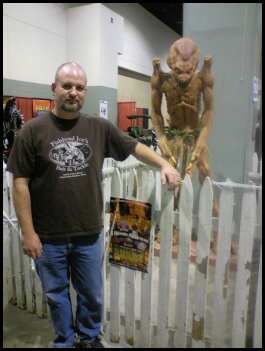
Pumpkinhead statue

My treasures in hand, Denny and I went to check out the celebrity room. Naturally, there were long lines for the top celebrities like Robert Englund, Lance Henriksen, and Roddy Piper. For reasons I can not rationally explain, Ace Frehley had at least a hundred people waiting to meet him. Denny noticed a few celebrities with the word “zombie” among their movie credits, so we decided to visit them. The first was Addy Miller, a ten year old girl who had the distinction of being the very first zombie on The Walking Dead. We talked a while with her friendly mother before moving on to the next zombie. In the almost exact opposite corner of the room sat Sherman Howard, who played the zombie Bub from Day of the Dead. Denny got an autographed picture of Bub with a razor to his face. Sherman signed it “There’s something about an aqua velva man.”

We decided to check out the rest of the convention and make good on our promise to visit the zombie calendar guy again.

“Oh, it’s you guys again, thanks for coming back,” he said appreciatively. “My name’s Rocky and the calendar was my idea.” We introduced ourselves as well. I told him I was here to see the horror writers, but I was impressed with the rest of the event as well. “Look guys, I was wondering if you could do me a favor?”

“What’s the favor?” Denny asked. Rocky looked quickly to his left and right. When he was convinced the vendors nearest us were busy with their customers, he started hurrying through his story nervously.

“I’m so screwed,” Rocky told us. “I won the lottery!”

“What’s wrong with that?” Denny asked.

“Yeah,” I agreed. “People are usually happy when they win the lottery.”

“No, not that kind of lottery,” Rocky said. “The freakin’ Rock and Shock lottery, man!”

“What’s the Rock and Shock lottery?” I asked.

“Yeah, what could be so bad about dinner with Robert Englund, or something like that?” Denny laughed. “Freddy Krueger give you nightmares?” I chuckled.

“No, it’s not like that,” Rocky said. “With the Rock and Shock lottery, winning is definitely losing. I get to be the lamb!”

“What lamb?” I asked.

“Jesus, I thought you said you were with the writers,” Rocky said, exasperated.

“Actually this is my first time meeting them. It’s my first time at Rock and Shock too,” I explained.

“Freakin’ virgins! Great, just great.” Rocky ran his fingers through his spiked hair and looked around fearfully, yet again. “The lamb,” he continued, “is the sacrificial lamb, man. Every year one vendor is sacrificed to the horror icons on Saturday night. In return for the sacrifice, the horror icons bestow prosperity on the rest of the vendors for one year, until the next Rock and Shock. That’s the lottery that I won.”

“Come on, buddy. You’re messing with us,” Denny replied.

“Yeah, that’s pretty much the plot of the Shirley Jackson story,” I noted.

“Oh really?” Rocky said. “In the Shirley Jackson story, do the horror icons sit around this big table and drink the blood of the sacrifice out of a giant punch bowl? Hmm? Do they? All the other vendors just sit there and watch. I know, I’ve seen it a half dozen times.” He stopped a moment, shrugged, and continued his tale.

“It’s a sickening sight. I bet you expect me to say the horror icons physically morph into the demons they play in the movies. It’s not that simple. It’s more like a possession takes hold of them. Look, these horror icons, they seem like nice, friendly people when you talk to them. But at the sacrifice, it’s like you can see this evil invading their souls. They still look the same, mostly, but you can still tell they’ve turned into monsters. It’s a horrible thing to see. Gary Busey is an animal.” He was even more agitated now as he apparently contemplated his fate.

“Why would the vendors keep coming back, if there was a chance of that?” I said.

“Are you kidding? In this economy?” Rocky said. “People will do just about anything for a year’s worth of prosperity. There’s a hundred vendors here. That’s only a one percent chance you’ll get chosen. It’s worth the risk.”

“Well, then stop complaining about it,” Denny said, playing along.

“I’m not so sure I want to join the New England Horror Writers group if there is any chance I could get killed at a con,” I joked.

“Oh, the writers, they’re not vendors,” Rocky said. “Technically, they’re part of the celeb room.”

“So do they drink the blood too?” I asked, curious to see where he was going with this.

“No, they don’t drink the blood, but they don’t sit with the vendors, either,” Rocky whispered. “They just stand around the table near the horror icons. They drag the body of the victim off. Then they’re gone.”

“Well that doesn’t sound too bad, Dave,” Denny kidded. “Maybe you can join them after all.”

“Listen,” Rocky interrupted. “I’m having this party with all the zombie girls from the calendar. If you guys help me get outta here, you can come. It’s gonna be sick. You’d like that, right? Come on guys, help a brother out.”

“Why can’t you just leave on your own?” Denny asked him.

“Cause they’re watching me, man!” Rocky whined. “Plus, I’m sure they’ve messed with my car by now. I’ll never get away. I need a distraction,” he thought it over for a few frantic moments. “Okay, I’m going to summon my girlfriend; she’s the zombie on the cover. She does this great dance of the dead. After she gets up on the table, people will gather around. It’s really hypnotic. You guys can sneak me out of here then.”

“She’s coming in zombie makeup?” I asked.

“Not makeup, man. She’s a real freakin’ zombie! All the calendar girls are.” Rocky exclaimed. “You guys really are Rock and Shock virgins.”

“All right then,” Denny said. “We’ll come back when your zombie girlfriend gets here and smuggle you out, okay?”

“When will she get here?” I asked.

“In a little bit,” Rocky’s eyes rolled back in his head and a bit of drool slid out of the corner of his mouth. Denny and I just looked at each other. Was he having a stroke? In a few seconds, Rocky snapped out of it. “All right, I just summoned her. She’s on the way.”

“Yeah, okay,” Denny said. “We’ll check back in a little while. Then we can help you escape, or whatever.” We walked away.

When we got around the corner, I said, “What a nut case!”

“Maybe it’s just part of the show,” Denny suggested.

“That’s got to be it,” I agreed. “Like some prank on Scare Tactics. Want to go get zombie caricatures of ourselves?”

“Let’s see how long the line is,” Denny said. Along the way, we bumped into Stacey from the NEHW.”

“Oh, hi again,” I said.

“Hi David,” she said. “Did I see you guys talking to the zombie calendar guy?”

“Oh, yeah, Rocky,” I confirmed. “That guy must have forgotten his meds or something.”

“You were over there for quite a while,” Stacey said, folding her arms in front of her.

“Well, he had this really crazy story to tell,” I explained. “We were actually wondering if it was some sort of trick the Rock and Shock people pull on unsuspecting noobs.”

“What did he tell you?” Stacey asked, blinking innocently.

“Something about a lottery and a sacrifice,” Denny said.

I wasn’t sure if I was going to divulge the whole story to Stacey, just in case, you know? But since Denny started the ball rolling and I am not very good at making up lies on the spot, I decided to relay Rocky’s twisted tale to Stacey. “He’s nuts, right?” I said.

“Huh,” Stacey said, licking her lips. She looked around and moved closer to me, showing a little too much tooth. I was uncomfortable, so I backed up until I hit a wall. “Listen, David. Jason likes how you stepped up to help out with the publicity committee. He thinks, maybe, that you have something to offer our group, some potential. I don’t know if he’s right, but that’s his call. In regards to Rocky, I just want to offer you this advice. Walk away.”

“Now wait a minute,” Denny said. “We don’t like threats.” Suddenly, two huge Predators came up behind my brother, and seized him. I had seen them earlier in the celebrity room and assumed them to be men in costumes, of course. Up close and personal, I wasn’t so sure those were costumes. My brother is not a small guy, but the Predators towered over him. Denny struggled a bit, to no avail. They had him.

“We don’t want any trouble,” I said. “Let my brother go.”

“I’m sure we can come to an arrangement,” Stacey smiled. “If you guys agree not to interfere with our dinner plans, then I can forget this ever happened.”

“Dinner plans?” I said.

“Of course,” Stacey said. “Rocky’s not a writer, so he doesn’t know what we do.”

“Yeah, he said you guys take the victim’s body and leave. That’s all he knew,” I said.

“The horror icons get the blood,” Stacey said. “But the horror writers, we get the meat!” She had a wild look in her eye and I felt real fear. Adrenaline coursed through my veins. If this was really just some prank, it was working. I wondered if was going to say–no, I prayed she would–“Are you scared? You should be, because you’re on Scare Tactics!

My prayers were not answered.

“Okay, fine. Look, we’ll leave peacefully,” I said, holding my hands up. “Could you just answer a question for me?”

“What is it?” Stacey said.

“On Facebook, there was an invitation to go out to dinner that was sent to the whole group. Is that when you eat the meat? What if I had accepted?”

“In that case, Jennifer would have cast a glamour spell over you,” Stacey answered. “You would have been served whatever you ordered, but we would have been served the meat. The glamour would have kept you from seeing what we were really eating. All you would be able to see would be cheeseburgers, Caesar salads, quesadillas and the like.”

“Jennifer’s a witch?” I asked.

“She does have that Michelle Pfeiffer Witches-of-Eastwick-look going on,” Denny said.

“True,” I agreed. “Okay Stacey, we have a deal. We’ll leave quietly. When should we go?”

“Now would be good,” she instructed. “There may still be a place for you in the NEHW, but right now, you know too much. Just go home while I do damage control. And remember,” she added with a grin, “we know where you live. Jason mailed you a shirt, remember?”

Of course I remembered. I had ordered one of those cool New England Horror Writers t-shirts almost immediately after I joined the group. Denny and I left the building. It was not the bravest moment for a couple of hockey-playing construction workers, but we had entered a world we were not prepared for. In this case, discretion really was the better part of valor. As for Rocky, we felt bad, but he knew what he was getting into.

It was raining, so we hurried to the parking garage where I had parked my truck. I put the key in the ignition and turned. Nothing. I tried again. And again. Still nothing. Crap! I looked back at the parking garage attendant in her little booth, just a few parking spaces away. She pointed two fingers at her eyes, and then at us. I’m watching you. “We’re not going to say anything. We’ll mind our own business, I promise!” My shouts echoed hollowly in the parking garage. The attendant glared at us for a torturous amount of time, then nodded slowly. I turned the key again and the truck started. We got the hell out of there.

We drove home in silence for a while. About halfway home, Denny decided to look at the pictures on his phone. “Dave, look at this.” I was driving, but I glanced over.

“Yeah, so what. It’s a picture of me looking at books at the horror writers’ table.”

“Right,” he said. “But it was a picture of you looking at books that Stacey was showing you. She was right beside you.”

“She’s not in the picture now,” I said.

“But she should be.”

“Maybe you have the wrong picture?” I suggested.

“I’ve checked them all. I took three pictures Stacey should be in, but she doesn’t show up in any of them.”

“What are you saying. Stacey is a vampire?” I asked.

“Maybe,” Denny answered. “Hey, did you shake hands with John?”

“Yeah.”

“Was it just me, or did he have hairy palms? And I’d swear he sniffed me,” Denny commented.

“I thought I might have been imagining the hairy palms, but I noticed the sniffing too,” I remarked.

“What’s that a sign of, again?” Denny asked.

“Werewolf,” I admitted, my stomach sinking.

“Remember what John said about Scott’s book, Trailer Trash? It was Scott’s life story, an autobiography. What did he say it was about again?” Denny asked.

“Something about a monster hunter who sees the error of his ways and joins the monsters,” I said.

“Yeah, that’s it,” Denny said.

“Okay, so if Stacey’s a vampire, John’s a werewolf, Jennifer’s a witch and Scott is an ex-monster hunter, what about Nathan?” I said.

“I get the feeling he’s a new guy,” Denny said. “Maybe he hasn’t passed the initiation yet.”

I nodded. “What about Danny Evarts?” I said.

Denny thought about it for a minute. “You notice the way he stuck by Stacey’s side? Followed her around?”

“Yeah, so?” Denny said nothing, giving me a second to figure it out. “Oh, you think Danny’s a thrall?” He nodded. “I can see that,” I agreed. “So I guess I won’t be joining that horror writer’s group.”

“Why not?” Denny said.

“They’re freaking monsters man. I don’t know, but maybe that sounds kind of dangerous.”

“So? They seemed like a good group, otherwise. I liked them,” Denny explained. “Take out the whole Stacey threatening our lives thing, and I think it went well.”

“Well…I guess you’re right. I liked them too,” I said. “I guess we could give it another try at Anthocon and see how that goes.”

“I think we should,” Denny agreed. It occurred to me that John was having a potluck supper at his house in December. If I was still invited to it when the time came, I would be careful what I ate.

No mystery meat.
Tips for Selling Your Work: For Traditional and Self Published Authors (Or Those Who Are Thinking about It)

The article “Tips for Selling your Work: For Traditional and Self-Published Authors (Or Those Who Are Thinking about It) by Phil Sexton originally appeared on Writer’s Digest’s website (http://www.writersdigest.com/editor-blogs/there-are-no-rules/tips-for-selling-your-work-for-traditional-and-self-published-authors-or-those-who-are-thinking-about-it)

Whether you’ve been published traditionally or are self published, your success as an author can only be measured by a few different things:

* Quality of the work
* Personal satisfaction
* Positive response from readers
* Copies sold
* Revenue generated

Now those last two elements might seem crass for those of us whose aspirations are more literary than monetary. But it’s the hard truth that impressive sales enable you to get more projects published, live more comfortably, and build a bigger readership.

To that end, we’re going to start posting occasional marketing tips from Rob Eager, author of the upcoming Sell Your Book Like Wildfire, and a freelance marketing specialist who has worked with numerous publishers and bestselling authors to help promote their books.

This week’s tip:
SEO is an abbreviation for a term used by website programmers and hosting companies that stands for “Search Engine Optimization.” This concept refers to employing various methods to make your website appear on the first page of displayed answers when someone conducts an Internet search on Google, Bing, Yahoo, etc. There are both paid and free techniques that can be used to help the search engines find you and rank you higher than other sites. The problem is that there are all manner of technology sharks who will lure you into paying extra money to use their SEO “secrets.”

These techniques usually focus on trying to drive random people to your site when they conduct an Internet search. But, that’s not your goal as an author. Instead, you want to be the primary option when someone searches on your specific book topic or expertise. The good news is that you can enhance your search engine results for free through properly choosing your website metatags, keywords, blog posts, and providing lots of online articles on your subject. Tell your webmaster to make sure that your site contains keywords that focus on your name, book titles, and article titles.

As an author, you want targeted, repeat traffic to visit your website – not random, disinterested traffic. You’re trying to build a community, not a flea market of casual observers. So, don’t let people up-sell you on paid SEO services. Most of those tactics are a waste of money. You will grow legitimate website traffic as you build your reader community and strengthen word-of-mouth among your fans.
—Rob Eager

If you’re interested in self publishing, be sure to check out the official Writer’s Digest self publishing imprint, Abbott Press. We provide self publishing services, as well as education, information and a collaborative environment for creating your book. To learn more, simply click here. We’d be happy to discuss the options available to you.

Best
Phil

A Writer’s Life, “I’ve Never Heard of You”

This article, “A Writer’s Life, ‘I’ve Never Heard of You,'” by James Jackson is from http://www.huffingtonpost.co.uk/james-jackson/a-writers-life_b_979923.html.

Some fourteen years ago now, the fellow had marched across a crowded airport departure hall in order to deliver his crushing verdict. He entered the bookstore in which I was signing copies of my first thriller, picked up and briefly studied the paperback and slowly put it down, looked me in the eye and told me straight. Absolutely no doubt about it, he had definitely not heard of me. I smiled and replied: ‘That’s because I don’t write children’s fiction’. Security was called.

Such are the trials and encounters involved in writing for a living. Some never get used to it. One friend of mine – a hugely successful bestselling author – confided to me she feels genuine pain whenever she is gratuitously criticised. The revelation amazed me, for affirmation surely came in the millions of her books purchased and read avidly by her fans throughout the world. But no, the occasional brickbat still hurt.

She should count herself lucky. Another friend – an actress – stepped from the stage-door after a feted West End performance and found two American tourists waiting for her in the rain. Her face lit up. ‘Did you enjoy the play?’, she enquired. ‘No, we really did not’, bluntly came the reply. Well, she did ask and one cannot win them all. Maybe those in the creative world should grow a thicker skin and accept that criticism and subjectivity are part of the deal. Frankly, m’dear I have never really given a damn.

Indeed, I have always worked on the basis that reviews – like media interviews – reflect more on the individual penning the plaudits or poison than on anything one has produced oneself. One Amazon review – read to me down the phone with great relish by my brother – spoke of how ‘It must be Jackson’s friends and family who give him such good write-ups… he will be needing them’. I suspect that particular contributor is a frustrated and unpublished novelist, for they are ever the most spiteful.

On a bathroom wall I still have framed the first rejection letter that I ever received from an editor. Rather naively, and without the advice of an agent, I had punted a manuscript in her direction. A terrible mistake. She wrote back: ‘The characterisation is thin, the dialogue unconvincing, and the violence gratuitous’. Ah well, that has never been known to stop a book deal. Within three weeks I had found myself an agent and shortly thereafter secured a pretty significant publishing advance (my agent bought herself a new pair of boots to celebrate). It was the very same book that provoked the airport bookshop incident. Beginner’s luck, I suppose.

Few things prepare one for a career as an author. I kicked against it for years, resenting the isolation and even finding myself smoking cigarettes with tree surgeons working nearby (I am a non-smoker). Only now do I fully embrace this life of gainful unemployment, the freedom to lunch, the advantage of not trudging to work through the sleet and snow and darkness.

Complete the book, push it out, get on with the next. That is how it goes. After almost two years since the start-point, the title hits the stands and promotion begins. So too does the wait to gauge it is heading into The Sunday Times top-ten bestseller list. A friend once rang to say she had seen my books piled high in a famed London store and had spread them around to create an impression of high demand. That afternoon a second friend rang to inform me he had noticed my books spread about in the same bookshop and had piled them up to ensure a stronger visual presence. Avoid help from those you know.

A new book now begins its gestation and another historical thriller is due to appear in January 2012. So the cycle continues, a challenge, a total immersion, a privilege. Whilst giving a talk in Cambridge, I was once asked if there was any genre of writing I would not attempt. An easy question. It would have to be sci-fi: things are strange enough with a fan base that occasionally dresses as Templar knights. Readers garbed in bacofoil spacesuits would probably drive me over the edge. Yet the life of a writer would be impoverished without the truly committed.

As for the editor who so cruelly dismissed my first manuscript all those years ago – I gather she now works in the soft furnishings business.

Rock & Shock Returns to Worcester

This article appeared at www.worcestermag.com.

Rock & Shock Returns to Worcester
By Trisha J. Wooldridge

Hordes of leather- and black-clad denizens of the underworld are crawling, walking or running into Worcester’s DCU Center and the Palladium this weekend of October 14- 16. There will be cries of terror, thundering earthquakes, and screaming guitar strings and fans. It’s Rock & Shock time again!
“I really enjoy coming to Rock & Shock because it’s New England’s horror con, and everyone we’ve met there has been great,” says Penny Dreadful, horrormovie hostess based out of Massachusetts and regular Rock & Shock guest. “This is New England’s big convention for all things monstrous and horrific, and there’s rock ‘n’ roll to boot!” Attendees to this year’s Rock & Shock get the added Shilling Shockers bonus of a free six-page preview of the upcoming comic, “Penny Dreadful’s Cauldron of Horror,” with artist Frankie Washington of Marvel Upper Dec art cards doing special signings on Sunday.
The DCU Center and Palladium host the unique convention pairing the horror industry with the rock and metal music industry. Not only do attendees get to meet horror icons such as Robert Englund and William Forsythe, but they get to see music legends like Ace Frehley and attend concerts given by local bands to headliners such as Insane Clown Posse.
Rock & Shock is the dark, evil love project of WAAF’s Kevin Barbare and Mass Concert’s general manager Gina Migliozzi. Based on both horror fans’ experiences at conventions, they wanted to create the unique event that is Rock & Shock. As the convention grows every year—with significantly more in 2011 than prior years, it’s excellent reputation grows with it.
“It actually makes it very tough to book the show because so many people want to come back here, year after year,” says Migliozzi. “You want to have them back, but you can’t because you have to have new people in, to keep it exciting and different.”
Barbare adds, “And if we weren’t a show where they wanted to come to or had a good experience with, it would be much harder to get them to come, even if they wanted the work.”
In fact, this year the convention has drawn the attention of Rhode Island’s Woodhaven Production Company, which will be hosting the world premiere of “Inkubus,” starring horror legends Robert Englund and William Forsythe, at Rock & Shock. It’s a full red-carpet affair drawing the entire cast, the director, writers and producer. Tickets are available exclusively as giveaways, by invitation or contest. Only paid attendees of Rock & Shock can attend the premiere and following Q&A.
Having the premier at Rock & Shock is “a win-win for everyone,” says producer Chad Verdi of Verdi Productions. “Rock & Shock benefi ts by having us there, and Rock & Shock is the best place to promote the movie.” He’s particularly looking forward to sharing this first red carpet of one of his movies with first-time director Glenn Ciano.
“We’re treating [Rock & Shock] like Comic-Con, getting all the actors there, doing panels,” describes Ciano, “taking a fan’s first route with this, because if it is going to get out there and be what we want it to be, the fans are going to have to take a part in how we do that.”
As an additional gift to Rock & Shock attendees, one of only five dolls made of Englund’s demon, Inkubus, will be raffled off at the convention. In addition to the doll, Rock & Shock fans will also be the first to hear about future projects with the character.
Another regular booth at Rock & Shock belongs to the New England Horror Writers, an organization founded in 2001 to provide peer support and networking to opportunities to authors who sell books, comics and other literature throughout the weekend. “I love that the New England Horror Writers’ organization is a part of Rock & Shock again,” says Jason Harris, New England Horror Writers’ director of publicity. “The written word fits in well at Rock & Shock. Without the written word, horror fans wouldn’t have Wes Craven’s creation, Freddy Krueger in ‘A Nightmare on Elm Street.’”
“The great thing about the New England Horror Writers’ being at an event like Rock & Shock is that there’s a unique energy—it’s our time of year, we love rock, we love scary movies,” describes New England Horror Writers’ member and author, Kristi Petersen Schoonover.
This year’s Rock & Shock still has more to offer. Starting on Thursday, where weekend ticket-holders can attend a preparty concert with Alisano and The Bones at the Palladium. On top of that, Fangoria Magazine is sponsoring an excellent panel track that includes Q&As with actors, screenwriters and filmmakers; a writing workshop with professional authors and editors; a look at publishing in the horror industry, including small press, ebooks and indie publishing; and much more.
There’s more reason than ever to check out the convention that continues to become the northeast’s premier horror media con — plus it’s right in our own back yard!

Worcester’s Rock & Shock Hosts Red Carpet Premiere of “Inkubus”
While Worcester DCU Center and Palladium are crawling with the torn shirts and band T-Shirts of recently undead or concert goers, some dark denizens will don tuxedos and dresses to strut down the red carpet for the World Premiere of “Inkubus,” the latest horror film starring icons Robert Englund and William Forsythe.
In this film, Englund plays the demon Inkubus who arrives during the last shift, a skeleton crew of officers closing Cranston Police Station, with the severed head of a girl so he can use his one phone call to contact retired detective Gil Diamante [Forsythe], who nearly caught him 13 years ago.
In addition to the intriguing plot, it’s interesting that this film with amazing star power behind it—Jonathan Silverman, Joey Fattone, and Michelle Ray Smith help round out the cast—is a local production filmed less than an hour away, in Cranston, R.I., at the old Cranston Police Station, employing local cast and crew.
“During ‘Inkubus,’ I drove twoand- a-half minutes from my house to the police station,” describes actor Tom DeNucci, who plays Offi cer Pax. “It’s something that wouldn’t have happened even a few years ago. Maybe a whole future generation of filmmakers could get churned out of Rhode Island because they see what we’re doing and say, ‘Oh, we can do that, too.’”
Producer Chad Verdi explains, “We want locals to support local filmmakers. And I can guarantee you, no one had more fun making these films than us and the actors. They’re coming to this red-carpet premiere because they want to come.”
Only attendees of Rock & Shock will be able to attend the World Premiere of “Inkubus.” Tickets are being given out via contests and giveaways throughout the convention. After the premiere, there will be a special Q&A. The movie will be released in theaters throughout nine states on October 28.

Nick Cato’s Book Review

Nick Cato’s book review of
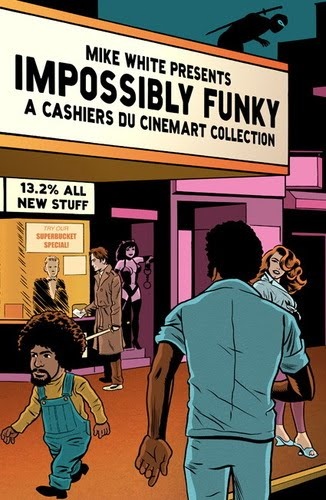
Impossibly Funky: A Cashiers Du Cinemart Collection by Mike White
(2010 Bear Manor Media / 377 pages / trade paperback) from Cinema Knife Fight (www.cinemaknifefight.com)

20111001-221801.jpg

From 1994-2008, Cashiers Du Cinemart was a fanzine featuring wildly opinionated movie reviews and retrospects, as well as interviews, with everyone from Crispin Glover to cast members of seldom-seen 70s blaxploitation films. Impossibly Funky collects some of the fanzine’s finest moments, and features introductions from exploitation film guru Herschell Gordon Lewis to the founder of Film Threat, Chris Gore.

Author Mike White is perhaps best known for calling Quentin Tarantino out for certain “similarities” between the 1989 Hong Kong movie, City on Fire, and his own film, Reservoir Dogs. White even made a short feature, Who Do You Think You’re Fooling?, which shows (side-by-side) shots from both films, calling Tarantino’s motives into question. The opening chapters of the book deal with this whole saga, and while I had seen White’s film online, there’s plenty more here for those interested in this on-going celluloid grapple.

Among my favorite sections were Mike Thompson’s look at the original script for the Nicolas Cage film 8mm, Mike White’s section on Alien 3, White’s interview with Canadian cult film director Guy Maddin, and of course, the huge section dedicated to the 1975 blaxploitation classic, Black Shampoo, which features an overview of the cast, interviews with the director and a few stars, and an interesting story on how Mike and his friends became addicted to it (and still hold annual viewings).

While I haven’t mentioned even half of what’s on display here (Star Wars fans will get a kick out of the small section dedicated to it), Impossibly Funky looks at films through the eyes of super-geek film fans, and while (at times) things get a bit obsessive (I mean, what film geek doesn’t get obsessive when talking films?), film fans will not be bored, even if a topic being discussed isn’t of particular interest.

A fun. informative, and smart book to garnish any film freaks’ book shelf.

© Copyright 2011 by Nick Cato

How to Meaningfully Grow Traffic to Your Site/Blog

How to Meaningfully Grow Traffic to Your Site/Blog by Jane Friedman (an article from http://www.writersdigest.com/editor-blogs/there-are-no-rules/digitization-new-technology/how-to-meaningfully-grow-traffic-to-your-siteblog)

It’s a problem that every new blog or website faces in its early days—or every day (!): How to get readers (also called traffic).

There are a few well-worn pieces of advice in this area, such as:

  1. Comment on other people’s blogs. Virtually all comment systems ask you to leave your name and site URL. If you leave valuable comments, people may visit your site.
  2. Link to other people’s blogs frequently and meaningfully. If you link to someone, and you send them
    significant traffic, they’re going to notice! They might link to you
    one day, or pay attention to your work if you’re within the same community.
  3. Add your URL to your e-mail signature, business card, book, etc.
  4. Offer guest posts on sites/blogs with more traffic than your own.
  5. Be active on relevant community sites, which can interest people in what you’re doing, which can lead to visits to your site/blog.
  6. Ask for a link trade, where others agree to permanently link to your site/blog in their blogroll, and you return the favor on your own site. (This is by far a less popular method nowadays; it’s pushy and can damage credibility if you don’t believe in the links you’re sharing. Better for this to happen naturally, over time.)
  7. Be active across social media and alert people when you have a new post. (And/or make sure your URL is clearly listed on every social media profile.)

Your mileage will vary on No. 7 depending on your social media presence, how savvy you are, and if you’re reaching out in the right areas.

But I’m a strong believer in the breadcrumb method, where you have accounts on multiple community sites. That’s because you never know how people might find you, and the more doorways you have leading to your site, the more traffic you will get over time.

Even if you’re not active or devoted to a particular community site or social media channel, you can still appear to be active if you adjust the settings in your favor.

To help explain, let me show you where my site or blog traffic comes from, then explain how that traffic happens.

Here are 5 key, continuing sources of traffic for this blog (No Rules) in the past year—aside from search engines and direct traffic.

1. TWITTER

Both Writer’s Digest and I have active presences on Twitter (130K and 50K followers, respectively). When a link is broadcast that a new post is up, it reaches thousands of people initially, and then thousands more through retweets and mentions.

2. FACEBOOK

New blog posts are automatically fed onto my Facebook personal page, as well as the Writer’s Digest fan page (without any help from me, because it works through NetworkedBlogs). Other people also commonly post links to my blog content on their own Facebook walls.

3. WRITERSDIGEST.COM
There’s a permanent link to all Writer’s Digest blogs on the homepage, and it’s a consistent driver of traffic to No Rules.

4. BLOGGER MENTIONS (and permanent bloggers’ links)
When taken individually, one person’s blog or site may send just a handful of visits per day or week. But when you multiply that effect by dozens or hundreds of bloggers, that’s a huge impact. But you only get to enjoy this dynamic if you’re blogging for the long haul. It rarely happens overnight.

5. STUMBLEUPON
To tell the truth, this is one site where I am not active, and only recently did I even start an account. But over time, this site has started sending MORE traffic my way as my most popular posts are tagged and catalogued. (Right now, this controversial post that’s tagged is sending me a few dozen visits a day from StumbleUpon.)

Some other important sources of traffic this past year have been Writer Unboxed (where I offer guest posts) and Alltop, where this blog is catalogued as part of the writing and publishing pages.

Here are the top 5 sources of traffic for my personal site (JaneFriedman.com) in the past month. They constitute about 80% of my traffic.

1. THERE ARE NO RULES (this blog)
This make sense since NO RULES is where I focus most of my time and energy in producing new content. I rarely link to my personal site in my posts. Instead, it’s a static link on the lefthand sidebar if people want to know more about me.

2. GOOGLE (organic search)

The No. 1 search term that brings people to my site is “Jane Friedman.” I am probably attracting a considerable number of visits from people looking for The Other Jane Friedman.

3. TWITTER
Traffic from Twittercomes from 3 areas:

  • from the static URL on my Twitter profile (see above)
  • from the tweets I send with links
  • from the retweets and mentions from my followers

4. DIRECT VISITS
These visits are from people who have bookmarked my page, click on direct links from e-mail notifications, or otherwise type in “JaneFriedman.com.”

5. FACEBOOK
Traffic from Facebookcomes from 3 areas:

  • from the static URL on my profile page
  • from the links I post to my site
  • from the links other people post to my site

Some of my biggest traffic bumps happen when a major Facebook group posts a link to my series, When Mom Was My Age—which shows you the value of consistent series or features on your site/blog.

If you look at the long tail of my site traffic—on this blog as well as my personal site—I’m getting a significant number of visitors, over a year’s span, from:

Does it take me any effort to get this traffic?

No. I simply make sure that I use all settings and opportunities for auto-updating, when applicable.

Take my LinkedIn profile as an example. I don’t spend time on this site. But I’m “active.” See below; the top red arrow points to my Twitter updates, which are automatically fed into my profile and provide constantly refreshed information about what I’m doing. I don’t lift a finger.

The bottom arrow points to a mash-up of things I’ve told LinkedIn to report, based on my other activity online.

On LinkedIn, I also feed in my blogs, which appear under my profile summary.

This keeps me active on the site without requiring my time. Look for these types of feeds and settings on every site you use!

This is why I give the appearance of being everywhere at once, while really just focusing my energy on a few things: my professional blog, Twitter, Facebook.

Why those 3?

Because those places give me the most return on my investment of time and energy. Everyone’s results will be different, though, which is why you absolutely must find out where your site traffic comes from. (Use Google Analytics to get started.)

People will find you in a hundred different ways, and it’s more important than ever to have your own site—so you can direct people to your “home,” where readers and community influencers have an opportunity to find out where you’re most active, and choose their preferred means of staying updated.

I can guarantee that after this post, I’ll have a lot of people joining me on Facebook or LinkedIn because they didn’t realize I was there!

And that’s a good thing.

Interview With Ghost Rider And Dark Wolverine Writer, Rob Williams

This article appeared on www.comicbookmovie.com.

Interview With Ghost Rider And Dark Wolverine Writer, Rob Williams!

Talking to me about his work on Daken: Dark Wolverine, Ghost Rider, The Iron Age, RoboCop/Terminator, his thoughts on comic book movies and more, hit the jump to read this fascinating interview…
Despite being insanely busy writing countless titles for Marvel, writer Rob Williams was kind enough to take the time to talk to me about the many comic books he’s been working on as of late. As you may notice, some of the questions below focus on titles which have already come out, but that is simply down to Rob only just now having managed to find the time to answer them! If you’ve missed any of the comics, I strongly advise hunting down the back issue or trades when they’re available. To keep up to date with all of his work, you can find Rob on Twitter (@Robwilliams71).How exactly did you get into writing comic books for a living?

I was writing and directing for a small video production company and that taught me to write with visuals in mind, albeit very dull visuals. It made me think maybe I could try my hand at a comic script. This was back in ’99/2000, I think. I wrote issue one of Cla$$war without a clue what to do with it. Luckily for me I heard that a new comic company called Com.X was starting up in the UK and I gave them my script at the Bristol comic convention. A few months later they rang one evening, said they loved it and wanted to publish it. That was my break. After Cla$$war gained some positive reviews 2000AD asked me if I’d like to write for them. My comic work then grew gradually over the years. But I was a professional journalist throughout my comics career. It wasn’t my sole source of income. I was already writing for a living.

Not too long ago, it was revealed that you’ve signed an exclusive contract with Marvel. It must be a pretty exciting time for you, right?

It’s been an exciting year. I’ve been a Marvel fan since I was a child, so getting a chance to tell stories within their universe, writing some of my favourite characters, has been an absolute blast. It’s been very busy and very challenging, but I’m enjoying it hugely. Marvel editorial really do push you to create the best stories you can. It’s a different level.

One of your first ongoing series’ with Marvel was of course Daken: Dark Wolverine. What would you to say to anyone who’s not yet picked up the title, and what can current readers expect to see in store for the son of Wolverine in the coming months?

Well, we’re a good way into the run now. I took Daken to Los Angeles in order to try and become its kingpin of crime, but he hasn’t found that as straightforward as he thought it would be. There’s a serial killer in Hollywood called The Claws Killer, and all signs point towards that being Daken. The thing is, he’s become addicted to a new drug called HEAT, and that is not only giving him blackouts but it’s shutting down his healing factor. We’ve had some fun guest starring moments from Taskmaster and Moon Knight and we’ve got an arc coming up co-starring The Runaways. So, it’s been fun. Nasty, violent, psychotic fun. I wanted the book to be a ‘Kingpin Of Crime: Year One’ type book. The villain as the protagonist.

Your run on Skaar: King of the Savage Land is also well under way. How’s it been working on that character in such a setting?

Skaar was a lot of over the top fun. How can it not be in a setting like The Savage Land? Devil Dinosaur and Moon Boy were the highlight. Every time they were in the script it seemed to lift the series due to the enormous silliness of the concept. That lends itself to comedy and crazy visuals. King Of The Savage Land was a hoot to write. Dinosaurs, aliens, pulp characters like Kid Colt and The Phantom Eagle, giant robots. You could really go for it.

What can you tell us about your upcoming work on the new Ghost Rider series? The recent #0.1 issue seemed to hint at a somewhat different status quo for the character.

By now you’ll have seen that Johnny Blaze is no longer the Ghost Rider. It’s passed on to a new character called Alejandra. An 18-year-old warrior girl who’s been trained her entire life to become the Ghost Rider. But there’s a huge amount of rage inside her and that’s bad news for the world. Johnny’s going to be forced into a mentor role that he’s really not best suited for. #5 & #6 focus on Alejandra and then #7 & #8 co-star Hawkeye in a crazed bike chase adventure. Like Skaar, it’s a fun series to write. The core concept begs for OTT action. #4 takes the Ghost Rider into space, which just seems perfect.

And how about Fear Itself: Uncanny X-Force with Simon Bianchi?

We finished up FI: Uncanny X-Force recently. Yeah, Simone was great to work with. There was some beautiful imagery that he was able to capture and the storyline was one which, hopefully, went to the heart of what X-Force is as a group. A kill crew. I wanted to write a story about the moral question of the group’s existence. What did that say about superheroes in general. Plus lots of action and explodo, obviously.

The Iron Age recently kicked off with something of an explosive and shocking start to say the least. What can you tell us about the series and where things are going from here?

Well, due to my being appallingly late with these answers the series has now finished. But it was a huge amount of fun for several reasons. Being able to play with so many Marvel characters in classic storylines, getting to collaborate with so many top talents. Art-wise, I had Rebbekah Isaacs, Ben Oliver and Roberto De La Torre drawing my issues, and as a writing team there was people like Christos Gage, Jan Van Meter, Louise Simonson. I got to write Iron Man, Captain Britain, the classic ‘new’ Uncanny X-Men lineup – characters like Nightcrawler and Dark Phoenix. It was a bit of a dream job. The type of storyline that spoke to my inner Marvel fanboy from years gone past. Hopefully that sense of fun translated to the end product.

Did delving into the past of so many Marvel characters leave you feeling pretty pressurised to live up to the expectations of long-time fans?

Not really. I was aware of it, of course, but I weirdly felt a bit naive about that kind of pressure. I just wanted to tell the best story I could. If you let yourself get bogged down by the pressures of writing classic characters you’d never get anything done.

Talking of Captain Britain, is that a character you’d like the chance to work with again? I know a lot of people really enjoyed your work with him in Deadpool Team Up, not to mention the excitement of seeing him in The Iron Age!

Definitely. The Alan Moore/Alan Davis Cap Britain run is one of my favourite comics and I’ve got a huge soft spot for the character and his look as a result. I’d jump at the chance to write more Cap. I’m not sure there’s currently a market for a Cap Britain title right now. Paul Cornell’s MI:13 was highly praised but, despite that, the sales just weren’t there. There’s a line of thinking that U.S. comic fans aren’t interested in buying a book about British characters. That’s a shame. But maybe I can crowbar Cap in somewhere down the road.

One other thing you’ve got coming up outside of Marvel is a Robocop/Terminator series. What can you tell us about that exactly?
It’s called Kill Human and is drawn by 2000AD and Battlefield’s PJ Holden. I’m really pleased with the storyline. It starts in the far future where mankind is wiped out and Robocop finds himself re-awakened in a museum. From there he travels back to the time of T2 in an effort to try and save history. So it’s Robocop vs. the T1000. And then the timeline does change and we go in a completely new direction. I was working on the proof of the final issue last week and it’s a really strong comic, I think. The type of thing that would make a great movie.

Although you’re working on a pretty diverse range of characters right now, is there anyone else in particular you’d like to write you’ve not yet had chance to?

Got to say, I’ve written an awful lot of Marvel characters in the last year and a half and I’m pretty happy with who I’ve had the chance to get my mits on. I supposed I’ve not written Daredevil yet. That might be fun. I’m such a fan of the classic Frank Miller run.

Have you had a chance to check out any of this years big comic book movies yet? Any in particular that you’re looking forward to seeing in future?

I saw Thor and really enjoyed it. Thought it was a fun, nicely handled movie that could’ve easily been something camp. The tone was great, and the Asgard stuff, which was a difficult line to tread, was really good. Plus, the core of the story was two brothers fighting over their father’s love. That’s pretty brave for a summer blockbuster.

Didn’t get to see Cap, which was a shame. I was looking forward to it. I’ve got two young kids so cinema visits are pretty infrequent. Green Lantern, I must admit, the trailers put me off. Maybe I’ll see it on DVD.

I’m ridiculously excited about The Avengers and I’m sure Nolan’s next Batman movie will be great. Man Of Steel is an intriguing one. The casting choices have been great and Nolan’s involvement is reassuring. I can’t help but think that Zach Snyder’s a very odd choice for director. Just the wrong tone for a Superman movie. But, we’ll see. I hope I’m proved wrong. I’d love to see a bloody great Superman movie.

The 4 Pet Peeves of Freelancers (and How to Tackle Them)

The 4 Pet Peeves of Freelancers (and How to Tackle Them) by Brian A. Klems (via www.writersdigest.com)

We freelance writers tend to think of editors as the ones having all the pet peeves, but we also have plenty of things that drive us crazy. We’ve all dealt with editors who neglect to respond to pitches, sources who don’t show for scheduled interviews, markets that take forever to pay—or all of the above, and then some.

Every business, including writing, has its challenges. But these challenges needn’t hurt your productivity or income—if you know how to handle them. Here’s how to beat four of the most common pitfalls of the freelance life.

PET PEEVE NO. 1: THE AWOL EDITOR
You researched the market, came up with a timely, compelling idea and sent a stellar query. Now weeks have passed and you still haven’t heard from the editor. What do you do next—you know, besides check your e-mail every five minutes?

Follow up. If you hear nothing after a reasonable time (say, four to eight weeks), send a brief e-mail that includes your original pitch, and ask if the editor is interested in the idea. Let her know (politely) that if you don’t hear from her in, say, two weeks, you may market the idea elsewhere. That often triggers a response, and shows you’re serious about your business. But if you don’t hear anything, do cut bait and pitch the
idea elsewhere.

PET PEEVE NO. 2: WRITING IN THE DARK
Sometimes an editor will provide you with a detailed assignment. But what happens when you’re not given much direction at all for your story?

“I’m not interested in hearing, ‘Just start researching and writing and I’ll let you know if you’re on track when I see it,’ ” says freelance writer Kathy Sena, who has written for USA Today, Newsweek and Woman’s Day. “Like every writer, I love a concise, clear assignment letter that spells out exactly what is to be covered, the approximate number and type of sources, word count, etc. If an editor doesn’t provide that, it makes me wonder if he really knows what he wants.”

Her solution to a vague assignment? “If we’ve just talked on the phone or had a brief e-mail or two, and there doesn’t seem to be a detailed assignment letter forthcoming, I’ll write a draft assignment letter myself.” Sena then asks the editor to confirm the details so she can get to work. While expediting the process, this also helps avoid another pet peeve—multiple revision requests—by clarifying the editor’s needs ahead of time.

PET PEEVE NO. 3: THE AWOL SOURCE
You found the perfect source for your piece and arranged a telephone interview a few days before your deadline. But when you called at the scheduled time, the source wasn’t there! Several voice mails and
e-mails later, you still haven’t been able to connect. Now what?

The key is to identify multiple source options from the outset, says freelancer Polly Campbell, a blogger for Psychology Today and ImperfectSpirituality.com. “In most cases, during the preliminary research I come up with two or three sources that could be ideal for the piece, and I always contact at least two,” Campbell says. “Then, if one doesn’t work out, you just keep going down your list.”

Another way to keep this problem from putting dents in your deadline is to pursue interviews as soon as you can (and avoid relying on a single method of contact—always obtain or request both an e-mail address and a phone number). In other words, never wait until right before the piece is due. That will give you some breathing room if something takes longer than expected or falls through.

PET PEEVE NO. 4: CLIENTS THAT PAY LATE
You wrote the story and turned it in on time. You answered a few follow-up questions from your editor and submitted backup material for fact checking. Your work is done—so where’s your check? Not getting paid on time (or at all!) ranks high on the freelance pet-peeve list.

“It’s hard enough to manage a variety of publication styles, editorial personalities, invoice requirements and multiple deadlines, but when you have to put on the account collections hat, things really get difficult,” says freelancer Sharon Miller Cindrich, author of A Smart Girl’s Guide to the Internet and other books.

To stay on top of accounts receivable, Cindrich recommends providing every client with a detailed invoice that includes the pay rate, publication date (if known), due date, projected payment due and contact information. Then follow up as often as necessary.

“If I don’t get paid, I send e-mail reminders with the attached invoice to help the publication’s staff save the time of looking for old e-mails or piles of paperwork for the original,” she says. “I might also pop a hard copy in the mail—sometimes it is easier to drive your point home when someone … has it in their hand.”

Sure, you’ll always face some obstacles as a freelancer. But in many cases, planning ahead and following up (whether on a query or invoice) will help you overcome them, meet your deadlines, and, of course, collect your checks.

Steve Jobs and re-imagining obituaries

This article, “Steve Jobs and re-imagining obituaries,” by Michelle V. Rafter appeared on her blog, Word Count: Freelancing in the Digital Age (http://michellerafter.com/)
20111008-040819.jpg

To do great writing, read great writing. Here’s the great writing I’ve been reading this week.

If you’re like me, over the past few days you’ve probably spent some time – or a lot of time – reading about Steve Jobs. The Apple Computer founder and ex-CEO died of pancreatic cancer this week at 56. He’d retired in August after having been on a leave of absence since early this year from the company he and a friend started in his parents’ garage in 1976.

It’s been a time for reflecting on the mark that Jobs left, not just on the technology industry, but on how people communicate and connect, and where he stands in the pantheon of American inventors and innovators.

For writers, it’s also been an opportunity to study a basic but often bungled story type: the obituary.

Studying the Obituary

Obituaries are a journalism staple. Open to the back of any local newspaper and you’ll see them. These days, most of what you see are paid obituaries that families write themselves and buy by the column inch, since financially-challenged newspapers don’t have as much space to devote to them as they used to. What you see is usually terribly written.

During the semester I taught an intro to news writing class in a graduate journalism program, students were required to write an obit as part of the general curriculum. It was one of the harder exercises of the semester. Why? Writing a good obituary is more difficult than it looks. Most students structured their stories chronologically, starting with when the person was born, and moving through where they went to school and worked, who they married, when they died – just like those paid obits in the back pages of the paper.

But when someone dies, readers don’t want a laundry list of facts and dates. They want the most important stuff and they want it right away: who the person was, why what they did mattered and how they made a mark on their community or the world.

The Modern Obit

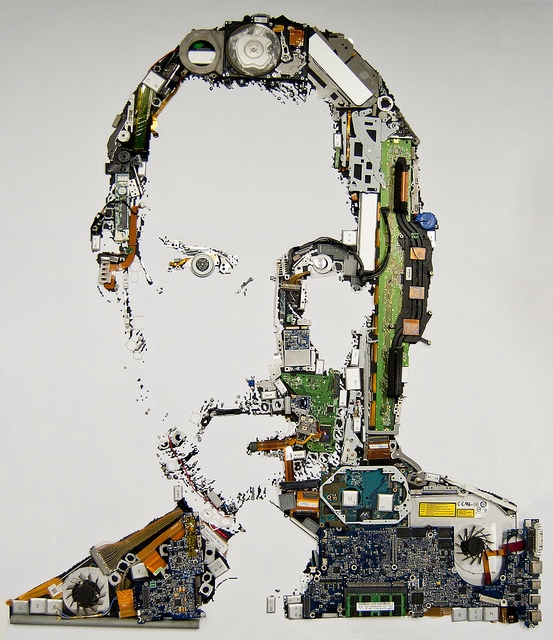
Today, obituaries can cover the basis but take many different forms, which is apparent if you look at what’s been written about Jobs. Besides the classic, straight narrative, obits or tributes can be a personal remembrance, photo montage, video, slideshow or compilation of quotes from the famous or not-so-famous. One company, Mint Digital, disassembled a MacBook Pro and using the parts to create a Steve Jobs portrait – that’s it at the top of this post.

Here are a handful of Jobs obituaries and other tributes that stuck with me for their context, emotion or originality:

Traditional Obituary – Straight forward obituaries from the New York Times and Washington Post, attempt to put the man behind the Mac, iPod and iPhone in perspective, as a 21st century entrepreneur, tech visionary and marketer with a prickly, secretive side that made him a difficult subject to interview or photograph.

Personal Remembrance – Long-time Wall Street Journal tech columnist and All Things D cofounder Walter Mossberg shared stories about a side of Jobs most people, including reporters, never saw. After returning to Apple in 1997, Jobs called Mossberg Sunday evenings for some off-the-record shop talk. Later when he was sick, Jobs invited Mossberg to visit him at home and the two went for a walk:

He explained that he walked each day, and that each day he set a farther goal for himself, and that, today, the neighborhood park was his goal. As we were walking and talking, he suddenly stopped, not looking well. I begged him to return to the house, noting that I didn’t know CPR and could visualize the headline: “Helpless reporter lets Steve Jobs die on the sidewalk.”

But he laughed, and refused, and, after a pause, kept heading for the park. We sat on a bench there, talking about life, our families, and our respective illnesses. (I had had a heart attack some years earlier.) He lectured me about staying healthy. And then we walked back.

Apology – Brian Lam used Jobs’ passing to write a long apologia and explain what happened while he was editor at Gizmodo during the infamous iPhone 4 leak in 2010. After an Apple employee lost a phototype of the phone and it ended up in the hands of a Gizmodo reporter who wrote about it, Lam exchanged numerous telephone calls with an increasingly more frustrated Jobs, who wanted the device back but didn’t want to publicly confirm what it was. Lam held out and got confirmation in writing, but later regretted it. “I thought about the dilemma every day for about a year and half,” he writes in The Atlantic. “It caused me a lot of grief, and I stopped writing almost entirely. It made my spirit weak. Three weeks ago, I felt like I had had enough. I wrote my apology letter to Steve.”

Website – For a day after Jobs died, tech site BoingBoing temporarily rebooted its design to mimick the then-revolutionary (and still very black and white) graphical user interface of the original 1984 Macintosh computer.

Slideshow – As part of its coverage of Jobs’ passing, the New York Times asked readers to send in thoughts and photos, which the paper assembled into a “Reader Memories” slideshow. One family of a grandmother in Chile who recently died of cancer sent in a picture of her in bed with a MacBook Pro on her lap making a last video-phone call to a granddaughter in Belgium.

Video – For its homage, social media new site Mashable compiled a video of Jobs’ 10 most “magical” moments, including introducing the first Macintosh and launching the iPod, iPhone and iPad. In place of the photographs of Bob Dylan, Pablo Picasso, Maria Calas and other square pegs originally featured in the classic “Think Different” commercial Gizmodo’s Jesus Diaz substituted photos and videos of Jobs during his various stints at Apple, granting him star status through association.

Cartoon – Hugh McLeod, the Gaping Void cartoonist, used the copy from the same ”Think Different” commercial as the basis for a text-only cartoon that he posted on his website and offered free to anyone who wanted to download it (I ran it here yesterday).