The New England Authors Expo Happens July 30 in Danvers, MA.

By Jason Harris

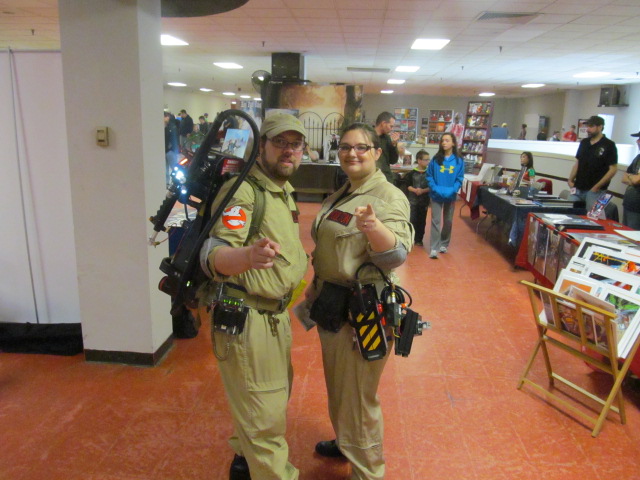
The 2013 New England Authors Expo. Photo by Jason Harris.

The 2013 New England Authors Expo. Photo by Jason Harris.

The New England Authors Expo will be attended by authors, artists, booksellers, publishers, and many more guests, companies and organizations, which makes it the perfect time for readers to meet and talk to authors and others in the publishing world about books and the written word. For an entire list of who will be there, click here.

Some of the authors and artists in attendance are Stacey Longo, Rob Watts, Dale T. Phillips, Vlad V., Michele McPheeNicholas ConleyEric DimblebyGuntis GoncarovsEdith MaxwellUrsula Wong, A.J. Kane, and S.L. Johnson.

The bookseller, Books & Boos, will also be in attendance selling used and new books. There will be a few authors at its table. The authors are Longo, Michael Evans, and Kurt Newton.

The Expo operates from 4 p.m. to 9 p.m. and takes place in the Harborview Ballroom at the Danversport Yacht Club. The yacht club is located at 161 Elliott Street (Rt. 62) in Danvers, MA. There will be a free gift bag to the first 100 visitors. This event is FREE.

You can follow the Expo on its Facebook page here or on Twitter (@neauthorexpo).

WWE’s Kane Still On Fire


By Stacey Longo


WWE Wrestler Kane a.k.a. Glenn Jacobs

WWE Wrestler Kane a.k.a Glenn Jacobs


WWE superstar Kane was on hand at TerrorCon at the Rhode Island Convention Center on Sunday, June 8 to meet fans and participate in a Q & A session with a packed crowd in attendance. Glenn Jacobs, who is the man behind Kane’s mask, was friendly, personable, and humble as he answered questions from the audience.

The first question from the moderator was about a failed character from Jacobs’s past, the ill-fated Isaac Yankem, DDS. Notorious for not liking to discuss this past gimmick, Jacobs did admit that he felt the personality’s failure was “mostly my fault. I didn’t like [the character], and it showed.” Jacobs was next asked who his favorite opponents have been over the years. His response listed some of the most well-known faces in wrestling from the past two decades, including The Undertaker, Mick Foley, Stone Cold Steve Austin, and Shawn Michaels.

One fan in the audience asked Jacobs about his reputation in the wrestling locker room as one of the “safest” opponents to face. Jacobs shrugged and explained “it’s mostly just about being a professional. You want to stay safe and keep your opponent safe.”

Jacobs was asked to reflect on his character’s evolution over the past 17 years. “Most guys go out to the ring doing the same thing night after night,” he said with a smile. “Kane’s different. He’s been able to evolve and develop as a character. I think it keeps him interesting.” He recalled different phases of Kane’s career, including a time when Kane had to use a voice box to communicate and when the Big Red Machine’s mask first came off. “It was hot under that mask,” he admitted. When asked who made the decision to unmask Kane, Jacobs said “two people: me and Vince [McMahon, WWE CEO].”

Jacobs fielded the questions from fans with good humor and grace. When one audience member asked him to comment on a current storyline about the Shield and Evolution, a storyline Kane is not involved in, he responded kindly: “I think it was a surprise, and that’s what you want, right?” Another fan asked about Kane’s experience getting Pete Rose in a Tombstone pile driver at WrestleMania 14 in 1998. “Pete Rose is like us,” Jacobs laughed. “He doesn’t take himself too seriously. I was just surprised when the crowd started cheering me.”

After the Q & A session, fans lingered to shake Jacobs’s hand and thank him for the opportunity to talk to him. “The best part about this business is you guys, the fans,” Jacobs said humbly, which is yet more evidence showing why Kane continues to be a fan favorite among wrestling patrons of all ages.

How a Horror Fan became Miss Terror Con


By Jason Harris

Sarah Michelle. Photo courtesy of Sarah Michelle.

Sarah Michelle. Photo courtesy of Sarah Michelle.


Sarah Michelle is a model, actress, and wrestler. She has also been named Miss Terror Con. When she first heard about the newest horror convention in New England, it was as “a fan of horror,” she said.

“I was very excited that there was something like this going to happen in my hometown because it’s the first one,” Sarah said. “This is exactly what Rhode Island needs.”

She wanted to be involve in some capacity whether as a spokesmodel, helping out with flyers, or anything else she could do to help out the horror convention.

“I knew I could be beneficial to them.”

She sent the organizers an email and they responded with the idea of Miss Terror Con.

This isn’t Sarah’s first time in the spotlight. She started modeling about seven years ago when she was helping out a friend who was going to school for photography.

“I was really tomboyish. I still am at heart so the whole fashion, glamour thing was really new to me.”

After Sarah started her modeling career, she liked what she doing and was having fun doing it. Within the last few years, she started taking it seriously, she said. Since she loved horror, she started to wonder if there was anyone who would be interested in taking horror photos.

“I found out that there were a lot of people interested in that.”

Through her horror work, she started doing fetish work. When she started, she didn’t realize it was fetish work. She was working with the production company, Damsels in Distress Visual Productions. During the production, there were a lot of close-ups being taken of her legs, which were stuck in the mud. All she was thinking at the time was that it was a job and that it would give her a chance to practice her acting. After being told it was a fetish work, she was fine with it.

“I have always been very curious about different fetishes and things like that.”

After that first experience, she found out about different types of fetishes like bondage and vore, “which is essentially someone being eaten by something.”

She focuses mainly on fetish and horror photos and videos now. She handles her own business. She gets projects through Facebook, Twitter, and email. She has a shoot coming up in New Hampshire, which she got after the photographer saw some of her work on Twitter, she said.

“I enjoy doing it,” she said about fetish work. “It’s a lot of fun. I get to travel.”

Her work has taken to different states and overseas to England where she filmed a quicksand fetish for Damsels in Distress Visual Productions.

“I never thought in a million years I would be going to England especially not for fetish work.”

You can find Sarah’s work by clicking here.

You can meet her in person this weekend at Terror Con, which runs from 10 a.m. to 7 p.m. on Saturday and 10 a.m. to 5 p.m.

Pictures from Hartford Comic Con


By Jason Harris


This past weekend Hartford experienced the debut of Hartford Comic Con at the XL Center. There were long lines before the doors opened at 10 a.m. From what I saw, this convention will be coming back to Connecticut.

2014-05-30 23.05.47

Batman, Poison Ivy and Donatello.

2014-05-30 23.29.20

Michael Massee of The Amazing Spider-man

The crowds at Hartford Comic Con.

The crowds at Hartford Comic Con.

2014-05-31 10.47.44

Chronic and Bluntman

Chronic and Bluntman

Brighton Sharbino and Kyla Kenedy of The Walking Dead.

Brighton Sharbino and Kyla Kenedy of The Walking Dead.

2014-05-31 10.48.26

Michael Myers

Michael Myers

Beaker

Beaker

Spider-man

Spider-man

Disney Princesses

Disney Princesses

Maleficent and Anakin Skywalker

Maleficent and Anakin Skywalker.

Katrina Law of Arrow and Spartacus.

Katrina Law of Arrow and Spartacus.

An Umbrella corporation soldier.

An Umbrella corporation soldier.

2014-05-31 13.37.37

Ghost Rider.

Ghost Rider.

Jim Dyer of Fenham Publishing.

Jim Dyer of Fenham Publishing.

Marvel superheroes.

Marvel superheroes.

There will be a few more entries with pictures coming in the next few days.

Pictures from the Rock Comic Expo


By Jason Harris


The first Rock Comic Expo happened yesterday at the Rockingham Park in Salem, New Hampshire. The Expo was created by J. Moulton. It ran from 10 a.m. to 7 p.m. It was a day of people in cosplay and talking with authors and artists.2014-05-09 23.53.05

2014-05-10 00.28.23

Author Rob Watts with the Iron Patriot.

Author Rob Watts with the Iron Patriot.

Emily and Jeremy Drouin of Eplis Comic.

Emily and Jeremy Drouin of Eplis Comic.

2014-05-10 00.41.33

2014-05-10 02.06.20

Author Dale T. Phillips

Author Dale T. Phillips holding his book, Crooked Paths.

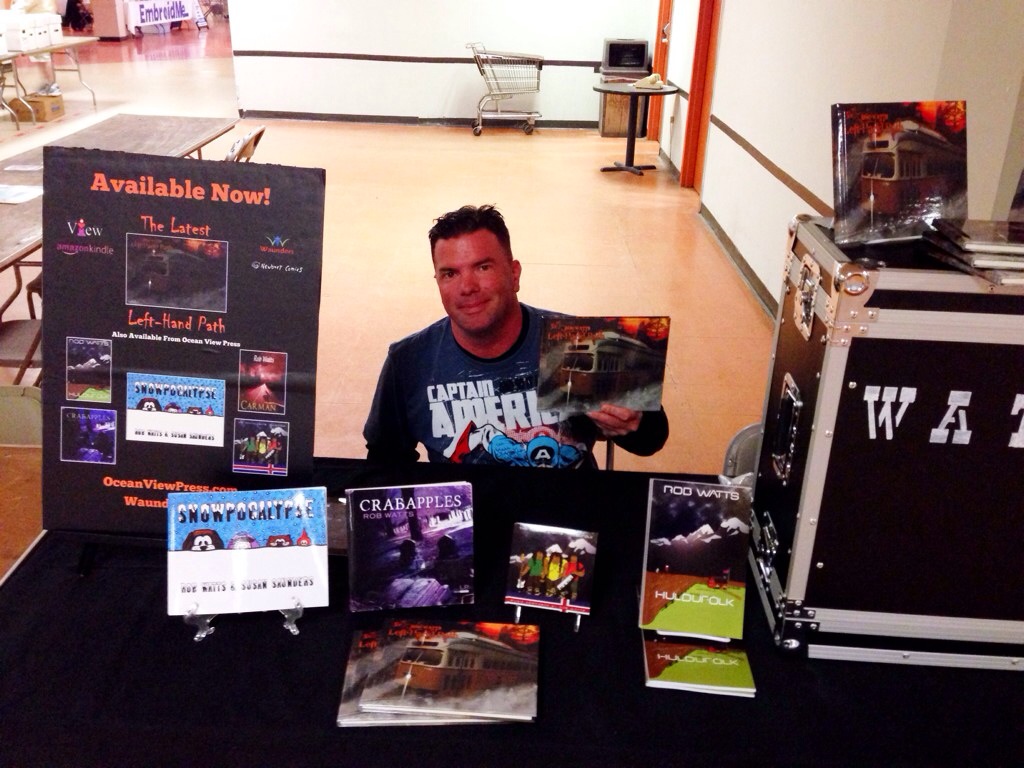
Author Rob Watts holding his latest book, Left-Hand Path.

Author Rob Watts holding his latest book, Left-Hand Path.

Crystalia Amaquelin of Marvel's The Inhumans.

Crystalia Amaquelin of Marvel’s The Inhumans.

Authors Rob Watts and Dale T. Phillips

Authors Rob Watts and Dale T. Phillips

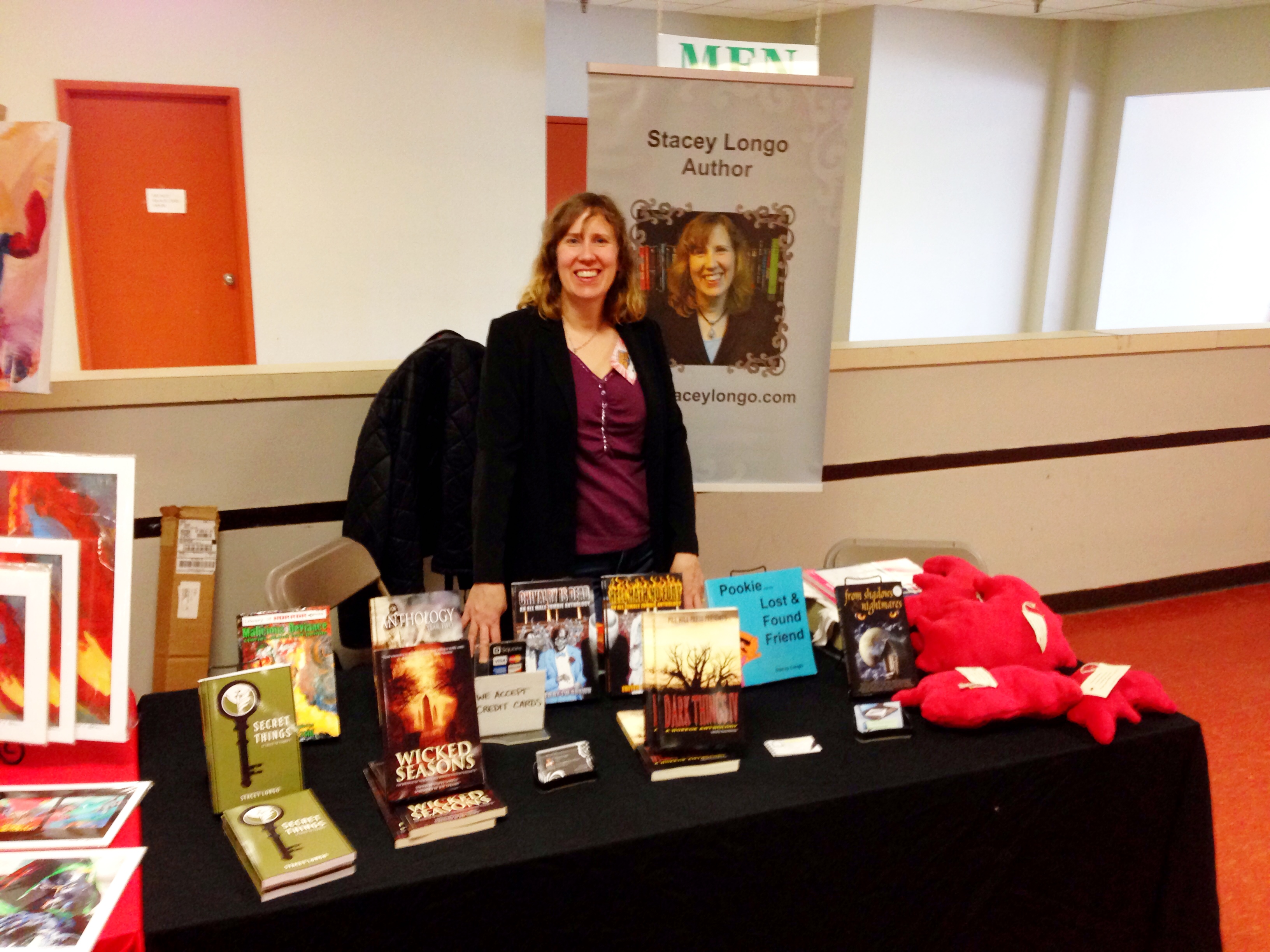
Author Stacey Longo talking with a expo attendee.

Author Stacey Longo talking with an expo attendee.

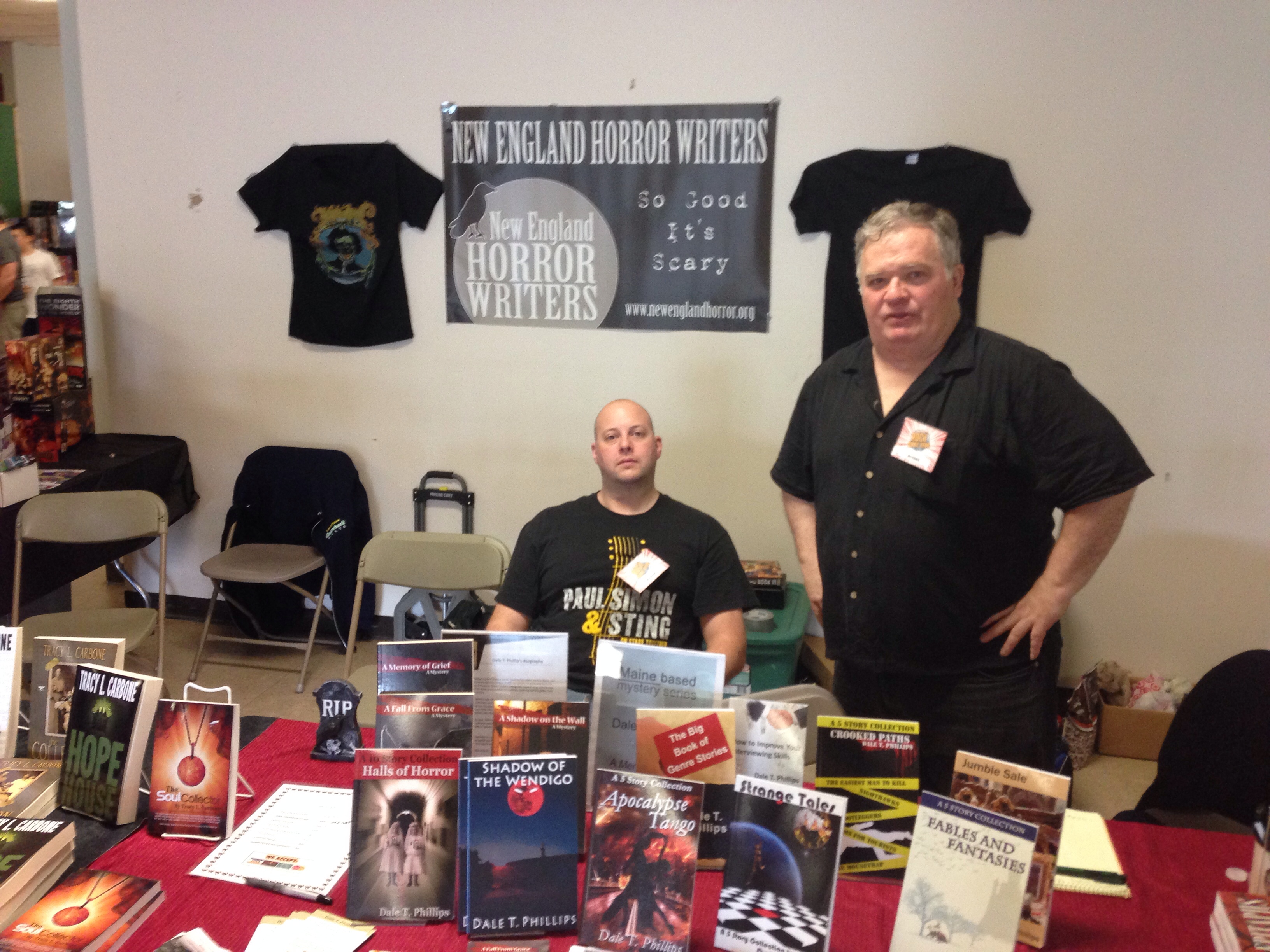
Authors Vlad Vaslyn and Dale T. Phillips behind the New England Horror Writers table.

Authors Vlad Vaslyn and Dale T. Phillips behind the New England Horror Writers table.

Moulton plans to make the comic expo a two-day event next year. He is also involved with Vermont Comic Con, which debuts in October.

Author Joe R. Lansdale Talks about ‘Cold in July’ and Writing


By Jason Harris

Joe R. Lansdale

Joe R. Lansdale

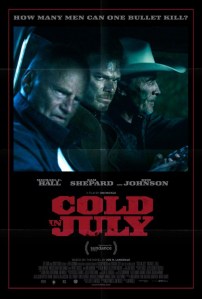
JH: The movie version of Cold in July comes out in May. Did you have any involvement with the filmmakers?

JRL: Yes, Jim Mickle, the director, and Nick Damici the writer, kept me in the loop and asked my opinions frequently. I was on the set for two weeks watching them film. It was a great experience, and as icing on the cake, I like the film. A lot.

JH: If you did have any involvement, what was your involvement and how did you feel about it?

JRL: Mainly just as an adviser. They respected me enough to make me a producer on the film. I did teach Sam Shepard a finger lock for one of the scenes.

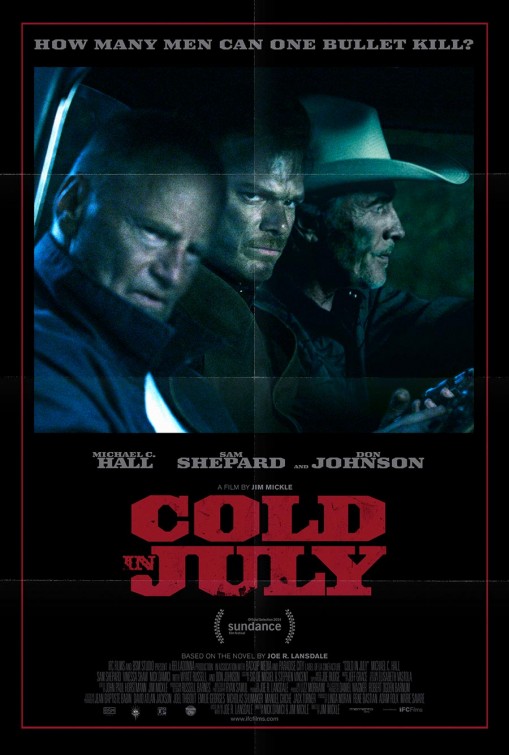
JH: What do you think about the casting of Michael C. Hall, Sam Shepard, and Don Johnson in the roles of characters you created?

JRL: It was like they were born for those parts. I didn’t think about them as the actors, but as soon as they said their names, I thought, oh hell yeah.cold_in_july
JH: Are there anymore film adaptations in the works of your books?

JRL: There are several. The Bottoms is the only one I can talk about right now. Bill Paxton is set to direct, and there is a great script by Brent Hanely. He wrote Frailty and Bill directed it. I think we’ve got a winning team. Next actors are to be chosen. The plan right now is to shoot this fall.

JH: How important are names to you in your books? Do you choose the names based on liking the way it sounds or the meaning? Do you have any name choosing resources you recommend?

JRL: Sometimes I just want something common. And there are times when I feel something a little unusual is better. I’m not picking names like Bill Storm or Willie Hammer, but now and again I go for something a little exotic like Vanilla Ride.

JH: Do you have a favorite conference to attend? What is it?

JRL: ArmadilloCon in Austin, Texas. I go most years.

JH: What is your least favorite part of the publishing/writing process?

JRL: Proofing and promotion, though I have learned to embrace those things.

JH: Is there one subject you would never write about as an author? What is it?

JRL: I don’t know. I never say never, but I’m sure there are some things I wouldn’t want to write about, but I’d have to come up on that one before I’d know it.

JH: Is there a certain type of scene that’s harder for you to write than others? Love? Action? Racy?

JRL: Not really. Not if I like the story and feel it works in the context of that story.

JH: Just as your books inspire authors, what authors have inspired you to write?

JRL: Too many to name here. But among them: Jack London, Mark Twain, Edgar Rice Burroughs, Robert E. Howard, Ray Bradbury, Richard Matheson, Charles Beaumont, William F. Nolan, William Goldman, Raymond Chandler, James Cain, Dashiell Hammett, Ernest Hemingway, F. Scott Fitzgerald, [William] Faulkner, a little, Flannery O’Conner, a lot Glendon Swarthout, some [Larry] McMurtry, and the list goes on.

JH: What writing advice do you have for other aspiring authors?

JRL: Read a lot, and learn to write regularly, daily. Put your ass in a chair and write. Have a reasonable goal each day. Say one to three pages, and reach it, and if you go over, great, but try hard to reach that goal.

Editor’s Note:

THe movie version of Cold in July comes out in limited release in theaters on May 23.

You can read an earlier article about Lansdale receiving the Horror Writers’ Association’s Lifetime Achievement award here.

Author Talks about Writing and ‘Spies of Revolutionary Connecticut’

By Jason Harris


Author Mark Allen Baker talks about his book during his visit to the Colchester bookstore, Books & Boos.

Author Mark Allen Baker talks about his book during his visit to the Colchester bookstore, Books & Boos. Photo courtesy of Books & Boos.

Author Mark Allen Baker, who lives in Connecticut and has written 17 books, spoke to Jason Harris Promotions about a number of topics including writing and his current book, Spies of Revolutionary Connecticut: From Benedict Arnold to Nathan Hale.

JH: Mark you have written 17 books, when did you start writing and when was your first book published?

MAB: As a corporate executive for the General Electric Company, I began writing articles on graphics software and hardware; our division was involved with numerous early developments in graphics, most of which people are familiar with today as Microsoft PowerPoint. As an avocation, I have always been interested in baseball. After writing and publishing a number of articles on the 1980s boom in baseball collectibles, I was approached by a publisher to write a book. I accepted and wrote the Baseball Autograph Handbook for Krause Publications in 1990. While the word autograph is in the title, much of the information was historical.

JH: What was the impetus behind your latest book, Spies of Revolutionary Connecticut: From Benedict Arnold to Nathan Hale?

MAB: Having visited numerous historical sites here in Connecticut, such as the Nathan Hale Homestead (Coventry, CT) and the Webb-Deane-Stevens Museum (Wethersfield, CT), the word spy kept creeping into my conversations with historians and volunteers. It intrigued me so much, that I instigated a bit of my own primary research and found that there was much more to many of the stories. Like my previous work for The History Press, the material filled a genuine need: a single resource that would answer a majority of questions any concerned individual might have. In this case, it was visitors to a historical site.

JH: When you were at Books & Boos in March, you mentioned that some of the spies you have written about are in the video game Assassins Creed. Can you elaborate more on this?

MAB: As most know, Assassin’s Creed III is a 2012 video game developed by Ubisoft Montreal for a variety of systems. The fictional plot is set in the 18th century, before, during and after the American Revolution. Benedict Arnold, who is featured in Spies of Revolutionary Connecticutis also included as part of the exclusive missions, available on PlayStation 3. Other individuals included: George Washington, Benjamin Franklin, Sam Adams, General Israel Putnam and Benjamin Church.

JH: How long did it take you to write Spies of Revolutionary Connecticut?

MAB: This work took me about nine months.

JH: How much research did you do for the book?

MAB: Since my interest in the topic goes well beyond the scope of the book, I conducted more primary research than usual; I easily could have written a dozen volumes on the topic. As far as locations, I visited numerous libraries, historical societies and landmarks. I was even in the attic at the Nathan Hale Homestead and inside the War Room at Versailles, France. Always believing that a writer must get as close to the subject as possible, I tried to visit where my subjects worked and lived, and even where they were buried.

JH: What draws you to writing about history?

MAB: The people are what draws me to history. They are more than two dates on a tombstone, far more. It’s my job, or so I believe, to bring them back to life and acknowledge, at least in most cases, their achievements. While most know the names of Ethan Allen or Nathan Hale, few are unaware of heroes like Daniel Bissell and Noah Phelps.

JH: What does your writing process look like?

MAB: The process depends upon the work. For Spies of Revolutionary Connecticut: From Benedict Arnold to Nathan Hale, I began with a full investigation of the topic. This ranges from books and manuscripts, to scarce articles and even pension testimony.  Since I stay in the period that I am writing about, my ‘downtime’ includes only related items, period books, videotapes on the subject, university lectures and even music. Only when I feel I am ready, often months into the contracting, do I finally draft, revise and edit.

JH: What is your least favorite part of the publishing/ writing process?

MAB: Editing. Having to extract so many individuals from this work-Spies of Revolutionary Connecticut: From Benedict Arnold to Nathan Hale-was difficult. For example, I had no other choice but to edit out some (minor characters) individuals from the chapter on The Culper Ring. Choosing 35,000 words to express any topic is a challenge.

JH: You started a sport’s bar. Where was this, how did it come about, is it still there and what was the name of it?

MAB: Upstate New York, Liverpool, to be exact. It was called “Bleachers.” It came through my participation in another business. We, the four of us, believed the timing was proper to undertake an investigation or market analysis. As a former Market Research guru for a Fortune 500 company that became my task. It took me about six months to complete my research. It confirmed our feelings, guided us to a site and composed our business. I sold my shares three years into the business. I believe it lasted about four years longer before shutting its doors.

JH: Have you been involved in any other businesses?

MAB: Having worked for a large corporation for the bulk of my professional life, I began exploring other options when I was still in my thirties. A mail-order business, along with a sporting goods store, prepared me for the sports bar. That being said, having had managed three fast-food restaurants, before I started my own, certainly helped.

JH: How did your involvement come about in the New York music scene? Can you describe some of your experiences?

MAB: From 1975 until 1979, I supervised the shows at the university I was attending. During that period I promoted, or assisted, over fifty regional shows including: Aerosmith, Boston, Peter Gabriel, Genesis, Billy Joel, KISS, John Mayall, Queen, Bob Seger and Bruce Springsteen. My experiences could fill a book, and eventually will.

JH: Besides writing, history, and music, do you have any other interests?

MAB: Gardening. Organic fruits and vegetables are a favorite of mine.

JH: Are you working on any current projects?

MAB: Yes, I am currently working on a follow-up to Spies of Revolutionary Connecticut: From Benedict Arnold to Nathan Hale, that will be available in the fall of 2014.

JH: Just as your books inspire authors, what authors have inspired you to write?

MAB: Ernest Hemingway, David Halberstam, David McCullough, John Updike, Joseph J. Ellis, Ron Chernow … there are so many.

JH: What book do you wish you could have written? And why?

MAB: The Old Man and the Sea by Ernest Hemingway. Because it’s perfect.

JH: Are you there any upcoming promotional events you are doing for your current book?

MAB: Yes, I will be at Nathan Hale’s New London Schoolhouse on Saturday, August 16.

Interesting Magnets and Coffins at a Craft Fair


By Jason Harris


I have been to many craft fairs as a patron and as a vendor. I use to set-up events at craft fairs and open air markets for the New England Horror Writers (NEHW) organization. These events were very successful for the NEHW so I have continued setting-up events like these for my bookstore, Books & Boos, which I co-own with my wife. Along with these shows, I also set-up events such as conventions and comic book shows for the bookstore. You can find out about these Books & Boos’ events here.

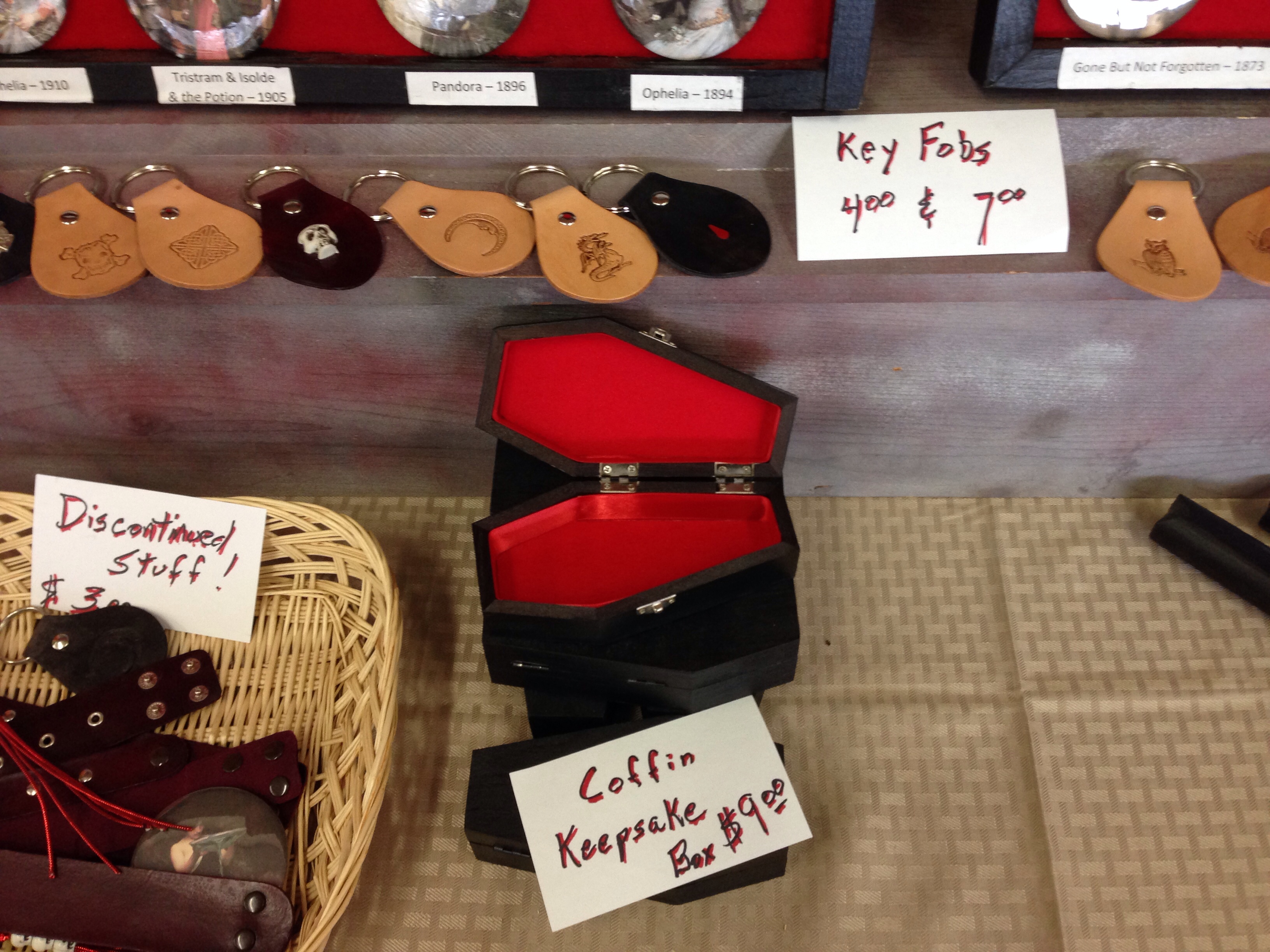
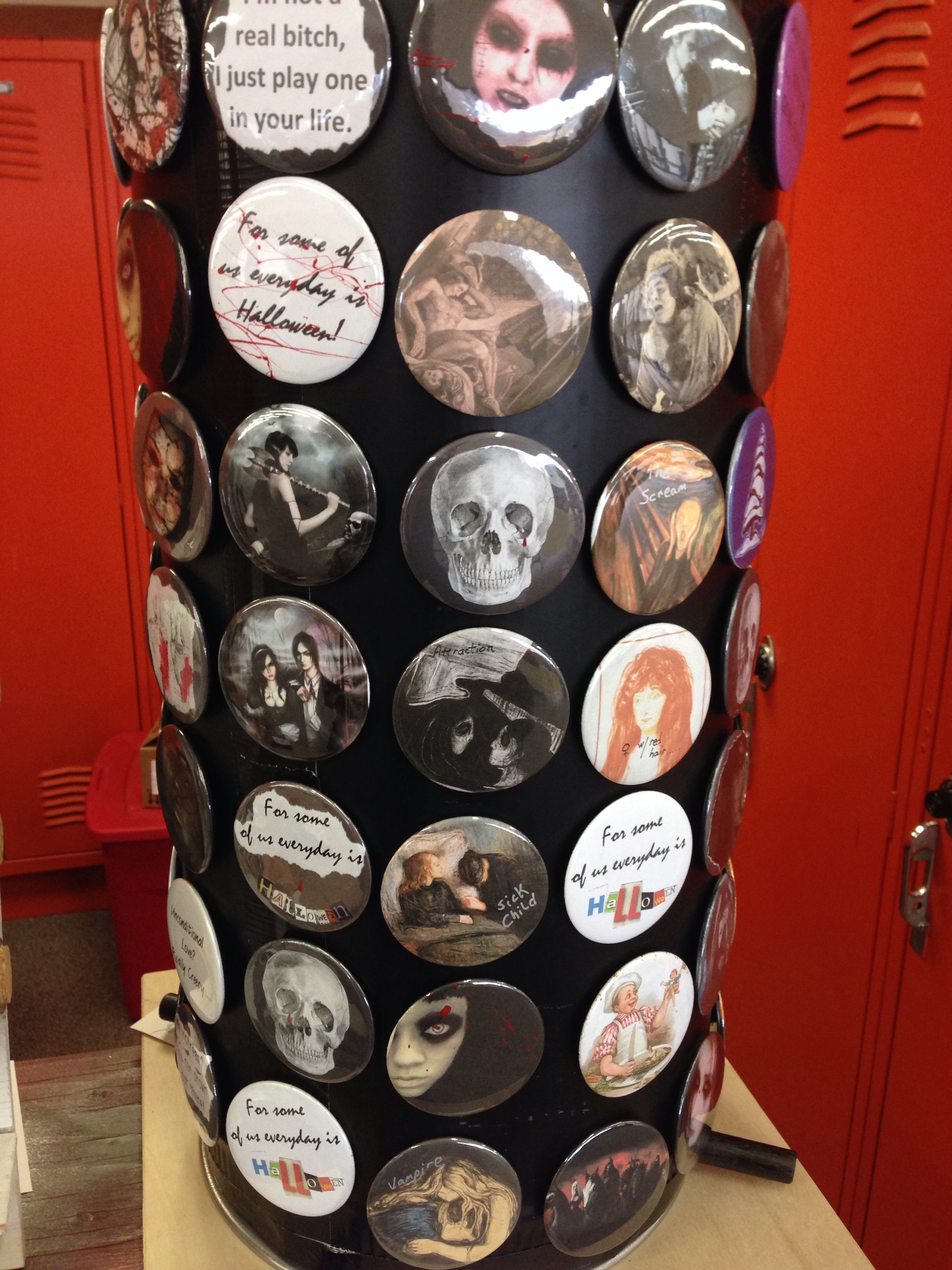
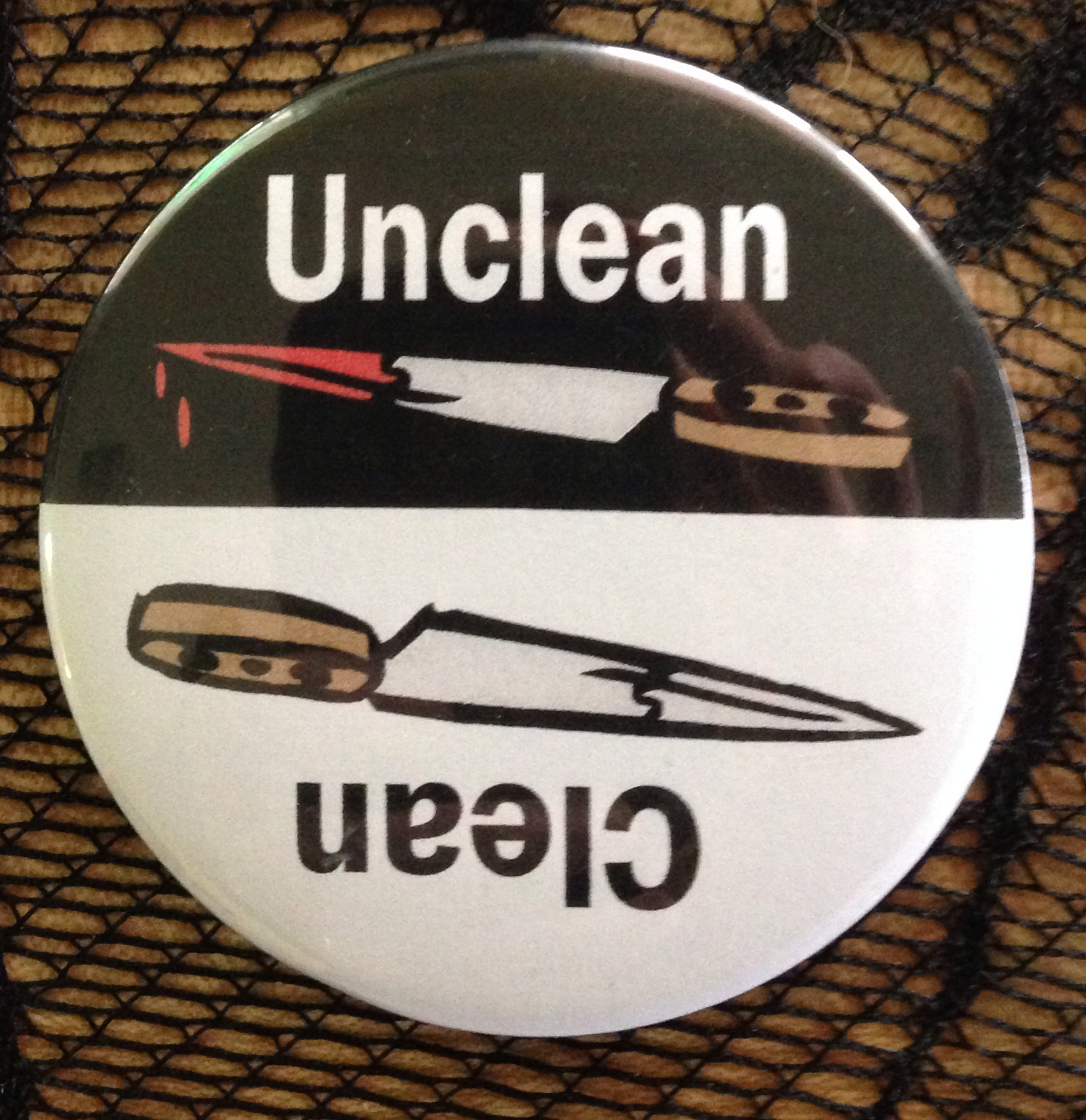
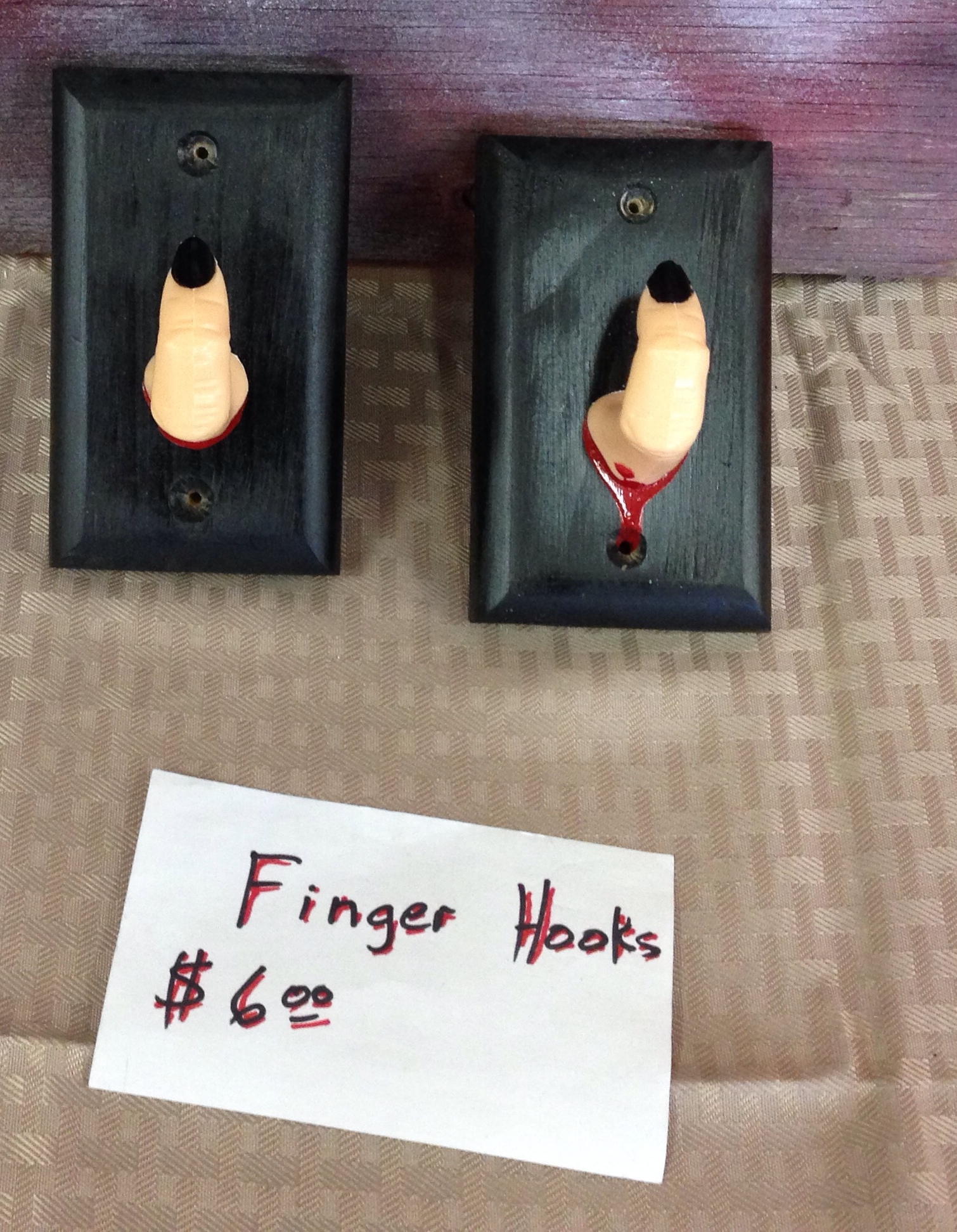
At the 41st Annual Craft Fair held at the Keefe Technical School in Framingham, MA. yesterday, there were the usual jewelry sellers, dog stuff, and handmade wooden bird houses. There was one unusual seller at this craft fair. The vendor was Frankenstein Medical School, which is owned and operated by Jerry Stiles. He sells finger hooks, coffin-shaped keepsake boxes, and interesting magnets.

2014-03-29 14.51.50

Jerry Stiles

Coffin Shaped Keepsake box.

Coffin-Shaped Keepsake Box

Magnets

Magnets

One of Stile's magnets.

One of Stiles’ magnets.

Finger hooks.

Finger hooks.


Stiles has a site on Esty, you can check it out here.


Award-winning Photographer turned Horror Writer

By Jason Harris

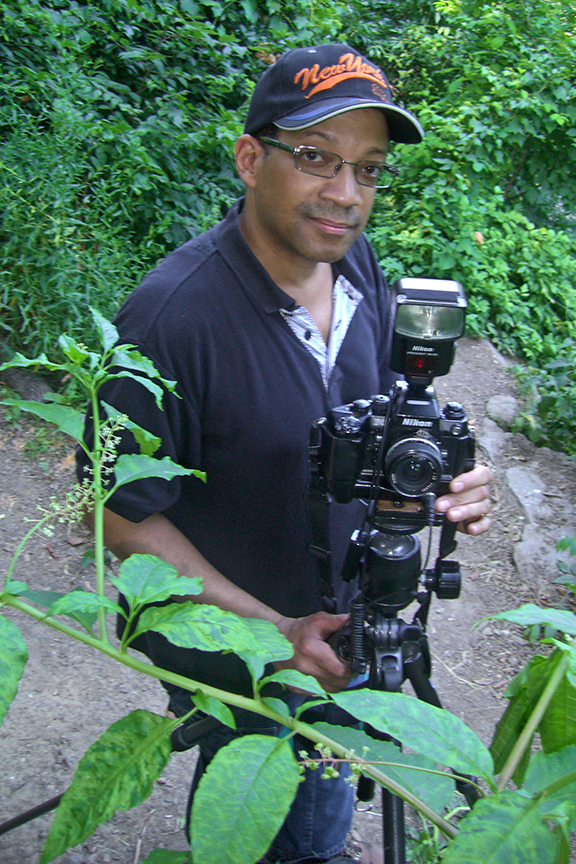
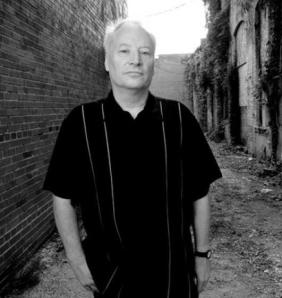
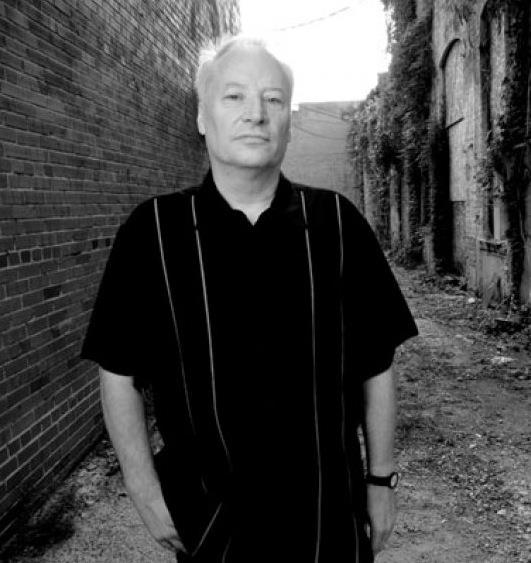
F.M. Kearney1

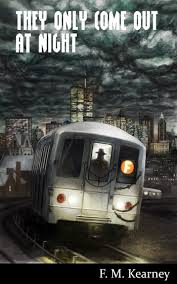
F.M. Kearney, an award-winning photographer, has written his first horror novel, They Only Come out at Night. Today, he’s talking  about his career, New York Subways, and writing his first horror novel.

JH: How long have you been a fine art nature photographer?

FK: I’ve been a fine art nature photographer for about 20 years.

JH: What awards have you won for your photography?

FK: I’ve won numerous awards from various magazine and online photography competitions, ranging from First Place to Honorable Mentions.

JH: In the 80’s, you worked as a photojournalist for various New York City newspapers. What newspapers did you work for? What were you covering for them?

FK: I’ve worked for a number of local papers such as Town & Village, City Limits, The Phoenix, The City Sun and The New York Tribune. I mainly covered news pertaining to the particular neighborhood or borough that the paper serviced, but I also did hard news as well. I’ve done ride-alongs with FDNY and NYPD undercover units. I covered the first bombing of the World Trade Center in 1993. I’ve also photographed many famous people, such as Bill Cosby, Mayor David Dinkins, Fred Lebow (founder of the NYC Marathon) and several sports celebrities in one-on-one sit-down interviews.

F. KearneyJH: What inspired you to write your first book and what was the idea behind it?

FK: I suppose my inspiration was two-fold. The first, and most obvious inspiration, came from my own personal experiences in the subway. As a photojournalist, I rode the subway all over town traveling to and from my assignments. I lived (and still do) in Manhattan, and up to that point, I had never really been to a lot of the stations in the outer boroughs, i.e., The Bronx, Brooklyn and Queens. I was really amazed at the total contrast in environments. You see, when most out-of-towners think of the NYC subway, images of Times Square and Grand Central Station will undoubtedly come to mind. These are huge, bustling hubs filled noisy activity and throngs of commuters almost 24/7. They have come to define what the NYC subway is all about. However, stations like these only account for a tiny percentage of the 463 stations of which the entire system is comprised. The vast majority of stations are nothing like that. In fact, I would even say that they are the polar opposites. Many of the stations in the outer boroughs (and even some in Manhattan) are very quiet, dimly lit and sparsely populated…and that’s in the middle of the day!  I can remember being in certain areas of some stations that were sore mote and so creepy that I felt very uncomfortable and couldn’t wait to get out. Many of these areas have since been sealed off to the public…presumably because of the safety risks they posed. I couldn’t help but think that this would be a perfect location for a horror story. To be honest, I’m actually surprised that Hollywood doesn’t use the NYC subway as a regular setting for horror movies.

My second inspiration came from one of the most unlikely of sources…a disco song. In the 80’s, Peter Brown released a single called, “They Only Come Out at Night.” It’s an upbeat tune about people (referred to as “creatures of the night”)  who like to go out clubbing. The song features the haunting sound of a saxophone — the kind of sound one might hear while walking along a deserted city street at night. Between that, and my experiences in the subway, They Only Come Out at Night (the book) was born.
JH: What drew you to writing in the horror genre?

FK: I’ve always been a fan of everything horror related…books, movies, TV shows, you name it. But, I always found one flaw in almost every story. It seemed as though a lot of time and effort went into producing the chills and thrills throughout the story, but the ending was usually somewhat of a letdown. Of course, most horror stories are fiction, but it seemed as though no attempt at all was made to make the story even halfway believable. I wanted to write a story that made sense — a story that, albeit fictional, contained enough factual details one might wonder if it could actually happen.

JH: Why did you use the New York City subway as the main setting?

FK: Aside from the reasons already mentioned, I used the subway because of its familiarity to so many people — even if they don’t happen to live in a major city that has a subway. Most tourists will make riding the subway one of their “must-dos” while visiting. Very few people will ever find themselves in an actual haunted house or a foggy cemetery at midnight. The same can’t be said for a subway. I think the chills are far more intense when you read about scary things happening in a more familiar and commonplace environment. After having read the book, a lot of people have told me that they will never again ride the subway alone at night.

JH: What type of research did you do for the book?

FK: I visited every major location I wrote about with a digital tape recorder. I recorded everything I saw, heard, smelled and felt…things that I (and probably most people) would never even give a second thought. This greatly helped to create atmosphere. I also researched news articles about local crimes committed in the area, and spoke with the NYPD about specific rescue procedures in the subway. As far as the supernatural aspects of the book are concerned, I went online and researched actual case studies and terminology. Lastly, the dates in the book are very important. I went to the library to insure that the days of the week and the newspaper articles I mentioned were correct.
JH: How long did it take you to write the book?

FK: Since I had no deadlines and was basically just writing for fun, I’d say it took about 10 years from start to finish.

JH: What’s been the reaction of some of the people who have read the book?

FK: Chapter One, by far, has received the biggest reaction! Many of my friends have told me that it was the most intense thing that they’ve ever read. Although they thoroughly enjoyed it, I realized that it might be a little too intense for the average reader. Before releasing the book to the public, I considerably watered-down this chapter from its original version. Even so, a number of reviewers have commented on just how violent this chapter is, and a few were even unable to get past it. Make no mistake, Chapter One is not for the faint of heart, but it is necessary to the story as a whole.

JH: Are there any other genres, you want to write in?

FK: As a nature photographer, I’ve considered putting out a non-fiction book about nature photography at some point in the future.
JH: Who is your favorite author/authors and what is it that really strikes you about their work?

FK: I like many of the works from Dean Koontz and Stephen King. I think King’s books are much better than his movies — many of which leave me scratching my head. These writers have a way of painting a picture with words that tends to put the reader right in the scene. I tried to do that with my book as well.
JH: What books have most influenced your life the most?

FK: I don’t know if I can point to any one book of fiction. However, I’ve read many photography books that greatly influence the way I shoot.

JH: Are you working on a second novel?

FK: Not at this time. Many have suggested a sequel to They Only Come Out at Night.  Although it definitely lends itself to a sequel, I can’t see myself writing one. Unless you’re talking about an action series, most sequels rarely live up to the original.

JH: What are your current projects?

FK: I’m currently focusing more on my photography and photography articles.

Waging Bets on Digital Thoroughbreds

How video game AI could work in tandem with horse race betting

Compared to other genres, horse racing video games just aren’t as popular as titles like Street Fighter or the Madden NFL series. It has its fair share of the market, to be sure; but in a billion-dollar industry like the video game business, selling a few hundred thousand copies just doesn’t cut it.

This isn’t to say that there aren’t any quality horse racing games. In fact, despite having only two prominent publishers – Tecmo and Koei; which later on merged to become Tecmo Koei, interestingly – most of the games released have been very entertaining.

A big part of this appeal comes by way of how closely these titles’ gameplay mechanics stick to the real thing. This, of course, includes the betting aspect of the sport, which has always been an integral part of the whole horse racing experience. Given the level of realism of current generation of video games, it’s to be expected that horse racing titles should only follow suit. As authentic as the breeding and racing portions of games like Champion Jockey feel, a lot of gamers derive their fun from casting their bets on their favored horses as well.

The advent of online betting just presents more interesting possibilities vis-à-vis video game integration. Betfair has comprehensive coverage of the online wagering aspects of the Cheltenham Festival annual races. A joint effort with the aforementioned Tecmo Koei to organize pre-race fantasy matches using the game company’s latest titles will no doubt generate a lot of additional hype before the real races begin. Using up-to-date stats algorithms to simulate the performance tendencies of the real-life horses and their jockeys, this digital recreation preview could allow betting aficionados to hone their intuition and give them further analytical insight for the actual races.

Something close to this has in fact already been done. In a move straight out of the last Rocky movie, online gaming company Horse Racing Simulation LLC released a video that had recently retired American racehorse Zenyatta go up against some of the very best thoroughbreds in history, including the likes of 1948 Triple Crown champ Citation and Great Depression-era icon of hope Seabiscuit.

Using the company’s proprietary advanced AI, the simulation sought to answer the question of which horse would come out on top with all of them at their peak. Expectedly, Zenyatta’s propensity to hold back and gather energy for a final speed burst ultimately led to him winning the match.

Race analysts can argue all they want with the result, but that doesn’t take away from the fact that the way each digital horse race stayed true to how they actually did in real life. For all we know, a repeat match with a different set of variables such as weather conditions and whatnot might wield different a result.

And that in itself is the fun that horse race betting represents. It’s a game of numbers and probability factors; something which a fairly advanced computer AI is all too familiar with. Transitioning this level of AI sophistication into full-fledged pre-race virtual betting sessions seems like a no-brainer. Only time will tell, though, if something like this eventually does come to fruition.