Author’s Third Zombie Novel in Series Available Now

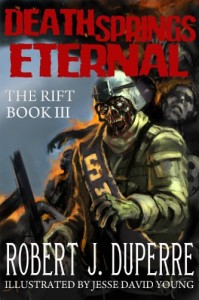
Author and New England Horror Writer member Robert J. Duperre’s book, Death Springs Eternal: The Rift Book III is available as an e-book and the fourth book in the series comes out in June. All the books in the series are illustrated by fellow NEHW member, Jesse David Young.

Here is the description of the book from Amazon, “the sun rises from its slumber, melting away the winter’s snow and bathing the barren land with light. The survivors once more begin their journey, braving the hordes of wandering undead, heading south for what they hope will be safer shores. But an old threat has risen from the bowels of humanity, standing in the way of any hope for salvation. As those who remain soon learn, in a world of chaos, zombies are the least of their worries.”

For more information about the series, check out The Rift Online website.

Along with writing novels, Duperre writes a blog, Journal of Always, which is “first and foremost a review blog,” where the reviews written by himself (and occasionally others). “It is also an attempt to highlight inexpensive Kindle books in the genres I enjoy reading, such as Fantasy, Science Fiction, Horror, and Thrillers,” Duperre said on his blog.

To purchase Death Springs Eternal, click here. To purchase other paperback or e-book versions of his books, click here.

Jeers of a Clown: Exploring the Balancing Act of Black Humor Writing

This entry originally appeared on Adrienne Jones’s website.

Jeers of a Clown: Exploring the Balancing Act of Black Humor Writing

By Adrienne Jones

Back in college, a bunch of us got called into the dorm lounge one day to receive some bad news—one of our dorm mates had attempted suicide. He was fine, they were able to save him, but he wouldn’t be coming back to school. A terrible thing, of course. We all sat mournful and appropriately shocked at the news. Then my buddy Al asked the dorm director how this kid had…you know, done it. Turns out he’d taken an overdose of Sudafed.

I went into one of those inappropriate snicker fits, the kind that happen in church or in a meeting with your boss, where laughter is the worst option. I was weakened by it, sliding off the chair, unable to stop while the others stared on in horror, like I was a monster. Come ON! The guy tried to dry his sinuses to death.

Since I started publishing fiction, my brand of humor as been repeatedly called “dark” or “black,” which recently led to pondering the source. Does a dark sense of humor come from the viewpoint of an author, or does the world regularly present us with these scenarios that only a certain personality type recognizes as humorous? Is it the same thing? And where do we draw the line between dark humor and a simple lack of taste?

The late Roald Dahl considered this endlessly, as evidenced in this quote: “If a bucket of paint falls on a man’s head, that’s funny. If the bucket fractures his skull at the same time and kills him, that’s not funny, it’s tragic. And yet if a man falls into a sausage machine and is sold in the shop at so much a pound, that’s funny. It’s also tragic. So why is it funny? I don’t know, but what I do know is that somewhere within this very difficult area lies the secret of all black comedy.”

I think most will agree that Roald Dahl found that balance in his own work. I wonder if his was based purely on speculations, or if he too felt plagued with darkly humorous scenarios thrust before him in daily life. This reminds me of another incident that happened while I was skiing with a group of friends at Killington Mountain. We spotted a man with no arms, expertly swishing down a mogul field, and thought, “Wow. That is incredible.” There was nothing funny about it. We certainly weren’t juvenile and callous enough to laugh at a no-armed skier. We looked on in awe and admiration of his courage.

Yet two hours later we spotted the same man in the ski lodge, casually watching the television as he had lunch with a companion. My friend nudged me and signaled to the TV screen, on which played out the Black Knight scene from Monty Python and The Holy Grail. The knight continued to fight King Arthur even as both his arms had been hacked off by Arthur’s sword, jumping and kicking as fake blood gushed dramatically from his stumps. Dear God, I thought, why are you doing this to me? I mean, what are the odds of watching a no-armed man watching a comedy scene about a no-armed man? I don’t want to laugh at the no-armed skier! The universe is NOT playing fair.

There is a certain safety in laughing at such things in the realm of entertainment, and it would stand to reason that suspension of disbelief or the fiction buffer is the key. But there are just as many staunch haters of Monty Python’s brand of humor as there are fans. I’ve seen people come to blows over this topic. Which brings back the theory that dark humor is about viewpoint, in observer and creator alike.

Since I can’t dig up Roald Dahl and ask him, I participated in a discussion with some living writers of black humor about their life view and how it affects their writing. Author Aurelio O’Brien used to make his living on the big budget animated kiddie films, but crossed over to the dark side with his first novel Eve, a blackly humorous tale of genetic tampering gone awry in a dystopian future.

“For me, so much of life is observably funny and this automatically feeds my writing. When I was creating my all organic, genetically designed future, things like McDonald’s characters directly inspired me to go further than I might otherwise think to go…The little giggling McNuggets are really chunks of dead fowl flesh with cute little smiles carved into them. I find these kinds of things to be so twisted and humorous and odd. Most people don’t think about these characters beyond their surface appeal. So, when people tell me my Lick-n-Span© is gross, I think, is it really any grosser than having a hacked-up chicken giggle at you?”

I agree with O’Brien on this, most consumer icons are creepy. Like the Tidy Bowl man and Mr. Clean. Why is it always a little fantasy man helping the lonely housewife with her daily chores? Strange men coming up out of the floor and the toilet? And why does the housewife always keep them a secret from her husband? Notice the way Mr. Clean winks at her when hubby walks in? And what’s the actual purpose of that little hand guy from Hamburger Helper? What’s he really helping her with?

Speaking of sex and animation, most people know Gary K. Wolf as the creator of Disney’s Roger Rabbit, but he’s also a novelist, and one of the masters of dark humor. For Wolf, the humor definitely comes from a unique way of seeing the world, and is more second nature than calculated creativity.

“There’s something unfathomable about humor writers that compels them to look at a situation or a character, twist it, turn it, squeeze it, squash it until it’s a round peg that fits into a square hole and looks funny doing it,” says Wolf. “Good stand-up comedians have the same ability, taking everyday situations and making them funny. They do it verbally. Most of the humorous writers I know, me included, aren’t very funny in conversation. In fact, I’m so boring I could suck the laughs out of a hyena convention. However, give us a blank page and a pen, and we’ll have you in stitches. I’ve been applauded by editors, critics, and readers for the humor in my work. All well and good except they were talking about what I consider to be my serious work. What I’m saying is that there’s something perverse about the way I look at reality or, in the case of science fiction, unreality I see a situation, I make it funny. Can’t help it. Don’t do it intentionally. That’s just the way I write.”

Gary makes a good point here about stand-up comedians, which prompted me to speak with one of my favorite and darkest comedians, winner of the 2009 Boston Comedy Festival, Dave McDonough. Dave, who’s confessed to needing roughly 70 jokes written for a half-hour set, has a “serial killer on Valium” kind of delivery, and pushes the envelope with some wince-worthy jokes, but he’s booked solid most weeks, so the man has found his groove, and his audience.

“There is a balancing act but you can’t make everyone happy,” says McDonough. “I cross the line sometimes but that’s half the fun. I don’t have any material I draw the line at except Muslim jokes, because I need my head. I tell a Jesus Christ/abortion joke and a male-inmate rape joke that often get applause breaks, so there’s a way to make the darkest of topics palatable to the public. I’m nowhere near as dark or as crazy as the freak I play onstage, I’m really a positive, introverted person by nature who happens to believe that the world is coming to an end.”

So writers and entertainers alike seem to reiterate my previous theory, that black humor is a personality trait, an inherent point of view within the creative mind before the material ever reaches the page, or the stage. But in the spirit of point/counterpoint, I figured there had to be a dark humor writer who didn’t necessarily see the real world through gore-colored, Groucho Marx glasses. Someone calculating, a mere craftsman, crazy on the page but with a solid, normal worldview—author Jeff Strand.

If you’ve read Strand’s popular, horror/humor brand of fiction, you’re now scratching your head and saying, “Did she just call Jeff Strand normal?” Especially after reading excerpts like this one from his book Disposal, which shows off his talent for making gore and violence a casual affair.
“We’ll finish slicing up my husband’s body, then we’ll get rid of the chunks, then we’ll take a long shower, and then we’ll get some sleep–and no, you can’t spend the night–and then I’ll pay you.”

The reason I thought I’d get calculated normalcy from Jeff Strand obviously didn’t come from the content of his fiction. But having had many writing-craft related discussions with Strand, I always end up shaking my head at the logic he applies to the structure of writing, putting himself completely outside the whacky content in order to plot his scenes with almost mathematical precision. He’s like the Professor on Gilligan’s Island, fixing the radio while everyone else is running around throwing coconut cream pies.

But I was wrong. While Strand recognizes more conventional logic about the crux of black humor, in the end he too opts for the warped theory.
“We’re living in dark times, and one theory is that because it’s difficult to cope with or even comprehend some of the horrors around us, we use them for comedic effect to help us better deal with them,” says Strand. “Which is a good theory. But at the same time, I think most of us are just sickos. The college student who creates an elaborate online animation of The Puppy Blender isn’t doing it as a defense mechanism. We’re all warped!”

Though like Roald Dahl, Jeff finds himself balancing that delicate line between humor and bad taste. “If I can come up with a genuinely funny angle that’s more than just ‘Oooh! Look how tasteless I can be!’ then my only off-limits material would be specific real-life people suffering tragedies. Cancer itself is acceptable. A real-life person dying of cancer is not. I wouldn’t necessarily feel the need to make something funnier just because of the uncomfortable subject matter—it would just have to be handled in a way that justified the material.”

And so ends the cage match, the popular vote going to the theory that black-humor writers have an inherently twisted perspective, a real-life view of the world that powers the motor for creating the dark funnies. Limitations are applied when putting pen to page, balancing the scales of humor and darkness to make the mix palatable for human consumption. If the mix is just right, the audience will laugh. Or at least some of them. Because as all humor is in the eye of the beholder, it’s inevitable that part of the population will always stare slack-jawed, horrified as you giggle maniacally at the boy who tried to dry his sinuses to death.
Author Promotes His Book and Some Blogs

Author Promotes His Book and Some Blogs

by Jason Harris

The New Year is here. Have you started doing your New Year’s resolution or has it already fallen to the wayside? If you are still struggling with staying with your resolution then here is a link to an article on the Tipb website mentioning a few apps like Evernote and Weight Watchers mobile to help with those resolutions.

If you are looking for blogs to follow as one of your resolutions, NEHW member Rob Watts has a few suggestions of blogs to follow in an entry on his site. One of those suggestions is this site. I do thank him for the mention.

Recently, Watts was on the Sci-fi Saturday Night program discussing his book Huldufolk, Iceland, Cedar Grove and his Traffic Lights Soundtrack album.

His novel, Huldufolk, is a horror story set in both Iceland and Massachusetts and was published by Ocean View Press. According to the program’s website, Watts is also “a musician and songwriter for The Traffic Lights, an Icelandic Trance band whose music is integral to the book.”

You can download the podcast here: http://www.scifisaturdaynight.com/?p=5273.

Watts has also written album reviews and conducted interviews with musicians which can be found on the Ocean View Press website.

The NEHW Creeps into Sci-Fi Saturday Night

The NEHW Creeps into Sci-Fi Saturday Night

by Stacey Longo

Several New England Horror Writer members have been appearing or are scheduled to appear on Sci-Fi Saturday Night.

Craig D. B. Patton’s short story “Aftershocks” was spotlighted on the site’s Fiction Friday entry for 12/10/11. Bob Bois had a flash fiction piece appear on the site on 12/16/11, taken from his blog.

Kristi Petersen Schoonover was featured on the podcast dated 12/17/11, talking about Skeletons in the Swimming Hole and her upcoming novel, Bad Apple. You can download her interview here.

NEHW members on the slate to appear on the Sci-Fi Saturday Night podcast before the end of the year are Kasey Shoemaker, who will be interviewed on the 12/24/11 show, and Rob Watts, scheduled for 12/31/11.

Editor’s note: Stacey Longo is a NEHW member and part of the Publicity Committee.

Author’s Take on Holiday Classic

This entry originally appeared on NEHW member Stacey Longo’s blog.

Here Comes the Sun

by Stacey Longo

I’m not crazy about The Year Without a Santa Claus, and as you know, I despise Rudolph the Red-Nosed Reindeer, but the one holiday cartoon that I hate more than a root canal is Frosty The Snowman. Just hearing this self-centered, nihilistic boob’s voice gives me the dry heaves. Sometimes the wet heaves, too.

This cartoon starts off with a bunch of ably-challenged children being let out of school on Christmas Eve. I’m assuming they’re challenged, because one of them actually says “snow is good” when they’re let out of class, which is, of course, crazy. They decide to build a snowman, and one of these special kids wants to name their creation “Oatmeal,” which further proves my case that these kids are challenged. But I digress.

The magician who was hired to entertain these kids on the last day of school before winter break tosses out his hat, which lands on Frosty’s head, bringing him to life. The first thing he says is “Happy Birthday!” which would be nice if he was remembering what Christmas is actually celebrating. But no, the selfish sacrilegious snowball is talking about his own birthday, which he clearly feels is more important than, say, the birthday of the son of God. What a pompous egomaniac!

As soon as this numbskull is born, he immediately starts complaining that it is so hot he’s melting. Hey, stupid. Maybe you should have thought about that before coming to life in a temperate climate.

Frosty leads a parade through the center of town, scaring the bejeepers out of the townspeople. One poor policeman is so alarmed by the walking, talking snow abomination that he swallows his own traffic whistle, causing (I am sure) permanent damage to the man’s trachea. Frosty (I am sure) doesn’t care.

Frosty now reveals his true nature. Instead of buying a train ticket to the North Pole like a decent snowman, he kidnaps a little girl, Karen, and hops in to a refrigerated boxcar, which, might I remind you, is illegal. Of course, the little girl that is stuck freight-hopping with Frosty starts to suffer from hypothermia and frostbite. Good job, Frosty. He bullies some woodland creatures into making her a fire, but then the magician, who simply wants the hat Frosty stole from him back, blows out the fire. Apparently this scrawny magician has the lung capacity of the wolf from the Three Little Pigs, which I never would have guessed from looking at him.

The highlight of this nauseating cartoon is when Frosty and Karen find a greenhouse in the middle of the frozen tundra…as you do. Inside the greenhouse, Frosty melts to a puddle in what I like to think of as a slow, agonizing death. Then Santa comes along and, proving he is looooong overdue to retire, brings him back to life. Really, Santa, what are you thinking? Frosty just kidnapped a kid and tried to freeze her to death! Also, I was taught that only one being was ever able to die and then rise from the grave, but I believe we’ve already established that this cartoon was written by a bunch of atheists. And really, who needs Jesus when you’ve got a self-centered, parading snow terrorist to worship?

The only nice thing that I can say about this cartoon is that at least it ends before Frosty can insist that Christmas be renamed in his honor. I say, bring on the sun!

Editor’s note: Stacey Longo also has an entry about Rudolph the Red-Nose Reindeer on her blog.

Thoughts on Revising Versus Redrafting

This entry originally appeared on NEHW member Craig D.B. Patton’s blog.

On Starting Again

by Craig D.B. Patton

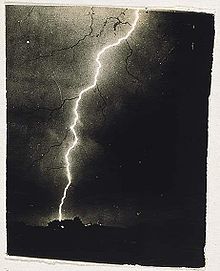
Revising vs. redrafting. Tinkering with what you wrote the first time vs. tossing all of it in the (virtual) bin because you realize you just plain whiffed on the first attempt. I think I’ve had a habit of resisting the latter. It’s harder, emotionally, for me to accept the fact that I invested time and energy and didn’t actually create something worth keeping. I like it much better when the lightning bolt flies straight and true and fries something with a really solid BOOM!

(picture courtesy of Wikipedia)

But it doesn’t always. And I’ve missed enough times now to be better at recognizing and accepting it. It’s also become one of the times when I remember what bands go through in the studio. I’ve never been in a band, but I’ve read enough articles and books to have a sense of how some of them work and how bumpy and long and curving the road to creating some of my favorite music was. Take after take after take. Experiment after experiment that seems great conceptually and then just lies there on the floor when tried. Songs that have no chorus. Choruses that have no verses. Bits of instrumentation that don’t work until combined, which happens sometimes by design and sometimes accidentally. Hours and hours of horrible music before the good stuff arrives, if it does at all.

But the seed idea, if it’s good enough, survives through all that.

Which is the same with stories. A good idea is a good idea. The problems come when trying to tell the story. And sometimes it takes a while.

I have a song/story like that now. The first take/draft was fun while I was doing it. There are some good images and moments, particularly in the second half of it. But it wound up…meh. And meh doesn’t get fixed by cutting a few paragraphs and rewriting a few more. So I’ve marched back into the studio. Changed a few effects pedals. Reworked some instrumentation. The red light is on.

Time for another take.

The Mirroring of Life and Fiction

This entry originally appeared on NEHW member Inanna Arthen’s blog.

Hey, how did that fiction get in my real life?

by Inanna Arthen

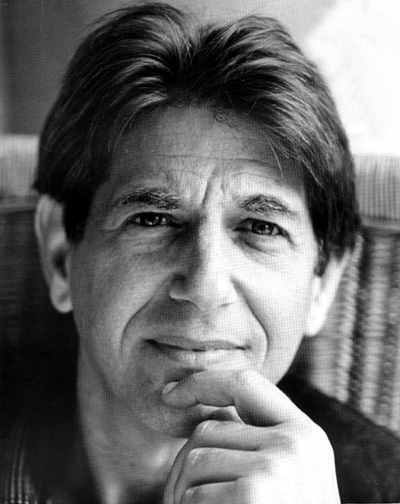
Peter Coyote (picture courtesy of texasgoldmovie.com)

There has always been a consistent pattern in my life whereby my fiction and my actual experiences echo and mirror each other in the weirdest ways.The first time I encountered actor Peter Coyote was in Steven Spielberg’s E.T., in which he played the mysterious scientist tracking the little alien. I’d never heard of Mr. Coyote before. But I confess: it was a case of crush at first sight. I’m not prone to fannish excesses–I won’t even collect autographs–so I didn’t look up Mr. Coyote’s biography or read gossip magazines or anything like that. Probably almost any other fan of his knew a lot more about his background than I did. But I loved him in E.T.,and I watched for him in other things. Many years ago, I went to a Red Cross blood drive to donate blood. I can no longer pinpoint exactly when this was, except that I’m fairly sure it was between 1982 and 1989, and I think the blood drive was in Acton, Massachusetts, where I lived in the 80s. It wouldn’t have been far from there, anyway. I had taken some film magazines with me to read – Premiere, I think. This was during my efforts to break into film acting locally. I even read Variety.After I finished with the donation and was resting, the way the Red Cross always makes you do so you won’t just jump up, barf and pass out, I was reading the magazines, and one of the blood drive volunteers came by see how I was doing. I said I was doing great, and then she picked up one of the magazines and said, “Oh, could I just look at these?” I said of course, and as she flipped through them she said, “I have a brother who’s an actor, and I always like to see if they say anything about him.”“Oh, really?” I said, pricking up my ears for a possible industry contact. “What’s his name?”

“Peter Coyote.”

I didn’t respond very politely, because to me, this was like saying she was related to Justin Bieber. It’s amazing that I didn’t jump up and pass out. “Oh, you can’t be, you’re making that up!” I said, or something like it. (In my defense, I was running a pint low at that moment.)

She looked a bit offended and said, “No, I’m not, why would I make that up? Most people have never heard of him.”

“Of course I’ve heard of him! He was in E.T.! He’s a doll!” (I’m sure they took a bit more than a pint, actually.)

She seemed rather pleased at that, so I hope I redeemed myself. “He is a doll,” she said, laughing.

That was the gist of our discussion – she had other donors to see to – and I didn’t even think to ask her own name, or look at her badge if she was wearing one. (I think it just said, “Volunteer” or whatever the term is they use.) I always wondered if she was really on the level. Why would a movie actor’s sister be volunteering at a blood drive in Acton, Massachusetts, fer gosh sakes?

But then, why wouldn’t she be? Actors come from all over the place. I lived in Acton and I was trying to be one.

But now it’s the 2010s and I’m trying to be a novelist. My third book, All the Shadows of the Rainbow, is set during the 1960s, plus a few years on either side. I lived through the 1960s, but just as I did with the 1950s and The Longer the Fall, I’ve been doing what I call “total immersion research.” I’m reading as much contemporary material as I can find, and watching raw film footage from that era, and generally working to enfold myself in the zeitgeist of the times, so I can, not just write it, but live it from the inside out.

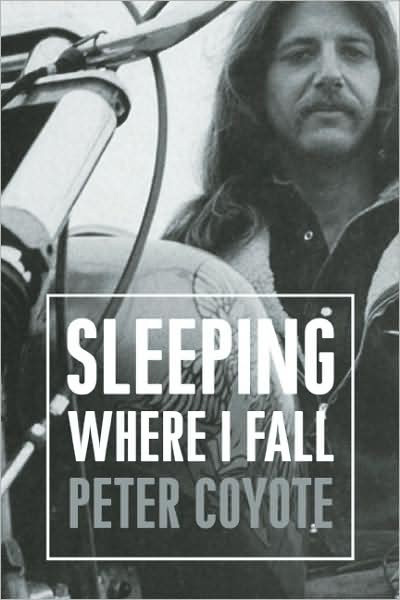
(courtesy of Peter Coyote's website)

By complete happenstance, I discovered that Peter Coyote had been deeply involved in the 1960s counterculture –he was a member of the Diggers and the Free Family, lived on several communes, worked with the San Francisco Mime Troupe, and was at the center of a lot of things that happened in those years. He’s written a memoir about it all, called Sleeping Where I Fall. I learned about it from a random reference on the Red Room website, which I rarely visit, but I just happened to click over there on the day when this book was mentioned. I instantly located a copy. I’ve been reading it for the past week or so.

I’ve been enthralled with the book, because I hadn’t known any of this about Peter Coyote’s personal history. It helps explain why, the instant I saw him onscreen, I just felt this “click.” I’ve been relating strongly to so much that he says in his book. I knew I liked him as an actor, but I never realized that he was what I think of as, “one of us.” He does have a younger sister, although he doesn’t give any clues as to her life or whereabouts. Sleeping Where I Fall was published in 1998, and I’d love to hear what Mr. Coyote thinks about the social and political developments of the last 13 years. I’d guess we share similar views.

Sleeping Where I Fall is going to be one of the most helpful resource books I read, and I’ve got a stack of them. But I’d be enjoying it even if I wasn’t writing All the Shadows of the Rainbow. To add yet more synchronicity to the mix, I found a documentary called Commune by running keyword searches on Blockbuster. When it arrived, it turned out to be about Black Bear Ranch, one of the Free Family communes that Peter Coyote lived with, and Mr. Coyote appears in the film.

It’s just strange how themes and people can weave in and out of our lives in violation of all probability or logic. Over and over again, I’ve been downright spooked by the way things that I’m writing tie into my real life in completely unexpected and inexplicable ways. It’s part of the reason that I’m one of those writers who feel that their fictional universes and characters have wills of their own. I don’t calculate and control the stories I tell, or the people who inhabit them. My characters tell me what’s going to happen and I simply record it … and sometimes, I feel like I’m living it with them. Every once in a while, I feel like I’m living out my fiction in the (so-called) real world.

You might think I’d be more nervous about blowing things up in my novels, in that case! But what good is art if it doesn’t shake you up sometimes?

Top 10 Reasons …To Self-Publish

This blog entry was found on Nathan Wrann’s website by David Price.

Top 10 Reasons …To Self-Publish

by Nathan Wrann

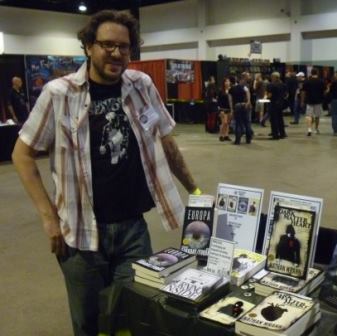
Nathan Wrann at Rock & Shock 2011 (photo by Kristi Petersen Schoonover)

First some housekeeping before I get into the meat of this blog:
**I recently started a tumblog for those times that I want to put a quick link, pic or vid out there. So make sure to follow me there. This wordpress blog will still be for my long-winded diatribes.
**There’s a Dark Matter Heart Facebook page now too.
**Dark Matter Heart is now available at iTunes for iPad etc: http://bit.ly/DMHitunes

Now, about that title up there. I had to shorten it. The full title of this blog is:

“Top 10 Reasons That I Decided To Self-Publish.”

Almost immediately after announcing Dalton Gang Press and DARK MATTER HEART the same question kept being asked of me: “Why did you decide to self-publish?” So I’ll use this forum to answer that question. Here are my top reasons why:

10) I’m lazy. I didn’t want to spend the amount of time and effort it would take to try to get an agent or publisher to like my work enough to work for me. The thought of formatting an e-book, designing a print book, designing a cover, and spending countless hours getting the word out to potential readers that the book actually exists is more appealing to me than writing a single query letter.

09) I’m impatient. I wrote my book. It’s done. There’s no way in hell I want to wait 2 or 3 years for a publisher to put it out. I’d rather take 2 to 3 years to build up sales for Dark Matter Heart.

08) I’m not good at asking permission. I’m not all that into asking (begging/pleading) someone (an agent/publisher) to read my work and publish it for me.
To lift a phrase from Jason Brubaker’s Filmmaking Stuff website, the old way of book publishing is “asking permission” for someone to put your book out for you. I don’t need to ask, I can just do. Why ask a half-dozen people (agents/publishers) to read your work when you can ask millions of people (customers/readers), simply by making it available and enticing them to read it.

07) I’m ‘hands on‘. I’d have trouble letting someone else design my covers, and do all that other stuff that publishers are supposed to do. That’s not to say that they would make a bad cover or that my covers are the best for my books, but that is to say, that I like to do that stuff. Like making promotional pins.

06) I’m greedy, possessive and I don’t like to share. It’s tough seeing my movie “Hunting Season” out there handled by someone else and only getting a cut of the proceeds. Do I appreciate Gravitas and Bosko Group’s efforts in getting the movie out there and available? Sure. Do they get it to an audience that I probably wouldn’t be able to reach? Sure. Does it suck that I can’t do whatever I want, whenever I want with my own movie? Hell yes. I want to be able to do whatever I want with my books. Like release a special edition of Dark Matter Heart that includes the original screenplay that it’s based on.

05) I don’t want to be pigeonholed. If you’ve seen my movies you know that I don’t do the same thing over and over. Yes, I will be putting out a second Cor Griffin Novel, but I’ve also got some hardcore horror stuff to put out, and some sci-fi to put out, and some dramatic stuff. I have a lot of different stories in a lot of different genres and styles. Signing with a publishing house would probably mean that I would have to stick with YA Paranormal. Without diversion. For at least a little time. Maybe that’s not true, but I believe it to be.

04) Here’s a quote from my pal Joshua Jabcuga: “You did it on your own terms. That’s art in its purest form, in my opinion. Fuck compromise.” I agree. Getting published means getting edited. Which means compromised for the purpose of marketability. Maybe that’s good for the book. Maybe that’s good for the story. I don’t know. All I know is that the book and story that is out there is exactly the one that I wanted to put out. Writing isn’t collaborative like filmmaking is (unless something is co-written). It doesn’t necessarily improve with more cooks in the kitchen.

03) Have you read J.A.Konrath’s blog? It’s a very convincing fantasy site about the gazillions of dollars a self-published author can make.

02) Have you read Dean Wesley Smith’s blog? It’s a realistic approach to the hard work and time that goes into building a self-publishing business.

01) To quote my pal Josh Jabcuga again: “Cor Griffin is proof-positive that the best investment you can make is an investment in yourself.” or as I’ve said in the past: “If I’m going to bet, I’m going to bet on myself.”

So that’s it. I’m sure these are the same reasons J.K. Rowling is self-publishing the Potter e-books. Let’s discuss.

NaNoNoNoNoNoMo

This article originally appeared on Harley Jane Kozak’s website.

NaNoNoNoNoNoMo By Harley Jane Kozak

Harley Jane Kozak (photo courtesy of Kozak's website)

This month William—yes, our William, or that William, or that *!@# William, as I now think of him—talked me into NaNoWriMo. It sounds like a new flavor of Haagen-Dasz, doesn’t it? Or an active volcano?
Don’t I wish.
NaNoWriMo is National Novel Writing Month. Where participants—and any idiot can join, William, it’s not like we’re special—vow to write 50,000 words by November 30. Which is about 170 manuscript pages.
“Make no mistake,” the NaNoWriMo website says. “You will be writing a lot of crap.”
I’ve got that part down.
After taking the plunge (why? why?) I was a day late, because William didn’t begin haranguing me until he’d gotten a head start, and also, it took me a day just to read the NaNoWriMo website. My strategy then became to not think FIFTY THOUSAND WORDS. Because I’m no Nora Roberts. Or James Patterson. (Not that James Patterson is James Patterson.) I kept that “You will be writing a lot of crap” motto close to my that “You will be writing a lot of crap” motto close to my heart and eked out 800 words by November 3. 800 different words, I might add, as you’re not supposed to write one word over and over fifty thousand times. But there’s no rule (aside from the rule of good writing) that prevents me from saying something is “very, very” and “really really” whatever it is. I do that very, very often.
Another rule: you must write a novel from scratch. No recycled prose. Some authors cheat, but I was raised by nuns, so I closed the file on my real novel-in-progress, started a new document, named it The Khan Man and just continued with where I’d left off. Chapter One begins mid-sentence and doesn’t even pretend to be a first chapter. William was all excited about me writing a Star Trek novel, but it’s not a Trekkie kind of Khan Man, it’s a Genghis kind of Khan Man, and that’s all I’m saying about that, because I know there are people out there trolling Dumpsters and blogs and even paper shredders for ideas to steal. And if, 18 months hence, the publishing world is overrun with novels featuring 11th century Mongols, I’ll know who to blame, William.
Another NaNoWriMo motto I mutter feverishly is “Fix it in December.” Nancie-the-Gun-Tart has money on me being unable to resist futzing. Sure, I’ve futzed, but my rule of revision is I can’t make it shorter. Still, rewriting is not time-efficient. The Word Count gods demand fresh paragraphs. So I’ve stopped reading what I’ve written. That’s right. I’ve no idea what’s in those 56 pages. And so if I die this month, and someone (William) tries to read my novel, I’ll just . . . die. Thus, I forbid it. If I go, all three computers, plus flash drive, are to be thrown onto the funeral pyre.
So here goes. Current word count:12,203. But it’s not my fault! I’ve been preparing to teach a seminar this weekend in Nebraska, and now my kids only have school half days this week and then NO SCHOOL next week, and Thanksgiving’s at my house and my sister’s wedding’s in Wisconsin, and what demented mind picked November for this?
The only way to pull it off is to throw grocery lists into my novel, along with my Thanksgiving Squash Soufflé Recipe, William’s home phone number, notes to my kids’ teachers, and drafts of the text for my Christmas cards, which need to get to the printer.
Why, just by cutting and pasting this blog into The Khan Man and calling it Chapter Twelve, I’ve bumped my word count up to 12,838.
Next week: I bump off William and steal his novel.

Check out Harley Jane Kozak’s website.

An Author’s Account of the Middletown Open Air Market

Rob Watts writes about his experience at the NEHW tent at the Middletown Open Air Market. This originally appeared on Watt’s website, http://robwattsonline.livejournal.com/.

The vendor tents on the grounds of the Wadsworth Mansion (photo by Maria Arakil)

As colder days are approaching in New England, I would say we lucked out by being able to take advantage of one of the few remaining weekends where the weather gods were smiling down upon us. Even though there was a slight chill in the air, locals turned out in impressive numbers for the Middletown Open Air Market in Middletown, Connecticut on Sunday afternoon. I, along with fellow members of the NEHW, spent the better part of the day behind our booth fielding questions from curious visitors about us, our books, the organization and anything else that crossed their minds.

NEHW member

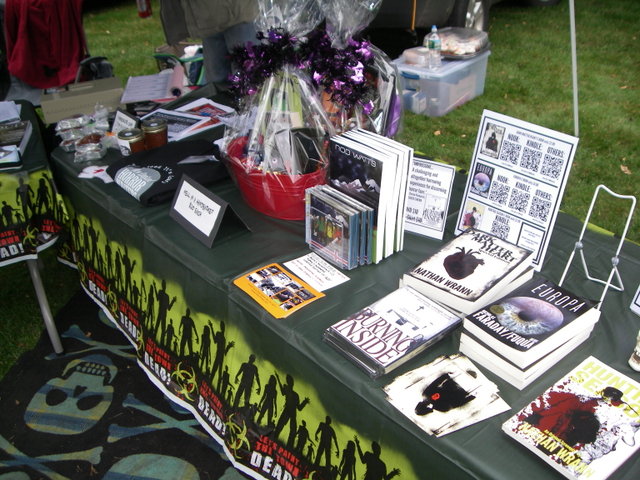
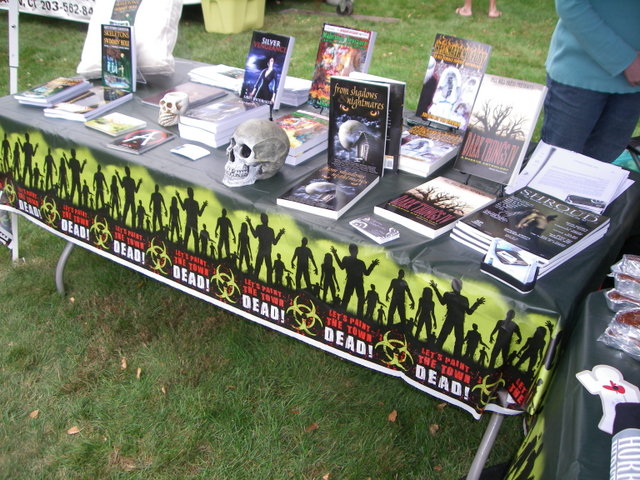
Table full of NEHW products (photo by Maria Arakil)

What made this a truly pleasurable event was the very laid-back atmosphere. It was held on the grounds of the beautiful Wadsworth Mansion, and the event itself was well organized which allowed for a positive flow throughout the day, for both the patrons and the vendors. Foot traffic around our booth was plentiful and with the beautiful display of books from the talented writers on hand, passersby were hard-pressed not to stop and browse through the displays. Camaraderie was the word-of-the-day, as each author did a great job of talking up their fellow writer’s books, not just their own (everyone at the table sold and signed books.) The team spirit and support throughout the booth made for great vibes and good fun during the afternoon. That’s something that can easily be lost and forgotten at events such as this.

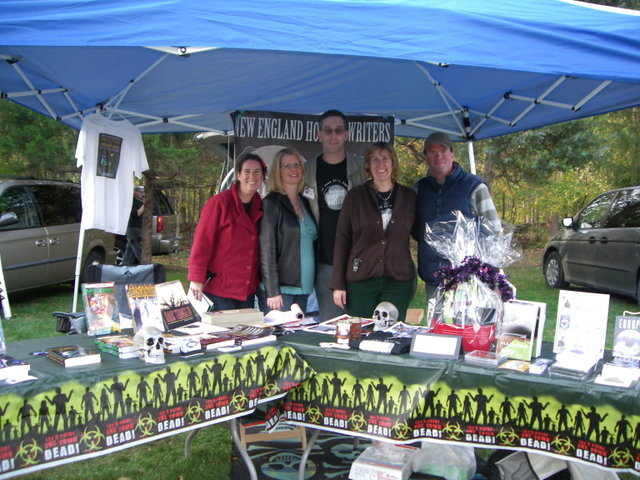
From left to right: Kristi Petersen Schoonover, Kasey Shoemaker, Jason Harris, Stacey Longo, and Rob Watts (photo by Maria Arakil)

So kudos to all involved…myself, Stacey Longo, Jason Harris, Kristi Petersen Schoonover, Kasey Shoemaker and Kurt Newton. It was definitely the perfect event to debut my new book and well worth the 2 1/2 hour drive to and from Boston 🙂

Watts will be making an upcoming appearance at the NEHW table at the Southcoast Toy and Comic show on Sunday, Nov. 6, from 10 a.m. to 4 p.m at the Seaport Inn and Marina in Fairhaven, MA. The location is 110 Middle Street. For more information, check out the website, www.southcoasttoyandcomic.com.