
Follow Maleficent on Twitter: @Maleficent for more news. According to the press release, “something big is coming.”
Maleficent will be released in theaters may 30.
Follow Maleficent on Twitter: @Maleficent for more news. According to the press release, “something big is coming.”
Maleficent will be released in theaters may 30.

Billed as a Pam Grier vehicle, Scream Blacula Scream (1973) probably had no intention of being as preposterous as it was. The story revolves around Prince Mamuwalde (William Marshall), also known as Blacula himself, revived from the dead by Willis Daniels (Richard Lawson), via voodoo magic. Blacula repays the favor by immediately turning Willis into a vampire and setting about his true agenda: finding a woman to fall in love with, antagonizing the cops, and making a whole bunch more vampires. He raises the suspicions of local ex-police officer Justin Carter (Don Mitchell), who ultimately hunts down and (spoiler alert!) with the help of voodoo princess Lisa Fortier (the aforementioned Grier), kills Blacula.
What makes this movie a trashterpiece is it’s unintentional hilarity, mostly due to the dated “jive talk” and the tendency, apparently, for African-American vampires to grow an unruly mass of hair on their face once they turn. Blacula sports two lightning-bolt sideburns that slash across his cheeks when he’s hunting; his apprentice, Willis, sprouts eyebrows resembling two wooly caterpillars mating in a briar patch. With references to ‘bread,’ ‘rags,’ and ‘dudes,’ the slang is dated and entertaining.
Grier is underutilized for the first twenty minutes or so, but hang in there: when she finally gets into the action, you’ll remember why she gets so much respect. She’s smokin’ hot and coolly confident. Yet she loses credibility points when she doesn’t recognize Blacula as Professor Mamuwalde at first, which is ridiculous. The only difference in his appearance is the rabid facial hair and a new, super-groovy black cape. Luckily for her, Blacula is immediately smitten, and he puts her under his protection against his rapidly growing clan of bloodsuckers.
Unfortunately for Blacula, Grier’s Lisa is already dating Justin Carter, and he doesn’t like the latest turn of events. However, a lousier shot with a crossbow you’ve never seen, and it’s up to Lisa to save the day.
Noteworthy in this flick, besides Ms. Grier, is William Marshall in the title role. His larger-than-life presence and baritone voice commands attention, and you’ll cheer when he announces not once, but twice: “The name is Blaa-cu-laa!” In a sea of porn mustaches and fabulous afros, Scream Blacula Scream is absolutely worth viewing. You dig?
As part of Earth Hour Blue, the revolutionary program launched by WWF’s Earth Hour, Foxx will support ‘Light Up A Village,’ a clean energy project from WWF-Uganda. The Amazing Spider-Man 2 actor is urging participants to go online and contribute funds to the ‘Light Up a Village’ crowdfunding project, which will provide solar lights and energy efficient mud stoves to families living around an area in Uganda that has come to be known as the “Earth Hour Forest.” Through the simple steps of supporting these vulnerable communities, the project aims to empower the locals to become the future protectors of the soon to be rehabilitated forest area.
Foxx was inspired by a passionate video from a small community of Super Heroes in Uganda who came together to show how the project could protect the newly planted trees by meeting the basic energy needs of the locals. The video explains how just one energy efficient mud stove can save up to 33 trees from being cut down annually and also save money by reducing a family’s expenses on firewood and charcoal.
“Earth Hour isn’t just about lights off – it’s about people across the world coming together throughout the year to join forces to improve the planet. If you haven’t yet, you need to get involved. Never underestimate your power. Never underestimate what you can do,” said Foxx.
In conjunction with the Earth Hour 2014 celebrations in Uganda, one million trees will be planted across the country by youths over the next year, with the majority earmarked to help fill the 2700 hectares of land marked out for the Earth Hour Forest initiative.
Another global solution-driven crowdfunding project on Earth Hour Blue for people to back is a Colombian conservation project for The Amazon that aims to protect endangered species like the jaguar, Andean bear, and the pink river dolphin, and work with indigenous communities to use and restore natural resources in a responsible way.
The crowdfunding project from WWF-Colombia, called “Lights OFF AmazON,” allows you to invest in the largest ecosystem and air, water and life producer on the planet by raising funds to implement infrastructure for sustainable industries for indigenous communities. Known as the “world’s lungs,” the Amazon is quickly disappearing with mining and ranching causing loss of species and pollution in the area.
Earth Hour in Australia has today launched a report, ‘Lights Out for the Reef,’ that highlights the latest scientific findings about climate change impacts on the Great Barrier Reef. The report confirms that urgent action to cut carbon pollution is needed for the sake of the reef’s survival.
“If we don’t act now, the effects of climate change on the Great Barrier Reef will be irreversible in a little more than a decade,” said Professor Ove Hoegh-Guldberg, one of the world’s leading experts on the Reef and author of the Oceans Chapter of the upcoming U.N. Intergovernmental Panel on Climate Change report.
The easiest thing you can do on the Earth Hour Blue platform is to give support via a quick social post to Instagram for Australia’s Great Barrier Reef. The Reef is under threat due to climate change and the recently approved government decision to develop a mega coal and gas port that would cause dredging and dumping of millions of tonnes of seabed and rock in its Marine Park.
Andy Ridley, CEO and Co-Founder for Earth Hour, announced today, “What we’re seeing is a massive group of Super Heroes around the world who are calling on support for incredible campaigns to address the environmental issues we’re facing in our daily lives. That’s why we built Earth Hour and Earth Hour Blue, so now it’s up to you to help bring together this global momentum to show what can be achieved when we use our power together.”
Earth Hour event activities will be amplified on islands across the world, with music becoming a major focus to inspire environmental action in the places on the forefront of climate change and sea level rise. Reggae artists in Jamaica will perform an acoustic concert for the second year running; and in Tahiti, 5000 people will gain entry to a massive acoustic concert at Stade Paster by handing in a piece of recyclable waste they’ve collected to avoid landfill.
Following the recent announcement that Spider-Man is the first Super Hero ambassador for Earth Hour, the global movement organised by WWF, the cast of The Amazing Spider-Man 2 will be on hand to help to switch off the lights across Singapore’s signature Marina Bay skyline on Saturday March 29, at 8.30 p.m. as part of WWF-Singapore’s flagship Earth Hour event.
Expanding on many sustainability efforts over the years, The Amazing Spider-Man 2 became the most eco-friendly tentpole production in the history of Columbia Pictures. These environmental efforts, on set and off, were supported at every level – from producers, studio executives, and cast and crew and began as soon as the film went into pre-production.
“I’m very proud of the fact that The Amazing Spider-Man 2 is entirely carbon-neutral. We made a commitment to be as eco-conscious as possible during production itself, when we took a special effort to think green and avoid waste; now, completing that process with Earth Hour Blue is a wonderful testament to what we can achieve when we all work together,” says Jeff Blake, Chairman, Worldwide Marketing and Distribution, Sony Pictures Entertainment.
“Use your power at earthhour.org, so you too can become a Super Hero like Spider-Man, Earth Hour’s Super Hero ambassador,” said Foxx.
 “Compass” to Be Included On Country Supergroups’s Forthcoming Studio Album This May
A new Rascal Flatts song entitled “Compass” will be featured in the upcoming Sony Pictures film Heaven Is For Real, which opens nationwide on Wednesday, April 16. The song will also be included on Flatts’ forthcoming Big Machine Records album, REWIND, available May 13. The album is now available for pre-order at www.RascalFlatts.com.
Based on the #1 New York Times best-selling book of the same name, Heaven Is For Real brings to the screen the true story of a small-town father who must find the courage and conviction to share his son’s extraordinary, life-changing experience with the world.
The film stars Academy Award nominee and Emmy award-winning actor Greg Kinnear as Todd Burpo and co-stars Kelly Reilly as Sonja Burpo, the real-life couple whose son Colton (newcomer Connor Corum) claims to have visited Heaven during a near death experience. Colton recounts the details of his amazing journey with childlike innocence and speaks matter-of-factly about things that happened before his birth … things he couldn’t possibly know. Todd and his family are then challenged to examine the meaning from this remarkable event.
As the best-selling Country vocal group of the past decade, Rascal Flatts (Gary LeVox, Jay DeMarcus and Joe Don Rooney) have sold over 22.5 million albums and over 28 million digital downloads since their musical debut in 2000. The Superstar group has delivered 14 #1 singles to the top of the charts and have the distinction of being one of only four acts during the SoundScan era to have seven consecutive studio albums debut at #1 on the Billboard Country Albums chart. Rascal Flatts have earned over 40 trophies from the ACAs, ACMs, AMAs, CMAs, People’s Choice Awards and more. In 2012, they reached a new career milestone with over 7 million concert tickets sold and will hit the road again this Spring with the REWIND Tour 2014. In anticipation of their next Big Machine Records album this summer, fans will get a taste of the fresh sound and rewind back in time with some previously released tunes on March 4 with the release of a Walmart exclusive EP. Their new single “Rewind” is currently rising in the Top 15.
For tour information, new music, and more, visit www.rascalflatts.com.
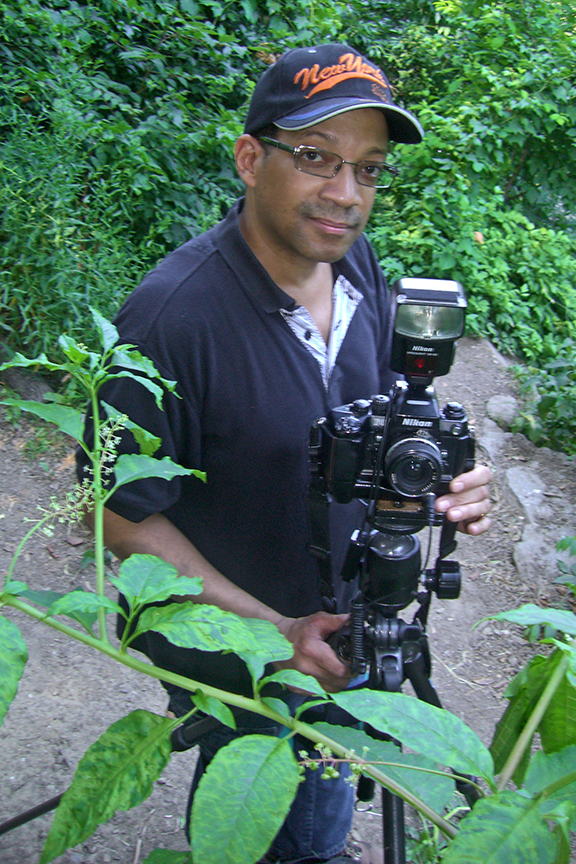
F.M. Kearney, an award-winning photographer, has written his first horror novel, They Only Come out at Night. Today, he’s talking about his career, New York Subways, and writing his first horror novel.
JH: How long have you been a fine art nature photographer?
FK: I’ve been a fine art nature photographer for about 20 years.
JH: What awards have you won for your photography?
FK: I’ve won numerous awards from various magazine and online photography competitions, ranging from First Place to Honorable Mentions.
JH: In the 80’s, you worked as a photojournalist for various New York City newspapers. What newspapers did you work for? What were you covering for them?
FK: I’ve worked for a number of local papers such as Town & Village, City Limits, The Phoenix, The City Sun and The New York Tribune. I mainly covered news pertaining to the particular neighborhood or borough that the paper serviced, but I also did hard news as well. I’ve done ride-alongs with FDNY and NYPD undercover units. I covered the first bombing of the World Trade Center in 1993. I’ve also photographed many famous people, such as Bill Cosby, Mayor David Dinkins, Fred Lebow (founder of the NYC Marathon) and several sports celebrities in one-on-one sit-down interviews.
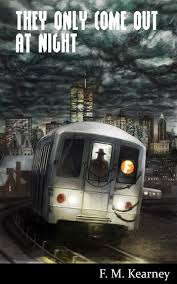 JH: What inspired you to write your first book and what was the idea behind it?
FK: I suppose my inspiration was two-fold. The first, and most obvious inspiration, came from my own personal experiences in the subway. As a photojournalist, I rode the subway all over town traveling to and from my assignments. I lived (and still do) in Manhattan, and up to that point, I had never really been to a lot of the stations in the outer boroughs, i.e., The Bronx, Brooklyn and Queens. I was really amazed at the total contrast in environments. You see, when most out-of-towners think of the NYC subway, images of Times Square and Grand Central Station will undoubtedly come to mind. These are huge, bustling hubs filled noisy activity and throngs of commuters almost 24/7. They have come to define what the NYC subway is all about. However, stations like these only account for a tiny percentage of the 463 stations of which the entire system is comprised. The vast majority of stations are nothing like that. In fact, I would even say that they are the polar opposites. Many of the stations in the outer boroughs (and even some in Manhattan) are very quiet, dimly lit and sparsely populated…and that’s in the middle of the day! I can remember being in certain areas of some stations that were sore mote and so creepy that I felt very uncomfortable and couldn’t wait to get out. Many of these areas have since been sealed off to the public…presumably because of the safety risks they posed. I couldn’t help but think that this would be a perfect location for a horror story. To be honest, I’m actually surprised that Hollywood doesn’t use the NYC subway as a regular setting for horror movies.
FK: I’ve always been a fan of everything horror related…books, movies, TV shows, you name it. But, I always found one flaw in almost every story. It seemed as though a lot of time and effort went into producing the chills and thrills throughout the story, but the ending was usually somewhat of a letdown. Of course, most horror stories are fiction, but it seemed as though no attempt at all was made to make the story even halfway believable. I wanted to write a story that made sense — a story that, albeit fictional, contained enough factual details one might wonder if it could actually happen.
JH: Why did you use the New York City subway as the main setting?
FK: Aside from the reasons already mentioned, I used the subway because of its familiarity to so many people — even if they don’t happen to live in a major city that has a subway. Most tourists will make riding the subway one of their “must-dos” while visiting. Very few people will ever find themselves in an actual haunted house or a foggy cemetery at midnight. The same can’t be said for a subway. I think the chills are far more intense when you read about scary things happening in a more familiar and commonplace environment. After having read the book, a lot of people have told me that they will never again ride the subway alone at night.
JH: What type of research did you do for the book?
FK: I visited every major location I wrote about with a digital tape recorder. I recorded everything I saw, heard, smelled and felt…things that I (and probably most people) would never even give a second thought. This greatly helped to create atmosphere. I also researched news articles about local crimes committed in the area, and spoke with the NYPD about specific rescue procedures in the subway. As far as the supernatural aspects of the book are concerned, I went online and researched actual case studies and terminology. Lastly, the dates in the book are very important. I went to the library to insure that the days of the week and the newspaper articles I mentioned were correct.
JH: How long did it take you to write the book?
FK: Since I had no deadlines and was basically just writing for fun, I’d say it took about 10 years from start to finish.
JH: What’s been the reaction of some of the people who have read the book?
FK: Chapter One, by far, has received the biggest reaction! Many of my friends have told me that it was the most intense thing that they’ve ever read. Although they thoroughly enjoyed it, I realized that it might be a little too intense for the average reader. Before releasing the book to the public, I considerably watered-down this chapter from its original version. Even so, a number of reviewers have commented on just how violent this chapter is, and a few were even unable to get past it. Make no mistake, Chapter One is not for the faint of heart, but it is necessary to the story as a whole.
JH: Are there any other genres, you want to write in?
FK: As a nature photographer, I’ve considered putting out a non-fiction book about nature photography at some point in the future.
JH: Who is your favorite author/authors and what is it that really strikes you about their work?
FK: I like many of the works from Dean Koontz and Stephen King. I think King’s books are much better than his movies — many of which leave me scratching my head. These writers have a way of painting a picture with words that tends to put the reader right in the scene. I tried to do that with my book as well.
JH: What books have most influenced your life the most?
FK: I don’t know if I can point to any one book of fiction. However, I’ve read many photography books that greatly influence the way I shoot.
JH: Are you working on a second novel?
FK: Not at this time. Many have suggested a sequel to They Only Come Out at Night. Although it definitely lends itself to a sequel, I can’t see myself writing one. Unless you’re talking about an action series, most sequels rarely live up to the original.
JH: What are your current projects?
FK: I’m currently focusing more on my photography and photography articles.
CHERRYTREE / INTERSCOPE RECORDING ARTIST ELLIE GOULDING IS THE “MUSICAL VOICE” OF DIVERGENT WITH HER MUSIC FEATURED THROUGHOUT THE FILM AND BRAND NEW SONG, “BEATING HEART,” ON THE SOUNDTRACK
ALBUM ALSO FEATURES BRAND NEW MUSIC FROM ZEDD, SNOW PATROL, TAME IMPALA AND KENDRICK LAMAR, M83, A$AP ROCKYFEATURING GESAFFELSTEIN, PRETTY LIGHTS, SKRILLEX AND PIA MIA
ITUNES PRE-ORDER BEGINS TODAY TUESDAY, FEBRUARY 25th
Interscope Records will partner with Summit Entertainment, a LIONSGATE company, to release the Original Motion Picture Soundtrack to the action adventure film Divergent on March 11th, as well as the Original Score on March 18th. The soundtrack features a brand new song by multi-platinum British singer/songwriter Ellie Goulding entitled “Beating Heart” as well as songs from Goulding’s sophomore album, Halcyon. Goulding will also contribute vocals to the film’s score composed by Grammy-nominated and multi-platinum electronic artist Junkie XL and executive produced by Grammy and Oscar-winning composer Hans Zimmer (The Dark Knight, Inception). Pre-order on iTunes today: iTunes.com/DivergentSoundtrack.
“We started working with songs from Ellie Goulding’s album Halcyon and soon found that the texture of her music and the tone of her voice perfectly matched our film,” says Divergent director Neil Burger. “In many ways Ellie has become the inner voice of our heroine Tris.”
In addition to “Beating Heart,” the soundtrack album features music byZedd (the track “Find You,” featuring Matthew Koma and Miriam Bryant) and brand new songs from Snow Patrol, Tame Impala and Kendrick Lamar, M83, A$AP Rocky featuring Gesaffelstein, Pretty Lights, Skrillex and Pia Mia featuring Chance The Rapper. Songs from the Original Motion Picture Soundtrack are prominently featured in the film.
North American fans can pre-order both Standard and Deluxe editions ofDivergent: Original Motion Picture Soundtrack on iTunes today Tuesday, February 25th. Those who pre-order either the Standard or Deluxe Edition (which includes additional songs) will receive instant downloads of Goulding’s “Beating Heart” and Zedd’s “Find You.”(iTunes.com/DivergentSoundtrack)
Target is the exclusive retailer offering the deluxe version of the soundtrack on physical CD, with pre-orders now available on Target.com.Pre-order bundle options available at www.divergentsoundtrack.com include the soundtrack on 12″ picture disc vinyl as well as a pre-order exclusive poster with the names of fans who order.
The film, which is based on the best-selling novel Divergent by Veronica Roth and hailed as the most highly anticipated movie of 2014 by social media research firm Fizziology, will be released in theaters and on IMAX® screens nationwide on March 21st. Divergent is the first installment in the Divergent Trilogy, which were the top three books onUSA Today’s best-seller list in 2013. The story is set in a world where people are divided into distinct factions based on human virtues. Tris Prior (Shailene Woodley) is warned she is Divergent and will never fit into any one group. When she discovers a conspiracy by a faction leader (Kate Winslet) to destroy all Divergents, Tris must learn to trust in the mysterious Four (Theo James) and together they must find out what makes being Divergent so dangerous before it’s too late.
Divergent is directed by Neil Burger from a screenplay by Evan Daugherty and Vanessa Taylor. The film stars Shailene Woodley, Theo James, Ashley Judd, Jai Cortney, Ray Stevenson, Zoё Kravitz, Miles Teller, Tony Goldwyn, Ansel Elgort, Maggie Q, Mekhi Phifer, and Kate Winslet.
The track-listing for Divergent: Original Motion Picture Soundtrack is as follows:
“Find You” — Zedd featuring Matthew Koma and Miriam Bryant
“Beating Heart” — Ellie Goulding
“Fight For You” — Pia Mia featuring Chance The Rapper
“Hanging On” (I See MONSTAS Remix) — Ellie Goulding
“I Won’t Let You Go” — Snow Patrol
“Run Boy Run” — Woodkid
“Backwards” —Tame Impala and Kendrick Lamar
“I Need You” — M83
“In Distress” — A$AP Rocky featuring Gesaffelstein
“Lost And Found” (ODESZA Remix) — Pretty Lights
“Stranger” — Skrillex with KillaGraham from Milo & Otis and Sam Dew
“Dream Machines” — Big Deal
“Dead in the Water” — Ellie Goulding
Also included on Deluxe Edition:
“I Love You” — Woodkid
“Waiting Game” — Banks
“My Blood” — Ellie Goulding
For more about Divergent, visit:
https://www.facebook.com/Divergent
http://www.pinterest.com/divergent/

Compared to other genres, horse racing video games just aren’t as popular as titles like Street Fighter or the Madden NFL series. It has its fair share of the market, to be sure; but in a billion-dollar industry like the video game business, selling a few hundred thousand copies just doesn’t cut it.
This isn’t to say that there aren’t any quality horse racing games. In fact, despite having only two prominent publishers – Tecmo and Koei; which later on merged to become Tecmo Koei, interestingly – most of the games released have been very entertaining.
A big part of this appeal comes by way of how closely these titles’ gameplay mechanics stick to the real thing. This, of course, includes the betting aspect of the sport, which has always been an integral part of the whole horse racing experience. Given the level of realism of current generation of video games, it’s to be expected that horse racing titles should only follow suit. As authentic as the breeding and racing portions of games like Champion Jockey feel, a lot of gamers derive their fun from casting their bets on their favored horses as well.

The advent of online betting just presents more interesting possibilities vis-à-vis video game integration. Betfair has comprehensive coverage of the online wagering aspects of the Cheltenham Festival annual races. A joint effort with the aforementioned Tecmo Koei to organize pre-race fantasy matches using the game company’s latest titles will no doubt generate a lot of additional hype before the real races begin. Using up-to-date stats algorithms to simulate the performance tendencies of the real-life horses and their jockeys, this digital recreation preview could allow betting aficionados to hone their intuition and give them further analytical insight for the actual races.
Something close to this has in fact already been done. In a move straight out of the last Rocky movie, online gaming company Horse Racing Simulation LLC released a video that had recently retired American racehorse Zenyatta go up against some of the very best thoroughbreds in history, including the likes of 1948 Triple Crown champ Citation and Great Depression-era icon of hope Seabiscuit.
Using the company’s proprietary advanced AI, the simulation sought to answer the question of which horse would come out on top with all of them at their peak. Expectedly, Zenyatta’s propensity to hold back and gather energy for a final speed burst ultimately led to him winning the match.
Race analysts can argue all they want with the result, but that doesn’t take away from the fact that the way each digital horse race stayed true to how they actually did in real life. For all we know, a repeat match with a different set of variables such as weather conditions and whatnot might wield different a result.
And that in itself is the fun that horse race betting represents. It’s a game of numbers and probability factors; something which a fairly advanced computer AI is all too familiar with. Transitioning this level of AI sophistication into full-fledged pre-race virtual betting sessions seems like a no-brainer. Only time will tell, though, if something like this eventually does come to fruition.

Poultrygeist: Night of the Chicken Dead is vulgar, politically incorrect, and completely unapologetic about it. The premise of this ridiculous romp is that a fried chicken franchise, American Chicken Bunker, has been built on top of a sacred Native American burial ground in Tromaville. The site is also chock full of toxic waste (this is, after all, the same town that birthed the Toxic Avenger). Our hero is Arbie (Jason Yachanin), who discovers his high school sweetheart, Wendy (portrayed by Kate Graham) has turned gay while away at college, and is now protesting the new chicken franchise in Tromaville. Arbie, in turn, gets a job at the restaurant to spite her. As Arbie sings (this movie is also a quasi-musical): “Revenge is a dish best served fried.”
Things quickly go south as patrons of the restaurant get sick and eventually turn into giant mutant chickens from eating the toxic poultry. There is one particular bathroom scene that is so disgusting, repulsive, and full of excrement, that teenage boys everywhere will be cheering.
The climax of the movie shows patrons being murdered in gratuitously gory ways including sliced to death by deli slicer, impaled by chicken nuggets, and a guy’s legs being ripped apart like a wishbone. Arbie, fellow employee Hummus, Wendy, and a random little girl are able to fight off the chickens with alcohol, but it is Hummus who sacrifices herself so the others can escape.
While silly and spoofy, this movie is entertaining, too. Highlights include a cameo by Ron Jeremy, and nods to films like Jaws, The Exorcist, and Alien. Although campy, this is also a commentary on corporate greed: how chain franchises and large corporations are putting mom-n-pop stores out of business, contributing to child obesity in the country, and basically dumbing down America. Yes, this could be a serious introspection on the heartlessness and cold greed of corporate America, if not for all of the topless girls and “choking chicken” references.
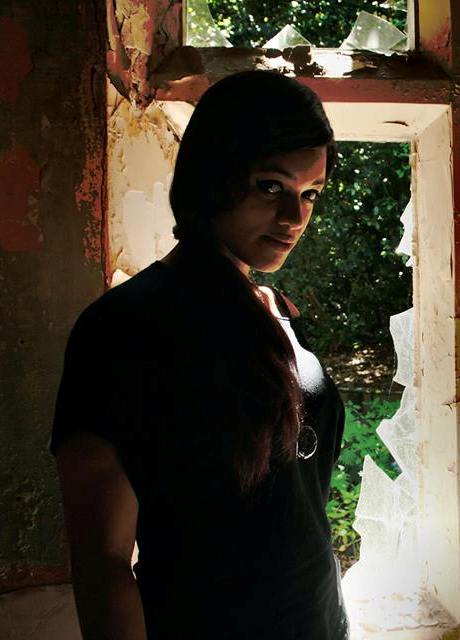
Catherine Bell
JH: Your adventure in writing started in 2001. How did that come about?
CB: I had just started secondary school at age 11, and had always enjoyed reading in my spare time. In English classes, my passion for writing began to flourish, partially because of support from teachers, as well as at home, so it became something I enjoyed and felt confident in pursuing.
JH: The Cathy Stories came about from your time in school. Can you tell my readers how that came about, what’s it about and how long this work is?
CB: This book still makes me smile now, mostly because I get very nostalgic when talking about it. It was a fun piece to write, probably only 50 or so pages long, and was all about “Cathy” the main character, and her friends, who battled evil demons while having to crack puzzles and codes. It was all based in at school, too, so the mentors in the book were all based on teachers. It was a comedy, and it was my first attempt at writing for a particular audience.
JH: How did the opening of your first book, Whistler’s Travels, come about being published by Manchester Metropolitan University and why only the opening?
CB: This was a piece I submitted as part of a writing competition, and so I got it published that way. At that point I had only written the opening, so it was a good opportunity to test the water, and see if it was something worth following up [on].
JH: What inspired you to write your first book and what was the idea behind it?
CB: My first serious completed work was Eden from the Ashes. With it being my first piece, looking back I feel it is quite disjointed, so I will definitely be undertaking a huge re-edit before it comes into the public domain. It was a really interesting project for me, as it allowed me to experiment and really understand the freedom of writing. I finished that book when I was around 18, so it will be good for me to have a look back, and try and develop some of the ideas behind it.
I was inspired to write it as I had suffered hugely from bullying, and as, at the time, I was a very shy, reserved person, I had no real outlet to express how I was feeling. This is where writing became a huge emotional support for me, and continues to help me alleviate stress as well as being a very enjoyable pastime.
JH: The title for Whistler’s Travels was changed to Eden from the Ashes? What is it about and what was the reason behind the name change?
CB: The book itself is a fantasy fiction, focused on a socially isolated character, who decides to leave the village he has lived in all his life, and break away into the unknown. The story is about him developing as a person, learning more about his interests and limits, and understanding how his interests and habits had been formed by his environment, not be his personal choice.
The title Whistlers Travels was never a serious title for me. It came about because I needed a name to reference my work, and that was a simple one. It kind of stuck, however, but once it was finished, I wasnt happy with that as a final title. It didn’t fit well with the storyline as it had developed, and didn’t really give an insight as to the meaningfulness of the book to me. Eden from the Ashes is much more fitting.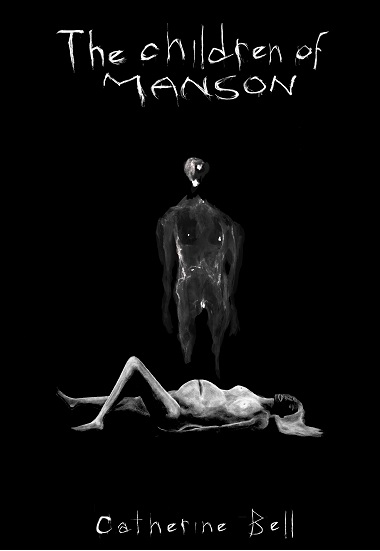
JH: Your second work Nomed was also re-named. It changed to Apocalypse 2012, then to Man Down, then to The Children of Manson. What’s this work about and is there a story behind all the different title changes?
CB: The Children of Manson is a horror [story], which ties together terror, gore, and psychosis, with a subtle political undertone. It was a way of expressing some of my views about some real life issues as an undertone, while the predominant storyline was horror. It centres around Dee, a student who seeks comfort from her isolation at University from her flatmate Lily, and their friendship quickly blossoms into something more.
Unbeknownst to Dee, a sinister figure is watching her closely. He grows exceedingly paranoid as he tracks her movements over time, as he fears she knows about his own dark secrets. Underneath the home in which he is cared for, a maze of passageways are home to a cult following, vigilant in their tasks under Lloyd’s watchful eye.
Their aim? To prevent pregnancy, destroy fertility, and if necessary, will go to the very extreme to achieve their goals.
The reason for the many name changes was that the book underwent a huge re-edit, where the plot line massively changed. For this reason the first title was no longer relevant. I re-named it Man Down to continue the story, but again, wasn’t entirely happy with this new title either. It was when I decided on the cult following as a major part of the storyline that I became set on The Children of Manson. There are also other subtleties in the storyline , for example the “Family” reference, that helped me decide that this was a most fitting title.
JH: You published The Sick & Sombre Tales of Sinister Town-Part 1 this past October. This was another work of yours to sustain a name change. Why the name change and why break it up into different parts? And how many parts will there be?
CB: The name change was to allow myself some flexibility as to the content. My focus for Part 1 was to give some background as to the characters and the general environment of Sinister Town. Initially there were 7 short stories, but I felt some were better placed in Part 2, so I needed to change the title to reflect that.
At the moment, I plan there to be 3 parts. Part 2 is well on its way to completion, and I’m already building some ideas for Part 3. Whether there will be further parts after that … we will just have to wait and see.
JH: What are the different styles and what’s the impetus behind this series?
CB: I’m planning for the three parts to have three different focuses, i.e. the first one was about building up the actual characters who live in Sinister Town, so the next part will [focus] instead on an invader to the town, and the defense mechanisms the town uses to keep intruders out.
JH: Do you have a specific writing style?
CB: I think my writing style is quite distinguished, in that it is probably recognizable, but in saying that, I try to experiment with different styles depending on what I’m writing, and the type of atmosphere I’m trying to create.
JH: What genres do you write in?
CB: I write predominantly horror, though I am thinking of expanding in to fantasy/comedy, as I have bits and bobs still in the planning stages.
JH: Who is your favorite author/authors and what is it that really strikes you about their work?
CB: My favorite author is Stephen King; my favorite work by him was a joint piece with Peter Straub, called Black House. It is to this day the best book I have ever read in terms of fear. I remember vividly being too scared to turn the page, and even flipping forward a couple of pages first to steel myself into going back to read it.
That is what inspired me to write horror myself. I want to instill that feeling in others; I feel that the images the imagination conjures are so much more powerful than those fed to us by films.
JH: What books have most influenced your life the most?
CB: R.L. Stine deserves a lot of the credit for introducing me to the horror genre as a child (though I enjoyed all sorts of non-horror titles as well), as I would devour his books every evening after school.
Through my teenage years I did read some of R. L. Stine’s more mature works, but quickly became enthralled by Stephen King, and have never looked back. In fact, I have two of his books by my bedside as I type this!
JH: What are your current projects?
CB: I am currently working on a new horror [story], called The Black Sheep. I am looking to create a piece that explores the deep emotional effects of bullying, and the characters in this book play out a physical expression of those effects.
JH: Where can readers find your work and find out more about you?
Please have a look at my website to find out more. You can also find me on Twitter: @TheCathyStories. On Facebook. I am also on Google Plus or on Amazon.
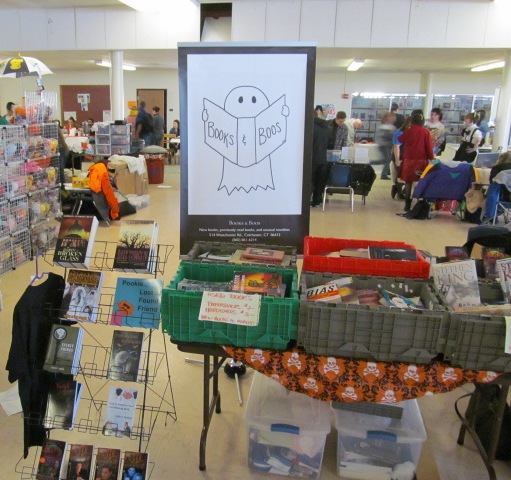
The Books and Boos banner at Queen City Kamikaze.

From left to right: Dale T. Phillips, Stacey Longo, T.T. Zuma, and Mark Wholley behind the Books and Boos tables.


Authors Gordon Bean and Stacey Longo on the Horror in the Movies panel.


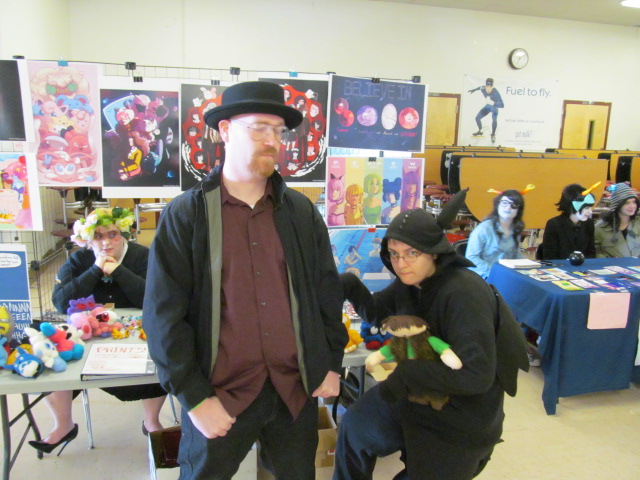


Authors Dale T. Phillips, Stacey Longo, and Vlad Vaslyn on the Where Authors Get Their Ideas panel.


Authors Gordon Bean and Dale T. Phillips talking with a visitor to the Books and Boos table.


Author Stacey Longo with the Joker.


The Anthocon table at Queen City Kamikaze.


