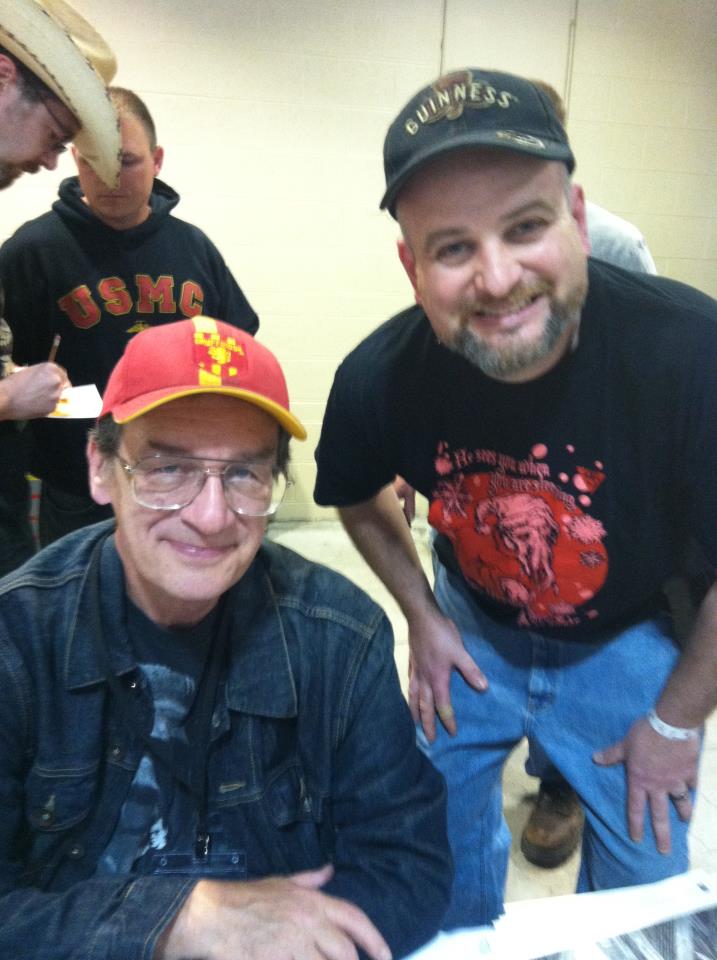
Author Robert J. Duperre Talks about Zombies and Writing

Author Robert J. Duperre Talks about Zombies and Writing

by Jason Harris

Zombies are still lumbering around in pop culture after since George Romero’s Night of the Living Dead arrived on the silver screen in 1968. Romero is considered to be the father of all zombie movies. They can even be seen on the small screen thanks to the AMC series, The Walking Dead. The Resident Evil zombies are still finding success on the big screen and the next incarnation, Resident Evil: Retribution, arrives in theaters this year.

Zombies are so popular that a London-based game developer, Six to Start, has created an app that has merged fitness and zombies, “Zombies, Run!”

Author and New England Horror Writer member Robert J. Duperre is continuing to give zombie fans their fix with his four-book series The Rift, which opens with a zombie apocalypse triggered by an evil buried deep in a Mayan ruin in the first volume, The Fall, the three books that follow are Dead of Winter, Death Springs Eternal, and The Summer Son, which is due out in July.
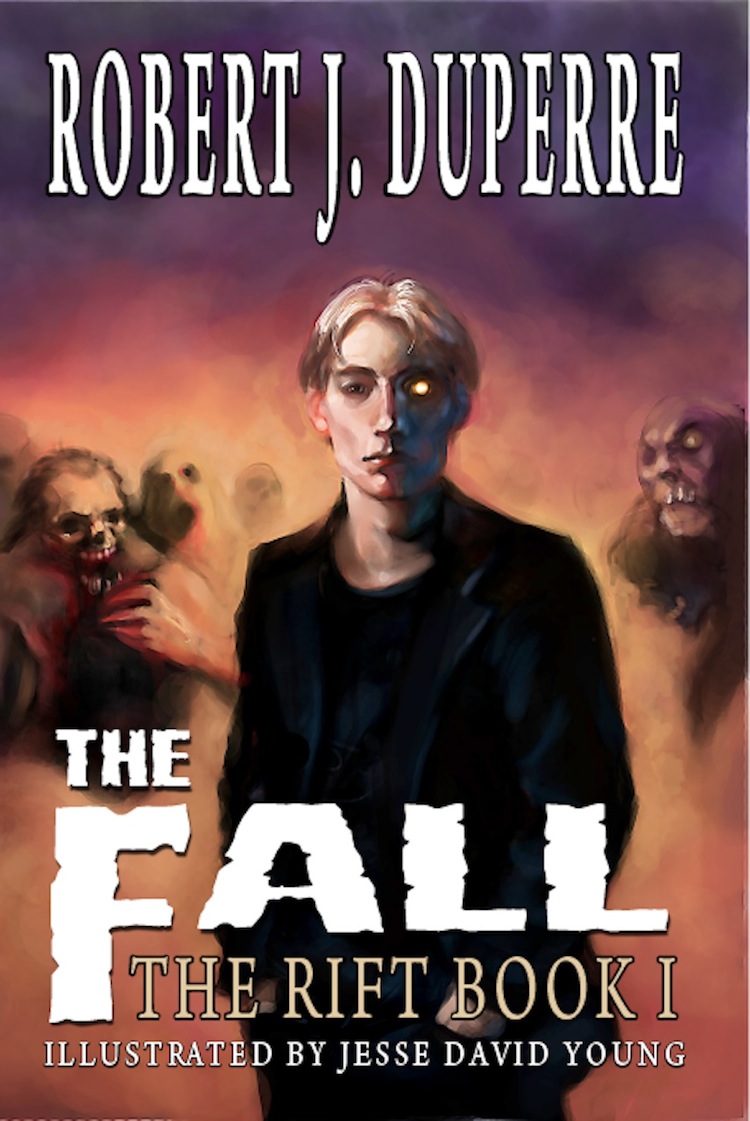
The Fall: The Rift Book I

The Fall: The Rift Book I

In his series, the origin of the apocalypse is the Mayan Ruins, which he chose because of the fact “the Mayans were so advanced, not only for their time, but for all time.” Even with their advancement, Duperre considers the Mayans as “somewhat primitive.”

“In that way their culture sort of mirrors our own—complex and sophisticated, yet clinging to some rather archaic ideals.  So what if the same mysterious events that brought down their culture brought down our own?  Poetic justice, right?  Yeah, a bit of a stretch I know, but trust me, it works in my head.”

The author wasn’t planning on The Rift being a series. He thought it would be a simple zombie tale.

“It was supposed to be a humorous novella.”

Once it was over 400,000 words, he decided to split it into four books and completely rewrote it.

“The story had already been sectioned off into seasons, so I figured that was as good an idea as any to act as natural segues between volumes.  The only problem is the first three books all end in cliffhangers because of this, which I’m sure can be a little irritating to readers.”

Duperre thinks there are “a couple of layers” to the zombie-apocalyptic trend.

“For me, [zombies are] the perfect tool for storytelling—they represent humanity in its most primal form, in many ways reflecting conventional and homogametic nature of our culture,” Duperre said. “Literature in the zombie genre forces a return to the basics by the survivors, in effect exploring that which made them human in the first place.”

He assumes the zombie-apocalyptic trend is popular because people are “obsessed with being scared, and nothing is as frightening as the prospect of the end-of-times.”

“A zombie apocalypse is, strangely enough, the most convenient and readily available outlet for that kind of fantastic exploration.”

He has never seen this “particular scenario play out before,” which he figured was a good point in his favor. This allowed him “to move away from traditional zombie lore and present some different scenarios and outcomes.”

Duperre considers his endeavor with The Rift series risky and knows he has annoyed more than one reader by straying from the typical zombie formula.

“I’m happier doing things my own way than sticking to a script someone else wrote.”

There are some prevalent motifs running through Duperre’s series such as isolation, personal tragedy, and social injustice, which he considers “the single greatest theme” that runs through all four volumes. The social injustices that he tackles are the treatment of women and the complexities of race relations.

“At heart, I’ve always considered myself a progressive and a bit of a social activist, and this series allows me to explore these themes in a no-holds-barred manner, sometimes disturbing manner.”

Duperre’s work has been influenced by a number of writers throughout his career including Clive Barker, John Skipp, Stephen King, and George Romero, whose original Dead trilogy is “the single biggest influence” in his life.

“It was the first time I realized that monsters could be used as metaphors, and I ran with it,” Duperre said. “Clive Barker has also been a huge influence, in particular his fascination with the concept of worlds within worlds. Though you certainly can’t write a good book without talent, the style any writer develops is always dependent on the authors they’ve read and loved over the span of their lifetimes.  I’m no different, and to all the writers who’ve spurred me on over the years, I say a great big thank you.”

The Rift series is a collaboration between Duperre and fellow NEHW member, artist Jesse David Young, who has done all the series’ covers.

They had discussed as far back as 2006 about Young doing illustrations for him, but nothing came of it. Three years later in the summer of 2009, Young called about working on a comic book they could pitch to DC comics. Duperre was working on final rewrites on the first book in the series and asked Young if he wanted to do what they talked about so long ago, he said.

“We’ve been working together ever since, and it’s been one of the most rewarding experiences of my life.  It’s nice to have a partner to share in the stress, after all.  I wouldn’t have been able to get as much work done as I have without him by my side.”

His series is self-published, which allows Duperre to take risks, but not something he couldn’t have done through a traditional publishing company, he said. He doesn’t hold any “real love for self-publishing” since “it’s difficult and time-consuming.”

Duperre considers self-publishing “a means to an end” and doesn’t think he would be where he is today without it. He thinks the changing publishing world is “exciting and dangerous at the same time.”

“For the release of a book to be as simple as a click of a mouse, the possibilities are endless for success and failure. I experienced a bit of both.”

Duperre rushed The Fall to publication which resulted in the release of a poorly edited book, he said. It was full of plot holes, which he had to go back and fix post-publication. The same mistakes happened with Dead of Winter, but to “a lesser extent.”

“Thankfully for me, my sales didn’t really start to take off until after they were fixed which is a very good thing.  It could have ruined my reputation something fierce had the lesser-quality work taken center stage.”

He considers this a huge problem since there are a lot of books on the market that are not good. These books are lacking “plot and characterization, are poorly executed, or simply put out there by someone who doesn’t have a clue about how to write.”

These problems have created a stigma for being a self-published author “that is rightly deserved.” This stigma has even put more pressure on authors like Duperre, he said.

“I need to work extra hard to make sure the work we put out is of professional quality, is edited, and cohesive.  It’s a good thing I enjoy doing this, otherwise I might have walked away by now.”

Along with writing his zombie series, Duperre has published two anthologies, The Gate: 13 Dark and Odd Tales and The Gate 2: 13 Tales of Isolation and Despair. The first one was released in November 2010 and contains stories by him and a few writer friends. Each story contains an illustration by Young.

“After [the first anthology was released], I thought it would be a novel idea if the anthology became a yearly/bi-yearly event.”

The Gate’s sequel was released this past February. It contains stories from K. Allen Wood, David Dalglish, Steven Pirie and Mercedes Yardley.
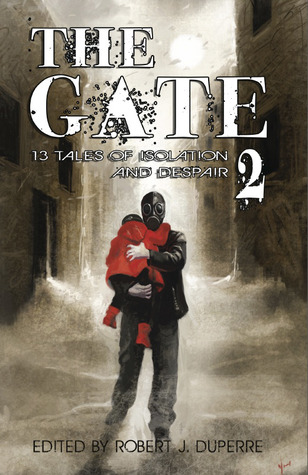
The Gate 2: 13 Tales of Isolation and Despair

The Gate 2: 13 Tales of Isolation and Despair

He wants to publish a third volume next February entitled The Gate 3: 13 Creature Features.

“The goal is to have it be an actual paying anthology this time around, featuring some of my old-time and new favorites in horror and dark fantasy. I’m not entirely certain if I’ll be able to pull it off given the state of finances at the moment, but I’m dedicated to it, and I’ve found over the years that if I’m dedicated to something, I somehow find a way to pull it off.”

Duperre has been writing since childhood, he has been “obsessed” with it from “the process, the imagination involved, [and] the outcome.”

 “My high school term papers were behemoths, and I decided that my life’s goal would be to teach English and write novels for a living.”

Life did get in his way back in his early to mid twenties until Jessica, his wife, told him to pick up his pen again. There would be “a gigantic hole” in his soul if he wasn’t writing, he said.

He began a website, Journal of Always, back in 2009 with the idea he would blog about what he thought was important, what bothered him, and maybe even discuss his own experiences during the writing process. It didn’t happen that way though, he said.

“I ignored it for far too long and eventually it was all but forgotten. Then, halfway through 2010, I decided I would start reading my fellow self-published authors and use the JOA as an outlet for reviews.”

The website has progressed nicely for the past two years until the past few months of this year when he had deadlines looming on other projects.

“I haven’t posted a review since February, even though I have a backlog of more than fifteen to write.”

He plans on adding more reviews soon.

Duperre’s advice to up and coming writers is the same as what other writers like King has told people. It is too read and write. He also goes farther and adds a person has to edit and rewrite too. A writer also has to “be open to criticism.”

“The only way any artist improves is by trial and error.  There is no first draft of any book that is fit for publishing.  Make sure you realize that and learn everything you can before putting yourself out there.”

Here is Duperre’s bibliography:

April 2010 – The Fall: The Rift Book I (novel)
July 2010 – Feeding the Passion (short story), Darker Magazine #2
November 2010 – The Gate: 13 Dark and Odd Tales (collection)
November 2010 – The One That Matters (short story), A Land of Ash (edited by David Dalglish)
December 2010 – Dead of Winter: The Rift Book II (novel)
June 2011 – Silas (novel)
September 2011 –  Chorus (short story), Dark Tomorrows, Second Edition (edited by J.L. Bryan)
October 2011 – 39 Days (short story), Unnatural Disasters (edited by Daniel Pyle)
December 2011 – One Good Turn (short story), Shock Totem Holiday Issue
January 2012 – Death Springs Eternal: The Rift Book III (novel)
February 2012 – The Gate: 13 Tales of Isolation and Despair (collection)

Duperre will be at the NEHW booth at the South Windsor Strawberry Fest on June 16 in Nevers Road Park , South Windsor, CT. from 9 a.m to 5:30 p.m.
Chiller Theatre: Then and Now

Chiller Theatre: Then and Now

By Nick Cato

Although I’ve been going to horror film conventions since 1985, it wasn’t until 1991 when I attended my first Chiller Theatre expo, which at the time was called Son of Horrorthon.  I’m guessing Horrorthon had been the name of an earlier version?  Either way, back then the convention was held in Cherry Hill, NJ, at a small but accommodating campus.  Then they began to grow, and eventually moved to a couple of hotels in Secaucus, right across the highway from Giants Stadium, where they held court until about five years ago, when they wound up in the Hilton Parsippany in Parsippany, NJ, where I’ve just returned from their “2012 Spring Spooktacular.”  Chiller runs two conventions a year, in April and again the weekend closest to Halloween.  While the conventions run one evening and two days, I usually attend on Saturday, meet the couple of guests I’d like to meet, cruise the huge dealer’s room, and then leave.

And here’s why Chiller Theatre—at one time my favorite convention—has come to me doing an in-and-out appearance:

At the aforementioned Son of Horrorthon, while crowded, it was still under control.  I was able to meet a couple of my horror heroes (a particular fan-geek moment goes to my discussion with director Herschell Gordon Lewis and his lovely wife) and get some photos and items autographed FREE of charge.  In the early days of Chiller, guests gladly signed anything for free and happily took pictures.  The talk of the day at the 1991 convention was guest star Butch Patrick, the actor who had played Eddie Munster on the 60s sitcom, The Munsters.  People were openly complaining that he was charging $30.00 for an autograph.  I remember countless people bad-mouthing him for his audacity … and yet 21 years later, this practice has become the norm at both Chiller and Fangoria conventions.

A few years later (mid 90s) you saw guests starting to charge $5.00, then $10.00 for an autographed picture, or to sign your own item.  Most of them usually still had no problem taking pictures with their fans for free.  I didn’t have a problem shelling out the five or ten bucks to meet some of my favorite actors, directors, and FX people, but by the late 1990s, EVERYONE seemed to be charging $20.00 for an autograph … and today the norm is between $20.00 and $30.00.

Suffice it to say, what was once a great, fun time has become a way over-priced event that STILL somehow manages to draw some of the largest crowds this side of Comic Con.

But what’s more questionable than the prices are the majority of the guests: Chiller Theatre is named after an old TV show, where classic horror and sci-fi movies were played late on Saturday nights.  Chiller has since become an anything goes convention: over the past ten years there’s been more former wrestlers and non-genre TV stars than there’s been horror and sci-fi people.  There was even an F-Troop reunion a few years ago!

I’ve been saying for years that Chiller seriously needs to change their name.  While the dealer’s room is still mainly horror oriented (and as far as I’m concerned, the main reason to attend this convention), Chiller’s guest list reads like a who’s who of has-been’s and have never been’s.  “Actors” and “directors” sit at booths selling their cheap, shot-on-video productions, attempting to lure people in with scantily-clad women dressed like Vampirella ; Former wrestlers justify Mickey Rourke’s depressing convention sequence in his film The Wrestler; Former TV stars attempt to show interest in their fans (thankfully most seem interested, but there are many gems, including a certain cast member from Star Trek—charging $30.00 an autograph—who once sat there reading a book as he signed some poor schmuck’s photo); and possibly the saddest of all, self-published writers who have NO CLUE how the business is run, hocking their horribly-edited novels and wondering why no one is stopping by their table.  In fact, aside from Doug Winter and Jack Ketchum (who stopped attending Chiller a few years back), Chiller is simply NOT for horror writers.  It’s a film expo full of people looking to find horror film T-shirts, rare DVDs and theater posters.

I’m often asked, “Why do you still attend?”  There are two reasons: the dealer’s room and the one or two guests they usually have on hand who I find interesting.  As mentioned, Chiller’s dealer room is one of the largest and best of any film convention I know of.  There’s an endless array of horror-related merchandise that anyone can spend an entire weekend browsing through.

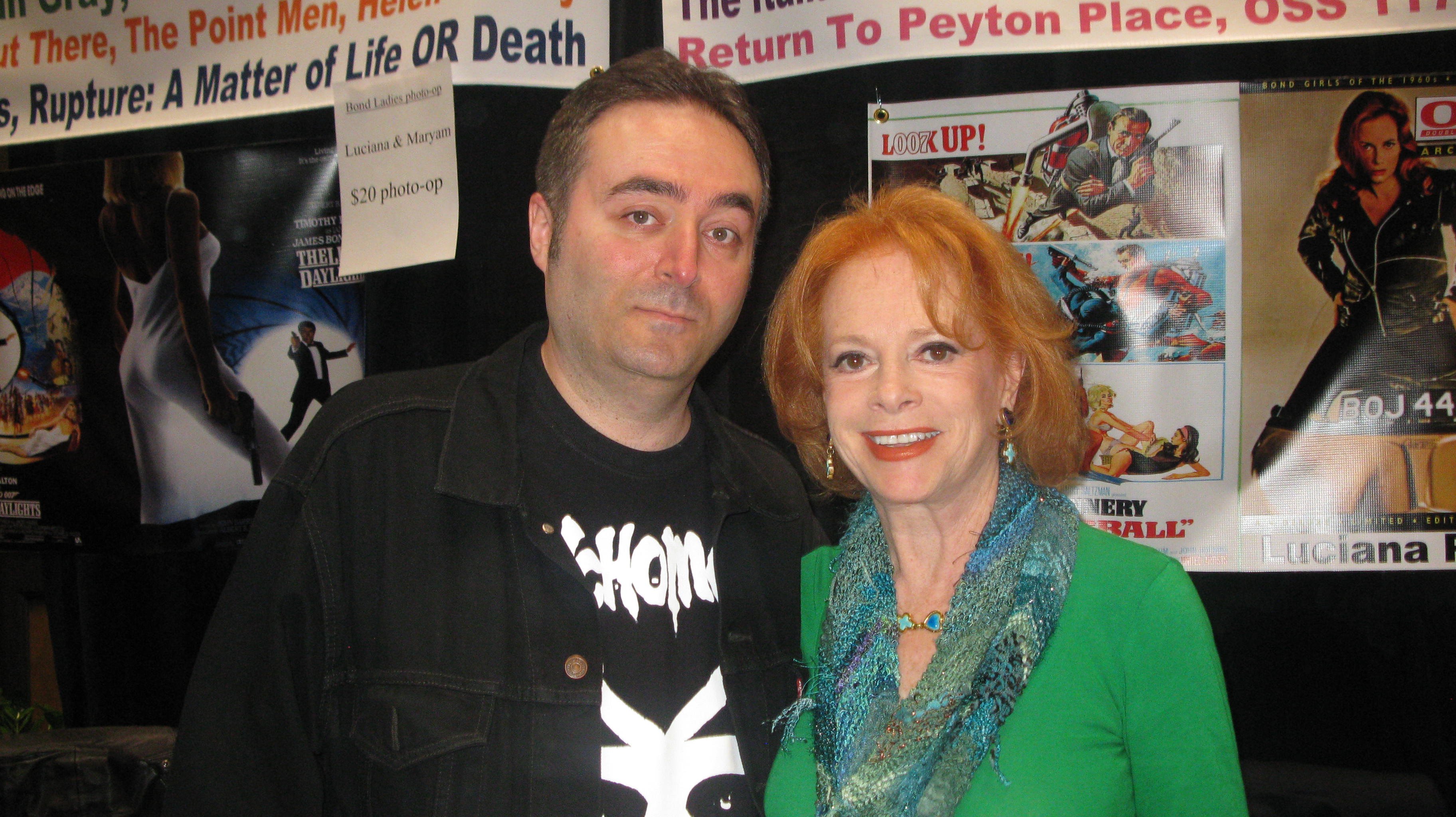
Nick Cato with actress Luciana Paluzzi from the 007 classic Thunderball and the the scifi classic The Green Slime.

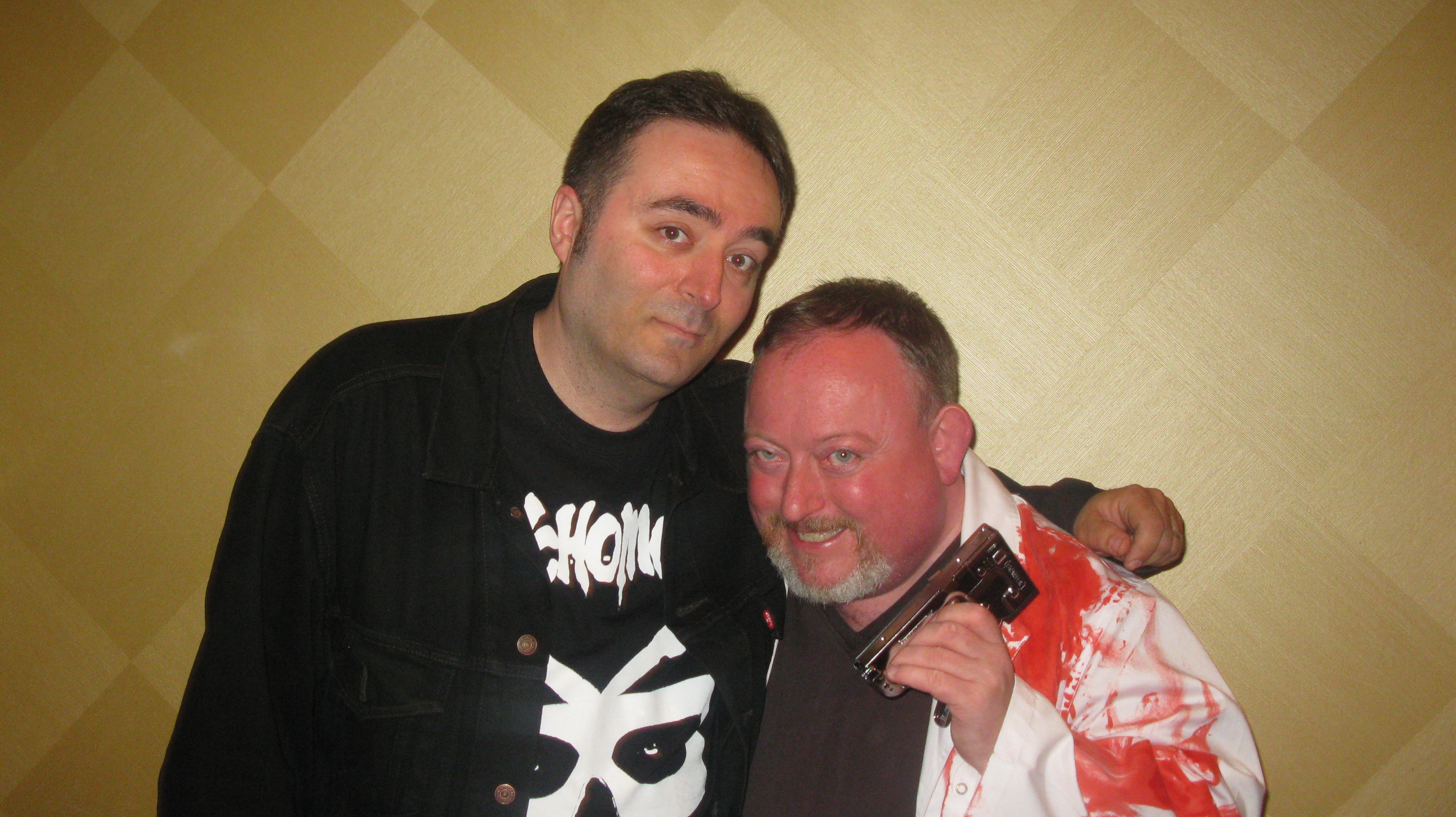
At the latest Spring Spooktacular, I found a couple or films I had been hunting down for some time now, and there were two guests I was interested in meeting.  One was Luciana Paluzzi, the beautiful actress who starred in the 007 classic Thunderball as well as the sci-fi classic The Green Slime.  She was every bit as classy as her on-screen personas suggested. And when she found out I was a fellow Italian, she graciously signed a picture of herself for me in Italian.  It’s personal little things like this that separate the thankful guests from the couldn’t-be-bothered types.  Also on hand was actor Laurence Harvey, star of the controversial The Human Centipede 2.  Not only was he a soft-spoken English gent, he had no problem signing anything you wanted, and even hammed it up by donning the bloody lab coat he had worn in the film.  You’d never believe a man this nice could star in such a depraved film!  It’s rare meetings like this that still make Chiller worth fighting your way through the over-priced crowds.

Nick Cato with actor Laurence Harvey from The Human Centipede 2.

At this particular Chiller, the largest line was to meet actor Norman Reedus, who was there as part of a Boondock Saints reunion, and of course to represent The Walking Dead.  I can’t remember the last time I saw girls walking around with autographs so taken aback by someone … you’d think the Beatles were doing a reunion show.

Being a fan of the low-budget stuff, you get to meet the smaller stars a lot quicker as they rarely have long waits to see them.  Of course there are exceptions: the first time Ken Foree from the original Dawn of the Dead appeared, I think I waited close to 40 minutes to meet him. But the wait was well worth it and I’ve since had the pleasure of meeting him several more times and have even exchanged several emails.

The glory days of Chiller Theater are long gone.  It has become an over-crowded, over-priced convention that is more of a nostalgia-fest than a horror con.  But as long as they keep their amazing dealer room, and the one or two genre guests who grab my interest, I’ll probably continue to attend, even if it’s only to pop-in for a few hours during one of the three days. That is, until every guest jumps on the current trend of “photo ops,” where you have to pre-pay $50.00 to meet with a particular guest in a private room to have your picture taken with them by a pro photographer.  Thankfully only a few of the bigger guests have been doing this, but if it becomes widespread there’s a good chance it will mean the end of Chiller.

Then again, everyone said the same thing in 1991 when Eddie Munster started asking money for his signature …

An Outing to Boston Comic Con

An Outing to Boston Comic Con

By David Price

I had no intention to attend Boston Comic Con this year. My son’s girlfriend, Amy, had brought it up a few weeks ago, but no plans were made to go. On Friday night, however, she was over visiting and brought it up again. My son, Devon, had no desire to go either, so she was doing her best to convince him. Now, I haven’t been to a comic con in many years, but the prospect of going piqued my interest. I pulled up the website and checked out the details. There was going to be 74 featured guest artists there. 74! Wow, these things have gotten much bigger since the last time I went.

I use to collect comics. I stopped pretty much cold turkey back in the nineties, when all those endless crossovers became big. They drove me nuts, interrupting the ongoing story lines of your favorite series and also forcing you to buy books you didn’t want, just to keep up. It was a sales gimmick that I quickly grew to despise and drove me away from comics completely. I’m still a fan, of sorts. I see every comic book based movie that hits the screen and I’ve been pretty happy with Hollywood’s attempts to bring some of my old favorites to life. I still have probably thirty boxes of comics in storage. It’s like the fan in me is in hibernation, I guess, like my collection.

So when I looked over that list of 74 artists, I didn’t recognize quite a few of them. I’m guessing there are many who have entered the business since my comic collecting days. But still, there were a few that really caught my eye, like Bernie Wrightson, for instance. Wrightson is an artist I have admired since I started reading and collecting comic books. You see, what first drew me into comics were horror comics. I was reading them for a couple years before I even noticed the super hero books. Maybe it was growing up watching Creature Feature on Channel 56, but I’ve always had this fascination with monsters. Wrightson was of course, an illustrator on many of the horror comics that I grew up loving. These had titles like, House of Mystery, House of Secrets, Tales of the Unexpected, and Vampirella. Did I mention he was the co-creator of Swamp Thing? Yeah, that too.

Wrightson didn’t stop with comic books, though. He did an illustrated version of Frankenstein, which is absolutely beautiful. Later in his career, he went on to do some illustration for my favorite author, Stephen King. Mr. Wrightson illustrated The Cycle of the Werewolf, The Stand, and even did some work on the Dark Tower series. Needless to say, I was excited at the chance to meet him.

Also on the list of artists, I noticed the name Bill Sienkiewicz. Wow! There was another guy who had impressed the hell out of me with his art. You see, Sienkiewicz brought a style unlike any other I had ever seen when he entered the comic book industry. In 1984, Sienkiewicz took over as the artist for the X-Men spinoff, New Mutants and brought an expressionistic style that was mind-blowing. I’m not sure it was for everyone, but I know he gained quite a bit of recognition and managed to work with some of comicbook greats at that time like Frank Miller and Alan Moore.

There were a couple other names that stood out to me like Bob Layton of Iron Man, Kevin Eastman of the Teenage Mutant Ninja Turtles, and Simon Bisley whose work I remember from Judge Dredd and Lobo. It was enough for me to want to go. To top it all off, my twelve-year-old daughter, who to my knowledge has never read a comic book, begged to go. Between my son’s girlfriend and my daughter, they managed to convince Devon to give it a try. I was happy to drive, so the plans were made. My daughter invited her cousin, Roberta, so she would have someone the same age to tag along with her.

Saturday morning, I picked up Amy and brought her back to the house. She was carrying this trash bag full of costumes because apparently the three girls were determined to dress up. They had the idea that people went in costume to these cons and they wanted to participate. I certainly wasn’t going to put a costume on, but I didn’t mind if they did. There wasn’t a lot of planning involved here, so my daughter Kay ended up as Alice in Wonderland, Roberta was a sort of Victorian age vampire, and Amy wore a Pink Floyd shirt and flag as a cape. With the girls dressed up and ready to go, we headed off to the Hynes Convention Center in Boston.

The first problem encountered is that the Hynes is near Fenway Park, and the Yankees were playing the Red Sox that day. Finding parking was an adventure. As we passed the Convention center looking for a parking garage, we saw this ridiculously long line outside of the building. That couldn’t be the line to get in, we said. Spotting several people in line dressed as comic book characters confirmed our worst fears, though.

The line moved quickly, however, and we probably only waited thirty to forty minutes to get in the building. None of us were prepared for what we found inside. It was wall to wall with people. You really couldn’t get anywhere without fighting your way through the zombie-like horde of comic book fans. At first, this really bothered my daughter. She complained to me quite a bit. I reminded her that she begged me to bring them. After a while, we all just got used to it.

Devon and his girlfriend went right over to the Newbury Comics table to check out The Walking Dead books. My family is a fan of the show, but none of us have read the books. He grabbed the first few, which was okay with me, since I wanted to read them, too. Amy grabbed a few things that she was really excited about, including a Doctor Who book as a thank you present to me. We stopped at an artist who did a portrait of my daughter and niece in anime style. This put them both in happier moods. When we hit the back row, I saw the line for Bernie Wrightson. I stepped up and he asked if I had anything to sign. I knew I had forgotten something. Oh well, he had some prints from his work on Frankenstein, so I bought one of those. More importantly, I got a picture with him.

Bernie Wrightson and David Price at Boston Comic Con.

We fought our way through the mob and did our best to take in the whole thing. I had just about given up on finding Bill Sienkiewicz when we finally stumbled upon him. I got another cool picture and my daughter got an autographed Cat Woman print. We tried to find another vendor called Madknits, who had these handmade stuffed little monsters, on the way out, but after bumping our way up and down a bunch of aisles, we gave up and decided to call it a day. The kids were hot, tired, and feeling a bit claustrophobic.

All in all, Boston Comic Con was very cool, but it definitely needs to find a bigger venue. The Boston Convention and Exhibition center on the waterfront is much bigger and more suited to something that attracts as many people as comic con does. They should probably consider upgrading, even though I heard that this was an upgrade from previous years. We all had fun, which was the most important thing. Well done, Boston Comic Con.