Up Close with Author Daniel Pearlman

This article originally appeared on the Go Local Prov website.

Up Close with Author Daniel Pearlman

by Anthony Faccenda, GoLocalProv Contributor
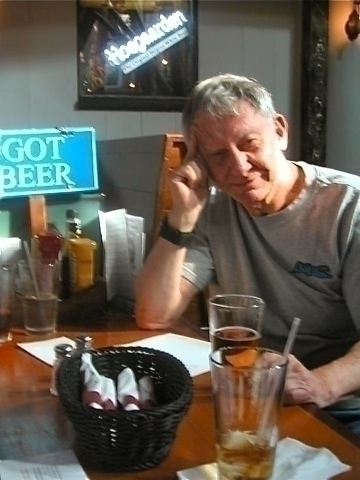
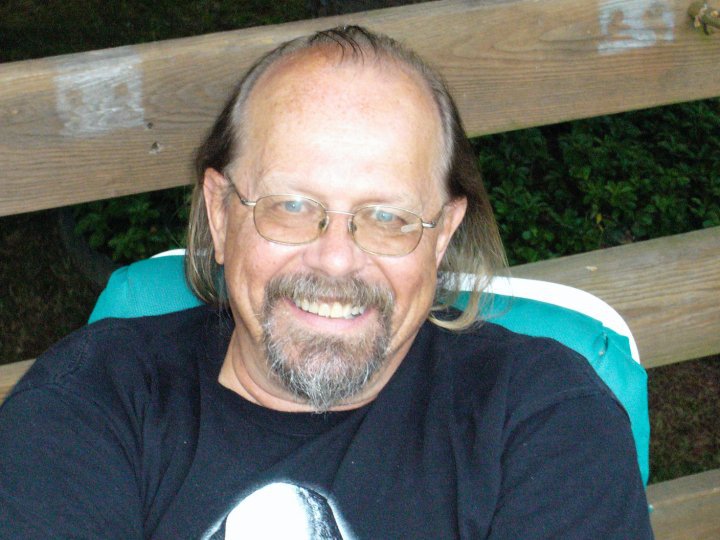
Author Daniel Pearlman

Simply labeling Daniel Pearlman a “fantasy writer” would be doing this multi-talented author a great disservice. Pearlman’s unique brand of fantasy fiction often includes elements of irony, satire, magic realism and speculative fiction. Aside from fiction, Pearlman, a professor emeritus of English at the University of Rhode Island, has also written everything from literary criticism to student writing handbooks.Despite his demanding schedule, GoLocal got Pearlman put down his prolific pen to discuss his latest effort, A Giant in the House & Other Excesses, published by The Merry Blacksmith Press(Warwick).

Your new book A Giant in the House & Other Excesses contains twelve different short stories and novelettes. Can you briefly describe what readers can expect to find in this collection?

The word “excesses” implies the over-the-top nature of my stories, and not only in this collection, which is my third. Here is a thumbnail of each of the twelve stories:

A Giant in the House: A boy grows up with a violent father who progressively shrinks in the young man’s imagination—or is it only in his imagination?

The Death Club: A secret Death Club guarantees its members wealth and power—until reaching age eighty, after which they will be euthanized in some unpredictable way, leaving all their worldly goods to the Club. Rich old Anton Malevitch, however, on the verge of eighty, has won the love of a beautiful and much younger woman, and is determined not to honor his contract.

Hannibal’s Victory: Two women who live together, one old and one young, take out their growing mutual hostility indirectly, through the medium of their respective opinionated cats.

Facedowns: A group of friends tell each other stories during Friday night poker games at which each takes turns with the host’s obliging wife.

The Fetal Position: A young man receives warnings from a mysterious female voice that professes concerns for his safety but is bent on crushing his identity.

Lyonel Unbound:  An English professor on his way to class, where his teaching is to be evaluated to determine whether he is worthy of tenure, suddenly finds himself unable to hold up his pants.

Two-Time Losers: A young night-school teacher is assigned a class of failures, a collection of the worst students in the program, whom he is under administrative pressure to pass.

Double Occupancy: An aging couple find their home invaded nightly by alluring refugees from the sixties who themselves have never aged.

With Arms Outstretched: A man demands sexual freedom from his grossly overweight wife.  She, fearing to lose him, complies in an astounding manner.

Refrigerator Blindness: Not long married, the egocentric young husband cannot seem to find the most ordinary things around the house. His exasperated wife eventually contrives to use his “disability” to her own personal advantage.

Mariah My Soul-Mate: A teenage girl forms a self-destructive relationship with a beautiful, fashionably dressed manikin.

Great White Hope: In the early sixties a recently married young man, on vacation with his wife in Mexico, finds himself in sexual rivalry with a septuagenarian ex-boxer, a still-powerful Frank Moran, one of a string of “great white hopes” who once challenged Jack Johnson for the world heavyweight title.

This last story has an autobiographical basis, since I did meet Frank Moran in Mexico, and the first part of the story is almost a literal transcription of our conversation, as noted in my diary.

Several of the stories in A Giant in the House & Other Excesses have never been available to the public, including “Lyonel Unbound,” which was drafted decades ago. How important was it for you to finally release stories such as these?

Ten of the twelve stories have seen previous journal publication–over the course of the past dozen years.  “Lyonel Unbound,” published in Spectrum in 2010, is the only “trunk” story I’ve rescued from the really distant past because I could never forget its basic narrative punch. But the setting needed updating to make it contemporary.

Prior to embarking on a career in writing fiction, you wrote a literary critique of poet Ezra Pound’s writings. Did you ever think of exclusively writing literary criticisms or similar works of non-fiction?

Literary criticism, though I’ve found it enjoyable, was only a diversion necessary to establish an academic career that has paid all the bills. I’ve always written fiction, my first love, and it’s always been for love, because the money it’s earned me has been negligible. As a matter of fact, the only book that has garnered respectable bucks for me over many years through eight editions is my still-in-print college writing handbook, Guide to Rapid Revision.

Do Pound’s themes or stylistic approaches ever find their way into your works of fiction?

Allusions to his work and certain of his themes do enter, in an ironical fashion, into some of my stories–especially in my first novel, Black Flames (White Pine Press, 1997).

Compared to writing a novel, short story authors run the inevitable risk of having limited time to develop character or setting. How do you confront these challenges or are they challenges to be embraced?

They are challenges to be embraced.  In a short story or novella a few telling details are enough to establish, for the reader, a living, recognizable, believable, already fully-formed “character.” A novel provides the opportunity to show how that character is formed.

Aside from short stories, you have also written novels. Do you prefer writing one to the other?

If I devoted myself more to the novel, I’d be far more productive in terms of sheer word count and of daily or weekly output. If I’m lucky, I put in a few months planning a novel, and then for the next year, more or less, I’ve got a steady writing schedule to keep me productive. But if I devote myself to shorter fictions, as I’ve done for many years, I usually have to spend a couple of months dreaming up a worthy idea and fleshing it out before I can sit down and write. The writing itself goes reasonably fast, gets done in a couple of weeks, but my overall yearly productivity suffers.

Why, then, don’t I focus on writing novels rather than stories? I’ve had bad luck in the marketplace for two major novels still sitting in my drawer. As tough as it is even to get good shorter work published–in journals and anthologies–I’ve had much better luck with those shorter pieces. Literary journals are far more open to new and unusual writers than are the major book publishers, who are less and less inclined to take risks. When I completely run out of hope of ever seeing my novels accepted by a “big” publisher, I’ll go the small-press route. I still dream of getting a decent literary agent (I’ve had several lousy ones) whose initial enthusiasm for my work translates into a long-term marketing commitment. I’ve found that if an agent hasn’t sold you in six months your book gets shunted to the back burner, and the agent won’t be honest enough to tell you so. Nowadays finding a good agent is as hard as finding a good publisher.

For you, what better qualifies some stories as short story candidates and others for novels?

Usually, the idea for a story comes to me along with an intuitive sense of its probable length.  Once, though, I was happily mistaken. The novel Black Flames started out as an idea for a longish short story but soon demanded expansion because the extraordinary combat experiences of my protagonist, a veteran of the Spanish Civil War, demanded inclusion. The novel is loosely based on the life of a strange but real person I knew.

Are you ever tempted to transform one of your short stories into a novel?

No. Unfortunately, too many writers–as seen in the science-fiction field, for instance–pad out a short-story idea with enough fluff to balloon it into a novel–because novels are what make the real money.

Lastly, what are you currently working on?

I have just finished a “novel-in-stories,” the adventures of an inter-dimensional detective named Merkouros, stationed in our New York to catch criminal trespassers from his own parallel New York. The series of a dozen science-fiction stories (I always confine myself to a dozen, for some reason) plays with cultural contrasts between our own relatively laid-back social order and a parallel America run by a harshly conservative autocracy. My detective often finds himself torn between these differing value systems. Several of these stand-alone stories have already appeared in print, and in addition there exists a separately published paperback Merkouros novella called Brain and Breakfast (Sam’s Dot Publishing, 2011). The series legitimately constitutes a novel because the main characters develop throughout, as do the forces endangering their world. Ever since reading Winesburg, Ohio by Sherwood Anderson, I’ve been fascinated by the idea of a novel-in-stories, and I didn’t know I was writing one till I got about halfway through my series.

Pearlman will read from A Giant in the House & Other Excesses at the Rochambeau branch of the Providence Public Library Jan. 23 at 7 p.m. The library is located at 708 Hope St., Providence. The reading is free and open to the public.

If you would like to purchase A Giant in the House & Other Excesses visit The Merry Blacksmith Press. For more information about Pearlman visit his website at ddpearlman.com.

‘Ghoul’ Arises Back in Print and on Film

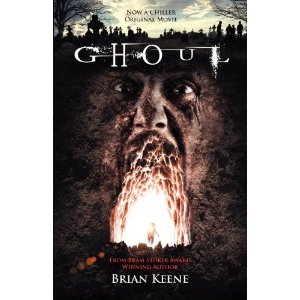
Two-time Bram Stoker Award-winning author Brian Keene’s Ghoul has recently been released with a new edition by Deadite Press. It tells the story of Timmy Graco and his two friends who risk their lives to stop a rash of disappearances in town, happening in the town in the summer of 1984.  It’s a great novel that is hard to put down. It will make you nostalgic for the songs and toys Keene mentions that were popular during that time.

Ghoul cover (courtesy of Brian Keene's website)

The movie based on the novel premieres at the Slamdance Film Festival on Jan. 22 at 4 p.m. and Keene will be in attendance. It will also be shown at the Sundance Film Festival. The movie is directed by Greg Wilson (The Girl Next Door) and the screenplay was written by William M. Miller (Headspace).

The movie comes to the Chiller channel in April.

Find out more about Keene on his website.

A Writer Experiences Arisia

This convention write-up by NEHW member, Kendra Saunders, for the Pure Textuality wesite.

A Writer Experiences Arisia

by Kendra Saunders

Arisia in Boston has a longstanding history for being the conference where geeks, nerds and steampunk enthusiasts can party and battle snowstorms. Arisia 2012 was remarkable in many ways, but most strikingly, because the skies overhead were blue and snow-free.

Your intrepid reporter (intrepid? No, that’s a lie. A bit overtired, over-excited and over-caffeinated), left snowy and icy New Hampshire on Friday morning with about three bags full of clothes, writing supplies, books and her well-travelled Loki action figure, and hit the road for southern New Hampshire. After connecting with a considerably more famous author, Elaine Isaak (The Singer’s Crown, The Bastard Queen), the journey continued southwards.

As soon as we hit the MA border, the ice and snow disappeared and the skies turned blue and the clouds fluffy, as if we had stumbled across a lovely summer afternoon. Well, maybe not summer, as the temperature was freezing and the winds quite raw.

The convention geared up late in the afternoon as participants threw their belongings in hotel rooms and rushed to get in line for registration. The lines were a bit long and crowded, and the whole matter was disorganized, but once registration was finished, the guest was free to wander at will. A Starbucks and bar/grill stood guard on either side of the hotel’s lobby, providing caffeine or beer, depending on your mood.

Costumes on Friday night were muted compared to the rest of the weekend, but even so, you might easily find yourself sipping coffee with Robin Hood, a Jedi and three young Victorian chaps. Bowler hats and goggles popped up more frequently as dinner-time loomed, and panels about role playing, writing, corset-design and gender gave way to several spectacles on the ground floor of the hotel. A disastrous but amusing showing of The Rocky Horror Picture Show held my interest for ten minutes, but I soon joined the crowds of people that flooded out of the room due to DVD malfunctions (yes, really). Wandering down the hall from the movie room, I heard pounding Goth synths and investigated only to find a dark room of dancing witches, Vikings, teenagers, middle aged steampunk guys and a few curious passersby.

It must be said that if you will ever, ever, ever feel comfortable in the knowledge that you can be dressed in PJs and have curlers in your hair, and you won’t be the weirdest thing on the dancefloor… it’s probably at Arisia. I found myself dancing (badly) to songs by Lady Gaga and Blutengel. The DJ was phenomenal.

After passing out at 2:30 a.m. and waking up around 6 a.m., getting dressed in my diesel punk outfit (20s crossed with futuristic/steampunk inspired fashions) and wandering down into the hotel lobby, I discovered rather quickly just how creative the people who attend these conventions really are. Everywhere I looked, women strolled by in Victorian garb, giant hats, skimpy lace outfits and elaborate animal costumes. The men were dressed in a variety of fashions, though many of them seemed to stick close to the steampunk aesthetic. It was gorgeous. And most of the costumes were made by the people who wore them.

Early in the day, the women of Broad Universe hosted a book reading for women writers in the organization. I was among the readers, and after a bout of nerves, I managed to deliver a chapter of my book with all of the glee and grade-A ham that any of us frustrated actor/entertainers harbors inside. Everyone laughed when they were supposed to, clapped when they were supposed to. KT Pinto gave a spirited reading that had everyone nearly in tears with laughter.

Most of Saturday was dotted with various panels for attendees, but perhaps the greatest draw was the never-ending parade of fabulous costumes in the lobby. Batman posed for pictures, Sherlock Holmes wandered the halls, the 10th and 11th Doctor made multiple appearances, a Dalek drew gasps and Tony Stark smirked while he posed for pictures with hot women. The masquerade ball was allegedly one of the best in the history of Arisia and was talked about loudly for the rest of the weekend.

KT Pinto’s book-signing that evening culminated in one enthusiastic fan kneeling in front of the author’s table for a copy of her upcoming book (shhh!) A cancelled party sent hordes of too-sober nerds back into the lobby, most of them choosing to drink and mope and converse in grumbles about their party being cancelled. A few found solace in watching the football game. And let me tell you, there’s nothing like a bunch of men in Ren-fair clothes yelling at a TV screen and cheering on their favorite football team.

Another late night rolled into a somewhat later morning than the one before it. Sunday at Arisia boasted just as many costumes, but a bit less energy as the alcohol and lack of sleep caught up to the attendees.

Broad Universe and Spencer Hill Press hosted a hugely successful book launch for the Spencer Hill Press anthology, UnCONventional. A dragon cake was consumed, fans were able to get autographs from many of the anthology’s writers and much conversation floated around the crowded room.

Arisia attendees were fed a steady diet of somewhat appropriate food offerings—dry, stale bread, butter, a few bruised fruits, assorted cheeses and crackers and endless tea, coffee and hot chocolate. The food was laid out on multiple tables and left to be picked over by the sleepy maidens, grumpy young peasant children, stiff anime characters and confused men in crumpled business suits. I couldn’t help feeling that it was fitting and, for that reason and that reason alone, clever. So yes, I mostly lived off of stale loaves of bread, warm butter and cups of black tea… just like any good waylaid steampunk girl stuck in a great valley of dragons, street vendors and magicians.

And then more than once I hit up the bar/grill in the lobby for their delicious curry. If you stay at the Westin, try the curry. It’s surprisingly addictive, with or without the suggested French fries. Don’t mix it with Guinness though. I already did that for you, so I could warn you. Awfully kind of me, yes?

JA Starr was on hand to take lovely professional photos and he generously shared some of his honey mead with me. Delicious!

By Monday, most everyone was scurrying about to hug their new friends, say goodbye to old friends, get contact information or just figure out what the heck they did with their (keys, bag, purse, child, etc). I had fallen victim to a nasty bout of vertigo, thanks to the elevators and far too little sleep, so admittedly I was rather happy to see things winding down.

All in all, I suggest Arisia highly for fans of fantasy, fans of role-playing, costumers, steampunk enthusiasts, and writers in the Northeast. It’s a great chance to meet fans, make friends, meet heroes, dress up in your old ballgown (everyone has one, right?) or just gawk at the most creative people in the world (fans, of course!) While I didn’t find the panels to be quite as interesting as I was expecting them to be, the pure spectacle of the costumes and fandoms and vendors are enough to justify attending. And the conversations! Oh, you’ll have conversations with all sorts of people.

Included are pictures of the event and some of my favorite costumes from Arisia. Enjoy!

For more about Broad Universe, a world-wide organization that supports and promotes female writers, visit www.broaduniverse.org.

For more about Spencer Hill Press or UnCONventional, visit www.spencerhillpress.com.
For more about one of the incredible vendors at the show, visit www.etsy.com/shop/EmrysFynery.

For books by Tim Lieder visit http://www.amazon.com/Dybbuk-Press/lm/R1LB59CKVHK136.

For more information on me, visit my fancy-dancy, newly updated website, www.kendralsaunders.com

Facebook Gave Me Writers’ Block

This article originally appeared on the Guardian website.

Facebook Gave Me Writers’ Block

by Tom Cox

For Tom Cox, the creative isolation of living in the country was punctured by a constant babble from social networking. So in 2012, he’s decided to go cold turkey

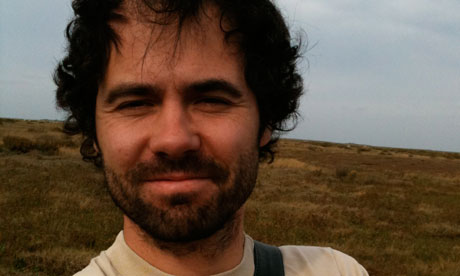
For Tom Cox, the creative isolation of living in the country was punctured by a constant babble from social networking. So in 2012, he's decided to go cold turkey (photo courtesy of Tom Cox)

To see in this year, I did two things I’ve been meaning to do for a long time: I challenged myself to put on as many coats as possible at the same time during a lull in a New Year’s Eve party, and I deactivated my Facebook account. The coats challenge didn’t work out quite as well as I’d hoped: I ran out of arm space when I got to six, and I’m not sure one – a pinstriped, Yardbirds-style blazer owned by my friend Pat – strictly counted. The Facebook experiment, however, has so far been a success. Ten days in, I no longer reach for the Facebook icon on my iPhone in the night as one might reach across the bed for a departed partner, and, as I approach two weeks of cold turkey, the “virtual phantom limb” feeling that kicked in around day three is dissipating.

I was far from the most active Facebook user I know, but my decision to quit came from a long cold look at just how many hours I’ve devoted to it in the last couple of years, and a strong accompanying feeling that, were I to devote the same amount over the next couple, I would want to put on some spiked gloves and repeatedly punch myself in the nose really hard. No matter how positive you feel about Facebook or Twitter and the ways in which they’ve enhanced your life, it is unlikely that anyone will ever lie on their deathbed and say, “You know what? I’m really glad I spent all that time social networking!” Additionally, I’m starting to write a new book, and attempting to feel more focussed.

It’s easy to picture a country writing retreat and imagine that its sheer remoteness naturally leads to the kind of mental peace that breeds creativity, but these days that’s not the whole story. I live in Norfolk with lots of greenery around me but in 2012 rural life doesn’t mean “isolated life”. One of the hardest things about writing for a living is being at your keyboard and feeling that everyone else is out having a party. Facebook and Twitter make that party non-stop and put it constantly in your house, in your face, in your bag, in your pocket. I can convince myself that the two of them are friends in the background, gently egging me on through my creative hermitry, but by doing so I’m being too easy on myself. I already spend far too much time going for coffees and beers with my real friends when I should be writing.

A sensible way to combat such interference would be to switch my router off for a few hours or download one of the increasing range of software packages that lock you out of Facebook and Twitter – or, like Sean French, one half of the bestselling crime writing novelist duo Nicci French — build a writing shed just out of broadband range. But I’m not sensible, and, after a bout of pre-Christmas creative block, I decided to take more extreme measures. Last week, in addition to deactivating Facebook, I drove from my own rural writing retreat to another, even more rural writing retreat, 360 miles away: an almost impossibly idyllic fire-warmed one-bedroom cottage called The Bothy, half a mile down a muddy track just north of Dartmoor, with no internet and only intermittent phone signal.

With a “new year, new start” mentality, I got down straight to business, and held my laptop up against the bedroom window in an attempt to piggyback onto the wi-fi from the main house where the owners of The Bothy live. Having failed in this mission, and fielded some text messages from friends asking why I wasn’t on Facebook any more, which soon extended into conversations I would have previously had with them on Facebook, I read a book about witches and fell asleep, hoping that the witches would get together in the night with the half-formed witches in my own book and make them more vivid.

The next morning I felt more motivated, but I was also a bit hungry, so before working I drove out to the nearest supermarket, ten miles away. This being rain-sodden rural Devon, and the roads being narrow and flooded, the journey took me the best part of 45 minutes each way, and Richard, one of the Bothy’s owners, very kindly accompanied me in his four by four for the first stretch, to make sure my ailing Toyota Yaris got through the floods.

These are the factors the author seldom accounts for when buying into the myth of “getting away from the world”: the two hours that it might take to find an interesting sandwich, the potential hour waiting on a dark roadside for the RAC. Back at the start of the last decade, when I lived in Finsbury Park, in London, traffic noise and nextdoor’s Stereophonics albums were problems, but a carless existence and plenty of nearby conveniences contributed to a simpler working life in a way I took for granted. Also, the pet cats in London were mostly cynical loners, while Bertie, one of the happy, gregarious ones living next to The Bothy, wouldn’t leave me alone, and I couldn’t quite bring myself to stop laying in front of the fire with him on my chest.

When people talk romantically about dreams of rustic artistry, nobody warns you about this stuff: just like when I moved into my house nobody warned me that a man would come to the shore of the nearby lake and shout “COME ON THEN, LET’S BE ‘AVIN YOU!” at the ducks every morning, just as I tried to write the day’s most difficult sentence.

There could probably be no better place to write than The Bothy, if you were a perfect writer, disciplined in his solitude. I, however, am an imperfect modern one, struggling with an attention span that has been torn into strips by the internet and who likes being around people a bit too much.

I managed to work there in the end, but will probably remember it less for what I achieved and more as the place where I found the discipline to almost properly start my seventh book, and finally faced up to the fact that the true distractions stopping me from doing so at home were not external, but internal: that the rabbit hole universe available to us online is far more of a distraction than any physical “bustle” could ever be and the authors really getting down to the best work aren’t the ones telling you about it on the internet.

In fact, I have an impulse to tweet that right now, but I’ll probably leave it.

Tom Cox’s latest book, Talk To The Tail, is published in paperback by Simon And Schuster this month

NEHW Members at Annual Author’s Night

Four NEHW Members to Appear at Winery’s Annual Author’s Night

by Jason Harris

The second annual Author’s Night at the Zorvino Vineyards in New Hampshire on Jan. 20 features four New England Horror Writers’ members, who will be signing their books, at the event.

The members are Tracy Carbone, Roxanne Dent, Karen Dent, John M. Mcllveen, and Scott Goudsward.

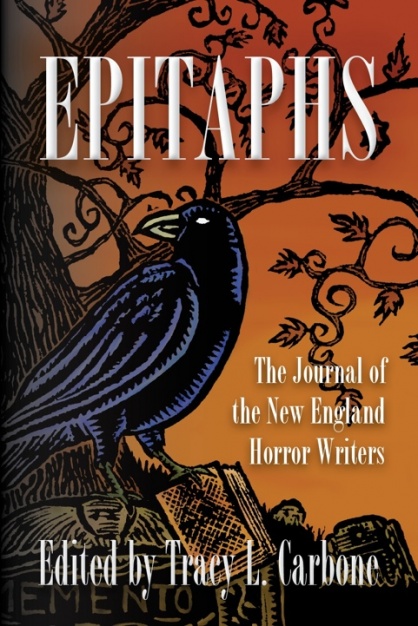
There will be copies of the first NEHW anthology, Epitaphs, which was released last October and debuted at Anthocon in November, will be available at the event. The anthology was edited by Carbone and features stories by Roxanne Dent, Mcllveen, and Goudsward.

According to the vineyards’ website, there will be over 75 New England authors at this charity event that goes from 6 p.m. to 9 p.m. This event will be “partnering with five New Hampshire Schools to help bring the joy of reading to all.” This year’s participating beneficiaries are the Timberlane District Elementary Schools. Each school, Pollard School (Plaistow), Atkinson Academy, Danville Elementary, Sandown Central, and Sandown North, will be holding a raffle, where the money generated will go towards reading in the classroom, the website said.

Everyone who signs up for the event on Zorvino’s website will be entered into a chance to win a “Private Wine Tasting and Tour For Up To 20 People,” which includes a cheese and cracker platter and a tour of their facility. Just sign up online, print your ticket and bring it to the book signing to be entered.

The event is free and there will be a cash bar at the event. The winery will be open all night for complimentary wine tasting as well. The vineyard wants people to be aware to bring cash since the authors won’t have access to a credit card machine.

For a list of the authors attending the event and their websites, check out Zorvino’s website. The vineyard is located at 226 Main St. in Sandown, New Hampshire.

Amanda Hocking, the Writer Who Made Millions by Self-publishing Online

This article originally appeared on The Guardian website.

Amanda Hocking, the Writer Who Made Millions by Self-publishing Online

by Ed Pilkington

A couple of years ago, Amanda Hocking needed to raise a few hundred dollars so, in desperation, made her unpublished novel available on the Kindle. She has since sold over 1.5m books and, in the process, changed publishing forever

Woman makes millions from self published books

Amanda Hocking: 'I didn't have a lot of hope invested in ebooks'. (Photograph courtesy of Carlos Gonzalez/Polaris)

When historians come to write about the digital transformation currently engulfing the book-publishing world, they will almost certainly refer to Amanda Hocking, writer of paranormal fiction who in the past 18 months has emerged from obscurity to bestselling status entirely under her own self-published steam. What the historians may omit to mention is the crucial role played in her rise by those furry  wide-mouthed friends, the Muppets.

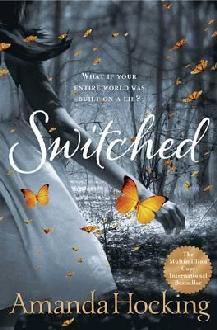
Switched: Book One in the Trylle Trilogy

To understand the vital Muppet connection we have to go back to April 2010. We find Hocking sitting in her tiny, sparsely furnished apartment in Austin, Minnesota. She is penniless and frustrated, having spent years fruitlessly trying to interest traditional publishers in her work. To make  matters worse, she has just heard that an exhibition about Jim Henson, the creator of the Muppets, is coming to Chicago later that year and she can’t  afford to make the trip. As a huge Muppets’ fan, she is more than willing to drive eight hours but has no money for petrol, let alone a hotel for the night. What is she to do?

Then it comes to her. She can take one of the many novels she has written over the previous nine years, all of which have been rejected by umpteen book agents and publishing houses, and slap them up on Amazon and other digital e-book sites. Surely, she can sell a few copies to her family and friends? All she needs for the journey to Chicago is $300 (£195), and with six months to go before the Muppets exhibition opens, she’s bound to make it.

I’m going to sell books on Amazon,” she announces to her housemate, Eric.

To which Eric replies: “Yeah. OK. I’ll believe that when it happens.”

Let’s jump to October 2010. In those six months, Hocking has raised not only the $300 she needed, but an additional $20,000 selling 150,000 copies of her books. Over the past 20 months Hocking has sold 1.5m books and made $2.5m. All by her lonesome self. Not a single book agent or publishing house or sales force or marketing manager or bookshop anywhere in sight.

So let the historians take note: Amanda Hocking does get to Chicago to see the Muppets. And along the way she helps to foment a revolution in  global publishing.

I’ve come to Austin, legendary birthplace of Spam (the canned as opposed to the digital version), to find out what this self-publishing revolution looks like in the flesh. I can report that, from the outside, it’s surprisingly conventional. Hocking no longer lives in that pokey apartment, but then she’s no longer a struggling would-be author. She’s bought herself her own detached home, the building block of the American dream, replete with gables and extensions, its own plot of land, and a concrete ramp on which to park the car.

But step inside and convention gives way to a riot of colour. It is just before Christmas, and Hocking has decorated the house with several plastic trees bedecked in lights and two large Santa stockings pinned expectantly over the mantelpiece. The sofa is scattered with animals, some of the cuddly toy variety and others alive, notably Elroy the miniature schnauzer and Squeak the cat (apparently they get on very well).

She greets me at the door and, without preamble, we talk for the next two hours about her extraordinary rags-to-riches tale and what it means for the future of the book. At 27, and with only a few months in the limelight, she is patently new to the fame game. She seems nervous at first, answering my questions in short bursts and fiddling with her glasses; but gradually she relaxes as we discuss what for her has been the central passion of her life since an infant.

She was brought up in the Minnesota countryside on the outskirts of Blooming Prairie about 15 miles north of Austin. Her parents divorced when she was young, money was tight and there was no cable TV to wallow in. “So I read a lot. I would go to the library, or get books at rummage sales. I got through them so quickly I started reading adult books because they were longer. I remember my mom giving me a box set of five books to last me all summer; I devoured them all in two weeks.”

By the age of seven she was reading Jaws by Peter Benchley and anything by Stephen King. Michael Crichton, JD Salinger, Shakespeare, Jane Austen, Mark Twain, Jack Kerouac, Kurt  Vonnegut and many others fed an insatiable appetite.

It was a way, she now thinks, of coping with the depression that troubled her childhood. “I was always depressed growing up. There wasn’t a reason for it, I just was. I was sad and morose. I cried a lot, I wrote a lot, and I read a lot; and that was how I dealt with it.”

What went in had to come out. The child Hocking began telling her own stories before she could walk. She was forever inventing make-believe worlds, so much so that the counsellor to whom she was sent for depression concluded that her incessant storytelling was an aberration that had to stop. Fortunately for Hocking, and for her many fans, her parents took her side in this argument, and she was never sent back to see him.

At 12 she had already begun to describe herself as a writer and by the end of high school she estimates she had written 50 short stories and started countless novels. The first that she  actually completed, Dreams I Can’t Remember, was written when she  was 17. She was very excited by the  accomplishment, and printed it out for friends and family, as well as sending it to several publishers.

“I got rejection letters back from all of them. I don’t blame them – it wasn’t very good,” Hocking says.

Hocking went on to develop an intimate relationship with rejection letters. She has somewhere in her new house a shoebox full of them.

Yet she would not give up. She wrote unpublished book after unpublished book. “Sometimes I’d say: ‘I’m done, I’m never going to write another book,’ but then a couple of months later I’d have another idea and I’d start again. This time it was bound to work.”

In 2009 she went into overdrive. She was frantic to get her first book published by the time she was 26, the age Stephen King was first in print, and time was running out (she’s now 27). So while holding down a day job caring for severely disabled people, for which she earned $18,000 a year, she went into a Red Bull-fueled frenzy of writing at night, starting at 8 p.m. and continuing until dawn. Once she got going, she could write a complete novel in just two or three weeks. By the start of 2010, she had amassed a total of 17 unpublished novels, all gathering digital dust on the desktop of her laptop.

She received her last rejection letter in February 2010. Hocking says she hasn’t kept the letter, which is a crying shame because it would surely have been an invaluable piece of self-publishing memorabilia. As far as she can remember, the last “thanks-but-no-thanks” came from a literary agent in the UK. If that agent is reading this article, please don’t beat yourself up about this. We all make mistakes …

April 15 2010 should also be noted by historians of literature. On that day, Hocking made her book available to Kindle readers on Amazon’s website in her bid to raise the cash for the Muppets trip. Following tips she’d gleaned from the blog of JA Konrath, an internet self-publishing pioneer, she also uploaded to Smashwords to gain access to the Nook, Sony eReader and iBook markets. It wasn’t that difficult. A couple of hours of formatting, and it was done.

“I didn’t have a lot of hope invested in it,” she says. “I didn’t think anything would come of it.” How wrong she was.

Within a few days, she was selling nine copies a day of My Blood Approves, a vampire novel set in Minneapolis. By May she had posted two further books in the series, Fate and Flutter, and sold 624 copies. June saw sales rise to more than 4,000 and in July she posted Switched, her personal favourite among her novels that she wrote in barely more than a week. It brought in more than $6,000 in pure profit that month alone, and in August she quit her day job.

By January last year she was selling more than 100,000 a month. Being her own boss allowed her to set her own pricing policy – she decided to charge just 99 cents for the first book in the series, as a loss leader to attract readers, and then increase the cover price to $2.99 for each sequel. Though that’s cheap compared with the $10 and upwards charged for printed books she gained a much greater proportion of the royalties. Amazon would give her 30% of all royalties for the 99-cent books, rising to 70% for the $2.99  editions – a much greater proportion than the traditional 10 or 15% that publishing houses award their authors. You don’t have to be much of a mathematician to see the attraction of those figures: 70% of $2.99 is $2.09; 10% of a paperback priced at $9.99 is 99 cents. Multiply that by a million – last November Hocking entered the hallowed halls of the Kindle Million Club, with more than 1m copies sold – and you are talking megabucks.

The speed of her ascent has astonished Hocking more than anyone. She was so elated to receive her first cheque from Amazon, for $15.75, that she didn’t cash it and still has it pinned up on a noticeboard above her desk. “It went from zero to 60 overnight,” she says. “Everybody was buying my books and it was overwhelming.”

In internet-savvy circles she has been embraced as a figurehead of the digital publishing revolution that is seen as blowing up the traditional book world – or “legacy publishing” as its detractors call it – and replacing it with the e-book, where direct contact between author and reader, free of the mediation of agent and publishing house, is but a few clicks away. There is certainly something to that argument. The arrival of Hocking onto the Kindle bestseller lists in barely over a year is symptomatic of a profound shift in the book world that has happened contiguously. Her rise has occurred at precisely the moment that self-publishing itself turned from poor second cousin of the printed book into a serious multi-million dollar industry. Two years ago self-publishing was itself denigrated as “vanity publishing” – the last resort of the talentless. Not any more.

A survey carried out last year by the book blog Novelr found that of the top 25 bestselling indie authors on Kindle, only six had ever previously enjoyed print deals with major book publishers. With e-book sales reaching $878m in the US in 2010, an almost fourfold increase from the year before, some 30 authors have already sold more than 100,000 copies through Kindle’s self-publishing site. That’s the kind of statistic that made Penguin’s chief executive, John Makinson, say recently that he saw “dark clouds” gathering in 2012.

But Hocking’s new-found stature as self-publishing vanguardista is not something she welcomes. “People built me up as a two-dimensional icon for something I was not. Self-publishing is great, but I don’t want to be an icon for it, or anything else. I would rather people talk about the books than how I publish them.”

She also resents how her abrupt success has been interpreted as a sign that digital self-publishing is a new way to get rich quick. Sure, Hocking has got rich, quickly. But what about the nine years before she began posting her books when she wrote 17 novels and had every one rejected? And what about the hours and hours that she’s spent since April 2010 dealing with technical glitches on Kindle, creating her own book covers, editing her own copy, writing a blog, going on Twitter and Facebook to spread the word, responding to emails and tweets from her army of readers? Just the editing process alone has been a source of deep frustration, because although she has employed own freelance editors and invited her readers to alert her to spelling and grammatical errors, she thinks her e-books are riddled with mistakes. “It drove me nuts, because I tried really hard to get things right and I just couldn’t. It’s exhausting, and hard to do. And it starts to wear on you emotionally. I know that sounds weird and whiny, but it’s true.”

In the end, Hocking became so burned out by the stress of solo publishing that she has turned for help to the same traditional book world that previously rejected her and which she was seen as attacking. For $2.1m, she has signed up with St Martin’s Press in the US and Pan Macmillan in the UK to publish her next tranche of books. The deal kicks off this month with a paperback version of Switched. It’s a fast-paced romance featuring changeling trolls called Trylle who are switched at birth with human babies. The novel cannot be classed as literary, but then it makes no pretensions to be so. It is precision-targeted at a young-adult audience, and is surprisingly addictive. Once the Trylle trilogy is out, Hocking’s new series of four novels, Watersong, revolving around two sisters who get caught up with sirens, will be released from August in hardback and e-book simultaneously.

Hocking’s editors on both sides of the Atlantic point to the deal as evidence that traditional and solo digital publishing can live in harmony. “There’s a lot of talk about publishers being left out of the loop,” says Jeremy Trevathan, Macmillan’s fiction editor. “But this whole thing is an opportunity for writers and publishers to find each other.” Or as Matthew Shear, publisher of St Martin’s Press, puts it: “It’s always been the same since the days when people self-published from the back of their car – cream will rise to the top.”

There’s something peculiar about all this: one of the leading figures in the self-publishing revolution is now being vaunted by major book houses in London and New York as evidence that traditional publishing is alive and kicking. Hocking is very aware of the paradox, which she observes with a wry writer’s eye. “A lot of people are saying publishing is dead,” she says. “I never did, and I don’t think it is. And they want to use me to show it isn’t.”

Switched, the first in the Trylle Series by Amanda Hocking, is out now in paperback and e-book formats, featuring previously unseen extra material. Published by Pan Macmillan in the UK and St. Martin’s Griffin in the USA. For further information, see www.worldofamandahocking.com.
Some of the other Kindle Million Club members

Stephen Leather

Widely hailed as Britain’s most  successful “independent” writer, two years ago Leather took three novellas that had been turned down by Hodder & Stoughton and issued them for the Kindle through Amazon. Last year, he put his monthly income from ebooks at around £11,000.

Joe Konrath

The Chicago-based author is both prolific – he has written seven thrillers, a horror series, and a sci-fi novel, each under a different pseudonym – and candid about the benefits of self-publishing. “One hundred grand – that’s how much I’ve made on Amazon in the last three weeks,” he boasted on his blog last month.

HP Mallory

The “urban fantasy and paranormal romance” author sold around 70,000 copies of her e-books in two months last year, and signed a three-book contract with traditional publisher Random House. She sums up her appeal thus: “If you’re all about fairies and witches and vampires (oh my!) … and you like men who get a little hairy during a full moon, I got the goods.”

John Locke

Last summer, the one-time insurance salesman from Kentucky became the first self-published author to sell 1m Kindle e-books. Alongside his lurid thrillers fans can download an advice book entitled How I Sold 1 Million eBooks in 5 Months!.

Oliver Pötzsch

German novelist and film-maker Pötzsch has reached the highest echelons of the Kindle bestsellers list with the English translation of his historical novel The Hangman’s Daughter. It’s a big success story for AmazonCrossing, which identifies books selling well in other languages, and republishes them in English.

David L. Tamarin’s Notes from the Darkside

COLUMN

David L. Tamarin’s Notes from the Darkside

Break a Leg, My Life in Film

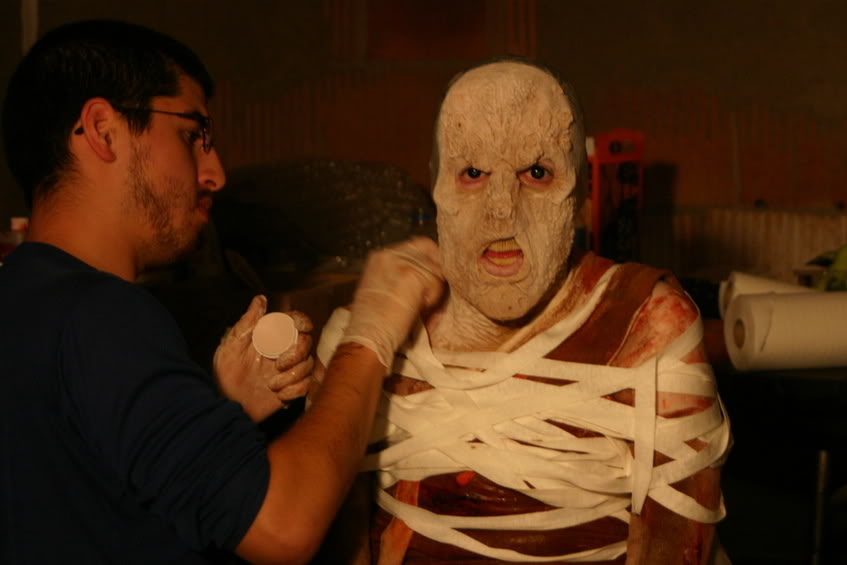
It was so cold that at the last moment the actor said he couldn’t do the scene. All he had to do was reach through a wall and grab a girl by the throat and pull her through the hole. Because he was a zombie, he had to be shirtless, with makeup on his arms. We were filming in the third floor basement of an abandoned gigantic train depository in Buffalo, New York, in the Winter. It was beyond freezing. One of the reasons the building was closed down was because it was filled with asbestos, which I inhaled regularly for two weeks on the set. We were restricted to the first three floors, so naturally when I wasn’t shooting I was wondering around the forbidden higher floors of the mammoth structure, where giant blocks would fall from the ceiling leaving a mushroom cloud of asbestos. I didn’t have anything to cover my mouth and filter my air, so if I get some type of asbestos poisoning at least I know I did it for art. For horror.

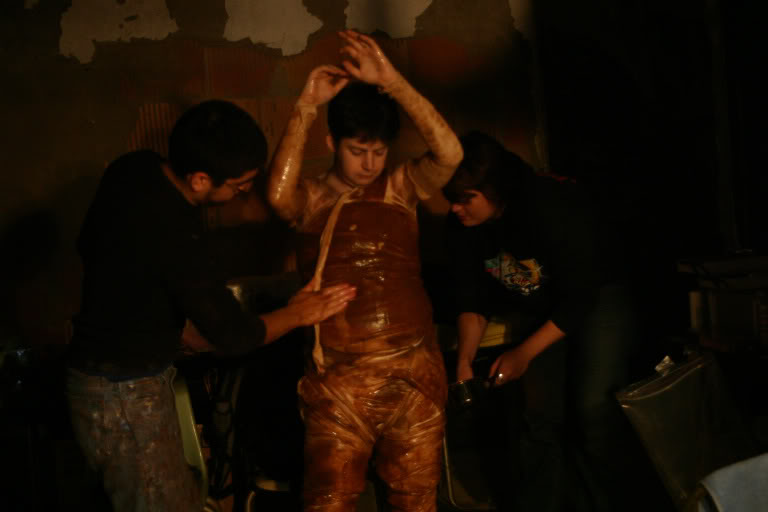
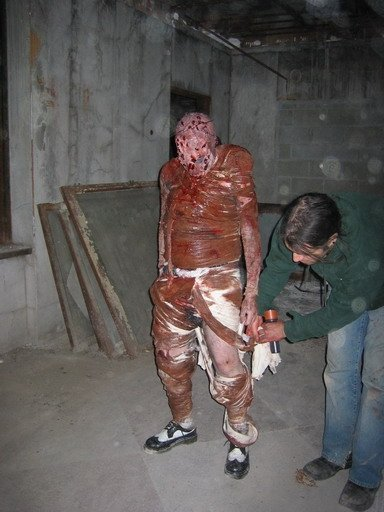
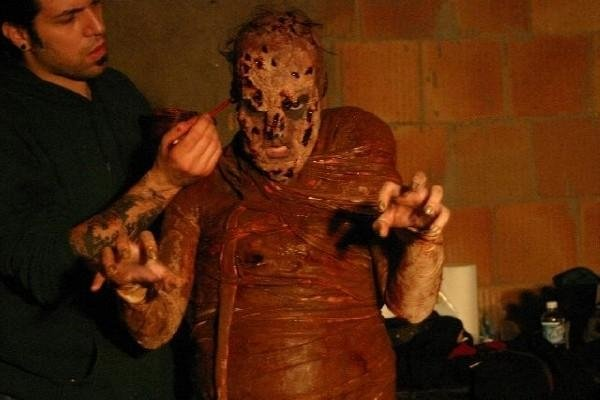
So I volunteered to play the Zombie Arms.  I took off my sweaters and jacket and was freezing, and when they began to apply the icy cold makeup I thought my blood was going to freeze and my fingers would fall off and shatter on the hard ground like icicles. For two miserable hours a team of make-up artists transformed my arms into hideous deformities. I’ve worked with makeup effects many times and these people were excellent. I was literally shaking and trembling from the cold, which didn’t make their jobs any easier. But this was easier than my ordeal several days prior to this, when I had played a zombie and spent 7 hours wearing just my boxers getting a full body zombie makeover, followed by an extremely long and cold shoot that lasted a full 12 hours, during which I shattered a toe, followed by two hours of makeup removal.

I was running, chasing after a scream queen, and we were in these very spooky tunnels underground that looked like they were part of a dungeon. I was barefoot, it was completely dark, and I kicked a rock. It was so cold I felt nothing, but the next morning I woke up several people in the motel screaming. The pain was massive, indescribable – and I had not even noticed on set because of the Arctic-like conditions.

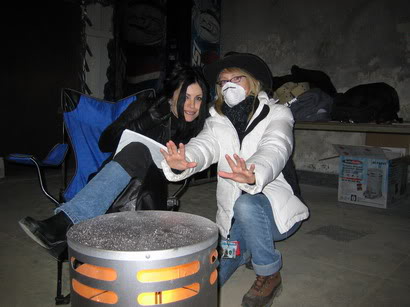
On set at the filming of Prison of the Psychotic Damned (courtesy of David L. Tamarin)

When I did the zombie arms, my toe was broken, and had been three days, but I did not know it yet and the cold prevented me from feeling everything. Back at the hotel, alcohol helped. When I was ready they set up the shot in this underground sub-basement room that looked like it was an ancient execution site. It was the perfect environment for the film, which was a horror zombie gore-fest, but a terrible place to spend all of your time for two weeks. We would all hover around little gas heaters in between takes. Except me, because my makeup was highly flammable, so I could not even stand near the little heaters. Of course, no one told me I was flammable and I had spent a couple of hours by the heaters, almost putting my hands in the flames to gain some feeling back. Then the cinematographer went to light up a cigarette and someone screamed “Don’t light that! David is covered head to toe in flammable material!” I jumped back from the heater and stayed away for the rest of the shoot.

As instructed, I reached through the hole in the wall and grabbed the actress by the throat and began to pull her back.

It was at this point that I realized what a unique business this is. I didn’t want to hurt her, and wasn’t pulling hard enough, and the crew was trying to get me pumped up so they could get the shot and move on. So ten people started screaming at me. “Choke her!” “Squeeze her neck harder!” “Don’t worry about whether you’re going to hurt her you’re a zombie act like you want to fucking kill her!” I felt like I was re-living the scene in The Accused where a bunch of drunks cheered on a rapist. Everyone was screaming at me to choke this woman, choke her and yank her entire body through a hole in the wall. I can’t think of any other job where people would be screaming at me for not choking a woman hard enough, and would be critiquing my choking techniques.

It was only after the actress told me I was a wimp and to get over it so we finish and get out of this icy chamber before we started losing fingers to frostbite that I was able to give a satisfactory performance.

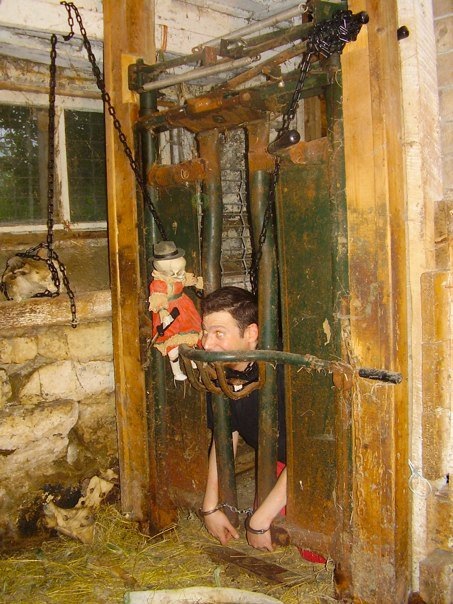
On set at the filming of Countess Bathoria's Graveyard Picture Show (Photo courtesy of David L. Tamarin)

Cut to six years later, in a Canadian barn. There’s this device you put cows in to get them pregnant, and my head was locked into one, my body twisted in a terribly painful position. Now the tables were turned. That same actress was now directing me in my own murder scene, and this time I was the one who was going to suffer. My head is knifed open by an evil doll, and my brains dumped into a plate, which she sips up with a straw. As with the other film, I was one of the writers and had a real emotional attachment to the film and would do what it took to let my words turn into visual mayhem and scare or repulse the audience.

The film debuted at Fantasia Film Fest, but there was one slight problem: someone called a bomb threat into the movie theatre and halfway through the film, a nervous woman came onstage and in a Canadian accent asked that we all leave the building as quickly as possible so that the police could search it for bombs. Feel free to add your own “that film really bombed” pun at this point, but trust me I’ve probably heard it. “I bet they were worried when they heard your film was a real bomb” is the one I hear the most. But luckily, it was a theatre full of devoted fans. And the vast majority waited outside in Quebec way past midnight for over an hour until they cleared the building and let us back in to finish the film. And far from being a bomb, the film kept the audience spellbound despite the bomb threat. As for why someone called in a bomb threat, that is another story for another column.
David L. Tamarin is an attorney, writer, and actor along with being a NEHW member.  This is his first column for the site.

Online Journal Publishes Author’s Flash Fiction Story

This Flash Fiction story by NEHW member, David L. Tamarin, originally appeared on the Three Minute Plastic website.

Gravity by David L. Tamarin

Does gravity always work? Surely, once in awhile, it just stops working. After all, nothing is perfect. Dr. Shingles decided to perform a test. He was sick of being considered a failure.

He held the newborn baby above his head on the roof of the hospital. It had been a rough day. Seven of his patients had died, and two nurses. When he raided the pharmacy and shot opiates he would slip (oops!) with the knife during surgery or nod off with his hands deep inside someone’s stomach. He’d wake up in blood to the sounds of the nurses screaming (and that one crazy nurse with the cross eyes and death breath giggling).

Sometimes he would doubt his medical skills, like when he would put organs back in the wrong place (like a nurse’s mouth) or, as had been happening quite frequently, he would forgot he was delivering a baby and would think he was there to perform an abortion and things got crazy.

At a lecture, he heard a scientist on acid explaining how physics is about perfection, and that gravity is a perfect and consistent force in the universe.

“Perfect and consistent,” brooded the Doctor. “No one has ever said that about me”. He was upset because he made another transplant mix-up and both the donor and the beneficiary died screaming, blood spraying everywhere. The Boss wanted to have a talk with him.

The Doctor was lost in thoughts about perfection and angels and awards for Doctor of the Year. He obsessed on memories of being called a failure, by the families and attorneys of his surgical victims, and the medical community at large.

But if there were a way for to him to see gravity fail just one little bit he would feel so much better. I’m not a perfect doctor, but even good old mighty “Mr. Perfect” gravity fucks up sometimes, he tried to reassure himself.

He tossed the baby into the concrete parking lot, waiting for gravity to dysfunction and make him feel better about the universe and his place in it.

He felt a splattering and thought to himself, I guess gravity worked that time.

An alien who was observing this from deep in space climaxed at the moment the concrete rushed up and broke open the baby.

Pictures from the Steampunk Bizarre Exhibit

Pictures from the Steampunk Bizarre Exhibit

by Jason Harris

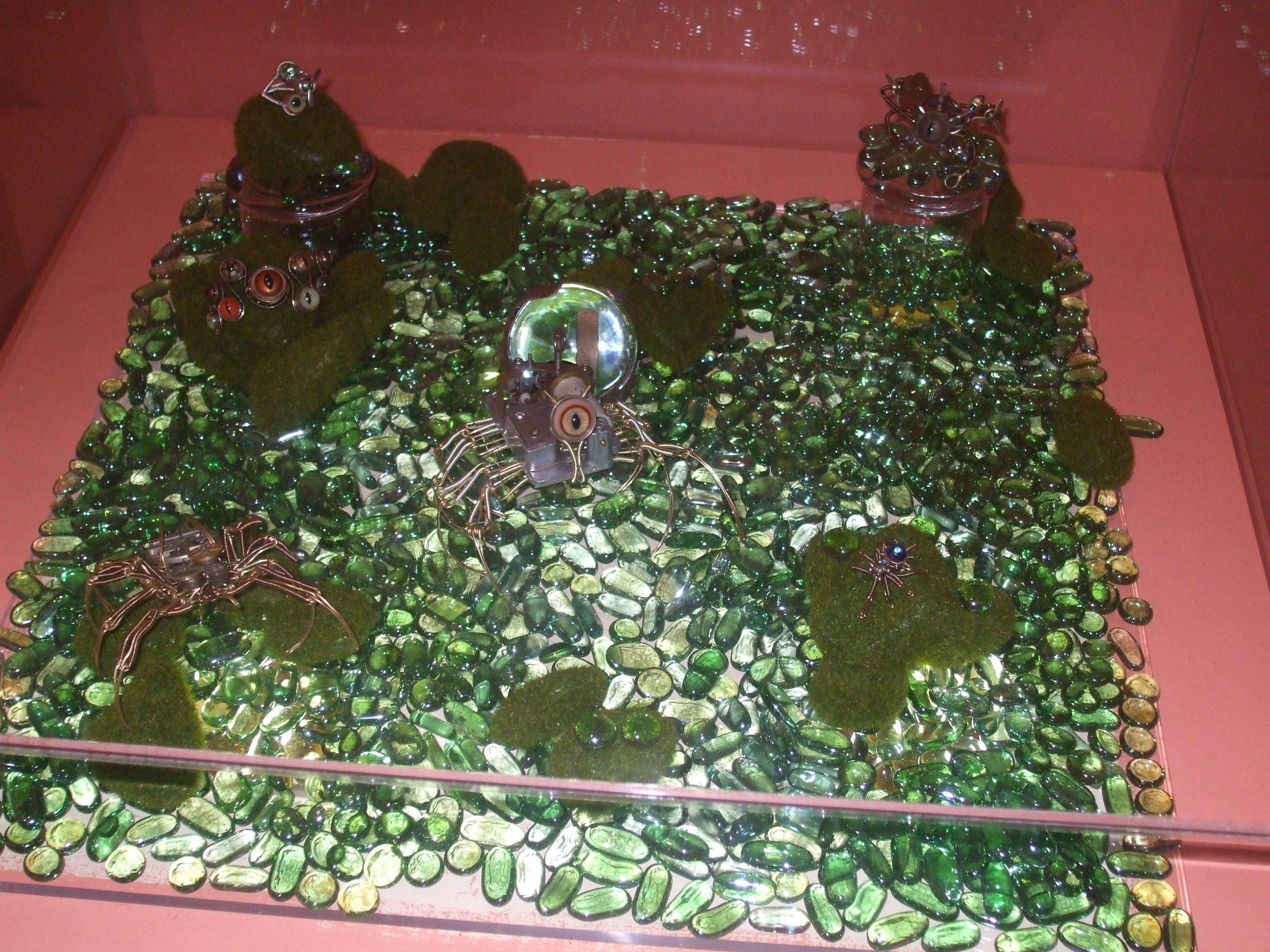
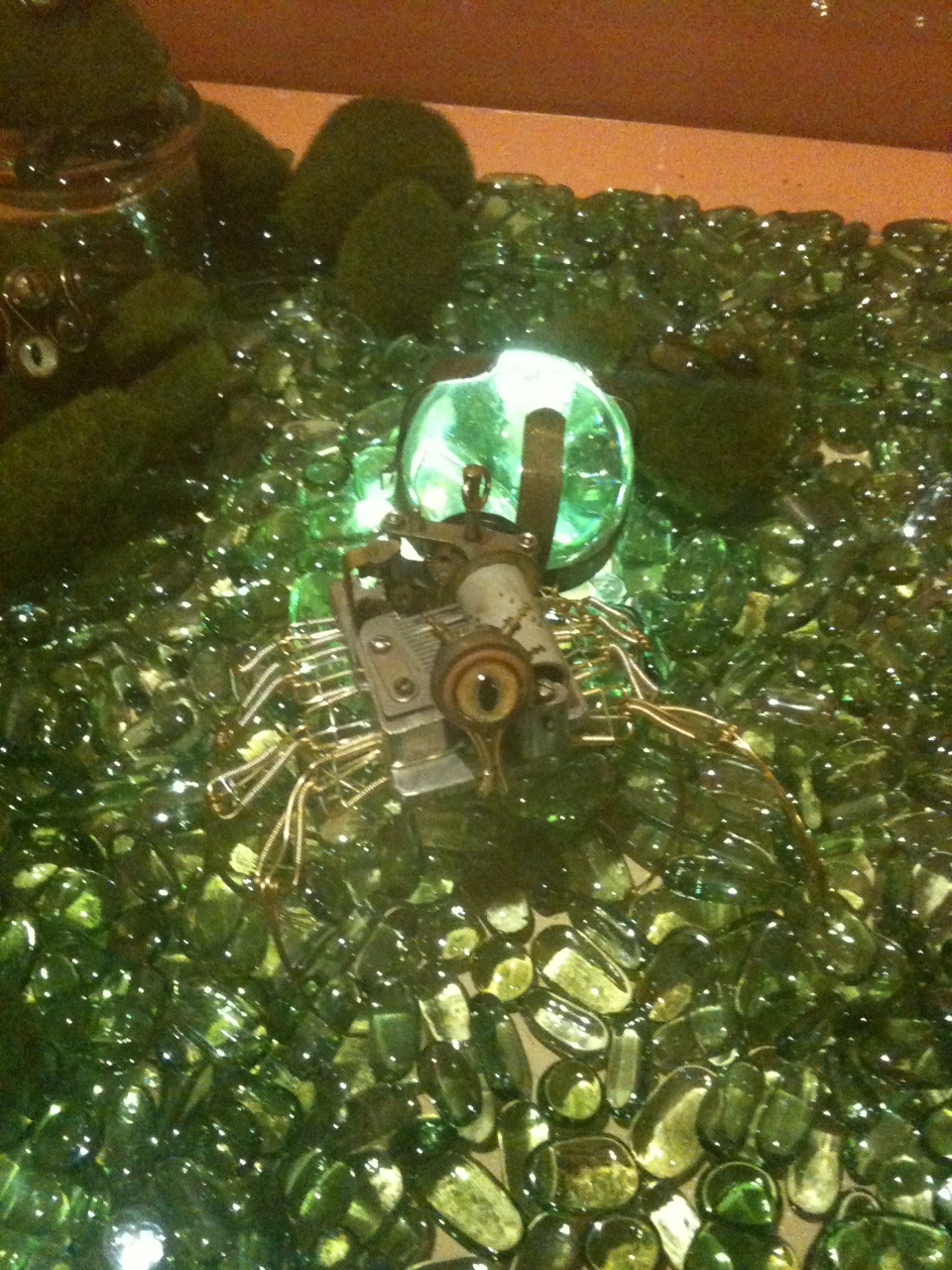
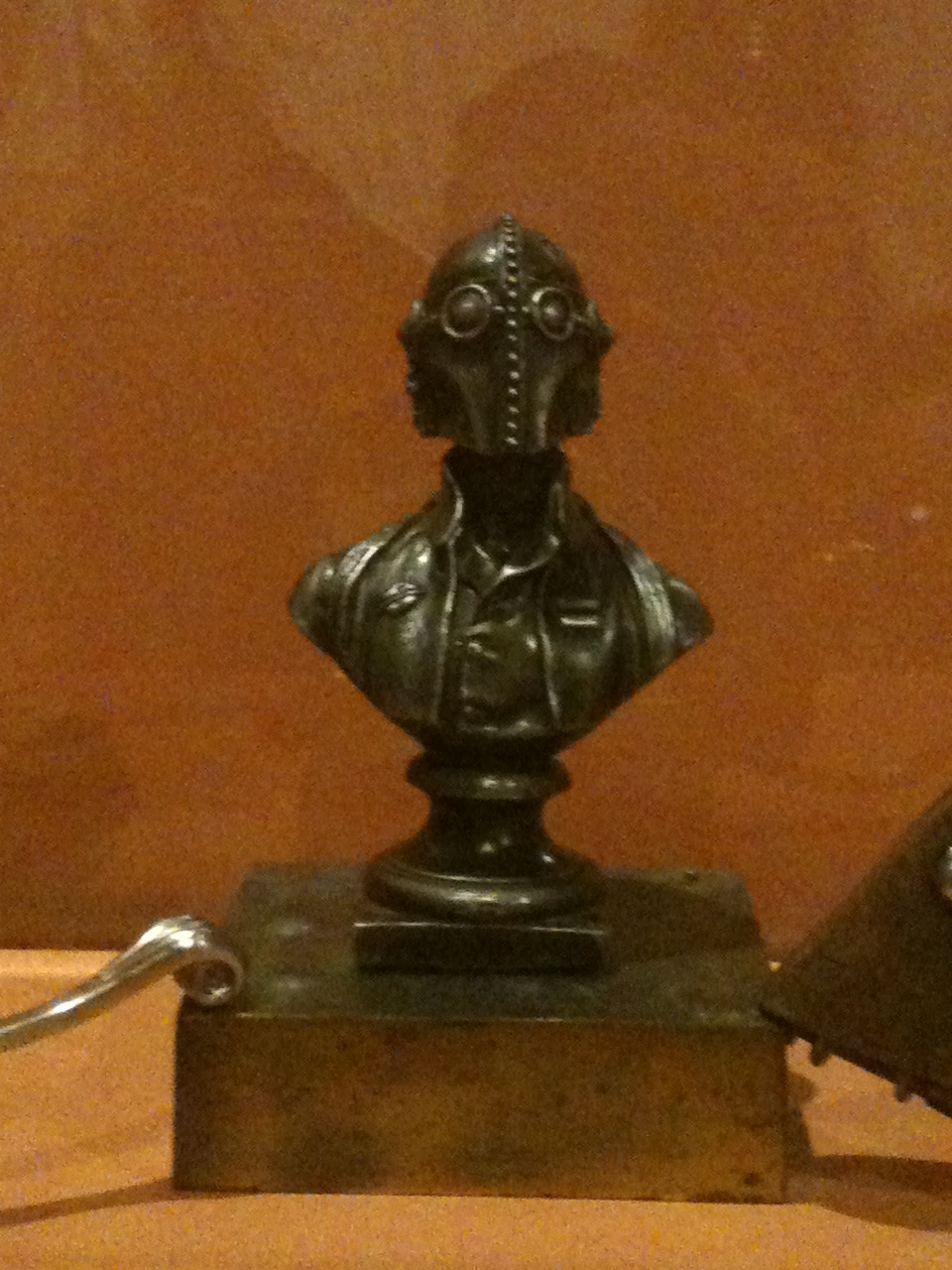
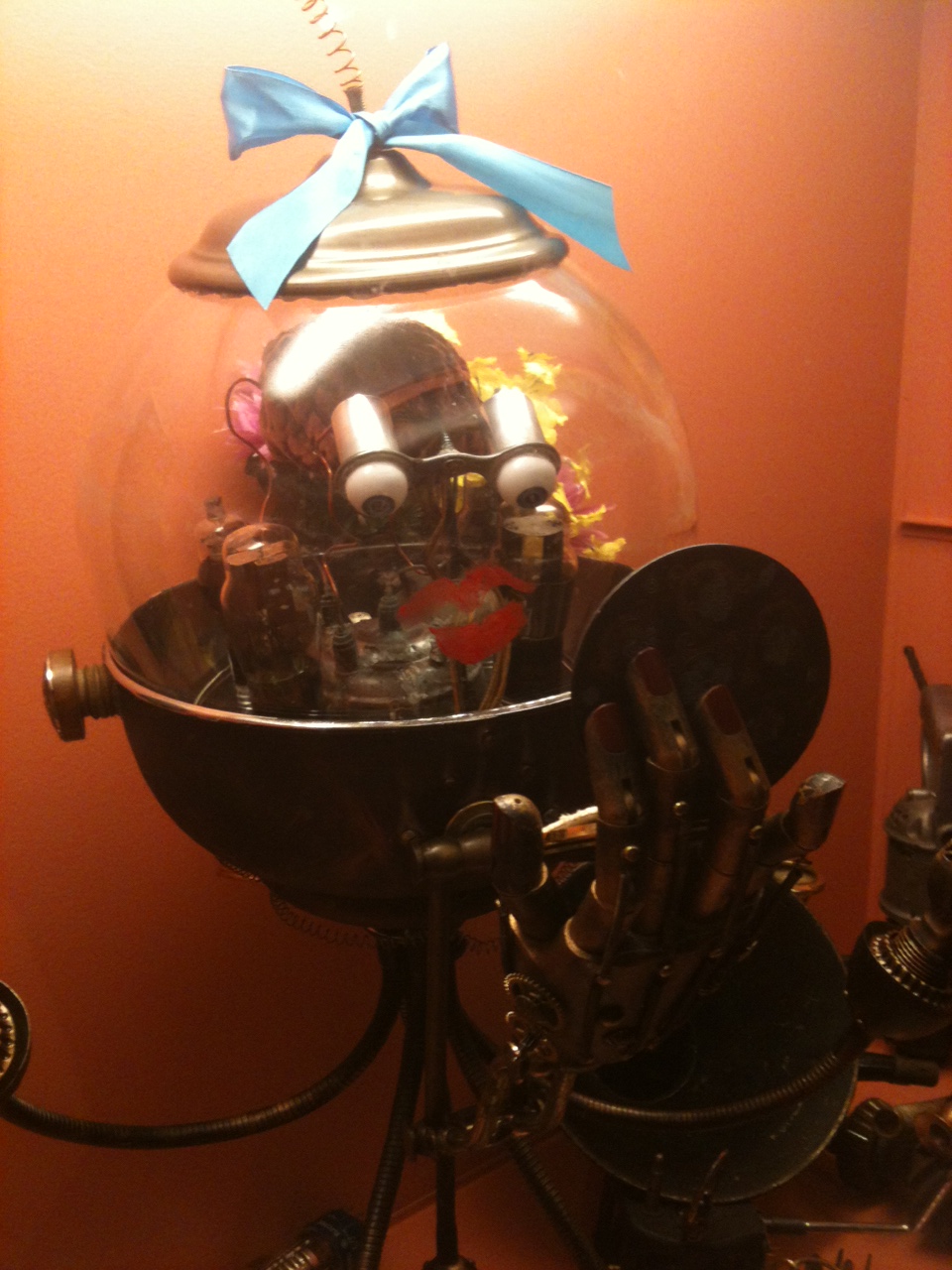
The 2011 Steampunk Bizarre Exhibit at the Mark Twain House and Museum ends Sunday, Jan. 15 with a showing of Stream Driven: The Movie, and a panel of artists talking about their work being shown in the exhibit from 12 p.m. to 4 p.m. The event is free and refreshments will be provided. Musician Eli August will be performing during this event as well.

A brochure at the event describes Steampunk as “an art movement inspired by great literature writers such as Mark Twain, H.G. Wells, Jules Verne, and Mary Shelley to name a few.”

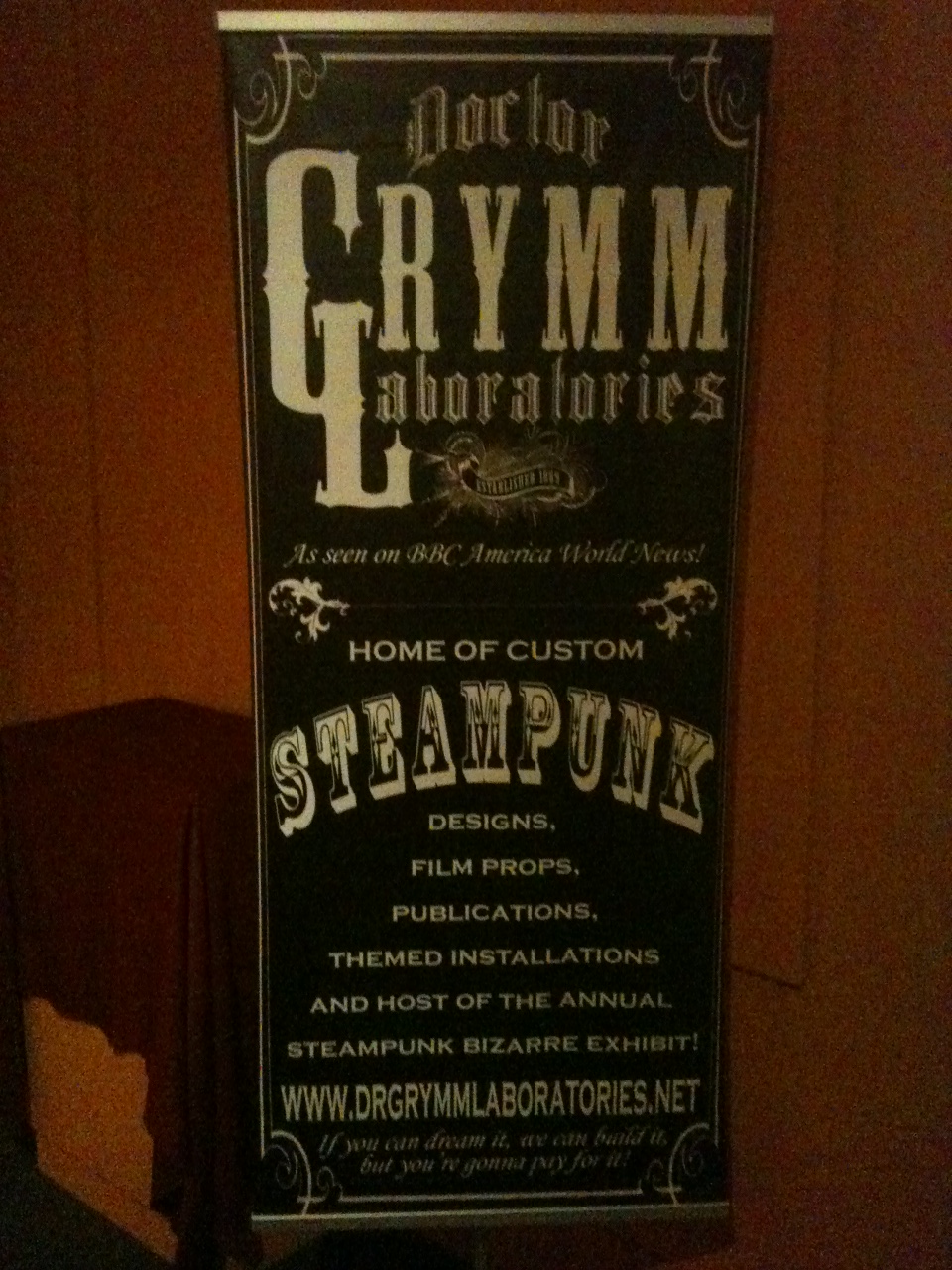
The exhibit is curated by local Connecticut artist Joey Marsocci, proprietor of Dr. Grymm Laboratories to bring together 21 international Steampunk artists of all styles and mediums to celebrate one of the greatest writers and ‘inventors’ of time travel, Mark Twain,” the brochure said.

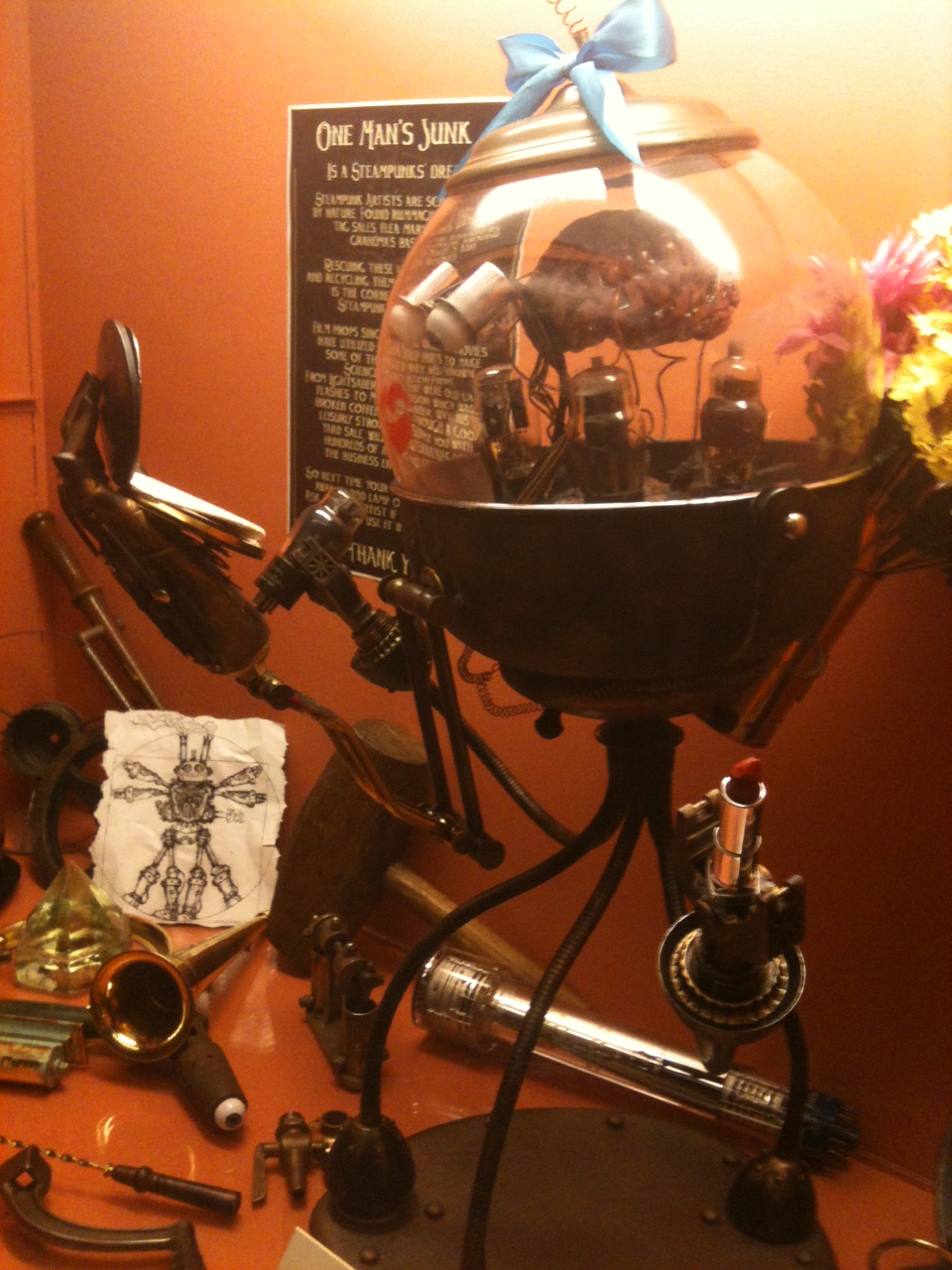
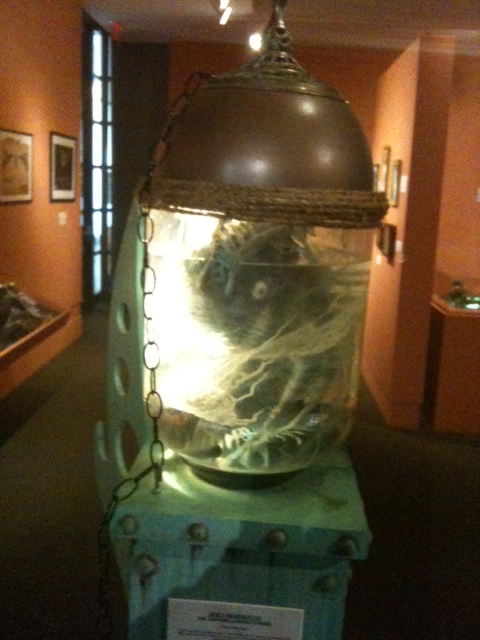
According to the Mark Twain House and museum website, “Dr. Grymm and the gang will offer one last chance to socialize among brass bolts, bubbling brain tanks, fantasy paintings, fantastic weaponry and backpack-borne Tom Sawyer fence-painting gear, all inspired by quotations from America’s bad boy author — you have to see it to believe it.”

The website quotes Steampunk aficionado Miss Kitty that “Steampunk is the future as imagined through the eyes of the past. It is mechanical gears and boilers, dirtiness mixed with the shininess of brass and copper with the deep red of cherrywood. It is a time for tea and gadgets, airships and ether.”

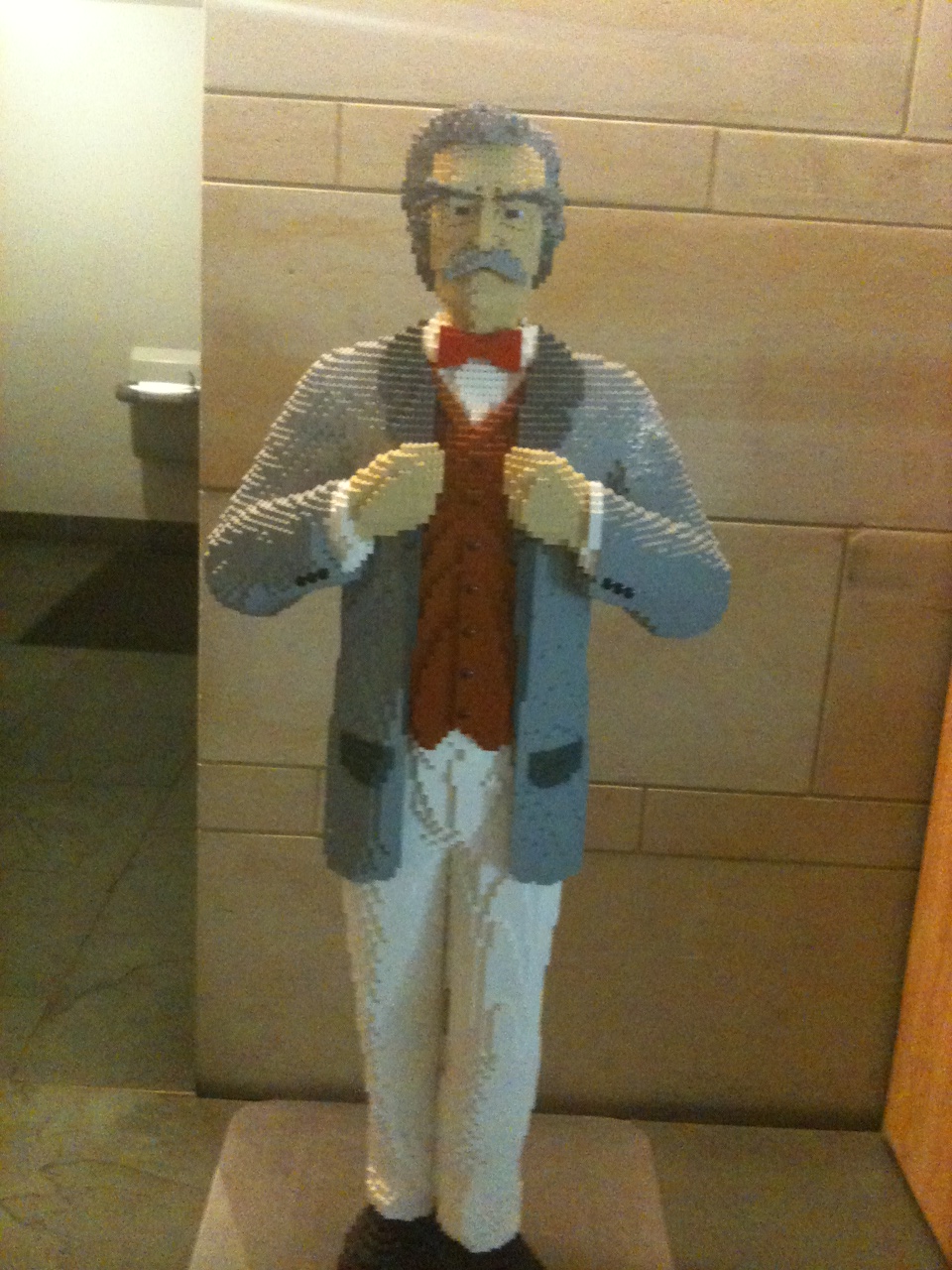
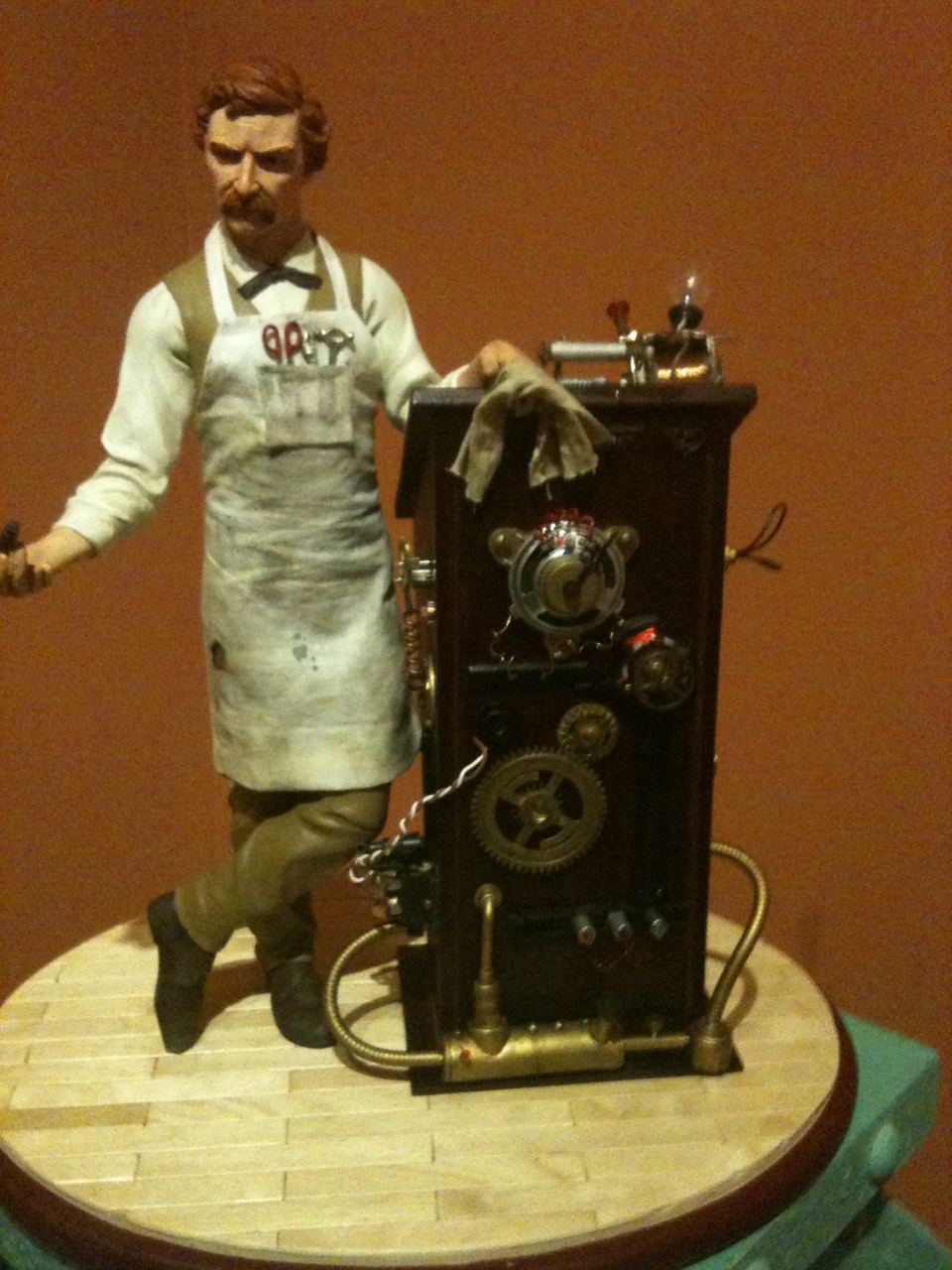
Mark Twain made out of Legos

"Fish Boy"

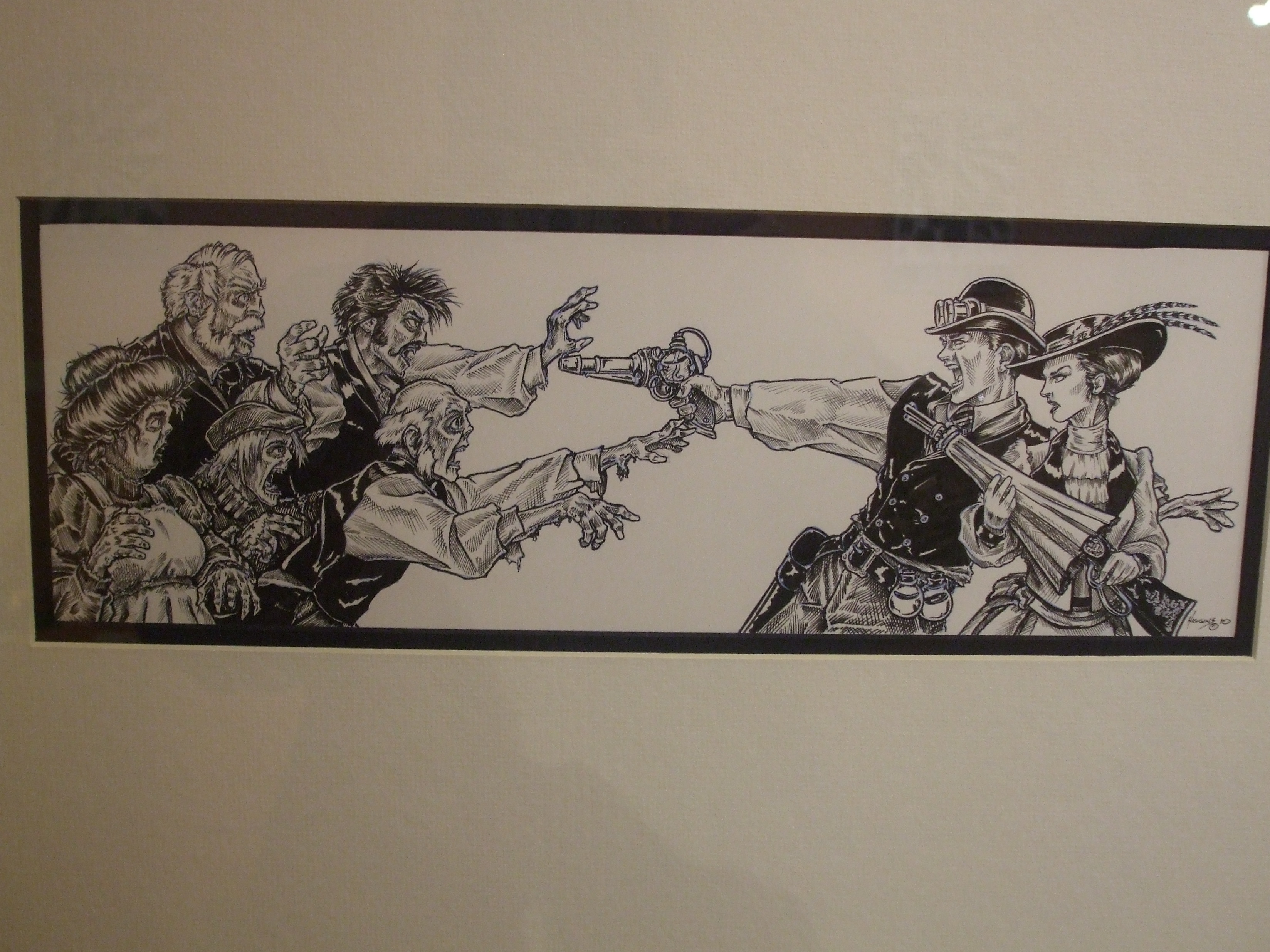
"Steampunk Zombies"

"Catherinette Rings - Canada"

Steampunk Boba Fett

"The Edgar Allen Poe Nightmare Inducer"

"Game Changer"

"Rumination"

For more information, check out the Mark Twain House and Musuem website.

The HWA Announces 2012 Recipients for Lifetime Achievement

The HWA Announces 2012 Recipients for Lifetime Achievement

by Jason Harris

The Horror Writers Association has announced the 2012 recipients of its Bram Stoker Award for Lifetime Achievement.

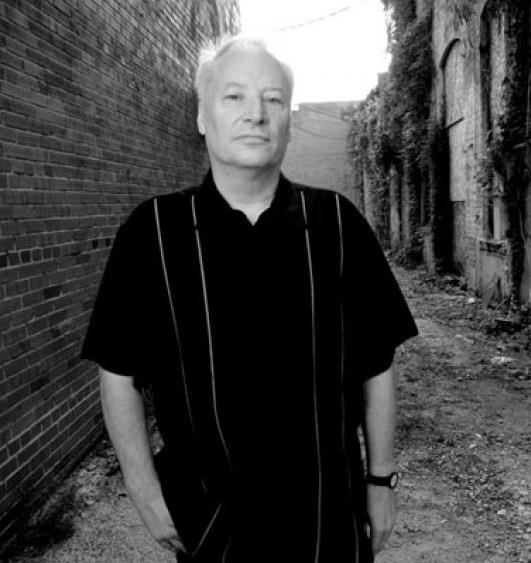
Rick Hautala (photo courtesy of his Facebook page)

The two recipients of the award are NEHW member Rick Hautala and Joe R. Lansdale.

Hautala and Lansdale join previous recipients such as Stephen King, F. Paul Wilson, John Carpenter, Thomas Harris (no relation), Anne Rice, Charles L. Grant, Harlan Ellison, and Ramsey Campbell to name a just a few of the people who have been honored with this award.

Hautala, who recently had his first novel, Moondeath, rereleased by Evil Jester Press and is in the NEHW’s first anthology, Epitaphs, released last year, said that receiving the award was “unexpected.”

Lansdale’s novel, All the Earth, Thrown to the Sky and the e-book, Bullets and Fire, were released last year. His newest book, Edge of Dark Water, comes out March 25.

“Truthfully, I am more humbled than excited by it,” Hautala said. “There are so many other writers who, I think, are much more deserving. I feel like Carrie White at the prom.”

Lansdale “was surprised” and “maybe even shocked” when he heard about the honor, he said.

Joe R. Lansdale (photo courtesy of his Facebook page)

“It’s an honor to be given this award along with Rick,” Lansdale said.

According to the HWA website, “the Lifetime Achievement Award is the most prestigious of all awards presented by the HWA. It does not merely honor the superior achievement embodied in a single work. Instead, it is an acknowledgement of superior achievement in an entire career.”

A committee chooses the recipients for the lifetime achievement award instead of it being voted on by the entire associations’ active membership, the website said. By having an committee, it “prevents unseemly competition” and the “impression that there are any losers in this category.”

Hautala said, he will “accept the award with humility and — yes, a measure of pride.”

He feels better “sharing the stage with Lansdale, who has been a great friend” for many years.

“As Harlan Ellison says: ’Becoming a writer is easy. It’s staying a writer that’s hard.’ So this award should be an inspiration to young and aspiring writers everywhere … If you stick around long enough, eventually they have to notice you.” Hautala said.

Lansdale agrees with Hautala’s sentiment about having to be noticed when “you have been around long enough.”

“… I like to think we’ve contributed to the field of horror and dark suspense, and that there’s someone out there who became a fan, or writer of horror, because of something I wrote, or something Rick wrote,” Lansdale said. “Again, it’s a great and respected honor.”