Review: ‘The Man in the High Castle’ by Philip K. Dick

by Vlad Vaslyn

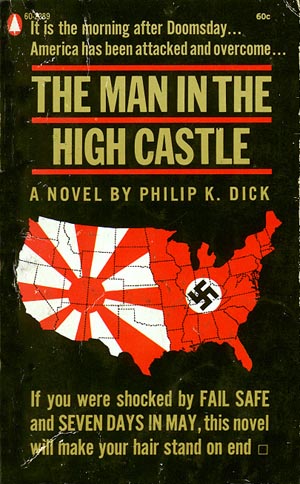
the-man-in-the-high-castleThis 1960s work paints a chilling portrait of what life might have been like if Germany and Japan had been victorious in World War II, and it remains one of the pinnacles of the Alternative History sub-genre for a very good reason. Simply put, I found the book stellar, with resonant characters and interesting and disturbing philosophical questions about Nazism and Japanese fascism if they had been allowed to play out across the globe unrestrained.

In this book, the Allies lost the war, and the Axis powers have divided the world up. The Japanese rule the west coast of the United States, the Germans rule the east coast, and the two powerless remnants of what was once America eek out an existence in the middle. In many ways the Japanese are a power unto themselves, but there is no doubt that the Germans are the stronger of the two. While not exactly subservient to the Germans, the empires still chafe against one another, for the racial identity that drives Nazi culture looks down all non-Aryan races, a fact that is not lost on the Japanese.

The story takes place in what was once California, leveraging the friction between the two empires into a potent story element; the political might of government officials and secret police loom over the characters en masse. A simpering arts dealer, an anxious and estranged wife, a slick Gestapo assassin, and a jewelry designer who lives by the commands of an oracle are pulled into a multi-pronged conspiracy as the two empires seek leverage on one another.

In the background, an award-winning novelist has written a book that infuriates the Nazi regime and ended up on a hit list. That book, The Grasshopper Lies Heavy, is a fictional account of what would’ve happened if the Allies won the war, providing an interesting mirror as the alternative reality portrayed in The Man in the High Castle reflects the true reality that we’ve all come to know.

The drama in The Man in the High Castle lies not in chase scenes or explosions (although there are some fascinating Science Fiction elements), but rather in a simmering, intellectual sort of political and ideological tension that hooked me throughout and built to a boil in the final pages. The book reaches an intriguing crescendo, and it becomes easy to understand why so many have dubbed The Man in the High Castle one of the great Alternative History novels.

It took me a couple of minutes to comprehend what I had just read when I finished the story. When it finally sank it, I leaned back and thought, “Whoa. That was heavy.” Such is often the mark of a great book.

Genre: Science Fiction/Alternative History.

Rating: 5 out of 5 Stars.

VladVaslynVlad Vaslyn is the author of Brachman’s Underworld, Yorick and The Button. He has been a guest performer at multi-artist events such as Cool Roots and Rooted, and has appeared in places such as Open Book Society, Yahoo! Shine, Indie Author News, Strange Amusements, and Digital Journal. He is an active member of the New England Horror Writers, and his background as a newspaper correspondent has earned him dozens of publishing credits as well.

We encourage you to view his work at: www.TheVlad.net.
Book Review: ‘A Shadow on the Wall’ by Dale T. Phillips

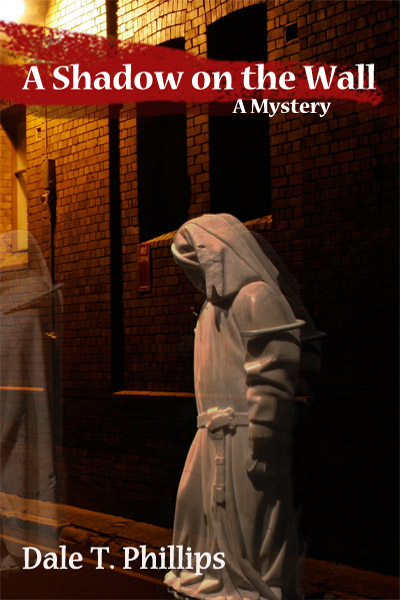
shadow_on_wall_cover_smashZack Taylor just can’t seem to escape his past. Ollie Southern, a member of a notorious biker gang, has cut a deal with the feds to get out of prison, and he’s returned to Portland, Maine to let Zack know he isn’t about to let bygones be bygones.

Meanwhile, Hollywood descends on his beloved city, and Zack is persuaded by a beautiful starlet to come on board as the martial arts liaison for what is sure to be a blockbuster film. But Zack is beside himself when he finds out the movie is actually about his own troubled past, and when someone in the business winds up dead, the blame falls on him.

Zack’s desire to put his past behind him has suddenly been complicated by questionable Hollywood ties to internationally organized crime, a police officer with an agenda, an old flame, a new flame, troubled actors, suspicion of arson and murder, and a big bag of money. And of course, Ollie Southern doesn’t help matters either.

What is an ex-con like Zack Taylor to do?

In A Shadow on the Wall, Dale T. Phillips delivers a high-octane mystery/thriller that moves seamlessly from dilemma to dilemma as Zack Taylor navigates the deadly mysteries playing out around him. Zack sizzles as a man with a troubled past trying to turn over a new leaf, and as a pawn and an unwilling player in an agenda he must understand before it kills him. His inevitable confrontation with a bloodthirsty Yakuza assassin delivers an exciting conclusion to what continues to be one of the more engaging mystery series I’ve read. The pacing in this book starts at 60 miles per hour and only accelerates from there, making it a quick, enjoyable read.

This is the best Zack Taylor book yet.

4 out of 5 Stars

Vlad Vaslyn, book reviewer

‘The Tenth Witness,’ An Intriguing and Heartbreaking Mystery

By Stacey Longo

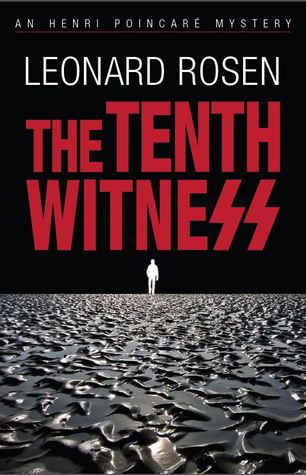
17233995Leonard Rosen’s The Tenth Witness is an intriguing and at times heartbreaking mystery surrounding the family history of both our protagonist, Henri Poincaré, and his new girlfriend, Liesel Kraus. The book takes us through the twisted path of their relationship and Henri’s search to learn more about the life of a man he considered an uncle, Isaac Kahane.

The Kraus family will make you as uncomfortable as they make Henri. With an estate populated with artifacts stripped from history, references to “superior bloodlines,” and a warehouse in Dachau, there’s enough here to make any visitor uneasy. When Henri attends Isaac Kahane’s funeral and learns a little more about Isaac’s years during the Holocaust, he decides to investigate. The problem? Isaac was once forced to work as a prisoner under horrific conditions at a steel mill owned by Otto Kraus, Liesel’s father.

As Henri digs deeper into the history of what really went on Drütte, a steel mill and concentration camp, he finds a record of slave labor and cruelty. This goes against an affidavit published in Otto Kraus’s biography, signed by ten Drütte prisoners, affirming that Kraus was a good man. Henri begins tracking down these witnesses, only to find that they are dying off at an alarming rate. Evidence that Nazi Germany was still flourishing during the late ‘70s arises throughout the novel, and the reader can empathize with Henri’s despair and disgust as he recognizes the evil in his fellow man and even himself.

The Tenth Witness will capture your curiosity from the first page. A captivating, compelling mystery, you’ll find yourself riding shotgun with Henri Poincaré, a bit afraid of what you might find out next, but unable to stop until you unearth the whole truth, no matter how disturbing.

Editor’s Note:

The Tenth Witness is scheduled to be released on Sept. 13.

Debut Novel is One of Revenge

by Stacey Longo

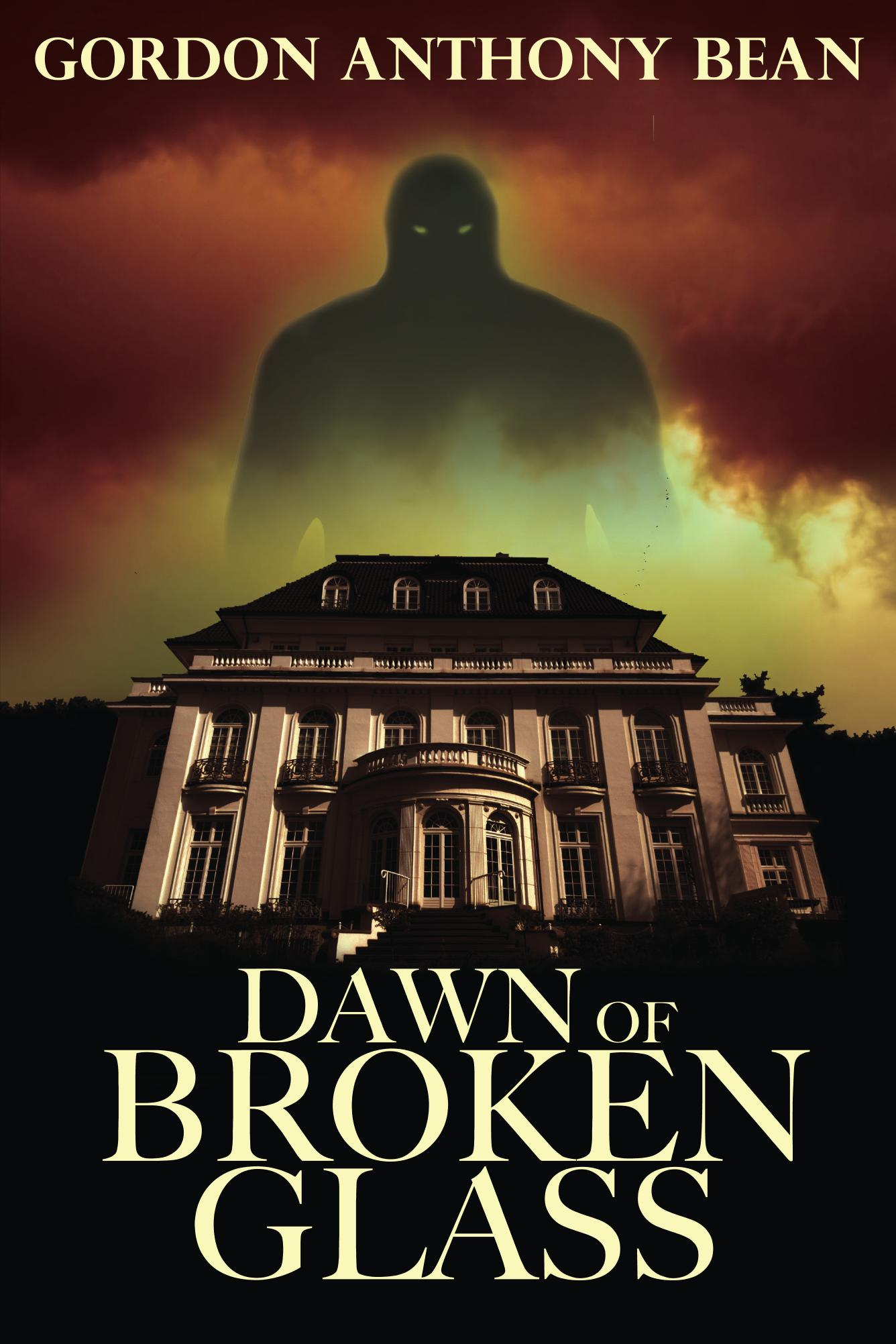
Dawn of Broken GlassGordon Anthony Bean’s debut novel, Dawn of Broken Glass, is a story of revenge, conceived by World War II Kristallnacht survivor Michael Carson and largely executed by his grandson, Ryan. Michael’s revenge is focused on the ancestors of the soldiers who mercilessly slaughtered Michael’s family.

The story opens by setting up the scene that results in Michael’s unwavering desire for vengeance. The scenario is gruesome, and Michael comes off as unlikable and warped. Ryan, too, seems motivated to carry out his grandfather’s plot mostly out of spineless fear, which makes him unlikable as well. Stick with it, though: once the soldiers’ living family members are collected and sent into a twisted, trap-filled labyrinth, that’s when the fun begins.

The maze is full of all sorts of ghoulish delights, from killer rats to tunnels wrapped in barbed wire. Each turn reveals a new horror, and our hapless victims work hard to try and escape. On top of the pitfalls that each tunnel offers, there’s also a monster stalking them, and a true baddie—Michael Carson’s assistant, Jason Froemmer—intent on making sure nobody makes it out alive.

As the story moves on, Ryan is fleshed out more, and the reader finds that he’s not such a bad guy, after all. He makes his way into the labyrinth to try and help some of his grandfather’s helpless quarry, and manages to redeem himself amid the chaos. The golem, which Ryan might possibly be able to control, yet doesn’t, is a satisfying recapturing of a centuries-old monster myth. And one of the descendants of the soldiers embodies all that was terrible about the Holocaust. You’ll be rooting for most of the participants to survive, but Paul Kaufmann, a racist and disgusting human being, will be the one you kind of hope doesn’t make it.

Dawn of Broken Glass offers a glimpse at the true ugliness of revenge and human nature. But it also offers hope: for survival, for redemption, and for faith in the kindness of strangers.

‘From Beyond the Grave’ is a Solid Collection of Ghost Stories

by Stacey Longo

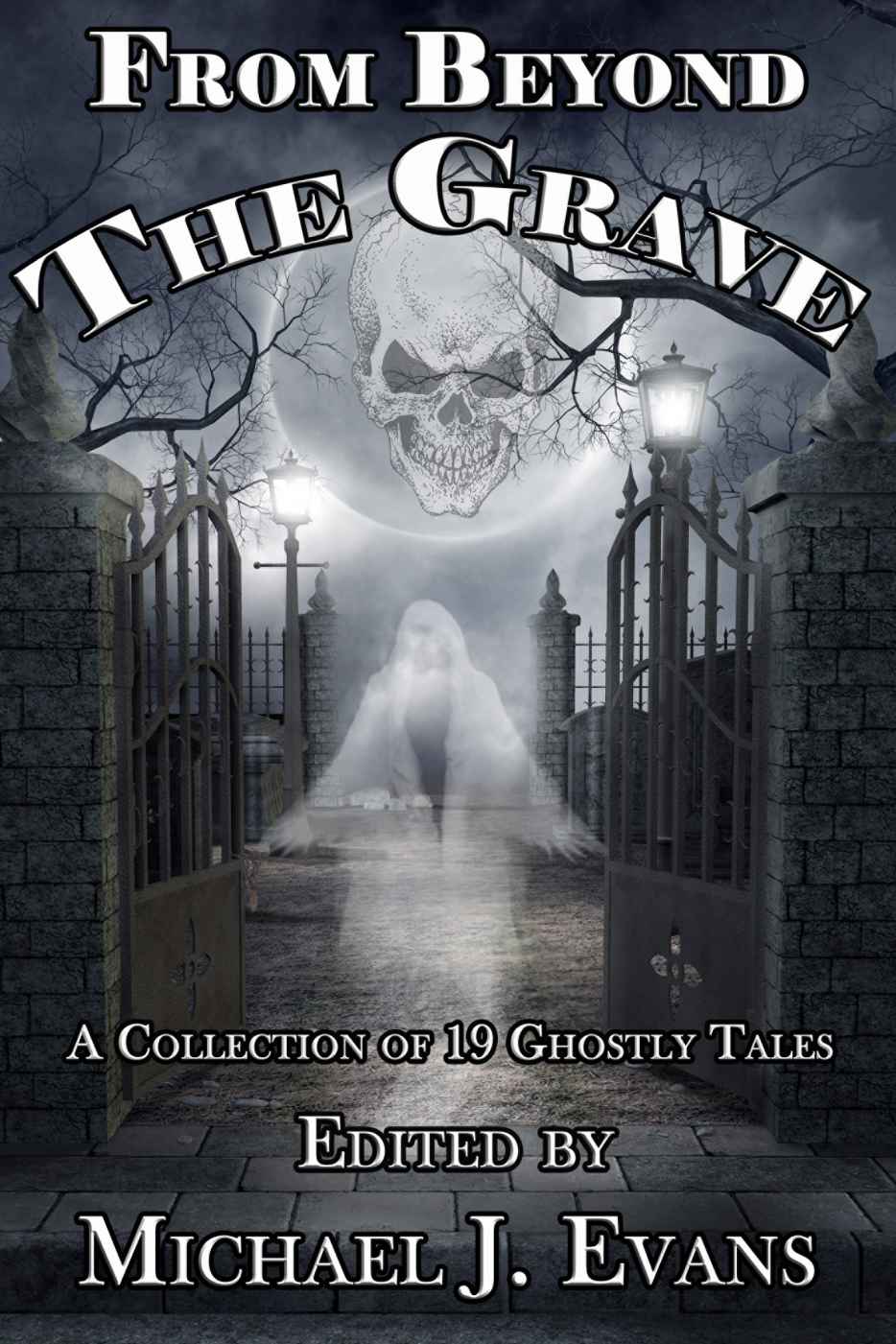
from-beyond-the-graveFrom Beyond the Grave is the debut anthology from Grinning Skull Press, a solid collection of ghost stories from a variety of authors. In the introduction, editor Michael J. Evans states “When I first set out to compile this anthology, I challenged the authors to scare the crap out of me, but they did more than that. Yes, they sent chills down my spine, but they also moved me in ways I wasn’t expecting.” Evans is correct—this collection of 19 ghostly tales is eclectic and intriguing. Personally, I couldn’t put it down.

Standout stories for me included “Cold Calling” by LisaMarie Lamb, the story of an artist who travels door-to-door selling paintings and fails to obey an all- important “no solicitors” sign. The description of the interior of the house and the odd little twist in the tale were vivid and satisfying.

“Spiritus Ex Machina” by Nelson Pyles is the story of a haunted car, and reminds the reader that you can exorcise a demon, but make sure you know where the demon’s headed once you evict it. It conjured up images of James Dean’s cursed silver Spyder and The Exorcist all in one package.

The anthology ends with “It All Comes Around in the End” by Jennifer Word, a modern-day ghost story set in Ireland with roots dating back 600 years. Most intriguing in this story is the farmer, Kell O’Donough, who tells his hapless tourists the history behind his plot of land. It’s a strong narrative with which to end the anthology, which I’m sure the editor was aware of when he was putting this together. Overall, I found this collection to be above par—no real clunkers found amid its pages—and a good, creepy read.

Editor’s Note:

Michael Evans will be at the New England Author Expo – Book Sale in Danvers, MA. next Wednesday (July 31) from 4 p.m. to 9 p.m. He will be at the Books & Boos table and will have copies of From Beyond the Grave available for purchase.

Review: ‘Interlands’ is ‘Perfect Example Why Self-Publishing can be a Good Thing’

By Stacey Longo

interlands coverInterlands by Vincent O’Neil (2013, Vincent O’Neil) is the perfect example of why self-publishing can be a good thing. The novel is well structured, reads at the perfect pace, and is hard to put down. There is no reason why O’Neil shouldn’t be picked up by one of the big publishing houses; but with so many voices out there, and so little money to sign new authors, it’s hard for a good writer to get a contract these days.

The novel introduces us to Angie Morse, a graduate student who is working on the final touches of her college thesis. The paper’s done, but she’s searching for a mysterious obelisk that she believes still exists somewhere in the area of Providence, RI. She’s found documents and photographic evidence of the monument, and even after uncovering some disturbing folklore surrounding it, is unable to give up her quest. There’s a great deal of mystery surrounding the obelisk as well as Angie herself, and the reader is given pieces of the puzzle along the way to hone one’s curiosity. O’Neil is able to answer questions in such a way that the reader thinks “Oh, that’s why! But what about this?”

The descriptions of Providence are eye opening, and the reader will never look at the city in quite the same way. (Being a New Englander myself, I can’t wait to go back and look at the buildings and train tracks through fresh eyes.) Interlands provides such an accurate and enchanting description of the WaterFire events that are held in Providence every year that if you’ve never been, you’ll swear you have after reading it.

O’Neil’s ability to slip into the horror/supernatural genre is impressive.  He has previously published a series of Frank Cole mystery novels (Murder in Exile, Reduced Circumstances) and a sci-fi novel as Henry V. O’Neil (Glory Main), but he slides into the horror/thriller genre with ease. His novel tips its hat to Providence native H.P. Lovecraft, but O’Neil has a style and structure all his own. There’s no need to be a Lovecraft fanatic to enjoy this book—it has a tight plot and straightforward style all its own.

There were a couple of questions that didn’t get fully answered for me – there’s a mysterious man that Angie dances with that I felt could use more explanation, and (without spoiling anything here) Angie’s reaction to her former roommate at the end was much more placid than I’d expected. But overall, this is a satisfying read. Interlands is vividly crafted and well worth the read.

Taking a Ride with ‘The Trip’

Taking a Ride with The Trip

by Jason Harris

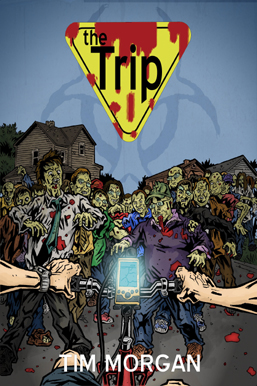
trip_cover_colorThe Trip by Tim Morgan tells the story of three teenagers who decide to travel by bicycle from their hometown of Billerica, MA. to Seattle, WA. after their graduation. On their trip, the Mumbai virus wreaks havoc on the world and their trip. It causes Dave, Meghan, and Chris to turn around and go home because they wanted to be with their families.

The virus causes people to become sick, die, and then become zombies. The zombies are not the slow moving kind, either. You would think that people on a bike wouldn’t be able to outride even one running zombie, let alone hundreds. It’s easy to overlook this fact because you care for these characters and hope they make it home.

Morgan starts each chapter with a news report about the virus and its spread. The chapters go back and forth between them trying to get home and planning for their trip while finishing their senior year in high school. The book starts with Meghan’s blog entry. She has a laptop and a solar panel to charge it while she’s on the road. Throughout The Trip, she is updating her blog and hoping her family or someone is reading it.

The Trip was interesting and kept me turning the pages. Any book that leaves you wanting more is always a good book.

Nick Cato’s Book Review

Nick Cato’s book review of
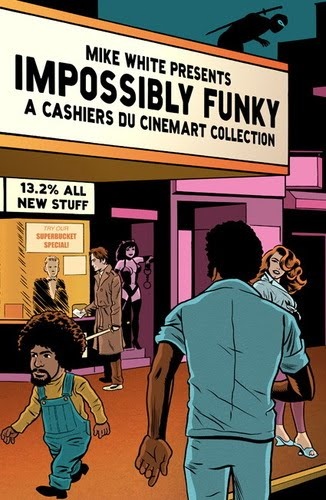
Impossibly Funky: A Cashiers Du Cinemart Collection by Mike White
(2010 Bear Manor Media / 377 pages / trade paperback) from Cinema Knife Fight (www.cinemaknifefight.com)

20111001-221801.jpg

From 1994-2008, Cashiers Du Cinemart was a fanzine featuring wildly opinionated movie reviews and retrospects, as well as interviews, with everyone from Crispin Glover to cast members of seldom-seen 70s blaxploitation films. Impossibly Funky collects some of the fanzine’s finest moments, and features introductions from exploitation film guru Herschell Gordon Lewis to the founder of Film Threat, Chris Gore.

Author Mike White is perhaps best known for calling Quentin Tarantino out for certain “similarities” between the 1989 Hong Kong movie, City on Fire, and his own film, Reservoir Dogs. White even made a short feature, Who Do You Think You’re Fooling?, which shows (side-by-side) shots from both films, calling Tarantino’s motives into question. The opening chapters of the book deal with this whole saga, and while I had seen White’s film online, there’s plenty more here for those interested in this on-going celluloid grapple.

Among my favorite sections were Mike Thompson’s look at the original script for the Nicolas Cage film 8mm, Mike White’s section on Alien 3, White’s interview with Canadian cult film director Guy Maddin, and of course, the huge section dedicated to the 1975 blaxploitation classic, Black Shampoo, which features an overview of the cast, interviews with the director and a few stars, and an interesting story on how Mike and his friends became addicted to it (and still hold annual viewings).

While I haven’t mentioned even half of what’s on display here (Star Wars fans will get a kick out of the small section dedicated to it), Impossibly Funky looks at films through the eyes of super-geek film fans, and while (at times) things get a bit obsessive (I mean, what film geek doesn’t get obsessive when talking films?), film fans will not be bored, even if a topic being discussed isn’t of particular interest.

A fun. informative, and smart book to garnish any film freaks’ book shelf.

© Copyright 2011 by Nick Cato