Book Review: ‘Accidents of Marriage,’ the newest offering from Randy Susan Meyers


By Stacey Harris

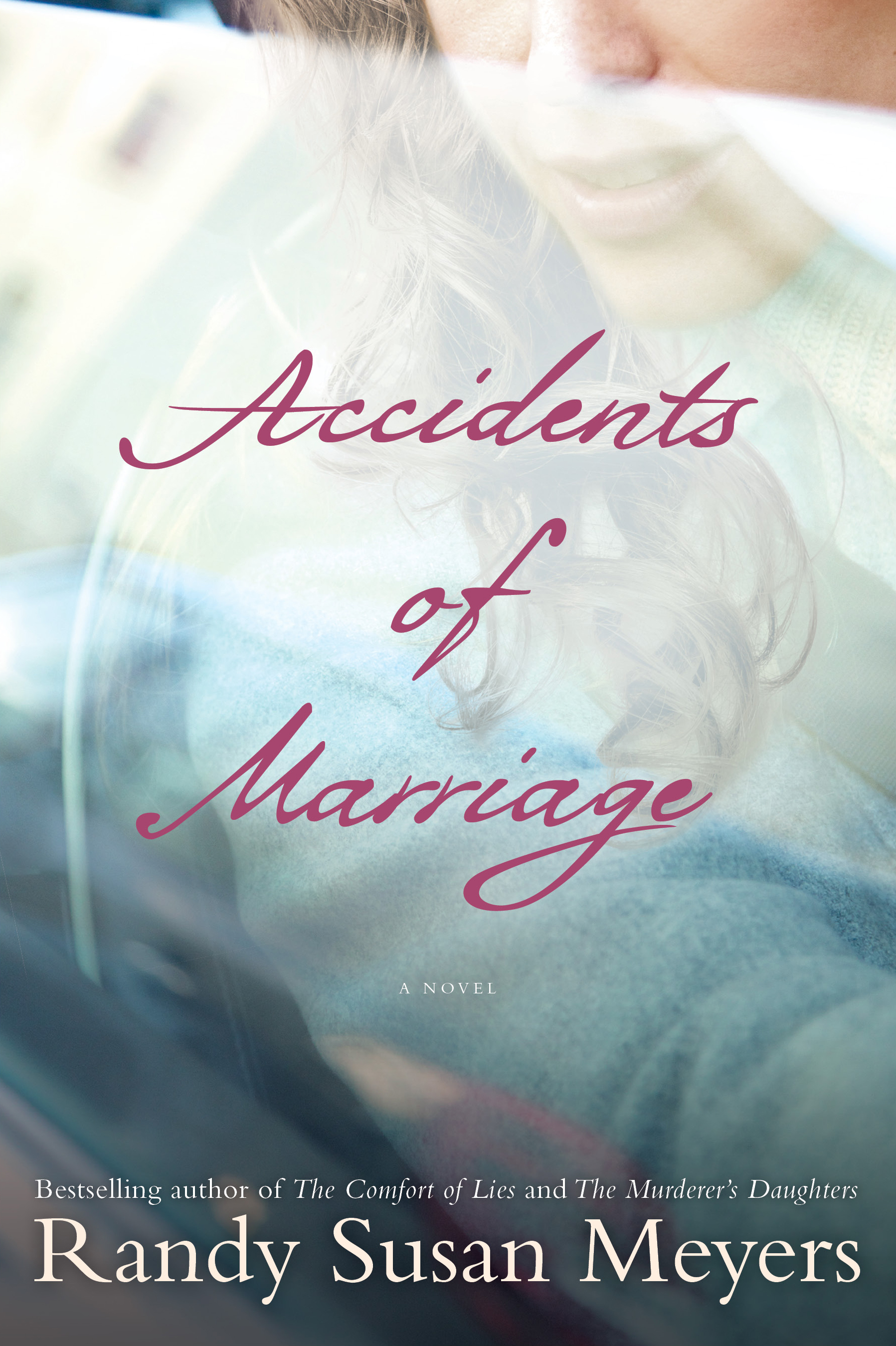
ACCIDENTS-OF-MARRIAGE-COVER-feb-27-2014

Randy Susan Meyers’ latest riveting offering, Accidents of Marriage, takes the reader through the strained workings of an unhappy marriage to the shattered remains after this marriage implodes. Ben and Maddy are struggling to raise three children and keep their relationship balanced, while the dark cloud of Ben’s temper always looms overhead. It’s Ben’s hotheadedness that results in a terrible accident which lands Maddy in the hospital with a traumatic brain injury.

Seamlessly told from the perspectives of Ben, Maddy, and Emma, their 14-year-old daughter, Meyers takes us through the cycle of Maddy’s transformation from victim to survivor, and the impact her accident has on the family dynamic. Blame is thrown like paint across a landscape, and nobody escapes the feelings of guilt, shame, and hopelessness that accompany it. The reader will find Maddy both likeable and oblivious (after all, she works with abused women, yet can’t seem to recognize the signs in her own marriage). Emma comes across as a true teenager, at times entitled and shallow, but as her role within the family changes after her mother’s accident, alarmingly burdened with the responsibility of keeping things running smoothly. She’s an empathetic character with a teenage attitude: the reader feels pity for her, but sometimes, her selfishness is aggravating. Kudos to Meyers for capturing the essence of the average American teenage girl.

Most surprising is Ben, who begins in this novel as a truly unlikeable and selfish man. His struggle throughout the book to do right by his family and better himself improves his character immensely, to the point where the reader almost feels sorry for him. Almost. Let us not forget he is the one who put Maddy in the hospital to begin with, and while the reader can draw a conclusion as to whether Maddy should forgive him, it is ultimately Maddy’s decision, after all.

Accidents of Marriage is an intriguing read that will leave the reader questioning what they themselves might do in such a complex and intense situation. This novel’s captivating narrative of family transformation makes Ben, Maddy, and Emma impossible to forget.

The book will be released on September 2. You can preorder through Amazon by clicking here.

Award-winning Photographer turned Horror Writer

By Jason Harris

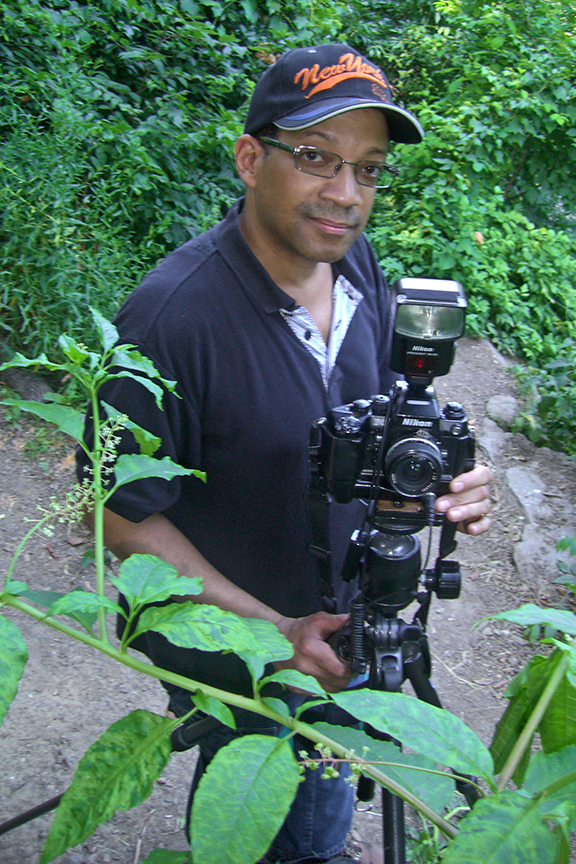
F.M. Kearney1

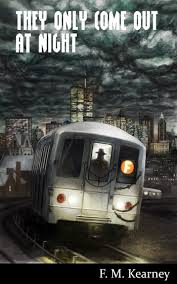
F.M. Kearney, an award-winning photographer, has written his first horror novel, They Only Come out at Night. Today, he’s talking  about his career, New York Subways, and writing his first horror novel.

JH: How long have you been a fine art nature photographer?

FK: I’ve been a fine art nature photographer for about 20 years.

JH: What awards have you won for your photography?

FK: I’ve won numerous awards from various magazine and online photography competitions, ranging from First Place to Honorable Mentions.

JH: In the 80’s, you worked as a photojournalist for various New York City newspapers. What newspapers did you work for? What were you covering for them?

FK: I’ve worked for a number of local papers such as Town & Village, City Limits, The Phoenix, The City Sun and The New York Tribune. I mainly covered news pertaining to the particular neighborhood or borough that the paper serviced, but I also did hard news as well. I’ve done ride-alongs with FDNY and NYPD undercover units. I covered the first bombing of the World Trade Center in 1993. I’ve also photographed many famous people, such as Bill Cosby, Mayor David Dinkins, Fred Lebow (founder of the NYC Marathon) and several sports celebrities in one-on-one sit-down interviews.

F. KearneyJH: What inspired you to write your first book and what was the idea behind it?

FK: I suppose my inspiration was two-fold. The first, and most obvious inspiration, came from my own personal experiences in the subway. As a photojournalist, I rode the subway all over town traveling to and from my assignments. I lived (and still do) in Manhattan, and up to that point, I had never really been to a lot of the stations in the outer boroughs, i.e., The Bronx, Brooklyn and Queens. I was really amazed at the total contrast in environments. You see, when most out-of-towners think of the NYC subway, images of Times Square and Grand Central Station will undoubtedly come to mind. These are huge, bustling hubs filled noisy activity and throngs of commuters almost 24/7. They have come to define what the NYC subway is all about. However, stations like these only account for a tiny percentage of the 463 stations of which the entire system is comprised. The vast majority of stations are nothing like that. In fact, I would even say that they are the polar opposites. Many of the stations in the outer boroughs (and even some in Manhattan) are very quiet, dimly lit and sparsely populated…and that’s in the middle of the day!  I can remember being in certain areas of some stations that were sore mote and so creepy that I felt very uncomfortable and couldn’t wait to get out. Many of these areas have since been sealed off to the public…presumably because of the safety risks they posed. I couldn’t help but think that this would be a perfect location for a horror story. To be honest, I’m actually surprised that Hollywood doesn’t use the NYC subway as a regular setting for horror movies.

My second inspiration came from one of the most unlikely of sources…a disco song. In the 80’s, Peter Brown released a single called, “They Only Come Out at Night.” It’s an upbeat tune about people (referred to as “creatures of the night”)  who like to go out clubbing. The song features the haunting sound of a saxophone — the kind of sound one might hear while walking along a deserted city street at night. Between that, and my experiences in the subway, They Only Come Out at Night (the book) was born.
JH: What drew you to writing in the horror genre?

FK: I’ve always been a fan of everything horror related…books, movies, TV shows, you name it. But, I always found one flaw in almost every story. It seemed as though a lot of time and effort went into producing the chills and thrills throughout the story, but the ending was usually somewhat of a letdown. Of course, most horror stories are fiction, but it seemed as though no attempt at all was made to make the story even halfway believable. I wanted to write a story that made sense — a story that, albeit fictional, contained enough factual details one might wonder if it could actually happen.

JH: Why did you use the New York City subway as the main setting?

FK: Aside from the reasons already mentioned, I used the subway because of its familiarity to so many people — even if they don’t happen to live in a major city that has a subway. Most tourists will make riding the subway one of their “must-dos” while visiting. Very few people will ever find themselves in an actual haunted house or a foggy cemetery at midnight. The same can’t be said for a subway. I think the chills are far more intense when you read about scary things happening in a more familiar and commonplace environment. After having read the book, a lot of people have told me that they will never again ride the subway alone at night.

JH: What type of research did you do for the book?

FK: I visited every major location I wrote about with a digital tape recorder. I recorded everything I saw, heard, smelled and felt…things that I (and probably most people) would never even give a second thought. This greatly helped to create atmosphere. I also researched news articles about local crimes committed in the area, and spoke with the NYPD about specific rescue procedures in the subway. As far as the supernatural aspects of the book are concerned, I went online and researched actual case studies and terminology. Lastly, the dates in the book are very important. I went to the library to insure that the days of the week and the newspaper articles I mentioned were correct.

JH: How long did it take you to write the book?

FK: Since I had no deadlines and was basically just writing for fun, I’d say it took about 10 years from start to finish.

JH: What’s been the reaction of some of the people who have read the book?

FK: Chapter One, by far, has received the biggest reaction! Many of my friends have told me that it was the most intense thing that they’ve ever read. Although they thoroughly enjoyed it, I realized that it might be a little too intense for the average reader. Before releasing the book to the public, I considerably watered-down this chapter from its original version. Even so, a number of reviewers have commented on just how violent this chapter is, and a few were even unable to get past it. Make no mistake, Chapter One is not for the faint of heart, but it is necessary to the story as a whole.

JH: Are there any other genres, you want to write in?

FK: As a nature photographer, I’ve considered putting out a non-fiction book about nature photography at some point in the future.

JH: Who is your favorite author/authors and what is it that really strikes you about their work?

FK: I like many of the works from Dean Koontz and Stephen King. I think King’s books are much better than his movies — many of which leave me scratching my head. These writers have a way of painting a picture with words that tends to put the reader right in the scene. I tried to do that with my book as well.

JH: What books have most influenced your life the most?

FK: I don’t know if I can point to any one book of fiction. However, I’ve read many photography books that greatly influence the way I shoot.

JH: Are you working on a second novel?

FK: Not at this time. Many have suggested a sequel to They Only Come Out at Night.  Although it definitely lends itself to a sequel, I can’t see myself writing one. Unless you’re talking about an action series, most sequels rarely live up to the original.

JH: What are your current projects?

FK: I’m currently focusing more on my photography and photography articles.

Author Travels State for ‘The Signs of Connecticut’

By Jason Harris

Tom Fatone

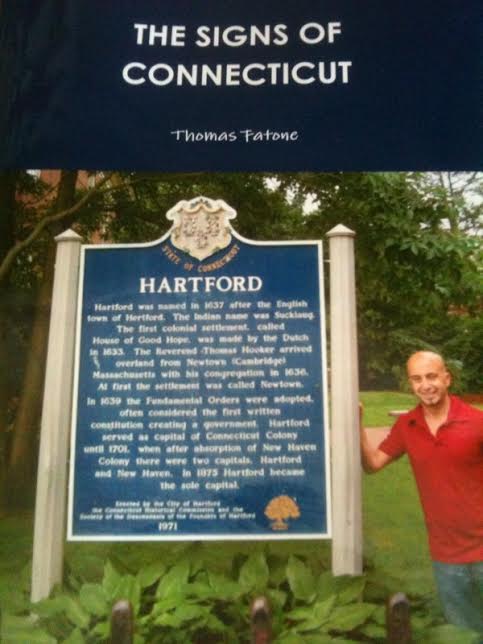
Author Thomas Fatone took over 15 years to complete his book, The Signs of Connecticut. It took him 13 years to drive around the state taking the pictures of all the blue town history signs and another two years to write the book, he said.

1. What was the impetus behind the book?

My impetus behind the book was my interest in history within the state I live. I also did not have much money to travel to far places when I was younger, so I decided to make Connecticut my own little playground, traveling to all corners of  our great state. The CT Post did a story about me when I was 50 signs in. They said “give us a call when you write your book.”

2. What year did you start the project? How old were you at the time?

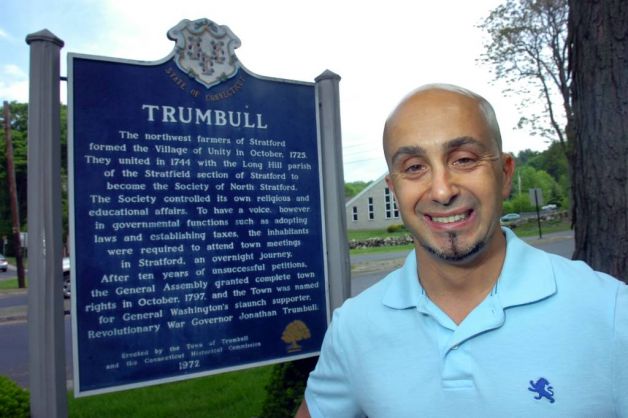
My project began with my 1st picture of the Trumbull Sign in 1997. I was approx. 29 years old at this time, still had hair and was wet behind the ears. It had taken me a lifetime to finally stop and take a picture of this 1st sign. From there on in, I was hooked!

Photo courtesy of the Connecticut Post.

Photo courtesy of the Connecticut Post.

3. Did your job as a traffic coordinator for the Department of Transportation inspire this project? And did having the job help you in your project at all?

Working as a traffic coordinator helped me a great deal when it came to this book. My job has me dealing with maps often. So by working with the maps, it helped me a great deal in getting familiar with the roads before they were traveled.

4. What were some of the most memorable towns in Connecticut that you visited?

This is a question I receive often. There is not one favorite town, but I like to go with my top 5. They would be, in no order: Washington, Ridgefield, Milford, Woodstock and Branford. This list could continue, but these are the most memorable.

5. Since you will be speaking at Books & Boos in Colchester in March, did you learn anything about Colchester when you took a picture of the Colchester sign? 

The thing that’s stands out about Colchester is that it seems all the state roads in the state come together here at the town green. I also, learned about legendary Harry’s, as it was right down the road. Of course, I stopped for a hot dog and shake.

6. Where is the Colchester sign located?

The Colchester sign is located on its town green, like most of the 169 signs. But not all.

7. Did you learn anything about the different Connecticut towns during your travels that you didn’t know about them? 

There are so many things I learned about CT while traveling the state and taking the pictures of the signs. This is why I wrote this book, as I wanted to share my experience. Some that stand out are that the highest point of the state is in Salisbury, visiting the Book Barn in Niantic, and that Mystic is not officially one of the 169 towns. How about getting books for buying a meal at the Travelers Restaurant in Enfield?

8. Since you have been to all 169 towns of Connecticut, have you thought about writing a book about what each town offers and what people can find there?

In my book, I not only have taken the pictures of the blue town history signs, but I have also documented my experience as well. It’s two stories in one. You have the history of the town itself based on what is written on the sign. Then you have my experience, based on a place I ate, a person I met, a picture I took and anything off the beaten path.

9. Do you have any current projects?

At this time, I have no current projects in mind, though I would love to do another book. Maybe boroughs of Connecticut, more signs of Connecticut or anything Connecticut. I love this state!

You can order The Signs of Connecticut here. You can also check out the book’s Facebook page here.

Thomas Fatone will be at Books & Boos with his book, The Signs of Connecticut, on Saturday, March 8, from 5 p.m. to 7 p.m. He will talk about his experience working on the book and answer any questions about this endeavor.

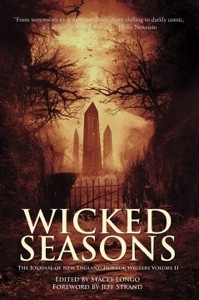
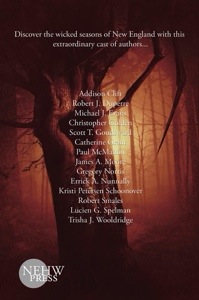
The Final Front and Back Covers for ‘Wicked Seasons’ Unveiled

20131024-005442.jpg
The final front and back covers for the second New England Horror Writers anthology, Wicked Seasons, edited by Stacey Longo and debuting Nov. 9 at Anthocon have been released.

The cover was done by Mikio Murakami.

This is the second NEHW anthology and the first from NEHW Press.

Longo congratulates all of the contributors, and gives many thanks (and her unending gratitude) to Jeff Strand and Holly Newstein Hautala for providing the foreword and cover blurb, respectively.

You can read the TOC here.

20131024-005546.jpg

Cover Revealed for ‘Secret Things’

Books & Boos Press is pleased to announce the cover artwork for Secret Things, a collection of scary tales by Stacey Longo. The cover was created by artist Stephanie Johnson, the cover is reminiscent of Saul Bass’s work, but with a style and flair all its own.

SecretThings

“I’d seen some of the covers Stephanie did for Kate Laity—most notably Noir Carnival and Weird Noir—and knew she’d be the perfect choice to design the cover for this collection,” Books & Boos Press co-owner Jason Harris said. “She was wonderful to work with, and we’re so happy with the result!”

The short story collection will be released in October 2013 as both a paperback and e-book.

Author at Bozrah Farmer’s Market

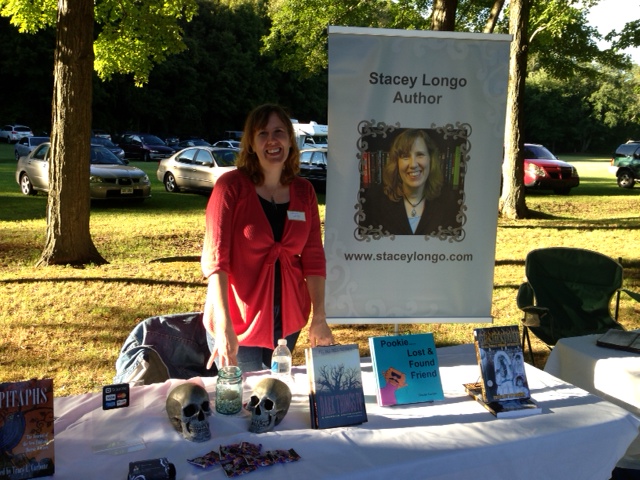
Author Stacey Longo was at the Bozrah Farmer’s Market recently for Connecticut Author’s Night. She was one of 18 authors at the event.

2013-09-06 15.36.24

2013-09-06 17.21.32

Longo has a collection of 12 stories, Secret Things, coming out in October. She is also editing Wicked Seasons,which is the New England Horror Writers’ second anthology. It will debut at this year’s Anthocon in November. You can see the TOC here and the front and back covers here.

Issue #2 of ‘The Uninvited’ is Available

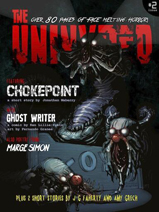
the-uninvited-2The second issue of The Uninvited magazine is now available. It contains the stories “Chokepoint” by Jonathan Maberry (Rot & Ruin) and  “Double Helix” by Amy Grech (Blanket of White). Click here to download the issue.

Getting to Know Author Rachelle Bronson

By Jason Harris


Author Rachelle Bronson started writing when she was very young. It was around the age of 6 or 7.

“I would fill those school notebooks full of drawings and stories. I’ve always had a good imagination, and seeing those ideas turn into reality struck a chord.”

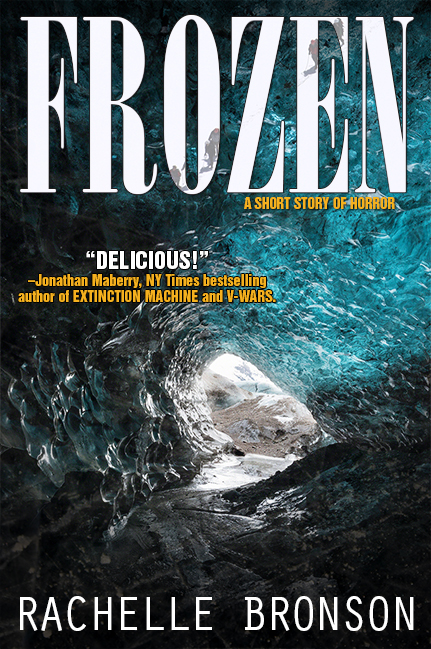
Her newest work, Frozen, was released last month.

“It’s about a group of scientists that trek high into the Himalayas to dissect a newly discovered breed of humanoid,” Bronson said about Frozen.frozen-72

Her previous story, “Lulabelle,” was published in the Hersham Horror Books anthology, Alt-Zombie. This collection includes stories by William Meikle and Joe McKinney.

The story was shortened from its original version, Bronson said. She would like to see the whole story published someday.

Before she begins writing, she does a lot of research. She also makes sure to have well-developed character and plot outlines before beginning.

“I like to know where I’m going, which helps me avoid writer’s block. Many times however, the characters and story take on a life of their own and always surprise me in the end.”

Her published short stories aren’t the only works she has written. She has a few unpublished novels, Legends: The Bleeding Door, which will launch next year, and Tarzwell, which doesn’t have a release date at the moment.

Her first novel, Legends: The Bleeding Door, is based on an urban legend she researched and turned into fiction. It was conceived when she was in high school. Legends is what got her involved with Invictus Films, who wanted in 2007 to turn the novels into a television series after her pitch was received favorably by NBC and HBO. Unfortunately, the recession in 2008 killed the project’s momentum.

“I reacquired the rights in 2012 and am planning to launch the series, as intended, in book format, with The Bleeding Door being the first of a series of 13.”

Outside of the Legends series, she also has her novel, Tarzwell, which takes place between 1992 and 1996 and is based on actual events.

“Talk about a confusing time, going through high school and living in a house that has paranormal activity. It was a tough time for everyone. My mother was ill, my father was forced to work out of town to support us, so I was there many times alone, taking care of my mother, dealing with teenage angst and spirits.  I never believed in ghosts until I lived in this house.  It changed me profoundly.”

She considers living in the house “a major learning experience” and considers herself stronger for it.

“It definitely reminds you that life is about mind, body and spirit.”

The best writing advice she has ever received is to “never quit.”

“There are many obstacles to becoming published. But if you want it bad enough, hone your craft, lick your wounds and just keep going. Oh, and get yourself a good editor. They can make or break you.”

She is currently the chief reviewer at The Novel Blog website, which was conceived in 2008 by Daniel Boucher and Peter Mark May. She joined shortly after that and they have had a blast publishing news, reviews and interviews of authors ever since, she said.

“We wanted to do a book review site, one that included both up-and-comers and established authors to help get out awareness of their works and grow the community.  It also gives authors of other genres that may not be in the fiction literary mainstream a place to get the word out about their work.”

Bronson doesn’t have a website, but she hopes to remedy that by the end of this year or the beginning of 2014. She does have a Facebook page (https://www.facebook.com/?ref=tn_tnmn#!/rachelle.bronson.9?fref=ts) and a Twitter account (@rachellegagne).

She and her publisher, Hive Collective, are looking at different promotional opportunities for her, which she will announce on her two social media accounts.

She loves reading the classic authors such as Stephen King, Agatha Christie, Robin Cook, and H.P. Lovecraft. She also has had great pleasure exploring new writers such as Kane Gilmour, Daniel Palmer, JT Ellison, Jonathan Maberry and Peter Mark May.

Bronson looks up to all writers, who stay true to themselves and their craft, but doesn’t want to emulate them.

“I want to be me, being original and trusting in my own pool of knowledge and creativity in order to produce something new, entertaining and inspiring to horror fans everywhere.”

Interview with the ‘You Gonna Die, Fly’ Creators

By Jason Harris

935211_392473287538359_169053195_n

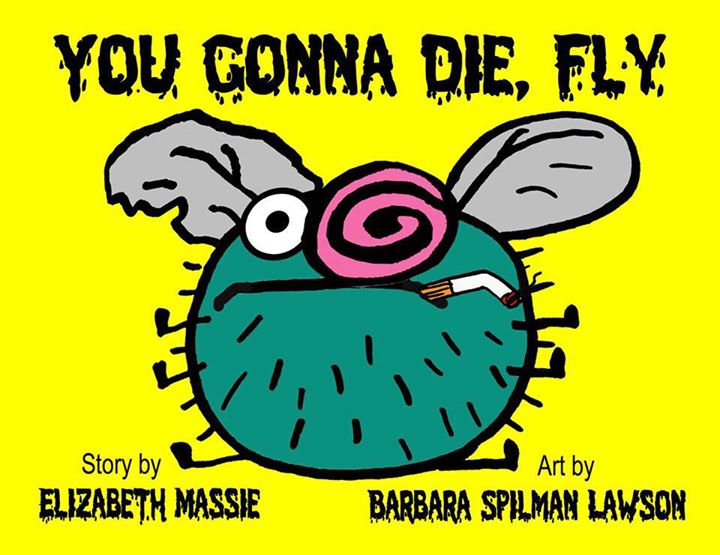
You Gonna Die, Fly was released last month. It was my pleasure to talk to Elizabeth Massie and Barbara Spilman Lawson about their creation. Massie wrote the story while Barbara illustrated this cute book.

JH: When did you come up with the concept/idea of You Gonna Die, Fly? Did you two come up with it together? What inspired it?

Elizabeth: A couple years ago, while at NECON (a great July convention in Rhode Island), I bought a copy of It’s Okay to Be a Zombie by Nathaniel Lambert and Danny Evarts. It’s a total hoot, wild and over-the-top, and is marketed as an “unchildren’s book.” I started thinking about how much I get a kick out of books with bright, insane artwork, especially if they illustrate stories that are equally crude, fun, and crazy. I also was aware that summer of how many flies there seemed to be – buzzing around my car, some of the bushes in the yard, and banging into the windows and into me inside the house. I started jotting down ideas for a short tale featuring a fly and his life. Then I showed it to my sister Barb, whose cartoony artwork I adore. She agreed to create the illustrations. We pretty much forgot about it for almost two years, and then we talked it over again during one of our long road trips together (Barb is a professional storyteller, and I often travel with her to help out.)

Once Barb created the character of Fly, with his one little eye/one big eye and ball-shaped body, the rest flowed like fine wine. Or cheap wine. Or stinky swamp water. Okay, like something wet that pours.

Barbara: After Beth wrote the book, she asked me if I’d like to illustrate it. My art style is bold, colorful and cartoony, so a picture book was the perfect idea. And I loved the idea of a “NOT-for kids” picture book. I write and illustrate my own picture books (actually FOR kids – I was a Kindergarten teacher for over 20 years and a professional storyteller now) but I love the chance to illustrate for a different genre. (Is a totally tacky and rude not-for-kids picture book an actual genre? If not, it should be.)

JH: Was Fly going to be the main character all along or did it start out as something else?

Elizabeth: Fly was always going to be the main character. Flies in real life drive me crazy, all buzzy in my ears and hair and banging around and crawling on stuff, but I do have a bit of sympathy for them with their itty-bitty short lives and being flies and all. So I imagined what it might be like for a fly who wanted to search for the meaning of his life, even though he only had two weeks to make it happen.

JH: Barbara, is this the first book you have been the illustrator for? If not, what else have you illustrated?

Barbara: I wrote a children’s book with Beth (Jambo Watoto: Hello, Children, Creative Arts Press, 1998), which was illustrated by artist, Marsha Heatwole. It’s a beautiful art book for kids. But that’s not what you asked, is it? I am just finishing writing and illustrating my own picture book, How Many Words Does It Take To Write A Book? It will be available in September, but not published under the Fucked Up Folktales Publishing line. ‘Cause you know, since it actually is for kids. Thought that was good move. It will be published under Stories With A Twist Books publishing.

Elizabeth: Barb forgot to mention that she has also written and illustrated a number of entertaining picture books toward the Virginia Standards of Learning for public schools under her Fun Stuff Publications imprint. These books have been a hit with kids and lifesaver for teachers needing clear, fun, practical, and memorable materials to teach the standards.

JH: Elizabeth, you have worked with Cortney [Skinner] before? Why not on this book?

Elizabeth: Cortney has been hired to do the artwork and cover designs for a number of my novels and collections – such as the ones for Afraid, Sineater, The Fear Report, Sundown, Naked On the Edge, Homegrown –and he is incredibly talented! However, I’d wanted to collaborate with my sister Barb for a while, and You Gonna Die, Fly seemed like the perfect project. I knew her light-hearted and sometimes insane illustrative style and was sure she would push it over the edge where it belonged!

JH: How long did it take to write and illustrate You Gonna Die, Fly?

Elizabeth: It took me a little over a week, to write the story. Then I let it sit and went over it again for some tweaking. Then it sat and sat and then Barb got her hands on it.

Barbara: When I finally started working on the pictures (a couple of years after Beth first wrote the story), it took about six weeks to get everything finished and ready for printing. As I completed each picture, I sent it to Beth and she checked it out and gave some input. “I really like this one!” or “Well, that sucks the big one.” You know, helpful, constructive input.

JH: You just started Damn You, Demon. When do you think the public will be able to get their hands on it?

Elizabeth: Barb had drawn a round, red, ball-shaped demon picture for another project we have in the works and we realized that the style would be perfect for a second book in the Fucked Up Folktales line. We just came up with the idea a week or so ago, and we’re working on that as we speak. Or will get back to it after we speak here, in this interview. Anyway, I’m guessing it will be ready to order by early September.

Barbara: What she said.

JH: Is there a timetable for the publishing of your books?

Barbara: There is no set timetable for publishing, but hopefully we’ll get all our books published before we’re dead.

Elizabeth: I like selling things before I’m dead. And yes, we have ideas for books beyond Fly and Demon. Oh, we do indeed ….

JH: I loved the first one. It was informative and funny. I actually looked-up online to see if flies only lived two weeks. I didn’t want the story or Fly’s life to end. Did you do research for the book before writing or illustrating?

Barbara: I looked up pictures of flies to see what they are supposed to look like. Then I drew a ball with wings. I also gathered pictures of stinkbugs, ticks, bowl weevils, beetles and lightning bugs for reference (for the insect orgy page).

Elizabeth: Thanks, Jason! We didn’t want Fly’s life to end, either, but damn it, there ya go. As to flies’ lifespans, we checked to see how long they live. Some live just a couple weeks. Some live a month or a little more. Hey, we want our rude, crude, over-the-top, not-for-kids picture books to be based in facts!

JH: You named your publishing company, Fucked Up Folktales. How long did it take to come up with the name? Is there any significance to the name?

Elizabeth: It took about ten seconds to decide the name. I’d recently been hired to write retellings of folktales for a major educational publisher. I researched a lot of folktales and geez louise, a lot of them are messed up. In one country, about 80% of the folktales end with some dude getting his head cut off. Happy-happy folktales! So anyway, while Barb and I were driving into town for some errand or other (did I tell you we live next door to each other, out in the country, so we run errands together fairly often?) I was telling her about the crazy-ass stories. I blurted out, “Those are some fucked up folktales!” Barb got this look on her face and said, “That the name for our line of not-for-kids picture books! Perfect!” And, you see, since folktales are tales made up by and told by folks, and Barb and I like to think of ourselves as folks, we figure ours could be new folktales. Perhaps our little stories will live on into the future, told and retold, read and re-read, like those lovely ones where dudes get their heads cut off.

Barbara: Once we decided on the publishing company name, we got together with our web designer. She hesitated, angled her head a little and asked, “With that name, what if you get some people looking for porn?” And I asked, “Do they buy books?”

JH: How has the response been for the book?

Barbara: Fantastic! Here are excerpts from a few early reviews: “It’s freakin’ hilarious and adorable.” “I honestly thought it was one of the most clever and funniest things I’ve read in a long time!!!” “This book is the poop!” “I LOVE “You Gonna Die, Fly”!!!!! It’s dark and irreverent and … stinky. Perfect!”

JH: How would you describe it to people. A children’s book for adults?

Elizabeth: We purposely call it a “not-for-kids picture book.” We put the “not-for-kids” first for people who can only read and comprehend a few words at a time. Otherwise, they’ll be giving it away to babies to enjoy, and can you imagine the mayhem when babies start acting likes flies, cussing, smoking, drinking, emulating their favorite character? I shudder at the thought.

Barbara: We don’t want it mistaken in any way for a children’s book. We put a picture of Fly smoking a cigarette on the front cover, we described the book as the “Not-for-Kids” book on the back cover so we hope adults will take a little time to flip through it and see it is NOT a kid’s book. We hope it is very clear. We hope adults are that smart.

JH: Besides the website, are there any other places to purchase the book?

Elizabeth: At the moment, the only place to order them is either through our Fucked Up Folktales website, the You Gonna Die, Fly page (http://fuckedupfolktales.com/you-gonna-die-fly/) or through the You Gonna Die, Fly Facebook page (instructions are on the page.) Eventually, we’ll look into putting it on Amazon. After we figure how to do that.

Barbara: Yep, we’re working on it ….
Author Talks about First Novel and Writing


By Jason Harris

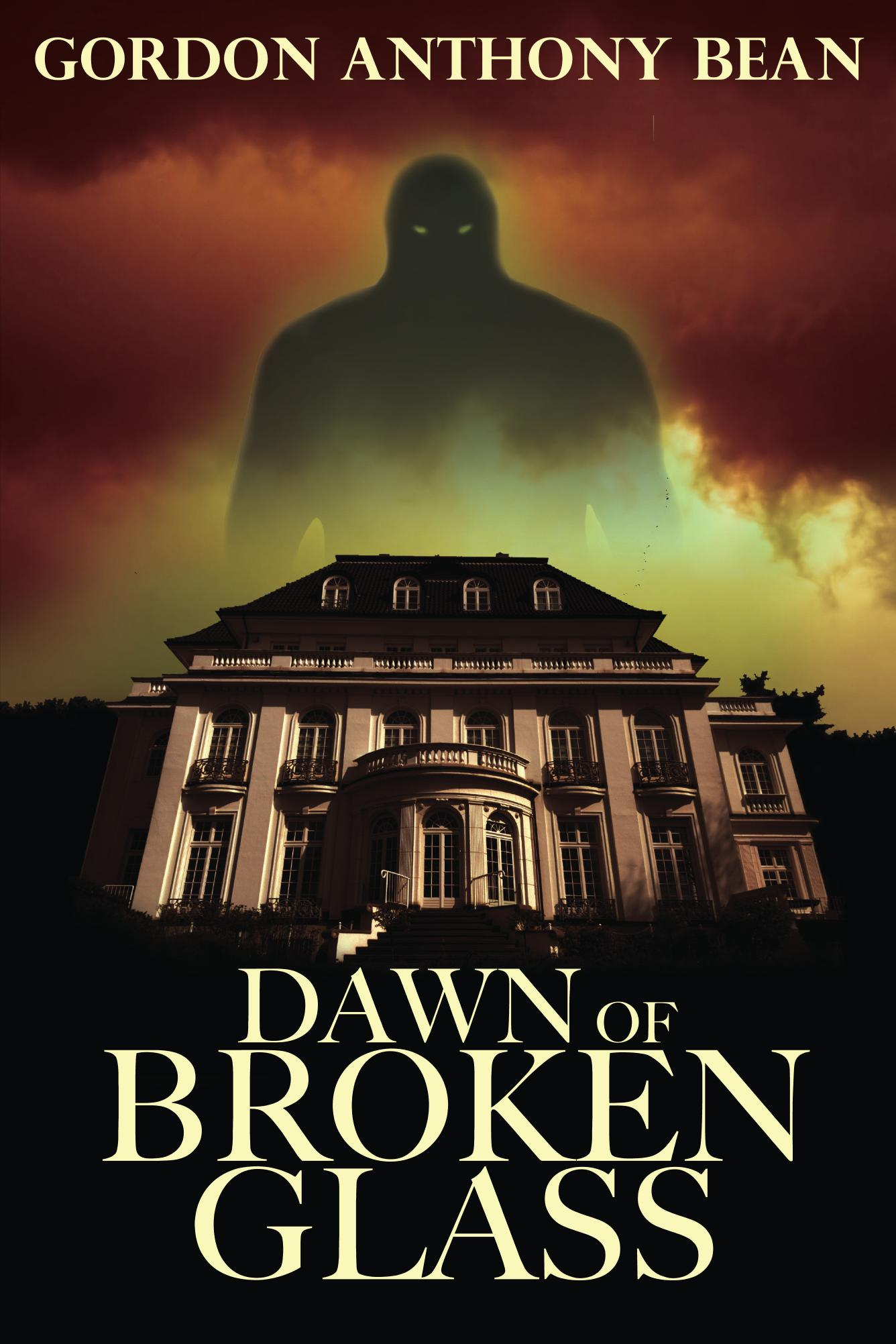
Dawn of Broken GlassGordon Anthony Bean recently published his first novel, Dawn of Broken Glass. It was released in June.

He has written two other novels, but shelved them since they didn’t feel right to him. He plans to revisit them at a future date.

Dawn of Broken Glass felt like a great story with fully developed [and] believable characters that the reader could identify with, so I decided this was the book I wanted to publish first,” Bean said.

Dawn of Broken Glass tells the story of Michael Carson, who witnesses the brutal and senseless slaughter of his family during Kristallnacht in the early days of World War II. The loss of his family has left him with deep emotional scars, and feelings of anger and hatred which become all-consuming to the young man. Years later, he seeks his revenge. Along with the mysterious Jason Froemmer, Carson begins a mission to eradicate the bloodlines of each soldier who partook in his family’s slaughter so many years earlier.

Bean wrote it over eighteen months. He spent the better part of a year doing multiple revisions on plot, characters, and writing style.

Bean is working on Bloodlines, a sequel to his first published short story, “From a Whisper to a Dream.” This story was published in the anthology, Sinister Landscapes, published by Pixie Dust Press. He does have a second short story, “Out of the Corner of His Eye,” in the Grinning Skull Press anthology, From Beyond the Grave.

“One interesting tidbit about my writing is that the stories are all interconnected. In my second novel, there will be an appearance of a central character from Dawn of Broken Glass. Basically, I’m creating a wholly contained universe where all my stories take place on the same earth,” Bean said.

His primary career is in finance, but he wants it to be writing.

“I’m trying to get my writing career to take off and hopefully be able to one day devote myself to it full-time.”

He has been writing his entire life. “In elementary school, I had a short story published in our school’s spring journal. In high school, my creative writing teacher told me that of all the students she ever had, she felt that I was best suited to be a writer.”

He belongs to the New England Horror Writers organization. He hopes to get exposure for his writing through the NEHW. This is what he hopes would happen with belonging to any writer’s organization.

“What I hope the NEHW or any other group would be able to do is help give exposure to this novel and future novels,” Bean said.

Bean has received good writing advice in his life, he said.

“The best I remember getting was to write for myself. Like most writers, I love to write. I am a huge horror fan and if I can leave a lasting imprint on a reader through my work, it’s all worthwhile.”

Besides writing, he enjoys reading. Michael Moorcock and Robert Heinlein were two early favorites and Clive Barker, who he loved when he was a teenager. He reads Christopher Golden, Brian Lumley, F. Paul Wilson, Joe Lansdale, Edward Lee, Jonathan Maberry, Dan Simmons, Richard Matheson, Douglas Preston & Lee Child now. His tastes vary, he said.