NEHW at Ninth Annual Middletown Open Air Market

Authors Stacey Longo, Kristi Petersen Schoonover, Rob Watts, Kasey Shoemaker, and Dan Foley will be at the Ninth Annual Middletown Open Air Market being held on Oct. 23 from 10 a.m. to 4 p.m. at the Wadsworth Mansion at Long Hill Estate, located at 421 Wadsworth Steet.

There is still room for other interested authors to be involved in this event. Please contact Jason Harris at dudley228@gmail.com. The cost for participating will be $10. Room will be limited.

For more information about the authors check out their websites: Longo (http://www.staceylongo.com/), Schoonover (http://kristipetersenschoonover.com/), Watts (http://www.robwattsonline.com), and Shoemaker (http://www.kaseyshoemaker.com). Foley doesn’t have a website.

Author Releases Supplemental Material in Anticipation of His New Book

In celebration of author Stefan Petrucha’s release of his new book, Dead Mann Walking, on Oct. 4, he is releasing some supplemental material about the history of zombies.

An Explanation From the Author: In my first draft of Dead Mann Walking, a group of peacefully protesting chakz, pushed too far by the living, go feral, fulfilling the zombie stereotype. As chak-detective Hessius Mann helplessly watches the mess, he broods on the fictional history of the walking dead.

Upon reading this, Ace editor, Jessica Wade, felt it pulled the reader out of the story-world. I agreed, lopping it out quicker than Ash with a chainsaw-hand.

However, to celebrate Dead Mann’s Oct 4 release, what could be more appropriate than restoring it to half-life? So here ‘tis, a quick, quirky look at Z’s from the POV of a PI who should know.

Dead Mann Talking: A History of Zombies

Crowded, surrounded, attacked, the chakz gave the people what they wanted, proof that they were dangerous. It was as though that group-mind the LBs worried about had actually kicked in. Maybe the ferals just never had the numbers before, or maybe you had to be far enough back to see the patterns. I saw them now.

Flashes of chak-bodies moved in elegant waves, like flocks of migrating birds. The livebloods, for all their higher functions, fled without grace. The big picture pulsed and throbbed. But the personal tragedies played out in tiny spaces, as if the two had nothing to do with one another. In the center of the swirls stood the fair-haired cop I’d seen from the window, bullets spitting from his AK-47. They tore some dead flesh. Mostly, he was hitting livebloods before the ferals took him down.

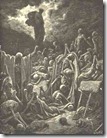
So was this Ezekiel and his dry-bones rising in the valley of death? Was it then, or later, now, or the future? The edges were arbitrary, the beginnings and endings likewise. But as I watched, this was the shit I remembered.

In 1929 W.B. Seabrook wrote about voodoo cults and resurrected slaves in a novel called The Magic Island. It made sense that Haiti, whose population had recently thrown off their shackles, would have plantation slaves for their monsters.

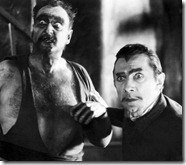
In 1932, Victor Halperin’s White Zombie took it to the white Europeans. The island lust of Murder Legendre, played by Bela Lugosi, put a white virgin’s virtue at risk.

But these were early, proto-forms. There was no blood yet, not like there was on the Fort Hammer plaza. My eyes singled out a male teen, all buff and dressed to shock with Mohawk, tattoos and piercings. He ran half-heartedly, grabbing at the side of his head where his ear had been once. Red liquid dripped between his fingers. Eventually, he slowed and then, simply stopped.

In 1943 Jacques Tournier’s I Walked With a Zombie gave us a dead-eyed scarecrow. It was more a symbol. No savagery, just foreboding. It was Richard Matheson’s I Am Legend in 1954 that took it up a notch. The book was sort of about vampires, but they were so much like zombies that the 1964 Italian film version with Vincent Price, The Last Man on Earth, became the prime inspiration for George Romero’s Night of the Living Dead.

1968, the zombie had arrived. Romero was the first, really, if you don’t count Ezekiel and all the others. What took so long? Well, in those days, the dead moved slowly.

On the plaza, groups formed and collapsed like cauldron bubbles. I watched two families band together. The mothers carried the little ones, forcing the older children ahead. Weirdly, the fathers carried doors, using them as shields. Two danglers and a gleet banged at them. They even tried the knob.

Romero made it biblical again. Cannibal corpses, old friends and lovers among them, children chewing on parents. The condition spreading like plague, and no one knew why or who to shoot. His sequel, Dawn of the Dead, used the same idea, but more directly as social critique, played out in comic-book colors so gaudy you had to get the joke.

I hoped the family made it. Something should survive, and it didn’t look good for anyone else. The elegant swarms had surrounded the LBs, and as they squeezed in, began to lose their pretty shape. Together now, ferals and livebloods pushed and pulled en mass, so many, so close together, they could barely move. Limbs tangled, the center of the blob tumbled, all together, all at once, like football teams in a joint tackle.

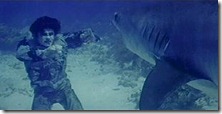
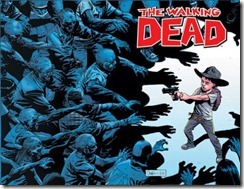
After Romero, what could you say? A horde of lesser efforts followed, Fulci’s Zombi 2 notable for an underwater battle between zombie and shark. Then decades passed. 28 Days Later brought some class back to the movies. That was more about plague than the dead, but close enough, and its monsters were fast. The Dawn of the Dead remake followed suit. The books and comics got better – Monster Island by David Wellington, The Walking Dead by Robert Kirkman, Tony Moore and later Charlie Adlard (now on TV!). By then people played video games like Rebel Without A Pulse and Left4Dead, shooting and being shot, eating and being eaten. The great democracy of mass media.

The mob in the plaza had formed a single creature, like one of Colby Green’s orgies, many limbs, many mouths, some screaming, some chewing. Stray Livebloods and ferals tried to pull the bodies free, but for different reasons.

The cop with the flamethrower stood at the edge of the mass and stared, unsure what to do. He tried to help, used his free hand to grab a hand and yank, but when a feral came free, a chunk of dripping meat in its mouth, he’d had enough. He let loose with the thrower, turning it on the writhing pile. Before the cop could barbecue the lot, a liveblood clocked him with a crowbar, then dived into the smoldering mess, screaming that he had to find his girlfriend.

I’d like to say all the books and movies fade against the reality, but maybe it’s the reality that fades. After all, who could forget the surprise hit, Pride and Prejudice and Zombies? This is the shit that gives us shape, that let’s us understand the world, even build it from scratch. Shakespeare told us. We are such stuff as nightmares are made on, and our little life is rounded with a scream.

The plaza had reached critical mass. The blob broke and scattered. Bodies, some moving, spilled across the street, then onto the long black hospital entrance ramp that had kept the scene arms distant. The tide was coming in.

# # #

How Location Writing Worked for One Author

Location, Location, Location!
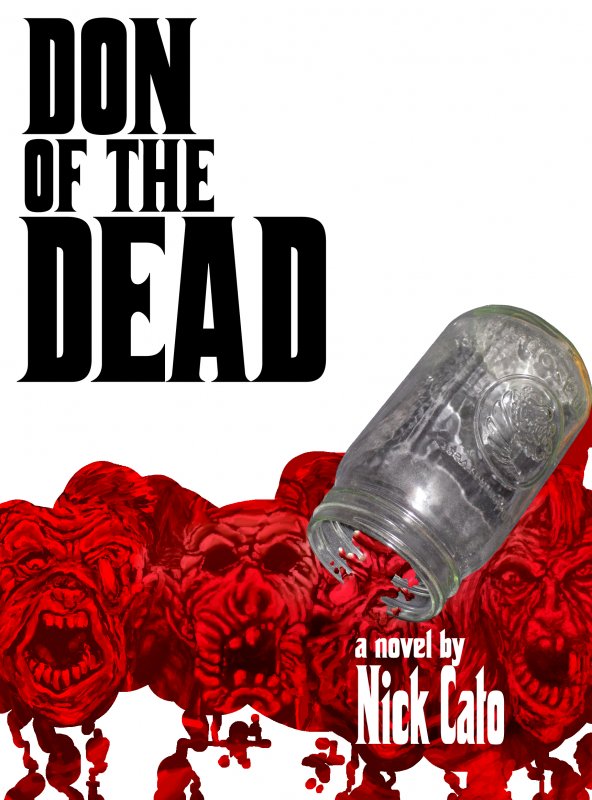
By Nick Cato

Although I would later read about it in several books on writing, I discovered “location writing” on my own due to several circumstances at the time.

And the time was 1998.

After years of dabbling with short stories, I had finally plotted my first novel. I banged out the first few chapters in front of my computer, and while I still had the drive to finish the book, something wasn’t right. At first I thought maybe this wasn’t meant to be a novel. Maybe another fifteen chapters and I could shop this thing as a novella. No—that wasn’t it. Then finally, after wasting too much time snacking and staring out the window in contemplation, it simply “hit” me.

I needed to go somewhere to write this thing.

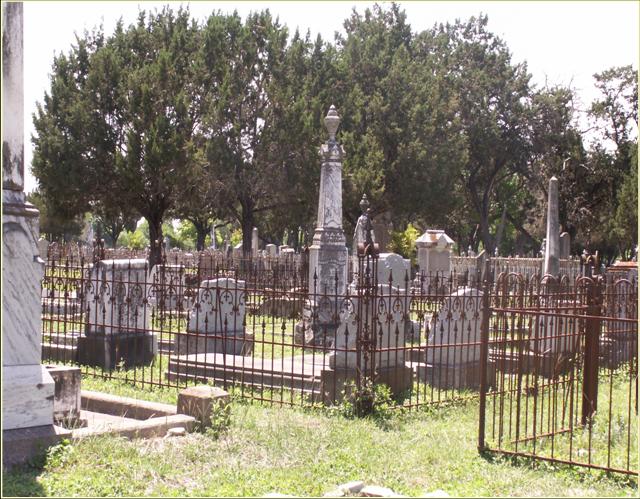
Of course, considering this was a zombie novel, the first place I went was a local cemetery. I had a day off from work so I parked on one of the narrow dirt roads between the tombstones with a mead notebook and Papermate pen. I took in my surroundings (and hoped the maintenance staff wouldn’t bother me) and spent the next six hours writing until my hand told me it was time to rest. Then I grabbed a burger and went back for another hour to re-read everything I had written and made some minor changes.

I managed to get close to eight thousand words done that day, and became a bit too giddy, thinking I had discovered the secret to getting work done. On my next visit to the cemetery a week later, I had spent almost as much time as before, only at the end of the day I had written maybe four thousand words; a good output, but not what I had hoped for.

Not discouraged, I decided to write my next section at the area where my next scene was to take place. So I made sure I had a full bottle of Poland Springs and I pulled into an isolated parking spot at my local shopping mall. And wouldn’t you know it? The words flew out of me like I was on fire. Nine thousand words, much of which I kept in the final draft.

During the writing of my novel, I wrote at about a dozen locations, each one giving me a different feel and a new inspiration. Within eight months I had an eighty-four thousand word novel in my hands, and to this day I continue to write on location as often as possible.
While I wouldn’t sell this novel until 2008 (and after close-to twenty thousand words were chopped off of it), location writing has helped me to complete two other novels and over fifty short stories and two novellas, not to mention countless non-fiction pieces.

Location writing also helped me to develop my first-draft system: to this day I still write 85% of my first drafts the old fashioned way (with pen and paper), my second draft coming into play as I transfer the handwriting to computer. While weather and time off from the day job often dictate the amount of location writing one can do, I’ve found it to be a priceless tool in the war to get words out.

If possible, give the Location Writing Method a shot. Find a location similar to the one you’re currently writing about. Don’t worry what others may think as they see you sitting there, jotting or typing away on the laptop; the busier you get the more the world around you fades out. But don’t let it fade out until you’ve FULLY taken in your new writing surroundings. Take your time looking at every nook and cranny, keep the windows open (if you’re in a car as I often am) and make notes of the smells and sounds. Make notes of as many details as you can. There have been times I’ve filled up both sides of a sheet of paper with minor things I eventually added to the background in certain scenes.

If this works for you—and you fail to reproduce the same amount and/or quality of writing upon your second visit to the same place—simply change locations. Or, with your notes handy, try finishing your current section at home while the memories of a particular location are still fresh in mind.

And let me know if it works for you!

Authors to Take Readers to “The Monster’s Corner” Tuesday

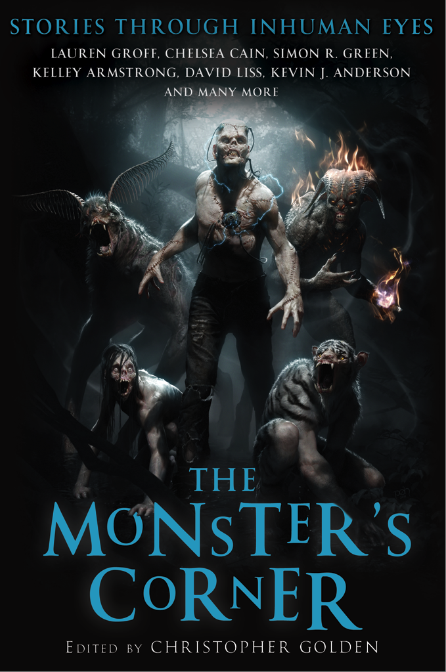
Pandemonium Books in Cambridge, MA. will host the launch party for The Monster’s Corner: Stories Through Inhuman Eyes Tuesday, Sept. 27, from 7 p.m to 9 p.m.

Christopher Golden, the editor of the anthology, along with authors Nate Kenyon and John McIlveen, who both have stories in the book, will be on hand signing the newly released collection.

The bookstore is located at 4 Pleasant St. in Cambridge. For more information, go to the website, http://www.pandemoniumbooks.com or call (617) 547-3721.

New Printing For Gaiman’s Gold Book


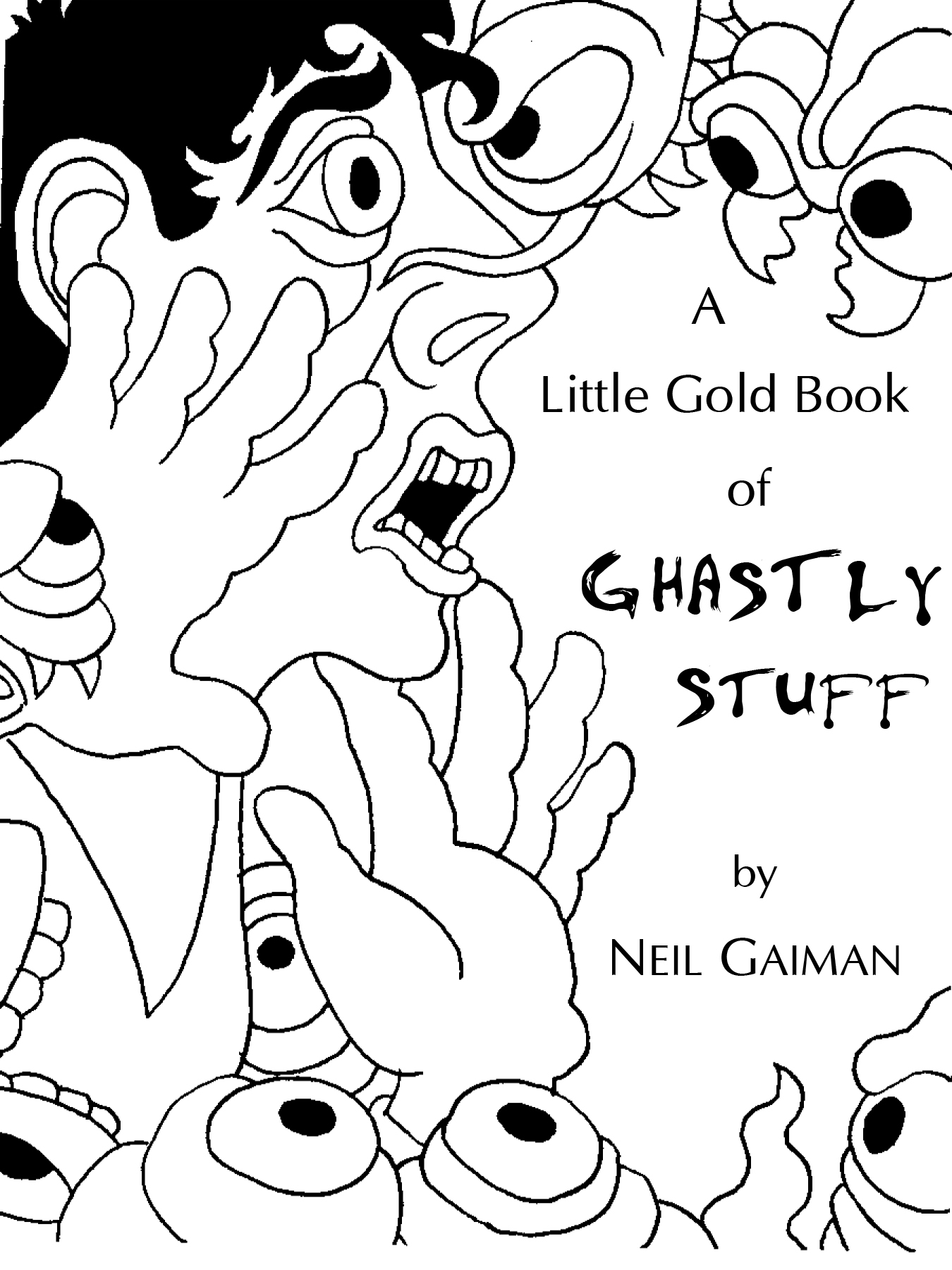
Borderlands Press has announced that Author Neil Gaiman has authorized an additional printing of his book A Little Gold Book of Ghastly Stuff because of the overwhelming response of the first printing. In a press release, the publishers said there were so many orders for the first printing they couldn’t all be filled.

The book will be $20.00 and will be exactly like the limited, numbered edition, but it will not be signed by the author. It is full of rare or never-before-published material, which is sure to be a collector’s item. The book will ship at the end of October.

If you would like to order a copy, click this link: www.borderlandspress.com/littlegold

NEHW at Middletown Open Air Market

The NEHW will have a booth at the Middletown Open Air Market on Sunday, Oct. 23 from 10 a.m. to 4 p.m. in Middletown, CT. Members wanting to sell their wares please contact me at dudley228@gmail.com. The cost for participating will be $10.

This will be another great opportunity for our members to meet the public and for the organization to get its name out there.

Cover Released for NEHW’s First Anthology

20110921-122149.jpg
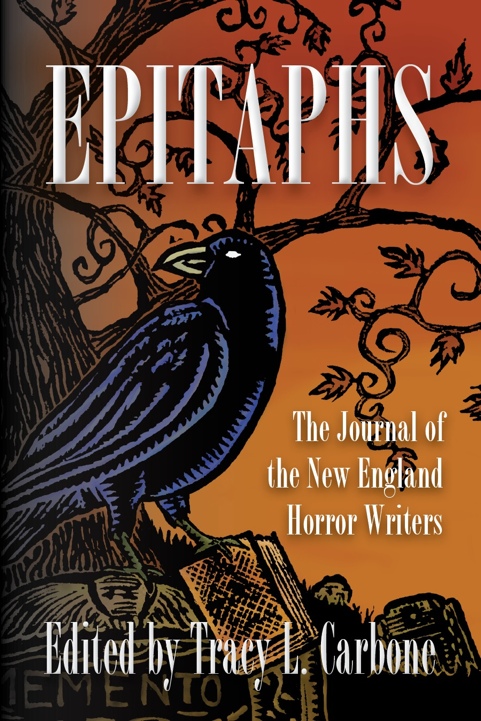
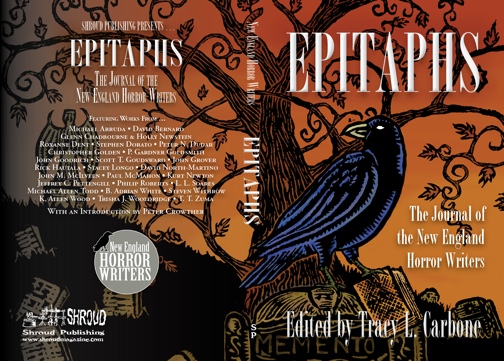
The cover for Epitaphs, the first NEHW anthology, has been released. The anthology is edited by Tracy L. Carbone and will be published by Shroud Publishing. It will be released on Nov. 11 during Shroud’s convention, Anthocon, in Portsmouth, New Hampshire.

The introduction is written by Peter Crowther, who has written over 80 short stories which has appeared in a variety of anthologies and magazines. Along with his fiction writing, he has written about music and the arts.

The NEHW members who are in the inaugural anthology are listed below.

Jeffrey C. Pettengill “To Sleep, Perchance to Die”
Paul McMahon “The Christopher Chair”
Kurt Newton “A Case of the Quiets”
Scott T. Goudsward “Build-a-Zombie”
John Goodrich “Not an Ulcer”
B. Adrian White “The Possesor Worm”
John M. McIlveen “Make a Choice”
Michael Allen Todd “The Death Room”
Rick Hautala “Perfect Witness”
Holly Newstein and Glenn Chadbourne “Stoney’s Boneyard”
Trisha J. Wooldridge “Kali’s Promise”
David Bernard “The Sequel”
David North-Martino “Malfeasance”
Stacey Longo “Private Beach”
Christopher Golden “All Aboard”
L.L. Soares “Holiday House”
Steven Withrow “Lines at a Wake”
K. Allen Wood “A Deeper kind of Cold”
P. Gardner Goldsmith “Alone”
Roxanne Dent “Pandora’s Box”
Michael Arruda “Chuck the Magic Man Says I Can”
T.T. Zuma “Burial Board”
John Grover “Windblown Shutter”
Stephen Dorato “Cheryl Takes a Trip”
Philip Roberts “The Legend of Wormley Farm”
Peter N. Dudar “Church of Thunder and Lightning”

20110921-122559.jpg

Nick Cato’s Suburban Grindhouse Memories Column on CKF

Nick Cato’s current column “Suburban Grindhouse Memories” column at Cinema Knife Fight (www.cinemaknifefight.com).

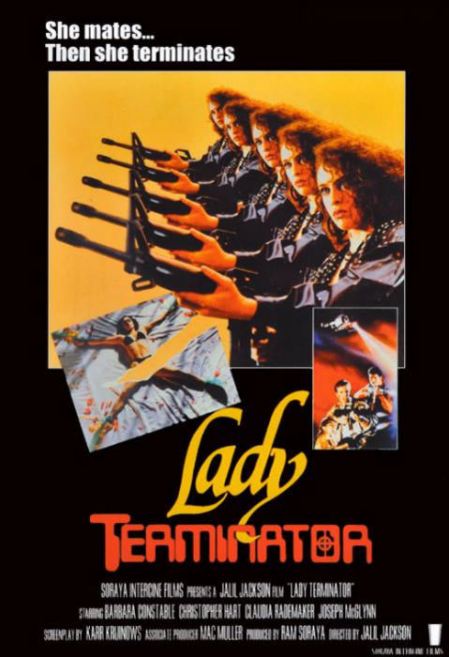
June, 1989. I see an ad in the NY Daily News for what promises to be a real wild one. I venture out of the safety of my suburban neighborhood (alone) and hit the still-sleazy pre-Guiliani Times Square for what would be my final visit to the famed area before it was cleansed a few years later. Getting off the train around 36th Street, I see a huge billboard poster for “Lady Terminator,” and attempted to peel it off. No luck. I was offered weed and other substances at least five times during my eight-block trek uptown to the theater. One guy claimed to have switchblades. I kept walking, keeping my eyes straight ahead, hoping I made it to the theater in one piece.

Man, do I miss the old NYC.

“Lady Terminator” played solo, a rarity for a Times Square feature at that time. I attended an afternoon showing, and the place had at least a dozen people in attendance…yet I was thrilled about ten minutes into the film when screams and comments were flying as loudly as any midnight screening of “The Rocky Horror Picture Show” could hope for.

Check out the plot of this Indonesian import: An anthropology student named Tania Wilson (played by the beautiful Barbara Ann Constable in her ONLY credited role) becomes possessed by some ancient queen—while exploring her underwater lair. In a surreal/dream-like sequence, Tania finds herself swimming one second then tied to a huge bed the next. An eel-like creature wiggles up the sheets and into her vagina, causing her to become possessed. She soon emerges on shore (stark naked) and interrupts a lame drinking party where she wastes a couple of losers. After taking one of their leather jackets (yeah, this follows “The Terminator” (1984) quite closely at this point), she begins an all-out attack that’d make Hurricane Irene green with envy. While it’s never clear why this ancient sea witch is bent on revenge, the audience (and I) really didn’t care. Tania (aka the Lady Terminator) goes Tottally Balistic, creating a body count ten miles high via machine guns and a couple of brutal sex scenes (Remember the tag line: “She mates…then she Terminates!” One blurb that lives up to its promise).

Why this woman is turned into a cyborg-type revenge creature by an ancient sea witch is anyone’s guess, but that’s not even a quarter of a quarter of the flaws in this insanely ridiculous action romp. And when Tania starts her killing spree, you’ll either overlook these flaws, ride with it and have the greatest time of your trash film life, or shut the DVD off and continue to be a dullard (This film is actually playing in NYC at a rare screening in a couple of weeks—I’m freaking out that I can’t attend— hence the inspiration for this week’s column).

What put the crowd into a screaming frenzy were several repeated scenes, especially one of Tania spraying a group of military men with machine gun fire: that had to be shown at least five times. I’m guessing this saved the film crew from having to shoot from different angles? Either way, this is the type of thing that makes “so-bad-they’re-good” movies memorable.

I’m a big fan of the original “Terminator.” But, I can sit through “Lady Terminator” a thousand more times without being bored, as it contains more car chases, explosions, gore, violence, nudity and sheer insanity than a dozen low budget rip-offs combined. (It should be noted that star Barbara Ann Constable is also credited as doing the make-up for the film, too).

The most amazing aspect of “Lady Terminator” is it’s ability to entertain to the core, despite a plot that’s all over the place (or not even there, depending on who you talk to), dialogue that’s beyond inept, and question after question after question and confusion on top of confusion. Somehow this pile of Indonesian trash works. It’s a true miracle of low-budget filmmaking that I’ve been contemplating for the past twenty-two years, made worse by my second viewing via a VHS screening in the early 90s.

I think I’m finally ready to seek this out on DVD…although when I do it’ll be hard not to toss it in the DVD player for weekly viewings.

“Lady Terminator” was one of the greatest exploitation films I’ve ever had the pleasure of seeing on the big screen with my fellow Noo Yawk trash hounds at the near-end of the genuine grindhouse era.

I think I’m gonna go cry now…

© Copyright 2011 by Nick Cato

Kurt Newton’s Encounters with the Blurry People at the Hebron Harvest Fair

2011 HEBRON HARVEST FAIR REPORT or MY ENCOUNTERS WITH THE BLURRY PEOPLE

by Kurt Newton

DAY 1: THURSDAY

It was my first time at the Hebron Harvest Fair. As a lifelong Connecticut resident I’d been to other fairs in the area — the Lebanon Fair, the Brooklyn Fair, the Woodstock Fair — but never the Hebron Harvest Fair. Now I know why. It looked and smelled like any other fair — fried dough, roasted meat, the bright flickering lights of the midway, farm animals, country folk — but the Hebron Harvest Fair hid a sinister difference behind its rural facade.

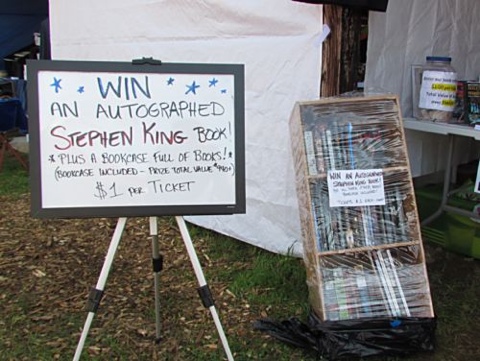
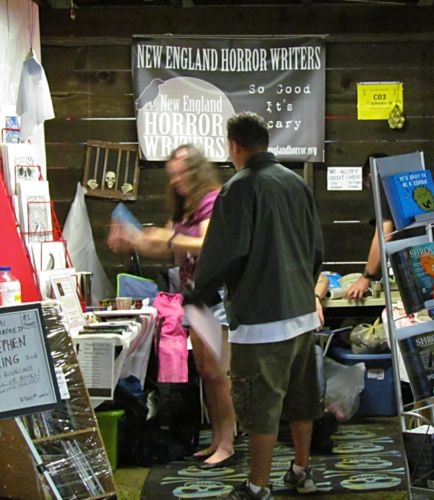
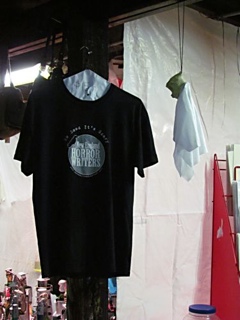
It began innocently enough. I arrived Thursday afternoon and, after slogging through the rain-soaked hayfield turned parking lot turned mud pit, I was greeted by Jason Harris at the gate. Jason was wearing his black New England Horror Writer’s t-shirt. I’d met Jason before and it was nice to see a familiar face among the Lion’s Club and John Deere logo wearing locals. Jason led me to the NEHW booth and I was pleasantly surprised by the look and location of our humble home away from home.

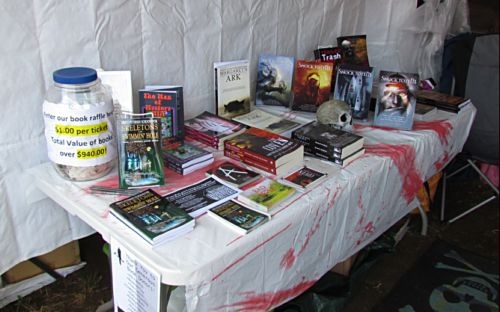
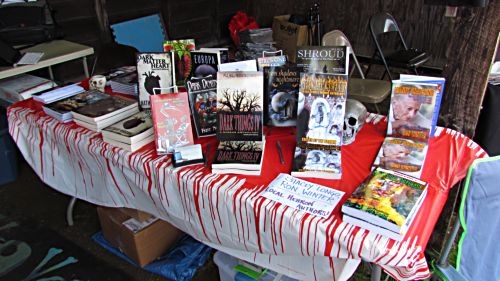
NEHW member books were neatly displayed across two long tables. A custom made banner hung at the back of the booth proudly displaying our organization’s logo. Skeletons dangled on the walls and skulls rested on the tables, so there was no mistaking what kind of books we were selling. Jason’s better half, Stacey Longo, was there. Both Jason and Stacey were not only glad to see me, each simmered with that nervous excitement that is only found among couples expecting their first child.

20110918-102150.jpg

20110918-102634.jpg

20110918-102923.jpg

20110918-103336.jpg

“Wow…this looks great,” I said.

Jason fidgeted, making room for the books I’d brought. “I’m really hoping we do well so next year members won’t be so hesitant to come to this event. I don’t know why but we didn’t get the kind of response we were hoping for. Stacy and I had to put in $130.00 of our own money to get this booth. Look, I’m not complaining. As the organizers, we knew what we were getting into. It’s just that –”

“Jason…enough!” Stacey barked. She turned to me and smiled. “We’re glad you could make it.”

“Thanks,” I said, and settled in.

“I just don’t understand,” Jason muttered as he pulled out his IPad and began blogging.

Like I said, it began innocently enough. First night highlights: I got to hang out with Dan Keohane (author of Solomon’s Grave & Margaret’s Ark); I sold one book; I ate some really good Pad Thai noodles and garlic chicken on a stick; and no rain. Lowlights: I had brought my new 30x zoom digital camera with me, but when I went to use it the battery pack was dead; the grassy lane outside our booth was a bit muddy and woodchips had to be laid down to make it passable for foot traffic; and it got a little chilly once the sun had set. Overall, a good start to what I hoped would be a fruitful weekend.

It would still be another twenty-four hours before I saw my first blurry person.

DAY 2: FRIDAY

The weather had warmed. After spending an hour in bumper-to-bumper traffic to get to the fairgrounds, I finally arrived. The sun had already set. Jason met me at the gate again and, when I got to the booth, he introduced me to Danny Evarts (artist, illustrator of the children’s book It’s Okay to be a Zombie), Kristi Petersen Schoonover (author of Skeletons in the Swimmin’ Hole) & Nathan Schoonover (Kristi’s paramour and extreme paranormal investigator). This time I brought the special battery charger for my camera’s battery and promptly plugged it in. I was determined to get some pictures tonight.

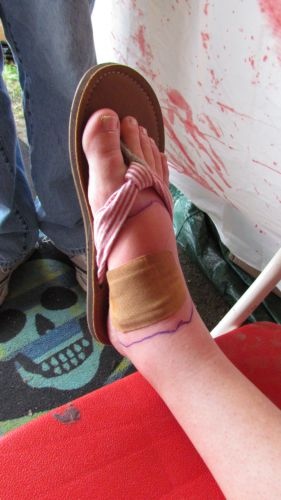
The fair was in full swing and no sooner had I arrived, Kristi, wearing low-cut shoes, had had a little accident involving an extra-long and extra-sharp woodchip. Apparently, the chip had flipped up and stabbed her in the ankle, taking a little gouge out of her skin. To me, it looked like a relatively harmless injury, one that a wipe with a damp paper towel would fix. But, no, Kristi was beside herself. Infection, even cellulitis was mentioned. Nathan eased her fears by taking her to the First-Aid center. I thought it was an over-reaction. But little did I know.

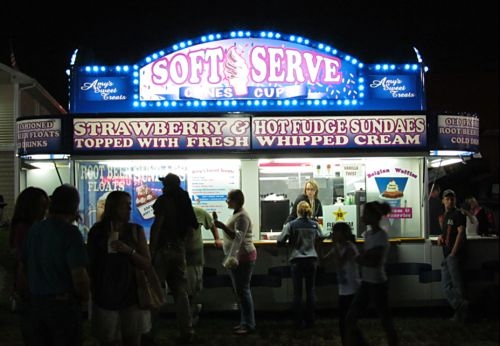
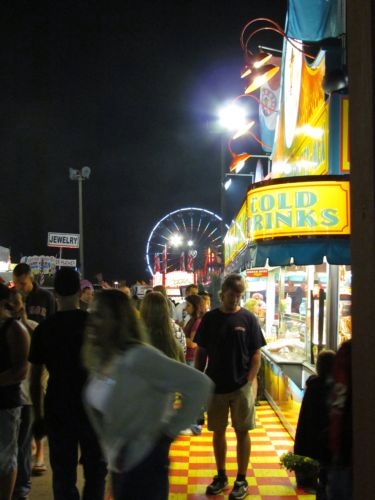
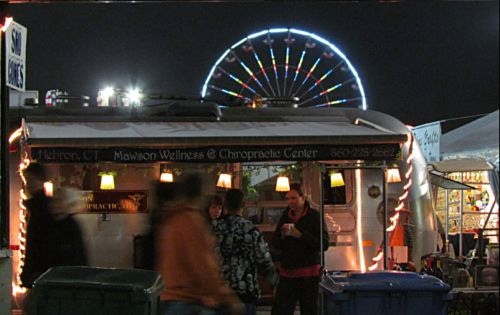
With my battery charged, I took the opportunity to take in the fair through the eye of my camera’s lens. I snapped pictures of the nearby Soft Serve ice cream vendor. I took a long shot of the ferris wheel. I even snapped one of a chiropractic booth. I took others. Here’s one of Jason doing his best H.P. Lovecraft imitation.
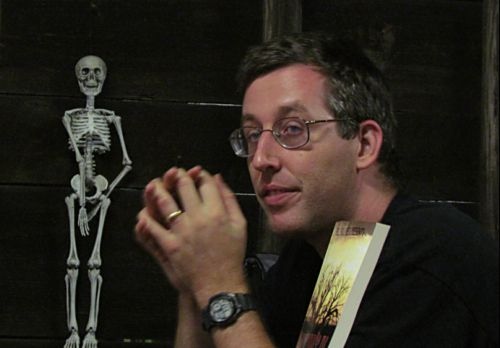
20110918-103743.jpg

I intended to write a brief essay on the fair for the NEHW blog, with pictures.

Here’s one of Nathan Schoonover looking wary of what was in this lady’s folder.
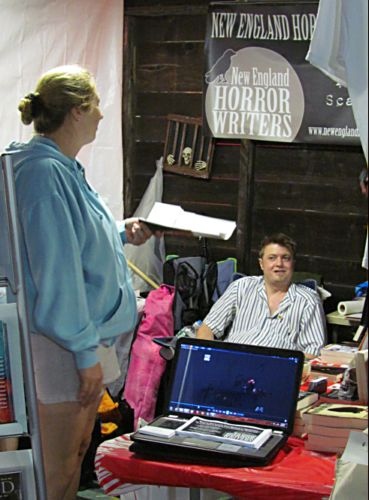
20110918-104220.jpg

When I was done taking pictures, I sat in the booth and reviewed what I had. Strangely enough, I began to notice a common element in some of the pictures. In and among the random crowds there were stationary strangers watching me. Here’s one standing alongside the Soft Serve vendor.

20110918-104504.jpg

Here’s another in the foreground of the long shot of the ferris wheel.

20110918-104757.jpg

I didn’t remember these people standing there when I took the pictures. But here they were, standing like security guards, eyeing me with bad intent.

Maybe I was just reading too much into what must have been random figures. Maybe they weren’t looking at me at all. But there was something else. The blurry people. At least, that’s what I thought they were. People. One (the white-haired lady on the left in the chiropractic booth picture) looks almost skeletal. Ghostly. Was I imagining things?

20110918-104951.jpg

After reviewing the pictures, I put my camera aside and thought nothing more of it. After all, I’m a horror writer. I have a horror writer’s imagination. If I didn’t let my mind go off on these crazy tangents, my stories wouldn’t be very interesting, now would they? But as the evening progressed I found myself watching the crowd. Just when I thought I’d spotted one of those security guard-looking figures, they’d round a corner or fall in behind a group of fair-goers only to disappear. I finally let it go and focused on selling books.

Kristi came back hours later with a bandage on her foot. She was still worried about it. Nathan was still trying to calm her worry.

I sold two more books and stayed till closing. I packed up my stuff, grabbed my camera, and headed home. It had been a long day.

DAY 3: SATURDAY

I didn’t go to the fair. I had to move that day into my new apartment. I felt bad. I was going to miss meeting a lot of people that I wanted to hang out with. But my dreams the night before had left me feeling as though maybe it was best.

I had dreamed of the fair, only I was the only one in the booth. I stepped out onto the woodchips and noticed all the other booths were empty. I went looking for someone, anyone. The rides of the midway were operating but I could hear no screams of delight, no far-off loud-speaker voice announcing entrants to the tractor pull. In fact, there was very little sound at all. Except for the eerie shuffle of footsteps following me. Footsteps I knew belonged to that of the security guards I’d captured in my photographs. Security guards that were following me because of what else I had captured in my photographs: the blurry people. I approached a tent and heard the buzz of wings. The sound grew louder, filling my ears. I reached out to push back the tent entrance, to see what was inside, to see what was making that horrid buzzing noise, when a hand fell on shoulder.

I woke up then and tried to shake the dream from my head. I looked at the clock. I was already behind schedule. My girlfriend would be arriving soon to help me move. Funny, but as I got out of bed, I could have sworn I saw a figure standing outside my apartment window. I rushed to the window to see who it was, only to be greeted by green grass and bright sun. Nobody there.

Throughout the day, I couldn’t shake the feeling that I was being watched. I wanted to call Jason and warn him. But warn him about what? Security guards that weren’t there? Blurry people that buzzed in my dreams? For some odd reason I thought that what I was imagining had to do with the fact that we were horror writers. That because we immerse ourselves in darkness, we perhaps unknowingly uncover what the average person cannot see. That perhaps what we think is a product of our imagination is in fact true. That perhaps because we have the ability to “expose” these things, these things are watching us, making sure we don’t go too far.

It was a crazy thought. But it unnerved me just the same. I couldn’t wait until the following day when I could share this crazy thought with my fellow horror writers. It would be good for a laugh or two.

DAY 4: SUNDAY

It was the best day of all. Bright sunshine, warm, dry September air. We couldn’t have asked for a better day to finish this experiment in bringing horror to the local fair.

I arrived before noon. Jason and Stacey, and Kristi and Nathan were there. Although Jason and Stacey looked tired, there was a renewed excitement in the air. I was told Saturday was a success. Many books were sold. A good time was had by all. Today was the day of the big country music concert, so the crowds were expected to be big. Jason was hoping we’d finish on a high note, so to speak.

Nathan Wrann (author of Dark Matter Heart, and writer/editor/producer of the film The Hunting Season) had joined us.

Kristi was walking with a limp. When she sat down and put her leg up on a chair to elevate it, I couldn’t believe the swelling. She told me she had to visit the emergency room and get a tetanus shot. I was amazed that such an innocent mishap could produce such a painful injury.

20110918-105247.jpg

Music boomed all day in the distance. I visited the Thai vendor again, this time eating some spicy cashew chicken with vegetable rice. I got into some interesting conversations with Nathan Schoonover about the correlation between the TV series House and Sherlock Holmes, and the origin and evolution of the Freemasons. Best of all, people seemed to be in a spending mood. I sold two more books, as did Kristi and Nathan Wrann. It was a nice cap to the weekend.

I’d almost forgotten about the blurry people and their bodyguards…until I looked at one picture of Kristi I had taken. While those of us in the booth were perfectly still and clear, Kristi appeared as a buzzing blur.

20110918-105544.jpg

Needless to say, I packed my things and promptly left, excusing myself early on the grounds that I needed to get back to my new apartment and unpack. Nathan Schoonover eyed me as I left, the smoke from his pipe curling around his head like a disembodied spirit.

It’s been five days now since the fair ended. Every night I’ve heard rustlings outside my windows.

They’re watching me. I know it. They’re probably wondering if I’ll expose them, tell the world of their existence.

I’m a writer. It’s what I do. I can’t help myself.

I may be moving again…very soon.

THE END
A Writing Advice Article from Stepcase Lifehack

An article from Stepcase Lifehack (http://www.lifehack.org/.

11 Books to Inspire, Encourage, and Cleanup Your Writing by Chris Smith

I’d like to call myself a writer. But I have found that it is hard to do. Mostly because of fear of the craft and how I sometimes don’t think that I can “stack up” to other, better writers.

What I have found is that my notion of me being terrible at writing isn’t anything unique. Not in the slightest. The best writers in the world all struggle with this notion on a daily basis. It’s hard for me to believe that writers like Steven King and Natalie Goldberg don’t believe that they are awesome at writing all the time, but it’s true.

So, instead of being hard on myself I decided to read what other writers had to say as well as learn some writing technique in the process. Below are 11 books that can help you inspire, encourage and clean up your writing.

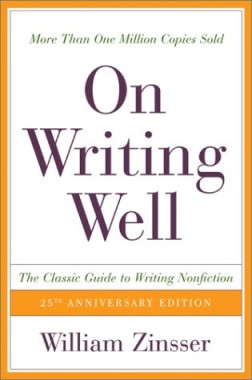
On Writing Well

This book is a classic and one of the first that I read when I got into writing. Zinsser writes in a very approachable style and reminds you that writing isn’t always fun; that it is a real job and that you have to write through blood, sweat, procrastination, and tears to be considered a writer.

He is the one that helped me understand that writing less is more.

On Writing

It would be hard to not include a book about writing from one of the best selling authors of all time; Stephen King. This book dives into King as a person and also provides the reader with how he stays motivated and how he goes about the writing process. There is some excellent stuff in this book and definitely worth reading a few times to glean.

Anyone that listens to Metallica while writing horror and mystery is my kind of human.

Writing Down the Bones

Ah, what can I say about Natalie Goldberg? That she is one of the greatest writing enthusiasts and teachers I have come across.

In Writing Down the Bones, Goldberg reminds us that we can’t beat ourselves up as writers and no matter what we will. She shows us how to get out of our “monkey mind” and how to write without the inner critic stopping your from putting down your ideas.

If you are a writer or even know a writer, Writing Down the Bones can “inspire” you and move you to keep your ideas and pen moving.

The Artist’s Way

Several months ago I heard about the idea of writing 750 words a day to get out of myself and to keep the flame of writing alive. It helps you by making a guarantee with yourself; no matter what, no matter how tired or apathetic I am, I will write 750 words a day.

That idea came from the Artist’s Way by Julia Cameron. Cameron suggests writing “Morning Pages” every day. The idea is to write 3 pages of long hand writing and no matter what don’t stop while you are writing. It is supposed to liven the writer in you as well as work through some cruft so you can be more creative.

And it works.

Bird by Bird

Bird by Bird is a book by the infamous Anne Lamot. I have yet to read it but from the endless awesome reviews at Amazon, it seems to be a truly great book about writing.

Lamott is known for speaking her mind and isn’t afraid to tell you the truth about writing. She has written around a dozen books

The Courage to Write

The Courage to Write is what it says; a short book to help writers not be afraid of the keyboard or pen and help to get them writing more. Raplh Keyes is a well known writing teacher and in this book tries to help us get over the fear of putting pen to paper (or fingers to keyboards).

Keyes writes about the reasons why we become fearful of writing and it’s no surprise that the fear is something in ourselves rather than something external.

The Pocket Muse and The Pocket Muse 2
This is a fun book and isn’t truly a writing technique book like most of the others. What the Pocket Muse is intended to do is give writers a spark to write and be creative. There are many sayings and prompts throughout the book with different types of visuals to get a writer’s mind going.

It’s a nice little book to have by your side, especially if you want to find something for a little boost to get started writing.

The Daily Writer

The Daily Writer is another book that isn’t completely about writing technique. What the Daily Writer provides is 366 prompts and writing exercises that you can use everyday. Every good writer that I have encountered over the years has kept a journal or has written every single day without fail. So, something like the daily writer coupled with the above mentioned Morning Pages can kickstart your writing habit and your creative process.

I’ve used the Daily Writer for almost 7 months now and it is definitely worth the time and money to check out.

Immediate Fiction

I tend to not write fiction but have been thinking about trying some more and more. Especially when a friend recommended “Immediate Fiction” to me. Once again, I don’t have first hand knowledge of this book, but according to my friend and reviewers on Amazon, this is one of the best books for help with writing fiction.

The Elements of Style (4th Edition)

Ah, the classic. I remember sitting in my first semester of college writing with this weirdly colored and amazingly short book as our text. I in no way recognized the importance of Mr. Strunk’s book then. It took several years and a revisit to college to understand its impact on my writing.

The 11 rules of Usage and Composition are extremely valuable and something that every potential writer should take note of.

The Essential Don Murray: Lessons from America’s Greatest Writing Teacher

Don Murray is sort of the “black horse of writing”. Not too many people outside of the field know about him as he doesn’t have the grand allure of authors like Steven King. But Don Murray may have been one of the best writers and writing coaches in the West.

The Essential Don Murray is a collection of all of Murray’s scattered works and provides the reader with many strategies and tips for writing. But, what this book truly shows us is how much Murray loved writing and tries to help the reader love it too.

Chris is a developer, writer, tech enthusiast, and husband. He holds a degree in MIS and CMPSC from Penn State Behrend. Chris is also interested in personal productivity and creativity and how to utilize technology to get more things done. Check out his tech writing at androinica.com where he writes about Android.

By dudley228 • Posted in Advice