Jeers of a Clown: Exploring the Balancing Act of Black Humor Writing

This entry originally appeared on Adrienne Jones’s website.

Jeers of a Clown: Exploring the Balancing Act of Black Humor Writing

By Adrienne Jones

Back in college, a bunch of us got called into the dorm lounge one day to receive some bad news—one of our dorm mates had attempted suicide. He was fine, they were able to save him, but he wouldn’t be coming back to school. A terrible thing, of course. We all sat mournful and appropriately shocked at the news. Then my buddy Al asked the dorm director how this kid had…you know, done it. Turns out he’d taken an overdose of Sudafed.

I went into one of those inappropriate snicker fits, the kind that happen in church or in a meeting with your boss, where laughter is the worst option. I was weakened by it, sliding off the chair, unable to stop while the others stared on in horror, like I was a monster. Come ON! The guy tried to dry his sinuses to death.

Since I started publishing fiction, my brand of humor as been repeatedly called “dark” or “black,” which recently led to pondering the source. Does a dark sense of humor come from the viewpoint of an author, or does the world regularly present us with these scenarios that only a certain personality type recognizes as humorous? Is it the same thing? And where do we draw the line between dark humor and a simple lack of taste?

The late Roald Dahl considered this endlessly, as evidenced in this quote: “If a bucket of paint falls on a man’s head, that’s funny. If the bucket fractures his skull at the same time and kills him, that’s not funny, it’s tragic. And yet if a man falls into a sausage machine and is sold in the shop at so much a pound, that’s funny. It’s also tragic. So why is it funny? I don’t know, but what I do know is that somewhere within this very difficult area lies the secret of all black comedy.”

I think most will agree that Roald Dahl found that balance in his own work. I wonder if his was based purely on speculations, or if he too felt plagued with darkly humorous scenarios thrust before him in daily life. This reminds me of another incident that happened while I was skiing with a group of friends at Killington Mountain. We spotted a man with no arms, expertly swishing down a mogul field, and thought, “Wow. That is incredible.” There was nothing funny about it. We certainly weren’t juvenile and callous enough to laugh at a no-armed skier. We looked on in awe and admiration of his courage.

Yet two hours later we spotted the same man in the ski lodge, casually watching the television as he had lunch with a companion. My friend nudged me and signaled to the TV screen, on which played out the Black Knight scene from Monty Python and The Holy Grail. The knight continued to fight King Arthur even as both his arms had been hacked off by Arthur’s sword, jumping and kicking as fake blood gushed dramatically from his stumps. Dear God, I thought, why are you doing this to me? I mean, what are the odds of watching a no-armed man watching a comedy scene about a no-armed man? I don’t want to laugh at the no-armed skier! The universe is NOT playing fair.

There is a certain safety in laughing at such things in the realm of entertainment, and it would stand to reason that suspension of disbelief or the fiction buffer is the key. But there are just as many staunch haters of Monty Python’s brand of humor as there are fans. I’ve seen people come to blows over this topic. Which brings back the theory that dark humor is about viewpoint, in observer and creator alike.

Since I can’t dig up Roald Dahl and ask him, I participated in a discussion with some living writers of black humor about their life view and how it affects their writing. Author Aurelio O’Brien used to make his living on the big budget animated kiddie films, but crossed over to the dark side with his first novel Eve, a blackly humorous tale of genetic tampering gone awry in a dystopian future.

“For me, so much of life is observably funny and this automatically feeds my writing. When I was creating my all organic, genetically designed future, things like McDonald’s characters directly inspired me to go further than I might otherwise think to go…The little giggling McNuggets are really chunks of dead fowl flesh with cute little smiles carved into them. I find these kinds of things to be so twisted and humorous and odd. Most people don’t think about these characters beyond their surface appeal. So, when people tell me my Lick-n-Span© is gross, I think, is it really any grosser than having a hacked-up chicken giggle at you?”

I agree with O’Brien on this, most consumer icons are creepy. Like the Tidy Bowl man and Mr. Clean. Why is it always a little fantasy man helping the lonely housewife with her daily chores? Strange men coming up out of the floor and the toilet? And why does the housewife always keep them a secret from her husband? Notice the way Mr. Clean winks at her when hubby walks in? And what’s the actual purpose of that little hand guy from Hamburger Helper? What’s he really helping her with?

Speaking of sex and animation, most people know Gary K. Wolf as the creator of Disney’s Roger Rabbit, but he’s also a novelist, and one of the masters of dark humor. For Wolf, the humor definitely comes from a unique way of seeing the world, and is more second nature than calculated creativity.

“There’s something unfathomable about humor writers that compels them to look at a situation or a character, twist it, turn it, squeeze it, squash it until it’s a round peg that fits into a square hole and looks funny doing it,” says Wolf. “Good stand-up comedians have the same ability, taking everyday situations and making them funny. They do it verbally. Most of the humorous writers I know, me included, aren’t very funny in conversation. In fact, I’m so boring I could suck the laughs out of a hyena convention. However, give us a blank page and a pen, and we’ll have you in stitches. I’ve been applauded by editors, critics, and readers for the humor in my work. All well and good except they were talking about what I consider to be my serious work. What I’m saying is that there’s something perverse about the way I look at reality or, in the case of science fiction, unreality I see a situation, I make it funny. Can’t help it. Don’t do it intentionally. That’s just the way I write.”

Gary makes a good point here about stand-up comedians, which prompted me to speak with one of my favorite and darkest comedians, winner of the 2009 Boston Comedy Festival, Dave McDonough. Dave, who’s confessed to needing roughly 70 jokes written for a half-hour set, has a “serial killer on Valium” kind of delivery, and pushes the envelope with some wince-worthy jokes, but he’s booked solid most weeks, so the man has found his groove, and his audience.

“There is a balancing act but you can’t make everyone happy,” says McDonough. “I cross the line sometimes but that’s half the fun. I don’t have any material I draw the line at except Muslim jokes, because I need my head. I tell a Jesus Christ/abortion joke and a male-inmate rape joke that often get applause breaks, so there’s a way to make the darkest of topics palatable to the public. I’m nowhere near as dark or as crazy as the freak I play onstage, I’m really a positive, introverted person by nature who happens to believe that the world is coming to an end.”

So writers and entertainers alike seem to reiterate my previous theory, that black humor is a personality trait, an inherent point of view within the creative mind before the material ever reaches the page, or the stage. But in the spirit of point/counterpoint, I figured there had to be a dark humor writer who didn’t necessarily see the real world through gore-colored, Groucho Marx glasses. Someone calculating, a mere craftsman, crazy on the page but with a solid, normal worldview—author Jeff Strand.

If you’ve read Strand’s popular, horror/humor brand of fiction, you’re now scratching your head and saying, “Did she just call Jeff Strand normal?” Especially after reading excerpts like this one from his book Disposal, which shows off his talent for making gore and violence a casual affair.
“We’ll finish slicing up my husband’s body, then we’ll get rid of the chunks, then we’ll take a long shower, and then we’ll get some sleep–and no, you can’t spend the night–and then I’ll pay you.”

The reason I thought I’d get calculated normalcy from Jeff Strand obviously didn’t come from the content of his fiction. But having had many writing-craft related discussions with Strand, I always end up shaking my head at the logic he applies to the structure of writing, putting himself completely outside the whacky content in order to plot his scenes with almost mathematical precision. He’s like the Professor on Gilligan’s Island, fixing the radio while everyone else is running around throwing coconut cream pies.

But I was wrong. While Strand recognizes more conventional logic about the crux of black humor, in the end he too opts for the warped theory.
“We’re living in dark times, and one theory is that because it’s difficult to cope with or even comprehend some of the horrors around us, we use them for comedic effect to help us better deal with them,” says Strand. “Which is a good theory. But at the same time, I think most of us are just sickos. The college student who creates an elaborate online animation of The Puppy Blender isn’t doing it as a defense mechanism. We’re all warped!”

Though like Roald Dahl, Jeff finds himself balancing that delicate line between humor and bad taste. “If I can come up with a genuinely funny angle that’s more than just ‘Oooh! Look how tasteless I can be!’ then my only off-limits material would be specific real-life people suffering tragedies. Cancer itself is acceptable. A real-life person dying of cancer is not. I wouldn’t necessarily feel the need to make something funnier just because of the uncomfortable subject matter—it would just have to be handled in a way that justified the material.”

And so ends the cage match, the popular vote going to the theory that black-humor writers have an inherently twisted perspective, a real-life view of the world that powers the motor for creating the dark funnies. Limitations are applied when putting pen to page, balancing the scales of humor and darkness to make the mix palatable for human consumption. If the mix is just right, the audience will laugh. Or at least some of them. Because as all humor is in the eye of the beholder, it’s inevitable that part of the population will always stare slack-jawed, horrified as you giggle maniacally at the boy who tried to dry his sinuses to death.

The Pros of Publishing Short Stories on Amazon

This entry originally appeared on NEHW member Mark Edward Hall’s website.

The Pros of Publishing Short Stories on Amazon

by Mark Edward Hall

I get asked a lot, mostly by newbies, how I can make money by publishing .99 cent Ebooks on Amazon. First, my .99 cent books are all short stories. I make .35 on a short story that would otherwise be lost in my computer forever. I have twelve of my shorts out there now with more to come and it actually amounts to a tidy bit of extra income each quarter. Most all of my shorts have been previously published, so anything I make on them now is a bonus and welcome extra income. By the way, I also publish these same stories on Smashwords and Barnes & Noble.

All my novel-length works are 2.99 or above. On Amazon you receive 70% of anything priced above 2.99. On a 2.99 Ebook I receive 2.05. Not too bad when you consider that the stuff I have with a publisher (three books to be exact) only nets me 17.5% of list. The publisher likes to word it as 40% of net, which doesn’t sound too bad when you sign the contract, but in reality it figures to just about 17.5% of the purchase price.

I’m not here to trumpet the virtues of independent publishing over legacy publishing, although I might do that in a future post. Writers have to make up their own minds about what’s best for them. I only know what works best for me. I have two new novels coming early next year and I can tell you this, they will both be independent books. I hire my own editor, commission the cover art from some very good artists, and I’m pretty good at doing the formatting. (Better than my publisher actually) So when you take into consideration the profit difference between doing it yourself and putting it in the hands of a publisher it seems like a no-brainer to me. I wish I’d thought that way years ago.

By the way, I also offer some of those same .99 cent short stories as a collection entitled, Servants of Darkness, for $2.99. Readers who want to sample my work can buy a .99 cent short and if they like what they read they can buy an entire collection for 2.99. In this digital age I think writers are nuts if they don’t use every opportunity available to them.

Also, I am in the process of offering all of those same short stories on my website for free. Yes, you heard me right, FREE! If someone wants to save the .99 cent kindle fee and doesn’t mind reading on the computer, they can read my short stories without paying anything. Maybe I’m nuts but I believe it’s the right thing to do.

But to answer the original question: How can you make money by publishing .99 cent Ebooks on Amazon? Just ask John Locke. If you’re a writer and you haven’t yet heard of John Locke, then you’ve been living under a rock. John Locke writes the Donovan Creed book series and he prices all his novel-length books at .99 cents. He sold a million of them in five months and they’re selling at the rate of one every seventeen seconds.

In summary I think the future is very bright for those writers who have the courage to be creative.

———

Mark Edward Hall has worked at a variety of professions including hunting and fishing guide, owner of a recording studio, singer/songwriter in a multitude of rock n’ roll bands. He has also worked in the aerospace industry on a variety of projects including the space shuttle and the Viking Project, the first Mars lander, of which the project manager was one of his idols: Carl Sagan. He went to grammar school in Durham, Maine with Stephen King, and in the 1990s decided to get serious with his own desire to write fiction. His first short story, Bug Shot was published in 1995. His critically acclaimed supernatural thriller, The Lost Village was published in 2003. Since then he has published five books and more than fifty short stories. His new novel, a thriller entitled Apocalypse Island is due out in early 2012.

Interview: Joining Trent Zelazny on the Dark Side of Fiction

This interview originally appeared on NEHW member Erin Underwood’s blog.

Interview: Joining Trent Zelazny on the Dark Side of Fiction

by Erin Underwood

You might have seen him around. His name is Zelazny. Trent Zelazny. If you read dark fiction he’s someone you want to know, or more to the point, he’s a writer that you want to read. Some people write from the heart, but Trent Zelazny leaves his blood on the page, creating fiction that feels like you’re living an experience while tucked safely in your own cozy home. He is definitely making his mark, writing some terrific pieces–most of which have just been published this year.

Perhaps one of the most impressive things about Trent Zelazny is his ability to keep moving despite the obstacles thrown in his path. Troubles aside, Trent had continued to produce some excellent heart pounding stories that are likely to worm their way into your “To Be Read” pile until you’ve got nothing left from him to read–at which point you will join the rest of us who are waiting for more. Luckily, he’s agreed to give Underwords an interview so that we have a little something to tide us over for now.

~

Drummer. Writer. Movie buff. How would you describe that guy people call Trent Zelazny?

Reserved. A bit neurotic. Still healing. My life has taken a lot of twists and turns. 2009 and 2010 were both pretty much one big downward spiral, filled with alcohol and the death of my fiancée, bouncing aimlessly around Florida, staying in flophouses and some nights on the street. Thankfully, with the help of family and friends, I was able to pull out of it. The 2011, the new Model T is a vast improvement, though it still clinks and clanks when it runs.

What can readers expect when they pick up your newest publication Destination Unknown?

Hopefully a story with characters they can relate to. Hopefully it’s exciting to them, too. A far-fetched scenario but one that, I think, is quite plausible, even moreso possible. To me it asks the question: Can you stick together if you’ve already fallen apart?

What literary (or other) influences have been the most powerful on your development as a writer?

Horror was the big one at the start. Matheson, Bloch, King, Koontz. Over time this evolved into crime and mystery, especially the old pulps from the 40s and 50s, and Film Noir. And not to come off as pretentious, but you have to sound pretentious when you use the word, existentialism, especially Sartre and Kierkegaard. The best mentor I’ve had is Jane Lindskold. I seriously doubt I’d be as far along as I am without her. I’ve kind of let that friendship slip away, and deeply regret that, knowing it’s mostly my doing.

Your fiction is a mixture of horror, noir, crime, and comedy in varying degrees. As a writer or reader, what attracts you most to this combination of literary genres?

It would be more as a reader than a writer, I think. They are typically my favorite things to read, so I guess it would make sense that they’re the things that come through most when I write. Dave Barry and Donald Westlake can make me laugh so hard that I practically wet my pants. Joe Lansdale has the mind-boggling talent to frighten you, make you cringe, and laugh out loud, all at the same time. I also really love heavy drama. Judith Guest’s Ordinary People was and is a personal favorite, as is the movie. I’d love to be able to write something like that one day.

You’ve worked with a variety of the darker genres, but haven’t touched much on the fantastic. Since fantasy and horror often go hand in hand, do you think you’ll explore this combination of these genres?

I have a little. When I was younger I wrote a lot of fantasy and some science fiction. As time went on, however, I found that, overall, I just wasn’t very good at it. I think, with my father being who he was, I kind of thought that that’s what I was supposed to be doing. I have fantastical elements in pieces, usually dark. The book I’m working on now has a big supernatural subplot, and I have a sort of fantastical story coming out in the anthology Fantastic Stories of the Imagination. I try to let the story tell me what it is. Often not, but at times it waves its arms and says, “Hey, there’s some fantasy in this one.”

What story or scene has been the most challenging for you to write or pushed you the furthest outside of your comfort zone?

The book I’m working on has done that a good amount. Fractal Despondency would likely be the biggest so far, I think. Semi-autobiographical. My fiancée had only been dead four or five months when I wrote it.

[sample chapter of Fractal Despondency]

If you had one chance to ask anyone (alive or dead/real or fictional) one question, what question would you ask? Why that question?

At the moment of this interview, it would probably be Kierkegaard. I’d wanna ask him why the hell he had to say “Life can only be understood backwards; but it must be lived forwards.” Because it is one of the truest things I’ve ever heard and, to me, it’s not an all-together pleasant thought.

In an interview with Darrel Schweitzer for Fantasy Magazine in which you were answering a question about your father’s (award winning author Roger Zelazny) influence on your writing, you said, “He gave advice and helped with certain must-knows, but he always encouraged individuality.” Looking back, how has that encouragement helped to shape your fiction into what it is today?

Well, it almost contradicts what I said above about feeling like writing fantasy was what I should be doing. Last thing he ever wanted was to turn anyone into a literary clone of himself. I have an older brother and a younger sister—I’m the Jan Brady. Whatever any of us took interest in, he encouraged. He encouraged my music, my writing, my drawing. Anything I seemed to take a real interest in. He wasn’t a cheerleader, but an encourager. I’m pretty sure he did that with my brother and sister as well. When he saw that I was gravitating more and more towards writing, we’d sit in his office and talk about it. He rattled off a few things that every writer should probably read (Shakespeare, for example) but otherwise told me more about fundamentals. He used favorite books of his as examples (Alfred Bester’s The Demolished Man, which is an amazing book, comes to mind), but he never told me I had to read them. He wanted me to find my own way.

In another interview that you did with Gabrielle Faust, part of your advice to new writers was not to be afraid to write something unpublishable. Why do you think this is so important?

This is often where writer’s block comes in, I think. Not that the words won’t come, but more a fear that the words will be bad, or wrong, and this will somehow, in some way, confirm that you don’t have what it takes. That you’re not a real writer. I still write stories that are beyond help. Am I let down when I finish? Yes. Am I glad that I wrote it? Yes. It’s a little like blowing your nose, clearing the gunk and crap out so you can breathe, and sometimes you’re really stuffed up. You may have to go through an entire box of tissues, but eventually you’ll breathe better, and you’ll be glad you got rid of all that snot.

Within the last year you have published a solid stream of fiction. What are you working on next?

    • Destination Unknown – print & e-book (Dec 2011)
    • “Snow Blind” in Stupefying Stories – e-book (Dec 2011)
    • A Crack in Melancholy Time – e-book (Sept 2011)
    • Shadowboxer – e-book (Aug 2011)
    • To Sleep Gently – e-book (Aug 2011),
    • A story in Kizuna [Fiction for Japan] – print & e-book (Aug 2011)
    • Fractal Despondency – e-book (Apr 2011), print (Jun 2011)
    • The Day the Leash Gave Way and Other Stories – print (Aug 2010)

Currently working on a new novel, as well as a short novelette for a shared world anthology, and a project I’m not allowed to discuss (tease, I know). I’m sure a short story or two will pop up soon enough. With 2009-2010 being what they were, I was at least blessed this year with a bit more publishing success.

~

Trent Zelazny is the author of Destination Unknown, To Sleep Gently, Fractal Despondency, Shadowboxer, The Day the Leash Gave Way and Other Stories, and A Crack in Melancholy Time. He was born in Santa Fe, New Mexico. He has lived in California, Oregon, Arizona, and Florida. He currently roams throughout the country aimlessly. He also loves basketball. You can visit Trent on Facebook, Twitter, and on his website.

2012 New Year’s Resolutions for Writers

2012 New Year’s Resolutions for Writers

by Jason Harris

The last day of 2011, the day people start thinking of their New Years’ resolutions. Do you remember what you wanted to do last year? There will be the usual resolutions of people wanting to lose weight by dieting or exercising or a combination of both. There may be people out there wishing for a new job, a better job, or even looking for advancement at their current job. What will you as a writer want to do in the New Year?

Here are a few resolutions:

1. Spend less time on Facebook/Twitter or both

2. Write more

3. Be more productive

4. Respond/talk to fans

5. Drink less

6. Smoke less

7. Read more books, blogs, etc.

8. Promote yourself more

9. Don’t procrastinate

I know I plan on reading more in 2012. It has been a long time since I was reading on a regular basis. This last week I have read more than I have in a very long time, which is sad. One of my reading goals in the New Year will be to read more books and stories written by NEHW members. This will help me to promote their work when they are participating in NEHW events.

I will see everyone in 2012.

What to Get After Receiving a New Phone or iPad

What to Get After Receiving a New Phone or iPad

by Jason Harris

It’s been a few days since Christmas. What do you do if you received a phone or iPad as a gift? You should buy a case to protect your new present. I know how a person can be rough on their gadgets especially a phone. You clip it to your belt or throw it into a purse or pocket. You definitely don’t want to do that without your phone being in a case.

You may be wondering why this entry about cases is on this blog. It’s important to protect your devices. I have used both my iPhone and iPad in my professional life.  A phone isn’t the best device to write something on, but if it is the only thing available then you have to do what you have to do to get an assignment in on time. If you depend on your devices for your job, you don’t want something happening to them.

The Defender series

The cases I have used for both my Apple devices are an Otterbox Defender case. These cases are made to protect your device from a lot of different every day accidents that can befall a device. I have dropped my iPhone many times and nothing has ever happened to it. Only the case has been scrapped up by these falls. I feel comfortable letting a child handle my iPhone or iPad since they are protected.

There are two reasons I recommend Otterbox products. They get the job done and the companies customer service is up there in my book with Apple’s customer service.

A few weeks ago, I had to contact Otterbox because my wife’s iPhone case was broken. She hadn’t dropped it or anything, but the case was cracked. I knew she hadn’t dropped it since most of the time her phone is in her purse. It’s not clipped to her belt like I have mine. I chalked it up to a defect in the case. I contacted the company and they asked for a four digit number on the inside of the case. All I saw was a one digit number so I emailed the customer service person who emailed me. I decided to include a few pictures of her case to go with my message about not seeing the numbers. The next email I received was one telling me that a new case was going to be shipped to me.

The reason I equate the customer service at Otterbox to Apple’s customer service because there were no hassles. I had an issue and they took care of it just like what Apple has done for me in the past.

5 Secrets an 8-year old Natalie Wood Can Teach You About Persuasive Writing

This article originally appeared on the Copyblogger website.

5 Secrets an 8-year old Natalie Wood Can Teach You About Persuasive Writing

by Susan Daffron

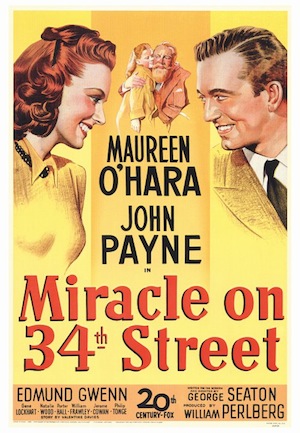
Like a lot of people, every year my husband and I watch Miracle on 34th Street during the holiday season.

One of my favorite scenes in the movie is right at the end when Natalie Wood is riding in the car with her mom and Fred Gailey.

The camera focuses in on Natalie sitting in the back seat of the car staring out the window looking bored and kind of annoyed, mumbling “I believe, I believe …”

Then, there’s a moment where the camera closes in a bit on her eyes as they widen in shock.

She shrieks, “Stop, Uncle Fred! Stop! Stop! Stop!”

The camera angle switches and you see Natalie running up the hill to the house that she had asked Santa Claus to give her.

Persuasive writing is like that.

When it works, the writing takes someone from a neutral state of bored indifference to excitement.

I think of that split-second transition as the “magic moment.”

Considering Natalie Wood was only 8 years old when the movie was made, she does an amazing job of conveying just what happens during that magic moment when suddenly something that seemed impossible becomes real.

To reach that magic moment in your copywriting, here are a 5 secrets you can learn from an 8-year old Natalie.

1. You need a big story

People don’t respond to boring. In fact, one of the worst insults an 8-year old can throw at you is “that’s boring.”

A story like, “What if Santa were real?” gets the attention of pretty much everyone, even those with short attention spans.

It gets people talking.

In Miracle on 34th Street, even the grandkids of the district attorney knew about the legal case. (And thought grandpa had a whole lot of nerve picking on Santa.)

Is your message something worth sharing? Could it be?

2. You need a big vision

Unlike most kids, instead of asking for a toy, Natalie Wood asks Santa for a house. She hands Kris Kringle a magazine photograph of a house and explains that she doesn’t want a dollhouse. She wants a REAL house.

She says, “If you’re really Santa Claus, you can get it for me. And if you can’t, you’re only a nice man with a white beard, like mother said.”

Natalie had a big vision for what life would be like living in a house in the suburbs versus living in an apartment in the city.

She doesn’t like her Manhattan apartment, and explains that her house would have a back yard with a big tree to put a swing on. She had a clear picture of exactly what she wanted.

With your writing, can you paint a transformative picture that inspires people to fill in the rest using their own imagination?

3. You need a big emotion

People do almost everything for emotional, not rational reasons.

It’s been said that Santa Claus doesn’t need a marketing department. What’s not to love about free gifts for boys and girls around the world? And the “spirit of Christmas” embodies noble emotions like generosity, love, and compassion.

As Kris Kringle says, “Christmas isn’t just a day, it’s a frame of mind.”

In your writing, you need to tap into emotions, whether they are noble like generosity or more negative like fear, greed, and vanity.

After all, there’s no logical reason to believe in Santa Claus or ever eat M&Ms, cookies or doughnuts. Yet people do. Krispy Kreme and Mrs. Fields are ample proof of that.

Why do people continue to buy fat-laden doughnuts and cookies? Because they taste yummy and eating them makes you feel good.

What are your reader’s biggest pain points? What make him feel good?

4. You need big proof

Natalie Wood wants to believe that Kris Kringle is really Santa and looks for proof. At Macy’s she sees him speak Dutch to a little girl and is thrilled to discover he’s not wearing fake padding on his jolly tummy. Then when she tugs on his beard, it doesn’t come off!

She’s excited to tell her mom what she’s learned, but mom raises objections. “Many men have long beards like that” and “I speak French, but I’m not Joan of Arc.”

Many types of proof exist. For example, you might include testimonials in your copy, but that might not be enough. You may need something bigger.

In the movie, the ultimate proof is the existence of the house. (And the real magic is finding the cane tucked into a corner.)

Are you giving people enough reasons to have faith in what you offer? (“Faith is believing in things when common sense tells you not to.”)

5. You need to believe

People want to believe a lot of things they think they can’t do. They might secretly want to travel around the world or write a book.

Generally, there’s no real reason why these people couldn’t travel or write; they just think they can’t.

Good copywriting taps into the emotions and dreams people want to believe anyway. Natalie Wood wanted to believe that Santa would bring her a house, but “common sense” kept telling her it would never happen.

Until it did.

She says, “You were right, Mommy! Mommy said if things don’t turn out right at first…you’ve still got to believe. I kept believing. You were right, Mommy!”

Does your writing give people the joy of realizing a dream they want to believe is possible? Could it?

Of course, in the movie, the logistics of actually buying the house, mom and Fred getting married, moving, and so forth work themselves out. By then, it’s just details.

That’s true of great copy too.

Once the magic moment happens, there’s no turning back.

About the Author: Susan Daffron, aka The Book Consultant owns a book and software publishing company. In addition to teaching aspiring authors about book publishing and putting on the Self-Publishers Online Conference every May, she also just relaunched and is the editor of ComputorCompanion.com, which offers ideas and advice to grow your business.

Thoughts on Revising Versus Redrafting

This entry originally appeared on NEHW member Craig D.B. Patton’s blog.

On Starting Again

by Craig D.B. Patton

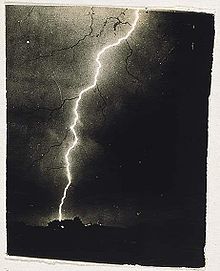
Revising vs. redrafting. Tinkering with what you wrote the first time vs. tossing all of it in the (virtual) bin because you realize you just plain whiffed on the first attempt. I think I’ve had a habit of resisting the latter. It’s harder, emotionally, for me to accept the fact that I invested time and energy and didn’t actually create something worth keeping. I like it much better when the lightning bolt flies straight and true and fries something with a really solid BOOM!

(picture courtesy of Wikipedia)

But it doesn’t always. And I’ve missed enough times now to be better at recognizing and accepting it. It’s also become one of the times when I remember what bands go through in the studio. I’ve never been in a band, but I’ve read enough articles and books to have a sense of how some of them work and how bumpy and long and curving the road to creating some of my favorite music was. Take after take after take. Experiment after experiment that seems great conceptually and then just lies there on the floor when tried. Songs that have no chorus. Choruses that have no verses. Bits of instrumentation that don’t work until combined, which happens sometimes by design and sometimes accidentally. Hours and hours of horrible music before the good stuff arrives, if it does at all.

But the seed idea, if it’s good enough, survives through all that.

Which is the same with stories. A good idea is a good idea. The problems come when trying to tell the story. And sometimes it takes a while.

I have a song/story like that now. The first take/draft was fun while I was doing it. There are some good images and moments, particularly in the second half of it. But it wound up…meh. And meh doesn’t get fixed by cutting a few paragraphs and rewriting a few more. So I’ve marched back into the studio. Changed a few effects pedals. Reworked some instrumentation. The red light is on.

Time for another take.

What To Do After Writing Your First Novel

What To Do After Writing Your First Novel

by David Price

This is all new to me. I finished writing my first novel just five months ago. It’s been a long time coming. There’s been so much to do since I finished the first draft, more than I ever imagined. I knew I’d have to edit it, but I never guessed how much work that would be, because I’d only written short stories before. I found out I needed to have a website, start a blog, as well as get active on facebook and twitter. Last and not least, I needed to network. As far as networking goes, the best thing I have done to date was join the New England Horror Writers.

The NEHW seemed like a good, solid group, right away. I immediately got involved in the facebook discussions and tried to help by contributing to the website. I had a chance to meet some of the members at Rock and Shock, and then about a month later at Anthocon. Those two events were great places to start and meet a few people, but the best chance to really get to know some people was going to be the Christmas party at John McIlveen’s.

Driving there was a bit of an adventure for me. I had trouble following the mapquest directions, and found myself wishing I had taken the GPS from my wife’s car. Overall, Haverhill is not that far from my home city of Peabody (pronounced Peebuddy, Jason), but once I got past Georgetown, I was in unfamiliar territory. It probably took me about a half hour longer to get there than it should have, because I turned around and backtracked so many times. In the end, I made it though.

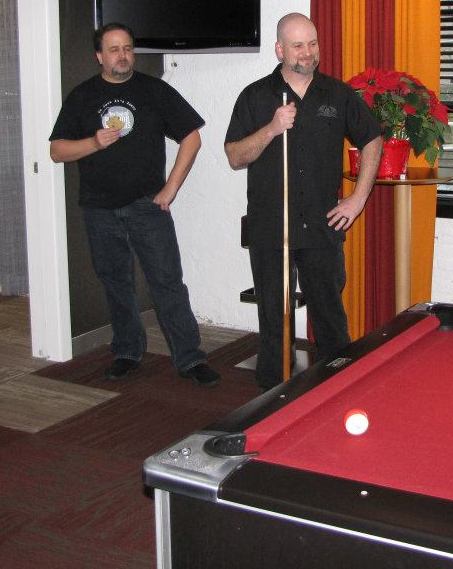
From left to right: Scott Goudsward and David Price playing pool (picture courtesy of John M. McIlveen)

Now, I’ve been an introvert all my life, so meeting new people isn’t really my specialty. I’m sure a lot of you other writer types out there can relate to this. I walked into the conference room where the party was being held and all those old anxieties came to the surface. All the seats at the table were taken, which didn’t make it any easier to blend in. Luckily, Dan Keohane got up from the food table and asked in anyone wanted to play pool. A few of us teamed up and we played some pool. This gave me a chance to mingle with just a couple people to start and break the ice. As an added bonus, our host John McIlveen brought down enough alcohol to supply a frat party. I’ve been in enough social situations to know the lubricating powers of alcohol, so I grabbed a beer and tried to relax.

People came and went, but I had the chance to talk to Paul McMahon, Scott Goudsward, John McIlveen and Tracy Carbone during the day. Eventually, Stacy Longo and Jason Harris showed up, the two people who I’ve had the most contact up until now. I’m not so good at mingling that I had the chance to meet everybody, but hopefully I’ll get there eventually. I’m learning more all the time. Everybody had their own experiences and their own advice to share. The NEHW is a very friendly, supportive community, and I’m glad I can be a part of it. As day turned to night, the partygoers dwindled to a level I was more naturally comfortable with.

At eight o’clock, those of us who had stuck it out that long, gathered around the television so we could check out Tracy Carbone’s appearance on Animal Planet. This was the best time for me. We all got a kick out of Tracy’s appearance on some show that had to do with exotic pets. It lightened the mood up for a fun conversation. At that point, Scott Woolridge and Gardner Goldsmith were telling stories about convention experiences, other writers they have met, and the British sci-fi comedy, Red Dwarf, a show I had never seen before. Gardner really had some great stories to share about Red Dwarf and what the show meant to him. Gardner and a friend of his even flew over to England one year, just to watch the show on tv.

As Gardner was telling us this story, he described his big, burly friend who went with him. He looked around the room, reached over and tapped me on the shoulder, “Kind of like this guy,” he said. I have to chuckle about this. I have been part of a few different social circles over my life, such as hockey players, construction workers, Boy Scout fathers and now writers. Everything being relative, I seem to be some sort of hybrid. When I am around the athletes and construction workers, I am generally one of the smaller guys, but when I hang out with Boy Scout dads and other writers, it goes the other way.

Anyway, it was a fun day filled with interesting people. I’ve never completely fit in with the athletes and construction workers. Nothing against them, mind you, I’ve been part of that crowd for over twenty-five years. Still, it’s nice to finally find a group of people who can sit around all day talking about H. P. Lovecraft, Star Wars, the next Stephen King mini-series and the zombie apocalypse. I hope I get the chance to get to know more of this group over the coming year. Maybe by the 2012 Christmas party I’ll even know the names of the others that I didn’t get a chance to meet. I guess I’ll wrap this up now. I think I’ll watch one more episode of Red Dwarf on Netflix before bed.

Editor’s Note: Along with being a NEHW member, David Price is part of the NEHW Publicity Committee.

12 Holiday Gifts That Writers Will Actually Use

This article originally appeared on the website, The Millions.

12 Holiday Gifts That Writers Will Actually Use

by Hannah Gersen

coverIn “Aren’t You Dead Yet?”, one of the stories in Elissa Schappell’s new collection, Blueprints for Building Better Girls, the narrator, an aspiring writer, receives a black, leather-bound journal as a gift from her best friend. Although she loves the look of the journal, she never writes in it. When her friend discovers this, he’s angry, and even accuses her of slacking off:

I tried to explain that I hadn’t written in it because I loved it so much and I didn’t want to ruin it. The pages were so nice, and sewn in, you couldn’t just rip them out. Whatever stupid thing I wrote down would be in there permanently.

This passage reminded me of the many beautiful blank journals I’ve received over the years, journals I’ve never used. Whenever I fill up one of my trusty spiral notebooks, I go through the stack and tell myself I’m finally going to start using them. But then I think of sullying those pristine, unlined pages with my half-formed thoughts, and I feel as guilty as the narrator in Schappell’s story.

Unfortunately, the same guilt intrudes on many of the other lovely writerly gifts I’ve received. At the risk of sounding ungrateful, I confess that I have a lot of nice pens I never use, because I’m afraid of chewing on them; a lot of classic novels I haven’t read because I feel guilty about not having read them; and a lot of inspirational writer’s guides I never read, because what if I’m not inspired?

None of these gifts are offensive, and no one will begrudge you for giving them. But they are boilerplate gifts. Writers get blank journals for the same reasons that teachers get mugs, assistants get flowers, and grandmothers get tea. If you want to give the writer in your life something he or she will truly adore, here are twelve ideas:

1.  A Cheesy New Bestseller

covercoverOne of the best presents I ever got was The Nanny Diaries. I really wanted it, but there were over 300 people on the library’s waiting list (I live in New York), and I wasn’t going to shell out $25 for something I was unlikely to read twice. The funny thing is, I never told my roommate that I wanted to read The Nanny Diaries. She just guessed that I had a secret craving for it. Of course, it can be as hard to gauge your friend’s taste in pop culture as it in high culture, but it’s better to guess wrong in the pop culture arena, because your friend is more likely to exchange it for something she likes better. Whereas, if you give her Gravity’s Rainbow, she’ll keep it for years out of obligation.

2.  Good lipstick

Writers are often broke. If they have $30 to spare, they are going to spend it on dinner, booze, or new books. Not lipstick. But writers are pale from spending so much time inside and could use some color. Make-up can be a tricky gift because it suggests that you think your friend’s face could use improvement. That’s why it’s important to go to a department store make-up counter and buy something frivolous and indulgent, like a single tube of red lipstick or some face powder or blush in a nice-looking case.

3.  Foreign language learning software

Most writers wish they knew more languages. It can also be relaxing to be rendered inarticulate in a new language, in that it offers a real break from personal expression, nuance, and irony. At the same time, learning a new language sharpens your native tongue, and expands your vocabulary. It’s sort of like cross training. Although language classes with live instructors are generally more effective than computer programs, I prefer software because it allows me to take the class on my own time and at my own pace.

4.  A Bathrobe

John Cheever famously donned a suit every morning in order to write. But as Ann Beattie recently revealed, and as a generation of bloggers already knows, most writers wear awful clothing while they are working. Help your writer friend out by giving her a beautiful robe to cover up her bizarre ensembles. Even if she already has one, she probably hasn’t washed it in a long time, and could use another.

5.  A Manicure

I bite my nails, especially when I’m writing. I’ve noticed that a lot of other writers have suspiciously short nails, too. Manicures help. Also, manicures get writers out of the house—and off the internet.

6.  “Freedom”, the internet-blocking software

Freedom” is a computer program that blocks the internet on your computer for up to eight hours. I don’t understand why it’s effective, since it’s relatively easy to circumvent, but as soon as I turn it on, I stay off the internet for hours at a time. (There is also a program called “Anti-social”, which only blocks the social parts of the internet, like Facebook and Twitter.)

7.  Booze, coffee, and other stimulants

Find out what your friend likes to drink and buy a really nice version of that thing. Wine can be tricky, but we are living in an age of over-educated clerks, so don’t be afraid to ask for help. If your friend is a coffee or tea drinker, find out how he brews it and buy him really good beans or tealeaves. Even better, find out what cafe he frequents and see if they sell gift certificates.

8.  Yoga Classes

Yoga does wonders for anxiety, depression, and aching backs, three common writerly afflictions. Most yoga classes also incorporate some kind of meditation practice, which is also very helpful.

9.  A pet

In a recent Atlantic blog post containing advice from world’s most prolific writers, a character from one of Muriel Spark’s novels is quoted, describing why cats are good for writers: “If you want to concentrate deeply on some problem, and especially some piece of writing or paper-work, you should acquire a cat… The effect of a cat on your concentration is remarkable, very mysterious.” Another prolific writer, Jennifer Weiner, recommends dogs on her website, where she’s posted a list of tips for aspiring writers. Dogs, she explains, foster discipline, because they must be walked several times a day. Furthermore, Weiner notes, walking is as beneficial for the writer as it is for the dog: “While you’re walking, you’re thinking about plot, or characters, or that tricky bit of dialogue that’s had you stumped for days.”

Obviously, a pet should not be given casually, or even as a surprise, but it’s worth considering, especially if you hear of an already-trained dog or cat that needs a new home.

10.  Freezable homemade foods: casseroles, soups, breads, and baked goods.

This is a potentially Mom-ish gift, but if your friend is on deadline, a new parent, or just far from home during the holidays, a home-cooked meal could be a lovely gesture. I emphasize freezable because it should be something that you make at home and leave with your friend to eat later. If you can’t cook, buy a pie.

11.  A hand-written letter

I know how corny this sounds, but many writers, especially fiction writers, still get a fair amount of rejection notes via the U.S. mail. You can easily make your friend’s day by sending an old-fashioned, chatty letter or even just a holiday card.

12.  The Gift, by Lewis Hyde

cover The Gift examines the role of artists in market economies, taking the lives of two major American poets as case studies. It’s the perfect antidote to all the earnest, helpful guides that aim to teach writers how to be more publishable, saleable, and disciplined. Where most writing guides make writers feel they could succeed if only they were more productive and efficient, The Gift argues that productivity and efficiency are market-based terms that have little meaning in gift economies, which is where many creative writers exchange and share their work. Another way of putting it is to say that The Gift makes feel writers feel less crazy.

The Pen Is Mightier Than The Phone: A Case For Writing Things Out

This article originally appeared on the Fast Company website.

The Pen Is Mightier Than The Phone: A Case For Writing Things Out

by Kevin Purdy

Writing things down, with your actual hands, is just plain better at getting you to remember and execute good ideas. Here’s why.

There’s all kinds of advice across the web about when to use which app for each small thing that needs doing. But the advocates for using paper to complete certain tasks are not so loud (you can’t hear them typing, among other things). Yet a Forrester Research survey of business professionals found that 87 percent of them supplement gadgets with paper productivity, and 47 percent thought their personal and company efficiency would improve with better note-taking. The survey might have been biased, since it was sponsored by the makers of the Livescribe smart pen, but you can’t help but think it touches on a need to refamiliarize ourselves with ink and thinly sliced wood pulp.Paper, but more specifically handwriting, will likely always be with us, and that’s a good thing. It’s a smoother path from your brain to the printed word, it saves you from task-switching overload, and it possibly makes the best to-do list.So here’s a chance for advocates of the handwritten way to make their best pitch for the best uses of dead trees.

Lightning-Strike Ideas

Carrying a notebook with you at all times is cheap and easy. You can catch those startlingly crisp ideas about a project that pop up in the auto shop waiting room, the airport, a bookstore, or wherever. Marina Martin, business efficiency consultant and self-described “quintessential Type-A Personality,” says that even the most fluid, thoughtful electronics introduce too much friction into the process of thinking, writing down, then thinking further out.

“We’re more likely to find an electronic device, open our favorite word processor, and fiddle with a margin and font size before committing a single word to the page,” Martin wrote in an email. “Automatic spellcheck and word correction can slow the process further and cause you to lose your train of thought.”

By committing your thought to paper, you’re also doing more to lock it into place. Virginia Berninger, professor of educational psychology at the University of Washington, has the brain scans to prove it. Berninger told the Wall Street Journal in Oct. 2010 that as your hand executes each stroke of each letter, it activates a much larger portion of the brain’s thinking, language, and “working memory” regions than typing, which whisks your attention along at a more letters-and-words pace.

A 2008 study, also cited in the Journal, asked adults distinguish between characters in another language and their trick mirror images. Those who had a chance to write out the original characters with pen and paper had “stronger and longer-lasting recognition” of the proper orientation than those who found the character on a keyboard.

Better To-Do Lists

The role of paper is “changing from information recording and archiving, to a more temporary role of containing transient information,” says Jenny Englert, senior cognitive engineer at Xerox, in summarizing some of the research her firm is doing on the future of work and work practice ethnography. In other words, paper still makes for a great to-do list (which, as you’ve just learned, is easier to remember).

A paper to-do list is easier to edit wherever you are, and can contain sketches and special characters without requiring you to learn new software or keyboard tricks. Paper also “provides a visual cue that persists spatially (it doesn’t disappear behind a computer screen),” Englert writes, and can be left right where you need to be reminded of it.

Martin notes, too, that it’s harder, psychologically and physically, to let an item grow stale on a to-do list, especially if you’re getting other items done around it.

“When it comes time to rewrite a messy or mostly done list, merely facing the idea of writing out the same task for the fifth time can be enough motivation for me to do it right then, so it never has to be written down again,” she says.

Jobs and Events That Seem Overwhelming

Dr. Sian Beilock’s book Choke: What the Secrets of the Brain Reveal About Getting it Right When You Have To, explores the many, many ways that the most talented people can set themselves up for huge failures at crucial moments. One thing that reliably helped very smart students with major test anxiety was writing about their anxieties to “off-load” them. And that was very specifically noted as “writing.” In general, ask a whole bunch of geeks where they write down their thoughts and feelings, and you might be surprised at how many choose pen and paper.

As another Fast Company blogger pointed out, critics and researchers see paper as a medium that allows for deeper thought and focus. By its nature, it’s a single page that you pick up and give a key position to, and you can see exactly how much you have done with it. On another level, paper lacks hyperlinks, search boxes, and notifications, the kinds of context switches author Nicholas Carr believes have rewired and distracted our brains.

Of course, there are lots of ways to digitize your paper thoughts once you’ve nailed them down, if you’d like–Livescribe, Evernote, and tools like the ScanSnap among them. Handwriting and paper’s biggest selling points may be that you don’t have to “switch” or “transition” anything at all. They’re always there, and will be for a long time.