A Newbie Shares His Experiences of NECON 33

by Nicholas Conley


NEHW member Nicholas Conley holding his book, "The Cage Legacy."

NEHW member Nicholas Conley holding his book, “The Cage Legacy.” Photo by Jason Harris.

For writers, the process of actually writing a book is one of the most painfully brutal tasks imaginable.  It’s a meticulous, painstaking, heart-stopping (and often heartbreaking) procedure that truly changes a person.

See, once the plucky creative-minded person decides that he or she has aspirations to become (of all the things in the world) a writer … and once that foolish, foolish person decides to embark on the god-awful,  painful task of writing a book, well … that creative person quickly becomes wrapped up in his or her own world.  And inside that world, it often seems like the only thing you’re working toward is that last page, that final period.

Once you finish the book, you’ll be done, right?   The world will just end, won’t it?  Everything will be complete! Your life is finished!

No, not quite.

As it turns out, completing your book isn’t the end of the story.  No, not by a long shot.  Now that your work is out there – now that this collection of inner demons that you’ve been carrying around in your head is finally out in the world, and it’s available for people to read — now, it’s time to get YOURSELF out there.  It’s time to meet people, form new friendships and make new connections.  You’ve done the introverted part, and you did it well — but now, it’s time to gather up your extroverted energies and, uh … mingle.

But … mingling?  How are a bunch of socially awkward WRITERS suppose to MINGLE?

See, this is why going to fiction/horror/comic etc. conventions can be difficult, but it’s also why the good conventions are so much fun.  Conventions force all of us introverted writers, artists and other creative types to get to know each other and interact.  Above all else, these conventions force us to get out of our writing shells.

0719131219a

Photo by N. Conley.

This is also why NECON (short for the Northeastern Writers Conference) is by far the most entertaining, lively and just plain entertaining convention I’ve ever had the opportunity to attend. Yes, it certainly features a smorgasbord of genre authors, artists and publishers, as well as plenty of enthusiastic genre fiction fans. But what makes NECON unique is that, really, it’s a surprisingly small, personal con; within a few hours, it’s as if you’ve known everyone there for years.

At NECON, the walls are down. It’s a highly casual affair, wherein all the big names (for example: Jack Ketchum, F. Paul Wilson, Kealan Patrick Burke, Christopher Golden, Brian Keene, etc.), small names and middling names are all on equal ground, and everyone freely interacts with one another. Everybody shares beers, trades corny jokes and gets to discuss their passions. Throughout my NECON experience, if there was one thing I heard quoted over and over again, it was this:

“Necon isn’t just a con, it’s a family.”

Yes, that’s definitely the feeling that one gets from attending. It doesn’t feel like a conference at all. Really, it just feels like a family reunion – the good kind, the kind where everyone cheerfully pokes fun at each other and catches up on what they’ve been doing for the last year.

0719131519

Photo by N. Conley.

For genre writers, the Northeastern Writers Conference in Rhode Island is something you hear a lot about, and always in highly enthusiastic tones. Put on every year by the Booth family, including founder Bob Booth (who is affectionately referred to as Papa Necon). Booth is a truly inspirational figure; currently battling lung cancer. Bob and his family’s perseverance is absolutely amazing to see.

NECON is the Booth family’s baby, and what a creation it is; most people I’ve spoken to refer to NECON as “the best con,” or “the only con I go to every year,” and now that I’ve attended, I can definitely understand why.

(Before we move on, allow me to insert an embarrassing side note and a tip: Yes, NECON is pronounced Knee-Con, not En-E-Con, Neck-on and definitely not Neeh-Cone. This seems obvious, but I’ll admit I actually made sure not to say Knee-Con out loud until I’d heard someone else say it first. Oh, the shame, the shame…)

Now, how did my weekend get started?

Okay, so I made the two-hour drive down from New Hampshire on Thursday afternoon. Immediately upon opening the doors, the welcoming nature of the whole event was made extraordinarily apparent. Once I got my badge, collected my bearings and started emptying all the empty candy/chips/highly-stereotypical-road-snack wrappers out of my bag, I was immediately greeted by Mark Angevine and artist Duncan Eagleson, both of whom did a terrific job at explaining everything, telling me the history of Camp Necon and showing me around. Seriously, I really can’t emphasize enough how great these guys were; I enjoyed many intriguing conversations with both of them throughout the weekend. From there, Mark offered me a cup of coffee – very, very strong coffee. I got the pleasure of enjoying a brief demonstration of his talented musical abilities, in particular his undeniable skill at playing the shakuhachi, an ancient Japanese end-blown flute.

From there, I met up with Scott Goudsward of the New England Horror Writers, a great guy who really does an admirable job at organizing all of these group events. There was a whole slew of NEHW members all over NECON, so all of us got to freely navigate throughout the convention. Sometimes at the table, sometimes at the panels or sometimes just walking around, you could always spot an NEHW member somewhere. Among those in attendance were Charles Day (The Legend of the Pumpkin Thief), Bracken McLeod (Mountain Home), Tracy L. Carbone (Restitution), David Price (Dead in the USA), Kristi Petersen Schoonover (Bad Apple), Michael Arruda (In the Spooklight), Eric Dimbleby (The Klinik) and Scott and Trisha Wooldrige (UnCONventional), as well as Jason Harris and Stacey Longo Harris, owners of the horror-themed Connecticut bookstore Books and Boos, which I’ll be doing a reading at on August 24.

Now, NECON is a four-day event , so naturally, there’s an enormous amount of great moments to talk about. However, since I’m far too aware of my own tendency to turn every article into a novel-length work (yes, I’m one of those guys, ugh), I’m going to force myself to whittle this down into a neat, tidy, manageable length. To accomplish this daunting task, I’m going to write out a concise list of highlights:

Rick Hautala

Rick Hautala

1. The Rick Hautala memorial.  Rick, who was famously known as “Maine’s other horror writer,”  was the author of over 30 novels and short stories; his recent death this past March was an enormous shock to many in the literary community. As a regular attendee of NECON – an event that was, according to his close friends, “Rick’s Christmas,” – most of the first night of NECON 33 was devoted to a moving tribute of the man and his work. Touching speeches were given by many of Rick’s friends and loved ones, including Christopher Golden and Rick’s wife, Holly Newstein Hautala. I’m sorry to say that I only had the opportunity to meet Rick once, back at Anthocon 2012. However, even in my limited interactions with him, Rick’s kindness and generosity were truly remarkable, especially for someone who so many young horror writers (myself included!) have looked up to for so many years; he was truly one of a kind. Rest in peace, Rick.

2. For the next highlight, going back to speeches; I can’t go without mentioning that every speech given by Mike Myers and Rio Youers was absolutely gut-bustingly hilarious. Great job, guys.

3. The Hawaiian shirt contest! Ridiculous as it might sound, this was totally one of my most anticipated events of the weekend. Since I consider myself to be something of a Hawaiian shirt connoisseur (and with that, the crowd groans), I was excited to give this a whirl. As it was, my shirt – a white and red number – placed in third, winning me a set of googly eyes. I was happy with third place, since my fellow top fivers (including the winner, Barry Dejasu) had some really terrific shirts. My personal favorite was probably Errick Nunnally’s Spider-Man number, which displayed almost all of the major Amazing Spider-Man issues of the last fifty years.

4. “That Damn Game Show,” hosted by Craig Shaw Gardner and Doug Winter. This is the sort of event that could only happen at NECON; a relentlessly silly “game show” with a head-smacking number of “simple rules.” Truly, an enormous amount of fun.

5. The artists’ reception – complete with coffee! – where everyone got to chance to spend some time exploring all of the amazing art pieces at the show, and discussing them with the artists themselves. Artists in attendance included Jill Bauman, Caniglia, Stephen Gervais and the aforementioned Duncan Eagleson. Overall, I probably spent the most time speaking with him. Duncan is an exceptionally interesting guy with a lot of great insights, as well as being a truly remarkable artistic talent; his Lovecraftian “Homo Avis” piece was absolutely fascinating.

6. …and finally, the courtyard! Why the courtyard? Because when it comes down to it, those nights in the courtyard – the long, late nights spent drinking an ocean of alcoholic beverages, chatting with friends and eating saugies – are truly where the warm, beating heart of NECON becomes most alive. The friendly, even affectionate atmosphere of the whole event is truly something special.

Photo by N. Conley.

Photo by N. Conley.

Special. That’s what NECON is, really — special.

And this, right here – right when I’m beginning to really, really enjoy reminiscing about what an amazing time NECON 33 was – is where I’m going to cut myself off, before I go into the aforementioned novel length territory. I’m already sailing ahead at almost 2,000 words, so I’d say it’s time to call it a night.

But in all seriousness, I just want to thank everyone who organized, contributed and attended NECON this year for creating an absolutely extraordinary event, one which even a “NECON newbie” like myself will never forget. Necon doesn’t just live up the hype, it surpasses it. There’s no other con like it, and I guarantee that I’m going to make a point to come back.
Author Talks about First Novel and Writing


By Jason Harris

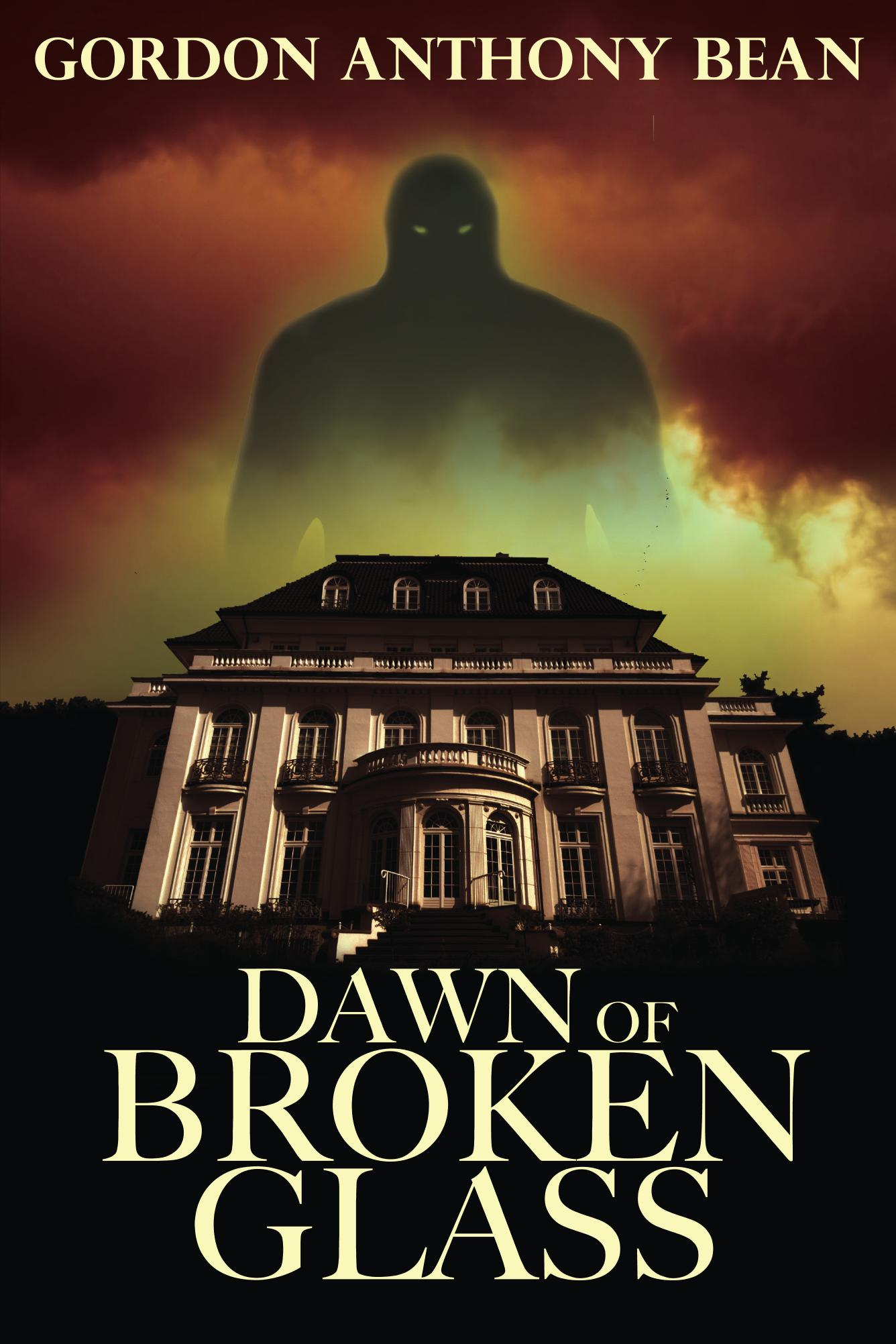
Dawn of Broken GlassGordon Anthony Bean recently published his first novel, Dawn of Broken Glass. It was released in June.

He has written two other novels, but shelved them since they didn’t feel right to him. He plans to revisit them at a future date.

Dawn of Broken Glass felt like a great story with fully developed [and] believable characters that the reader could identify with, so I decided this was the book I wanted to publish first,” Bean said.

Dawn of Broken Glass tells the story of Michael Carson, who witnesses the brutal and senseless slaughter of his family during Kristallnacht in the early days of World War II. The loss of his family has left him with deep emotional scars, and feelings of anger and hatred which become all-consuming to the young man. Years later, he seeks his revenge. Along with the mysterious Jason Froemmer, Carson begins a mission to eradicate the bloodlines of each soldier who partook in his family’s slaughter so many years earlier.

Bean wrote it over eighteen months. He spent the better part of a year doing multiple revisions on plot, characters, and writing style.

Bean is working on Bloodlines, a sequel to his first published short story, “From a Whisper to a Dream.” This story was published in the anthology, Sinister Landscapes, published by Pixie Dust Press. He does have a second short story, “Out of the Corner of His Eye,” in the Grinning Skull Press anthology, From Beyond the Grave.

“One interesting tidbit about my writing is that the stories are all interconnected. In my second novel, there will be an appearance of a central character from Dawn of Broken Glass. Basically, I’m creating a wholly contained universe where all my stories take place on the same earth,” Bean said.

His primary career is in finance, but he wants it to be writing.

“I’m trying to get my writing career to take off and hopefully be able to one day devote myself to it full-time.”

He has been writing his entire life. “In elementary school, I had a short story published in our school’s spring journal. In high school, my creative writing teacher told me that of all the students she ever had, she felt that I was best suited to be a writer.”

He belongs to the New England Horror Writers organization. He hopes to get exposure for his writing through the NEHW. This is what he hopes would happen with belonging to any writer’s organization.

“What I hope the NEHW or any other group would be able to do is help give exposure to this novel and future novels,” Bean said.

Bean has received good writing advice in his life, he said.

“The best I remember getting was to write for myself. Like most writers, I love to write. I am a huge horror fan and if I can leave a lasting imprint on a reader through my work, it’s all worthwhile.”

Besides writing, he enjoys reading. Michael Moorcock and Robert Heinlein were two early favorites and Clive Barker, who he loved when he was a teenager. He reads Christopher Golden, Brian Lumley, F. Paul Wilson, Joe Lansdale, Edward Lee, Jonathan Maberry, Dan Simmons, Richard Matheson, Douglas Preston & Lee Child now. His tastes vary, he said.

Director Talks about ‘Dirty Wars’: Part II


by Jason Harris

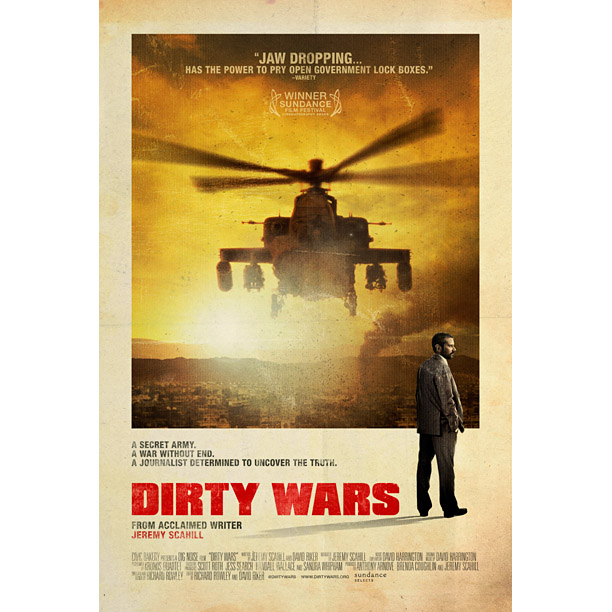
According to the movie’s website, Dirty Wars “begins as a report into a U.S. night raid gone terribly wrong in a remote corner of Afghanistan, and quickly turns into a global investigation of the secretive and powerful Joint Special Operations Command (JSOC).

As Jeremy Scahill digs deeper into the activities of JSOC, he is pulled into a world of covert operations, unknown to the public and carried out across the globe by men who do not exist on paper and will never appear before Congress. In military jargon, JSOC teams ‘find, fix, and finish’ their targets, who are selected through a secret process. No target is off limits for the ‘kill list,’ including U.S. citizens.

Drawn into the stories and lives of the people he meets along the way, Scahill is forced to confront the painful consequences of a war spinning out of control, as well as his own role as a journalist.

We encounter two parallel casts of characters.

The CIA agents, Special Forces operators, military generals, and U.S.-backed warlords who populate the dark side of American wars go on camera and on the record, some for the first time.

We also see and hear directly from survivors of night raids and drone strikes, including the family of the first American citizen marked for death and being hunted by his own government.”

The world has changed so much since director Rick Rowley and writer Jeremy Scahill began Dirty Wars. When they started the film, there was no public discussion on the war on terror, Rowley said. No one was talking about drones, targeted killing, assassinations or any of that. There may have been some talk on the fringes, but nothing like there is now, Rowley said. It eventually moved from the fringes to the editorial pages of the Washington Post.

Rowley doesn’t know why it is being talked about now when it wasn’t when they started the film. He thinks this discussion should have happened a decade ago so people would know why the war is being waged, what it’s doing to the world, and doing to us as a people. “It’s wonderful that it is, but the rhythms where they take us are difficult to explain.”

He’s not sure how these things happen, but after Sept. 11 it was bound to take some time before we could soberly look at what was going on, Rowley said. He thinks it could be happening now that President Barack Obama has been re-elected and he won’t be facing a challenge from a Republican contender.

“I think its safe for them to come forward and begin to talk about issues that they would feel differently talking about if you were about to go up against [Mitt] Romney.”

Rowley hopes his film is a part of the conversation that is going on at the moment. There are more than a dozen wars going on in the world at this time.

“There are a dozen of those countries where wars are being fought in our name, but without our knowledge and without our consent. And at home, they have assumed the right to execute American citizens without formal charges and without a trial.”

Rowley believes fundamentally important decisions have been made about who we are as a country and how we operate in the world, and it has all been made over the last decade in secret without a national debate. These wars have been orchestrated by the secretive and powerful JSOC, which Scahill is about to sue, he said. The lawsuit is coming about because of all the freedom of information requests that have not been answered by JSOC.

Scahill was also pressured not to publish certain articles, Rowley said. Scahill was threatened and his computer was hacked. Some of these instances are chronicled in the film. The film also delves deeper into JSOC’s activities.

You can find out where Dirty Wars is showing on its website, http://dirtywars.org/.

Director Talks about ‘Dirty Wars’: Part One


By Jason Harris


Dirty-Wars-Poster1

Dirty Wars, which was released in June, follows investigative reporter Jeremy Scahill, author of the international bestseller Blackwater, into the heart of America’s covert wars. He travels from Afghanistan to Yemen, Somalia and beyond.

“The war on terror is the most important story of our generation,” said Rick Rowley, director of Dirty Wars. “It’s the reason why I became a war reporter a decade ago, because this is the longest war of our history. We passionately believe the American people have a right and a responsibility to know about the wars being fought in their names around the world.”

This global war on terror has killed thousands and thousands of people, including American servicemen, he said. It has also cost billions of dollars.

“It’s unfolding mostly in the shadows without any public knowledge or without any meaningful congressional oversight,” Rowley said.

Rowley and Scahill wanted to make a film that would bring the war out of the shadows and into the light of public discussion, he said. He wants people to have a conversation about the war, what the United States is doing in the world and what’s becoming of us as a nation, he said.

There were dangers for Rowley and Scahill while they were filming.

“It wasn’t safe for us to travel around with a big crew, so it was just Jeremy and I traveling together,” Rowley said.

Jeremy was the interviewer and on-air talent, while Rowley was the behind-the-scenes person responsible for filming, sound and doing any other production function required of him, he said.

“In each country, we figured out a different way to work and to keep us safe.”

They grew their beards out, dressed in local clothing and drove around in a beat-up Toyota in Afghanistan, he said. They had to feel out the edge of how far they could safely go outside of Kabul.

“We had to go out and came back before the sun set, because the Taliban take control of the roads at sunset.”

Their calculations were wrong occasionally, which is shown in Dirty Wars when they were trying to return to Kabul, Rowley said. There was an ambush, which caused them to be stuck on the road after sunset. They ended up hiding out in a room nearby until sunrise when they could travel safely again, he said.

There plan was to fly below the radar in Afghanistan, but in Somalia it wasn’t a possibility.

“The only way for us to move around was with security,” Rowley said about filming in Somalia. “We never liked the high security because it changes the way you operate in a country.”

In Somalia, they had to drive around with twelve soldiers armed with machine guns, a decoy vehicle and motorcycles riding with the convoy, he said.

“I have never been in a city as dangerous as Somalia. It really is a surreal place.”

They were there filming at the height of the battle between the local insurgency and the African Union. The insurgents weren’t accurate with their weapons past 100 meters, Rowley said.

“We felt relatively safe in that you had to be very unlucky to get hit.”

Jeremy did tell him that he saw the insurgents spraying bullets trying to hit him after seeing a white guy with the warlord, Rowley said.

“Luckily, I didn’t see it or I would have changed the way I was working there.”

Rowley did recount a story that one of the warlord’s troops told him about another journalist who was shot and killed in the exact same spot they were filming at.

The entire filmmaking process took about three years. The film cost between $300,000 and $400,000. It was financed by a number of different foundations, Rowley said.

“It’s a film that wouldn’t have been commissioned by a television network.”

This movie could have only been made with help from the nonprofit sector because of the risks and the scope of the investigation, he said.


Dirty Wars opened at Real Art Ways in Hartford, CT on Friday, July 12. The theater is located at 56 Arbor Street. Director Rick Rowley will be attending the 2:15 p.m. screening at RAW today, which is hosted by the ACLU of Connecticut with Medea Benjamin of Code Pink

A Conversation with Author Adam Cesare

By Jason Harris


b55f3206ed747f885cd18d60591387401. You have written a novel, novella, and a short story collection. What are you working on now?

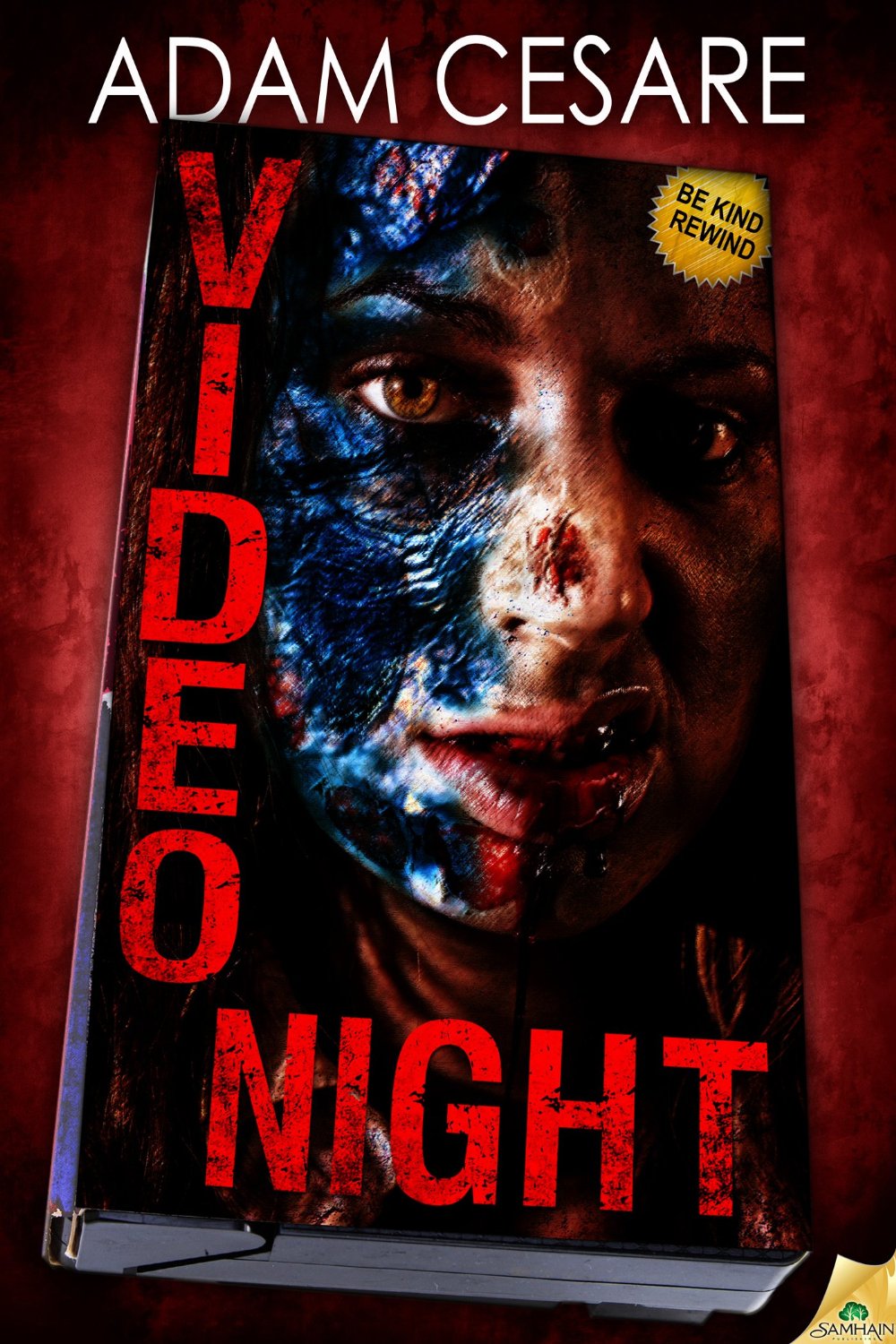
Next up will be another full-length novel. That one will be from Samhain (they put out Video Night, as well) and it’s my take on the satanic cult subgenre. All the longer pieces I’ve written have all been set in specific periods (the 1980s, 1960s, etc.) I didn’t want to become known as the “throwback” horror guy, so The Summer Job is set in our time. The characters have iPhones. I’m all done with that one and right now I’m working on a novella for a to-be-named publisher. I’m super excited about both of these.

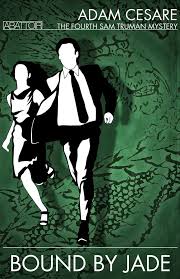
2. On Amazon, it has you credited with Bound by Jade (the Fourth Sam Truman Mystery). Is this true and were you involved with any of the other mysteries in the series? I only ask since you don’t have this book listed on your website.

There are a couple of posts about it on the site, but I think they’ve been pushed off the front page over the last few months. It should be on the website; I’m just the world’s worst webmaster, so it’s not up there. I’ll fix that.

The series was created by writer/publisher Ed Kurtz. Sam’s a disgraced P.I. who just happens to get the city’s strangest cases (the books are supernatural noirs). I didn’t write the first three, but they all share the same character. The series is something special and I’m very proud of my entry. They’re dirt cheap, so everyone should give the Sam Truman books a try.

My installment is a novella called Bound by Jade. It can stand on its own, but reading the whole series is the best way to go.Bound by Jade

3. You have written about movies in Tribesmen and Video Night. Would you say, you have been influenced by movies? What movies have influenced you?

Yeah. Even from a young age, movies were my everything. Not to get lame with the “write what you know” adage, but I use the world of film as a jumping off point in those books. Video Night is based on the phenomenon of watching movies, especially the social aspect of that, while Tribesmen is more about making movies and what goes in (and shouldn’t go in) to getting what you need on camera.

The Summer Job doesn’t explicitly connect to the world of film, but it is my attempt to write in the genre of folk horror. To the best of my understanding, folk horror is predominately a film term and it describes the subgenre that films like The Wicker Man, Blood on Satan’s Claw and Kill List belong in. Those are all British films, and I am nowhere near British enough to try and write about the location, so mine’s a New England folk horror story. 91w2nxklemL__SL1500_

4. You were a film studies major in college. What made you decide on that degree?

I studied both English and Film. When you’re a film studies major (as opposed to a film production major) the two fields of study are actually very similar. They’re both a lot of reading, writing, and analytical thinking. That kind of stuff interests me and I think that being a critical consumer of media (no matter if it’s Re-animator or The Canterbury Tales) makes you a better writer.

5. What did you envision doing with your life with a Film Studies degree?

I went to grad school for a year and picked up a Masters in Education. So I’m qualified to teach, which is also something I find worthwhile/enriching.

6. Who are some of your favorite writers?

Oh boy. This is one of those questions I could spend all night on. For horror, let’s go with Aaron Dries, Sarah Langan, Laird Barron, Stephen Graham Jones, Shane McKenzie, and Jeff Strand.

7. Who are you reading at the moment?

I’ve got Joe Hill’s latest, NOS4A2 almost finished. I’m right now in the process of choosing what goes next. I try to put my genre consumption on rotation, so since I’m just finishing reading something that’s horror I’ve got three different genres all vying for the title: N.K. Jemisin’s The Killing Moon (fantasy, I think), James S.A. Corey’s Abaddon’s Gate (science fiction) and Duane Swiercynski’s third Charlie Hardie book, Point & Shoot (crime).

TribesmenCover8. You have a blurb from Jeff Strand for Tribesmen. How did you feel when you received that blurb? Did you seek him out for one?

Jeff and I had only met once very briefly before I asked him to take a look at the book, so I was really surprised how nice he was about the whole thing. His blurb is amazing and now that I’ve seen him a couple more times at conventions, he and his wife (author Lynne Hansen) are two of my favorite people.

9. Would you like to see Tribesmen or Video Night made into a movie?

Yes, please.

10. If they were made into a movie, who would you like to see direct it and why?

Some aspects of the books would probably have to change either way, but I like to think that they’re both pretty adaptation-friendly.

Lexi Alexander would be a good choice for Video Night, in my opinion. She knows how to work with actors and gore in equal measure as evidenced by the criminally underrated Punisher: War Zone.

The dynamic directing-duo of John Skipp and Andrew Kasch would be my choice for Tribesmen. They’ve done some incredible short work that’s both hilarious and disgusting. They would get the tone EXACTLY.

I mean. There are no films in the works or anything, so why don’t we throw P.T. Anderson and Kathryn Bigelow and [Martin] Scorsese in the running?

11. What made you stay in Boston after college?

I love it. It’s been my home for seven years. It’s a movie-loving town, for one thing. The Coolidge and the Brattle are two of the best theaters in the country and they’re both walking distance from me.

12. Are there any plans to put Bone Meal Broth out in paperback? What inspired that collection of work?

I had the rights back to a bunch of stories that had been previously published, so I picked out the best of them and put out a short (20,000 word) collection. I’m quite proud of it, but I’m not sure it’ll ever be in paperback. It’s the only time I’ve self-published something and I really enjoyed the experience. Maybe in a few years I’ll bump up the word count by adding some stories to the roster and then find a publisher that would tangle with it.

13. What has your nonfiction work been about?

It’s all film essays. I’ve written guest posts for a few blogs and my articles have seen print in Paracinema Magazine. They’re amazing, by the way, if you haven’t read that magazine I highly recommend it.

14. Your work has been featured in Shroud and Fangoria. How did it feel being in Fangoria, a horror magazine that I think every person who is or has been into reading/watching horror has read?

That was just a quick book review I wrote freelance for them, but it got my name on the contributor page and I thought I would faint. For the whole month I was going to newsstands, thumbing to my page and giggling like a madman.

15. You had a blog, Brain Tremors. I love that name by the way. Why choose that name? Did the name come to you right away? Is there history behind the name?

Yeah, Brain Tremors. That was my old page, but I still use the banner over at www.adamcesare.com. I kind of knew what I wanted the insignia to look like, and what’s creepier than an involuntary shaking of the brain?

16. What would be your advice for wannabe writers?

Ha. I’m too low-level to be handing out advice. My advice would be to take writing advice from Joe Lansdale, as he hands it out occasionally on his Twitter/Facebook feed.

One thing that does bug me is the idea of an “aspiring” writer. There are a lot of people on twitter that label themselves that way. Fake it till you make it, guys and gals. There’s no room on the internet for low self-esteem, it’s too full of cat pictures and lackluster writing advice.

A Relaxing Saturday Afternoon with Joe Hill

By Timothy P. Flynn

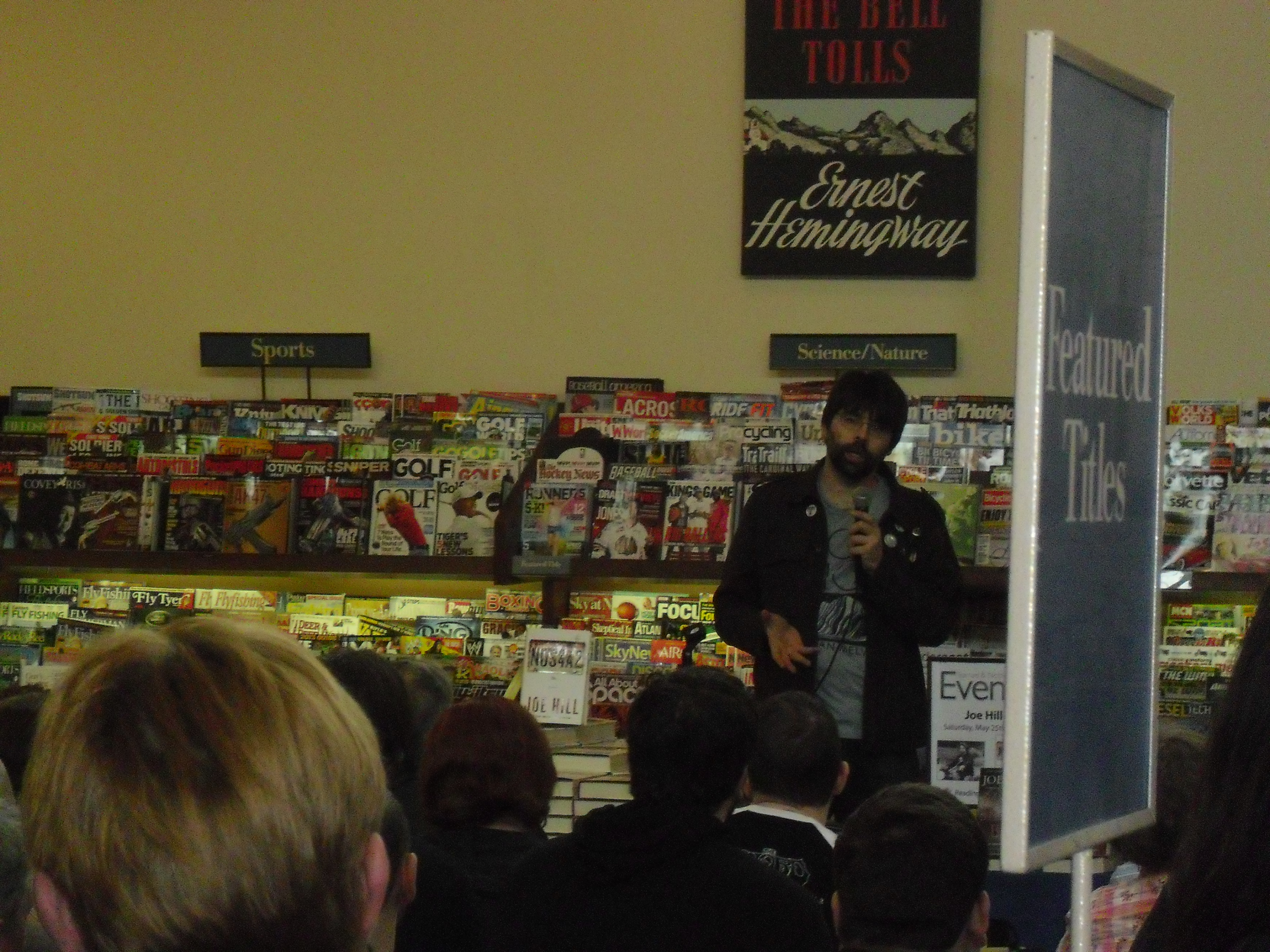
Tim BDay 2013 002Last Saturday, on May 25, my daughter and I made the trip up to the Barnes and Noble in Nashua, New Hampshire for the special event where horror/speculative fiction writer Joe Hill was appearing. He is presently doing appearances in various areas to promote his newest novel, NOS4A2. He was to do a brief reading from his new book, a Q and A session with the audience, and then start the signing of his books.

My nickname should really start to become “Tardy Tim” because I am late for everything recently. We got to the event around 2:30 (half an hour late) and missed the reading part of the event. There was a huge crowd all encompassing the magazine section of the store. My daughter and I snuck in the back, right beside fellow Necon camper Gardner Goldsmith (SHOUTOUT).

Joe has a terrific personality answering the questions before him making the audience cackle with laughs at all the right moments. When the subject of his famous father came up, Joe retorted with the statement, “You all may have heard my Dad writes here and there. He may have a future in this business, but who knows.” Joe made a point to refresh the audience that ALL of his family members are fantastic writers. This included his mom, Tabitha, his brother, Owen with a new novel out at present, and Owen’s wife is also a novelist. The King household at get-togethers and around the dinner table has always been the place for literary conversation.

Gardner’s question was a very good one. He asked Mr. Hill about his productive output, as in a daily word count and also any certain moments in his career that were pivotal in his direction. Joe answered with a daily 1200 words before anything: emails, phone calls, etc. The pivotal moment was his choice to pursue the horror/speculative fiction genre after some literary attempts – simply because he loved the genre was the answer, and the choice of the pseudonym, which was to not rely on name alone for his writing merits. Joe Hill made it as a successful writer on his own terms before it leaked who his identity was. The speed round Q and A was hilarious with short “yes” or “no” answers to multiple questions.

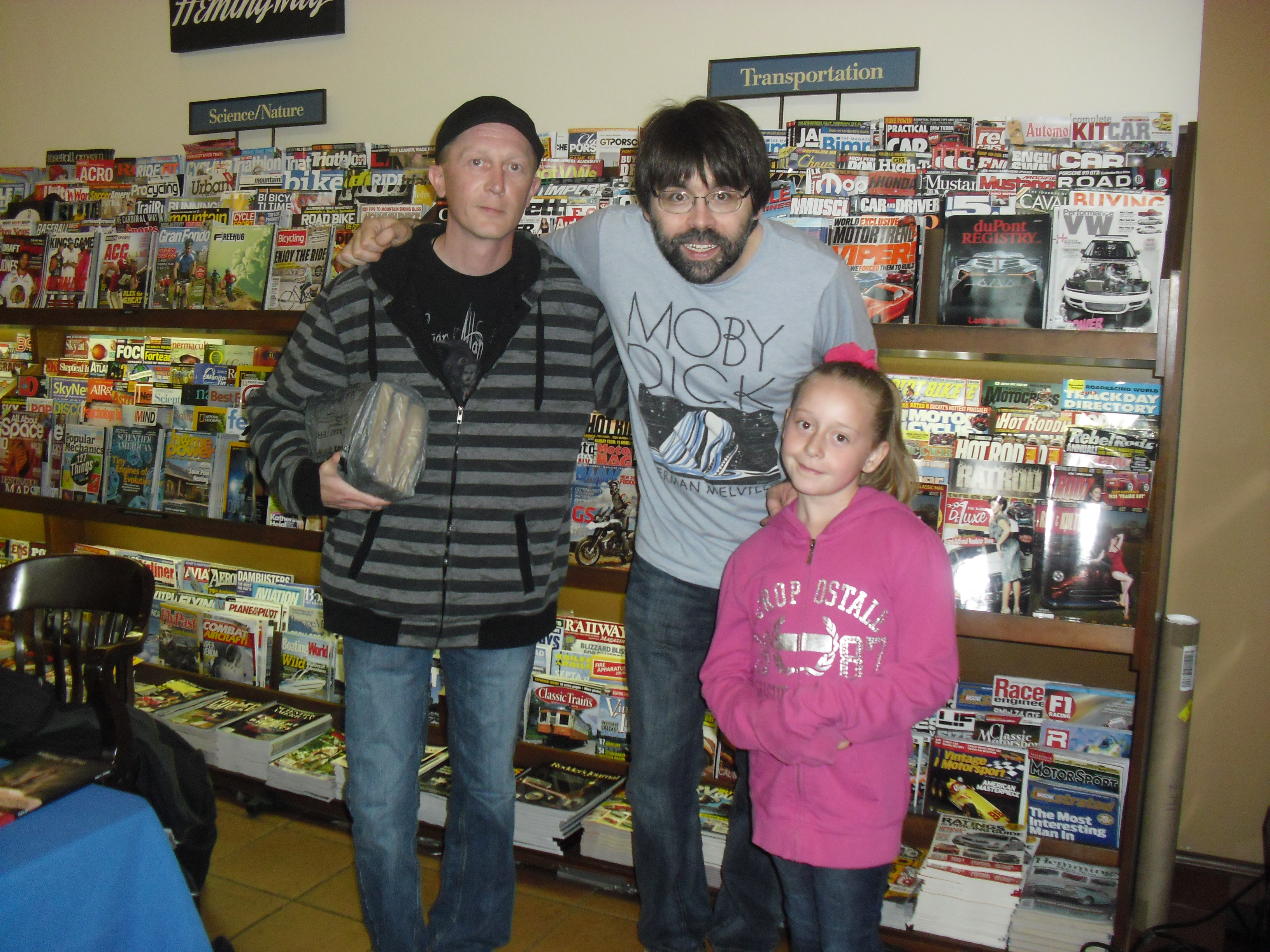
Tim BDay 2013 005The signing line was quite long, but well worth the wait. Joe was great by answering questions, signing multiple books, and even posing for a few pictures. One could easily say it was a successful event and a great time was had by everyone who attended. This was the second time I met Joe Hill, but it was my 10-year-old daughter’s first time. She braved through some of the boring parts for a child with her dad trying to best to keep a smile on her face. Her name is now even personalized in two of Mr. Hill’s books and resides now in our home on my bookcase.

About the author:

Flynn is an author and member of the New England Horror Writers. You can find out more about him on his website by clicking here.

The G&D Show Welcomes The Walking Dead’s ‘Merle’

The G&D Show Welcomes The Walking Dead’s ‘Merle’

by Kristi Petersen Schoonover

Fans of The Walking Dead will get lucky on St. Paddy’s Day when The Ghostman and Demon Hunter Show, co-hosted by NEHW member Nathan Schoonover, will be interviewing Michael Rooker  (Merle Dixon) from the popular series. The show will air at 7 p.m. (ET) Sunday, March 17, and conclude just minutes before The Walking Dead’s Episode 314, “Prey,” premieres on AMC.

Rooker has had a long and extensive career in film and television peppered with credits such as Cliffhanger, The Bone Collector, The Dark Half, Jumper, Mallrats, and The 6th Day. Some may also know him as the title role in the controversial 1986 film Henry: Portrait of the Serial Killer or as “The Repo Man” in 2006’s Repo! The Genetic Opera.

In The Walking Dead, Rooker’s Merle, brother to Norman Reedus’ Daryl Dixon, had been left for dead at the end of Season 1, but made a surprising reappearance at the opening of Season 3. There’s been plenty of talking about it ever since, and fans of the show should find this interview—during which they can ask questions via the chat room—a great lead-in to the newest episode.

The Ghostman and Demon Hunter Show has been around since February 2007, and over the years has featured guests such as Elvira, Doug Jones (The Silver Surfer, Hellboy), Butch Patrick (Eddie Munster), Keith Johnson (Ghost Hunters) and many more. The show was also the subject of a two-night special on A&E, Extreme Paranormal, in 2009. Nathan Schoonover and his co-host, Shaun Burris, have appeared on many television shows including Paranormal Challenge and My Ghost Story.

To hear Rooker on Sunday night and ask questions via The G&D chat room tune in at 7 p.m. (ET) by clicking here.

For more information and to listen to the show’s most recent episodes, visit www.ghostanddemon.com.

Publisher Delves into Family History

Publisher Delves into Family History

by Jason Harris

Recently, I had the good fortune to meet Jim Dyer, who started Fenham Publishing, a small independent publishing house, located in Narragansett. Dyer is the grandson of author C.M. Eddy, Jr.

Dyer got the idea about publishing his grandfather’s collections after going through his grandparent’s papers and manuscripts. According to the website, he chose some selections as a basis for the titles produced thus far.

Dyer wanted to produce a cohesive collection of their works, he said.

“Many of my grandfather’s short stories have been included in some anthologies through the years, but they had never been collected together in book form,” Dyer said.

When his grandparents passed away, their papers, letters, and manuscripts were put into storage. Dyer periodically went through them and made inquires to some small publishing companies, he said.

“There was quite a bit of interest from all the publishers in putting together some collections of my grandfather’s stories, and after further discussions I decided I could take my grandparent’s works, edit, design and develop them into book form.”

By creating Fenham in 2000, it allowed Dyer the control to make the collections look and feel the way he wanted them to, along with managing the quality. He was able to get all of the details the way he envisioned them, he said.

So far, Fenham has published these works by his grandparents: The Loved Dead and Other Tales, Exit into Eternity: Tales of the Bizarre and Supernatural, and The Gentleman from Angell Street: Memories of H.P. Lovecraft by Eddy, Jr. and Muriel E. Eddy, his wife. All three of these books can be found at www.fenhampublishing.com.

The collection, Exit into Eternity, was originally published in hardcover in the 1970s by Dyer’s aunt and mother in a very limited edition, so when he started Fenham Publishing he reprinted the edition in a trade paperback, he said. He then published the other collections.

“I have many more short stories that I am currently going through to assemble into more editions.”

According to a 1963 Providence Evening Bulletin article, Eddy knew and worked with Houdini and H.P. Lovecraft. He was one of Houdini’s ghost writers along with Lovecraft. This article also states that Eddy’s wife typed up Lovecraft’s manuscripts.

His grandmother had written quite a few essays and remembrances of H.P. Lovecraft throughout the years for various magazines, newspapers, fanzines and books, he said.

“Many people wanted her to give her personal memories and view of Lovecraft, as she knew him as a friend,” Dyer said.

Muriel E. Eddy was also a poet and author. She wrote short stories in the thriller, romance and mystery genres, Dyer said. Her stories were in various publications such as Midnight Magazine, Scarlet Adventuress, Personal Adventure Stories and Complete Detective Novel Magazine. Many of her poems have been published in newspapers through the years such as The Attleboro Sun, The Norwich Bulletin, Boston Daily Record, Philadelphia Inquirer and The Providence Journal/Bulletin, Dyer said. Her poetry
has been included in some anthologies and small press collections, he added.

Fenham Publishing titles are distributed by Baker & Taylor, and are available at your favorite local bookstore as well as the major online retailers.

Amazon Kindle’s Censorship Policies

Amazon Kindle’s Censorship Policies

by David L. Tamarin

With the advent of e-readers like the Amazon Kindle and the ability of individuals to ‘self-publish’, many people have been talking about a ‘revolution’ in publishing. Supposedly, independent authors with difficulties getting published by traditional publishers can now use Amazon Kindle to self-publish their stories or books and sell them directly to the people, without the middleman of a publisher.

Unfortunately, this is not a real revolution because of Amazon Kindle’s policies regarding what they will publish. While they publish a lot of fetish pornography, including incest porn, and even have e-books containing scanned pornographic images. they recently told me that they would not publish my horror short story, “What Did You Do To The Children?” due to content violations- namely that the story is pornographic and/or contains inappropriate content.

I’m a successful non-fiction author, a regular contributor to Girls and Corpses and the website www.severed-cinema.com/uglyworld. I have also been published in Rue Morgue magazine, Scars, Verbicide, NewEnglandFilm.com, The Independent, Serial Killer magazine, Six Word Memoirs of Love and Heartbreak anthology, Butcher Knives and Body Counts (essays on slasher films), horrornews.net, Red Scream, and dozens of other magazines, websites and anthologies.

My fiction is potentially offensive, and has caused me problems throughout my career. I’ve been at the center of multiple controversies surrounding the content of his writing. Because of frustration with traditional publishers, I decided to release my stories on Amazon Kindle, but immediately encountered a problem when three consecutive companies that format books for Kindle for a fee decided they would not format my first Kindle book because of the extreme and offensive content. Since then, that particular story was accepted into an anthology, and published, and I learned to format stories for myself. Now I face my newest adversary to being published: Amazon. They have stated it will not publish the my story, nor will it provide the specifics of why it made its opinion. I have appealed to Amazon, asking them to reconsider their decision, and on December 30, 2012, they affirmed their decision that they would not publish the story.

I’m exploring other publishing opportunities.

Self-Promotion – Be Shameless

Self-Promotion – Be Shameless

by Erin Thorne

The importance of self-promotion cannot be overestimated, especially for new writers. You’ve spent a great deal of time and energy creating your work. However, if you stop there, you’ve only done half the job. Arranging book events and being proactive in your approach to marketing is crucial to getting your name out there, and to building your audience.

There are several steps you can take that are free, and only minimally time consuming. One is creating Author’s Pages on Facebook and Amazon. These can be customized with pictures of yourself and/or your book(s), a brief bio, videos, and links to your website and Twitter account. Another is looking up and contacting newspapers and libraries in and around the town in which you’ll be doing a signing. This ought to be done a few weeks in advance, to allow enough time for the public to both become aware of your scheduled appearance, and to mark their calendars. Many free templates for crafting press releases are available online, which you can use to promote your event, and even the book itself. Try sending one to your local paper, and in addition to generating publicity for the signing, you may secure an interview.

Of course, you need to book an event before you can promote it. While large chain bookstores can be somewhat hesitant in inviting little-known authors to appear, independent bookstores tend to be more gracious. I’ve looked up ones within a reasonable driving distance and sent them press releases, or simply called them, with very satisfying results. Other hospitable venues include libraries and cafés; you’ll likely have to do your own promotion, such as printing flyers and notifying the press, but it’s worth it.

Once you’ve got a date, you can also create an event on Facebook to inform your friends, family, and co-workers about what you’re doing. From personal experience, I’ve found that personally inviting Facebook friends to signings isn’t as effective as one would think, and can irritate those who’ve been asked to attend an event that occurs at a locale far from their home. You’re better off creating it and posting it as a status update a couple of times a week, starting two to three weeks before the signing takes place. However, if you create a promotion event that takes place entirely online, such as a book giveaway, feel free to invite your friends, and ask them to share the link on their own pages.

The more effort you put forth, the more results you’ll see. I have two children, one of whom is an attention-requiring two-year old, and I’m working on other writing projects as well. My time and money are both limited; while life’s circumstances can make self-marketing a bit more challenging, it is nonetheless essential to one’s writing career, and can serve as a stepping-stone to landing an agent and enjoying some degree of success.

For examples of what I’ve done, and continue to do, please see my Author’s Pages on Facebook, www.facebook.com/authorerinthorne, and Amazon, www.facebook.com/authorerinthorne.

Good luck, and happy writing!