Passion Re-Kindle’d

Passion Re-Kindle’d

by Stacey Longo

I love to read. I don’t think there’s anyone who has ever met me that isn’t aware of this. If I had a choice between bathing in chocolate, getting a hot stone massage from Vin Diesel and Dwayne “The Rock” Johnson, or reading a really good book, I’d pick the massage with Vin and Rock, but it would be a really difficult decision. Maybe. How did I get off topic here?

As an avid reader, I have been quite vocal about my love for the book itself. I love the feel of a book in my hands, the smell of a new book or an old musty classic, and the ability to take a book anywhere with me. I have the Kindle app on my iPad, but I never use it. I blame this on the irresistible temptation that my ‘Plants vs. Zombies’ app dangles in front of me on the iPad, plus my unwillingness to take a $500 tablet to the beach or the bathroom.

My only teeny, tiny problem with books is that our house is rapidly running out of room to store them all. If I really like a book, I own a copy, and if I love it in an “if you love it so much, why don’t you marry it?” kind of way that makes you answer “okay,” like how I feel about Cider House Rules by John Irving, I buy it in hardcover. We have bookcases lining the walls of our office, and books in between the cases; towers of books precariously balanced in the spare room; novels crammed on the shelves and in the drawers of the hutch in our dining room. I can’t help it. It’s impossible for me to leave a library book sale without giving myself a hernia from my purchases.

While gushing about the joy that is reading with some co-workers this week, one of them (who shall, from this point forward, be known as my BFFandever Damian,) offered me his extra Kindle. Could I really go against everything I’ve ever ranted about, the changing publishing industry and the dying breed known as the book store…all of which I blamed on the Kindle? You bet I could. I accepted Damian’s offer before he even finished his sentence, because at my very core, I am a sell-out.

To say I love my Kindle is an understatement. I downloaded a ton of books for free and some for a couple of bucks each, and I haven’t let it out of my hands since. (Jason knows there’s a Kindle in the house, but I haven’t even let him breathe on it yet.) I take it everywhere I go, and use it when I’m brushing my teeth, cooking dinner, or even painting my toenails. The red polish and my lack of attention made my toes look like an autopsy, but I didn’t care, because my Kindle was there with me. Now I know what’s been missing all of my life—more books, without the storage problem. I don’t bother conversing with people anymore, because I don’t have to. My nose is buried in my Kindle. In fact, I’d love to tell you more about it, but writing this blog has already taken up too much precious reading time.

The only place the Kindle can’t go with me is the shower. But really, how important is good hygiene, anyway?This entry originally appeared on Stacey Longo’s blog. Click on here to read other entries by the Co-chair of the NEHW.

Interview with the Editor of ‘Epitaphs’

Recently, Erin Underword, a member of the New England Horror Writers organization, interviewed author Tracy Carbone, editor of Epitaphs and co-chair of the NEHW. In the interview, Carbone talks about her experience editing the first anthology of the NEHW and the authors who have influenced her work. Read the interview here.

If you would like to own your own copy of Epitaphs, you can order the paperback here for $12.99 or the e-book here for $4.99.

Your Cover Art Sucks

This entry originally appeared on author and NEHW member, K. Allen Wood’s website.

Your Cover Art Sucks

by K. Allen Wood

Let’s talk about cover art.

There has been a self-publishing boom as of late. Once a surefire way to garner scorn from so-called professional writers, now even those dingleberries of the upper crust are self-publishing their work. With its rapidly growing popularity, there are those in the industry whom suggest there is a bubble…and that it’s about to burst. But I disagree. I think things are just getting started.

And that means more self-published books flooding the market.

There is an oft-used quote out there, which goes like this: “Just because you can doesn’t mean you should.”

A few years ago, when I started Shock Totem, a well-known author told me that cover art “isn’t that important.” The argument being that it’s the content that matters more. It’s hard to argue with that. However, I think, in a certain regard cover art matters more. The expression “never judge a book by its cover” exists because everyone judges a book by its cover.

First impressions matter. That initial connection between cover art and potential reader is intimate, and it matters more than you and the masterpiece you think is a page turn away.

I won’t buy your book if the cover art sucks. I won’t download it for free. I won’t do more than laugh derisively like a too-cool uptowner and walk on. Haughtily.

I fully understand that the majority of writers doing this sort of thing are, to put it bluntly, bad writers; but many are quite good, in fact. And to them I say this: If you truly care about your work, seek out the work of professionals in areas where you are not King Dingaling. Dig deep. It doesn’t cost much.

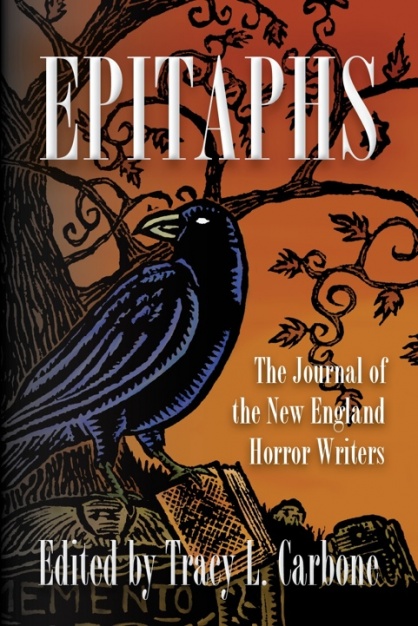
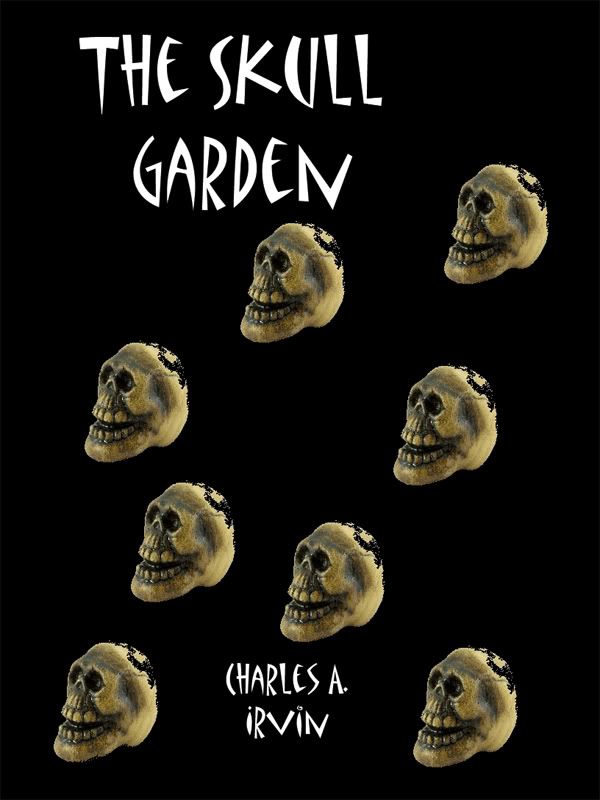
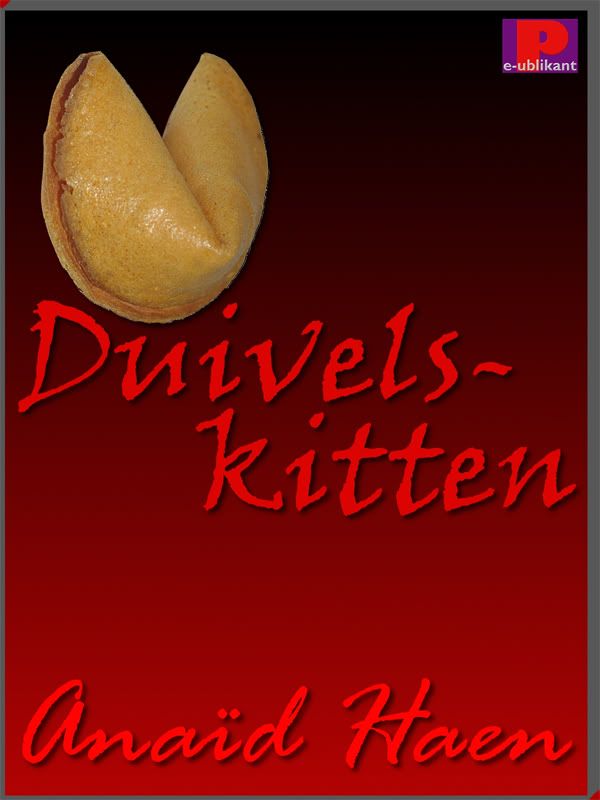
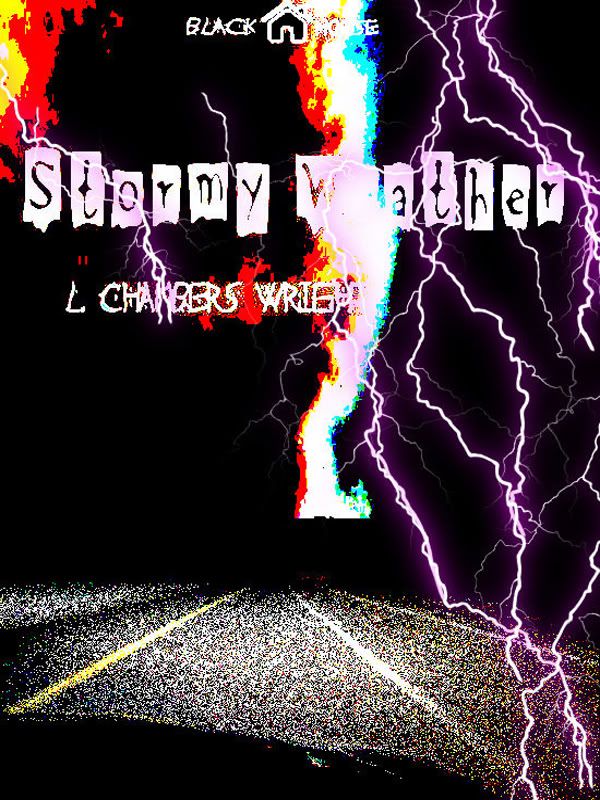
In other words, don’t do this…

[ click any photo to enlarge ]

Above are four actual book covers not designed by a 4-year-old.

Trapped inside the social-media matrix, I am bombarded daily with similar fruits of so many would-be writers’ half-assed labor. You, as well, I imagine.

I see authors posting bad cover art all the time, constantly asking for opinions (which people freely give but which equates to little more than smoke up the ass), often readily admitting that he or she has little skill in Photoshop or design, of any sort.

Thus, I question: If you are that person, why the fuck are you creating cover art?

Ode to Channel 56

This originally appeared on author and NEHW member David Price’s blog.

Ode to Channel 56

by David Price

What makes a science fiction fan? It’s a good question, right? The short answer is a simple one. It’s all about the imagination. While I believe everyone is born with one, some people’s imaginations seem to atrophy from lack of use. It helps to have parents who encourage its use, because not all do. Fans of speculative fiction, that all-encompassing term that includes fantasy, science fiction, and horror, have over-active imaginations. We’re dreamers. Do we daydream a lot? Sure. Do we let our minds wander on to things that many people would not consider important? You bet we do. It’s who we are, and where would the world be without the dreamers? Still stuck in the Stone Age, that’s where.

Okay, so it all has to start somewhere. Someone or something has to have nurtured that imagination at an early age. I am going to give a good chunk of that nurturing credit to an independent Boston television station, WLVI, channel 56. Funny, how you can’t appreciate some things until long after they are gone. I grew up in the 70s, and was raised on broadcast television. We didn’t even get cable until 1980 or so. Channel 56 was a UHF station, that ran a lot of syndicated series and old movies. So what did they air? Only some of the most amazing programs a young mind could soak in. My favorite was the original Star Trek series. My mother was a fan too, so this was something we could enjoy together. Star Trek was not perfect, by any stretch of the imagination, but it remains one of my all-time favorite shows. If I happen to be flipping channels and see Kirk, Spock, Bones, or Scotty, I will always stop and watch the rest of the episode. How many shows or movies can you say that about?

Growing up in the 70s was exciting for someone who dreamed about life “out there” and reaching for the stars. Star Trek was so inspirational for me. It hadn’t even been ten years since we first landed on the moon. NASA was actively exploring our moon with the Apollo program and our solar system with the Pioneer, Voyager, and Viking programs. Star Trek seemed like just a taste of what we might find out amongst the stars. Who knew, right? I wanted to be an astronaut right up until I entered college. I wanted to find what was out there. Kirk and the crew of the enterprise were responsible for those dreams just as much as our own space program was.

There was another series, however, that gave us some different ideas about what the future could hold for humanity. This series also aired on channel 56. It was called The Outer Limits. It gave warnings about the future, about contact with alien races, and about man’s ever improving technology. It was scary. Like The Twilight Zone, there was usually a moral associated with each story; a moral that said something about humanity. It was a much darker message and not as hopeful as Star Trek, but I took it all in, just the same. As a matter of fact, I even told myself, one day, I’ll be a scientist, but I won’t make those kinds of mistakes. I’ll be one of the good ones.

On Saturday afternoons, The Outer Limits led into one of the greatest programs that channel 56 had to offer. This was the show they labeled “Creature Double Feature.” As you might have guessed, this creature show aired giant monster, horror, and sci-fi movies. All those Japanese monster movies were great, especially Godzilla. That big, mutant dinosaur was nature unleashed. Godzilla was like the earth saying to the people of earth, “You know what? I don’t like your cities and pollution. I’m gonna stomp ‘em. Your military power? Pathetic. I’m gonna swat it away.” Godzilla was large and in charge. How could you not love that?

Another major sci-fi influence I can remember from channel 56 was Lost in Space. I know, I know, it was a very campy show after the first season. Still, I really loved that robot. There was just something about the robot which made the whole show for me. The robot was heroic, selfless, funny and often displayed more emotion than Mr. Spock. The best moments of the series were often between the once-evil, but now-bumbling Doctor Smith and the robot. He remains my all time favorite robot. “Warning! Warning! Danger, Will Robinson!” Classic stuff right there. I like it when robots show us how good humanity should be. The kinds of robots in Lost in Space and The Iron Giant, and also Data from Star Trek: The Next Generation are the ones that have always appealed to me. If mankind could create something noble like that, it might just say something good about us, and our future.

Speaking of Star Trek: TNG, it is the last sci-fi show that channel 56 broadcast, I will discuss. I was a little older when this show came out. I was out of high school and was reading mostly horror at the time. It didn’t really grab me right away. I kind of half-heartedly watched season one. I didn’t even start watching season two right away. It wasn’t until a friend of mine brought it up and said season two was much better that I even bothered with the second season. Once I did though, I got hooked. The original Star Trek was about what strange, alien, and sometimes familiar life forms we might find once we travelled to the stars. TNG was different, though, because it was more about what humanity’s place in the universe could be. Even in the face of a fearsome threat like the Borg, Picard and his crew used the human spirit to be a force for good and a defense against the darkness when necessary.

These are the shows and movies that WLVI, channel 56 in Boston, brought to me. Everything I have ever read or seen has influenced me, as a dreamer and a writer, in some way. I will remember fondly the part of my childhood that channel 56 influenced. I have even heard that fans still contact the station asking them to bring back Creature Double Feature. I can understand that. If the Syfy channel broadcast stuff that was half as good as channel 56 used to, I’d have more respect for them. I can’t imagine that the disaster movie knock-offs they show constantly are making any of today’s kids look towards the stars. At least, I can consider myself lucky enough to have been exposed to shows that made me think and dream. Thank you channel 56.

A Conversation with Author Jan Kozlowski

This entry appeared on author and NEHW member Kate Laity’s website.

Writer Wednesday: Jan Kozlowski

by Kate Laity

My pal and fellow Horror in Film and Literature lister, Jan Kozlowski, first fell in love with the horror genre in 1975 when the single drop of ruby blood on the engraved black cover of Stephen King’s Salem’s Lot hypnotized her into buying it. She sold her first story, Psychological Bacchanal to the EWG E-zine in 1997. Her short story, Parts is Parts, won awards in both the International Writing Competition sponsored by DarkEcho’s E-zine and Quoth the Raven’s Bad Stephen King contest. Another short story, Stuff It, was sold to an independent film producer and went into production as a movie short called Sweet Goodbyes. Her short stories have appeared in: Remittance Girl’s A Slip of the Lip anthology, Lori Perkins’ Hungry for Your Love: An Anthology of Zombie Romance and Fangbangers: An Erotic Anthology of Fangs, Claws, Sex and Love.

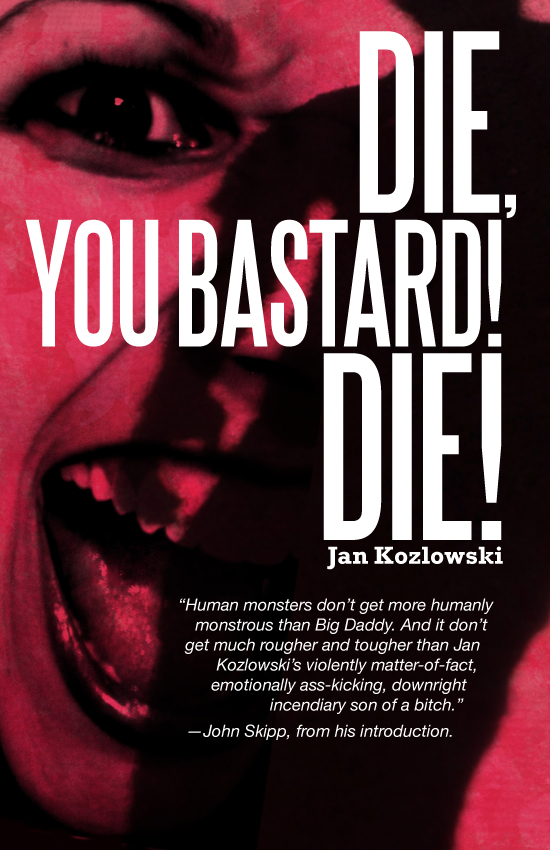
She is extremely proud and excited to announce that her first novel, Die, You Bastard! Die! debuted February 7, as part of Lori Perkins’ new horror line, Ravenous Shadows, edited by the legendary John Skipp.

Q: What do you write on? Computer, pad o’ paper, battered Underwood? Give us a vivid picture.

I do the majority of my writing on my cherished MacBook Pro laptop. I tend to turn my MacBook on at 6:30 a.m. and don’t shut down until 9 p.m. or later most days [Ed: Hmmm, you can shut them down?]. If I either get stuck or get a jones to feel pen against paper, I’ll pull out my old white L&M Ambulance Company clipboard loaded with scrap paper and start scribbling. The board is a souvenir of my days as an urban EMT in Hartford, CT and I keep it around as a reminder of what I COULD be doing for a living.

Q: Do you listen to music while you write? Does it influence what you write?

I almost always listen to my local Dinosaur (Classic) Rock radio station when I’m working. Since Die, You Bastard! Die! is such an ultra violent story, I tried putting together a play list of heavier metal like Avenged Sevenfold (my granddaughter’s favorite band), Testament, Broken Hope, Disturbed, but I ended up distracted by the unfamiliar songs. Listening to the rock I grew up with in the 70’s like Bob Seger, The Eagles, Bruce Springsteen and Aerosmith, with a little Tom Waits, Frank Zappa, Nathan & the Zydeco Cha-Chas, Bon Jovi and Bacon Brothers thrown in via iTunes works best for me.

Q: Do you write in short bursts or carve out long periods of time to work? Is it a habit or a vice?

For me, writing is a business. I’ve been freelancing since I was about 12 and sold articles about raising tropical fish to my hometown newspaper. For the past 15 years or so I’ve run my own freelance writing shop doing all sorts of business and web related writing, editing and research work. Over the past two years, I’ve slowly been moving away from the business projects in order to focus on my horror fiction, but whether I’m writing fiction or non-fiction my work style is the same….commit to the project and write until the client, the editor or I’m happy with the finished product.

Q: What writer would you most want to read your work? What would you want to hear them say?

That’s already happened…on one of the drafts of Die, You Bastard! Die! I think I managed to gross out my editor, legendary Splatterpunk King, John Skipp! Now if I can, one day, pay Dean Koontz back for the creeps he gave me with his novel Whispers, I’ll die a happy writer.

Q: On the days where the writing doesn’t go so well, what other art or career do you fantasize about pursuing instead?

When I was a little girl my grandfather used to tell me stories about his adventures working for a funeral home during the pre-embalming fluid days. I always thought I would have loved working in mortuary sciences, but when I was going to school women weren’t exactly welcomed into the funeral services industry. Now that times have changed and we have a first class Mortuary Sciences degree program at our local college, I’ve always thought that would make a fabulous Plan B, even now at age 50+.

Q: What do you read? What do you re-read?

I try to read a little bit of everything. I get some great ideas from newspapers and magazines. I just discovered and am now devouring Mad Money Wall Street guru, Jim Cramer’s books. I try and read as much classic horror like Robert Bloch, M.R. James, Fritz Leiber, H.P. Lovecraft, Richard Matheson, Edgar Allan Poe and J.N. Williamson as possible. I also try to keep up with who’s publishing today beyond Bestsellersaurus Rexes Stephen King and Dean Koontz. I’m a huge fan of Edward Lee, Neil Gaiman, Joe Hill, Joe R. Landsdale, Jonathan Maberry, Elizabeth Massie, Yvonne Navarro, Weston Ochse, Monica O’Rourke, John Skipp and Andrew Vachss.

I rarely find time to re-read anything unless I’m researching a specific writing technique, like how Jonathan Maberry handled the fight scenes in his Pine Deep trilogy or how Dean Koontz ramped up to the reveal of the cockroaches in Whispers.

Q: Where did the idea for Die,You Bastard! Die! come from? Do you have a surefire way of sparking inspiration? And is that an awesome title or what?!

The idea for Die, You Bastard! Die! came out of a lovely dinner Ravenous Shadows publisher Lori Perkins and I had during the 2011 Northeast Writer’s Conference, known as NECON. Lori mentioned she was looking for a story about an adult child coming home to take care of her abusive parent and it matched up with a story I had been kicking around for years about a survivor of childhood sexual abuse coming home to deal with her past. After the conference I got home, wrote up the proposal, Skipp green-lighted it and we took off from there. I realize that’s not the way most writers get a book deal but it goes to prove that if you consistently put the hard work in, you WILL find yourself at the right place, at the right time with the right story.

Writing inspiration and story/character/plot ideas are everywhere if you’re open to them…and my motivation for being open to them usually is based on my memories of being paid $5 an hour to be projectile vomited on as an EMT or waitressing at Friendly’s for .60 below minimum wage.

John Skipp raves about this book:

Die, You Bastard! Die! is one hard-as-nails crime story indeed, with a crime at its core so heinous it boggles both mind and soul. That said, it is also a horror story, a mystery, and an insanely taut suspense thriller. Categories are funny like that.

But human monsters don’t get more humanly monstrous than Big Daddy. And it don’t get much rougher and tougher than Jan Kozlowski’s violently matter-of-fact, emotionally ass-kicking, downright incendiary son of a bitch.
I love this book, and stand behind it 100%. Hope it blows you away, as it did me. And has you coming back for more.

Drop by Jan’s blog or website and follow her on Twitter. Find her on Facebook and check out her Amazon author page. Thanks, Jan!
The Challenge of Using Description in One’s Story

This entry originally appeared on Alex Lukeman’s blog, The Independent Writer.

Realism and Description

by Alex Lukeman

I received a wonderful comment this morning from a reader about my newest book, The Seventh Pillar (you can check it out by clicking on the cover picture to your left). Part of the book is set in the desert wastelands of the Western Sahara. I try to make the settings and details of my books accurate and real enough so the reader can picture him/herself right there, in this case with sand and heartless rock under their feet and heat beating down from a sky as intense and vivid as my imagination and experience can make it.

The reader had not been to the part of the desert I used in the book, but she had spent time in Saudi Arabia and she felt like she was there, with my characters, under that relentless sun and endless sky. Her comment made my day because it meant that I had succeeded in what I had tried to do, make the reader FEEL like she was THERE, where it counts.

Realism. Description. The challenge we face as writers to transport our readers to the worlds of our imagination, wherever and whatever they may be. It is unlikely my reader will ever find herself in a place where very bad people want to kill her, at least I certainly hope not. The magic of realistic description took her there.

I think one of the great challenges of story-making is knowing how much description is enough, or when it is called for. Too much, the reader goes to sleep. Too little, there is no context for the actions of the characters. It’s like the three bears–too hard, too soft, just right.

Complicate that by the kind of book it is. Some books linger forever. The Naked and the Dead (remember that one?). East of Eden. The Sun Also Rises. The Grapes of Wrath. Somehow we become imbued with a sense of time and place that stays even when the details of character, plot and story become hazy. Although I hated the book (not too strong a word), The Road comes to mind. Cold Mountain. And I really like Calumet City for crime noir urban grit.

These books are as different as can be from one another in setting and intent, but they all have incredibly skilled description of time and place as a core strength.

Good description is far more than the color of the sand or the haze over the mountains. It’s a sensual experience when you get it right. You hear and feel the rustle of the wind, see the ominous beauty of a desert sunset and smell the heat coming off the barren lands around you. As much as possible, all senses are involved.

WARNING: OPINION ALERT
Unless you are a Steinbeck or a Thomas Wolfe,
exercise caution.

When I write, the draft is always full of extraneous description which must be edited down to essence, something the reader can digest and feel while the story moves on. I can wax rhapsodic about almost anything (one of the things I love about blogging is that you can get away with clichés like that). But how much does a reader need?

Take a descriptive passage from whatever book you are working on out of context and open it in a new document. Read it again, out of context. Does it put you where you want the reader to be? If the reader didn’t know the plot or who the characters were or what was happening, would that passage stand on its own? Does it feel real? If the answer is in doubt, perhaps you should rethink that description.

Michael Connelly is one of my favorite contemporary authors, for many reasons. Often he has his protagonist Harry Bosch standing on the deck of a precariously perched house in one of the canyons of LA. Each time, I get a new sense of the place even though I’ve stood on that deck with Harry through many books. Connelly doesn’t need pages to make it work. He’s a master of essence.

That’s a challenge for all of us.

Write Like A Champion today.

A New Book Imprint Debuted at the Beginning of February

This entry originally appeared on author and NEHW member, Jan Kozlowski’s blog at the beginning of February.

Die, You Bastard! Die! & Ravenous Shadows Launch Today!

by Jan Kozlowski

It’s Launch Day! It’s Launch Day!

Ravenous Romance’s new horror/mystery/thriller imprint, Ravenous Shadows, headed by horror legend John Skipp, debuted today.

In an interview with Publisher’s Weekly, Literary Partners CEO Holly Schmidt said, “It was always our plan to expand our business model to other fiction genres, and when we had the opportunity to work with John Skipp, we decided to start with horror/mystery/thrillers. Skipp provided us with a clear vision and strong point of view for the line, and really is the heart and soul of Ravenous Shadows.”

From Editor in Chief, John Skipp- “Welcome to Ravenous Shadows: a new line of startling, provocative genre fiction, dedicated to the proposition that short, powerful novels and novellas can pack as much punch, personality, and plot as books three times their size.”

The four novels launching the line are:

Madness_spec_2
House of Quiet Madness by Mikita Brottman – an Ira Levin style mystery

Tribesmen_spec_4

Devoted_spec_6

The Devoted by Eric Shapiro – a Hitchcockian take on a modern suicide cult

Die_spec_3 Die, You Bastard! Die! by Jan Kozlowski – a sexual abuse/revenge story somewhere between Misery and Last House on the Left.

All the gorgeous, kick ass cover art was done by the fabulous Paula Rozelle Hanback.

Facebook 101

This funny take on learning about Facebook comes from the blog of  the Co-chair of the NEHW, Stacey Longo, which can be found on her website.

Facebook 101

by Stacey Longo

My sister finally gave in and joined Facebook this week, or, as she succinctly put it, “I’m drinking the Kool-Aid.” Tasteless Jim Jones reference notwithstanding, I was crazily excited to have my sister on Facebook—which is a little bit ridiculous, really, since we talk on the phone every day. But now I could talk to her online, too! And put up photos of shamrock shakes and tag her in them! Oh, the possibilities were endless! I spent two hours walking Kim through her first tentative Facebook steps. She navigated her way through the privacy settings, discovered how to leave her wall and successfully return to it later, and even gave the search bar a shot. “I can’t find O____ B_____,” she complained, trying to look up an old friend from high school as I sat with the phone propped up to my ear, tagging photos of her. “Don’t worry about it, she just found you,” I said, watching as O.B. ‘liked’ the picture of Kim I’d just put up and left a comment. Within moments, Kim had a friend request. “That’s a little scary,” she admitted. And it is. Which is why I’m offering these tips to my sister and the other 36 people in the world who are just now joining the Facebook nation:

1.  Remember that creepy guy from high school, the one who wore plastic vampire fangs to class and stared at you all day? Yup, he’s on Facebook too, and he’s about to send you a friend request so that he can finally confess to you that he was in love with you 30 years ago and that you are still just as beautiful today. Feel free to ignore his friend request.

2.  Remember your younger cousin, the one who set off firecrackers in the chicken coop and it caught on fire? He hasn’t changed. Ignore his friend request, too.

3.  People will tag random pictures of you. They do not care if you were thirty pounds heavier in that photo or had just had your hair done like Gene Simmons of KISS for a costume party. They also don’t care if your mother is on Facebook and will not find it as hilarious as your friends do to tag you in a picture of a bong shaped like Elvis’s head. You do have the power to un-tag yourself in those photos. Do it.

4.  Good news!  Your mother is not on Facebook. Yet.

5.  Some of your Facebook friends are quite vocal about their political views or feelings on social issues affecting our nation. Some of these people are, in fact, crazier than fruit bats. Choose your battles wisely. Sometimes it’s better to just bite your fingers instead of commenting.

6.  Yes, if you post something on someone’s page, all of their friends can read it. So if you want to tell your friend Jeanie that you still regret not marrying John Taylor of Duran Duran, send her a private message instead of posting it on her wall where your husband might see it.

7. Of course Duran Duran has their own Facebook page! You can only ‘like’ it once, though.

8. Don’t keep updating your status every five minutes. Honestly, nobody cares if you just found a great deal on toilet paper at Target. (Wait. How great of a deal was it?) Also, why do you want creepy vampire fang guy to know where you are at all times? Facebook can be a little scary for newbies. Personally, I’m thrilled to have my sister on there with me, mostly because my cousin Lori keeps ignoring my Farmville requests, and I want someone to play with me. Plus, it’s better that she figures Facebook out now…before her children do!

The Atavist

This entry originally appeared on New England Horror Writers’ member, Paul Tremblay’s website.

The Atavist

by Paul Tremblay

Last month I saw journalist turned boutique publisher Evan Ratliff give a live talk/presentation of his impressive new venture,  The Atavist:

“The Atavist is a boutique publishing house producing original nonfiction stories for digital, mobile reading devices. We created a new genre of nonfiction, a digital form that lies in the space between long narrative magazine articles and traditional books and e-books.”

So, yeah, long form non-fiction published digitally. The hook (besides well-written, well-researched, thoughtful pieces) is–if you have an iPhone, iPod touch, iPad–their unique digital platform. The multi-media that accompanies each piece truly enhances the stories. Embedded pop-ups include maps, personality histories, side bars, audio clips, images related to the story, video, and on and on. Watch the YouTube video below for a demo. It’s impressive stuff, and for the first time, I feel like I’m seeing digital reading taking full advantage of the medium’s possibilities. (The publisher app is free, then each story costs $2.99 ; you chose whether or not to purchase)

Thus far, I’ve read Lifted, a story about an elaborate government bank heist in Sweeden (the story includes, as it’s stunning prologue, actual surveillance footage from the break in–clips included in the YouTube clip below) and Baghdad Country Club (animated prologue included below), a story about a bar set up in the Green Zone during the height of the Iraq war.

The Trouble with Genres

This entry originally appeared on New England Horror Writer member, Kasey Shoemaker’s website.

The Trouble with Genres

by Kasey Shoemaker

Genre is truly a tricky thing. This all-important label helps not only to identify a novel but also the book’s intended audience. Without it, a book and its author could suffer a serious identity crisis. And, it was honestly one of the aspects of marketing my book that I struggled with the most. I’d written the entire first draft without much thought to its specific genre. Then, when left with the task of pigeonholing it, I ungracefully stumbled into calling it paranormal fiction. At my first fiction conference, I was told under no uncertain terms was it paranormal fiction. I often wonder how educated that assessment was coming from a distracted literary agent who half listened to my one-minute pitch. Nevertheless, she said paranormal fiction immediately brings to mind the genre’s sister, paranormal romance, and unless it was heavy on the romance, I was better off calling it urban fantasy. From then on, that was my book’s label.

However, a label can make an enormous impact on a book. Suddenly, my fiction novel, written before it was categorized, had an already established audience and with it a collection of expectations. Janice Hardy’s post addresses these expectations: “What readers expect. Fantasy is all about other worlds that can’t exist, mixed with magic, mysticism, or supernatural elements. These are the  defining characteristics of the fantasy genre. Just like spy thrillers  have their own characteristics and reader expectation. There were  aspects of the spy thriller I wanted to incorporate into my fantasy  story, but at its heart, it’s all about the magic and the fantastical world. When a reader picks up a book in a genre, they want certain traits.  Picture your favorite band. Now imagine going to their concert and hearing them play a totally different type of music. Country instead of  rock, rap instead of jazz. Even if you like the new type of music, odds are you’d be pretty unhappy at the bait and switch. Genre helps readers find the types of books they want to read. It also helps bookstores know where to shelve books, and what to suggest to their customers. Ditto for libraries.”

The publishing industry considered it a hot but overly saturated market. Readers had one of three reactions: strong interest (because they were long-time fans), rejection (usually due to thinking it was bloody, scary, or too steeped in fantasy), or confusion (typically a result of never having heard the term urban fantasy). The first group continued to ask questions about the plot and setting, all the while growing more and more interested. For the middle group, I would typically explain that it was bloody without being gory, suspenseful rather than frightening, and a fantasy set in our contemporary world. And, for the latter group, I stupidly found myself eloquently explaining the term urban fantasy and its roots instead of explaining my book, which didn’t necessarily fit neatly into the category. I did that only a few times. However, people still have preconceived notions about it based on the label. I have fielded questions, such as “Does it have vampires?” (no), “Is it like Twilight?” (um, big no on that one). “Will my teenager like it?” (absolutely), “Will adults like it?” (yes, more than the teenagers).

Essentially, the genre label, meant to be helpful to the publishing industry, has proven confusing to the readers. Some expect it to fit nicely on the bookshelf next to other urban fantasies where a barely clothed, well-endowed woman with a steely expression sits splay-legged in a graveyard. No offense to the character on that book cover, but when my Gabrielle Gayle sets out to demolish were-witches, she does so with all her parts covered and protected. She’s beautiful and sexy, but she will leave the lipstick at home in favor of packing her daggers. But, I have accidentally found myself on my soapbox about the over sexualization of female heroes in fantasy. Back to my point, for months, I trolled the aisles of bookstores and pulled countless titles off the shelves falling under the urban fantasy umbrella, lined them up to look at their covers, and asked myself how, and even if, my novel fit in with these. It does, mostly, but it also fit in with other books, novels that are a part of another sub-genre, dark fantasy. Dark fantasy has closer ties to horror than urban fantasy does, and poor horror has its own battles to fight when it comes to audience presumptions. After only a few months as a member of the New England Horror Writers, I have already been to some events where audience reaction was either excitement or blunt rejection. At least people know what it is to be classified as horror, for the most part. But, horror seems to be even more polarizing than fantasy. People either can’t get enough of it or steer clear of it, buying the books for that odd friend or family member who likes “that kind of stuff.”

With more and more novels being ones that cross genres, affixing a book with one specific genre label seems to be more troublesome than clarifying. Publishing companies can’t get by without the hard and fast categories and will at times allow new ones to spring up because every book simply must have a place. They revel in the preconceived notions held by audiences because it makes marketing that much easier.

But, what about the writer?

What happens to the unpublished writer spending thousands of dollars on fiction conferences who hears time and again that one particular element, while brilliant, simply isn’t found in that specific genre? One writer could hear from an agent that his or her science fiction book has too much science and not enough character while another agent could tell him science fiction is supposed to be more about the concept and less about the characters, all based on expectations of the genre. What’s to keep that writer from hacking at his or her work removing the book’s most poignant and well-crafted pages only to replace them with elements that, for no better reason, exist simply because they fit better in the genre? How much should a writer mold the book to fit the genre? Shouldn’t it be the other way around? After all, books are created by writers while genres are made by publishing companies to classify books?

Another issue is that there are likely too many genres for readers and writers to be aware of them all. Below is a genre map from Book Country. Notice that dark fantasy isn’t included? That’s because it’s only recently been recognized as its own sub-genre.

And, there’s no fixed formula or set of criteria for a book to meet before it’s labeled. And, an additional side effect of genres is that they often don’t settle with just the book. The labels attach themselves to the writer as well, like mold. Novelists aren’t simply writers once they’ve written a genre book.  They’re fantasy writers, mystery writers, romance writers, etc, leaving one to wonder the following:

Do writers themselves also conform to a specific genre to satisfy expectations of the audience and the industry? And, what does this mean for writing as a craft?