Pictures from Hartford Comic Con


By Jason Harris


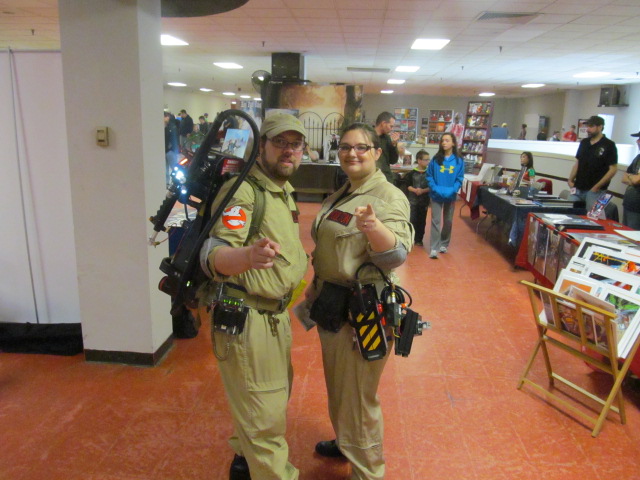
This past weekend Hartford experienced the debut of Hartford Comic Con at the XL Center. There were long lines before the doors opened at 10 a.m. From what I saw, this convention will be coming back to Connecticut.

2014-05-30 23.05.47

Batman, Poison Ivy and Donatello.

2014-05-30 23.29.20

Michael Massee of The Amazing Spider-man

The crowds at Hartford Comic Con.

The crowds at Hartford Comic Con.

2014-05-31 10.47.44

Chronic and Bluntman

Chronic and Bluntman

Brighton Sharbino and Kyla Kenedy of The Walking Dead.

Brighton Sharbino and Kyla Kenedy of The Walking Dead.

2014-05-31 10.48.26

Michael Myers

Michael Myers

Beaker

Beaker

Spider-man

Spider-man

Disney Princesses

Disney Princesses

Maleficent and Anakin Skywalker

Maleficent and Anakin Skywalker.

Katrina Law of Arrow and Spartacus.

Katrina Law of Arrow and Spartacus.

An Umbrella corporation soldier.

An Umbrella corporation soldier.

2014-05-31 13.37.37

Ghost Rider.

Ghost Rider.

Jim Dyer of Fenham Publishing.

Jim Dyer of Fenham Publishing.

Marvel superheroes.

Marvel superheroes.

There will be a few more entries with pictures coming in the next few days.

Pictures from the Jaycees Fourth Annual Spring Fair

The bookstore, Books & Boos was involved with the Jaycees Fourth Annual Spring Fair on Sunday, May 18. Normally, this event is held on a Saturday, but the organizers decided to move it to the rain date this year since the weather wasn’t looking too good for May 17. Click here for the previous article about this event. Click here for pictures from the 2012 Spring Fair when I, Jason Harris of Jason Harris Promotions, organized a vendor spot for the New England Horror Writers organization (NEHW).

Click here to see pictures on the Books & Boos’ website from this event.

Author Dale T. Phillips also posted pictures from the event on his website. You can find them here.

Godzilla is Back on the Big Screen and Bigger than Ever


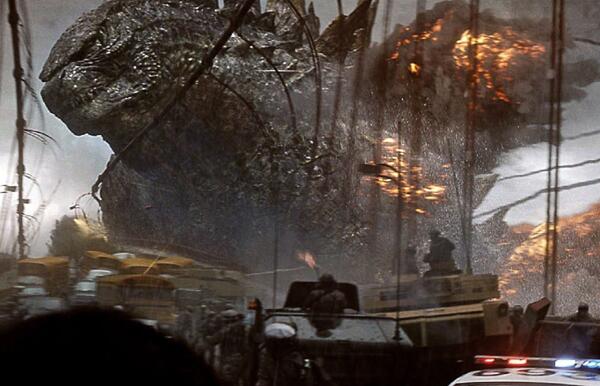
By Jason Harrisgodzilla-attacks-golden-gate

During the opening credits of Godzilla, the audience learns that the government never “tested” atomic bombs, as was widely believed. The sole reason why atomic bombs were detonated during that time period was to try and destroy the King of the Monsters. After the opening credits, the audience learns that it’s 1999 and there is a dig going on in the Philippines where something big is discovered. Is it Godzilla? Well, there is a huge skeleton plus something is dormant. There is also something that was awakened and got away.

The movie then goes from the Philippines to Japan where we are introduced to the Brody family: Joe (Bryan Cranston), Sandra (Juliette Binoche), and Ford (Aaron Taylor-Johnson). It’s Joe’s birthday, but he’s so busy with his job that he’s up earlier than normal, which causes Ford not to be able to hang his dad’s birthday banner that he has made. Joe is working at a nuclear power plant that is being affected by tremors. And the audience already knows, these are not naturally occurring tremors.

Taylor-Johnson, the secondary star of the movie after Godzilla, wasn’t recognizable with his shaved head. I didn’t realize I had seen him in such movies as Kick-Ass, Savages, and one of the after-credit scenes in Captain America 2: Winter Soldier, portraying Quicksilver.

Director Gareth Edwards has brought audiences the Godzilla movie that audiences have been waiting for since the disappointment of the 1998 version. He keeps the movie interesting and has us anticipating the appearance of Godzilla. He teases the audience with bits and pieces of him throughout the movie, until finally revealing Godzilla in his full glory near the end when he is battling the MUTO, giant insect parasites.

At the end this movie, audiences will be satisfied, exhilarated, and looking forward to his next appearance. Hopefully, Edwards will be helming it.

This movie gets five out of five stars.

Pictures from the Rock Comic Expo


By Jason Harris


The first Rock Comic Expo happened yesterday at the Rockingham Park in Salem, New Hampshire. The Expo was created by J. Moulton. It ran from 10 a.m. to 7 p.m. It was a day of people in cosplay and talking with authors and artists.2014-05-09 23.53.05

2014-05-10 00.28.23

Author Rob Watts with the Iron Patriot.

Author Rob Watts with the Iron Patriot.

Emily and Jeremy Drouin of Eplis Comic.

Emily and Jeremy Drouin of Eplis Comic.

2014-05-10 00.41.33

2014-05-10 02.06.20

Author Dale T. Phillips

Author Dale T. Phillips holding his book, Crooked Paths.

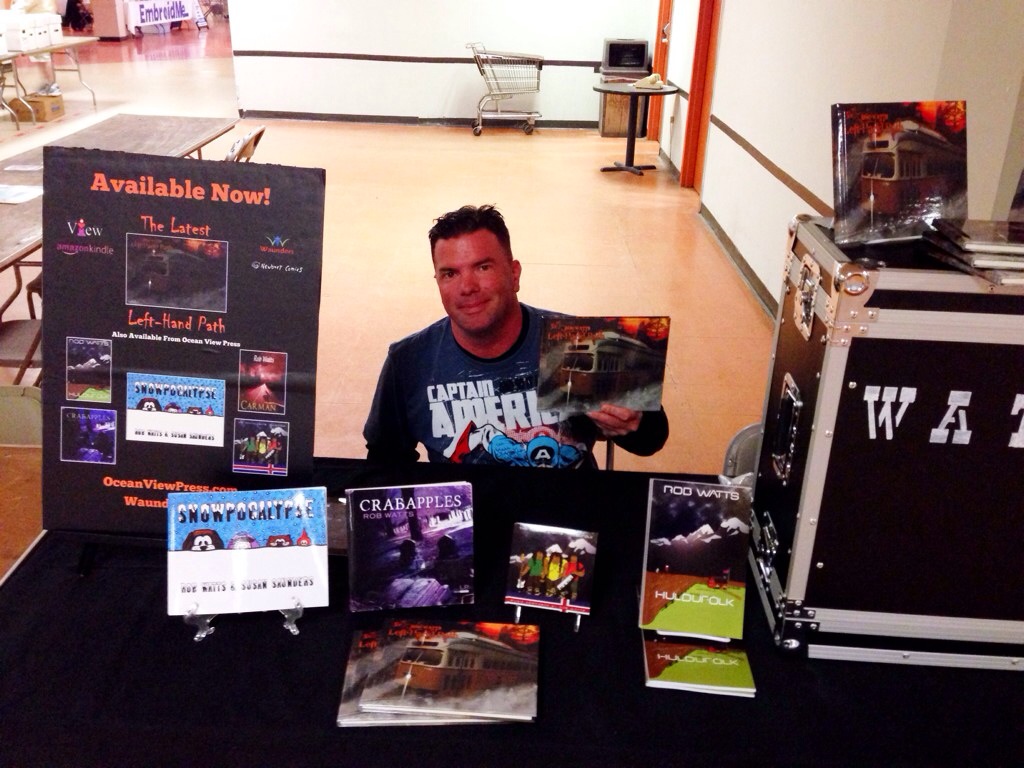
Author Rob Watts holding his latest book, Left-Hand Path.

Author Rob Watts holding his latest book, Left-Hand Path.

Crystalia Amaquelin of Marvel's The Inhumans.

Crystalia Amaquelin of Marvel’s The Inhumans.

Authors Rob Watts and Dale T. Phillips

Authors Rob Watts and Dale T. Phillips

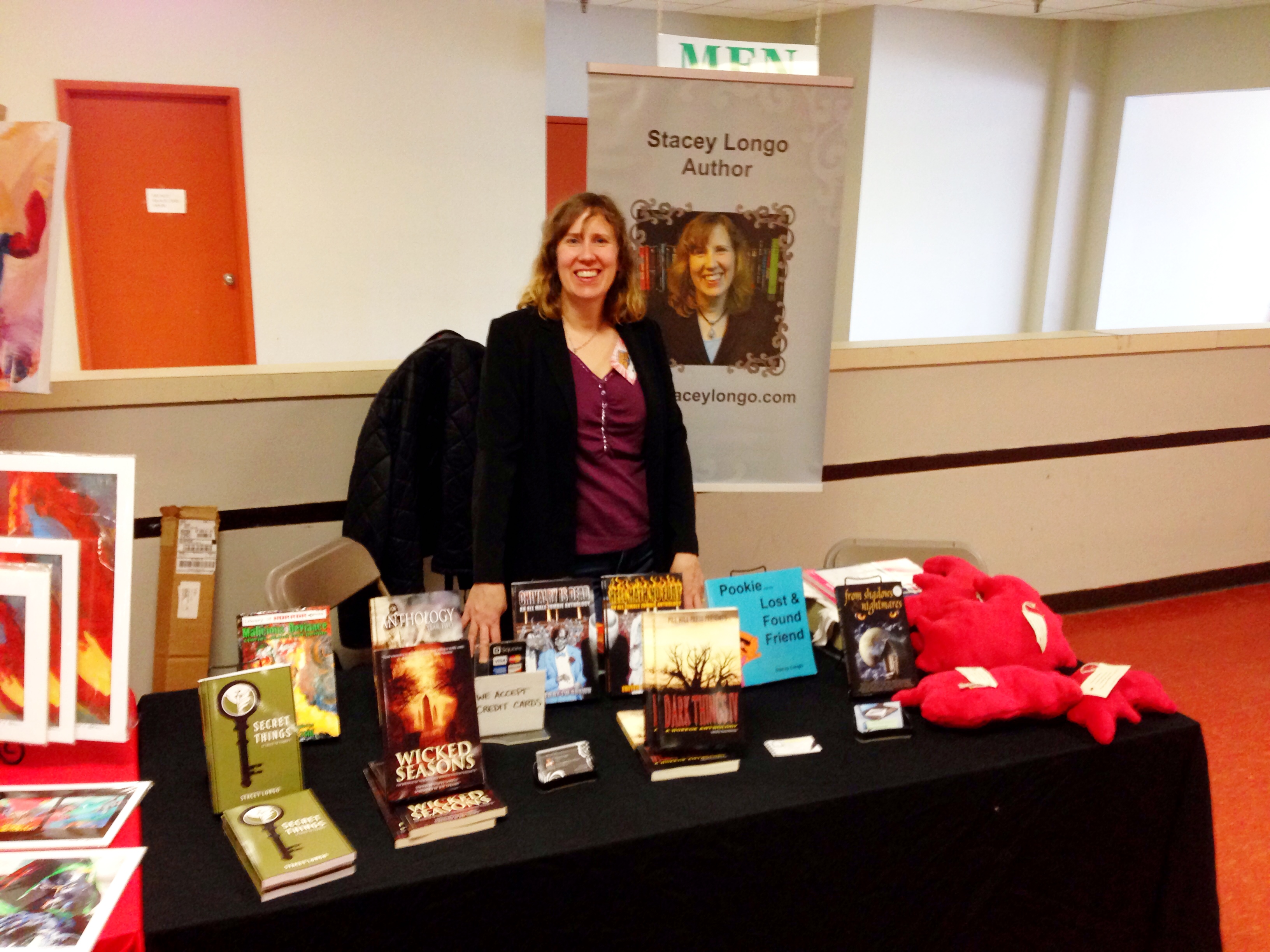
Author Stacey Longo talking with a expo attendee.

Author Stacey Longo talking with an expo attendee.

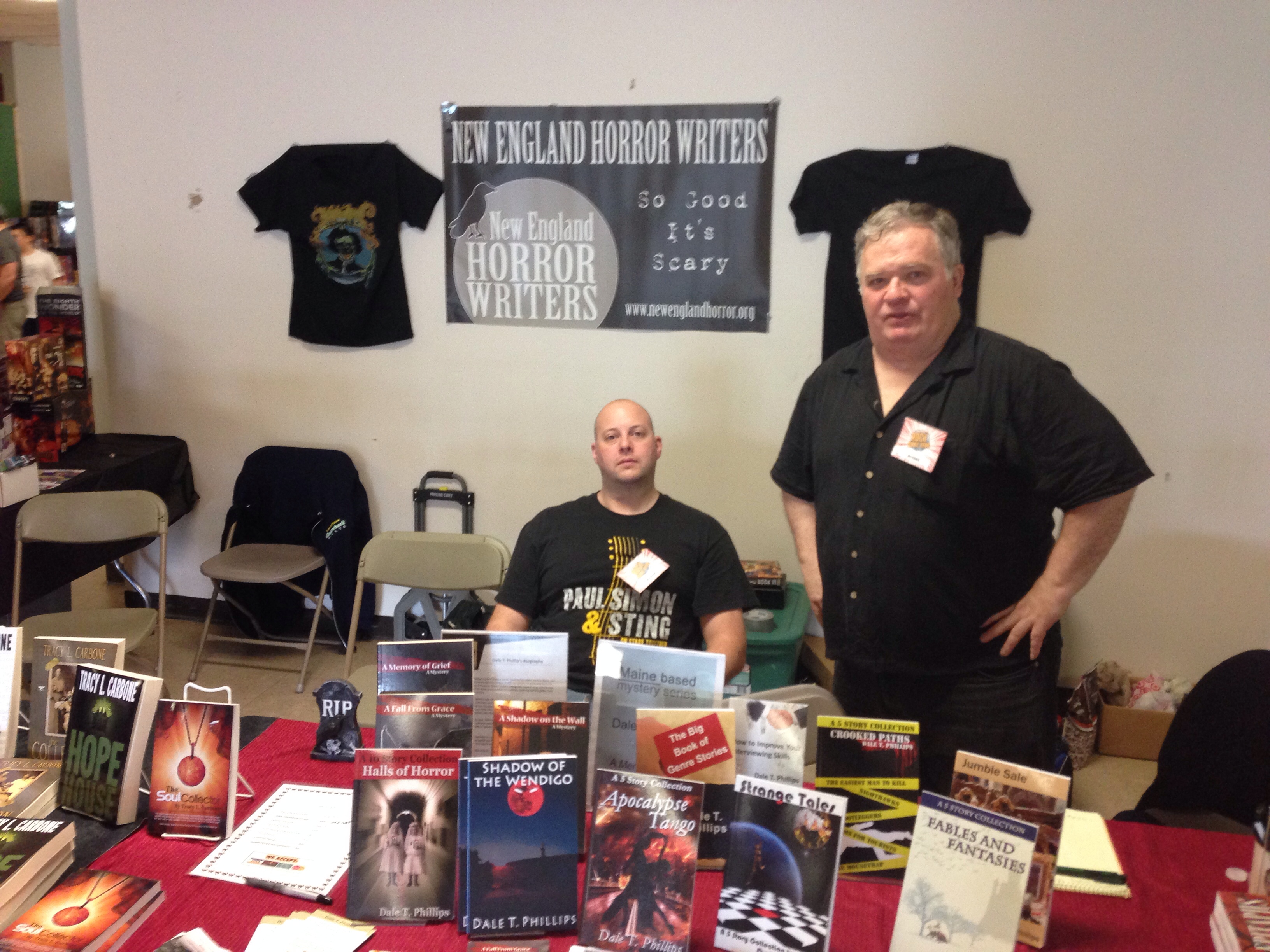
Authors Vlad Vaslyn and Dale T. Phillips behind the New England Horror Writers table.

Authors Vlad Vaslyn and Dale T. Phillips behind the New England Horror Writers table.

Moulton plans to make the comic expo a two-day event next year. He is also involved with Vermont Comic Con, which debuts in October.

Author Talks about Writing and ‘Spies of Revolutionary Connecticut’

By Jason Harris


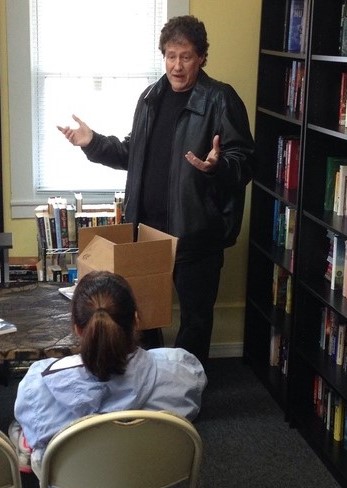
Author Mark Allen Baker talks about his book during his visit to the Colchester bookstore, Books & Boos.

Author Mark Allen Baker talks about his book during his visit to the Colchester bookstore, Books & Boos. Photo courtesy of Books & Boos.

Author Mark Allen Baker, who lives in Connecticut and has written 17 books, spoke to Jason Harris Promotions about a number of topics including writing and his current book, Spies of Revolutionary Connecticut: From Benedict Arnold to Nathan Hale.

JH: Mark you have written 17 books, when did you start writing and when was your first book published?

MAB: As a corporate executive for the General Electric Company, I began writing articles on graphics software and hardware; our division was involved with numerous early developments in graphics, most of which people are familiar with today as Microsoft PowerPoint. As an avocation, I have always been interested in baseball. After writing and publishing a number of articles on the 1980s boom in baseball collectibles, I was approached by a publisher to write a book. I accepted and wrote the Baseball Autograph Handbook for Krause Publications in 1990. While the word autograph is in the title, much of the information was historical.

JH: What was the impetus behind your latest book, Spies of Revolutionary Connecticut: From Benedict Arnold to Nathan Hale?

MAB: Having visited numerous historical sites here in Connecticut, such as the Nathan Hale Homestead (Coventry, CT) and the Webb-Deane-Stevens Museum (Wethersfield, CT), the word spy kept creeping into my conversations with historians and volunteers. It intrigued me so much, that I instigated a bit of my own primary research and found that there was much more to many of the stories. Like my previous work for The History Press, the material filled a genuine need: a single resource that would answer a majority of questions any concerned individual might have. In this case, it was visitors to a historical site.

JH: When you were at Books & Boos in March, you mentioned that some of the spies you have written about are in the video game Assassins Creed. Can you elaborate more on this?

MAB: As most know, Assassin’s Creed III is a 2012 video game developed by Ubisoft Montreal for a variety of systems. The fictional plot is set in the 18th century, before, during and after the American Revolution. Benedict Arnold, who is featured in Spies of Revolutionary Connecticutis also included as part of the exclusive missions, available on PlayStation 3. Other individuals included: George Washington, Benjamin Franklin, Sam Adams, General Israel Putnam and Benjamin Church.

JH: How long did it take you to write Spies of Revolutionary Connecticut?

MAB: This work took me about nine months.

JH: How much research did you do for the book?

MAB: Since my interest in the topic goes well beyond the scope of the book, I conducted more primary research than usual; I easily could have written a dozen volumes on the topic. As far as locations, I visited numerous libraries, historical societies and landmarks. I was even in the attic at the Nathan Hale Homestead and inside the War Room at Versailles, France. Always believing that a writer must get as close to the subject as possible, I tried to visit where my subjects worked and lived, and even where they were buried.

JH: What draws you to writing about history?

MAB: The people are what draws me to history. They are more than two dates on a tombstone, far more. It’s my job, or so I believe, to bring them back to life and acknowledge, at least in most cases, their achievements. While most know the names of Ethan Allen or Nathan Hale, few are unaware of heroes like Daniel Bissell and Noah Phelps.

JH: What does your writing process look like?

MAB: The process depends upon the work. For Spies of Revolutionary Connecticut: From Benedict Arnold to Nathan Hale, I began with a full investigation of the topic. This ranges from books and manuscripts, to scarce articles and even pension testimony.  Since I stay in the period that I am writing about, my ‘downtime’ includes only related items, period books, videotapes on the subject, university lectures and even music. Only when I feel I am ready, often months into the contracting, do I finally draft, revise and edit.

JH: What is your least favorite part of the publishing/ writing process?

MAB: Editing. Having to extract so many individuals from this work-Spies of Revolutionary Connecticut: From Benedict Arnold to Nathan Hale-was difficult. For example, I had no other choice but to edit out some (minor characters) individuals from the chapter on The Culper Ring. Choosing 35,000 words to express any topic is a challenge.

JH: You started a sport’s bar. Where was this, how did it come about, is it still there and what was the name of it?

MAB: Upstate New York, Liverpool, to be exact. It was called “Bleachers.” It came through my participation in another business. We, the four of us, believed the timing was proper to undertake an investigation or market analysis. As a former Market Research guru for a Fortune 500 company that became my task. It took me about six months to complete my research. It confirmed our feelings, guided us to a site and composed our business. I sold my shares three years into the business. I believe it lasted about four years longer before shutting its doors.

JH: Have you been involved in any other businesses?

MAB: Having worked for a large corporation for the bulk of my professional life, I began exploring other options when I was still in my thirties. A mail-order business, along with a sporting goods store, prepared me for the sports bar. That being said, having had managed three fast-food restaurants, before I started my own, certainly helped.

JH: How did your involvement come about in the New York music scene? Can you describe some of your experiences?

MAB: From 1975 until 1979, I supervised the shows at the university I was attending. During that period I promoted, or assisted, over fifty regional shows including: Aerosmith, Boston, Peter Gabriel, Genesis, Billy Joel, KISS, John Mayall, Queen, Bob Seger and Bruce Springsteen. My experiences could fill a book, and eventually will.

JH: Besides writing, history, and music, do you have any other interests?

MAB: Gardening. Organic fruits and vegetables are a favorite of mine.

JH: Are you working on any current projects?

MAB: Yes, I am currently working on a follow-up to Spies of Revolutionary Connecticut: From Benedict Arnold to Nathan Hale, that will be available in the fall of 2014.

JH: Just as your books inspire authors, what authors have inspired you to write?

MAB: Ernest Hemingway, David Halberstam, David McCullough, John Updike, Joseph J. Ellis, Ron Chernow … there are so many.

JH: What book do you wish you could have written? And why?

MAB: The Old Man and the Sea by Ernest Hemingway. Because it’s perfect.

JH: Are you there any upcoming promotional events you are doing for your current book?

MAB: Yes, I will be at Nathan Hale’s New London Schoolhouse on Saturday, August 16.

Interesting Magnets and Coffins at a Craft Fair


By Jason Harris


I have been to many craft fairs as a patron and as a vendor. I use to set-up events at craft fairs and open air markets for the New England Horror Writers (NEHW) organization. These events were very successful for the NEHW so I have continued setting-up events like these for my bookstore, Books & Boos, which I co-own with my wife. Along with these shows, I also set-up events such as conventions and comic book shows for the bookstore. You can find out about these Books & Boos’ events here.

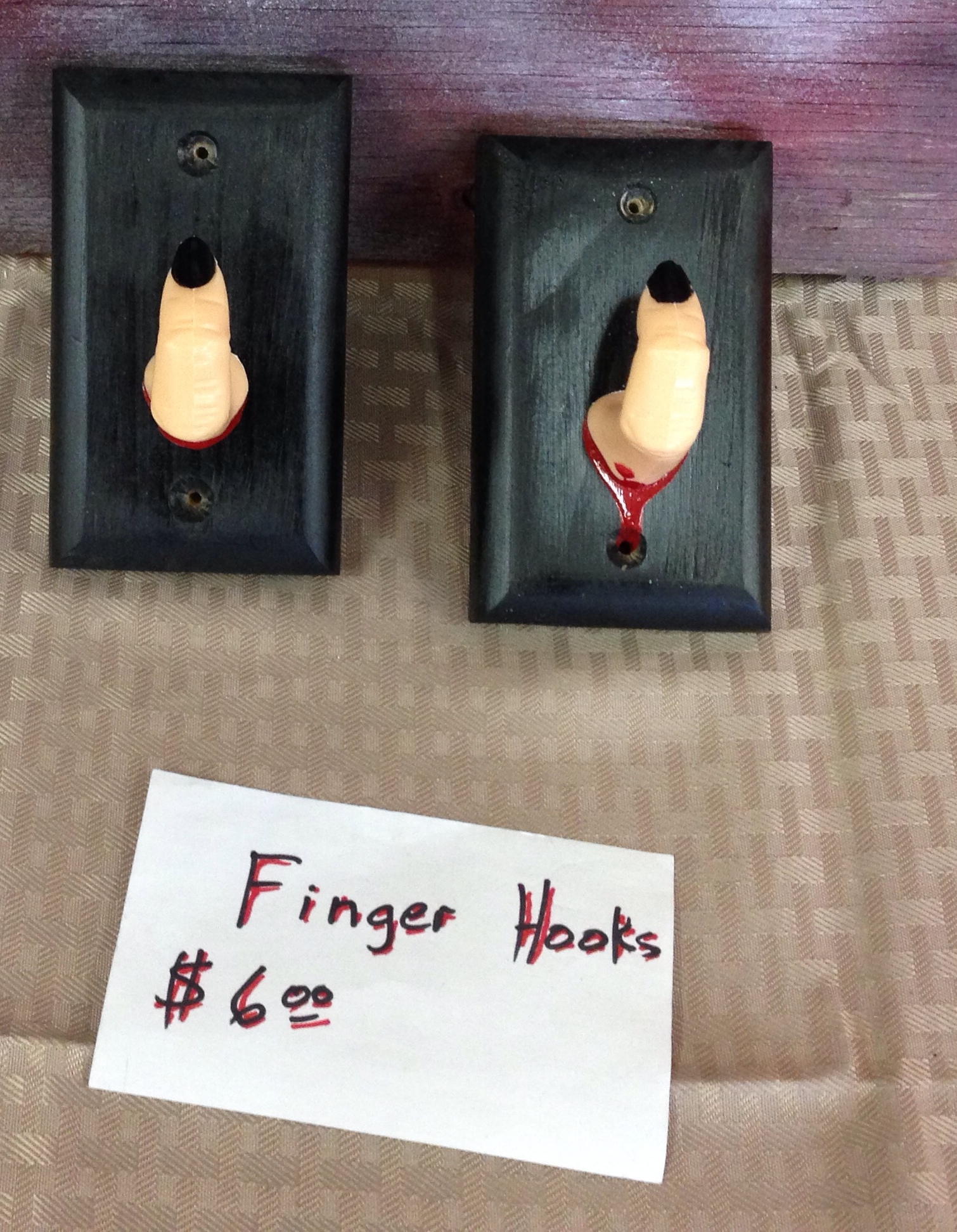
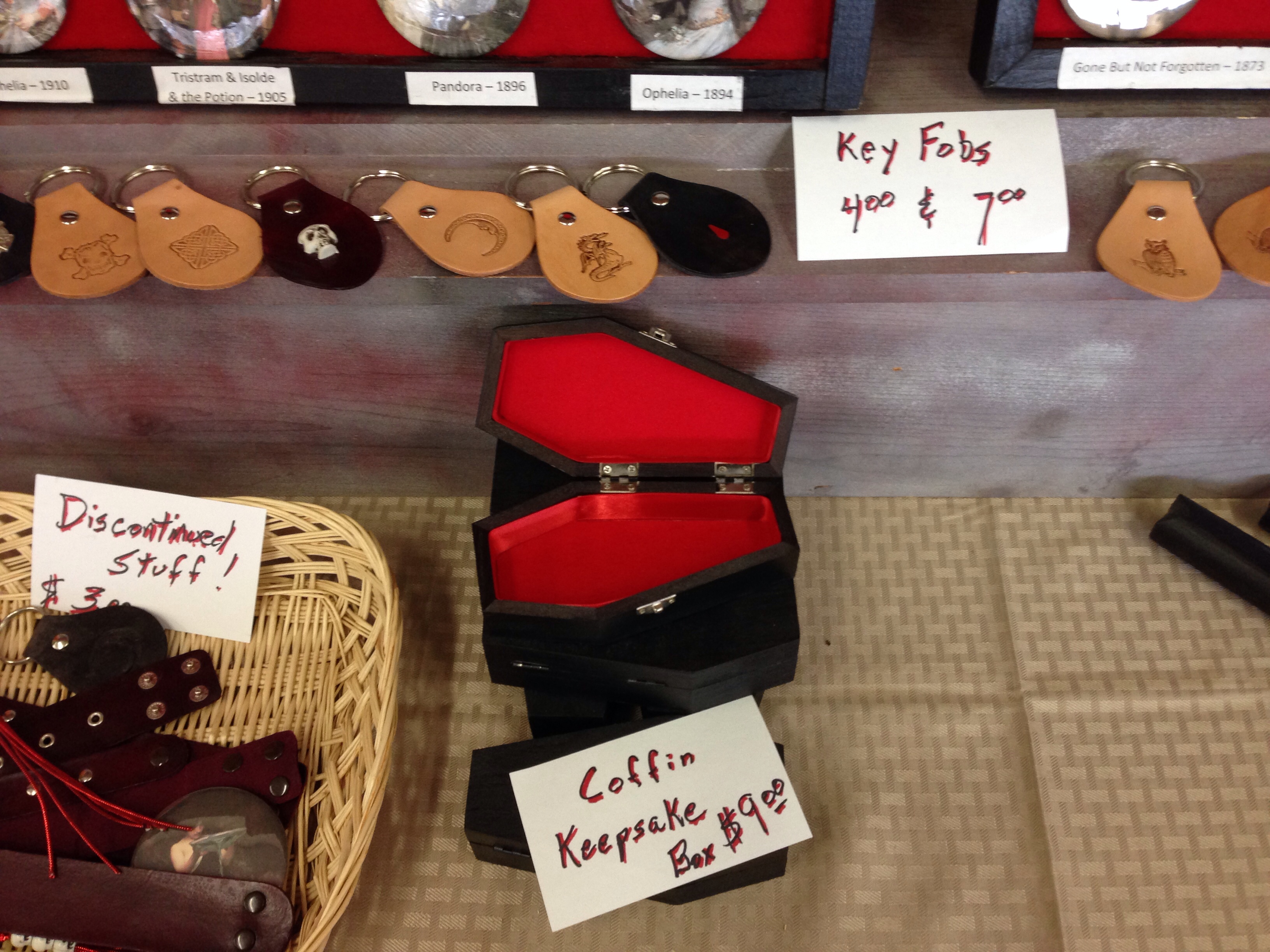
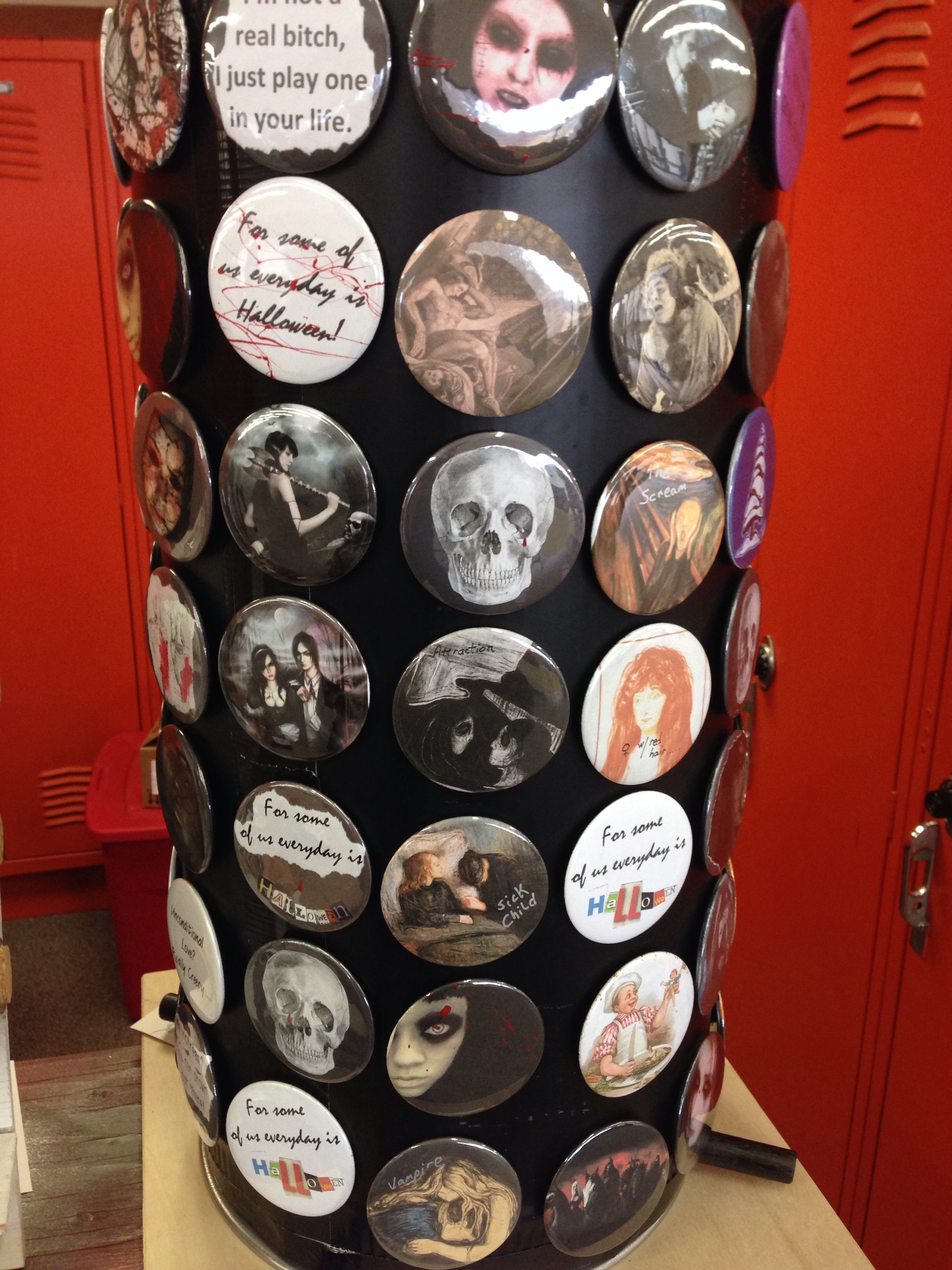
At the 41st Annual Craft Fair held at the Keefe Technical School in Framingham, MA. yesterday, there were the usual jewelry sellers, dog stuff, and handmade wooden bird houses. There was one unusual seller at this craft fair. The vendor was Frankenstein Medical School, which is owned and operated by Jerry Stiles. He sells finger hooks, coffin-shaped keepsake boxes, and interesting magnets.

2014-03-29 14.51.50

Jerry Stiles

Coffin Shaped Keepsake box.

Coffin-Shaped Keepsake Box

Magnets

Magnets

One of Stile's magnets.

One of Stiles’ magnets.

Finger hooks.

Finger hooks.


Stiles has a site on Esty, you can check it out here.


Award-winning Photographer turned Horror Writer

By Jason Harris

F.M. Kearney1

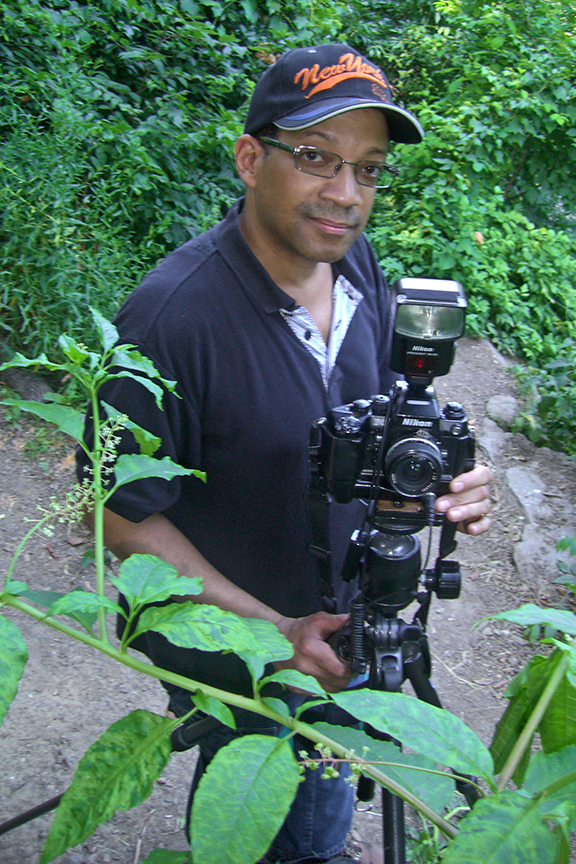
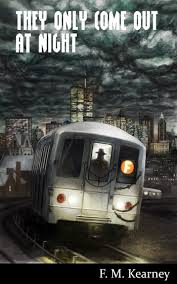
F.M. Kearney, an award-winning photographer, has written his first horror novel, They Only Come out at Night. Today, he’s talking  about his career, New York Subways, and writing his first horror novel.

JH: How long have you been a fine art nature photographer?

FK: I’ve been a fine art nature photographer for about 20 years.

JH: What awards have you won for your photography?

FK: I’ve won numerous awards from various magazine and online photography competitions, ranging from First Place to Honorable Mentions.

JH: In the 80’s, you worked as a photojournalist for various New York City newspapers. What newspapers did you work for? What were you covering for them?

FK: I’ve worked for a number of local papers such as Town & Village, City Limits, The Phoenix, The City Sun and The New York Tribune. I mainly covered news pertaining to the particular neighborhood or borough that the paper serviced, but I also did hard news as well. I’ve done ride-alongs with FDNY and NYPD undercover units. I covered the first bombing of the World Trade Center in 1993. I’ve also photographed many famous people, such as Bill Cosby, Mayor David Dinkins, Fred Lebow (founder of the NYC Marathon) and several sports celebrities in one-on-one sit-down interviews.

F. KearneyJH: What inspired you to write your first book and what was the idea behind it?

FK: I suppose my inspiration was two-fold. The first, and most obvious inspiration, came from my own personal experiences in the subway. As a photojournalist, I rode the subway all over town traveling to and from my assignments. I lived (and still do) in Manhattan, and up to that point, I had never really been to a lot of the stations in the outer boroughs, i.e., The Bronx, Brooklyn and Queens. I was really amazed at the total contrast in environments. You see, when most out-of-towners think of the NYC subway, images of Times Square and Grand Central Station will undoubtedly come to mind. These are huge, bustling hubs filled noisy activity and throngs of commuters almost 24/7. They have come to define what the NYC subway is all about. However, stations like these only account for a tiny percentage of the 463 stations of which the entire system is comprised. The vast majority of stations are nothing like that. In fact, I would even say that they are the polar opposites. Many of the stations in the outer boroughs (and even some in Manhattan) are very quiet, dimly lit and sparsely populated…and that’s in the middle of the day!  I can remember being in certain areas of some stations that were sore mote and so creepy that I felt very uncomfortable and couldn’t wait to get out. Many of these areas have since been sealed off to the public…presumably because of the safety risks they posed. I couldn’t help but think that this would be a perfect location for a horror story. To be honest, I’m actually surprised that Hollywood doesn’t use the NYC subway as a regular setting for horror movies.

My second inspiration came from one of the most unlikely of sources…a disco song. In the 80’s, Peter Brown released a single called, “They Only Come Out at Night.” It’s an upbeat tune about people (referred to as “creatures of the night”)  who like to go out clubbing. The song features the haunting sound of a saxophone — the kind of sound one might hear while walking along a deserted city street at night. Between that, and my experiences in the subway, They Only Come Out at Night (the book) was born.
JH: What drew you to writing in the horror genre?

FK: I’ve always been a fan of everything horror related…books, movies, TV shows, you name it. But, I always found one flaw in almost every story. It seemed as though a lot of time and effort went into producing the chills and thrills throughout the story, but the ending was usually somewhat of a letdown. Of course, most horror stories are fiction, but it seemed as though no attempt at all was made to make the story even halfway believable. I wanted to write a story that made sense — a story that, albeit fictional, contained enough factual details one might wonder if it could actually happen.

JH: Why did you use the New York City subway as the main setting?

FK: Aside from the reasons already mentioned, I used the subway because of its familiarity to so many people — even if they don’t happen to live in a major city that has a subway. Most tourists will make riding the subway one of their “must-dos” while visiting. Very few people will ever find themselves in an actual haunted house or a foggy cemetery at midnight. The same can’t be said for a subway. I think the chills are far more intense when you read about scary things happening in a more familiar and commonplace environment. After having read the book, a lot of people have told me that they will never again ride the subway alone at night.

JH: What type of research did you do for the book?

FK: I visited every major location I wrote about with a digital tape recorder. I recorded everything I saw, heard, smelled and felt…things that I (and probably most people) would never even give a second thought. This greatly helped to create atmosphere. I also researched news articles about local crimes committed in the area, and spoke with the NYPD about specific rescue procedures in the subway. As far as the supernatural aspects of the book are concerned, I went online and researched actual case studies and terminology. Lastly, the dates in the book are very important. I went to the library to insure that the days of the week and the newspaper articles I mentioned were correct.

JH: How long did it take you to write the book?

FK: Since I had no deadlines and was basically just writing for fun, I’d say it took about 10 years from start to finish.

JH: What’s been the reaction of some of the people who have read the book?

FK: Chapter One, by far, has received the biggest reaction! Many of my friends have told me that it was the most intense thing that they’ve ever read. Although they thoroughly enjoyed it, I realized that it might be a little too intense for the average reader. Before releasing the book to the public, I considerably watered-down this chapter from its original version. Even so, a number of reviewers have commented on just how violent this chapter is, and a few were even unable to get past it. Make no mistake, Chapter One is not for the faint of heart, but it is necessary to the story as a whole.

JH: Are there any other genres, you want to write in?

FK: As a nature photographer, I’ve considered putting out a non-fiction book about nature photography at some point in the future.

JH: Who is your favorite author/authors and what is it that really strikes you about their work?

FK: I like many of the works from Dean Koontz and Stephen King. I think King’s books are much better than his movies — many of which leave me scratching my head. These writers have a way of painting a picture with words that tends to put the reader right in the scene. I tried to do that with my book as well.

JH: What books have most influenced your life the most?

FK: I don’t know if I can point to any one book of fiction. However, I’ve read many photography books that greatly influence the way I shoot.

JH: Are you working on a second novel?

FK: Not at this time. Many have suggested a sequel to They Only Come Out at Night.  Although it definitely lends itself to a sequel, I can’t see myself writing one. Unless you’re talking about an action series, most sequels rarely live up to the original.

JH: What are your current projects?

FK: I’m currently focusing more on my photography and photography articles.

Author Catherine Bell Discusses ‘The Children of Manson’ and More


By Jason Harris


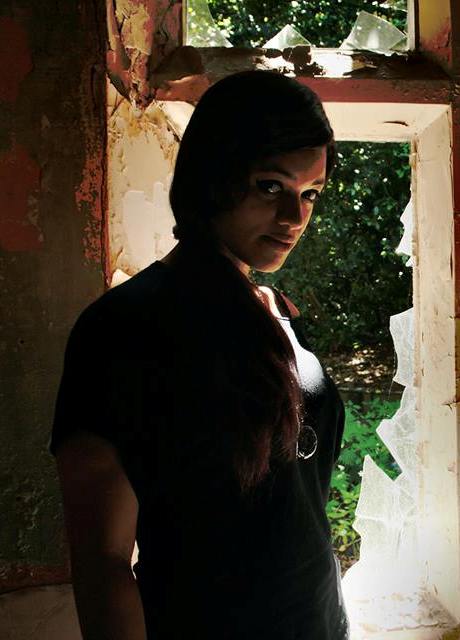
Catherine Bell

Catherine Bell

JH: Your adventure in writing started in 2001. How did that come about?

CB: I had just started secondary school at age 11, and had always enjoyed reading in my spare time. In English classes, my passion for writing began to flourish, partially because of support from teachers, as well as at home, so it became something I enjoyed and felt confident in pursuing.

JH: The Cathy Stories came about from your time in school. Can you tell my readers how that came about, what’s it about and how long this work is?

CB: This book still makes me smile now, mostly because I get very nostalgic when talking about it. It was a fun piece to write, probably only 50 or so pages long, and was all about “Cathy” the main character, and her friends, who battled evil demons while having to crack puzzles and codes. It was all based in at school, too, so the mentors in the book were all based on teachers. It was a comedy, and it was my first attempt at writing for a particular audience.

JH: How did the opening of your first book, Whistler’s Travels, come about being published by Manchester Metropolitan University and why only the opening?

CB: This was a piece I submitted as part of a writing competition, and so I got it published that way. At that point I had only written the opening, so it was a good opportunity to test the water, and see if it was something worth following up [on].

JH: What inspired you to write your first book and what was the idea behind it?

CB: My first serious completed work was Eden from the Ashes. With it being my first piece, looking back I feel it is quite disjointed, so I will definitely be undertaking a  huge re-edit before it comes into the public domain. It was a really interesting project for me, as it allowed me to experiment and really understand the freedom of writing. I finished that book when I was around 18, so it will be good for me to have a look back, and try and develop some of the ideas behind it.

I was inspired to write it as I had suffered hugely from bullying, and as, at the time, I was a very shy, reserved person, I had no real outlet to express how I was feeling. This is where writing became a huge emotional support for me, and continues to help me alleviate stress as well as being a very enjoyable pastime.

JH: The title for Whistler’s Travels was changed to Eden from the Ashes? What is it about and what was the reason behind the name change?

CB: The book itself is a fantasy fiction, focused on a socially isolated character, who decides to leave the village he has lived in all his life, and break away into the unknown. The story is about him developing as a person, learning more about his interests and limits, and understanding how his interests and habits had been formed by his environment, not be his personal choice.

The title Whistlers Travels was never a serious title for me. It came about because I needed a name to reference my work, and that was a simple one. It kind of stuck, however, but once it was finished, I wasnt happy with that as a final title. It didn’t fit well with the storyline as it had developed, and didn’t really give an insight as to the meaningfulness of the book to me. Eden from the Ashes is much more fitting.The-Children-of-Manson-book-Cover1

JH: Your second work Nomed was also re-named. It changed to Apocalypse 2012, then to Man Down, then to The Children of Manson. What’s this work about and is there a story behind all the different title changes?

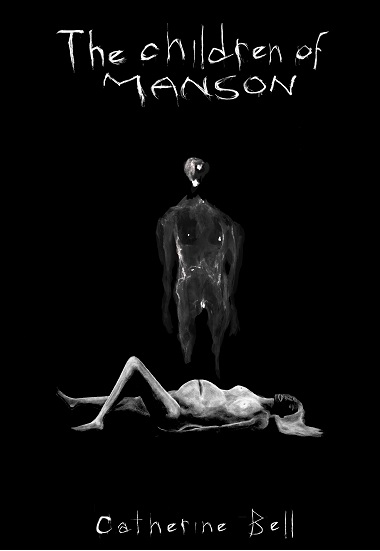
CB: The Children of Manson is a horror [story], which ties together terror, gore, and psychosis, with a subtle political undertone. It was a way of expressing some of my views about some real life issues as an undertone, while the predominant storyline was horror. It centres around Dee, a student who seeks comfort from her isolation at University from her flatmate Lily, and their friendship quickly blossoms into something more.

Unbeknownst to Dee, a sinister figure is watching her closely. He grows exceedingly paranoid as he tracks her movements over time, as he fears she knows about his own dark secrets. Underneath the home in which he is cared for, a maze of passageways are home to a cult following, vigilant in their tasks under Lloyd’s watchful eye.

Their aim? To prevent pregnancy, destroy fertility, and if necessary, will go to the very extreme to achieve their goals.

The reason for the many name changes was that the book underwent a huge re-edit, where the plot line massively changed. For this reason the first title was no longer relevant. I re-named it Man Down to continue the story, but again, wasn’t entirely happy with this new title either.  It was when I decided on the cult following as a major part of the storyline that I became set on The Children of Manson. There are also other subtleties in the storyline , for example the “Family” reference, that helped me decide that this was a most fitting title.

JH: You published The Sick & Sombre Tales of Sinister Town-Part 1 this past October. This was another work of yours to sustain a name change. Why the name change and why break it up into different parts? And how many parts will there be?

CB: The name change was to allow myself some flexibility as to the content. My focus for Part 1 was to give some background as to the characters and the general environment of Sinister Town. Initially there were 7 short stories, but I felt some were better placed in Part 2, so I needed to change the title to reflect that.

At the moment, I plan there to be 3 parts. Part 2 is well on its way to completion, and I’m already building some ideas for Part 3. Whether there will be further parts after that … we will just have to wait and see.

JH: What are the different styles and what’s the impetus behind this series?

CB: I’m planning for the three parts to have three different focuses, i.e. the first one was about building up the actual characters who live in Sinister Town, so the next part will  [focus] instead on an invader to the town, and the defense mechanisms the town uses to keep intruders out.

JH: Do you have a specific writing style?

CB: I think my writing style is quite distinguished, in that it is probably recognizable, but in saying that, I try to experiment with different styles depending on what I’m writing, and the type of atmosphere I’m trying to create.

JH: What genres do you write in?

CB: I write predominantly horror, though I am thinking of expanding in to fantasy/comedy, as I have bits and bobs still in the planning stages.

JH: Who is your favorite author/authors and what is it that really strikes you about their work?

CB: My favorite author is Stephen King; my favorite work by him was a joint piece with Peter Straub, called Black House. It is to this day the best book I have ever read in terms of fear. I remember vividly being too scared to turn the page, and even flipping forward a couple of pages first to steel myself into going back to read it.

That is what inspired me to write horror myself. I want to instill that feeling in others; I feel that the images the imagination conjures are so much more powerful than those fed to us by films.

JH: What books have most influenced your life the most?

CB: R.L. Stine deserves a lot of the credit for introducing me to the horror genre as a child (though I enjoyed all sorts of non-horror titles as well), as I would devour his books every evening after school.

Through my teenage years I did read some of  R. L. Stine’s more mature works, but quickly became enthralled by Stephen King, and have never looked back. In fact, I have two of his books by my bedside as I type this!

JH: What are your current projects?

CB: I am currently working on a new horror [story], called The Black Sheep. I am looking to create a piece that explores the deep emotional effects of bullying, and the characters in this book play out a physical expression of those effects.

JH: Where can readers find your work and find out more about you?

Please have a look at my website to find out more. You can also find me on Twitter: @TheCathyStories. On Facebook. I am also on Google Plus or on Amazon.

Pictures from Queen City Kamikaze 2014

by Jason Harris

2014-02-16 00.30.32

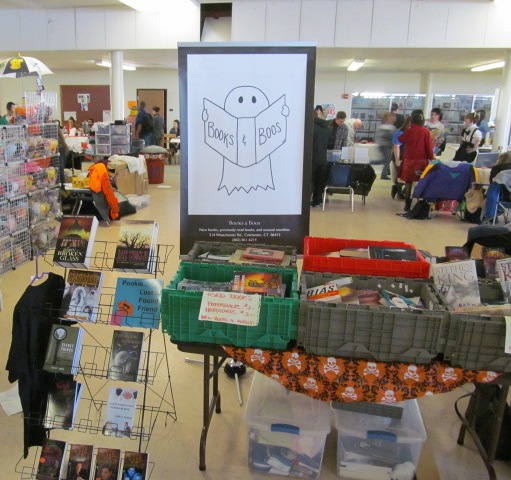
The Books and Boos banner at Queen City Kamikaze.

Dale T. Phillips, Stacey Longo, T.T. Zuma, and Mark Wholley behind the Books and Boos tables.

From left to right: Dale T. Phillips, Stacey Longo, T.T. Zuma, and Mark Wholley behind the Books and Boos tables.

2014-02-16 01.31.51

2014-02-16 01.54.22

2014-02-16 01.59.01

2014-02-16 02.47.04

Auhtors

Authors Gordon Bean and Stacey Longo on the Horror in the Movies panel.

2014-02-16 03.09.07

2014-02-16 02.13.30

2014-02-16 01.35.05

2014-02-16 01.31.36

Authors Dale T. Phillips, Stacey Longo, and Vlad Vaslyn on the Where Authors Get Their Ideas panel.

Authors Dale T. Phillips, Stacey Longo, and Vlad Vaslyn on the Where Authors Get Their Ideas panel.

2014-02-16 06.57.29

2014-02-16 01.25.12

2014-02-16 00.31.31

Authors Gordon Bean and Dale T. Phillips talk to a visitor of the Books and Boos table.

Authors Gordon Bean and Dale T. Phillips talking with a visitor to the Books and Boos table.

2014-02-16 02.53.21

2014-02-16 02.53.33e

Author Stacey Longo with the Joker.

Author Stacey Longo with the Joker.

2014-02-16 02.43.45

The Anthocon table at Queen City Kamikaze.

The Anthocon table at Queen City Kamikaze.

Queen City Kamikaze Happens this Sunday in New Hampshire (updated)


By Jason Harris


It’s February and the third annual Queen City Kamikaze is upon us once again. It’s one bright spot during this cold and snowy month.  The one difference this year is that this anime, video game, comic book, cosplay, sci-fi, and fantasy convention takes place on a Sunday. For the past two years, it happened on Saturday.

There will be over 25 vendors at this convention including Dandelion Studios, Books & Boos, and Harrison’s Comics.

Mark Wholley, one of the Four Horsemen who founded Anthocon, Northern New England’s only multi-genre literature and arts convention, will be at QCK for his second time to promote Anthocon. He will also be selling copies of Anthology, an anthology that debuted at Anthocon. He wants to make some vendor contacts and meet some artists, Wholley said.
“I like the show because of it diverse audience it draws in, It’s local to me and I like to support other shows when I can. I enjoyed last year so I decided to attend again this year,” Wholley said.

At the Books & Boos‘ tables, there will be six authors: Stacey Longo, Dale T. Phillips, Vlad Vaslyn, Tony Tremblay, David Price, and Gordon Bean. They are all members of the New England Horror Writers organization. These authors will be selling and signing their books. This will be Longo’s third time and Tremblay’s and Price’s second time attending the convention.

“I love this convention and meeting a younger generation of readers,” Longo said.

Along with selling new and used books, Books & Boos will be presenting two panels: Horror in the Movies (1 p.m. to 2 p.m.) and Where Authors Get Their Ideas (4:30 p.m. to 5:30 p.m.).

Horror In The Movies: authors Gordon Bean (Dawn of Broken Glass), David Price (Dead in the USA), Stacey Longo (Secret Things), and moderator Jason Harris will discuss the best and worst, darkest and most disturbing, scariest and silliest examples of horror on the big screen on the Horror in the Movies panel. From the golden age of Nosferatu to the modern-day Conjuring, this panel will cover it all. Questions from the audience are encouraged throughout the discussion.

Where Do Writers Get Their Ideas? Authors Dale Phillips (Shadow of the Wendigo), Vlad Vaslyn (Brachman’s Underworld), David Price (Dead in the USA), and moderator Stacey Longo (Secret Things) will answer the number one question writers hear from their readers: How do you come up with this stuff? From disturbing first dates to summer camp adventures gone awry, audiences will learn how the most innocent of memories and experiences can be turned into scary stories and best sellers. Questions from the audience will be encouraged throughout the discussion.

There is a third panel: How to Create, Publish, and Promote Your Own Comic, which will happen during the convention, but isn’t sponsored by Books and Boos.

The Queen City Kamikaze takes place at 1 Crusader Way in Manchester, New Hampshire from 10 a.m. to 7 p.m. on Sunday, Feb. 16. There is a $10 admission price.

Editor’s Note:
Author David Price won’t be able to attend the convention. A family issue came up.