An Author’s ‘Jumble’ of Stories

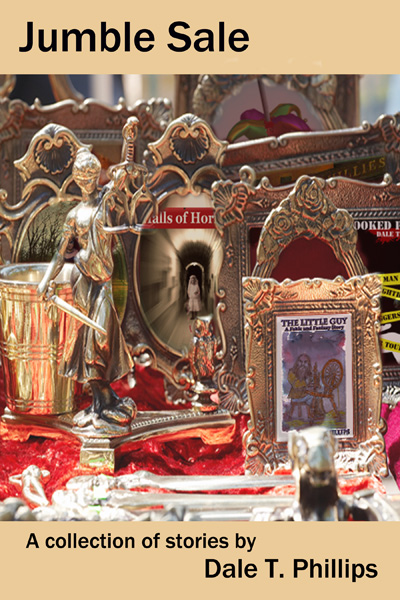
Author and NEHW member Dale T. Phillips has published Jumble Sale, a story collection containing 20 previously published tales. These stories are from different genres: science fiction, crime, fantasy, horror, humor, magic realism, and mainstream.

According to the book’s description on Smashwords, “there are fractured fairy tales, cautionary parables, peeks into disturbed minds, and amusing little romps. Everything from people with problems to giant lobsters, demonic creatures, small-time gangsters, and perverted dwarves.”

Phillips said his collection will “give you a shiver of frisson or a chuckle, or a chance to think about the world in a new way. Come take a sip from the dark myth pool of the human psyche, and taste a strange wine.”

Click here to order a copy.

A Vampire Tale Set in Boston

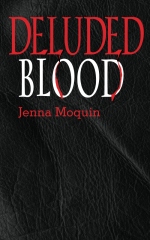
Author Jenna Moquin and NEHW member recently released her novel, Deluded Blood, a vampire story that takes place in Boston and centers around the friendship between a vampire and an aging priest. There is a battle between vampires and humans that grows so epic only one vampire survives. This vampire is left with the decision to either remain the last one, or continue the race by turning more humans into vampires.

The book is $12.99. To order a copy, click here.

‘Body Enhancements Gone Bad’ Anthology Available on Amazon

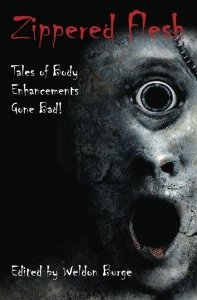
Author and NEHW member L.L. Soares’ story, “Sawbones,” appears in the anthology, Zippered Flesh: Tales of Body Enhancements Gone Bad! edited by Weldon Burge.

According to Amazon, this collection contains monstrous transplants, appalling amputations, bizarre implants and nightmarish forms of body enhancements. These “stories are not for those who are faint of heart or squeamish, or who are easily offended by nasty language, bloody violence, and freakish body augmentations.”

This collection also includes stories by Graham Masterton, John Shirley, Scott Nicholson, Lisa Mannetti and Burge.

Burge’s collection is available in paperback for $14.95 and in e-book for $2.99 on Amazon.

Your Cover Art Sucks

This entry originally appeared on author and NEHW member, K. Allen Wood’s website.

Your Cover Art Sucks

by K. Allen Wood

Let’s talk about cover art.

There has been a self-publishing boom as of late. Once a surefire way to garner scorn from so-called professional writers, now even those dingleberries of the upper crust are self-publishing their work. With its rapidly growing popularity, there are those in the industry whom suggest there is a bubble…and that it’s about to burst. But I disagree. I think things are just getting started.

And that means more self-published books flooding the market.

There is an oft-used quote out there, which goes like this: “Just because you can doesn’t mean you should.”

A few years ago, when I started Shock Totem, a well-known author told me that cover art “isn’t that important.” The argument being that it’s the content that matters more. It’s hard to argue with that. However, I think, in a certain regard cover art matters more. The expression “never judge a book by its cover” exists because everyone judges a book by its cover.

First impressions matter. That initial connection between cover art and potential reader is intimate, and it matters more than you and the masterpiece you think is a page turn away.

I won’t buy your book if the cover art sucks. I won’t download it for free. I won’t do more than laugh derisively like a too-cool uptowner and walk on. Haughtily.

I fully understand that the majority of writers doing this sort of thing are, to put it bluntly, bad writers; but many are quite good, in fact. And to them I say this: If you truly care about your work, seek out the work of professionals in areas where you are not King Dingaling. Dig deep. It doesn’t cost much.

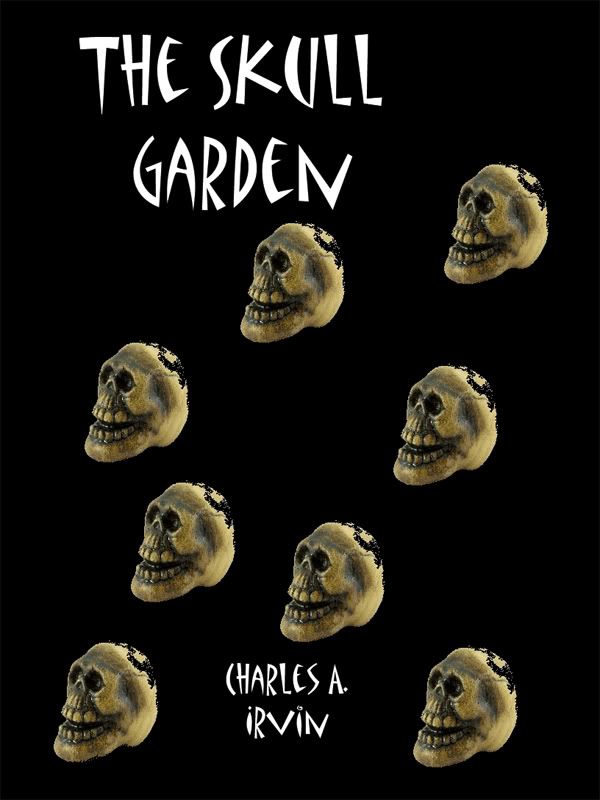
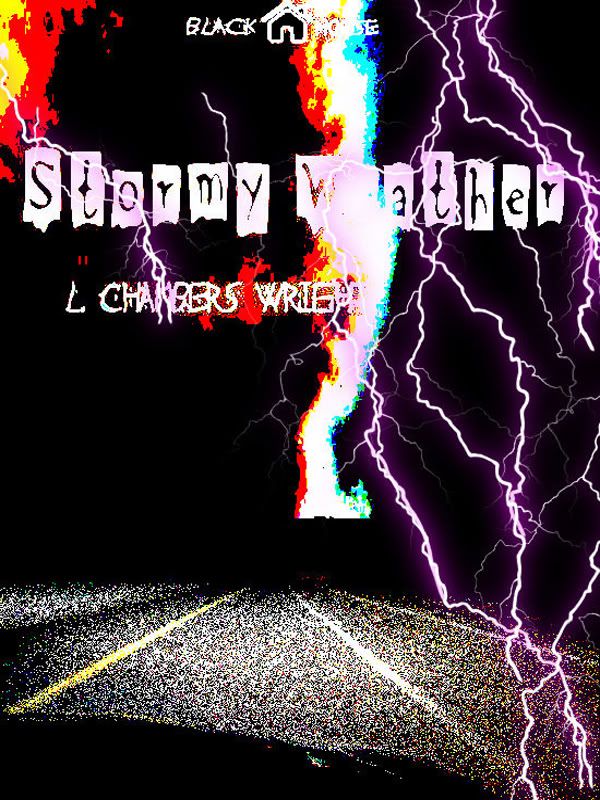
In other words, don’t do this…

[ click any photo to enlarge ]

Above are four actual book covers not designed by a 4-year-old.

Trapped inside the social-media matrix, I am bombarded daily with similar fruits of so many would-be writers’ half-assed labor. You, as well, I imagine.

I see authors posting bad cover art all the time, constantly asking for opinions (which people freely give but which equates to little more than smoke up the ass), often readily admitting that he or she has little skill in Photoshop or design, of any sort.

Thus, I question: If you are that person, why the fuck are you creating cover art?

Author Forecasts a Warm, Dark Future in New Story

This article originally appeared in the Monday edition of the Journal Inquirer, a newspaper out of Manchester, Connecticut.

JI editor forecasts a warm, dark future in ‘The End of Ordinary Life’

By Julie Ruth

The year is 2028. An Alaskan bush pilot is flying an electric plane. The Arctic Ocean is ice-free because of global warming. The U.S. has been in an economic slump ever since the banks collapsed in 2008, and things are coming to a head. That’s the backdrop for Journal Inquirer Associate Editor Daniel Hatch’s latest science fiction story, “The End of Ordinary Life,” which appears in the May issue of Analog: Science Fiction and Factmagazine.Hatch, who’s published more than 20 works of science fiction in Analog, Absolute Magnitude, and other publications, opens his latest science fiction story in southeast Alaska, where his lead character, Tom O’Reilly, discovers that each of his four girlfriends has disappeared. When he later finds himself uprooted against his will as well, O’Reilly realizes that what he has known as “ordinary life” is now over.

“I have been living in the shadow of the economic collapse, and the bill is finally coming due,” O’Reilly says.

The story explores the consequences of global warming and a longterm economic slump following the 2008 banking crisis.

“It’s a pessimistic projection that we don’t fix the things that are wrong with the economy, and they get worse,” he explained. “All kinds of solutions out there are easily attainable but nobody wants to touch them because they will interfere with the profit stream of the big corporate players.”

Hatch is a longtime contributor to Analog, which has been around since the 1930s, the Golden Age of science fiction, when there were dozens of fiction magazines.

Analog is known as the “hard science fiction” magazine, where stories are driven by science rather than characters, said Hatch.

He got the idea for the story after reading a report prepared for the U.S. Navy that predicts that the Arctic Ocean will have no ice during the summer within the next 20 years.

“It said we’re going to have an extra ocean to deal with, and we should start making plans now.” The report included things the Navy should watch out for, like terrorists and arms smugglers coming through Canada.

Hatch said he discovered science fiction in first grade, when he found “Danny Dunn and the Weather Machine” in the library, a novel about a teenager who discovers a device that can make small clouds and miniature rainstorms.

Like many teenage boys in the ’60s, he was reading science fiction novels voraciously.

He wrote his first saleable science fiction story during a stint in the U.S. Coast Guard in Cape May, N.J., after finding a book in the library. Written in 1929 by John Gallishaw, who taught at Harvard, it was called “20 Problems of the Fiction Writer.”

“I still have it; I never took it back,” he said. Which is just as well, since the book is no longer in print.

At the University of Connecticut Hatch prepared for his writing career.

“I studied all the things science fiction writers should study: Shakespeare, history, journalism,” he said. “Because you’re writing grand narratives about the meaning of life in the universe, man’s place in the universe.”

After graduating in 1980, he worked for the Connecticut State News Bureau and The New York Times before joining the Journal Inquirer in 1988.

Hatch said the story is also an excuse to write about flying, one of his passions, though he learned flying through the Microsoft Flight Simulator program, rather than by spending actual time in the air.

After Hatch submitted the story, his longtime Analog editor, Stanley Schmidt, sent him an email: “I don’t remember your ever saying anything about being a pilot, or living or traveling in southeastern Alaska, but if you haven’t done those things, you sure know how to research a story. I’ve done both, and this feels real!”

The May issue of Analog magazine featuring Hatch’s story will be available at Barnes & Noble stores.

The issue is also available on Barnes and Noble’s Nook and Amazon’s Kindle.
Epitaphs Giveaway

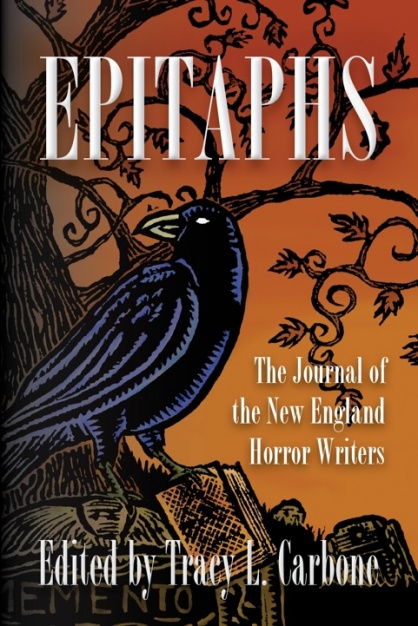
Win a copy of Epitaphs: The Journal of the New England Horror Writers, Vol. 1, the first anthology of the NEHW.

Tracy L. Carbone, editor of the anthology and co-chair of the NEHW, is sponsoring the giveaway of three copies of Epitaphs on Goodreads. Click here to enter. The contest runs until March 19.

Ode to Channel 56

This originally appeared on author and NEHW member David Price’s blog.

Ode to Channel 56

by David Price

What makes a science fiction fan? It’s a good question, right? The short answer is a simple one. It’s all about the imagination. While I believe everyone is born with one, some people’s imaginations seem to atrophy from lack of use. It helps to have parents who encourage its use, because not all do. Fans of speculative fiction, that all-encompassing term that includes fantasy, science fiction, and horror, have over-active imaginations. We’re dreamers. Do we daydream a lot? Sure. Do we let our minds wander on to things that many people would not consider important? You bet we do. It’s who we are, and where would the world be without the dreamers? Still stuck in the Stone Age, that’s where.

Okay, so it all has to start somewhere. Someone or something has to have nurtured that imagination at an early age. I am going to give a good chunk of that nurturing credit to an independent Boston television station, WLVI, channel 56. Funny, how you can’t appreciate some things until long after they are gone. I grew up in the 70s, and was raised on broadcast television. We didn’t even get cable until 1980 or so. Channel 56 was a UHF station, that ran a lot of syndicated series and old movies. So what did they air? Only some of the most amazing programs a young mind could soak in. My favorite was the original Star Trek series. My mother was a fan too, so this was something we could enjoy together. Star Trek was not perfect, by any stretch of the imagination, but it remains one of my all-time favorite shows. If I happen to be flipping channels and see Kirk, Spock, Bones, or Scotty, I will always stop and watch the rest of the episode. How many shows or movies can you say that about?

Growing up in the 70s was exciting for someone who dreamed about life “out there” and reaching for the stars. Star Trek was so inspirational for me. It hadn’t even been ten years since we first landed on the moon. NASA was actively exploring our moon with the Apollo program and our solar system with the Pioneer, Voyager, and Viking programs. Star Trek seemed like just a taste of what we might find out amongst the stars. Who knew, right? I wanted to be an astronaut right up until I entered college. I wanted to find what was out there. Kirk and the crew of the enterprise were responsible for those dreams just as much as our own space program was.

There was another series, however, that gave us some different ideas about what the future could hold for humanity. This series also aired on channel 56. It was called The Outer Limits. It gave warnings about the future, about contact with alien races, and about man’s ever improving technology. It was scary. Like The Twilight Zone, there was usually a moral associated with each story; a moral that said something about humanity. It was a much darker message and not as hopeful as Star Trek, but I took it all in, just the same. As a matter of fact, I even told myself, one day, I’ll be a scientist, but I won’t make those kinds of mistakes. I’ll be one of the good ones.

On Saturday afternoons, The Outer Limits led into one of the greatest programs that channel 56 had to offer. This was the show they labeled “Creature Double Feature.” As you might have guessed, this creature show aired giant monster, horror, and sci-fi movies. All those Japanese monster movies were great, especially Godzilla. That big, mutant dinosaur was nature unleashed. Godzilla was like the earth saying to the people of earth, “You know what? I don’t like your cities and pollution. I’m gonna stomp ‘em. Your military power? Pathetic. I’m gonna swat it away.” Godzilla was large and in charge. How could you not love that?

Another major sci-fi influence I can remember from channel 56 was Lost in Space. I know, I know, it was a very campy show after the first season. Still, I really loved that robot. There was just something about the robot which made the whole show for me. The robot was heroic, selfless, funny and often displayed more emotion than Mr. Spock. The best moments of the series were often between the once-evil, but now-bumbling Doctor Smith and the robot. He remains my all time favorite robot. “Warning! Warning! Danger, Will Robinson!” Classic stuff right there. I like it when robots show us how good humanity should be. The kinds of robots in Lost in Space and The Iron Giant, and also Data from Star Trek: The Next Generation are the ones that have always appealed to me. If mankind could create something noble like that, it might just say something good about us, and our future.

Speaking of Star Trek: TNG, it is the last sci-fi show that channel 56 broadcast, I will discuss. I was a little older when this show came out. I was out of high school and was reading mostly horror at the time. It didn’t really grab me right away. I kind of half-heartedly watched season one. I didn’t even start watching season two right away. It wasn’t until a friend of mine brought it up and said season two was much better that I even bothered with the second season. Once I did though, I got hooked. The original Star Trek was about what strange, alien, and sometimes familiar life forms we might find once we travelled to the stars. TNG was different, though, because it was more about what humanity’s place in the universe could be. Even in the face of a fearsome threat like the Borg, Picard and his crew used the human spirit to be a force for good and a defense against the darkness when necessary.

These are the shows and movies that WLVI, channel 56 in Boston, brought to me. Everything I have ever read or seen has influenced me, as a dreamer and a writer, in some way. I will remember fondly the part of my childhood that channel 56 influenced. I have even heard that fans still contact the station asking them to bring back Creature Double Feature. I can understand that. If the Syfy channel broadcast stuff that was half as good as channel 56 used to, I’d have more respect for them. I can’t imagine that the disaster movie knock-offs they show constantly are making any of today’s kids look towards the stars. At least, I can consider myself lucky enough to have been exposed to shows that made me think and dream. Thank you channel 56.

Controversial Horror Director Uwe Boll completes Profane Exhibit segment

Press Release

Harbinger International Films has great news concerning our film, The Profane Exhibit, an anthology of 13 international short films of extreme horror, produced by David Bond and Manda Manuel. Director Uwe Boll has completed his contribution to the film, the creepy and subversive short, Basement, starring Caroline Williams (Texas Chainsaw Massacre 2), Tara Cardinal and horror icon Clint Howard. David L Tamarin, General Counselor of Harbinger, attended the shoot and expressed his concern that the material might be too strong for mass consumption. “The film is about evil that is absolutely real. There are no zombies, and the only monster is of the human variety. The film takes you to a very dark place. Viewers need to prepare themselves for this one.”

Boll’s film is about the corruption of a family in a world where things are not always what they appear to be. A world where monsters parade as family men and home is another word for hell. In an ideal suburban home which could best be described as boring and ordinary a horrible secret exists deep in the basement. Howard and Williams play a married couple with an ordinary life – except for the fact that they keep their starving and abused daughter in a locked basement room that she has not left in years. In this perverse nightmare scenario that is unfortunately based on fact, all the young daughter (Tara Cardinal) wants to do is go outside and into the sun. Instead she must endure daily cruelties. This is a tale of sexual depravity and psychological torture, and a subversive look at the depraved realities of suburban life.

Boll, director of films such as Stoic, Rampage, Seed, Postal, Attack on Darfur, and more, has once again turned his eye on the nature of evil and corruption. Other directors for the film include Richard Stanley, Marian Dora, Yoshihiro Nishimura, Sergio Stivaletti, Ryan Nicholson, Michael Todd Schneider, and Andrey Iskanov. Many more to still be announced

Interview with Actor/Comedian Kevin Pollak

This article originally appeared on the DVD Snapshot website.

Interview: Actor/Comedian Kevin Pollak

by Jason Harris

Necessity is the mother of invention and the reason why Columbus Circle came to be.

“This is the most ridiculous example of the necessity being the mother of invention,” said Kevin Pollak in a phone interview.

Columbus Circle, which he co-wrote with the movie’s director, George Gallo, came about when producer Christopher Mallick’s financing for a remake of a Korean movie fell apart when the Korean government took back the movie rights in 2009, Pollak said.

This bad news came to Mallick as he was at the Cannes Film Festival celebrating the movie, Middle Men, with its cast that included Giovanni Ribisi, who is also in Columbus Circle, and Pollak.

Since Mallick already had two apartment sets built in Los Angeles for his now defunct remake, Pollack told him he would come up with an idea that night and they would go over it on the 11-hour trip home the next day to figure it out.

He was up most of the night coming up with the story for Columbus Circle, which concerns an heiress portrayed by Selma Bair, who is holed up in her apartment and no one knows who she is, and the couple who move into the apartment across the hall from her.

You can read the rest of the interview by clicking here.

Perfect Conditions

This entry came from NEHW member and author Bracken MacLeod’s website.

Perfect Conditions

by Bracken MacLeod

Recently Jonathan Franzen created quite a dust-up when he said that “the ‘impermanence’ of e-books is incompatible with enduring principles” (or something to that effect). I’ve already weighed in with my opinion of the Tastes Great/Less Filling debate when it comes to e-readers versus dead tree books and really am not interested in saying any more. However, Franzen did have something else to say which intrigued me enough to make further comment.

The acclaimed author … has said in the past that “it’s doubtful that anyone with an internet connection at his workplace is writing good fiction”. He seals the ethernet port on his own computer to prevent him connecting to the internet while he writes, also removing the card so he is unable to play computer games and wearing noise-cancelling headphones to prevent distraction. [emphasis added] source

I admire the luxury of being able to drop out entirely and simply be in the work. In the past I had a similar attitude toward distraction. I used to only be able to create when conditions were just right (that’s what I told myself anyway). You get the idea–fussing about with ideal setting as a means of procrastination. Distractions outside (or inside) could derail me for minutes or hours. Not any more, however. I’m done with all that. And since I’ve gotten rid of the perfect setting nonsense I’ve been much more prolific.

I wish I could say that my rejection of the Goldilocks conditions (not too noisy, not too hot,1 just right) for creativity was borne of discipline and a desire to just sit down and do the work, no matter what. But if I am to be honest, it was my son’s doing. Since adding a baby (nearly a toddler) to my life, all I need to be creative is enough time to open Scrivener and start clacking keys (or outlining, or editing, or whatever). And that’s the last remaining luxury of the full-time parent/writer. Fuck feng shui! All I need is time.

At this moment, time seems ample compared to when I was lawyering, for instance. The kid sleeps a few hours a day (I know that’ll change, don’t bother commenting about it) and I work. The sounds of the city buses and the gas station outside don’t bother me (most of the time), I don’t need to find the perfect mood music–although it does help me with “flow”–and most of all, if I only get to write for ten or fifteen minutes at a time instead of several uninterrupted hours I still feel like that was a success. It’s unclear to me whether being a stay-at-home parent has fragmented my ability to focus or solidified it. All I know is that my first book took four years to write and my new one only took two and a half months.2

The change came easier than I expected mainly because I was forced into it. Now, the only precursor to work that I absolutely require is coffee. I still can’t write in a cafe, however. I’m too busy eavesdropping, listening for dialogue.

1 I like the cold. It feels like being alive, where sweltering heat just reminds me of being ill.

2 I attribute the improved quality of my work to taking classes at Grub Street in Boston as well as the fantastic help of my writing circle. The speed is all the boy, however.