Rock and Shock Starts Promoting Its 11th Show

Rock abd Shock 11

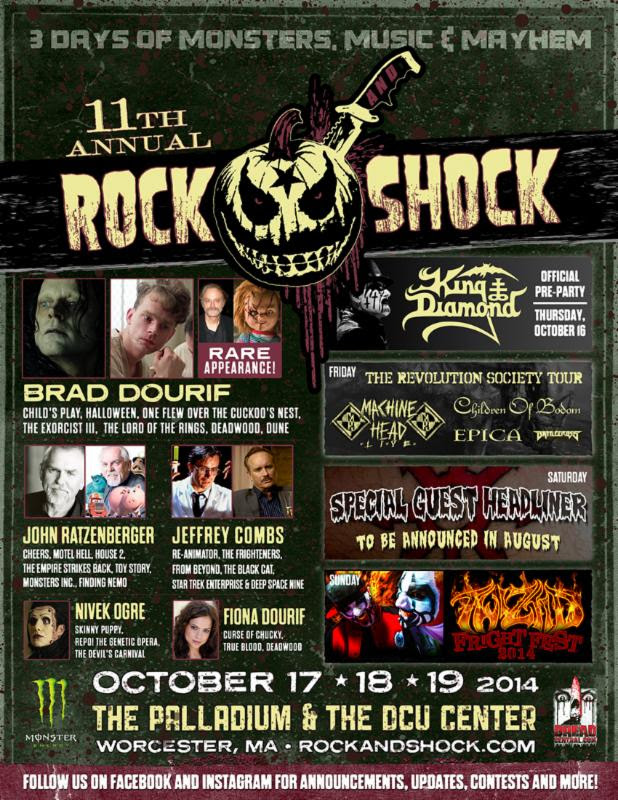
Rock & Shock is getting ready to turn it up to 11! In anticipation of the 11th anniversary of the horror and music convention that brings 3 days of monsters, music and mayhem to downtown Worcester, MA, Rock & Shock is giving the public an extra early sneak peak at this year’s attendees. While there are still plenty of big name acts yet to be divulged, Rock & Shock is pleased to announce that among this year’s guests will be Brad Dourif, John Ratzenberger, Jeffrey Combs, Nivek Ogre and Fiona Dourif. Meanwhile, King Diamond, Machine Head and Twiztid are among some of the convention’s scheduled performers.

Brad Dourif, the voice of everyone’s favorite flame-haired doll turned serial killer Chucky will be making a rare convention appearance at Rock & Shock 2014. Dourif is a legendary character actor who is best known for his appearances in Rob Zombie’s Halloween 1 & 2, The Exorcist III, The Lord of the Rings: The Two Towers & The Return of the King, Dune, TV’s Deadwood and his breakthrough role as Billy Bibbit in Milos Forman’s 1975 classic One Flew Over the Cuckoo’s Nest. To make the event a true family affair, Dourif will be joined by his real life daughter and True Blood star Fiona Dourif. Fiona’s other screen credits include Curse of Chucky, Deadwood and Paul Thomas Anderson’s Academy Award nominated film The Master.

He has danced with the stars, voiced some of your favorite cartoon characters and even fought for the Rebel Alliance and this October, Cheers‘ very own John Ratzenberger will be returning to the place where everybody knows his name. In addition to portraying Cliff Clavin, postal worker extraordinaire on the seminal Boston-based TV series Cheers, Ratzenberger has appeared in films such as Motel Hell and House 2: The Second Story, competed on Dancing With the Stars and has become the voice of Pixar. Ratzenberger is, in fact, the only actor to voice for a character in every Pixar film; most notably Hamm the Piggy Bank in the Toy Story series, The Abominable Snowman in Monsters, Inc. and Mack the Truck in the Cars.

A legend in both the horror and sci-fi communities, Jeffery Combs will be making his triumphant return to Rock & Shock this year. Combs first made his name as Herbert West, the main character in Re-Animator and it’s two subsequent sequels. He followed that up with appearances in several classic horror films including The Frighteners, I Still Know What You Did Last Summer, House on Haunted Hill, FeardotCom and most recently, Would You Rather. However, science-fiction fans will best know Combs for his portrayals of several characters within the Star Trek universe, most notably the Vorta clone Weyoun on Star Trek: Deep Space Nine.

Rounding out the early announcements is Skinny Puppy and ohGr frontman Nivek Ogre. Since forming Skinny Puppy in 1982, Ogre has wowed audiences as both a musician and an actor, appearing in films such as Repo! The Genetic Opera, 2001 Maniacs: Field of Screams and The Devil’s Carnival.

Speaking of world renowned musicians, this year’s performers are set to include: King Diamond, who will kick-off the event’s pre-party on Thursday, October 16, Machine Head, Children of Bodom, Epica and Battlecross, who will be rocking the Palladium stage on Friday, October 17 and Twiztid, back by popular demand with their Fright Fest festivities and scheduled to close out the event on Sunday, October 18. A very special guest headliner for Saturday is set to be announced in August, so let the speculation begin!

Tickets for Rock & Shock 2014 go on sale this Friday, June 27th at 10am and may be purchased at ticketfly.com, FYE stores or at the Palladium box office. There are still plenty of celebrity guests, musical acts and events yet to be announced so make sure to follow Rock & Shock on Facebook, Twitter, Tumblr and Instagram and visitrockandshock.com.

Lew Temple Talks about ‘The Walking Dead,’ Rob Zombie, and Baseball

By Jason Harris

Lew Temple. photo by Jason Harris

Lew Temple. photo by Jason Harris

Lew Temple’s time on The Walking Dead has ended, but he’s still proud of the work he did on the series, even though he thinks his character Axel had more to do in the show.

“I was obviously disappointed,” Lew Temple said. “I thought he was going to be serviceable to the group.”

Temple was given the news three weeks in advance that his character was going to die. He was in denial at first, but after some time he had to commit to it, he said.

“My intent is to always serve the story and that was my job. I wanted to do the best job possible.”

Temple did feel “disappointed for Axel,” though. As an actor, he will go on and work, but Axel is gone forever, he said.

The character of Axel will live on in The Walking Dead comic books and in reruns.

Temple did use the comic book character of Axel as a blueprint. Since comic books are one-dimensional, he had to make the character three-dimensional.

“I’m certain that we were able to use some of Robert [Kirkman’s] characteristics of Axel, but also brought some of my own to it as well.”

The producers on the zombie series knew of Temple before he came on in season three since he had been in to see them for the pilot.

“They looked at me for the role of Merle, originally, and then after that they hired Michael Rooker. Then they needed Merle’s brother, Daryl, who at that time was not even named.”

Temple auditioned for Daryl by reading Merle’s lines differently, which he was asked to do by the producers.

“Thankfully, they hired Norman Reedus. So when Axel came around they came to me and we were able to make that work.”

Temple was aware of the popularity of The Walking Dead, but not of the cross-cultural phenomenon it has become.

“I would say it hasn’t hurt me,” Temple said about Hollywood recognizing him from the popular series. “I would say prior to The Walking Dead I had a certain body of work Hollywood was aware of, and I was working prior to The Walking Dead …”

He admits that the series has elevated his visibility, which has helped him. He doesn’t know if his time on the series has defined him, which only “time will tell.”

“I like to do diverse stuff. I’m certainly proud of the work I did on The Walking Dead and to be part of that show. It’s been such an incredible hit.”

Temple has worked with writer and director Rob Zombie on Halloween and The Devil’s Rejects. He has “a really great relationship beyond a working relationship” with Zombie.

“I adore working with him because he knows what he wants and wants what he knows so there’s not a lot of grey area in-between. He is an absolute perfectionist and he does whatever it takes to make the day work, and if that means he needs to provide something on set, he does so.”

He does expect to work with Zombie again because he thinks they work well together. He just doesn’t know when that will happen.

“I think that I bring something to his story that he appreciates. It wouldn’t be a surprise to see Lew Temple in a Rob Zombie production yet again.”

Along with acting, Temple is “an incredible baseball fan.” He adores the game and it has been his first passion since he was a little boy. He’s even played it all the way up until the minor leagues with the Seattle Mariners and Houston Astros. When he couldn’t play the game, he worked as a baseball scout for the New York Mets. Now he roots for the Atlanta Braves.

“I would say I’m excited for the Red Sox, but rooting for the [Detroit] Tigers.”

Temple also writes music.

“I think that I am a pretty interesting songwriter. I think that I am able to spin a tune, at least in my head.”

He has a record deal with Universal through the Rob Zombie production, Banjo and Sullivan.

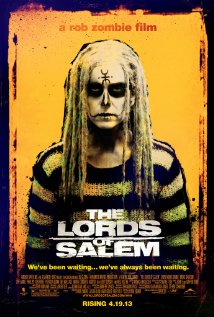
Review: ‘The Lords of Salem’

Hello there, readers and writers of Horror, and watchers of horror movies. Well, watchers of movies in general. My name is Rob Smales, and this is my first ever movie review. Never even tried one before. Jason, the webmaster of the NEHW website, asked me for one, though, so I’m giving it a shot. If it sucks, don’t blame me, blame him.

Or better yet, blame Rob Zombie.

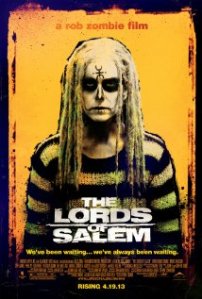
This is a review of Zombie’s new movie The Lords of Salem, from Alliance Films. Before I go off on  a rant here, I should probably tell you what kind of Horror movies I like — if  you don’t agree with my taste then you probably won’t agree with my review and can stop reading right now.Lords of Salem
Ready?

Friday the 13th (original, great!), Halloween (original, brilliant!), A Nightmare on Elm Street (original, I had to buy new pants!), Let the Right One In (the Swedish version, wonderfully creepy, fantastic idea!), The Woman in Black (Slow suspenseful build to get you looking over your shoulder — and THEN it gets scary!), The Ring (Still freaks me out), The Shining, The Birds, Psycho (the original), and the list goes on …

So, as you can probably see I like a touch of psychological horror over the Spatterfest. I also live in  Salem, Massachusetts, which is the setting for Zombie’s movie. A horror movie set in Salem? Should be a win-win for me, right?

Oh, one final thing. This review is going to contain spoilers, basically because I don’t know how to do it  without them. In fact, it’s going to be one big spoiler because I can tell you  in a couple of paragraphs what it took Rob Zombie one hour and forty-one minutes to tell me. Those who want to go out and experience the genius that is Rob Zombie first-hand, with no warnings or foreknowledge, there’s the door; we’ll catch you in the flip side. But hold on to the review — you can always watch the movie first, then come back and read the review later.

Alright, where to start …

This is the story of a nice little heroin addicted rock-n-roll DJ (played by Sheri Moon Zombie — wait, the  writer/director cast his wife in the starring role? Whew, no red flags here!) who works the night shift. One day she receives a box at the station containing  an unsolicited record with no title, just a note saying it is a gift from ‘The Lords’. She plays the record, the music doing something strange and mystical to  her and starting her down the path to possession by the Dark Lord Satan. Without her knowledge, of course. She’s guided on this path, again without her knowledge, by the spirit of a witch who was burned in Salem way back in the 1600s. She and her partners at the station play the record on the air where  (surprise, surprise) it’s a hit even though it sounds a bit like blocked pipes.  In a bull moose. Who has cramps. Once The Lords have a hit on their hands they  send another box to the station, this one containing free tickets, records and  posters so the station can host a local show for The Lords, which they do, even  though they have no contract and have never talked to, nor even seen, The Lords … because that’s just how things are done in the real world, right?

Anyway, the concert begins,  the music somehow being performed by the coven of witches that burned alongside  the witch who has been haunting Heidi, our leading lady. The coven has  apparently been summoned by Heidi’s landlady and two women she claims are her  sisters. The whole thing culminates in Heidi giving birth to a … uh .. a thing that looks a  bit like a Jumbo Shrimp that’s gotten into former Governator Schwarzenegger’s steroid stash.

Okay. Pros:

Though the film starts off somewhat cheesy, with a prologue set in the 1600s filled with naked dancing  witches, it slips almost effortlessly into modern day Salem and a naked DJ. As a  Salem native it was kind of neat to see things and places that I pass by on a daily basis in the film, and I have to admit the acting was not terrible. Okay, not too terrible.

The middle of the story, the haunting portion of our program, was actually pretty good. There was some nice camera work, a terrific dose of creepiness, a good build-up of suspense,  and even a couple of little “boo” moments where there were audible gasps from the audience.

Here, I thought, he saved it! All he has to do is build things in this vein and he might be able to make an impressive recovery!

Cons:

The last third of the film. Seriously, after making this creepy comeback within the movie you are somewhat unprepared when Zombie drives the plot right off the rails into an almost violent shift from scary and serious to something so over-the-top it actually becomes funny. Rather than trying to make any sense of what happens, I’ll simply list off some of what I consider the low points of the film, most of which happen in the later third of the action

  • The name of the film, The Lords of Salem.

The witches in the film were named “The Lords” way back in colonial Salem by the man who was trying to root them out … because it is only natural that someone would have referred to a group of women by such a masculine name, what with the Puritains being so open and fun-loving about things like gender.

  • Thanksgiving Day Satan.

When I think of Satan, The Father of Lies, The Prince of Darkness, the fallen Angel the Hebrews named “the Enemy,” I don’t think I have ever, ever, thought of a four-foot tall, succulent, crispy-skinned, juicy, cooked turkey with a vaguely human head. Apparently Rob Zombie does. I’m sorry, Mr. Zombie, no disrespect intended, but do you honestly think the Lord of All Evil should make the audience suddenly crave mashed potatoes and cranberry sauce? What was undoubtedly supposed to be a terrifying set of scenes really only made me hungry … and aware that it’s seven months ‘til Thanksgiving. Thanks. Thanks a lot … but, damn it, that Satan looked tasty!

  • Demonic Clergy masturbating day-glow strap-ons.

Okay …   this is a weird one. Faceless people strike me as creepy right off the bat —  the Terrible Trivium from “The Phantom Tollbooth” gave me nightmares as a kid. Faceless clergy in Hell … yes, creepy, and potentially scary depending on what they’re doing. This started out as a good idea, I think, but when what you have them doing is sitting in a group and facelessly beating the bishop (har-har) and the weasels they’re whipping happen to be somewhat floppy rubber penises in all the colors of the day-glow rainbow, well then what you get is an entire theater full of people all bursting out in laughter at the same time. That’s what you get, trust me. I was there and that’s what we did. Hell, I’m chuckling right now just thinking about it.

  • Where was the destruction of the World/Salem/Whatever at the end of the flick?

After all the threatening and posturing, after going through what was supposedly a terrible ordeal (aside from Turkey Satan and the Attack of the Day-Glow Dildos, of course) … nothing happens. There is no fire, there is no brimstone, there is  no destruction. Even Heidi seems to be happy at the end, suggesting the existence of some sort of Rohypnol of Evil. I want my destruction!

  • Naked women.

I  know, when was the last time you heard a guy complain about women taking their clothes off, right? Well, for me it was last Wednesday while I was watching this movie. When the DJ sleeps, she’s naked. Whenever there is  witchcraft they get naked. The ghost haunting the DJ is naked. The women who   hear the constipated moose music get naked. According to this movie every woman in Salem is just naked, naked, naked. I grew up here in Salem. I was a teen-ager in Salem. If there was some odd community of women who would just peel off whenever they heard a drum-beat then I’m pretty sure teenaged me, also known as The Human Hormone, would have found them and developed a one-man-band act so good it would have kicked the ass right off anything you see on American Idol today! All in all, it was more than a bit much. When,   toward the end of the movie, a group of women start shedding clothes and the 20-ish guy a couple of seats down from me shouts “Oh, come on!,” then Mr. Zombie, my friend, you’re doing it wrong.

Overall  Opinion:

The thing that annoys me about this film is that the middle portion is so comparatively good. It’s not  great, but it’s really pretty good. It’s like Rob Zombie was just showing us he could do it so we’d be more disappointed when he didn’t. What he did instead was make a film that’s going to be different things to different people.

If you’re a serious Horror movie buff who isn’t happy unless you’re having the pants scared off you, you might want to give this one a pass. The laughter at the end will only annoy you.

If you like the gore-fest,  then a lot of this movie will seem slow to you. There are a couple of nasty  scenes (it’s like Rob Zombie just couldn’t help himself) that try to make it up to you, but it probably won’t really be enough.

If you like the suspenseful  thriller, then this is almost for you… but winds up  being more of a tease than anything else. You’ll walk out of the theater bemoaning all that the film could have been.

If, however, you’re someone who occasionally likes to watch a movie just to make fun of it, as I sometimes  do, then we have your Golden Ticket right here.

There. My first movie review. Did you actually read this far? Did you laugh at the stuff up there? If you did, then this movie might be for you.

Okay. I’m going to go read up on how to actually write a movie review and see just how far from the norm I got with this one.

Until next time.
My Trip to Haddonfield

My Trip to Haddonfield

By Rob Watts

As a fan of many classic movies, I’ve had the pleasure of visiting a great deal of filming locations to those films. As a child I got to swim at the beach from Jaws in Martha’s Vineyard. I had the pleasure of visiting The Amityville Horror house in Toms River, New Jersey. Heck, I live within ten minutes of various movie locations in Boston where such films as The Town, The Departed, and Good Will Hunting were filmed. My absolute favorite location visited however was South Pasadena, California where the majority of John Carpenter’s HALLOWEEN was filmed.

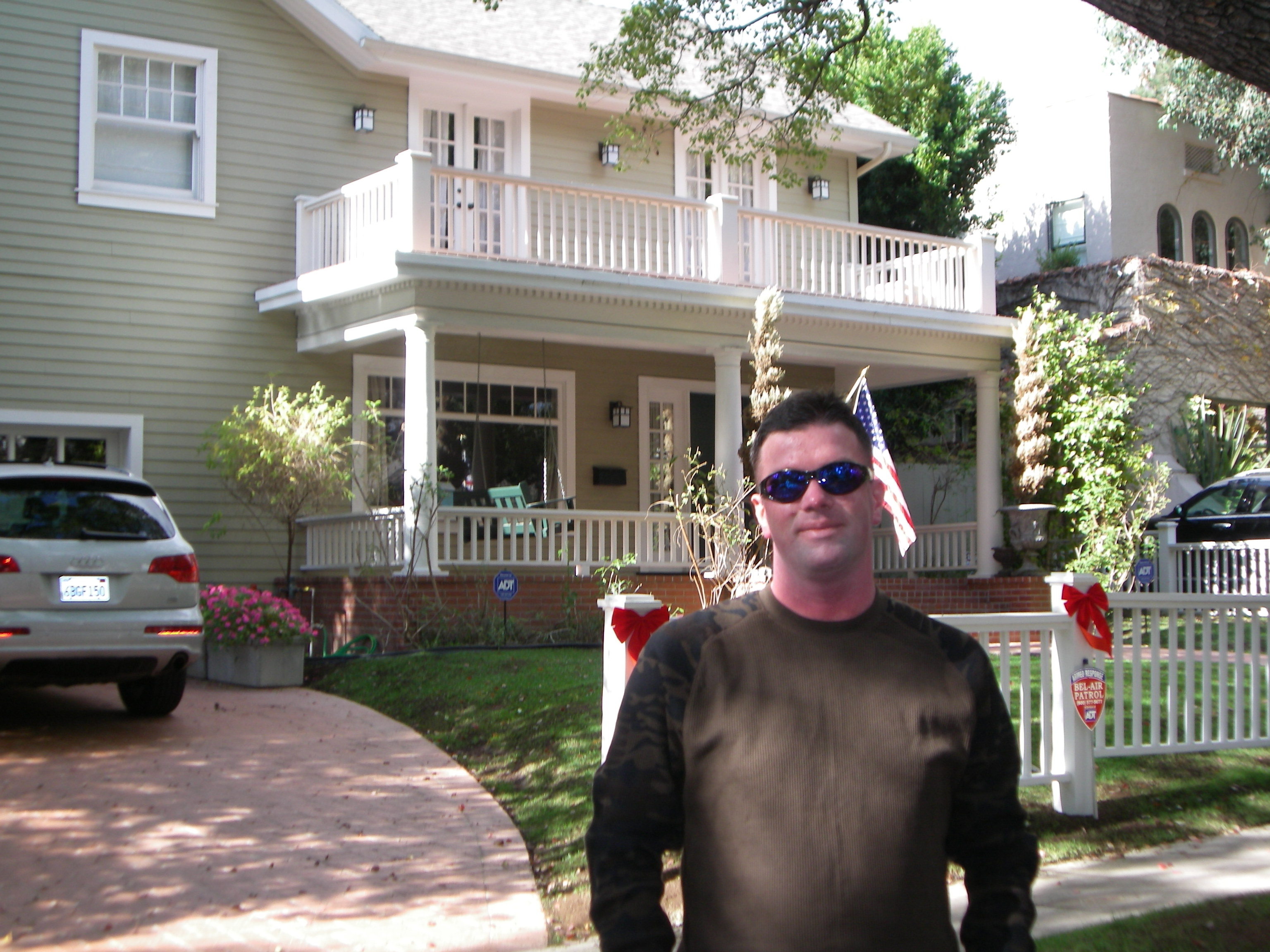
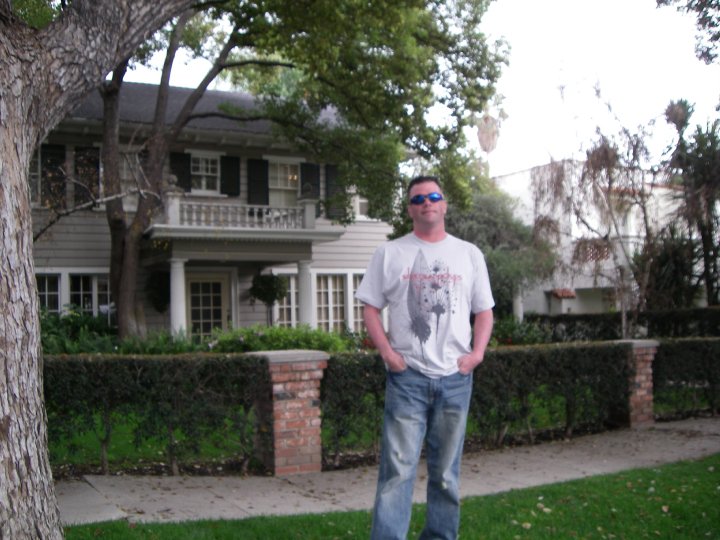
Rob Watts in front of The Wallace home where Laurie’s friend babysat. Photo by Shannon Watts.

Unlike a lot of filming locations, the neighborhood of South Pasadena was used primarily “as is.” There was very little film trickery involved as the town of “Haddonfield” had (has) a charm and beauty of its own that needed very little set dressing. Aside from bags of painted leaves being thrown around within frame to establish autumn in Illinois, very little else was manipulated. Upon first visit to the now iconic neighborhood, I was shocked to see just how much of it resembled that as it was in the film, even more than thirty years later.

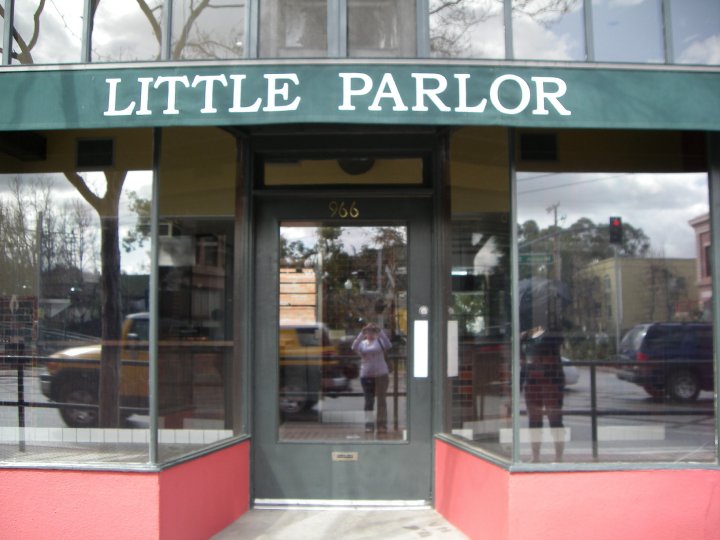
The hardware store (as it is today). Photo by Shannon Watts.

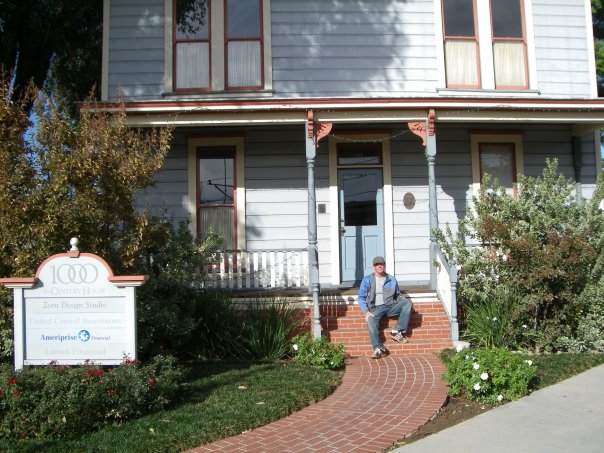
You don’t have to travel far around town to see most of the locations either, as much of the daytime hours scenes were all filmed within streets of each other. For instance, the street where Laurie Strode is walking to school after dropping the keys off at the Myers house (Meridian Ave), leads directly to the hardware store that was broken into later in the day. Incidentally, the actual Myers house was moved and restored directly across the street from the hardware store (now a picture framing store) and is currently a doctor’s office located at 1000 Mission Street.

Rob Watts on the steps of the Myers House. Photo by Shannon Watts.

If you walk back down Meridian Ave., you will be walking in the direction of the streets where Laurie and her friends walked home from school. You’ll want to look for Magnolia Street, Montrose Ave., and Highland Street. These are the streets which were most visible throughout the first half of the movie. Probably the most iconic location from the film, and believe me it’s still there, is the famous hedge where Michael Myers hid behind as the girls approached him. It’s a little tricky to find at first because most houses on the street have similar hedges, but if you travel down Montrose Ave, going through Oxley Street, you will stumble upon the giant hedge. Just make sure no one is standing behind it waiting for you.

The babysitting scene street . N Orange Grove Ave
The babysitting scene street. N Orange Grove Ave. Photo by Shannon Watts.

The last half of the film, where the girls were babysitting, was oddly enough filmed on the corner of Sunset Blvd in West Hollywood. Although you’d never know it from watching the film, directly behind the camera crew was a bustling nightlife. It was a bit odd for me to look in the opposite direction of the street from the film and find a KFC and Blockbuster Video (because I’m sure Laurie Strode could have run in there for help if she really needed it.) But that was the genius of John Carpenter. He had a knack for taking a side street of Los Angeles’ most happening neighborhood and have it appear as a modest suburban town in the middle of America.

The street where Myers drove behind the girls. Photo by Shannon Watts.

The two houses where Jamie Lee Curtis’ character and her friend babysat are located at 1530 and 1537 North Orange Grove Street, off Sunset Blvd. The home where Laurie Strode babysat looks almost identical as it did in the movie. The house across the street has been updated a great deal over the years but still maintains some resemblance to how it did in the movie.

Rob Watts in front of the Doyle House (Jamie Lee’s). Photo by Shannon Watts.

So if you are ever in the West Hollywood or South Pasadena area of California and you love the original Halloweenthen it’s worth a venture around the filming locations of this incredible film. Just be respectful to the homeowners and respect their privacy. And for God sake, if you see a guy walking around in a rubber mask, RUN!

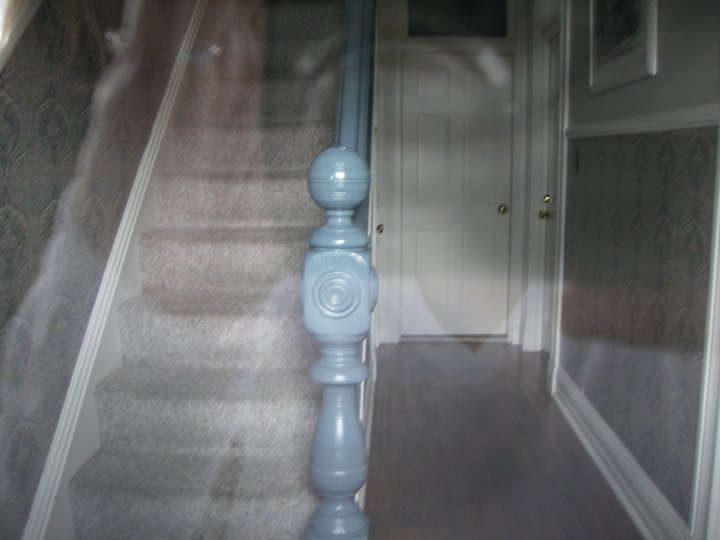
The creepy staircase in the Myers house. Photo by Shannon Watts.

Actor Talks about the role of Michael Myers in the Original ‘Halloween’

Actor Talks about the role of Michael Myers in the Original Halloween

By Jason Harris

Actor Tony Moran portrayed the 23-year-old Michael Myers in the original Halloween (1978).

He had a great time on the movie and compares John Carpenter to a computer because of the way he had every shot planned out.

“We never shot more than three shots for every scene,” Moran said. “He was pretty amazing.”

He considers Jamie Lee Curtis, his Halloween co-star, “really cool and really good.”

“[She] was a down to Earth chick.”

When asked if there were any scenes filmed that didn’t make it into the movie, Moran didn’t know of any.

Moran was asked to be in the sequel, but turned it down.

“I didn’t want to wear a mask,” Moran said about his reason for turning down the sequel.

The mask was uncomfortable and “really hot,” he said.

“You couldn’t breathe through it. The only holes through it were for the eyes.”

When asked how long he was in the mask on a typical day, he replied. “It seemed like forever.”

Moran received credit in the sequel since footage from the original was used in it, he said.

He doesn’t plan on seeing Rob Zombie’s Halloween remake.

“It’s a remake of me so I won’t watch it.”

Moran is proud to have portrayed the character of Michael Myers

Tony Moran

and wouldn’t want to be known for Freddy Krueger or Jason Voorhees, two other horror icons from Nightmare on Elm Street and Friday the 13th fame, respectively. He states “Halloween started it all …”

Moran has added producer to his resume when he took on that job when a guy messaged him on Myspace and sent him a script for Beg, a short film. It’s now a full-length movie starring his friend Tony Todd, P.J. Soles, and Michael Berryman, who he got to be in the movie. Debbie Rochon is also in Beg.

He would love to work with director Martin Scorsese and actor Robert De Niro.

“They are brilliant.”

Moran will be appearing at The Nightmare Factory, located at 2 Museum Place Mall in Salem, MA. from Friday through Sunday.

Have You Heard of these Underrated Horror Films?

My Top Ten List of Most Underrated Horror Films

by Rob Watts

July may be a strange time of year to discuss low-budget horror films, especially when the summer blockbusters (none of which are horror films) are currently on our viewing radar. The summer months however, were always tailormade for horror treasure hunts in the video stores for my friends and I. You do remember video stores don’t you? We’d come from an afternoon at the beach with our girlfriends, straight to the video store and make a bee line home with some horrible movie such as The Evil Laughstarring one of Scott Baio’s older brothers. But not all of our impulsive rentals were disappointing. Some were in fact downright unwatchable, but many were undiscovered gems for us, especially in the days of Nightmare on Elm Street Part 36 and Jason vs. Godzilla. Wasn’t there a Chucky goes to South Central Los Angeles at one point too?

Most of my favorite films have never spawned a sequel, hardly ever had stars with marquee value and sadly, never see the light of day on cable television. I’ll continue to argue up and down with someone when they tell me that the horror films of the 70s and 80s just don’t hold up to the films of today. When you talk to me about the benefits of CGI and gore over minimal production and stellar storytelling, I’m going with minimal production and stellar storytelling any day of the week. Which is why I am inspired to write this list. These films are by no means obscure although many have been forgotten about for some time and should be viewed and appreciated once again. If the new-school horror filmmakers grew up on these films, perhaps new horror films would actually be scary again.

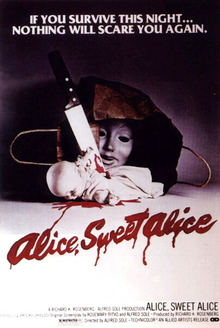
Alice Sweet Alice1. Alice Sweet Alice (1976) – This is the film that made me petrified of the translucent grinning mask. Set in Paterson, NJ during the early 60s, 9-year-old Karen (played by Brook Shields) gets strangled to death at her First Communion. Her jealous older sister Alice is of course at the center of suspicion although the actual killer is the last one you’d expect. This film was rather unique for its time as you hardly ever saw young children being murdered on-screen. With the exception of John Carpenter’s Assault on Precinct 13 that same year, I can’t really remember many films that crossed that Hollywood taboo. This film was actually theatrically released three separate times under three different titles due to Brook Shields’ ever-growing popularity after this film was made. Communion in 1976, Alice, Sweet Alice in 1978 and Holy Terror in 1981. Alice, Sweet Alice has remained the official title since then. If you haven’t seen this classic 70s flick, check it out. It has everything, a bitchy jealous sister, a fat creepy landlord and of course the horror movie’s best friend, the Catholic Church. How can you go wrong?

2. Patrick (1978) – This creepy Australian horror flick freaked me out for months after first seeing this. Patrick, who murdered his mother and her lover in the bathtub by way of electrocution, falls into a coma and his only way of communication is by electronic typewriter via psychokinetic powers. Although he is completely written off as nothing more than a catatonic vegetable, he can still murder anyone who crosses him. The thought of Patrick lying still in that hospital bed with his eyes wide open is still enough to keep me awake tonight.

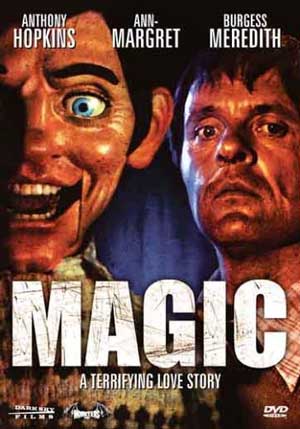
3. Magic (1978) – A movie about a man and his dummy. Ventriloquist Corky and his foul-mouth dummy Fats are onMagic the road to stardom but when Corky feels the pressure of showbiz, he retreats to the secluded Catskills where he reunites with his high school crush. Fats however does not enjoy competing for Corky’s attention and soon talks Corky into “getting rid” of the people in his life that could potentially separate them from each other. The dummy, Fats, is just unsettling in every way. This was another film that made it impossible to sleep with the lights off after viewing it for the first time.

4. He Knows You’re Alone (1980) – Let me preface this by saying that this was by no means a great film, but rather an enjoyable viewing with enough suspense and cliché scares to make it worth your while. Basically it’s Halloween (1978) set in Staten Island, NY but the killer doesn’t wear a mask and the storyline is nowhere nearly as incredible. The victims aren’t babysitters, they are brides-to-be and it features the debut appearance of a young Tom Hanks. But hey, don’t let that stop you! I will say this though; there are two things about this movie that fascinate me to this day. One, the fact that Tom Hanks is in this movie actually doesn’t ruin it for me. It’s not like I watch it and say to myself “Run Forest, Run!” as the killer approaches. Two, this movie has a made-for-TV sort of vibe to it until the last fifteen minutes where one of the female characters takes a shower and shows her goodies, thus reminding me that I am indeed watching a typical 80s horror flick.

5. Are You In The House Alone? (1978) – For a made-for-television horror film, this one wasn’t bad. A suspenseful thriller about a teenage girl who’s been receiving anonymous letters that say I’m watching you and of course phone calls where a sinister voice on the other end asks are you in the house alone? Of course she is which adds to the suspense factor and naturally any teenage girl watching this film would have been scared out of their wits back then. Unfortunately it just doesn’t hold up in today’s caller ID world so anyone under the age of 30 probably wouldn’t appreciate this as much. I would like to point out that after watching this again recently, I’ve come to realize that Dennis Quaid, who plays one of the classmates in the film, is just a strange looking dude. There’s just something not right about that guy. The other thing is Blythe Danner (Gwyneth Paltrow’s real-life mother) who plays the protagonists mother in the film, is at that point younger than Gwyneth Paltrow is today. Much better looking too if you ask me, but that’s just how my mind works when I’m watching movies. Sorry.

6. Stranger in the House (1978) – Another made-for-television gem starring Linda Blair and Lee Purcell and directed by Wes Craven. A pretty simple plot where Rachel (Blair) and her family invite Rachel’s cousin Julia (Purcell) to come live with them as Julia’s family died tragically in a car wreck. Things seem fine at first until Julia becomes jealous of Rachel, then of course strange things begin to occur in Rachel’s world. If you don’t mind simple storytelling and a rather predictable plot then you’ll probably enjoy this lost classic. Hey, it was directed by Wes Craven after all.

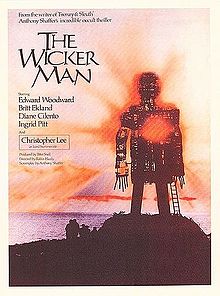
The Wicker Man7. The Wicker Man (1973) – By no means do I assume that I’m exposing you to films you’ve never seen before and The Wicker Man is certainly no exception. If you’ve seen this film, you absolutely know how incredible this is. Not to be confused with the horrendously bad Nicolas Cage remake, this original version blended horror, mystery, Christianity and Paganism into one dark psychedelic musical. Filmed in Scotland, a police officer from the mainland flies out to a mysterious isolated island inhabited by bizarre followers of Celtic Paganism. He’s in search of a reportedly missing young girl but he soon discovers the girl in question might not exist, prompting him to investigate just how bizarre the island’s inhabitants really are. This film is more of a psychological thriller with a lot of psychedelic influence. The cinematography is flawless as the isolated island is as much a character in the film as the actors. Speaking of actors, did I mention that Christopher Lee plays the antagonist? Enough said.

8. The Hearse (1980) – This haunted house film dangerously teeters on the “it’s as cliché as you can get” category, however, if possessed house stories tickle your fancy then you could probably do a lot worse than this. In this film, Jane, a middle-aged woman inherits a house in the county from her deceased aunt who was believed to have practiced witchcraft. Baring a striking resemblance to her aunt, Jane is looked down upon in her new community and must contend with several strange occurrences in her new home (doors slamming shut, music boxes playing on their own.) The worse occurrence is that Jane gets followed by a ghostly hearse at night on the road home. The very hearse that is believed to have carried her witchcraft practicing aunt straight into Hell. For a film, that is over 30 years old, this one still has a chill factor to it, provided you’ve never seen it before.

9. The Strangers (2008) – I know I’ve pronounced the contemporary horror movie genre dead and I’ll still stand by that, however, every once in a while something comes along that reminds me why I started watching horror films in the first place. Suspense and tension. The Strangers had plenty of those two elements. The only caveat to this film is that it’s a one-time viewing experience to gain its full shock value. After that, the scares are watered down because you know exactly what’s happening. But upon viewing this film for the first time, you’d agree with me that this is one suspenseful ride. In short, a young couple arrives at their summer home in the country very late at night. They get a strange late-night knock on the door from a girl looking for someone who doesn’t live there. She is turned away and the guy decides to take a ride to the store to run an errand for his girlfriend. While alone, the mysterious girl knocks on the door again asking for the same person. She gets turned away again but it’s revealed (to the viewers) that masked strangers have entered the home unbeknownst to the girlfriend. Even though this movie has a few moments where you ask “why would you run that way when you should go that way?” it’s loaded with suspenseful unpredictable moments that keep you on the edge of your seat. It starts off very slow-paced but it definitely builds tension leading up to the action. Remember, this film only has shock value the first time you watch it, so turn the cellphones off and don’t allow yourself to be distracted.

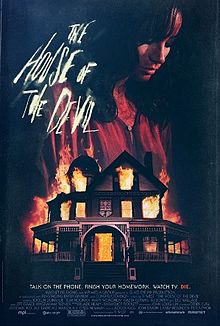
10. The House of the Devil (2009) – I have to hand it to director Ti West. He managed to make a horror movie look as though it was filmed in the late 70s and early 80s. Employing many elements of that era West created a gritty, suspenseful film about a female college student babysitting in a creepy old house for evasive homeowners. It falls on the evening of the lunar eclipse and the mysterious homeowners have something other than dinner and a movie on their agenda for the night. This is definitely worth watching if you’ve never seen it. The retro stylized filmmaking approach alone will make you reminisce over the scary movies we all watched on our couches back in the heyday of horror.The House of the Devil

A Promise of Violence

VOYANTS: The Promise of Violence in Seeing and Being Seen

by Bracken MacLeod

What I apprehend immediately when I hear the branches crackling behind me is not that there is someone there; it is that I am vulnerable, that I have a body which can be hurt, that I occupy a place and that I cannot in any case escape from the space in which I am without defense—in short, that I am seen. – Jean-Paul Sartre, Being and Nothingness

________________________________________________

Every story I read or write involves a promise. It is the pledge that an author makes to the audience that they will be rewarded for their faith in the story. In romance, the promise is love. Mysteries guarantee the satisfaction of the unraveling of a puzzle. In horror, the promise that the writer makes to the reader is the he or she will evoke fear.

I understand the attraction of “subtle” and “atmospheric” tales; well done (and how I love them when they’re well done), they can produce a wholly satisfying sense of fearful dread. But I’d also say that even in atmospheric horror, the dread the reader feels is the result of the promise of what is being subtly revealed. And that pledge is exactly the same as it is for extreme horror. The deepest root of fear is the threat of violence. Just because someone doesn’t have whip welts on their back don’t think there hasn’t been violence. That is to say, all horror assures violence of some kind: physical, psychological, spiritual, etc. Without it, what have you got? A ghost isn’t scary merely because it is a ghost. Neither is a man holding a knife. Both must offer something to the reader to evoke fear.

To expand on an example given by Alfred Hitchcock, a bomb underneath a table is more terrifying if the people in the café carry on their conversations unaware of its presence while we, the viewers, know it is there. But the bomb is only frightening in the first place if three conditions are met. First, we must understand the underlying concept of a bomb. Since most of us possess an understanding of a bomb’s only purpose (destruction), we can leap into the conceptual future and imagine the result of the ticking timer reaching zero. The second condition is the story-teller’s willingness to make us believe that the device might actually go off. If we know the bomb’s a dud or the hero will always defuse it at the last second, it is simply not scary. Finally, and most importantly, is our ability to put ourselves in the place of people in that setting—to be present at the table with violence and death. Fear exists is the moment of transformation from the known to the lived—bridging the gulf between academically understanding danger exists and being in danger. Thus, the sine qua non of good horror, as I see it, is the transformation of the reader from subject (i.e., conscious observer) to object (i.e., victim).

In a horror story we want the babysitter to hide because we are vicariously experiencing events from her perspective.[1] As long as she remains an observer hidden from view behind slatted closet doors, the tension dissipates and we relax. Until she is discovered. The scariest scene to me in John Carpenter’s Halloween (to stray again from the written word for a moment) is when Laurie Strode believes she has defeated the Shape and collapses in the doorway of the bedroom from which she has just escaped. Behind her, perfectly silent, Michael Myers sits up and turns his head toward her … and keeps going all the way toward us. In this subtle breaking of the fourth wall, Carpenter assures us that being seen is the onset of violence.

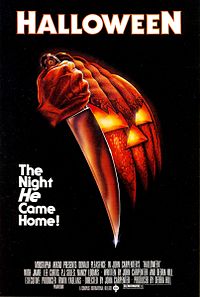
Halloween

Let me give a more concrete example. My wife and I are what I like to call shoe-leather tourists. That is, we like to see the cities we visit on foot, moving between neighborhoods without mediating our experience from behind the barrier of a cab or a rental car window. On a trip several years ago to Salvador, Bahia (Brazil), however, we were told that we could we not walk the neighborhoods between the hotel and the historic district without endangering ourselves. The hotel concierge assured us also, once at our destination, that we should stay on the main thoroughfares. As long as we could see shop signs, he explained, we were reasonably safe. Wander down a side street, however, and we would again be taking unnecessary risks with our well-being.

Taking his advice, we stuck to the main streets. But it is impossible to move in a city without at least passing those side streets. And it’s just as impossible (for us, anyway) not to look up them, curious what wonders or terrors await. Passing by a narrow alley in Cidade Alta, the Upper City, we paused. Half way down the alley, three men vigorously kicked and beat a fourth who lay motionless on the ground. It was a sobering experience until one of the men administering the thrashing looked up from the object of his wrath and made eye contact with me. Then the promise was made and it became a terrifying experience as I became an object in the gaze of another.[2]

Reflecting upon that moment, I came to understand in a visceral way (the known becoming the lived) the existential horror of a shift of perception. Years later and thousands of miles away, those men are still present with me. I’d had a direct experience dreading the shifting gaze of The Other. What was scariest about Salvador wasn’t its reputation for violence, but rather the actual in-context promise of it. The difference between being and not being a body in an alley for me was merely a matter of shifting observations and the promise of what may follow upon.

That experience, has helped me truly understand the blurring of lines between the observer and the observed and between voyeurism and engagement. Emotional and psychological detachment from someone else’s suffering—what Michel Foucault would call the “medical gaze,” the dehumanizing separation of the patient’s body from the patient’s identity—is anathema to good story telling and the frequent problem with all bad story-telling, extreme or atmospheric horror or in between. The beating heart of fear is found at the point where the wall between knowing and experiencing comes crashing down, leaving the observer exposed.

And it all begins with a look. I promise.


[1] The observer who identifies with the monster is either missing the point or is in it for a different kind of titillation.

[2] To finish the tale, we fled and found a sympathetic policeman with a smattering of English (not an easy task on either count) as quickly as we could, doing our best to describe what we saw and where we saw it before going on with our vacation.