Author Catherine Bell Discusses ‘The Children of Manson’ and More


By Jason Harris


Catherine Bell

Catherine Bell

JH: Your adventure in writing started in 2001. How did that come about?

CB: I had just started secondary school at age 11, and had always enjoyed reading in my spare time. In English classes, my passion for writing began to flourish, partially because of support from teachers, as well as at home, so it became something I enjoyed and felt confident in pursuing.

JH: The Cathy Stories came about from your time in school. Can you tell my readers how that came about, what’s it about and how long this work is?

CB: This book still makes me smile now, mostly because I get very nostalgic when talking about it. It was a fun piece to write, probably only 50 or so pages long, and was all about “Cathy” the main character, and her friends, who battled evil demons while having to crack puzzles and codes. It was all based in at school, too, so the mentors in the book were all based on teachers. It was a comedy, and it was my first attempt at writing for a particular audience.

JH: How did the opening of your first book, Whistler’s Travels, come about being published by Manchester Metropolitan University and why only the opening?

CB: This was a piece I submitted as part of a writing competition, and so I got it published that way. At that point I had only written the opening, so it was a good opportunity to test the water, and see if it was something worth following up [on].

JH: What inspired you to write your first book and what was the idea behind it?

CB: My first serious completed work was Eden from the Ashes. With it being my first piece, looking back I feel it is quite disjointed, so I will definitely be undertaking a  huge re-edit before it comes into the public domain. It was a really interesting project for me, as it allowed me to experiment and really understand the freedom of writing. I finished that book when I was around 18, so it will be good for me to have a look back, and try and develop some of the ideas behind it.

I was inspired to write it as I had suffered hugely from bullying, and as, at the time, I was a very shy, reserved person, I had no real outlet to express how I was feeling. This is where writing became a huge emotional support for me, and continues to help me alleviate stress as well as being a very enjoyable pastime.

JH: The title for Whistler’s Travels was changed to Eden from the Ashes? What is it about and what was the reason behind the name change?

CB: The book itself is a fantasy fiction, focused on a socially isolated character, who decides to leave the village he has lived in all his life, and break away into the unknown. The story is about him developing as a person, learning more about his interests and limits, and understanding how his interests and habits had been formed by his environment, not be his personal choice.

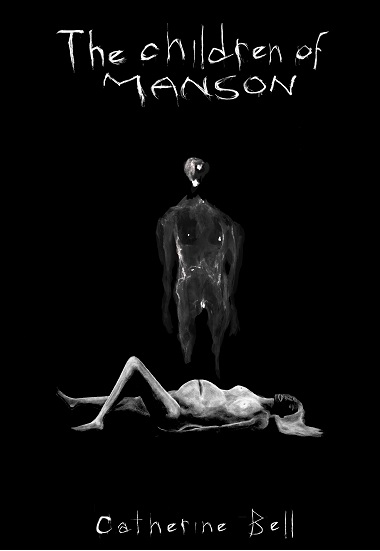
The title Whistlers Travels was never a serious title for me. It came about because I needed a name to reference my work, and that was a simple one. It kind of stuck, however, but once it was finished, I wasnt happy with that as a final title. It didn’t fit well with the storyline as it had developed, and didn’t really give an insight as to the meaningfulness of the book to me. Eden from the Ashes is much more fitting.The-Children-of-Manson-book-Cover1

JH: Your second work Nomed was also re-named. It changed to Apocalypse 2012, then to Man Down, then to The Children of Manson. What’s this work about and is there a story behind all the different title changes?

CB: The Children of Manson is a horror [story], which ties together terror, gore, and psychosis, with a subtle political undertone. It was a way of expressing some of my views about some real life issues as an undertone, while the predominant storyline was horror. It centres around Dee, a student who seeks comfort from her isolation at University from her flatmate Lily, and their friendship quickly blossoms into something more.

Unbeknownst to Dee, a sinister figure is watching her closely. He grows exceedingly paranoid as he tracks her movements over time, as he fears she knows about his own dark secrets. Underneath the home in which he is cared for, a maze of passageways are home to a cult following, vigilant in their tasks under Lloyd’s watchful eye.

Their aim? To prevent pregnancy, destroy fertility, and if necessary, will go to the very extreme to achieve their goals.

The reason for the many name changes was that the book underwent a huge re-edit, where the plot line massively changed. For this reason the first title was no longer relevant. I re-named it Man Down to continue the story, but again, wasn’t entirely happy with this new title either.  It was when I decided on the cult following as a major part of the storyline that I became set on The Children of Manson. There are also other subtleties in the storyline , for example the “Family” reference, that helped me decide that this was a most fitting title.

JH: You published The Sick & Sombre Tales of Sinister Town-Part 1 this past October. This was another work of yours to sustain a name change. Why the name change and why break it up into different parts? And how many parts will there be?

CB: The name change was to allow myself some flexibility as to the content. My focus for Part 1 was to give some background as to the characters and the general environment of Sinister Town. Initially there were 7 short stories, but I felt some were better placed in Part 2, so I needed to change the title to reflect that.

At the moment, I plan there to be 3 parts. Part 2 is well on its way to completion, and I’m already building some ideas for Part 3. Whether there will be further parts after that … we will just have to wait and see.

JH: What are the different styles and what’s the impetus behind this series?

CB: I’m planning for the three parts to have three different focuses, i.e. the first one was about building up the actual characters who live in Sinister Town, so the next part will  [focus] instead on an invader to the town, and the defense mechanisms the town uses to keep intruders out.

JH: Do you have a specific writing style?

CB: I think my writing style is quite distinguished, in that it is probably recognizable, but in saying that, I try to experiment with different styles depending on what I’m writing, and the type of atmosphere I’m trying to create.

JH: What genres do you write in?

CB: I write predominantly horror, though I am thinking of expanding in to fantasy/comedy, as I have bits and bobs still in the planning stages.

JH: Who is your favorite author/authors and what is it that really strikes you about their work?

CB: My favorite author is Stephen King; my favorite work by him was a joint piece with Peter Straub, called Black House. It is to this day the best book I have ever read in terms of fear. I remember vividly being too scared to turn the page, and even flipping forward a couple of pages first to steel myself into going back to read it.

That is what inspired me to write horror myself. I want to instill that feeling in others; I feel that the images the imagination conjures are so much more powerful than those fed to us by films.

JH: What books have most influenced your life the most?

CB: R.L. Stine deserves a lot of the credit for introducing me to the horror genre as a child (though I enjoyed all sorts of non-horror titles as well), as I would devour his books every evening after school.

Through my teenage years I did read some of  R. L. Stine’s more mature works, but quickly became enthralled by Stephen King, and have never looked back. In fact, I have two of his books by my bedside as I type this!

JH: What are your current projects?

CB: I am currently working on a new horror [story], called The Black Sheep. I am looking to create a piece that explores the deep emotional effects of bullying, and the characters in this book play out a physical expression of those effects.

JH: Where can readers find your work and find out more about you?

Please have a look at my website to find out more. You can also find me on Twitter: @TheCathyStories. On Facebook. I am also on Google Plus or on Amazon.

Queen City Kamikaze Happens this Sunday in New Hampshire (updated)


By Jason Harris


It’s February and the third annual Queen City Kamikaze is upon us once again. It’s one bright spot during this cold and snowy month.  The one difference this year is that this anime, video game, comic book, cosplay, sci-fi, and fantasy convention takes place on a Sunday. For the past two years, it happened on Saturday.

There will be over 25 vendors at this convention including Dandelion Studios, Books & Boos, and Harrison’s Comics.

Mark Wholley, one of the Four Horsemen who founded Anthocon, Northern New England’s only multi-genre literature and arts convention, will be at QCK for his second time to promote Anthocon. He will also be selling copies of Anthology, an anthology that debuted at Anthocon. He wants to make some vendor contacts and meet some artists, Wholley said.

“I like the show because of it diverse audience it draws in, It’s local to me and I like to support other shows when I can. I enjoyed last year so I decided to attend again this year,” Wholley said.

At the Books & Boos‘ tables, there will be six authors: Stacey Longo, Dale T. Phillips, Vlad Vaslyn, Tony Tremblay, David Price, and Gordon Bean. They are all members of the New England Horror Writers organization. These authors will be selling and signing their books. This will be Longo’s third time and Tremblay’s and Price’s second time attending the convention.

“I love this convention and meeting a younger generation of readers,” Longo said.

Along with selling new and used books, Books & Boos will be presenting two panels: Horror in the Movies (1 p.m. to 2 p.m.) and Where Authors Get Their Ideas (4:30 p.m. to 5:30 p.m.).

Horror In The Movies: authors Gordon Bean (Dawn of Broken Glass), David Price (Dead in the USA), Stacey Longo (Secret Things), and moderator Jason Harris will discuss the best and worst, darkest and most disturbing, scariest and silliest examples of horror on the big screen on the Horror in the Movies panel. From the golden age of Nosferatu to the modern-day Conjuring, this panel will cover it all. Questions from the audience are encouraged throughout the discussion.

Where Do Writers Get Their Ideas? Authors Dale Phillips (Shadow of the Wendigo), Vlad Vaslyn (Brachman’s Underworld), David Price (Dead in the USA), and moderator Stacey Longo (Secret Things) will answer the number one question writers hear from their readers: How do you come up with this stuff? From disturbing first dates to summer camp adventures gone awry, audiences will learn how the most innocent of memories and experiences can be turned into scary stories and best sellers. Questions from the audience will be encouraged throughout the discussion.

There is a third panel: How to Create, Publish, and Promote Your Own Comic, which will happen during the convention, but isn’t sponsored by Books and Boos.

The Queen City Kamikaze takes place at 1 Crusader Way in Manchester, New Hampshire from 10 a.m. to 7 p.m. on Sunday, Feb. 16. There is a $10 admission price.

Editor’s Note:
Author David Price won’t be able to attend the convention. A family issue came up.

New Hampshire Director in Search of Donations for Vampire Film


By Jason Harris


Writer and director Tim Morgan (author of The Trip), who lives in New Hampshire, has started a Kickstarter campaign to get his short film, My DreamGirl Was A Vampire, made. If he meets his goal, every backer who donates a $1 or more will receive a MP4 file of the movie.

Morgan’s impetus for My DreamGirl was a Vampire first developed in 1995 when he was working on a vampire movie that he wanted to direct as a feature, but didn’t have access to actors or the equipment.

“I wound up putting it down because the short was beyond what I could do with what I had access to at the time,” Morgan said.

In 1996, Morgan wrote a feature with a vampire named Stefanie as a “directed study in college,” he said.

“I had fun with it and it was the best I could do at the time, but it was a bad rip-off of The X-Files. There was something about Stefanie’s character that would stick with me, though, and I tried a couple times over the years to reboot her, but it never seemed to work.”

This past fall, Morgan wrote a new vampire short after meeting a couple of new actors who he had never worked with before.

“The early draft was darker and edgier but it just didn’t feel right. So I put that aside, thought about bringing Stefanie back, and wrote the script that became My DreamGirl Was A Vampire.”

The vampire, Stefanie, will be portrayed by New Hampshire actor Kimberley Miller. Miller considers Stefanie to be a “complex character.” It’s the real emotional challenge of the character that intrigued her, she said.

“She is a vampire, but with some very human characteristics. She wants a way out and is very vulnerable/desperate. She doesn’t want to be a vampire. A majority of vampire stories are about the turning and the power and blood lust,” Miller said.

Morgan said that he’s trying to put an original spin on the genre, but knows he has to adhere to certain things that the “rabid fans of the genre” would want.

“I love this story because it’s a simple/sweet story about a girl (who happens to be a vampire) who wants a second shot at life and the quirky cute guy who can help her. It is more about making Stefanie real and sympathetic to the audiences than focusing on the vampire piece,” Miller said.

The other character in My DreamGirl Was A Vampire is museum employee Grant portrayed by another New Hampshire actor, Billy Pomerleau, who is looking forward to bringing this role to life.

“[Grant] has a personality that, in my opinion makes him very likable. He’s a bit of an ‘everyman’ and I’ve always rooted for the reluctant hero types. Not to mention the opportunity to work opposite the devilishly beautiful Kimberley Miller. I mean, who could say no to that,” Pomerleau said.

There are 18 days left in Morgan’s campaign to raise $2,500. So far, the campaign has raised $97.

“If you’re looking for a fresh voice in the vampire genre, with a new approach, this is for you,” Morgan said.

Morgan hopes the campaign is successful so he can film, My DreamGirl Was A Vampire, and bring it to film festivals. The biggest festival is Shriekfest, which he was at in 2003 with one of his scripts, Morgan said.

Along with every donator receiving a MP4 file, there are other giveaways including PDF files of the script, DVDs of the finished film, links to a person’s website, t-shirts, mentions on the short film’s official page, and producer credits.

You can find and donate to his campaign on Kickstarter here.

Author Travels State for ‘The Signs of Connecticut’

By Jason Harris

Tom Fatone

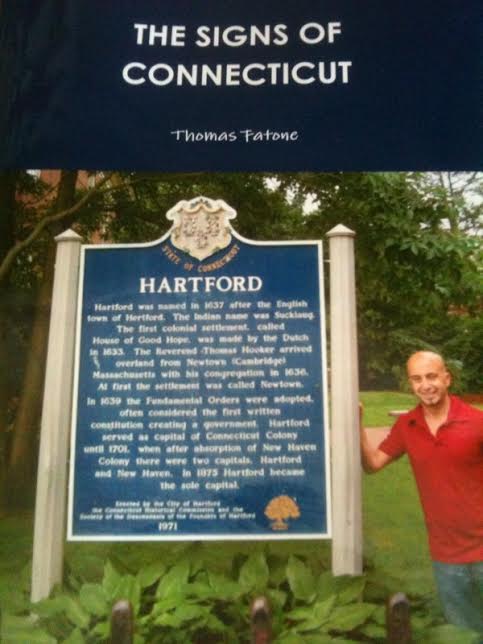
Author Thomas Fatone took over 15 years to complete his book, The Signs of Connecticut. It took him 13 years to drive around the state taking the pictures of all the blue town history signs and another two years to write the book, he said.

1. What was the impetus behind the book?

My impetus behind the book was my interest in history within the state I live. I also did not have much money to travel to far places when I was younger, so I decided to make Connecticut my own little playground, traveling to all corners of  our great state. The CT Post did a story about me when I was 50 signs in. They said “give us a call when you write your book.”

2. What year did you start the project? How old were you at the time?

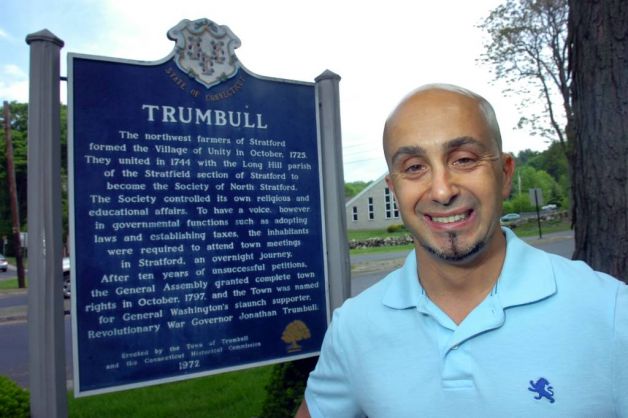
My project began with my 1st picture of the Trumbull Sign in 1997. I was approx. 29 years old at this time, still had hair and was wet behind the ears. It had taken me a lifetime to finally stop and take a picture of this 1st sign. From there on in, I was hooked!

Photo courtesy of the Connecticut Post.

Photo courtesy of the Connecticut Post.

3. Did your job as a traffic coordinator for the Department of Transportation inspire this project? And did having the job help you in your project at all?

Working as a traffic coordinator helped me a great deal when it came to this book. My job has me dealing with maps often. So by working with the maps, it helped me a great deal in getting familiar with the roads before they were traveled.

4. What were some of the most memorable towns in Connecticut that you visited?

This is a question I receive often. There is not one favorite town, but I like to go with my top 5. They would be, in no order: Washington, Ridgefield, Milford, Woodstock and Branford. This list could continue, but these are the most memorable.

5. Since you will be speaking at Books & Boos in Colchester in March, did you learn anything about Colchester when you took a picture of the Colchester sign? 

The thing that’s stands out about Colchester is that it seems all the state roads in the state come together here at the town green. I also, learned about legendary Harry’s, as it was right down the road. Of course, I stopped for a hot dog and shake.

6. Where is the Colchester sign located?

The Colchester sign is located on its town green, like most of the 169 signs. But not all.

7. Did you learn anything about the different Connecticut towns during your travels that you didn’t know about them? 

There are so many things I learned about CT while traveling the state and taking the pictures of the signs. This is why I wrote this book, as I wanted to share my experience. Some that stand out are that the highest point of the state is in Salisbury, visiting the Book Barn in Niantic, and that Mystic is not officially one of the 169 towns. How about getting books for buying a meal at the Travelers Restaurant in Enfield?

8. Since you have been to all 169 towns of Connecticut, have you thought about writing a book about what each town offers and what people can find there?

In my book, I not only have taken the pictures of the blue town history signs, but I have also documented my experience as well. It’s two stories in one. You have the history of the town itself based on what is written on the sign. Then you have my experience, based on a place I ate, a person I met, a picture I took and anything off the beaten path.

9. Do you have any current projects?

At this time, I have no current projects in mind, though I would love to do another book. Maybe boroughs of Connecticut, more signs of Connecticut or anything Connecticut. I love this state!

You can order The Signs of Connecticut here. You can also check out the book’s Facebook page here.

Thomas Fatone will be at Books & Boos with his book, The Signs of Connecticut, on Saturday, March 8, from 5 p.m. to 7 p.m. He will talk about his experience working on the book and answer any questions about this endeavor.

The Les Daniels Blog Tour, Day Two

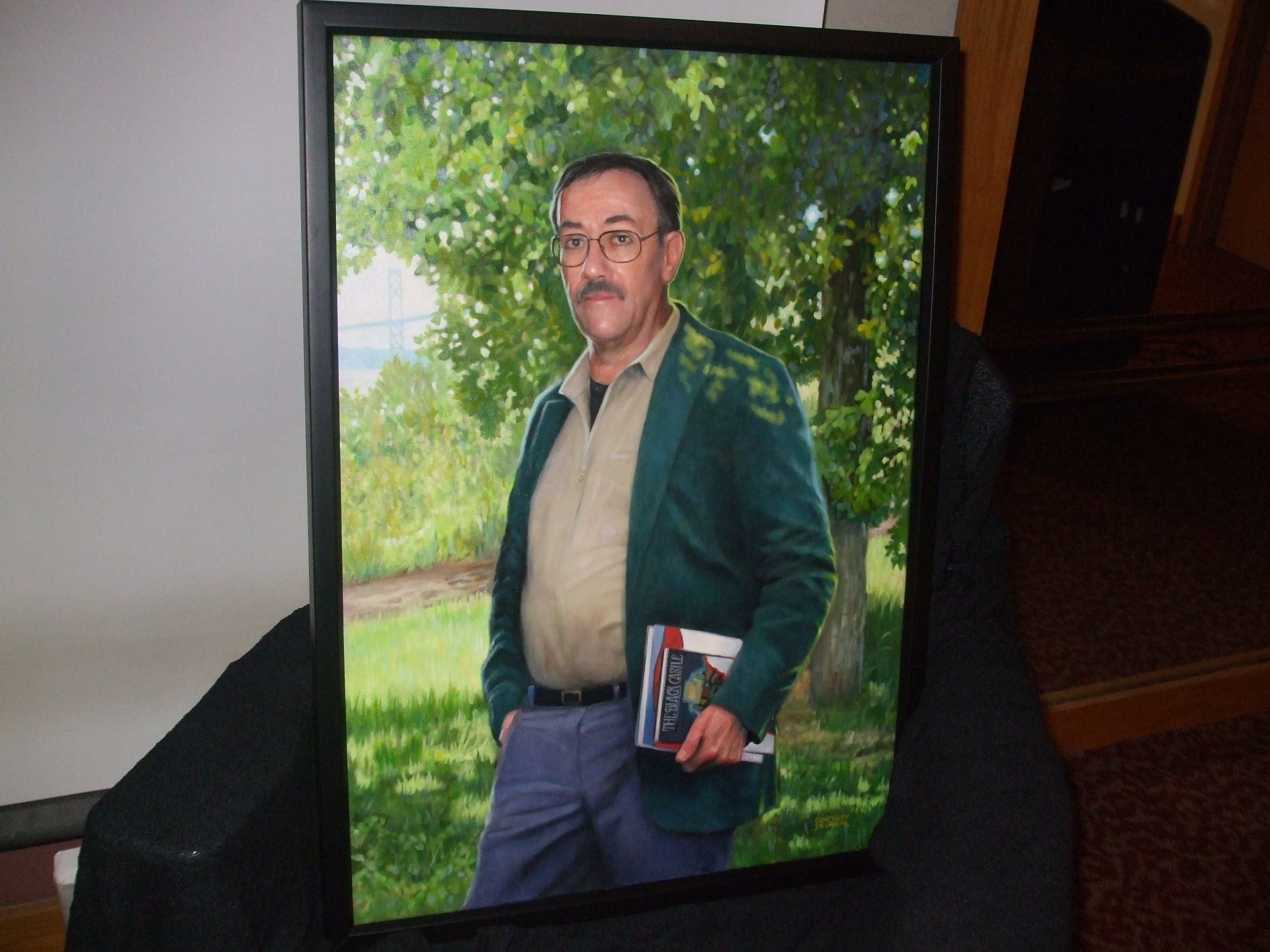
A portrait of the late Les Daniels, who died last November, done by Artist Cortney Skinner.

A portrait of the late Les Daniels done by Artist Cortney Skinner. Photo by Jason Harris.

The Les Daniels Blog Tour by Matt Bechtel of Necon E-Books, which started at Brian Keene’s website last Thursday, continues today at the New England Horror Writers’ website.

Bechtel’s entry today is  titled, “Location! Location! Location! Les Daniels’ Place as an Icon of New England Horror.” He writes, “Above all else, it’s Les’ ties to New England horror that establish him as a legend in the community. After all, as I mentioned, the man lived most of his adult life on Benefit Street in Providence, literally blocks away from 135 Benefit Street, a.k.a. “The Shunned House” which helped inspire H.P. Lovecraft’s short story of the same name. His contributions to and influence upon the Necon Convention would take pages upon pages to list …” You can read the entire blog entry here.

The entire blog tour schedule can be found here.

Taking a page from Patty Cryan’s Blog. I will explain my involvement with the New England Horror Writers (NEHW). I have been a member of the NEHW over five years. It started with me putting together the organization’s newsletter every month. From newsletter editor, I became the Directory of Publicity, which is the position I held from October 2010 until April 2013. During this time, I was promoting the organization through numerous events from conventions to craft shows. Throughout that time, I continued putting together  the newsletter, The Epitaph. The old NEHW website is archived on this site, Jason Harris Promotions. This archive includes the past newsletters as well.

-Jason Harris

An Interview with Writer Rod Labbe

by Jason Harris

Rod Labbe has been a freelance writer since 1977. His work has appeared in such publications as Fangoria, Gorezone, Starlog, Famous Monsters of FilmlandMuscle & Fitness, and Autograph Collector magazine. He has written his first novel, The Blue Classroom, which is a ghost story and will be published by Samhain Publishing this coming May. He is currently working on his second novel, which will be published by Samhain in 2015.

Rod Labbe he set of Stephen King's Graveyard Shift.

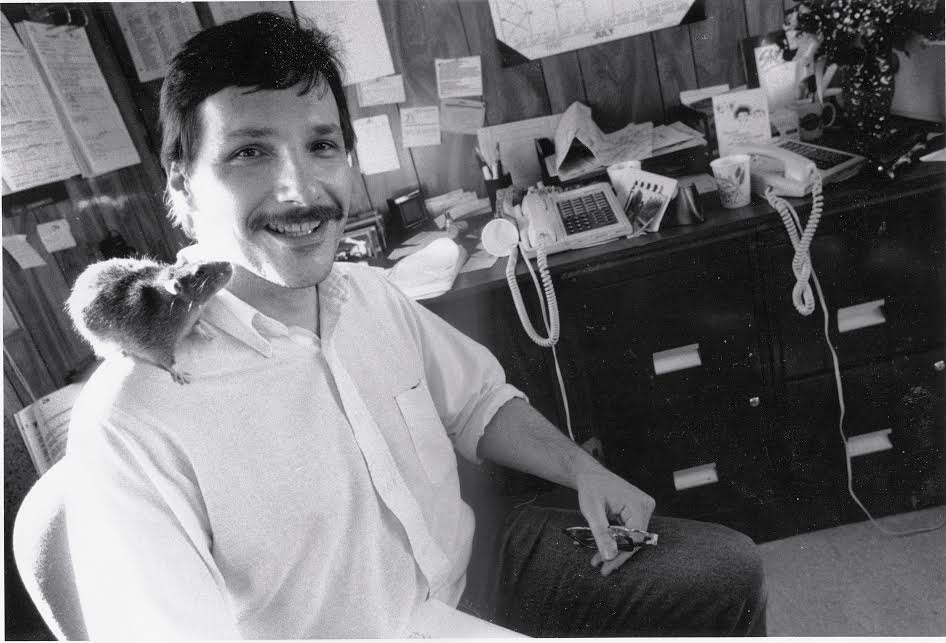
Rod Labbe on the set of Stephen King’s Graveyard Shift.

JH: When you started freelancing in 1984, what publications did you write for?

RL: My writing/freelance career actually began in the fall of 1977, not 1984. That’s when I landed a work-study job as a reporter with The University Free Press weekly newspaper (University of Southern Maine). I was a sophomore, totally green, and had never written anything outside of short stories that were strictly for my own enjoyment. What I lacked in cred, however, I more than made up for with dedication, discipline and determination (the “three Ds,” as I call them). From 1977 to 1981, I contributed articles every week to the UFP, ranging from theatre reviews to editorials to sports pieces and pretty much everything in-between. No limits! I also found time to edit the campus literary magazine, The Presumpscot Review, published annually. All of that was great, a wonderful hands-on training ground–even more significant, since I’ve never taken a Journalism course, not one.

I continued this kind of writing (including editing The Maine Review, a literary magazine at the University of Maine) as a graduate student at the University of Maine in Orono. During the summer of 1984, I stepped away from the collegiate environment and submitted work to an outside publication. That was for a magazine called Mainely Local, published out of Central Maine, where I lived. I’d seen an article about it in my hometown newspaper, was intrigued, and gave the editor a call. We met the next day at a local eatery/bar. She told me about her publishing plans–really quite ambitious–and welcomed me aboard as a writer. The one glitch? No pay, just comp copies. That was ok; I realized the exposure and experience would be invaluable. I stayed with them for a year and a half (while in school and also following graduation), sometimes generating articles on my own, but mostly doing ‘filler’ and ‘fluff’ assignments–which I hated.

From tiny acorns mighty Oaks grow, I’ve found. That stint with Mainely Local gave me the gumption to seek out other venues–which I did in March of 1985, two months prior to leaving the University of Maine. That’s when I sent out an interview to MuscleMag International (a bodybuilding monthly) and a short story, entitled “Pumpkin Head,” to Footsteps magazine (small press, non-paying). Lo and behold, both were accepted! And MuscleMag paid me $100! I was on my way!

JH: Do you have a specific writing style?

RL: Hmm. If I had to pinpoint a “style” for my freelancing–which has been and still is 95% non-fiction–I’d say ‘conversational.’ Interviews can be tricky things. A sense of comfortable ease should underscore the dialogue. Almost from the get-go, I settled on a laid-back, conversational style. It serves to present the individual profiled in a ‘down to earth’ manner; the reader will know this is a flesh and blood human and not merely an unreachable celebrity. I must also mention that I do all of my interviews over the phone so what’s transcribed is definitely ‘conversational.’

As for fiction, I’m not sure if I have a “style,” per se. I just write, edit, polish and tweak! Constantly! I was educated in a time when there was great emphasis on sentence structure, good grammar, spelling skills, etc.; therefore, I utilize all of that when I write. I never emulate nor “copy” any other writer; find your own voice–not necessarily a “style,” but it should be something you, as the writer, enjoys wearing like a comfortable sweater.

JH: You have written for genre publications such as Fangoria, Gorezone, and Starlog in the past. What were some of the topics you wrote about or what was the subject of your articles?

RL: Writing for Fangoria was my dream. I can still remember the first issue I ever bought–#9, featuring that great Motel Hell cover, on Friday, October 31, 1980. Yep, Halloween! I sat in my sun-washed dorm room, read the book from cover to cover, and drifted off into reverie. Ah! Someday, I told myself, I’m going to write for Fangoria. But how? I had no cred and no contacts, outside of living in Maine, the same place of [Fangoria’s] patron saint, Stephen King. At that point, I’d only been published by my campus newspaper!

I’m a believer in never letting go of your dreams, and if you pursue them doggedly enough, eventually they’ll become realities. That happened for me in 1986, when I sold my first article–an interview with novelist John (The Legacy) Coyne–to Fango. The next year, 1987, I sold another small piece about Maine author Rick Hautala, who sadly passed away last year. I finally ‘hit it big’ when I landed a star-making assignment: visiting the set of Stephen King’s Pet Sematary (1989), in Maine. That generated four articles and led to more film set visits (all King- related: Graveyard Shift, The Langoliers, and Thinner). Gorezone surprised me, since I thought my interview with Pet Sematary’s director, Mary Lambert, was going into Fangoria. Instead, it ran in Gorezone and scored me my first cover!

The Starlog piece, on Steve Reeves–famous as the cinematic Hercules–was submitted cold, via an e-mail to the editor. After Stephen King’s Thinner was filmed in Maine the fall of 1995, I took a break from Fangoria. Little did I know that break would stretch fourteen years!

My path led back to Fango in 2010. Editor Tony Timpone had stepped down, and a new editor–Chris Alexander, formerly of Rue Morgue–took the reins. I sent Chris an e-mail and introduced myself, which opened the door to my second stint. Chris is great. He’s supportive, energetic, enthusiastic and smart. I have his ear, and that has created a strong bond between us. He’s given me some choice assignments, too, like covering Tim Burton’s Dark Shadows movie and a two-part retrospective on Pet Sematary (currently running). Alas, prior to Chris’ arrival, Fangoria had fallen on hard time, but now, it’s reclaimed the crown as America’s premiere publication dealing with ‘horror in entertainment.’ I’m glad!

JH: Were you always a freelancer or did you work as a staff writer for any of the the magazines that you wrote for?

RL: I’ve always freelanced. In the beginning, I gladly accepted work that was assigned to me and bit the proverbial bullet. That’s all part of the game of moving up on the ladder. Don’t get me wrong, it’s great having the financial security of being ‘on staff.’ Creatively, though, I’d find it incredibly stunting … unless I was editor.

JH: What were some of the articles you wrote for Muscle & Fitness, MuscleMag International and Iron Man magazines and Men’s Workout about?

RL: I got into the fitness/bodybuilding books quite by happenstance. When I edited The Maine Review, I interviewed two people who’d gone to Maine and ‘made it big’ in the outside world. One was novelist Stephen King. The other was a bodybuilder, Skip Robinson, who’d won his weight/height class at the Mr. World competition. The interviews saw print, and amazingly, I received more comment on Skip’s. Bingo, an idea was born–I decided to mail this off to a bodybuilding magazine. This was in March of 1985. The editor complimented my style and suggested I find someone “new and today” to profile. I took his advice, found a ‘new and today bodybuilder,’ Jeff King, and interviewed him. MuscleMag bought it, and voila! I had my first big freelance writing credit!

My most rewarding project as a bodybuilding/fitness writer was creating a Legends of Bodybuilding series for Iron Man magazine. This ran from 1998 into 2012, approximately four installments per year and all extensively researched and executed. I interviewed classic bodybuilders and provided workouts and photo support. The series was immensely popular and archived all over the web. Just Google ‘Rod Labbe,’ and you’ll find a Legends interview

The fitness magazine marketplace has taken a severe hit, and several publications I freelanced with have been cancelled. Diminished ad revenue forced others to drastically reduce page count. Considering this, I’m now concentrating my freelancing efforts on the horror genre. Fans there are a more loyal and a less fickle bunch, it seems. And new mags are popping up

JH: What were some of your favorite freelance pieces?

RL: I was born in that far away year of 1952, so what I did, played with, watched and observed growing-up now has “nostalgia appeal.” and nostalgia is BIG. Without exception, every article I’ve written and [every] interview I’ve done is tinged with the burnished glow of nostalgia.

I wrote four huge pieces for the late/lamented Autograph Collector magazine because I’d been an ‘autograph collector’ as a teen. All of my articles for Scary Monsters magazine stem from personal experience as a ‘monster kid.’ Writing about Dark Shadows, Vincent Price, Famous Monsters of Filmland, The Munsters and Aurora Monster models is a blast. There’s something to be said for living a relatively long life. I don’t have to research such things as Marilyn Monroe’s death, the first moon landing, the ’60s counterculture or JFK’s assassination–I lived through them.

JH: How did you come to write for these different magazines?

RL: Easy. I just decided to ‘go for it’ and submit my work. In the case of Fangoria, I had an interview already done and merely sent the editor a ‘snail mail’ (this was in 1986) asking if he’d be interested. He was! That’s all it took for me to get my foot into the Fangoria door. But how to keep it open? There’s the rub! You must use ingenuity and a bit of craftiness. Study the magazines you want to write for and establishing good connections with editors is key. Always produce professional work! No misspellings, use accurate quotes (if an interview), edit to a fault and make sure your articles shine.

JH: What would be your advice for writers who want to be freelancers?

RL: My first piece of advice: don’t expect riches or fame. Start this journey as a fun (emphasis on that word) hobby, and you’ll be much happier. The second tidbit: write what you like and THEN market it. If I’m intrigued by the subject matter, I’ll gladly do an article simply to put it ‘out there.’ The goal is to be published, first and foremost. Forget about money–you can think about that later. Working gratis will give you incredible exposure and fodder for your portfolio. If you’re in love with writing, like I am, it’s never a chore!

My third recommendation? Educate yourself. Learn HOW to write. It’s not merely the desire or the urge, you must have a modicum of talent and be willing to learn. That means listening to criticism, even if it angers you. And it also means seeking out legitimate critiques, not just reassuring pats on the head from parents, siblings, and loved ones. Parents will rarely give you the straight scoop–they don’t want to hurt your feelings. An editor has nothing emotionally invested in you, so it doesn’t matter to them if feelings are hurt when they reject your work. Rejection does hurt … but it also helps you grow as a writer.

When doing fiction, it’s a good idea to read beforehand. Go to the classics. Read DraculaFrankenstein, Jane Eyre, Lord of the Flies, Of Mice and Men, Wuthering Heights, A Separate Peace. Watch films, too … but not junk. Watch films like Rebecca, Dead of Night, The Maltese Falcon, A Streetcar Named Desire, The Uninvited, Rosemary’s Baby, What Ever Happened to Baby Jane, The Birds, The Exorcist, All About Eve, The Haunting, Sunset Boulevard, The OmenNightmare on Elm Street and Carrie (originals only, please). Don’t limit yourself! Embrace the full experience.

If you’re truly considering a freelance career, invest in a copy of the latest Writer’s Market (published annually). The book compiles the best markets and lists everything you need to know. Peruse the magazine racks at your favorite bookstore. Is there a magazine you read and have always yearned to write for? Go ahead and just do it! I’ve found that the proof is in the doing, not necessarily the planning and/or dreaming. You must make that extra effort to get your work to an editor. Sure, rejection might happen; it’s part of the game. But the genuine warriors push forward, despite the occasional speed bump.

JH: Your first novel, The Blue Classroom, will be published in May by Samhain Publishing. What’s it about?

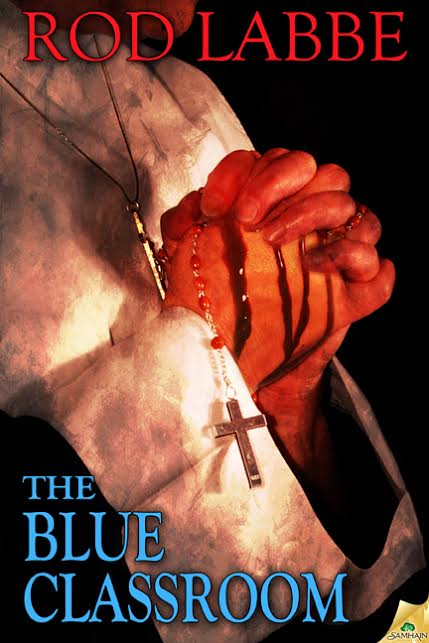
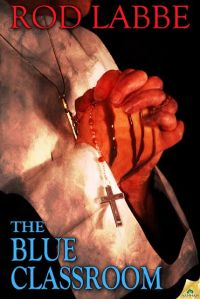
RL: The Blue Classroom is a Maine-based ghost story involving a haunted Catholic school and the spirit of a cruel, vindictive nun. There’s an extensive flashback to 1957 near the beginning, but most of the action takes place in 1998. I hesitate to call The Blue Classroom an epic, but it’s very close to 400 pages. The cover art just blew me away … and I’m extremely fortunate to have been picked up by Samhain. Their horror editor, the great Don D’Auria, has been a guiding light. Like Chris Alexander, he’s simply a great guy.

Keep in mind, Jason, I’m not a young Turk, and I have absolutely no use for splatter punk or flash fiction or ‘fan fiction’ or whatever it’s called. At 61, I’m old school all the way and go for quiet chills rather than gore, sexual nonsense, violence and/or rape. Frankly, I don’t understand most young writers. I’ve picked up books that are recommended to me, and what I find is gratuitous violence, profanity, and themes that are distasteful and unpleasant. And I’m sick of hearing about the ‘zombie apocalypse.’ Just what is this strange fascination with zombies. I can’t figure it out.

JH: How did you come up with the title?

RL: When my first draft was completed, I pulled out a trusty yellow legal pad and wrote down a dozen evocative titles. I chose The Blue Classroom because, hey, that’s where the horrifying memory takes place. What memory, you ask? Buy the book and find out.

JH: What inspired you to write your first book?

RL: In the fall of 1984, I’d just begun my last year as a Graduate student–a hectic period, as you might imagine. Not only would I be graduating with a Masters, but I was ending a monumental chapter of my life and entering into uncharted territory. Two things were on my immediate agenda: (1) becoming a freelancer, and (2) writing a novel. But how? I examined the situation from every angle and just dove in, navigating the rocky freelancing waters like a drowning man. I’d no guide and did everything by myself. In the meanwhile, I also set about tackling a novel. Can you say, failure? Nothing gelled. Idea after idea imploded or just sat there, lifeless. Frustrated, I gave myself breathing room and concentrated all my efforts on freelancing.

In 1989, with my freelancing journey going smoothly, I went back to brainstorming about the novel. I was reading through my graduate project, a collection of short stories entitled Seven Dark Images, and found the perfect inspiration. Can’t go into too much detail about that … but The Blue Classroom did grow from a short story originally published in 1985.

JH: How long were you writing it?

RL: The going was very slow, at first. I started in August of 1989 and worked on it when I could–and that turned out to be not very often. Between 1989 and January of ‘91, I’d written only three chapters! With the new year (1991), I decided to test the publishing waters and sent out my three measly chapters to publishers. Most of them came back so fast, the packages were smoking! Rejections across the board. I also let Rick Hautala read what I had, and he didn’t like it. Man, talk about disillusioning! Did I have what it took to be a novelist, I wondered? Maybe not. I was having much more luck as a freelancer and instinctively grasped what editors wanted. But when it came to fiction, I just didn’t seem to have that spark. I put the novel–or my, ahem, three chapters–in a desk drawer and let it germinate. By that summer, I’d decided to give the project another try. I barreled forward and finished a first draft sometime in early 1992. I had all of 200 pages and thought, wow, this is great! But the journey was just beginning. 200 pages would translate to a very thin book! I needed to flesh out the story, really put myself into it, which I did. By the end of 1999, the manuscript was just kissing 500 pages in draft form.

Then came the hard part: editing. I am a perfectionist, and that’s not always a good thing. I slept, ate, and existed with my book, tweaking, rewriting, throwing out chapters then putting them back in again. Aaargh! A decade trundled by. In 2012–yes, fantastic as it sounds, 13 years later–I had a good thing and sent it off to Samhain Horror (I told you I was determined!). Six agonizing months passed, and the e-mail I’d been waiting for arrived from Don D’Auria, Samhain’s horror editor. The Blue Classroom was on their schedule for May 2014.

Now, I’m waiting. Have I succeeded? Or will readers hate what I’ve put together? We’ll see …The Blue Classroom cover
JH. Who is your favorite author/authors and what is it that really strikes you about their work?

RL: Naughty, naughty, I know, but I do very little reading, nowadays–outside of articles and an occasional short story. Oh, I’ve tried reading more, but I usually end up losing interest or just shaking my head at all the gratuitous gore and sex … and ZOMBIES! I love the masters, people like Steve King, Poe, [and] Lovecraft, of course. But if I had to single-out a writer as my favorite, it would be Robert McCammon. In my humble opinion, this artist has never gotten his due. They Thirst, which I read in the summer of 1981, is a remarkable book. And I also loved Mystery Walk, Usher’s Passing, Swan Song and especially A Boy’s Life.

JH: What books have most influenced your life most?

RL: There are two, both intertwined. One is Bram Stoker’s Dracula, which I read way back in 1967, when I was 14. The other is King’s Salem’s Lot. I just could not put that one down. Even today, I’ll find myself going back to ‘the Lot’ and rereading certain passages. The section where Ben Mears encounters the vampiric Marjorie Glick in an examining room is high-octane horror. King wrote it beautifully, with so much unbridled energy. That’s when he was a hungry artist, and I plugged into his raw-edged enthusiasm. I should also mention how much I love The Shining. That one book kept me up all night, the only time such a thing happened. I started at about 10 p.m. and was still reading at 4:30 a.m. The true definition of a ‘page turner.’ It’s his masterpiece, as far as I’m concerned.

JH: What are your current projects?

RL: I’m always working on something. My second novel for Samhain is in the pipeline, scheduled for publication next year. It’ll be finished and polished up by June 2014. There’s a third novel percolating, as well as a collection of short stories, two of which were finalists in Fangoria’s ‘Weird Words’ competition. Freelancing continues, and my goal is to win a Rondo Award. I’ve been nominated three times, so far. Hopefully, 4th is the charm! It’s a busy, rewarding life, as clichéd as that sounds. I find new challenges in every project.

Editor’s Note:

The Blue Classroom e-book is currently available for pre-order at Amazon by clicking here.
Happy New Year 2014


We, at Jason Harris Promotions, hope our reader’s 2014 is a good, successful, and happy one. Happy New Year!2013-12-31 22.31.05

A Look Back at 2013


Today’s the last day of 2013. This website has been through some changes this year and the lost of a good friend, horror author Rick Hautala.  We are looking forward to a much brighter 2014 where we hope to continue providing you with some great content.

Here are the top 5 most read website entries this year.

1. Author Transformed by Haunted House

2. Pictures from the 2013 Rhode Island Comic Con

3. Granite State Comic Con, a Glimpse Into Another World

4. Horror Community Loses a Friend

5. Have You Heard of these Underrated Horror Films?

You can also find Jason Harris Promotions on Facebook, Twitter and Google Plus. See you in the New Year.

Resolutions for 2014


It’s that time of year again when people start thinking about what their resolutions will be for 2014.  According to Wikipedia, resolutions are a secular tradition more common in the West. The U.S. government even has a page on its website mentioning some of the most popular resolutions. Some of the more popular ones are quitting smoking, volunteering to help others, getting a better job, managing debt, and saving money. You can see the entire list here.

The biggest one that people choose for their resolution is to lose weight. If this is yours, I would suggest finding a 24-hour gym to add to your routine. I belonged to Anytime Fitness a number of years ago and the flexible hours were perfect for my schedule. Like the name implies, it’s open 24/7 for its members. I went at 4 a.m. a couple of times and there were a few people there even then. It was convenient and I didn’t have to wait to use the machines I wanted to use.

This year my resolution isn’t to lose weight, but to read more, a resolution I’ve made in the past. 2013 was not a big reading year for me; in fact, I read more in 2012.  Here are just a few of the authors I want to read in 2014: Stephen King, Dale T. Phillips, Vlad Vasyln, Stacey Longo, Joe Hill, Jeff Strand, Clive Barker, Bracken MacLeod, Daniel G. Keohane, Rob Watts, David Price, Monica J O’Rourke, and Melissa Crandall. It won’t be the first time reading some of these authors, but all have been on my author-to-read list because I either know them or someone has recommended their work to me.

My other resolution is to get a full-time job to get cracking on managing my debt. Do I want to make that resolution and face that challenge? Just thinking about it gives me a headache; so I would rather just think about the magical places the authors on my list will take me when I crack open their books and start reading.

Happy New Year!

Author Stacey Longo Talks Writing and the Habits of a Writer

by Jason Harris

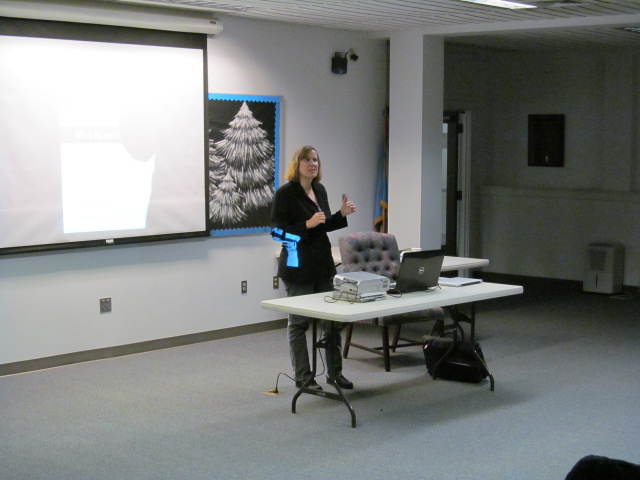
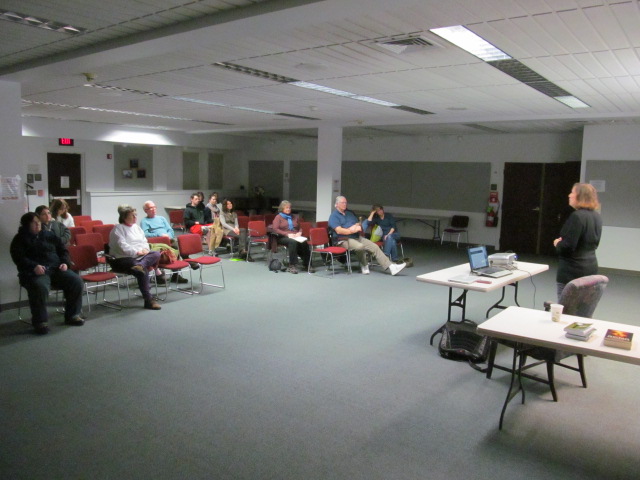
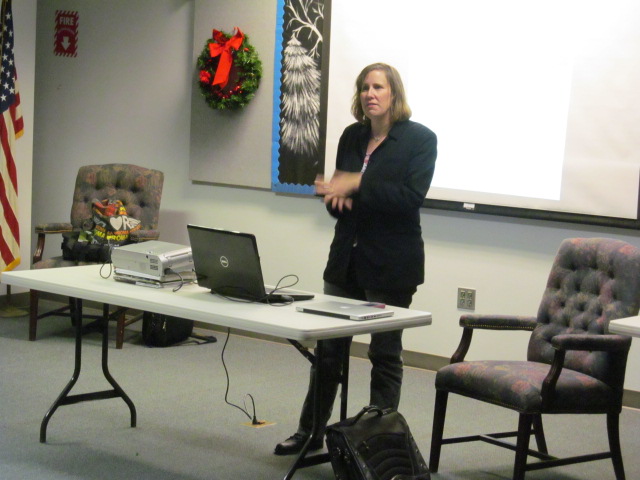
Author Stacey Longo spoke to an attentive audience at the Douglas Library in Hebron, CT on Wednesday night about being a successful writer. Longo knows what she is talking about since she has sold over 20 stories and has been in over a dozen anthologies. She also has published a children’s book, Pookie and the Lost and Found Friend, and a collection of 12 tales, Secret Things,which was released in October. Along with writing, she is also an editor with a number of successful edited books including Wicked Seasons: The Journal of New England Horror Writers, Volume II.2013-12-11 08.41.01

Before she began her horror writing career in 2010, she was selling articles to newspapers and magazine such as The Island Crier and The Works. She was also a humor columnist for the Block Island Times. She has also just been hired to review B horror movies for the Cinema Knife Fight website.

The habits of a successful writer include writing a lot, Longo said. A writer should be setting realistic deadlines and goals. If these deadlines and goals are not realistic, you will just be defeating yourself and setting yourself up to fail. Stephen King writes 10 pages a day. Ernest Hemingway wrote 500 words a day.

“Thomas Harris took 10 years to write the sequel to Silence of the Lambs. Robert James Waller wrote The Bridges of Madison County in 6 weeks. Both were NY Times bestsellers.”

One shouldn’t use Harris as an excuse not to write every day or at least a few days a week, she said.

Stacey Longo talking to a crowd interested in writing.

Stacey Longo talking to a crowd interested in writing.

A writer should even read more than they are writing. Reading is always good, but it should be well-written book,s not poorly-written books such as the Twilight series by Stephenie Meyer, she said. There are two books every writer should read. They are The Elements of Style by William Strunk Jr. and E. B. White and On Writing by King. A writer needs to know the rules of writing before choosing to break those rules.

If you want to write, you should seek out workshops, conventions, and writers’ groups so as to meet other writers. Longo states that writing is a lonely profession and meeting fellow writers is always a good thing. Other writers can help you or you may be able help them with editing, a potential market, or even with a story problem. “The best way to learn about the craft of writing is to talk to others who have been successful at it.”

Longo met Ken Wood, publisher of Shock Totem, in 2009 at the Northeastern Writer’s Conference (NECON). In 2011, he asked her to write-up an anecdote she had told him about her father so it could be printed in the magazine’s holiday issue.

When it comes to editing, it’s very important to Longo. Everyone needs to learn the basics of sentence structure, grammar, punctuation, and verb tenses. If you can do these things in your story, you won’t do it in a query letter, which will lead to no agents or publishers reading your story. This is where your fellow writers or your writer’s group comes in handy. Let them read your first draft and listen to their suggestions. Your first draft isn’t going to be publishable.

“No book on the shelves today is still in the original draft form that the writer first wrote. Everything needs editing,” Longo said.2013-12-11 08.39.49

Another important fact for a writer to learn is the need to be prepared for rejection because the publishing world is all subjective, Longo said. One publisher may reject a story while the another one will accept it.

For more information about Stacey Longo, click here.