The Journey to an Author’s First Autograph

The Journey to an Author’s First Autograph

by David Price

In March, I finally got to see my name in print. I have a story in the book, Tales from the Grave: An Anthology of True Ghost Stories. This is a big turning point for me. I joined the New England Horror Writers last August. Since then, I have attended some of the events from time to time, but only as a spectator, never as a participant. I like the people who I have met so far in the NEHW, and I was really looking forward to the day I could hang out with them at one of these conventions or fairs. That day was finally here when I was published in that anthology of ghost stories.

The story itself is called “Tucker’s Court” and it is about the house I grew up in, from the age of nine to twenty-five. My family moved in with my father’s parents when I was a kid, because their health was failing. Both of my grandparents died while I was living with them. There was always a presence in that house after that and many odd things happened to me. Maybe it wasn’t your typical horror movie kind of haunting, but to me it seemed worthy of a story. To my great pleasure, it was accepted by editor Rod Nojek and I made the transition from writer to author. Baby steps, first, you could say.

Naturally after I got the word that the book was in paperback, I emailed NEHW’s Director of Publicity Jason Harris and got my name on the list for the next event, which was the 39th Heritage Craft Fair in Framingham, Massachusetts, on March 24.  I had a couple weeks, so I thought I had plenty of time to get some books to sell at the fair. I placed my order with the publisher, only to be told that the books would not arrive in time. This was very disappointing and I immediately emailed Jason again, to let him know that my participation was in doubt. He told me to tell the publisher that I needed the books for an event and ask for rush delivery. I tried that, to no avail. The books were not going to arrive in time.

Two days before the fair, I went online to see if there was any chance of getting a few books on time from Amazon. It turned out I could get them with the rush delivery option, if I ordered in the next forty minutes. As an added bonus, since the books sell for less than ten dollars, they were included in Amazon’s “Buy four books for the price of three” promotion. So I ordered four books and the website told me I could get free rush delivery if I was an Amazon Prime member. Free one month trial, it told me. What the heck, now I’m an Amazon Prime member, too. I was meaning to sign up for that anyway.

Now, before I place d the order, it said that they were guaranteed to arrive by Friday. After I placed it, however, it said that they were estimated to arrive on Friday. Maybe it’s the English major in me, but there’s a big difference between guaranteed and estimated. A guarantee means that yes, it will be there, you can count on it. An estimate falls more into the, well; you’ve got a fifty-fifty shot. That’s not too bad, right?  That made me nervous. My nerves were not calmed when 6 p.m. passed and the UPS truck failed to arrive. That truck drives down my street every night between 6 and 6:15 p.m. I checked the Amazon website and it said the package was out for delivery. What happened then? 7 p.m. passed and still, no package. I pretty much gave up at that point, figuring the driver somehow missed me. But, to my surprise, at 7:15 p.m. the UPS guy showed up on my doorstep with a package that contained the four books with my very first published story in them. Yes!

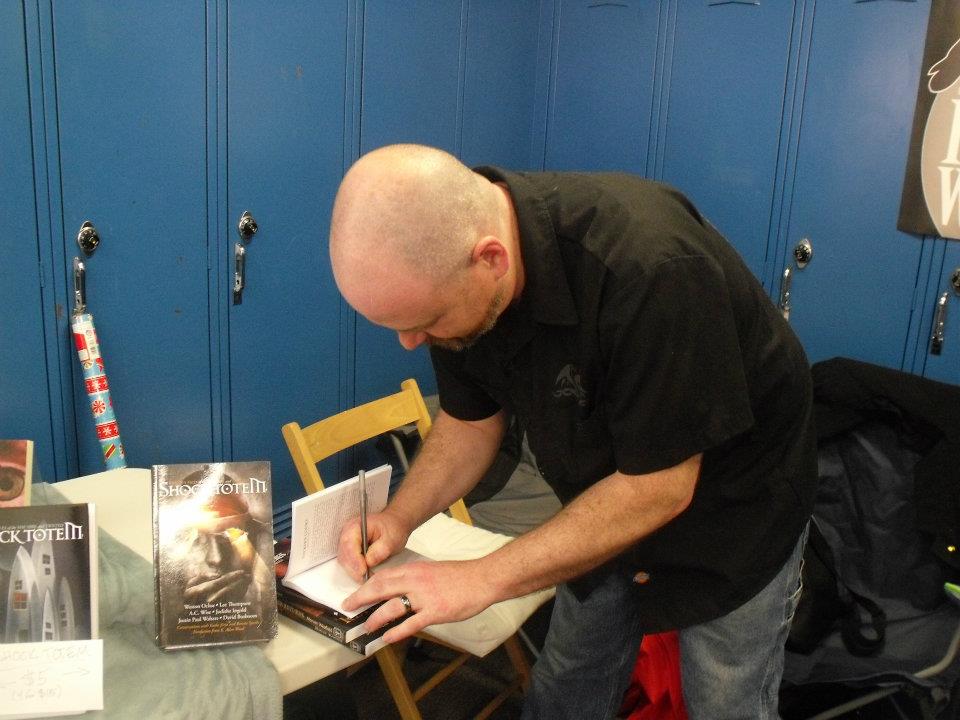
Author David Price signing first autograph. Photo by Pauline Price.

I woke up the next morning and headed out to the fair with my wife, Pauline and my daughter, Kayleigh.  Pauline probably won’t be able to come to many of these things with me, since she usually works on Saturdays, but we had a wedding to go to later that afternoon so she had the day off. After an hour or so drive, we got to the fair and Stacey Longo had a bookstand I could use to put my books on. I was so proud. It might sound silly, but every step towards my dream of a writing career is exciting, even the small ones.

The Heritage Craft fair was held at the Keefe Technical School, in Framingham.  That place is huge! I was expecting, I don’t know, a gymnasium maybe, but this was set up in a seemingly endless corridor. There was room for vendors on each side of the corridor to face each other, with a walkway for the patrons down the middle. The NEHW had its banner hung proudly at the site and I had a book for sale. How cool is that?

The day was made even more enjoyable by the other NEHW members in attendance. These included, the aforementioned Stacey, Morven Westfield, K. Allen Wood and Rob Watts. Morven is, I assume, from Framingham, since her two books, Darksome Thirst and The Old Power Returns were set in Framingham. As the day went on, this became something of a running joke. My wife works in a retail store and she clearly had more experience with customers then the authors who attended. She did her best at greeting all the people walking by and managed to draw quite a few in by telling them that we had some horror stories available that were actually set in Framingham. This was great for Morven’s sales.

It was an interesting day. We had some moderate interest at times and I managed to sell my first two books. When you sell at one of these events and the author is present, they want you to sign the book. Seems obvious, right? Well, I had the nerve-wracking experience of having to autograph my two books. My hands were shaking the whole time. It doesn’t seem like a big deal, I know, but it was to me. It was pretty cool. I also remembered that authors usually write some quick one liner that goes with the story. Since I have shadow people in my story I think I wrote something like “Watch out for the shadows!” If you were at the event and purchased one of my books, you should know those are the first two autographs I ever gave. Hold on to them, they’ll be worth something, some day.

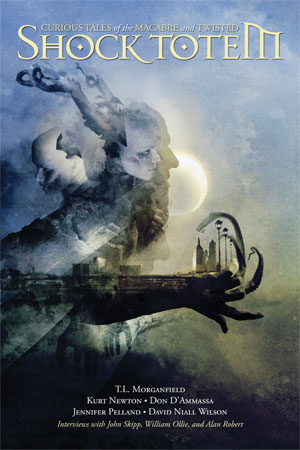
In addition to Morven’s plethora of sales, I believe Ken Wood, who is the publisher of Shock Totem magazine had a decent day in sales as well. Rob Watts was selling his book, Huldufolk, at the fair. It means “Hidden People” in Icelandic and he was even including a free CD that went along with it from The Traffic Lights, the band that is mentioned in the story. I picked up a copy of Rob’s book and one of Stacey’s anthologies before we had to leave for the wedding. It was a fun and slightly nerve-wracking day. It was a great experience. Any fledgling authors out there could do themselves a world of good joining an organization like the New England Horror Writers, which offers a great support system filled with amazing people. It also provides plenty of opportunities to sell your stuff at events including fairs and conventions. Join the NEHW now, you won’t be sorry.

Rebecca Rosenblum: Oh my God, my friend is a writer! What do I do?

This article originally appeared in the National Post’s section, The Afterward, back in December.

Rebecca Rosenblum: Oh my God, my friend is a writer! What do I do?

Rebecca Rosenblum’s fiction has been short-listed for the Journey Prize, the National Magazine Award and the Danuta Gleed Award. Her first collection of stories Once (2008) was one of Quill & Quire’s 15 Books that Mattered. Her latest collection is titled The Big Dream (2011). Rosenblum lives, works and writes in Toronto. She will be guest editing The Afterword all this week.

Don’t panic—this is something most adults will eventually have to deal with, if only until they can find a way to leave the bar. Maybe it’s a new friend, that great guy or gal from work or the gym, who suddenly blurts it out as if you should have somehow known from his or her lack of dress sense and unfocused stare. Or maybe it’s a friend you’ve known for years, a trusted confidante who you’d never have suspected harboured such a secret. But now here you are, where you never expected to be—a person with a writer in your life.

Ok, so calm down, take a deep breath and think. Is this a friend you want to keep? Because if you’ve been dreaming of ditching him/her, now is your chance; writers are used to rejection.

But say you like your friend enough to overcome this objectionable habit. How then to keep on spending time together, sanely, safely, without undo melodrama or romantic-poetry intake (which can be one and the same)? Here is my handy FAQ below—how to be friends with a writer.

Will my writing friend drink during the day/be surely at dinner parties/refuse to hold down a job?

Actually, that’s not a writer you’re describing; that’s a midlife crisis. Most writers support themselves and their families adequately, try to be kind to their friends and their partners, and many have jobs or at least some unliterary human interaction in their lives in addition to their writing. Sure, there might be a modest amount of nihilism, but this more usually takes the form of a third beer on a Tuesday rather than a 2-week bender. The Hunter S. Thompson-style shenanigans are largely the stuff of fantasy…or two-week vacations.

Do we have to talk about writing all the time? Because I don’t know whether truth is beauty or beauty, truth—and I don’t care, either. Is my friend going to be boring from now on?

Maybe; many people are boring. But writers don’t seem to turn up in this category any more or less than any other group of folks. We definitely like talking about books—if you happen to be into it, bring on the literary discussion. But depending on the writer, he or she may enjoy discussion of television, war, ethics, celebrity sex scandals, low-fat recipes, this weather we’ve been having, all of the above or countless other things. And writers who wish only to speak of their own work are as cloddish as lawyers, doctors, and anyone else who wishes to speak only of themselves. Disown immediately.

Should I read my friend’s writing? What if it’s bad? What if it’s really good, but I don’t understand it? What if I just don’t bloody want to?

I’ve found that the only folks in a writer’s life who need feel any pressure to read their work are fellow writers; the rest of you lucky ducks are off the hook. Writers like to give each other their manuscripts for shoptalk and advice; laypeople should only ask, offer, or agree to read manuscripts if they think they can contribute a serious opinion that would help improve the text, or else a cheerful one that might improve the writer’s mood. I never offer to read other writers’ unpublished work unless I’m clear on what sort of feedback they are looking for, and we set a timeline. The same is true for when kind friends offer to read mine. I have found that generally otherwise such impulses go into an abyss where, except for bimonthly protestations of guilt and insane busyness on the part of the (non) reader, it is never discussed again.

All that applies to unpublished work, of course. If a writer publishes something in a journal or a book, all friends except those who have recently declared bankruptcy are expected to purchase one copy each (multiple copies for gifting optional). This wanes with subsequent publications, but at the beginning, the support is so terribly valued and appreciated. When my first book came out, everyone I knew bought one, including those whom I knew to dislike reading short stories, reading fiction, or reading period. It was so terribly kind of them, and a pleasant surprise for us all when a few informed me that they’d read and liked some of my stories. I was truly touched. However, many of these friends have never mentioned their experience of the book, except to proudly point it out on the shelf when I visit. Did they read it and hate it? Never touch it at all? I don’t ask and they don’t tell; that’s what friends are for.

Another Notch in the Bedpost?

This entry originally appeared on New England Horror Writers’ member, K. Allen Wood’s website.

Another Notch in the Bedpost?

by K. Allen Wood

I’ve been contemplating—and worried about—writing this blog post for a long time now. My worry is a simple one: Will people be offended, take it the wrong way? I can’t answer that, but I hope not, because I’m compelled to discuss it.

So here goes…

I started a small-press horror publication in the fall of 2008. I enlisted the help of some online friends, we dubbed it Shock Totem, and in July of 2009 we published our first issue. (Most of you know this.) Ever since we published that debut issue, I’ve had one question constantly rattling around my head:

Does an author owe his support to the publications that publish his work?

That question pertains not only to me as a publisher but as a writer as well. Through four issues of Shock Totem, we have gotten some amazing support from authors we’ve published. But not all of them. Some hardly mentioned us at all, even when the issue containing their work came out. On a selfish level, I can’t help but find that disappointing. On a rational level, I understand that I have no idea why an author does what he does. There are things at play here that I am simply not privy to. I can dig that.

But back to the selfish side of things… As a publisher, I find myself leaning toward the notion that writers should be supporting those who publish their work. Because if the publisher is doing it right (relative to that particular publisher, of course), and if they’re a publication like Shock Totem where every issue is still in print and actively promoted, then the publication is fully and continually supporting the authors.

Back to the rational side of things… As a published author—hell, as a lifelong creative type—I completely understand that the muse commands one to look forward, to move forward, and create, create, create, to not waste time looking back. I also know how little time most artistic people have to actually focus on their art. So maybe some people simply don’t have the time. But that leads to the one thing I can’t rationalize…

When I finish a new story, I move onto a new one. But when I have a story published, I never move on. (All this can be applied, as well, to my musician days.) I can’t move forward and not look back in that regard. Because I want people to read my work! Do I owe it to that particular publication to support them, promote them? That’s debatable. But I sure as hell owe it to myself to support and promote my work! So I make the time.

And that is precisely what baffles me. (This does not take into account the fact that some authors publish bad stories best left forgotten from time to time.) Why do certain writers choose to not actively promote their work? Is a publication credit just another notch in the bedpost for these authors? As a publisher, sometimes it feels that way.

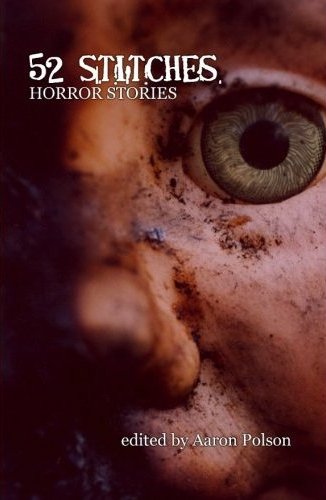
I have just three publication credits. The first was in 52 Stitches, Vol. 2. The publisher, Aaron Polson, essentially put Strange Publications to bed—at least for the time being—when this anthology was published. But this book is still available, and I promote the hell out of it…because I want people to read my work! “By the Firelight,” my story in this anthology, is a mere 457 words, but I still want people to read it. It doesn’t matter that the publication is inactive or perhaps permanently closed, because I like my story and, in my opinion, I owe it to myself to promote it.

My second published work, “Goddamn Electric,” was in The Zombie Feed, Vol. 1. I’ve sent out copies for review, I’ve posted about it here on this blog and on the Shock Totem blog. I will continue to do so as long as it’s available.

I’ve done the same thing, and will continue to do so, with Epitaphs: The Journal of New England Horror Writers, which contains my story “A Deep Kind of Cold.” In a certain, roundabout way, I’m promoting my work right now.

Which brings me to the revelation of things…

Since that first issue of Shock Totem came out in 2009, I’ve been asking myself should the author support the publisher? Again, the answer is debatable. But few would argue that an author shouldn’t promote his own work, right? And in promoting his own work, is that not, therefore, supporting the publisher? Is there a difference between promoting your own work and supporting the publisher?

I’m no longer sure you can have the former without the latter, but I know what I’m going to do. Always.

Editor’s Note:

Wood makes a lot of valid points. A creative person does look ahead, but to become well-known or even known, they need to promote their work. By authors’ promoting their stories, they are promoting the publisher of their work. How hard is it to write a Facebook status update or a tweet about your story being in an anthology, magazine, etc.

Wood promotes his magazine and any anthology his stories appear in. He does this through his website and his different twitter accounts. He also attends different conventions and fairs too. He will be at the NEHW tables at the Queen City Kamikaze Convention on Feb. 18 in Manchester, New Hampshire.

Amanda Hocking, the Writer Who Made Millions by Self-publishing Online

This article originally appeared on The Guardian website.

Amanda Hocking, the Writer Who Made Millions by Self-publishing Online

by Ed Pilkington

A couple of years ago, Amanda Hocking needed to raise a few hundred dollars so, in desperation, made her unpublished novel available on the Kindle. She has since sold over 1.5m books and, in the process, changed publishing forever

Woman makes millions from self published books

Amanda Hocking: 'I didn't have a lot of hope invested in ebooks'. (Photograph courtesy of Carlos Gonzalez/Polaris)

When historians come to write about the digital transformation currently engulfing the book-publishing world, they will almost certainly refer to Amanda Hocking, writer of paranormal fiction who in the past 18 months has emerged from obscurity to bestselling status entirely under her own self-published steam. What the historians may omit to mention is the crucial role played in her rise by those furry  wide-mouthed friends, the Muppets.

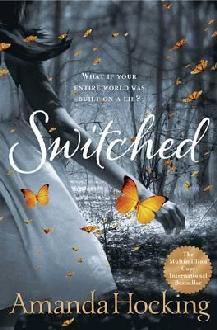
Switched: Book One in the Trylle Trilogy

To understand the vital Muppet connection we have to go back to April 2010. We find Hocking sitting in her tiny, sparsely furnished apartment in Austin, Minnesota. She is penniless and frustrated, having spent years fruitlessly trying to interest traditional publishers in her work. To make  matters worse, she has just heard that an exhibition about Jim Henson, the creator of the Muppets, is coming to Chicago later that year and she can’t  afford to make the trip. As a huge Muppets’ fan, she is more than willing to drive eight hours but has no money for petrol, let alone a hotel for the night. What is she to do?

Then it comes to her. She can take one of the many novels she has written over the previous nine years, all of which have been rejected by umpteen book agents and publishing houses, and slap them up on Amazon and other digital e-book sites. Surely, she can sell a few copies to her family and friends? All she needs for the journey to Chicago is $300 (£195), and with six months to go before the Muppets exhibition opens, she’s bound to make it.

I’m going to sell books on Amazon,” she announces to her housemate, Eric.

To which Eric replies: “Yeah. OK. I’ll believe that when it happens.”

Let’s jump to October 2010. In those six months, Hocking has raised not only the $300 she needed, but an additional $20,000 selling 150,000 copies of her books. Over the past 20 months Hocking has sold 1.5m books and made $2.5m. All by her lonesome self. Not a single book agent or publishing house or sales force or marketing manager or bookshop anywhere in sight.

So let the historians take note: Amanda Hocking does get to Chicago to see the Muppets. And along the way she helps to foment a revolution in  global publishing.

I’ve come to Austin, legendary birthplace of Spam (the canned as opposed to the digital version), to find out what this self-publishing revolution looks like in the flesh. I can report that, from the outside, it’s surprisingly conventional. Hocking no longer lives in that pokey apartment, but then she’s no longer a struggling would-be author. She’s bought herself her own detached home, the building block of the American dream, replete with gables and extensions, its own plot of land, and a concrete ramp on which to park the car.

But step inside and convention gives way to a riot of colour. It is just before Christmas, and Hocking has decorated the house with several plastic trees bedecked in lights and two large Santa stockings pinned expectantly over the mantelpiece. The sofa is scattered with animals, some of the cuddly toy variety and others alive, notably Elroy the miniature schnauzer and Squeak the cat (apparently they get on very well).

She greets me at the door and, without preamble, we talk for the next two hours about her extraordinary rags-to-riches tale and what it means for the future of the book. At 27, and with only a few months in the limelight, she is patently new to the fame game. She seems nervous at first, answering my questions in short bursts and fiddling with her glasses; but gradually she relaxes as we discuss what for her has been the central passion of her life since an infant.

She was brought up in the Minnesota countryside on the outskirts of Blooming Prairie about 15 miles north of Austin. Her parents divorced when she was young, money was tight and there was no cable TV to wallow in. “So I read a lot. I would go to the library, or get books at rummage sales. I got through them so quickly I started reading adult books because they were longer. I remember my mom giving me a box set of five books to last me all summer; I devoured them all in two weeks.”

By the age of seven she was reading Jaws by Peter Benchley and anything by Stephen King. Michael Crichton, JD Salinger, Shakespeare, Jane Austen, Mark Twain, Jack Kerouac, Kurt  Vonnegut and many others fed an insatiable appetite.

It was a way, she now thinks, of coping with the depression that troubled her childhood. “I was always depressed growing up. There wasn’t a reason for it, I just was. I was sad and morose. I cried a lot, I wrote a lot, and I read a lot; and that was how I dealt with it.”

What went in had to come out. The child Hocking began telling her own stories before she could walk. She was forever inventing make-believe worlds, so much so that the counsellor to whom she was sent for depression concluded that her incessant storytelling was an aberration that had to stop. Fortunately for Hocking, and for her many fans, her parents took her side in this argument, and she was never sent back to see him.

At 12 she had already begun to describe herself as a writer and by the end of high school she estimates she had written 50 short stories and started countless novels. The first that she  actually completed, Dreams I Can’t Remember, was written when she  was 17. She was very excited by the  accomplishment, and printed it out for friends and family, as well as sending it to several publishers.

“I got rejection letters back from all of them. I don’t blame them – it wasn’t very good,” Hocking says.

Hocking went on to develop an intimate relationship with rejection letters. She has somewhere in her new house a shoebox full of them.

Yet she would not give up. She wrote unpublished book after unpublished book. “Sometimes I’d say: ‘I’m done, I’m never going to write another book,’ but then a couple of months later I’d have another idea and I’d start again. This time it was bound to work.”

In 2009 she went into overdrive. She was frantic to get her first book published by the time she was 26, the age Stephen King was first in print, and time was running out (she’s now 27). So while holding down a day job caring for severely disabled people, for which she earned $18,000 a year, she went into a Red Bull-fueled frenzy of writing at night, starting at 8 p.m. and continuing until dawn. Once she got going, she could write a complete novel in just two or three weeks. By the start of 2010, she had amassed a total of 17 unpublished novels, all gathering digital dust on the desktop of her laptop.

She received her last rejection letter in February 2010. Hocking says she hasn’t kept the letter, which is a crying shame because it would surely have been an invaluable piece of self-publishing memorabilia. As far as she can remember, the last “thanks-but-no-thanks” came from a literary agent in the UK. If that agent is reading this article, please don’t beat yourself up about this. We all make mistakes …

April 15 2010 should also be noted by historians of literature. On that day, Hocking made her book available to Kindle readers on Amazon’s website in her bid to raise the cash for the Muppets trip. Following tips she’d gleaned from the blog of JA Konrath, an internet self-publishing pioneer, she also uploaded to Smashwords to gain access to the Nook, Sony eReader and iBook markets. It wasn’t that difficult. A couple of hours of formatting, and it was done.

“I didn’t have a lot of hope invested in it,” she says. “I didn’t think anything would come of it.” How wrong she was.

Within a few days, she was selling nine copies a day of My Blood Approves, a vampire novel set in Minneapolis. By May she had posted two further books in the series, Fate and Flutter, and sold 624 copies. June saw sales rise to more than 4,000 and in July she posted Switched, her personal favourite among her novels that she wrote in barely more than a week. It brought in more than $6,000 in pure profit that month alone, and in August she quit her day job.

By January last year she was selling more than 100,000 a month. Being her own boss allowed her to set her own pricing policy – she decided to charge just 99 cents for the first book in the series, as a loss leader to attract readers, and then increase the cover price to $2.99 for each sequel. Though that’s cheap compared with the $10 and upwards charged for printed books she gained a much greater proportion of the royalties. Amazon would give her 30% of all royalties for the 99-cent books, rising to 70% for the $2.99  editions – a much greater proportion than the traditional 10 or 15% that publishing houses award their authors. You don’t have to be much of a mathematician to see the attraction of those figures: 70% of $2.99 is $2.09; 10% of a paperback priced at $9.99 is 99 cents. Multiply that by a million – last November Hocking entered the hallowed halls of the Kindle Million Club, with more than 1m copies sold – and you are talking megabucks.

The speed of her ascent has astonished Hocking more than anyone. She was so elated to receive her first cheque from Amazon, for $15.75, that she didn’t cash it and still has it pinned up on a noticeboard above her desk. “It went from zero to 60 overnight,” she says. “Everybody was buying my books and it was overwhelming.”

In internet-savvy circles she has been embraced as a figurehead of the digital publishing revolution that is seen as blowing up the traditional book world – or “legacy publishing” as its detractors call it – and replacing it with the e-book, where direct contact between author and reader, free of the mediation of agent and publishing house, is but a few clicks away. There is certainly something to that argument. The arrival of Hocking onto the Kindle bestseller lists in barely over a year is symptomatic of a profound shift in the book world that has happened contiguously. Her rise has occurred at precisely the moment that self-publishing itself turned from poor second cousin of the printed book into a serious multi-million dollar industry. Two years ago self-publishing was itself denigrated as “vanity publishing” – the last resort of the talentless. Not any more.

A survey carried out last year by the book blog Novelr found that of the top 25 bestselling indie authors on Kindle, only six had ever previously enjoyed print deals with major book publishers. With e-book sales reaching $878m in the US in 2010, an almost fourfold increase from the year before, some 30 authors have already sold more than 100,000 copies through Kindle’s self-publishing site. That’s the kind of statistic that made Penguin’s chief executive, John Makinson, say recently that he saw “dark clouds” gathering in 2012.

But Hocking’s new-found stature as self-publishing vanguardista is not something she welcomes. “People built me up as a two-dimensional icon for something I was not. Self-publishing is great, but I don’t want to be an icon for it, or anything else. I would rather people talk about the books than how I publish them.”

She also resents how her abrupt success has been interpreted as a sign that digital self-publishing is a new way to get rich quick. Sure, Hocking has got rich, quickly. But what about the nine years before she began posting her books when she wrote 17 novels and had every one rejected? And what about the hours and hours that she’s spent since April 2010 dealing with technical glitches on Kindle, creating her own book covers, editing her own copy, writing a blog, going on Twitter and Facebook to spread the word, responding to emails and tweets from her army of readers? Just the editing process alone has been a source of deep frustration, because although she has employed own freelance editors and invited her readers to alert her to spelling and grammatical errors, she thinks her e-books are riddled with mistakes. “It drove me nuts, because I tried really hard to get things right and I just couldn’t. It’s exhausting, and hard to do. And it starts to wear on you emotionally. I know that sounds weird and whiny, but it’s true.”

In the end, Hocking became so burned out by the stress of solo publishing that she has turned for help to the same traditional book world that previously rejected her and which she was seen as attacking. For $2.1m, she has signed up with St Martin’s Press in the US and Pan Macmillan in the UK to publish her next tranche of books. The deal kicks off this month with a paperback version of Switched. It’s a fast-paced romance featuring changeling trolls called Trylle who are switched at birth with human babies. The novel cannot be classed as literary, but then it makes no pretensions to be so. It is precision-targeted at a young-adult audience, and is surprisingly addictive. Once the Trylle trilogy is out, Hocking’s new series of four novels, Watersong, revolving around two sisters who get caught up with sirens, will be released from August in hardback and e-book simultaneously.

Hocking’s editors on both sides of the Atlantic point to the deal as evidence that traditional and solo digital publishing can live in harmony. “There’s a lot of talk about publishers being left out of the loop,” says Jeremy Trevathan, Macmillan’s fiction editor. “But this whole thing is an opportunity for writers and publishers to find each other.” Or as Matthew Shear, publisher of St Martin’s Press, puts it: “It’s always been the same since the days when people self-published from the back of their car – cream will rise to the top.”

There’s something peculiar about all this: one of the leading figures in the self-publishing revolution is now being vaunted by major book houses in London and New York as evidence that traditional publishing is alive and kicking. Hocking is very aware of the paradox, which she observes with a wry writer’s eye. “A lot of people are saying publishing is dead,” she says. “I never did, and I don’t think it is. And they want to use me to show it isn’t.”

Switched, the first in the Trylle Series by Amanda Hocking, is out now in paperback and e-book formats, featuring previously unseen extra material. Published by Pan Macmillan in the UK and St. Martin’s Griffin in the USA. For further information, see www.worldofamandahocking.com.

Some of the other Kindle Million Club members

Stephen Leather

Widely hailed as Britain’s most  successful “independent” writer, two years ago Leather took three novellas that had been turned down by Hodder & Stoughton and issued them for the Kindle through Amazon. Last year, he put his monthly income from ebooks at around £11,000.

Joe Konrath

The Chicago-based author is both prolific – he has written seven thrillers, a horror series, and a sci-fi novel, each under a different pseudonym – and candid about the benefits of self-publishing. “One hundred grand – that’s how much I’ve made on Amazon in the last three weeks,” he boasted on his blog last month.

HP Mallory

The “urban fantasy and paranormal romance” author sold around 70,000 copies of her e-books in two months last year, and signed a three-book contract with traditional publisher Random House. She sums up her appeal thus: “If you’re all about fairies and witches and vampires (oh my!) … and you like men who get a little hairy during a full moon, I got the goods.”

John Locke

Last summer, the one-time insurance salesman from Kentucky became the first self-published author to sell 1m Kindle e-books. Alongside his lurid thrillers fans can download an advice book entitled How I Sold 1 Million eBooks in 5 Months!.

Oliver Pötzsch

German novelist and film-maker Pötzsch has reached the highest echelons of the Kindle bestsellers list with the English translation of his historical novel The Hangman’s Daughter. It’s a big success story for AmazonCrossing, which identifies books selling well in other languages, and republishes them in English.
Online Journal Publishes Author’s Flash Fiction Story

This Flash Fiction story by NEHW member, David L. Tamarin, originally appeared on the Three Minute Plastic website.

Gravity by David L. Tamarin

Does gravity always work? Surely, once in awhile, it just stops working. After all, nothing is perfect. Dr. Shingles decided to perform a test. He was sick of being considered a failure.

He held the newborn baby above his head on the roof of the hospital. It had been a rough day. Seven of his patients had died, and two nurses. When he raided the pharmacy and shot opiates he would slip (oops!) with the knife during surgery or nod off with his hands deep inside someone’s stomach. He’d wake up in blood to the sounds of the nurses screaming (and that one crazy nurse with the cross eyes and death breath giggling).

Sometimes he would doubt his medical skills, like when he would put organs back in the wrong place (like a nurse’s mouth) or, as had been happening quite frequently, he would forgot he was delivering a baby and would think he was there to perform an abortion and things got crazy.

At a lecture, he heard a scientist on acid explaining how physics is about perfection, and that gravity is a perfect and consistent force in the universe.

“Perfect and consistent,” brooded the Doctor. “No one has ever said that about me”. He was upset because he made another transplant mix-up and both the donor and the beneficiary died screaming, blood spraying everywhere. The Boss wanted to have a talk with him.

The Doctor was lost in thoughts about perfection and angels and awards for Doctor of the Year. He obsessed on memories of being called a failure, by the families and attorneys of his surgical victims, and the medical community at large.

But if there were a way for to him to see gravity fail just one little bit he would feel so much better. I’m not a perfect doctor, but even good old mighty “Mr. Perfect” gravity fucks up sometimes, he tried to reassure himself.

He tossed the baby into the concrete parking lot, waiting for gravity to dysfunction and make him feel better about the universe and his place in it.

He felt a splattering and thought to himself, I guess gravity worked that time.

An alien who was observing this from deep in space climaxed at the moment the concrete rushed up and broke open the baby.

NEHW Writing Workshop

NEHW WRITING WORKSHOP:

WORCESTER, MA— NEHW is hosting a writing workshop at Annie’s Book Stop on 65 James Street in Worcester, MA on Saturday, Feb. 4 from 10 a.m. until 5 p.m. The class is geared towards beginning to intermediate writers interested in bettering their writing and editing abilities while exploring all the “what now?” possibilities for publishing.

The class will be taught in three parts: writing, editing, and publishing; offer a bagged lunch; and include a professional critique of up to 2000 words of registered attendees’ manuscripts.

Attendees will learn under three professional members of the New England Horror Writers: Kristi Petersen Schoonover, T.J. May, and Trisha J. Wooldridge.

Schoonover is a three-time Norman Mailer Writers Colony Winter Resident; her short fiction has appeared in Carpe Articulum, The Adirondack Review, Barbaric Yawp, New Witch Magazine, Toasted Cheese, and others. Her most recent work, Skeletons in the Swimmin’ Hole, is a collection of ghost stories set in Disney Parks.

May is a writer of dark fiction, daylighting as a behavior therapist to children with autism. He is a regular contributor to Shroud Magazine, co-founder of SUMM Publications, an active member of the HWA and Co-Director of Events for the New England Horror Writers.

Wooldridge is the President of Broad Universe, an international non-profit dedicated to celebrating and promoting women who write speculative fiction. She’s contributed to several anthologies, including the EPIC-award-winning Bad-Ass Faeries series, is an associate editor for Spencer Hill Press, and freelance writes and edits for magazines, independent authors, and academic websites.

As this is the first workshop offered at the 65 James Street Annie’s, there is a special price of $30 for the course, or $25 for members of New England Horror Writers, Worcester Writers Collaborative, or Worcester college students. Attendees will need to pre-register either at Annie’s and will have to turn in their manuscript for critique no later than January 27. Seating is limited to 21 attendees. Walk-ins, if there is space, must pay full price and will not have a reserved bag lunch nor will they get the professional critique—but they are eligible for class critique.

For more information, contact Annie’s Book Stop via www.anniesbookstopworcester.com or email anniesbookstopworcester@gmail.com. The phone number for the store is 508-796-5613. Space is firmly capped, so register now!

For more information about the event and all media, contact: Trisha Wooldridge, trish@anovelfriend.com,774-239-3655.

Interview: Joining Trent Zelazny on the Dark Side of Fiction

This interview originally appeared on NEHW member Erin Underwood’s blog.

Interview: Joining Trent Zelazny on the Dark Side of Fiction

by Erin Underwood

You might have seen him around. His name is Zelazny. Trent Zelazny. If you read dark fiction he’s someone you want to know, or more to the point, he’s a writer that you want to read. Some people write from the heart, but Trent Zelazny leaves his blood on the page, creating fiction that feels like you’re living an experience while tucked safely in your own cozy home. He is definitely making his mark, writing some terrific pieces–most of which have just been published this year.

Perhaps one of the most impressive things about Trent Zelazny is his ability to keep moving despite the obstacles thrown in his path. Troubles aside, Trent had continued to produce some excellent heart pounding stories that are likely to worm their way into your “To Be Read” pile until you’ve got nothing left from him to read–at which point you will join the rest of us who are waiting for more. Luckily, he’s agreed to give Underwords an interview so that we have a little something to tide us over for now.

~

Drummer. Writer. Movie buff. How would you describe that guy people call Trent Zelazny?

Reserved. A bit neurotic. Still healing. My life has taken a lot of twists and turns. 2009 and 2010 were both pretty much one big downward spiral, filled with alcohol and the death of my fiancée, bouncing aimlessly around Florida, staying in flophouses and some nights on the street. Thankfully, with the help of family and friends, I was able to pull out of it. The 2011, the new Model T is a vast improvement, though it still clinks and clanks when it runs.

What can readers expect when they pick up your newest publication Destination Unknown?

Hopefully a story with characters they can relate to. Hopefully it’s exciting to them, too. A far-fetched scenario but one that, I think, is quite plausible, even moreso possible. To me it asks the question: Can you stick together if you’ve already fallen apart?

What literary (or other) influences have been the most powerful on your development as a writer?

Horror was the big one at the start. Matheson, Bloch, King, Koontz. Over time this evolved into crime and mystery, especially the old pulps from the 40s and 50s, and Film Noir. And not to come off as pretentious, but you have to sound pretentious when you use the word, existentialism, especially Sartre and Kierkegaard. The best mentor I’ve had is Jane Lindskold. I seriously doubt I’d be as far along as I am without her. I’ve kind of let that friendship slip away, and deeply regret that, knowing it’s mostly my doing.

Your fiction is a mixture of horror, noir, crime, and comedy in varying degrees. As a writer or reader, what attracts you most to this combination of literary genres?

It would be more as a reader than a writer, I think. They are typically my favorite things to read, so I guess it would make sense that they’re the things that come through most when I write. Dave Barry and Donald Westlake can make me laugh so hard that I practically wet my pants. Joe Lansdale has the mind-boggling talent to frighten you, make you cringe, and laugh out loud, all at the same time. I also really love heavy drama. Judith Guest’s Ordinary People was and is a personal favorite, as is the movie. I’d love to be able to write something like that one day.

You’ve worked with a variety of the darker genres, but haven’t touched much on the fantastic. Since fantasy and horror often go hand in hand, do you think you’ll explore this combination of these genres?

I have a little. When I was younger I wrote a lot of fantasy and some science fiction. As time went on, however, I found that, overall, I just wasn’t very good at it. I think, with my father being who he was, I kind of thought that that’s what I was supposed to be doing. I have fantastical elements in pieces, usually dark. The book I’m working on now has a big supernatural subplot, and I have a sort of fantastical story coming out in the anthology Fantastic Stories of the Imagination. I try to let the story tell me what it is. Often not, but at times it waves its arms and says, “Hey, there’s some fantasy in this one.”

What story or scene has been the most challenging for you to write or pushed you the furthest outside of your comfort zone?

The book I’m working on has done that a good amount. Fractal Despondency would likely be the biggest so far, I think. Semi-autobiographical. My fiancée had only been dead four or five months when I wrote it.

[sample chapter of Fractal Despondency]

If you had one chance to ask anyone (alive or dead/real or fictional) one question, what question would you ask? Why that question?

At the moment of this interview, it would probably be Kierkegaard. I’d wanna ask him why the hell he had to say “Life can only be understood backwards; but it must be lived forwards.” Because it is one of the truest things I’ve ever heard and, to me, it’s not an all-together pleasant thought.

In an interview with Darrel Schweitzer for Fantasy Magazine in which you were answering a question about your father’s (award winning author Roger Zelazny) influence on your writing, you said, “He gave advice and helped with certain must-knows, but he always encouraged individuality.” Looking back, how has that encouragement helped to shape your fiction into what it is today?

Well, it almost contradicts what I said above about feeling like writing fantasy was what I should be doing. Last thing he ever wanted was to turn anyone into a literary clone of himself. I have an older brother and a younger sister—I’m the Jan Brady. Whatever any of us took interest in, he encouraged. He encouraged my music, my writing, my drawing. Anything I seemed to take a real interest in. He wasn’t a cheerleader, but an encourager. I’m pretty sure he did that with my brother and sister as well. When he saw that I was gravitating more and more towards writing, we’d sit in his office and talk about it. He rattled off a few things that every writer should probably read (Shakespeare, for example) but otherwise told me more about fundamentals. He used favorite books of his as examples (Alfred Bester’s The Demolished Man, which is an amazing book, comes to mind), but he never told me I had to read them. He wanted me to find my own way.

In another interview that you did with Gabrielle Faust, part of your advice to new writers was not to be afraid to write something unpublishable. Why do you think this is so important?

This is often where writer’s block comes in, I think. Not that the words won’t come, but more a fear that the words will be bad, or wrong, and this will somehow, in some way, confirm that you don’t have what it takes. That you’re not a real writer. I still write stories that are beyond help. Am I let down when I finish? Yes. Am I glad that I wrote it? Yes. It’s a little like blowing your nose, clearing the gunk and crap out so you can breathe, and sometimes you’re really stuffed up. You may have to go through an entire box of tissues, but eventually you’ll breathe better, and you’ll be glad you got rid of all that snot.

Within the last year you have published a solid stream of fiction. What are you working on next?

    • Destination Unknown – print & e-book (Dec 2011)
    • “Snow Blind” in Stupefying Stories – e-book (Dec 2011)
    • A Crack in Melancholy Time – e-book (Sept 2011)
    • Shadowboxer – e-book (Aug 2011)
    • To Sleep Gently – e-book (Aug 2011),
    • A story in Kizuna [Fiction for Japan] – print & e-book (Aug 2011)
    • Fractal Despondency – e-book (Apr 2011), print (Jun 2011)
    • The Day the Leash Gave Way and Other Stories – print (Aug 2010)

Currently working on a new novel, as well as a short novelette for a shared world anthology, and a project I’m not allowed to discuss (tease, I know). I’m sure a short story or two will pop up soon enough. With 2009-2010 being what they were, I was at least blessed this year with a bit more publishing success.

~

Trent Zelazny is the author of Destination Unknown, To Sleep Gently, Fractal Despondency, Shadowboxer, The Day the Leash Gave Way and Other Stories, and A Crack in Melancholy Time. He was born in Santa Fe, New Mexico. He has lived in California, Oregon, Arizona, and Florida. He currently roams throughout the country aimlessly. He also loves basketball. You can visit Trent on Facebook, Twitter, and on his website.
Thoughts on Revising Versus Redrafting

This entry originally appeared on NEHW member Craig D.B. Patton’s blog.

On Starting Again

by Craig D.B. Patton

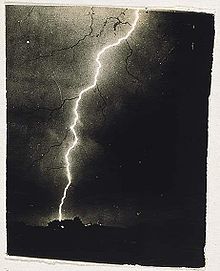
Revising vs. redrafting. Tinkering with what you wrote the first time vs. tossing all of it in the (virtual) bin because you realize you just plain whiffed on the first attempt. I think I’ve had a habit of resisting the latter. It’s harder, emotionally, for me to accept the fact that I invested time and energy and didn’t actually create something worth keeping. I like it much better when the lightning bolt flies straight and true and fries something with a really solid BOOM!

(picture courtesy of Wikipedia)

But it doesn’t always. And I’ve missed enough times now to be better at recognizing and accepting it. It’s also become one of the times when I remember what bands go through in the studio. I’ve never been in a band, but I’ve read enough articles and books to have a sense of how some of them work and how bumpy and long and curving the road to creating some of my favorite music was. Take after take after take. Experiment after experiment that seems great conceptually and then just lies there on the floor when tried. Songs that have no chorus. Choruses that have no verses. Bits of instrumentation that don’t work until combined, which happens sometimes by design and sometimes accidentally. Hours and hours of horrible music before the good stuff arrives, if it does at all.

But the seed idea, if it’s good enough, survives through all that.

Which is the same with stories. A good idea is a good idea. The problems come when trying to tell the story. And sometimes it takes a while.

I have a song/story like that now. The first take/draft was fun while I was doing it. There are some good images and moments, particularly in the second half of it. But it wound up…meh. And meh doesn’t get fixed by cutting a few paragraphs and rewriting a few more. So I’ve marched back into the studio. Changed a few effects pedals. Reworked some instrumentation. The red light is on.

Time for another take.

The Mirroring of Life and Fiction

This entry originally appeared on NEHW member Inanna Arthen’s blog.

Hey, how did that fiction get in my real life?

by Inanna Arthen

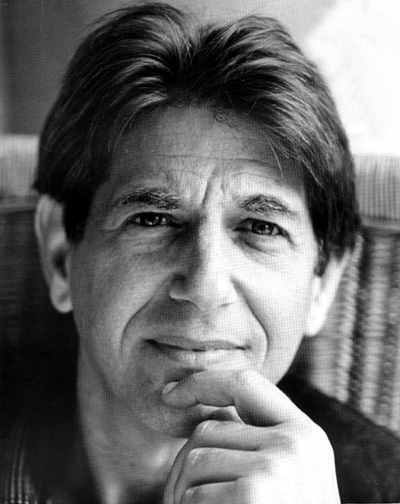
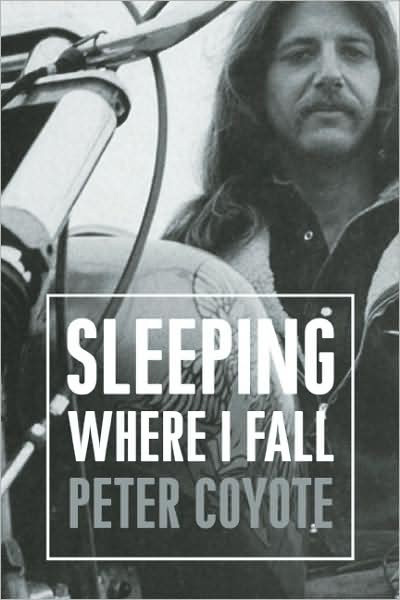
Peter Coyote (picture courtesy of texasgoldmovie.com)

There has always been a consistent pattern in my life whereby my fiction and my actual experiences echo and mirror each other in the weirdest ways.The first time I encountered actor Peter Coyote was in Steven Spielberg’s E.T., in which he played the mysterious scientist tracking the little alien. I’d never heard of Mr. Coyote before. But I confess: it was a case of crush at first sight. I’m not prone to fannish excesses–I won’t even collect autographs–so I didn’t look up Mr. Coyote’s biography or read gossip magazines or anything like that. Probably almost any other fan of his knew a lot more about his background than I did. But I loved him in E.T.,and I watched for him in other things. Many years ago, I went to a Red Cross blood drive to donate blood. I can no longer pinpoint exactly when this was, except that I’m fairly sure it was between 1982 and 1989, and I think the blood drive was in Acton, Massachusetts, where I lived in the 80s. It wouldn’t have been far from there, anyway. I had taken some film magazines with me to read – Premiere, I think. This was during my efforts to break into film acting locally. I even read Variety.After I finished with the donation and was resting, the way the Red Cross always makes you do so you won’t just jump up, barf and pass out, I was reading the magazines, and one of the blood drive volunteers came by see how I was doing. I said I was doing great, and then she picked up one of the magazines and said, “Oh, could I just look at these?” I said of course, and as she flipped through them she said, “I have a brother who’s an actor, and I always like to see if they say anything about him.”“Oh, really?” I said, pricking up my ears for a possible industry contact. “What’s his name?”

“Peter Coyote.”

I didn’t respond very politely, because to me, this was like saying she was related to Justin Bieber. It’s amazing that I didn’t jump up and pass out. “Oh, you can’t be, you’re making that up!” I said, or something like it. (In my defense, I was running a pint low at that moment.)

She looked a bit offended and said, “No, I’m not, why would I make that up? Most people have never heard of him.”

“Of course I’ve heard of him! He was in E.T.! He’s a doll!” (I’m sure they took a bit more than a pint, actually.)

She seemed rather pleased at that, so I hope I redeemed myself. “He is a doll,” she said, laughing.

That was the gist of our discussion – she had other donors to see to – and I didn’t even think to ask her own name, or look at her badge if she was wearing one. (I think it just said, “Volunteer” or whatever the term is they use.) I always wondered if she was really on the level. Why would a movie actor’s sister be volunteering at a blood drive in Acton, Massachusetts, fer gosh sakes?

But then, why wouldn’t she be? Actors come from all over the place. I lived in Acton and I was trying to be one.

But now it’s the 2010s and I’m trying to be a novelist. My third book, All the Shadows of the Rainbow, is set during the 1960s, plus a few years on either side. I lived through the 1960s, but just as I did with the 1950s and The Longer the Fall, I’ve been doing what I call “total immersion research.” I’m reading as much contemporary material as I can find, and watching raw film footage from that era, and generally working to enfold myself in the zeitgeist of the times, so I can, not just write it, but live it from the inside out.

(courtesy of Peter Coyote's website)

By complete happenstance, I discovered that Peter Coyote had been deeply involved in the 1960s counterculture –he was a member of the Diggers and the Free Family, lived on several communes, worked with the San Francisco Mime Troupe, and was at the center of a lot of things that happened in those years. He’s written a memoir about it all, called Sleeping Where I Fall. I learned about it from a random reference on the Red Room website, which I rarely visit, but I just happened to click over there on the day when this book was mentioned. I instantly located a copy. I’ve been reading it for the past week or so.

I’ve been enthralled with the book, because I hadn’t known any of this about Peter Coyote’s personal history. It helps explain why, the instant I saw him onscreen, I just felt this “click.” I’ve been relating strongly to so much that he says in his book. I knew I liked him as an actor, but I never realized that he was what I think of as, “one of us.” He does have a younger sister, although he doesn’t give any clues as to her life or whereabouts. Sleeping Where I Fall was published in 1998, and I’d love to hear what Mr. Coyote thinks about the social and political developments of the last 13 years. I’d guess we share similar views.

Sleeping Where I Fall is going to be one of the most helpful resource books I read, and I’ve got a stack of them. But I’d be enjoying it even if I wasn’t writing All the Shadows of the Rainbow. To add yet more synchronicity to the mix, I found a documentary called Commune by running keyword searches on Blockbuster. When it arrived, it turned out to be about Black Bear Ranch, one of the Free Family communes that Peter Coyote lived with, and Mr. Coyote appears in the film.

It’s just strange how themes and people can weave in and out of our lives in violation of all probability or logic. Over and over again, I’ve been downright spooked by the way things that I’m writing tie into my real life in completely unexpected and inexplicable ways. It’s part of the reason that I’m one of those writers who feel that their fictional universes and characters have wills of their own. I don’t calculate and control the stories I tell, or the people who inhabit them. My characters tell me what’s going to happen and I simply record it … and sometimes, I feel like I’m living it with them. Every once in a while, I feel like I’m living out my fiction in the (so-called) real world.

You might think I’d be more nervous about blowing things up in my novels, in that case! But what good is art if it doesn’t shake you up sometimes?

Run into a Wall, Crawl Through the Nearest Window

This post originally appeared on Benjamin Roesch’s blog, the almost right words.

Post #17: Crawling Through the Nearest Window

Doing National Novel Writing Month is exhilarating. I think this is mostly because I’ve never written, outside of education, for a capital “D” Deadline and the need to complete X quantity by Y date is a utilitarian sort of enterprise that’s added a different timbre to this writing experience than others whose end point hinges on a self-imposed deadline.

I’ve decided that NANOWRIMO is more about stamina than it is about creativity. Not to shit on creativity. Not at all. But the truth is that the writers who have the best chance of starting and finishing a task like NANOWRIMO are those not necessarily with the keenest imaginations, but with the deepest well of endurance. Those who can follow that sage piece of writing advice that I sometimes think is the only truly useful one: ass in chair.

Writing on a deadline makes you solve problems quickly. My analogy is that when your story runs into a wall, find and crawl through the nearest window. Can’t find a window? Tough. Invent one. I’m writing a sci-fi/horror mash-up because it sounded like a novel (pun so very much intended) change to my usual subject matter (realistic literary fiction) that would breathe enough fresh wind into my sails to make it to the finish line. What I failed to realize is that genre writing is a lot harder than I thought it was.

Of course, all kinds of writing are difficult in their own way, but what I’m talking about is closer to the necessity in genre to respect the beginning-middle-end story structure. I’m not writing a book about an existential crisis that doesn’t need to have an ending to be considered successful. The plot is front and center this time out and the plot needs to, perhaps above all things, make sense to the reader. And not sense as in “real,” but sense as in “consistent” and “logical.” There’s a difference.

(picture courtesy of Wikipedia)

Consider The Catcher in the Rye. In Salinger’s classic, one need not believe that the things that Holden does are the only things that could have happened. For instance, after Holden’s conversation with the nuns in the diner, we don’t feel the need to make the meet-up logical or the basis to judge what happens next. It may affect the next action, but it doesn’t have to. Nor does the book have to really go anywhere, to end up someplace in order to be a great book, which is, of course, why it doesn’t. For Christ’s Sake, the book’s final image is a kid on a merry go round! In many ways this is exactly what makes a book like Catcher so great and so lasting–it prizes emotion and character above action. And, quite frankly, character is more interesting.

But it all depends on how you look at it. Seen through certain eyes, too large an emphasis on character could be a liability. Most people I know who don’t like Catcher don’t like it because they don’t like Holden, not because “nothing happens.” And if they don’t like it because nothing happens, well, they should probably put down Salinger and read Blue Dot, my NANOWRIMO book. Because, let me tell you, all kinds of things are “happening” in my book.

But, of course, making things happen is its own kind of problem. One problem being that the “happenings” have different rules in a plot driven piece than in a character driven piece. Not dramatically different, but different all the same. In genre, the cause and effect sequence needs to be cleaner, leaner, and ultimately, more satisfying to the reader. After all, that’s what you’re selling them. No one wants to buy tickets to the circus only to find, after the lights have dimmed and the curtains have closed, that they’re actually at an antique show. It’s false

(picture courtesy of Wikipedia)

advertising. In filmic parlance, you might compare the ending of Die Hard to the ending of the last season of The Sopranos. If Die Hard had ended with a long, slow fade out on the bloodied face of John Mclaine before his final show down with Hans and his reunion with his wife, and we were given no closure, no sense that the good guy had prevailed or that the estranged couple had re-united, myself, and a lot of other late 80′s Bruce Willis fans, would have wanted their money back. The Sopranos could get away with such an ambiguous ending because the show was always more about Tony than it was about what Tony was doing. Die Hard is about a guy too, but for that story to make sense to us, that guy needs to always be doing things that lead places.

I guess what I’m saying is that I choose a genre piece for NANOWRIMO because I thought it would liberating, and perhaps easier, to write. But I’m realizing now this was a false assumption. Genre isn’t harder, but it sure as hell isn’t much easier. Which leads back to the earlier point that all kinds of writing are hard.

A problem for me is that I’m not used to writing plots that need to add up so neatly and my characters keep trying to stop my story and let themselves come front and center. Part of me feels like they’re stalling because they don’t know what to do next. I’m on track to finish my book on time, or at least get to 50,000 words on time, but right now the ending keeps getting further away. And the further away it gets, the more I’m getting the feeling that Blue Dot may just be the world’s first alien invasion story that ends with a kid on a merry go round.