Pictures from Necon 33

by Jason Harris

The 33rd Northeastern Writers’ Conference (Necon) has wrapped up another fun filled year. It was great seeing old friends and making new ones, talking about writing and marketing and just having a good time.

Throughout the four-day convention, there were panels including That Line We Crossed: How Explicit is Too Explicit and We’ve Got You Covered: How Print Cover Art Happens. There were also the Necon Olympics: bowling, darts, foosball, and hi-lo-jack.

There was an Meet the Author party on Friday night and an Artist reception on Saturday. A Hawaiian shirt competition, Necon Update, That Damn Game Show and the Infamous Necon Roast also took place during this fun weekend.

Necon campers remembered Rick Hautala, who passed away in March, on Thursday night during his memorial tribute, which was introduced by Christopher Golden.

2013-07-20 03.13.00

Christopher Golden on the panel, “I’ll Buy That for a Dollar: Resurrecting Your Backlist & Marketing the Hell Out of Your Writing (a.k.a. The Business Panel)”

Author Jeff Strand during the Necon Roast.

Author Jeff Strand during the Necon Roast.

Author Heather Graham

Author Heather Graham on the panel, “I’ll Buy That for a Dollar: Resurrecting Your Backlist & Marketing the Hell Out of Your Writing (a.k.a. The Business Panel)”

From left to right: Craig Shaw Gardner, Christopher Golden, Elizabeth Massie, Nicholas Kaufman, and F. Paul Wilson participating in That Damn Game Show.

From left to right: Craig Shaw Gardner, Christopher Golden, Elizabeth Massie, Nicholas Kaufman, and F. Paul Wilson participating in That Damn Game Show.

Author and NEHW member Nicholas Conley holding his book, "The Cage Legacy."

Author and NEHW member Nicholas Conley holding his book, The Cage Legacy.

Craig Shaw Garner about to talk about the prizes for winning That Damn Game Show.

Craig Shaw Garner about to talk about the prizes for winning That Damn Game Show.

Authors Trisha Wooldridge and David Price at the NEHW table.

Authors Trisha Wooldridge and David Price at the NEHW table.

Jeannine Calia finishing shaving author Rio Youers who shaved his head for charity, The Jimmy Fund.

Jeannine Calia fixing the shaving job author Rio Youers had done for charity, The Jimmy Fund.

Author P. Gardner Goldsmith having some fun as he shaves some of Rio Youers' head as Author James Moore films it.

Author P. Gardner Goldsmith having some fun as he shaves some of Rio Youers’ head as author James Moore films it and the blurry Christopher Golden watches.

John M. McIlveen's dealer table.

John M. McIlveen’s dealer table.

The Dealer and Art room at Necon.

The Dealer and Art room at Necon.

Bram Stoker winning poet Linda Addison being roasted.

Bram Stoker winning poet Linda Addison being roasted.

Artist Courtney Skinner during the Necon Roast.

Artist Courtney Skinner during the Necon Roast.

Author Brian Keene during the Necon Roast.

Author Brian Keene during the Necon Roast.

From left to right: writers Catherine Grant, Stacey Longo, and Tracy Carbone.

From left to right: writers Catherine Grant, Stacey Longo, and Tracy Carbone.
‘Red 2’ Keeps the Action Going and The Laughs Coming


By Jason Harris

Red 2I didn’t care for Red when it was first released almost three years ago. I’m not sure why. I recently watched it again in anticipation of seeing Red 2, and this time around I enjoyed it and would like to own it. It is now a favorite action movie of mine, as is Red 2.

 Red 2 opens up with Frank (Bruce Willis) and Sarah (Mary-Louise Parker) shopping at a Costco. Frank doesn’t seem any worse for wear after running from the Moldovan Army at the end of Red. He excitedly comes up to Sarah with bulk bargain items. The look on Sarah’s face seethes with boredom. She wants action. This is shown by her enthusiasm when Marvin (John Malkovich) shows up to tell him that Interpol is after him because of Nightshade, a Cold War project to sneak a nuclear weapon into Russia. Frank wants nothing to do with Marvin or his information so he sends him away, much to the chagrin of Sarah.

Even after Marvin’s car explodes and he is presumably dead, Frank still wants to play things safe. With the Red movies, you can never be sure what to expect. Frank isn’t sure Marvin’s dead, and he tests his theory a few times at Marvin’s funeral. These moments are funny and cringe-worthy since you and Frank are thinking the same thing. Is Marvin really dead? I won’t spoil it for you.

It’s not long after the funeral that Frank is living up to his RED (retired, extremely dangerous) designation.

Helen Mirren’s Victoria is back. She’s given a contract by MI6 to kill Frank. There is a moment where it looks like she will fulfill that contract, but before long they are all together trying to stop world destruction.

Anthony Hopkins portrays baddie Bailey. It’s not Hopkins’ best performance since it didn’t seem to be even. This problem could lie in the writing, though. One moment, he’s crazy or just acting like a loon. The next minute he’s fine then he starts to slip back towards crazy. It was an off-putting performance.

The movie’s writers, Jon Hoeber and Erich Hoeber, took a page from The Fast and the Furious movies with the character of Han Cho Bai (Byung-hun Lee). The audience is introduced to Han before he is contracted to kill Frank. Han is a cool character whom you want to survive and be in Red 3. This can’t happen if Frank and Han remain enemies. By the end of the movie, Frank and Han are working together. Hopefully there will be a third movie where we see more of Han.

The Red series could be considered Bruce Willis’ Expendables series (which he is in, but not in a starring role). Red is high on action and excitement, and there is definitely enough gas in the tank for a third movie.

Author Talks about First Novel and Writing


By Jason Harris

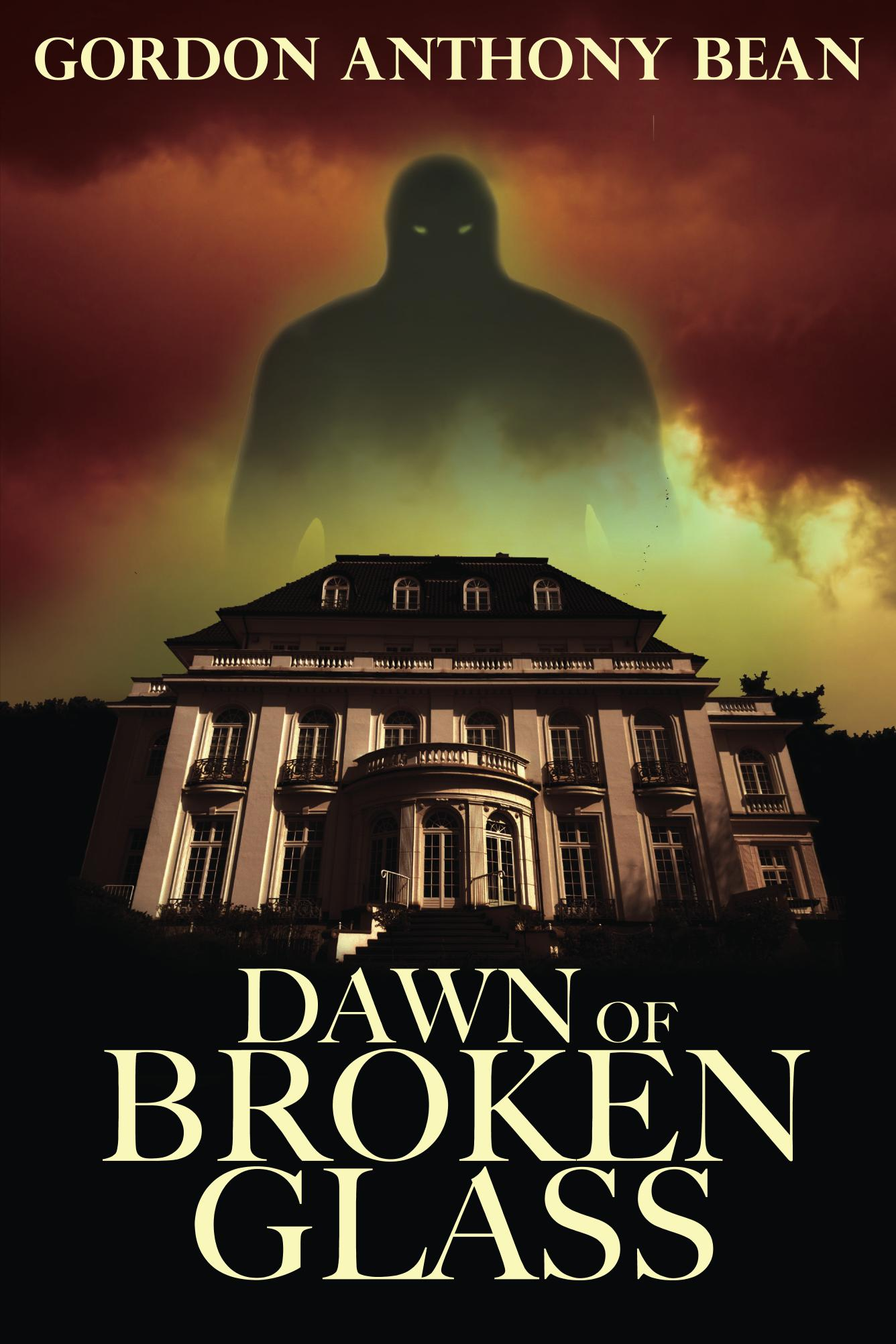
Dawn of Broken GlassGordon Anthony Bean recently published his first novel, Dawn of Broken Glass. It was released in June.

He has written two other novels, but shelved them since they didn’t feel right to him. He plans to revisit them at a future date.

“Dawn of Broken Glass felt like a great story with fully developed [and] believable characters that the reader could identify with, so I decided this was the book I wanted to publish first,” Bean said.

Dawn of Broken Glass tells the story of Michael Carson, who witnesses the brutal and senseless slaughter of his family during Kristallnacht in the early days of World War II. The loss of his family has left him with deep emotional scars, and feelings of anger and hatred which become all-consuming to the young man. Years later, he seeks his revenge. Along with the mysterious Jason Froemmer, Carson begins a mission to eradicate the bloodlines of each soldier who partook in his family’s slaughter so many years earlier.

Bean wrote it over eighteen months. He spent the better part of a year doing multiple revisions on plot, characters, and writing style.

Bean is working on Bloodlines, a sequel to his first published short story, “From a Whisper to a Dream.” This story was published in the anthology, Sinister Landscapes, published by Pixie Dust Press. He does have a second short story, “Out of the Corner of His Eye,” in the Grinning Skull Press anthology, From Beyond the Grave.

“One interesting tidbit about my writing is that the stories are all interconnected. In my second novel, there will be an appearance of a central character from Dawn of Broken Glass. Basically, I’m creating a wholly contained universe where all my stories take place on the same earth,” Bean said.

His primary career is in finance, but he wants it to be writing.

“I’m trying to get my writing career to take off and hopefully be able to one day devote myself to it full-time.”

He has been writing his entire life. “In elementary school, I had a short story published in our school’s spring journal. In high school, my creative writing teacher told me that of all the students she ever had, she felt that I was best suited to be a writer.”

He belongs to the New England Horror Writers organization. He hopes to get exposure for his writing through the NEHW. This is what he hopes would happen with belonging to any writer’s organization.

“What I hope the NEHW or any other group would be able to do is help give exposure to this novel and future novels,” Bean said.

Bean has received good writing advice in his life, he said.

“The best I remember getting was to write for myself. Like most writers, I love to write. I am a huge horror fan and if I can leave a lasting imprint on a reader through my work, it’s all worthwhile.”

Besides writing, he enjoys reading. Michael Moorcock and Robert Heinlein were two early favorites and Clive Barker, who he loved when he was a teenager. He reads Christopher Golden, Brian Lumley, F. Paul Wilson, Joe Lansdale, Edward Lee, Jonathan Maberry, Dan Simmons, Richard Matheson, Douglas Preston & Lee Child now. His tastes vary, he said.

Director Talks about ‘Dirty Wars’: Part II


by Jason Harris

According to the movie’s website, Dirty Wars “begins as a report into a U.S. night raid gone terribly wrong in a remote corner of Afghanistan, and quickly turns into a global investigation of the secretive and powerful Joint Special Operations Command (JSOC).

As Jeremy Scahill digs deeper into the activities of JSOC, he is pulled into a world of covert operations, unknown to the public and carried out across the globe by men who do not exist on paper and will never appear before Congress. In military jargon, JSOC teams ‘find, fix, and finish’ their targets, who are selected through a secret process. No target is off limits for the ‘kill list,’ including U.S. citizens.

Drawn into the stories and lives of the people he meets along the way, Scahill is forced to confront the painful consequences of a war spinning out of control, as well as his own role as a journalist.

We encounter two parallel casts of characters.

The CIA agents, Special Forces operators, military generals, and U.S.-backed warlords who populate the dark side of American wars go on camera and on the record, some for the first time.

We also see and hear directly from survivors of night raids and drone strikes, including the family of the first American citizen marked for death and being hunted by his own government.”

The world has changed so much since director Rick Rowley and writer Jeremy Scahill began Dirty Wars. When they started the film, there was no public discussion on the war on terror, Rowley said. No one was talking about drones, targeted killing, assassinations or any of that. There may have been some talk on the fringes, but nothing like there is now, Rowley said. It eventually moved from the fringes to the editorial pages of the Washington Post.

Rowley doesn’t know why it is being talked about now when it wasn’t when they started the film. He thinks this discussion should have happened a decade ago so people would know why the war is being waged, what it’s doing to the world, and doing to us as a people. “It’s wonderful that it is, but the rhythms where they take us are difficult to explain.”

He’s not sure how these things happen, but after Sept. 11 it was bound to take some time before we could soberly look at what was going on, Rowley said. He thinks it could be happening now that President Barack Obama has been re-elected and he won’t be facing a challenge from a Republican contender.

“I think its safe for them to come forward and begin to talk about issues that they would feel differently talking about if you were about to go up against [Mitt] Romney.”

Rowley hopes his film is a part of the conversation that is going on at the moment. There are more than a dozen wars going on in the world at this time.

“There are a dozen of those countries where wars are being fought in our name, but without our knowledge and without our consent. And at home, they have assumed the right to execute American citizens without formal charges and without a trial.”

Rowley believes fundamentally important decisions have been made about who we are as a country and how we operate in the world, and it has all been made over the last decade in secret without a national debate. These wars have been orchestrated by the secretive and powerful JSOC, which Scahill is about to sue, he said. The lawsuit is coming about because of all the freedom of information requests that have not been answered by JSOC.

Scahill was also pressured not to publish certain articles, Rowley said. Scahill was threatened and his computer was hacked. Some of these instances are chronicled in the film. The film also delves deeper into JSOC’s activities.

You can find out where Dirty Wars is showing on its website, http://dirtywars.org/.

Director Talks about ‘Dirty Wars’: Part One


By Jason Harris


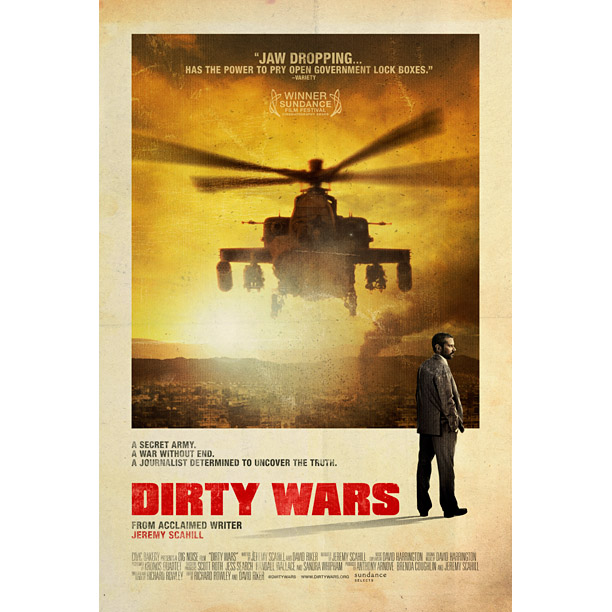
Dirty-Wars-Poster1

Dirty Wars, which was released in June, follows investigative reporter Jeremy Scahill, author of the international bestseller Blackwater, into the heart of America’s covert wars. He travels from Afghanistan to Yemen, Somalia and beyond.

“The war on terror is the most important story of our generation,” said Rick Rowley, director of Dirty Wars. “It’s the reason why I became a war reporter a decade ago, because this is the longest war of our history. We passionately believe the American people have a right and a responsibility to know about the wars being fought in their names around the world.”

This global war on terror has killed thousands and thousands of people, including American servicemen, he said. It has also cost billions of dollars.

“It’s unfolding mostly in the shadows without any public knowledge or without any meaningful congressional oversight,” Rowley said.

Rowley and Scahill wanted to make a film that would bring the war out of the shadows and into the light of public discussion, he said. He wants people to have a conversation about the war, what the United States is doing in the world and what’s becoming of us as a nation, he said.

There were dangers for Rowley and Scahill while they were filming.

“It wasn’t safe for us to travel around with a big crew, so it was just Jeremy and I traveling together,” Rowley said.

Jeremy was the interviewer and on-air talent, while Rowley was the behind-the-scenes person responsible for filming, sound and doing any other production function required of him, he said.

“In each country, we figured out a different way to work and to keep us safe.”

They grew their beards out, dressed in local clothing and drove around in a beat-up Toyota in Afghanistan, he said. They had to feel out the edge of how far they could safely go outside of Kabul.

“We had to go out and came back before the sun set, because the Taliban take control of the roads at sunset.”

Their calculations were wrong occasionally, which is shown in Dirty Wars when they were trying to return to Kabul, Rowley said. There was an ambush, which caused them to be stuck on the road after sunset. They ended up hiding out in a room nearby until sunrise when they could travel safely again, he said.

There plan was to fly below the radar in Afghanistan, but in Somalia it wasn’t a possibility.

“The only way for us to move around was with security,” Rowley said about filming in Somalia. “We never liked the high security because it changes the way you operate in a country.”

In Somalia, they had to drive around with twelve soldiers armed with machine guns, a decoy vehicle and motorcycles riding with the convoy, he said.

“I have never been in a city as dangerous as Somalia. It really is a surreal place.”

They were there filming at the height of the battle between the local insurgency and the African Union. The insurgents weren’t accurate with their weapons past 100 meters, Rowley said.

“We felt relatively safe in that you had to be very unlucky to get hit.”

Jeremy did tell him that he saw the insurgents spraying bullets trying to hit him after seeing a white guy with the warlord, Rowley said.

“Luckily, I didn’t see it or I would have changed the way I was working there.”

Rowley did recount a story that one of the warlord’s troops told him about another journalist who was shot and killed in the exact same spot they were filming at.

The entire filmmaking process took about three years. The film cost between $300,000 and $400,000. It was financed by a number of different foundations, Rowley said.

“It’s a film that wouldn’t have been commissioned by a television network.”

This movie could have only been made with help from the nonprofit sector because of the risks and the scope of the investigation, he said.


Dirty Wars opened at Real Art Ways in Hartford, CT on Friday, July 12. The theater is located at 56 Arbor Street. Director Rick Rowley will be attending the 2:15 p.m. screening at RAW today, which is hosted by the ACLU of Connecticut with Medea Benjamin of Code Pink

Authors and Design Converge at FindTheAxis.com

Stanley Tremblay owns a business, FindTheAxis.com, for authors who need a cover for their print book. All designs range from $300 to $800 or more, depending on what a writer needs. Tremblay has done book covers that wrap from the front to the back. He has also done a continuous image where he has melded multiple images together to create something that goes completely around the book.

If you don’t want to have a print book made, but an e-book instead, he can help you with that as well. Past and present clients include Steve Alten, NY Times bestselling author of the MEG series, Jeremy Robinson, bestselling author of SecondWorld and Island 731, and Steven Savile, international bestselling author of Silver.

Not only does he do covers for print books and e-books, he can also help authors build their websites. He partnered with Mindstir Media and The Novel Blog. He had a hand with building the website for Variance Publishing, Rick Chesler and Rick Jones. Other sites can be found at FindTheAxis.com.

Find the Axis is a full-service graphic design company geared toward book creation and layout. From book covers to e-book and print layout, to HTML websites, logos, business cards, bookmarks and more, Find the Axis works hard to bring top quality work and rapid response to every client, regardless of size.

Tremblay has helped authors and publishing houses in the past. Check out his website, FindTheAxis.com, and contact him to see how he can help you. Keep up with his latest designs on Facebook.

Front and Back Covers Announced for New NEHW Anthology

The front and back cover of Wicked Seasons, the new New England Horror Writers anthology have been announced. They are by Mikio Murakami, who has done covers for Shock Totem magazine.

2013-07-06 23.04.08

Front cover of Wicked Seasons by Mikio Murakami.

The back cover by Murakami.

The back cover.

The table of content for the second New England Horror Writers’ anthology, which is being edited by Stacey Longo, is listed below.

Introduction: Jeff Strand

“Furious Demon” by Addison Clift
“The Basement Legs” by Robert DuPerre
“Hungry For More” by Michael Evans
“The Secret Backs of Things” by Christopher Golden
“Blood Prophet” by Scott Goudsward
“Three Fat Guys Soap” by Catherine Grant
“Chuffers” by Paul McMahon
“Spirits” by James A. Moore
“Bleedthrough” by Gregory Norris
“Lycanthrobastards” by Errick Nunnally
“To Chance Tomorrow” by Kristi Petersen Schoonover
“A Night at the Show” by Robert Smales
“The Girl Who Wouldn’t Break” by Lucien Spelman
“The Widow Mills” by Trisha Wooldridge

Wicked Seasons will be released at Anthocon 2013 in November.

The first anthology, Epitaphs, was published in October of 2011.

Review: ‘Interlands’ is ‘Perfect Example Why Self-Publishing can be a Good Thing’

By Stacey Longo

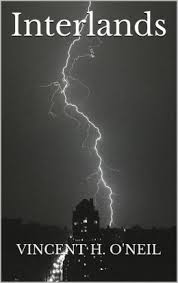
interlands coverInterlands by Vincent O’Neil (2013, Vincent O’Neil) is the perfect example of why self-publishing can be a good thing. The novel is well structured, reads at the perfect pace, and is hard to put down. There is no reason why O’Neil shouldn’t be picked up by one of the big publishing houses; but with so many voices out there, and so little money to sign new authors, it’s hard for a good writer to get a contract these days.

The novel introduces us to Angie Morse, a graduate student who is working on the final touches of her college thesis. The paper’s done, but she’s searching for a mysterious obelisk that she believes still exists somewhere in the area of Providence, RI. She’s found documents and photographic evidence of the monument, and even after uncovering some disturbing folklore surrounding it, is unable to give up her quest. There’s a great deal of mystery surrounding the obelisk as well as Angie herself, and the reader is given pieces of the puzzle along the way to hone one’s curiosity. O’Neil is able to answer questions in such a way that the reader thinks “Oh, that’s why! But what about this?”

The descriptions of Providence are eye opening, and the reader will never look at the city in quite the same way. (Being a New Englander myself, I can’t wait to go back and look at the buildings and train tracks through fresh eyes.) Interlands provides such an accurate and enchanting description of the WaterFire events that are held in Providence every year that if you’ve never been, you’ll swear you have after reading it.

O’Neil’s ability to slip into the horror/supernatural genre is impressive.  He has previously published a series of Frank Cole mystery novels (Murder in Exile, Reduced Circumstances) and a sci-fi novel as Henry V. O’Neil (Glory Main), but he slides into the horror/thriller genre with ease. His novel tips its hat to Providence native H.P. Lovecraft, but O’Neil has a style and structure all his own. There’s no need to be a Lovecraft fanatic to enjoy this book—it has a tight plot and straightforward style all its own.

There were a couple of questions that didn’t get fully answered for me – there’s a mysterious man that Angie dances with that I felt could use more explanation, and (without spoiling anything here) Angie’s reaction to her former roommate at the end was much more placid than I’d expected. But overall, this is a satisfying read. Interlands is vividly crafted and well worth the read.

The Mars Patrol Releases Follow-up Album

By Rob Watts

London’s indie rockers have done it again. The Mars Patrol have released their long-awaited follow-up to 2010s Landline, and it’s nothing short of perfection. Young Lovers illuminates the band’s desire to tread steady into the pop-rock universe on their own terms, not unlike many of their U.K. Peers such as A Silent Film or The Boxer Rebellion. Young Lovers was produced by lead guitarist Ross Nelson (and mixed by Grammy-nominated Tim Palmer of U2 and David Bowie albums), the band retreated  to an old farmhouse in the English countryside to escape the pressures and distraction that their London hometown offered. The result was a masterfully blended e.p. that boasts all the hallmarks of a big-budget, radio-friendly listening experience.

Lyrically, Young Lovers puts forth the bands growth and maturity and gleefully reveals the band’s intention to remain in the race as long-distance runners, not mere sprinters. “Here We Go” opens the album up with Davina Divine’s beautifully delivered lyrics “cause I can’t wait for what I can see/when it’s just so close it’s in front of me.” “Stop Pushing You Away”, the lead single delivers a glossy and stylish pop ballad sans the usual desperation such songs anchor us with. “Coming Home” is a slow-tempo ballad that builds with a towering sheen of guitars from Nelson and James Williamson and a healthy coda of Lewis Searle’s drums. “I Wonder” is reminiscent of “I Still Want You” from the band’s debut album, Are You With Me?.  Divine’s compelling delivery of such songs convey to the listener the vulnerability and emotion of heartbreak and falling in love. The title track closes the album up brilliantly with the band’s trademark upbeat and rhythmic nuances. Stephen Parker’s thumping bass and Matt Baker’s atmospheric vibes snap tightly together with the rest of the band’s musicianship to complete yet another enjoyable delivery from the U.K.’s most exciting band.

Check out the band’s website by clicking here.

Books & Boos Blog Entry about the Holly Newstein Hautala Fundraiser

The fundraiser went well today. The bookstore raised almost $350 for Holly. Her husband, author Rick Hautala passed away unexpectedly on March 21, 2013. Unfortunately, before he died, his life insurance policy lapsed. His widow and family are struggling to pay expenses related to his death. Anyone who has met Rick knows what a genuinely kind and decent man he was.

Not every item in the silent was bid on so we will be putting those items up on Ebay and/or our Amazon page. We will let you know when they are listed.

We want to thank Bill and Marge Rockwell, Scott M. Goriscak, David Price, T.T. Zuma, Trisha Wooldridge, Vincent H. O’Neil, Ronald Winter, Dan Foley, G. Elmer Munson, Jennifer Allis Provost, Dale T. Phillips, Vlad Vaslyn, Lauren Middleton, Tim J. Finn, Brian and Loretta White, Richard Tomas, Sandy Deluca, Leslie O’Grady, Linda Orlomoski, Kristi Petersen Schoonover, Daniel Keohane, Tracy L. Carbone, Stephen D. Rogers, Alex Scully, T.G. Arsenault, Carson Buckingham, Hal Kinney and Robert Heske.

The above list of people participated by appearing at the fundraiser, donating to it, or just helping by setting up and making food for the event. It was greatly appreciated.

We also would like to thank Rob Watts, Erin Thorne, Philip Perron, Gardner Goldsmith, Bracken MacLeod, Stephanie Johnson, Kate Laity, Amy Grech, and Catherine Grant for either sharing on Facebook, tweeting/retweeting on Twitter and/or writing blog entries about this fundraiser. Thank you for taking the time to promote this event.

We would also like to thank John Valeri of the Hartford Examiner and Ryan Blessing of the Norwich Bulletin for writing about this fundraiser.

We want to thank Pastor Kevin Zufall (Church of Hope) for lending us chairs for the event.

This entry is from the Books & Boos’ blog. You can read and see the pictures from the fundraiser by clicking here.