Book Review: “VWars: Blood and Fire”


By Stacey Longo

V_Wars_Blood_and_Fire

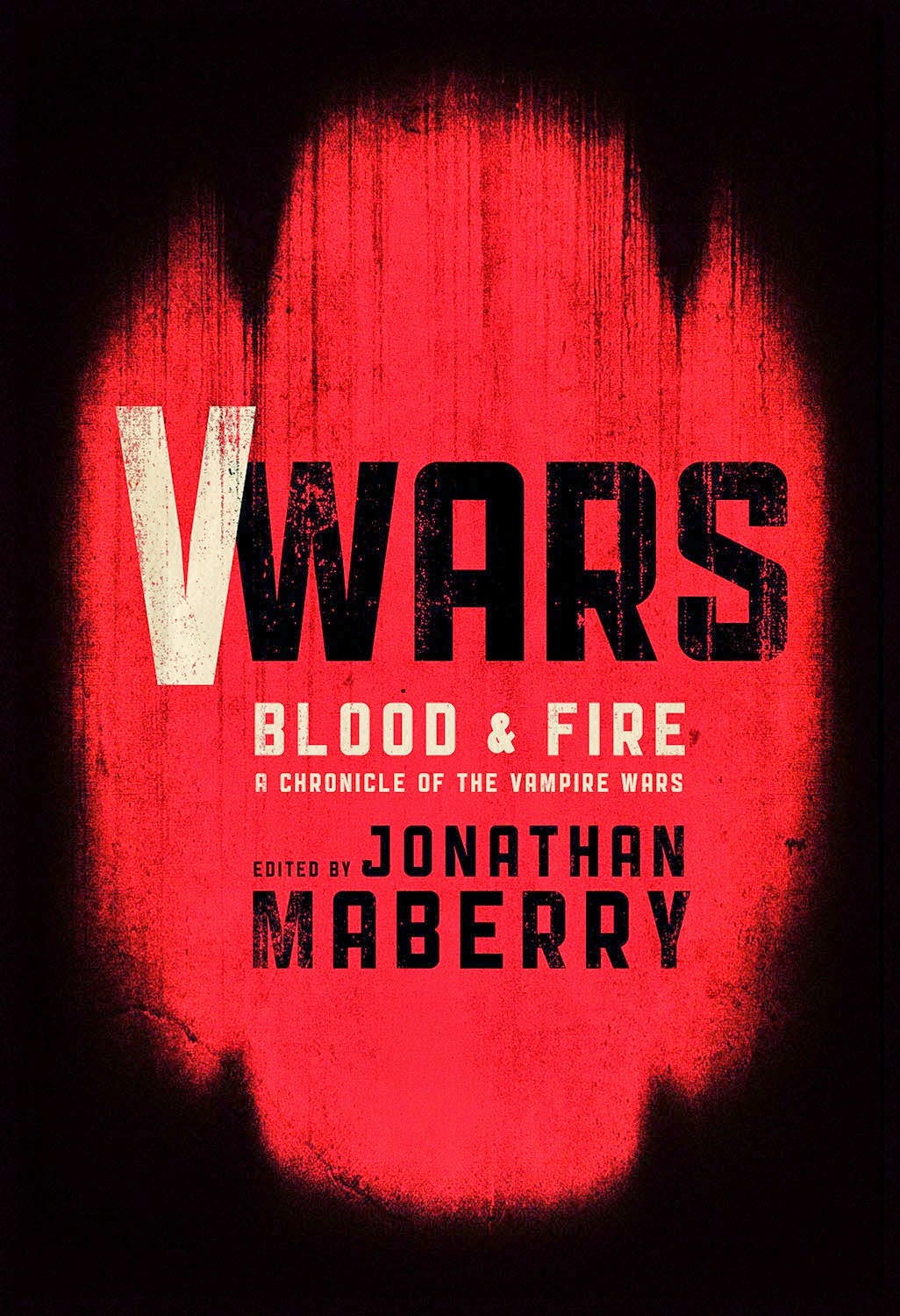
VWars: Blood and Fire is the second installment in the VWars series, edited and co-authored by New York Times bestselling author Jonathan Maberry, featuring such talented writers as Kevin J. Anderson, Larry Correia, Joe McKinney, James A. Moore, Yvonne Navarro, Weston Ochse, and Scott Sigler. The book is set up in a manner reminiscent of World War Z, in which the reader is treated to snippets of the escalating battle between the “Beats” (humans) and the “Bloods” (vampires). No need to worry if you haven’t read the first one (though I do recommend the first installment): the anthology is character-driven, engaging, and sucks the reader in from the first page.

Maberry leads off with “Apocalypse Tango” (broken up into seven parts and interspersed between other stories, as many of the tales in this book are), which introduces us to Luther Swann, an important figure throughout this book. This story maps out what’s going on—families are getting slaughtered, tensions are escalating, and Swann is unable to prevent what appears to be another war against the vampires.

“The Enemy Within” is a solid entry from Yvonne Navarro, who introduces us to Mooney, a vampire uncomfortable with her new status. She becomes immersed in local vamp infighting. Mooney is an intriguing character, and this story will have you hoping that Mooney gets her own novel someday.

Joe McKinney introduces us to thirteen-year-old Ernesto in “Tenochtitlan Will Rise,” showcasing yet another facet of the developing tensions. Through Ernesto, who is just trying to take care of his grandfather, we see how closely war can hit home.

“War Torn,” the piece from James A. Moore, creates an engaging voice in Johnny Lei. Lei is empathetic, and you’ll find yourself rooting for the misunderstood vampire, until he reminds you that first and foremost, he is a predator.

“Suicide Games,” also by Maberry, lets us know that there’s more to fear in this war than just vampires and humans.

Next up is “Solitude” by Kevin J. Anderson, a standalone piece about a veteran of Afghanistan who just wants to be left alone. It’s intriguing and haunting.

Maberry pops back in with “Let God Sort ’Em Out,” in which we’re treated to battle scenes, the internal struggle that our old friend Swann continues to deal with, and the introduction of a dynamic new character, Big Dog.

“Manifest Destiny” is Weston Ochse’s contribution, and showcases the cruelty and destruction of which both man and vampire are capable. Underlying in this piece is a cynical commentary on role the media plays in life-or-death situations.

Larry Correia gives us “Force Multiplier,” another standalone story, this one about the far-reaching destruction the war has wrought.

Scott Sigler is up next with “The Hippo,” a fascinating piece about a serial killer hunting amid the vampire wars. This was probably my favorite story in the book—it finally let the reader get a glimpse of reporter Yuki Nitobe, who is mentioned in several other pieces, plus, it reminds the reader that not all of the monsters in this book are vampires. Humans are capable of some pretty awful things, too.

“La Belle Dame Sans Merci” shows some behind-the-scenes negotiations between Swann and the Crimson Queen, in which we learn that neither side, really, wants this war.

Finally, Maberry concludes with “Monsters in the Dark,” a brilliant character portrait of a vampire that is intriguing, opens up new questions, and leaves the reader wanting more.

Overall, VWars: Blood & Fire showcased some fabulous writers, kept me turning the pages, and got me excited about the next collection. VWars: Blood & Fire is available in bookstores and on Amazon here.

Movie Review: ‘The House Across the Street’

By Stacey Longo

Jessica Sonneborn in The House Across the Street.

Jessica Sonneborn in The House Across the Street.

In The House Across the Street (2013, Eyethfilms) Amy Fielder (Jessica Sonneborn) has just moved from Kansas, and rents an apartment from Tom (Ethan Embry), a creepy landlord whose over-eagerness to rent to her should have made Amy think twice from the get-go. Amy finds herself fascinated by the house across the street, and watches the goings-on over there cautiously and voraciously. She also starts meeting some of her neighbors, none who seem too eager to give her any information about the house that fascinates her so.

The neighborhood where Amy now lives must be the friendliest in New England, because Mr. Barnes (Alex Rocco) keeps insisting she come over for lunch, and Ned (Courtney Gains, who still evokes memories of Malachai from Children of the Corn even as he approaches middle age) invites her to her home and offers to bring her food. The only people who aren’t friendly are the cops—after Amy finds a woman laying in the road, Officer Peterson (Eric Roberts) warns her not to make trouble, and Amy is subsequently pulled over by the police three more times. The only person who seems willing to help is Kyle, an officer who is also fairly new to town. But the message Amy continues to get from both cops and neighbors is the same: leave well enough alone.

Apparently, this isn’t in Amy’s nature, because after snooping around town hall and getting sideswiped by a car for her efforts, she decides to check out the house across the street for herself. Now on crutches, she hobbles from room to room until she finds Daisy (Sara Murphy), the daughter of the woman who was lying in the road earlier. Daisy is drugged and weak, but Amy manages to get her out of the house and hides her away in her own place across the street.

The movie moves rapidly at this point, as Amy starts to piece together the clues and figures out what’s been going on at the house across the street and who is involved. It turns out that Amy can trust nobody, and her world and new friendships start falling apart as we head to our violent and bittersweet conclusion.

The House Across the Street boasts a dynamic, talented cast that doesn’t disappoint. Roberts is completely at home in his role of small-town officer walking that thin line between keeping citizens in line and protecting the people in his town. Alex Rocco is brilliant (as always) as the forgetful, bumbling Mr. Barnes, and stole every scene in which he appeared. Courtney Gains, Ethan Embry, and Josh Hammond were also notable in the film. The movie was entertaining, though it did drag in places, and the scriptwriters missed a golden opportunity to add the twist of unreliable narration when Amy ran out of antipsychotic medication. Some of the methods in which Amy figured out the truth seemed contrived, yet others were pretty clever. Overall, The House Across the Street was slow, suspenseful, and disturbing—all good things.

Check out the movie’s website here.

Pictures from Queen City Kamikaze 2015

By Jason Harris


2015-03-07 12.17.04

2015-03-07 12.57.16

2015-03-07 13.46.46

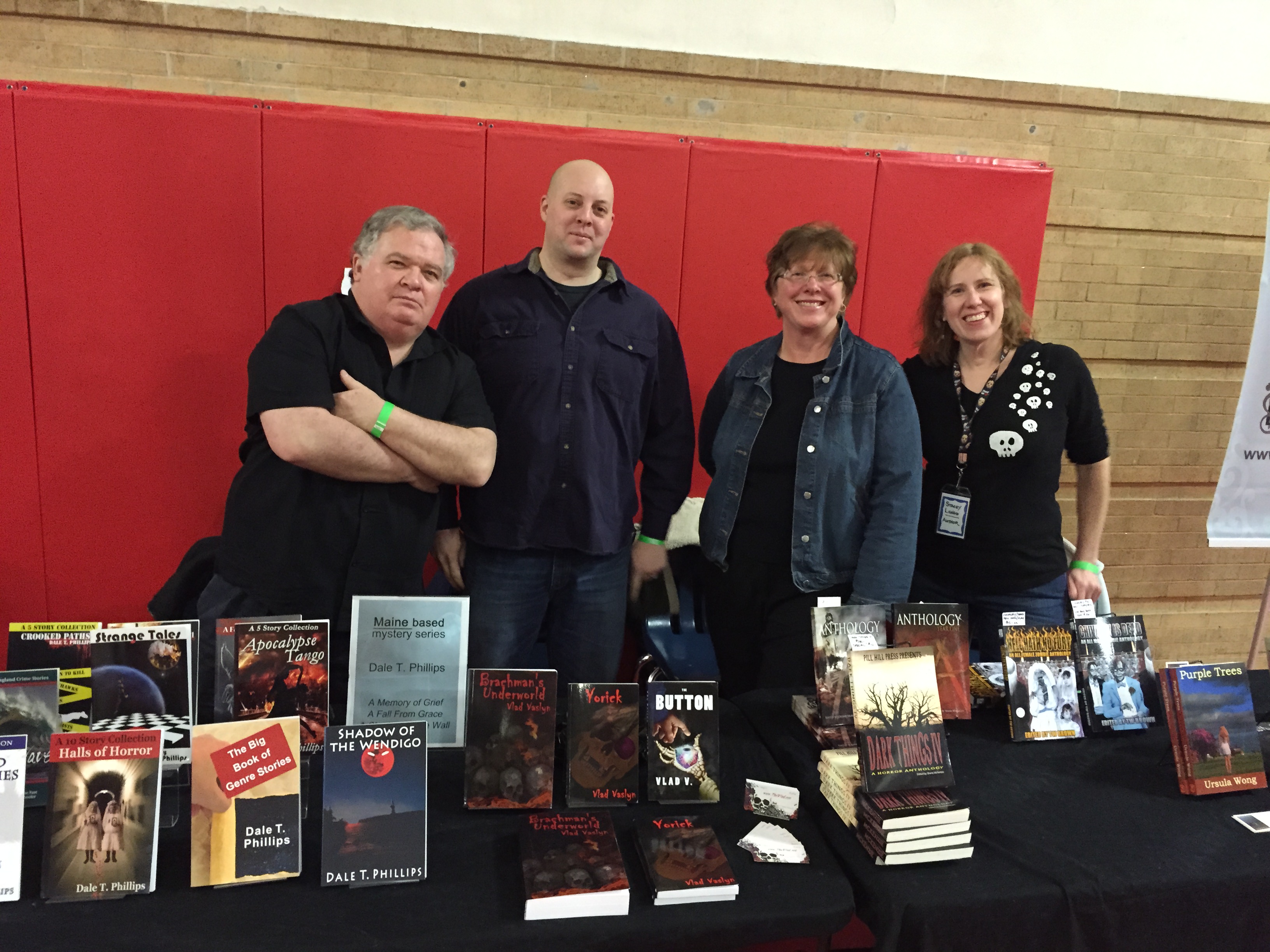
Authors Dale T. Phillips, Vlad V., Ursula Wong, and Stacey Longo at the Books & Boos' tables.

Authors Dale T. Phillips, Vlad V., Ursula Wong, and Stacey Longo at the Books & Boos‘ tables.

2015-03-07 13.46.29

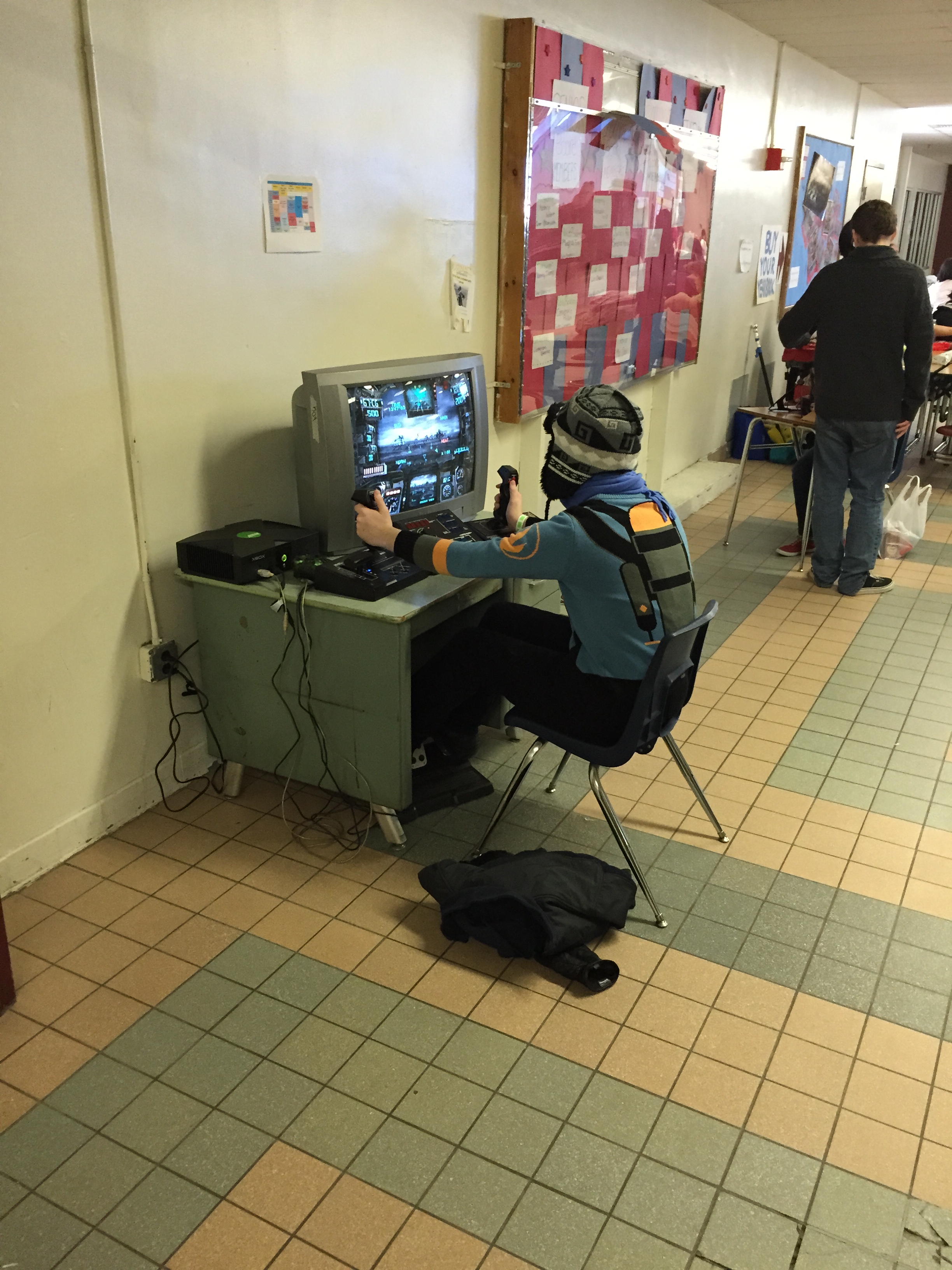
Convention attendees playing video games on the big screen.


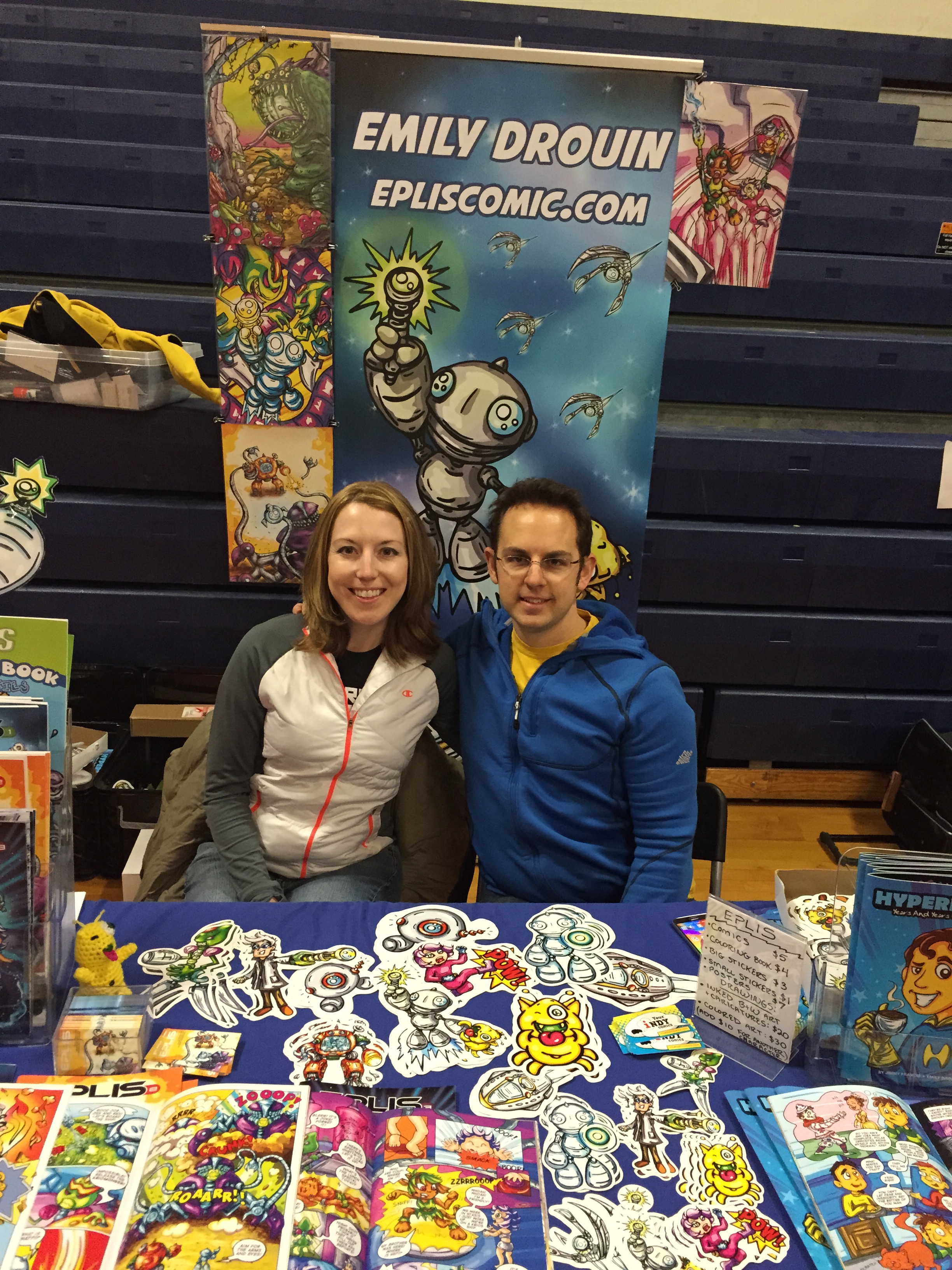
From left to right: Emily Drouin,  an illustrator, comic book artist, caricaturist, and painter and Jeremy Drouin, writer.

From left to right: Emily Drouin, an illustrator, comic book artist, caricaturist, and painter and Jeremy Drouin, writer.

2015-03-07 11.29.53

2015-03-07 11.42.02


2015-03-07 11.53.30

Jason Voorhees from Jason X.

Jason Voorhees from Jason X.

Authors David Daniels, Dale T. Phillips, Stacey Longo, and Vlad V., the authors in the collection, Insanity Tales, published by Books and Boos Press.

The Writing, Editing, and Collaborating on a Book Panel: authors David Daniel, Dale T. Phillips, Stacey Longo, and Vlad V., the authors in the collection, Insanity Tales, published by Books and Boos Press. Photo by Jason Rivers.

2015-03-07 17.39.34

The Two Jasons. Jason Voorhees and Jason Rivers.

The Two Jasons. Jason Voorhees and Jason Rivers.

2015-03-07 13.45.26

2015-03-07 12.17.58

You can find out about Queen City Kamikaze here.

Book Review: ‘The Great Grammar Book’


By Stacey Longo

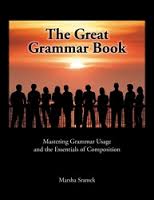
The Great Grammar Book

I am a copy editor for a Fortune 100 company by day, a copy editor by night for a small press, and a writer. As such, I am extremely rigid and unforgiving when I am asked to review and analyze a book about grammar and syntax. I am happy to say The Great Grammar Book (Second Edition) by Marsha Sramek exceeded my expectations.

The book uses familiar and easily understood language to go over the fine details of the English language, patiently walking the reader through each step, starting with parts of speech and ending with a comprehensive chapter on successful writing techniques. The example sentences used to demonstrate the nuances of the lesson being taught were full of interesting trivia, making this not only an informative review but also an interesting read.

My favorite things in this book were the pointers regarding commonly misused words. (Chapter Two, for example, patiently explained that “alright” does not exist in standard English—a pet peeve of mine when it crops up.) There were numerous examples highlighting common errors, all of which made me start mentally composing a list of people who would benefit from this book. Suffice to say, most of my holiday shopping is now done.

The only proofing error I found was in Chapter Five, “Using Apostrophes Correctly.” Chicago Manual of Style, 6.114 notes that the using the left single quotation mark “should always be construed as an error.” Basically, the tail of the apostrophe should always point to the omitted text, which didn’t happen in the section on omitted numbers (Spirit of ’76 was displayed as ‘76, for example). This is, of course, a minor error, but one I’m sure the author is chastising herself over as I type this.

The Great Grammar Book is fabulous for writers, editors just starting out (I found it to be overly simple for my editing level, but it never hurts to review the basics) and anyone who misuses the English language on a daily basis. I’ve brought it in to work with me to use as a reference when I’m tired and second-guessing myself. This book should be mandatory for every writer’s library.

The Great Grammar Book is available on Amazon here.
Author Marcia Clark Talks about ‘The Competition’

By Stacey Longo

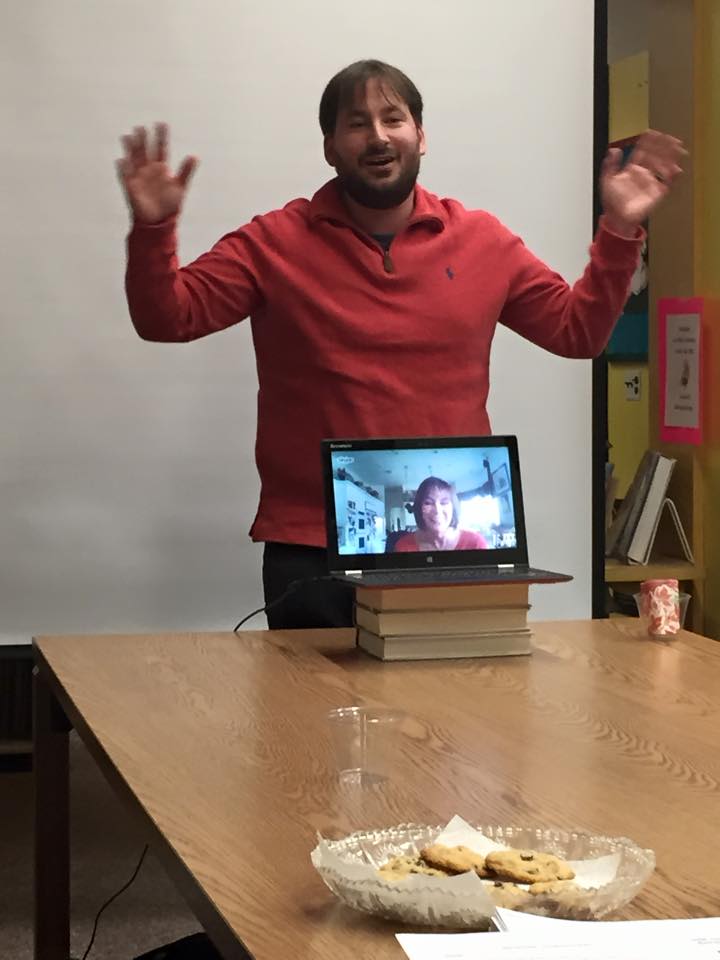
John Valeri and author Marcia Clark on Skype.

John Valeri and author Marcia Clark on Skype. Photo by Stacey Longo.

Former L.A. District Attorney Marcia Clark made an appearance via Skype at the Bentley Memorial Library in Bolton on January 8 to discuss The Competition, the fourth book in Clark’s Rachel Knight crime fiction series.

The event was moderated by John Valeri, who pens the Hartford Books Examiner column. Valeri kept the mood light as technical and other difficulties kicked off the event—first, Clark was caught in L.A. traffic, and then the Skype connection wasn’t working. Clark and Valeri started the discussion on speakerphone until the Skype issue was resolved.

Sixteen enthusiastic readers braved the cold weather to ask Clark about her book. The Competition revolves around Rachel Knight investigating a school shooting reminiscent of Columbine. Clark explained how she researched Columbine prior to starting to write the novel, learning more about Eric Harris and Dylan Klebold’s psyches and situations. The Newtown school shootings in Connecticut happened right as Clark turned in her draft of The Competition to her publisher. She and her publisher decided to move ahead with the book’s publishing schedule, as the theme seemed even more relevant and important after the events in Newtown.

The audience agreed that The Competition was at times difficult to read due to the subject matter, but well written and suspenseful. Clark shared some insight into her life these days—besides maintaining a hectic publishing schedule, she also writes appeals briefs and occasionally appears on television. While the audience was respectful of Clark’s request that her most famous trial not be brought up, Clark herself did refer to it when asked why she worked as a prosecutor and not a defense lawyer for much of her career.

“Keep in mind that what you saw in the Simpson trial was not the norm,” Clark said, though she did admit that there is a lot more freedom when working as a defense lawyer. “You only have to convince one person [of reasonable doubt], not twelve [of guilt].” Clark started her career as a defense attorney, but “I wanted to represent the victims,” she explained regarding her move to the prosecutor’s table.

Clark was articulate and endearing as she answered questions. She and Valeri played off of each other well, and attendees praised the event. As one person in the audience posted on Facebook later in the evening: “Great time tonight listening to John Valeri interview the brilliant Ms. Marcia Clark!”

A Book Suggestion for the New Year


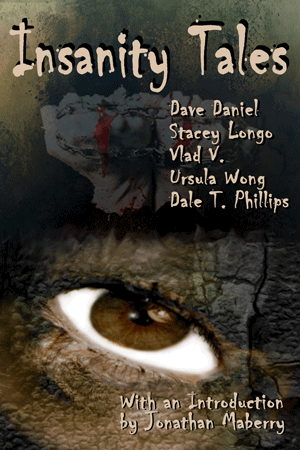
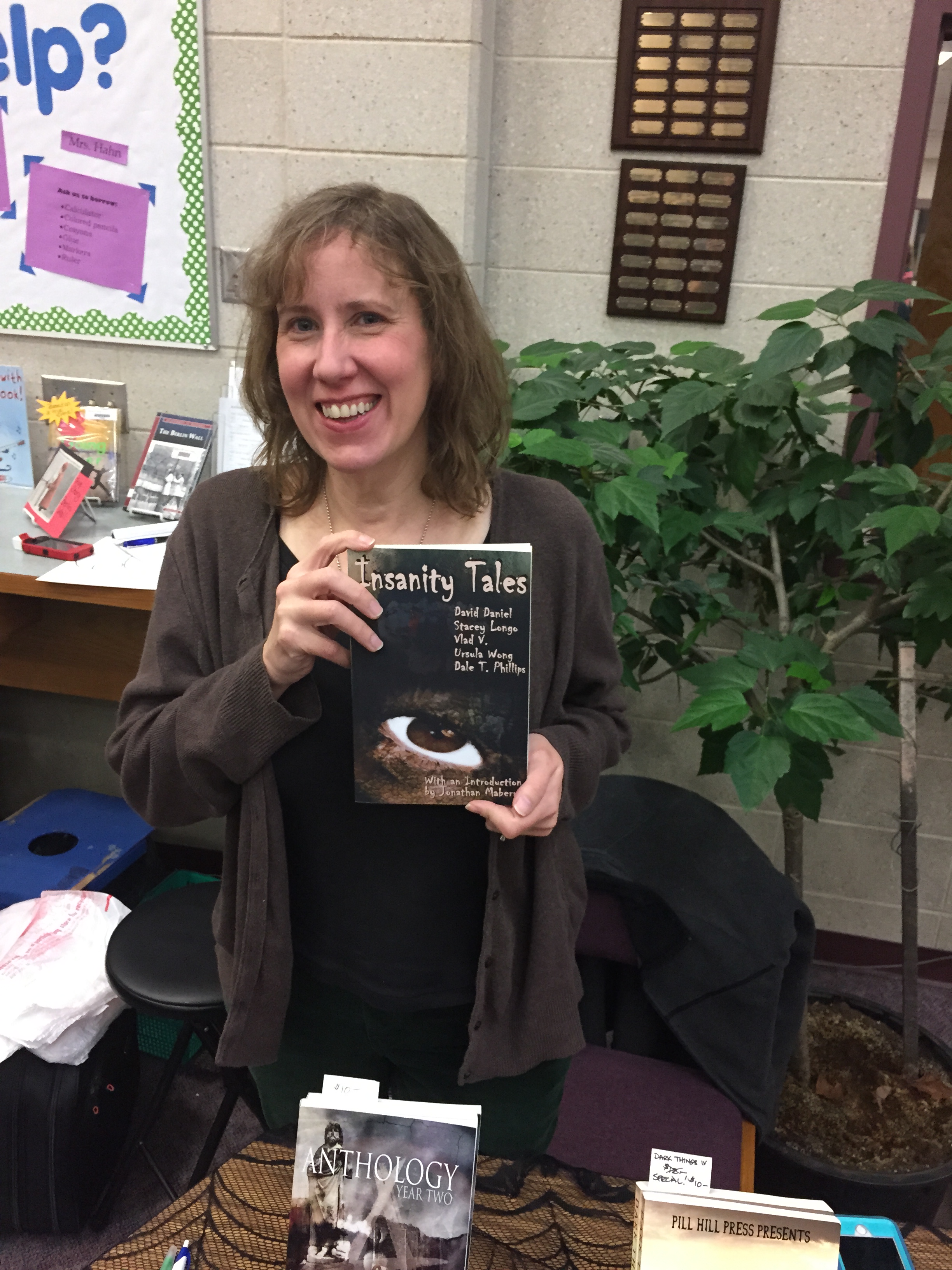
It’s December 31, the last day of 2014. What do you plan to do in 2015? If you are a reader, I would suggest the anthology, Insanity Tales. It’s a collection of work by five authors: David Daniel, Stacey Longo, Dale T. Phillips, Vlad V., and Ursula Wong. 2014-10-03 12.13.50Insanity Tales includes a foreword by award-winning author Jonathan Maberry (Rot & Ruin) and published by Books & Boos Press. Be prepared to enter a world of madness as you read these nine tales of twisted psyches, peculiar people, and demons of the mind and spirit.

Anthologies are a great way to discover new talent, so order the paperback or e-book today by clicking here.

You can find out about Books & Boos Press here.


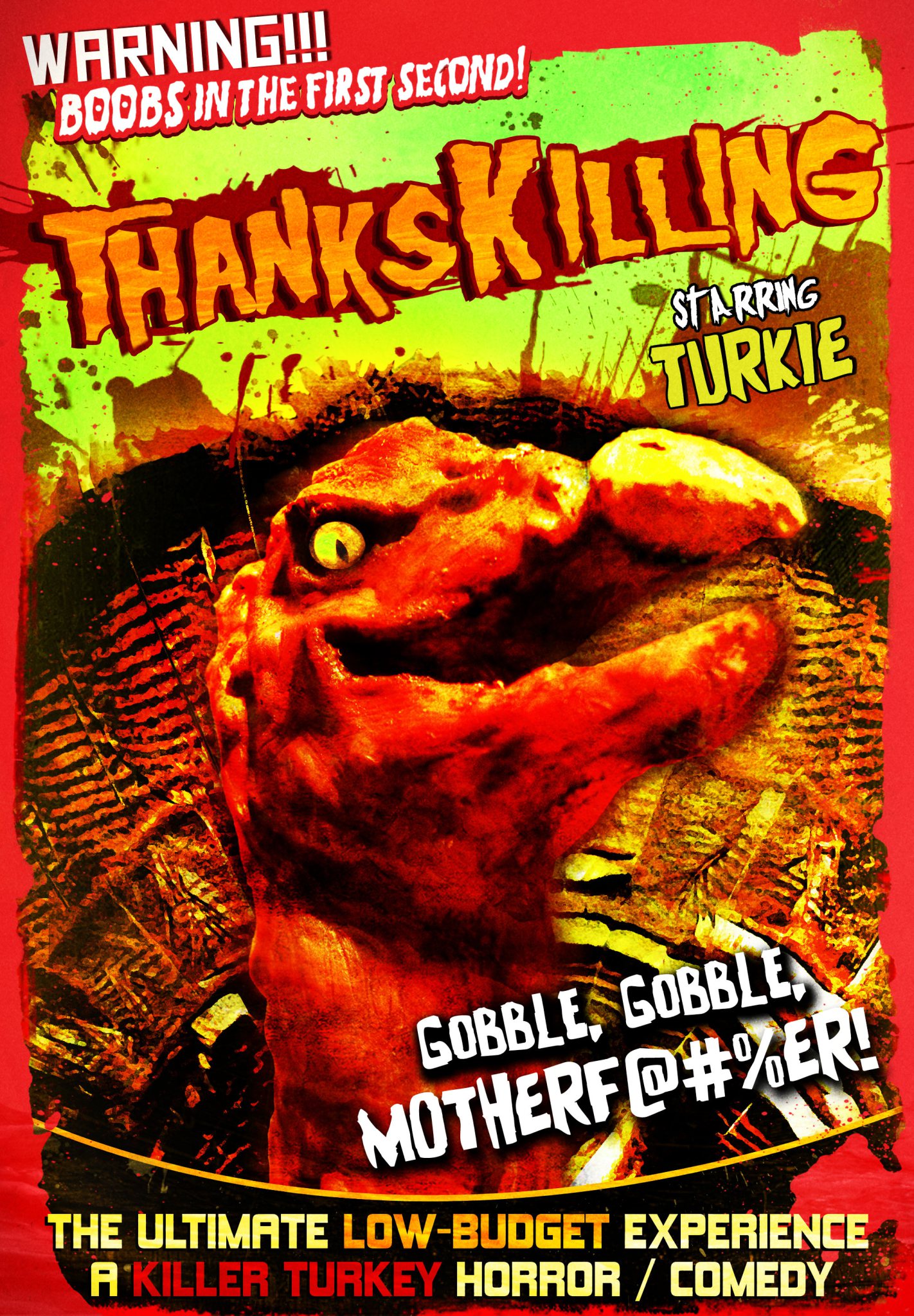
Movie Review: ‘Thankskilling’


by Stacey Longo

thankskilling

Thankskilling (2009) is a delightful testament to everything that can go right in a cheap B-horror film. The plot: a legendary bloodthirsty turkey murders college kids, one by one, over Thanksgiving break. Sounds marvelous, right? It is!

Ali, Kristen, Johnny, Billy, and Darren (or, in genre terms, the slut, the good girl, the jock, the fat funny kid, and the geek) are on their way home for the holiday break when their car overheats. They decide to pitch tents for the night and Darren tells a scary campfire story about a homicidal turkey. He thinks he’s making it up, but it turns out this legend is true: Turkie soon appears on the scene, leaving a gory trail of dog innards and turkey turds in his wake.

It turns out that Turkie returns every two-hundred-and-something years to exact vengeance on the town that slaughtered his brethren for that first Thanksgiving meal. The teenagers involved might be related to some of the pilgrims—or not; it was a plot point that disappeared as quickly as it popped up. Regardless, Turkie is on the prowl, and nobody’s safe.

Turkie’s one-liners and laughable disguises as he hunts down the group of friends will make you laugh so hard, gravy will shoot out your nose. There’s one scene in which Turkie, dressed as a human (wearing a ridiculous pair of sunglasses complete with plastic mustache that will make you giggle just looking at it) has coffee with Kristen’s father (dressed as a turkey) that is just as awkward and bizarre as you’d expect from a movie about a killer turkey. After Ali meets an untimely end, the gang heads to Kristen’s house because, as she says, “My dad has a huge collection of books. I’m sure he has something on killer turkeys.” (As would any decent private library, of course. Don’t we all have books on fowl lore and legend on our shelves?) Her father greets her at the door, but wait—is it really her father, or a turkey wearing her father’s face as a mask?

“You look different,” Kristen tells her father, squinting suspiciously at him.

“Err . . . I got a haircut,” Turkie says, and the group buys this excuse without thinking twice. Fabulous.

The kids start going through all of the books in the hope that they can find out how to defeat the killer bird. There’s a delightful scene in which the brainy kid teaches the porky kid how to read, and the looks on their faces as they overact this sequence is worth every moment of your life that you’ve wasted watching this movie. The book-cramming pays off, of course, when they find an ancient ritual that seems to be the answer to all of their problems.

To fight the evil curse of Turkie, the gang must chant specific words and perform convoluted rituals, which they predictably get wrong. You won’t be upset, though—Turkie, despite being the antagonist in this film, is undeniably the most likeable character, and you’ll be rooting for him and hoping for a sequel. Your hopes will be fulfilled, but that’s a review for another day.

Full of juvenile humor, occasional frontal nudity, and cringe-worthy puns, Thankskilling is a must-watch film for any B-horror fan.

The Official Pre-Christmas Writer’s Promotion Part 6

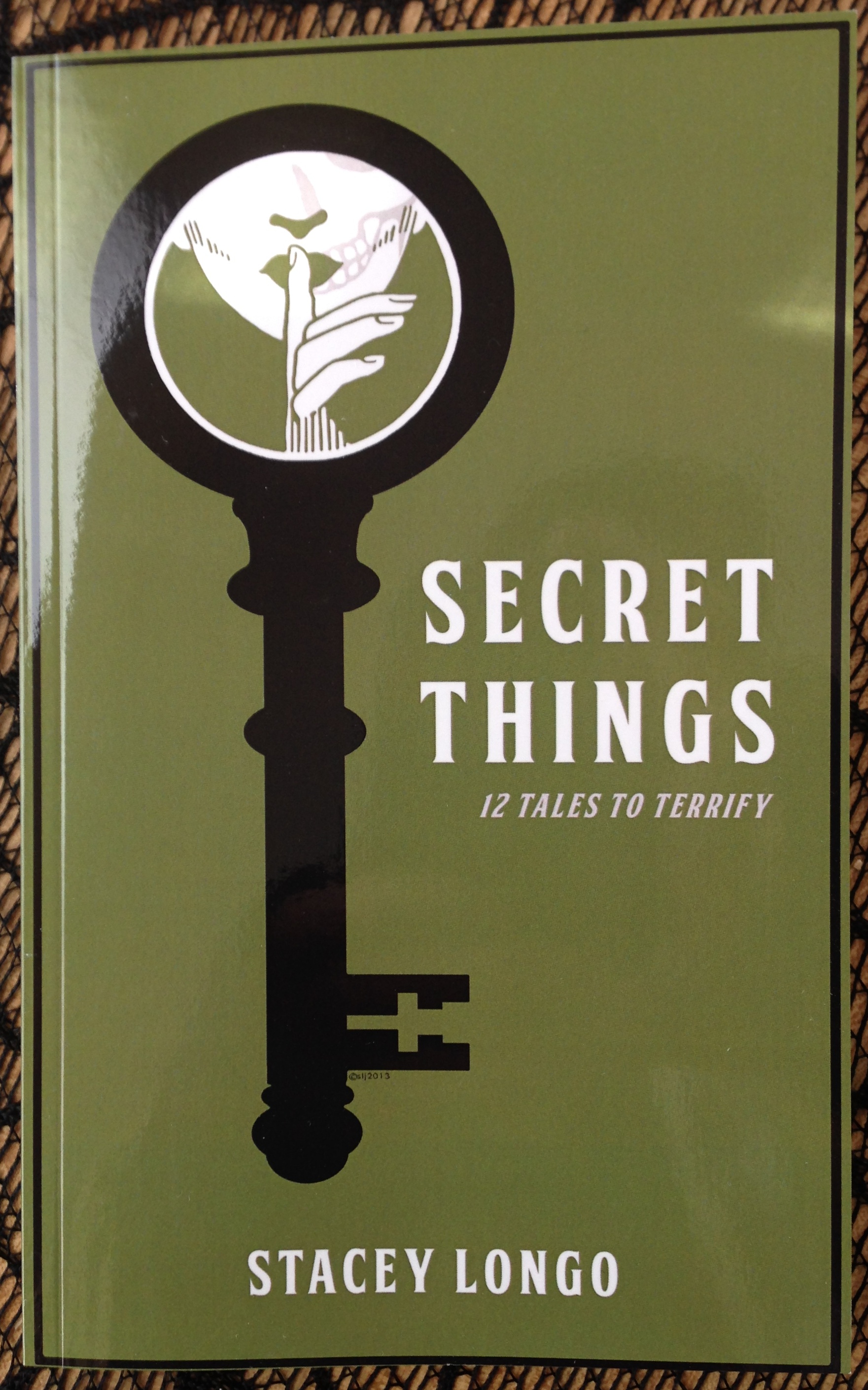
2014-01-23 14.48.17Looking for a good book this holiday season? Check out Secret Things by Stacey Longo. It’s a collection of unapologetic chillers. Perfect for your horror fan’s stocking, this collection of wickedly entertaining stories will compel you to lock the doors, keep the lights on, and ponder what it might be like to embrace the darker side of human nature.

Everybody has secrets. Sometimes they can kill you. Find out and purchase your own Secret Things here.

Connecticut Author Participates in Bacon Academy’s Annual Arts and Crafts Fair

By Jason Harris

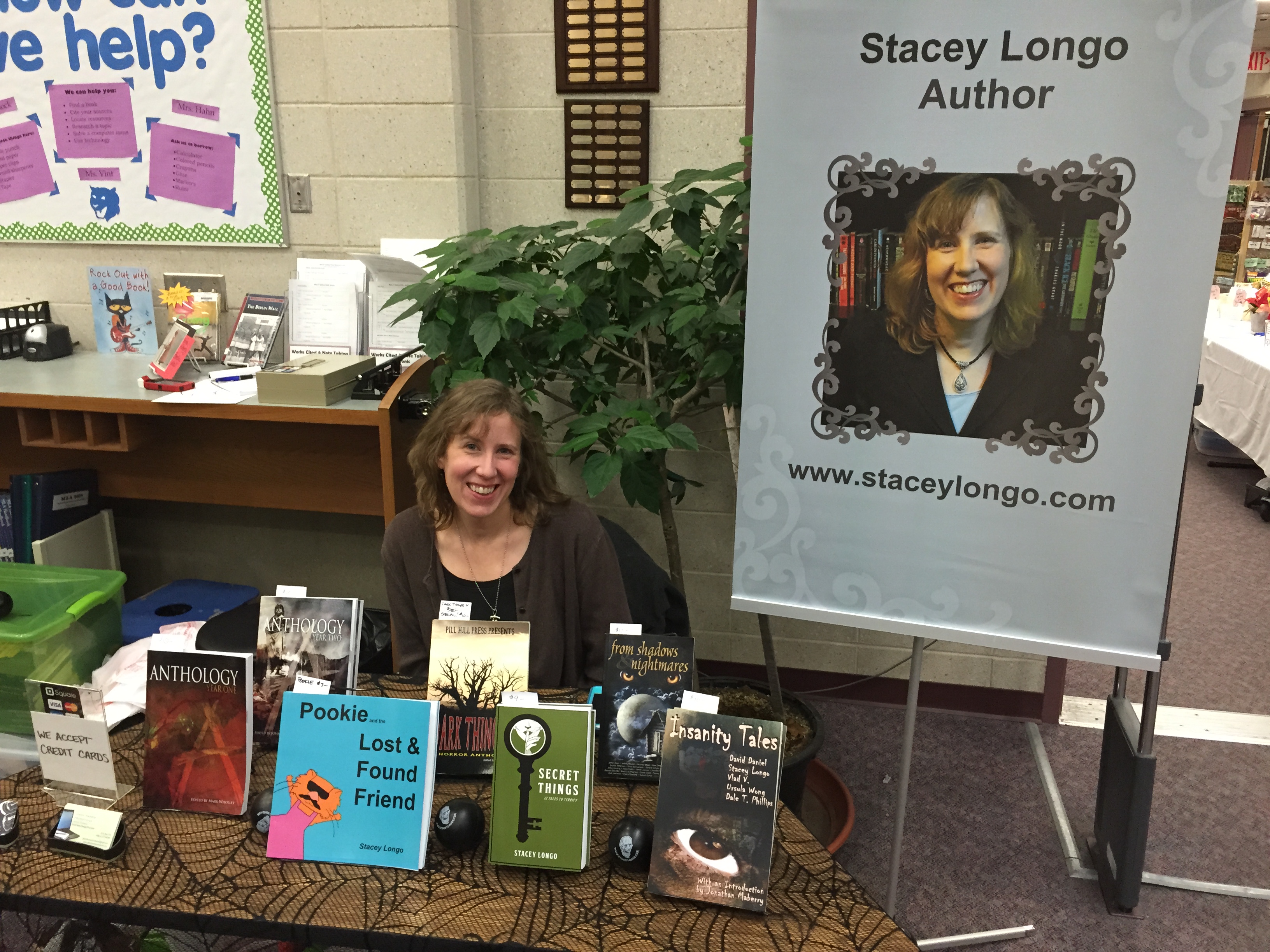
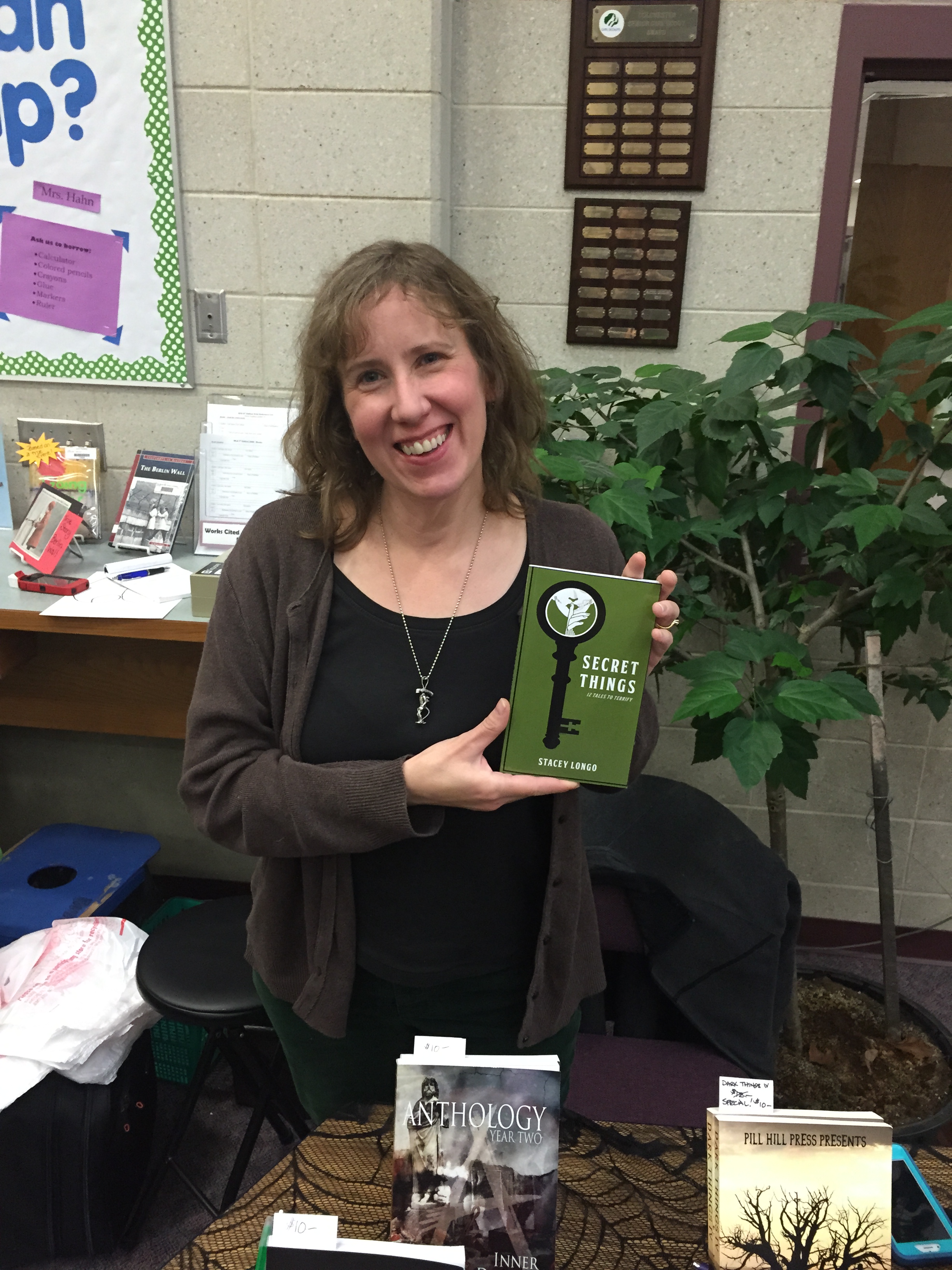
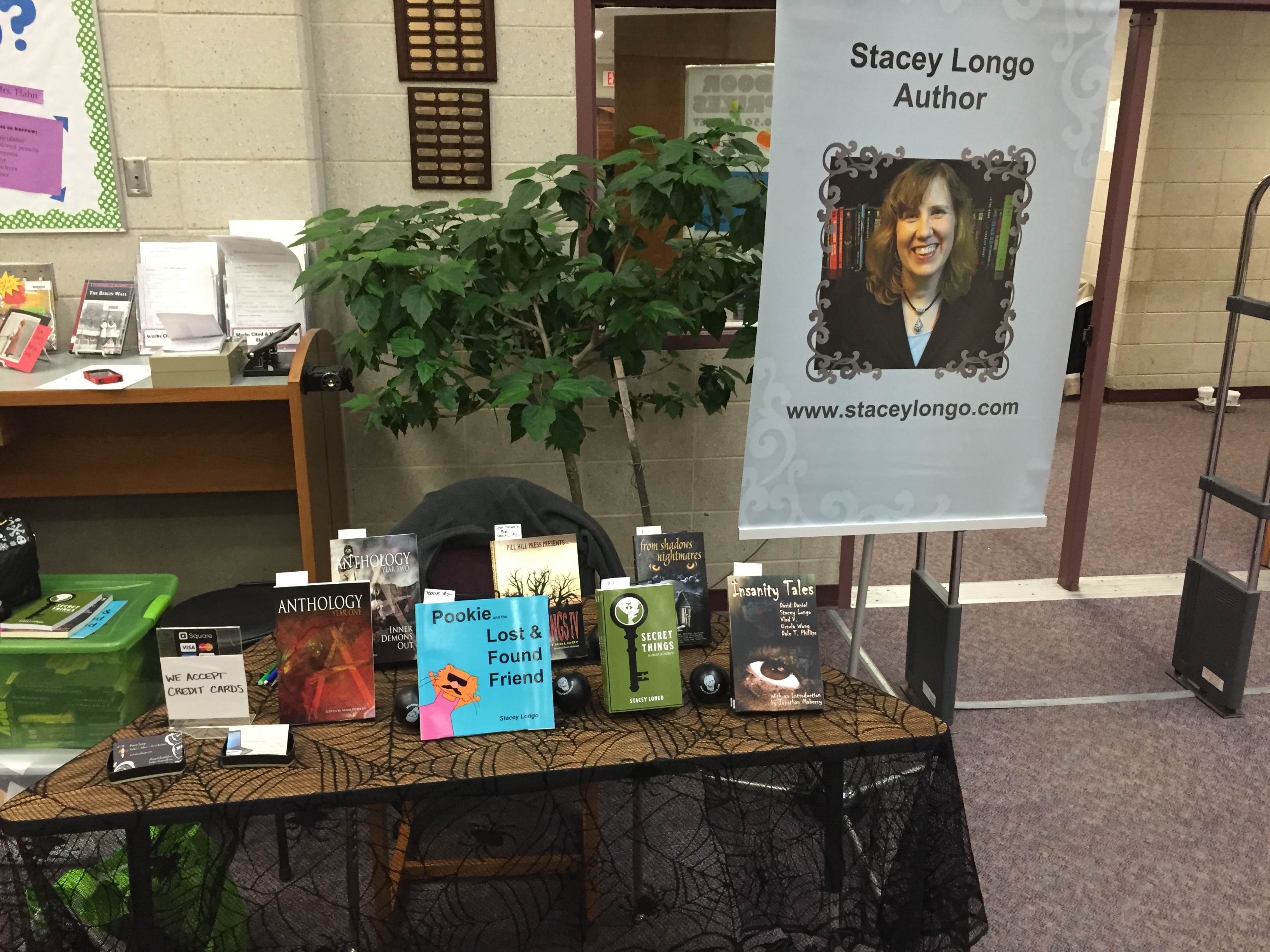
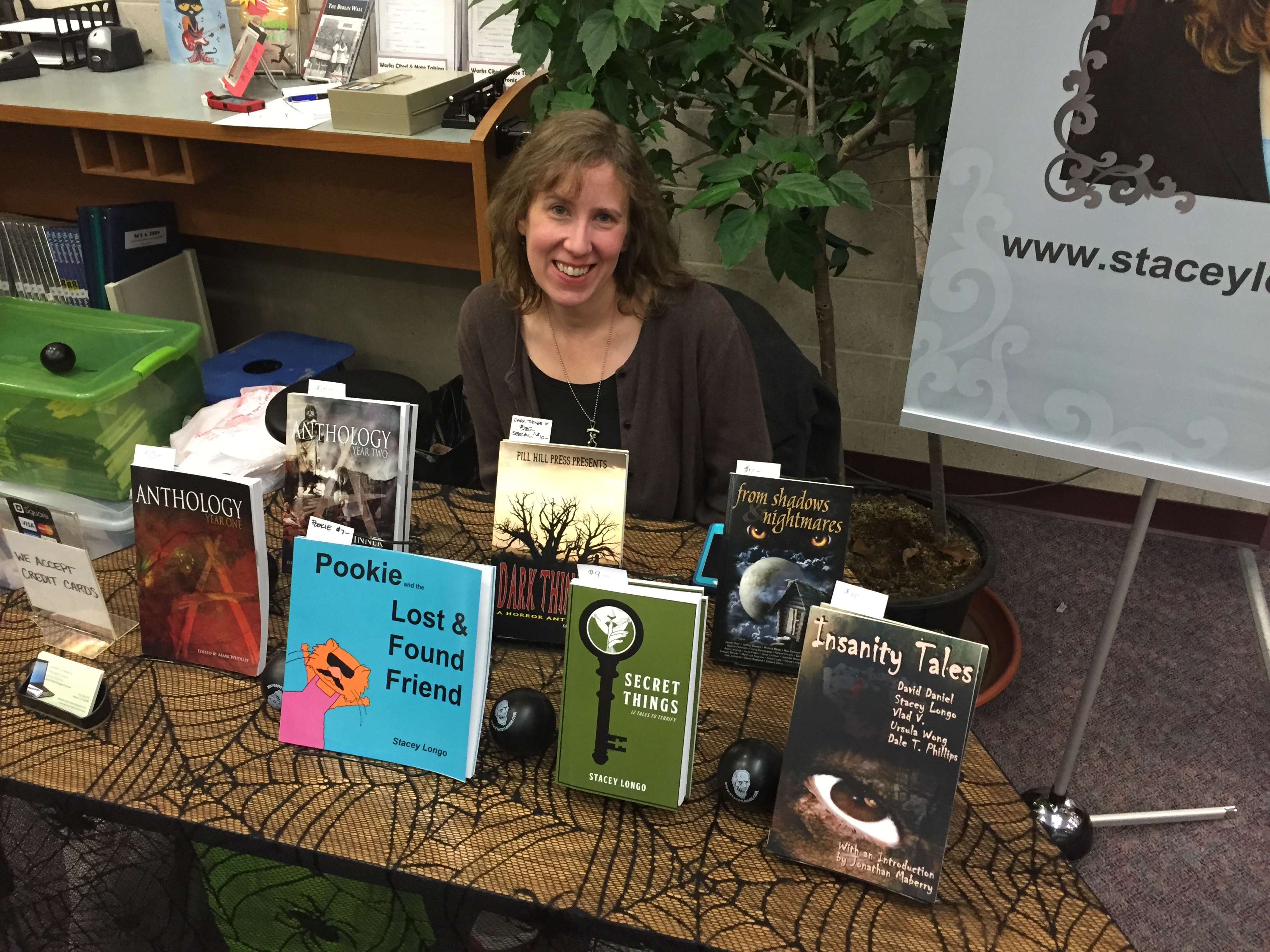
Bacon Academy held its third annual Sleigh Bells Arts & Crafts Fair at Bacon Academy in Colchester, Connecticut. This year Hebron author Stacey Longo was on-hand selling and signing her books including Secret Things and Pookie and the Lost & Found Friend.2014-12-06 09.28.56

Author Stacey Longo holding her book, Secret Things.

Author Stacey Longo holding her book, Secret Things.

She also had a number of anthologies she has stories in at her table. One of the anthologies was Insanity Tales, which was published this past October.

2014-12-06 09.29.27

2014-12-06 08.43.02

2014-12-06 09.29.01

Book Review: ‘The Witch of Painted Sorrows’ by M.J. Rose

By Stacey Longo

cover_witch_sorrows

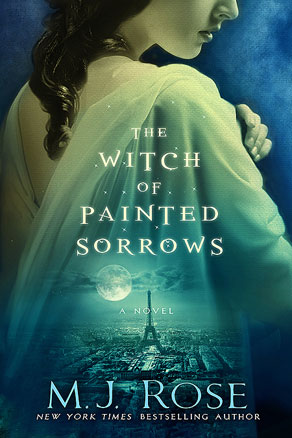
The Witch of Painted Sorrows, the latest offering from M.J. Rose, paints a tempestuous a portrait of a woman fleeing her corrupt husband to seek refuge with her grandmother in Paris. Sandrine, who has never known love, finds passion ignited within her when she meets Julien, discovers a talent for painting she never knew she had, and begins indulging both of these desires. The question becomes whether she is simply discovering her true self, or is there another, supernatural element involved?

Sandrine’s husband is responsible for her beloved father’s suicide, and Sandrine, unable to live with him a moment longer, escapes to her grandmother’s house to hide from him and find herself. Grand-mere is nervous having her granddaughter there, and fears that exposing Sandrine to the ghosts of their ancestors will set off a chain of events that can only end in despair and death for those possessed by the past. Sandrine is unwilling to accept that her newly awakened passions might be the result of a centuries-old courtesan witch. Her struggle to find herself and learn more about her fiery ancestor results in a climax embracing the basest of emotions: lust, love, hate, and vengeance.

Rose immerses the reader in a lush, vibrant scene of late nineteenth century Paris, and the reader immediately becomes a witness to the sumptuous scenes as they unfold. Senses are heightened as characters are drawn into a complex tale of witchery, ancestry, and fate; and Rose deftly guides us to a crescendo, resulting in an unexpected yet satisfying ending. It’s impossible not to feel affected and a bit emotionally drained after reading this story. Rose has brought her unique style and captivating tone to this tale, once again hypnotizing her readers in a world of beauty and mystery.