Pictures from Rock and Shock 2012, Part 1

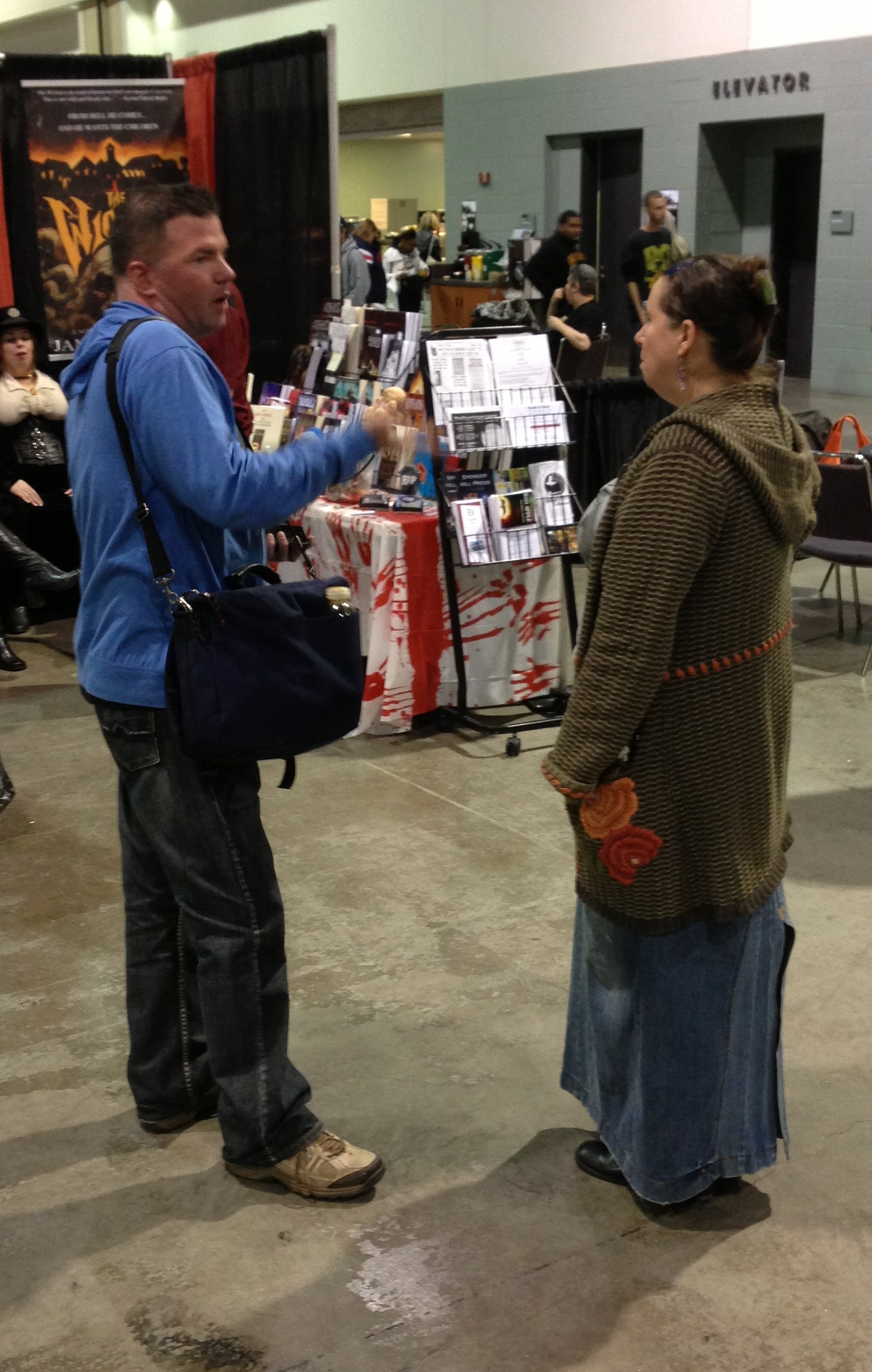
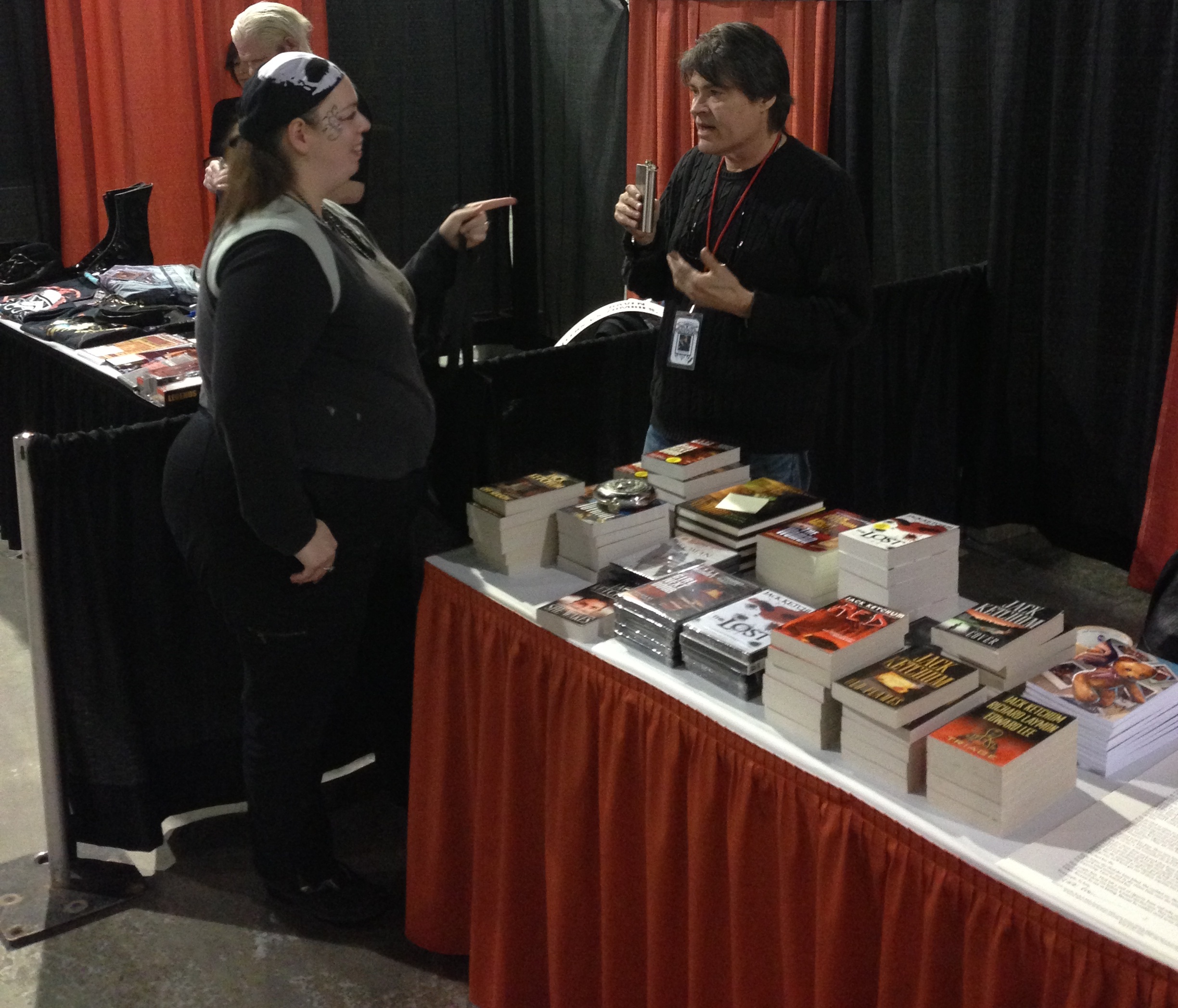
Author Trisha Wooldridge talking with author Jack Ketchum. Photo by Jason Harris.

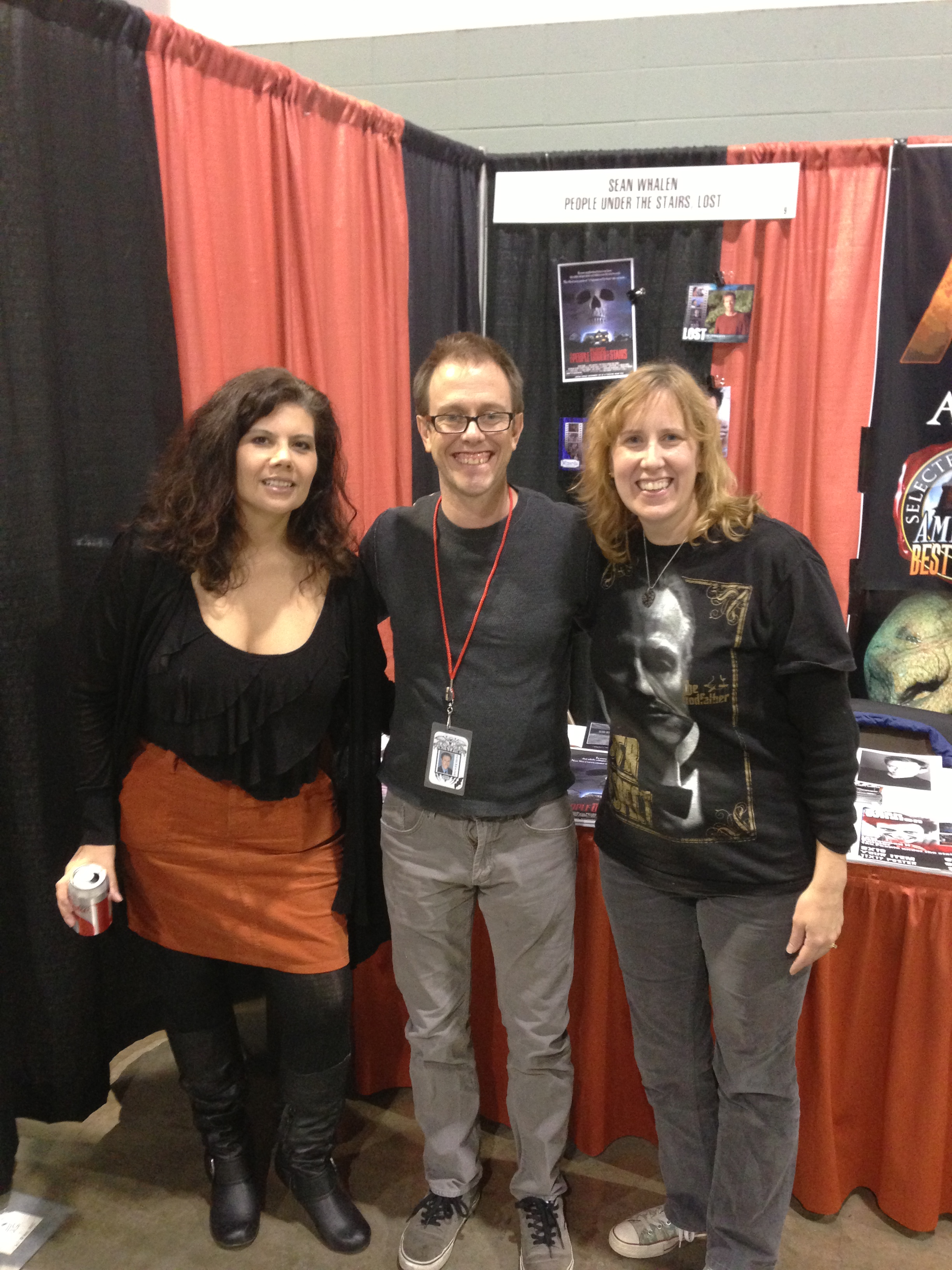
From left to right: NEHW Co-chair Tracy Carbone, actor Sean Whalen, and NEHW Co-chair Stacey Longo. Photo by Jason Harris.

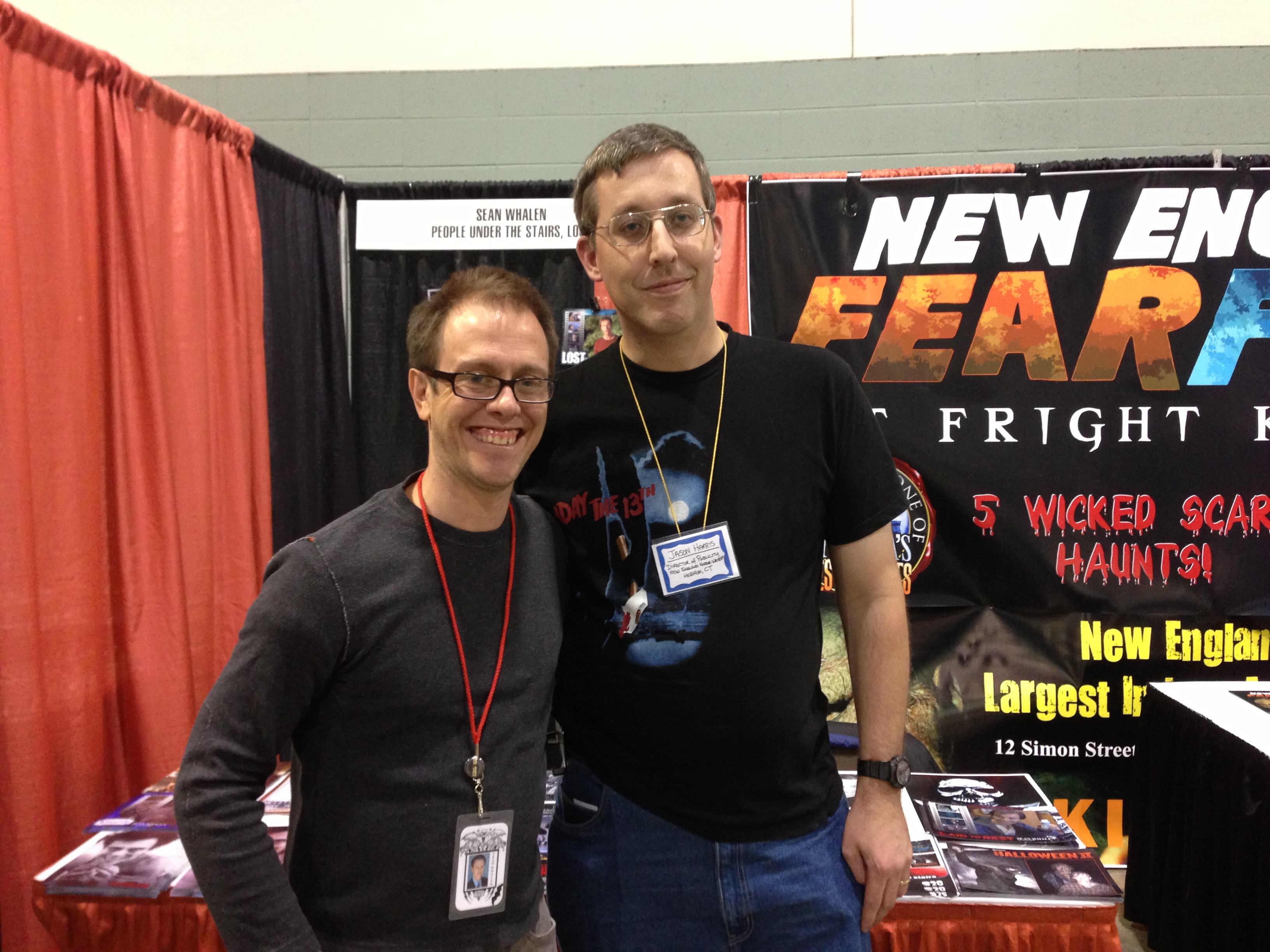
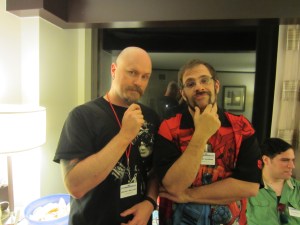
Actor Sean Whalen and NEHW Director of Publicity Jason Harris. Photo by Stacey Longo.

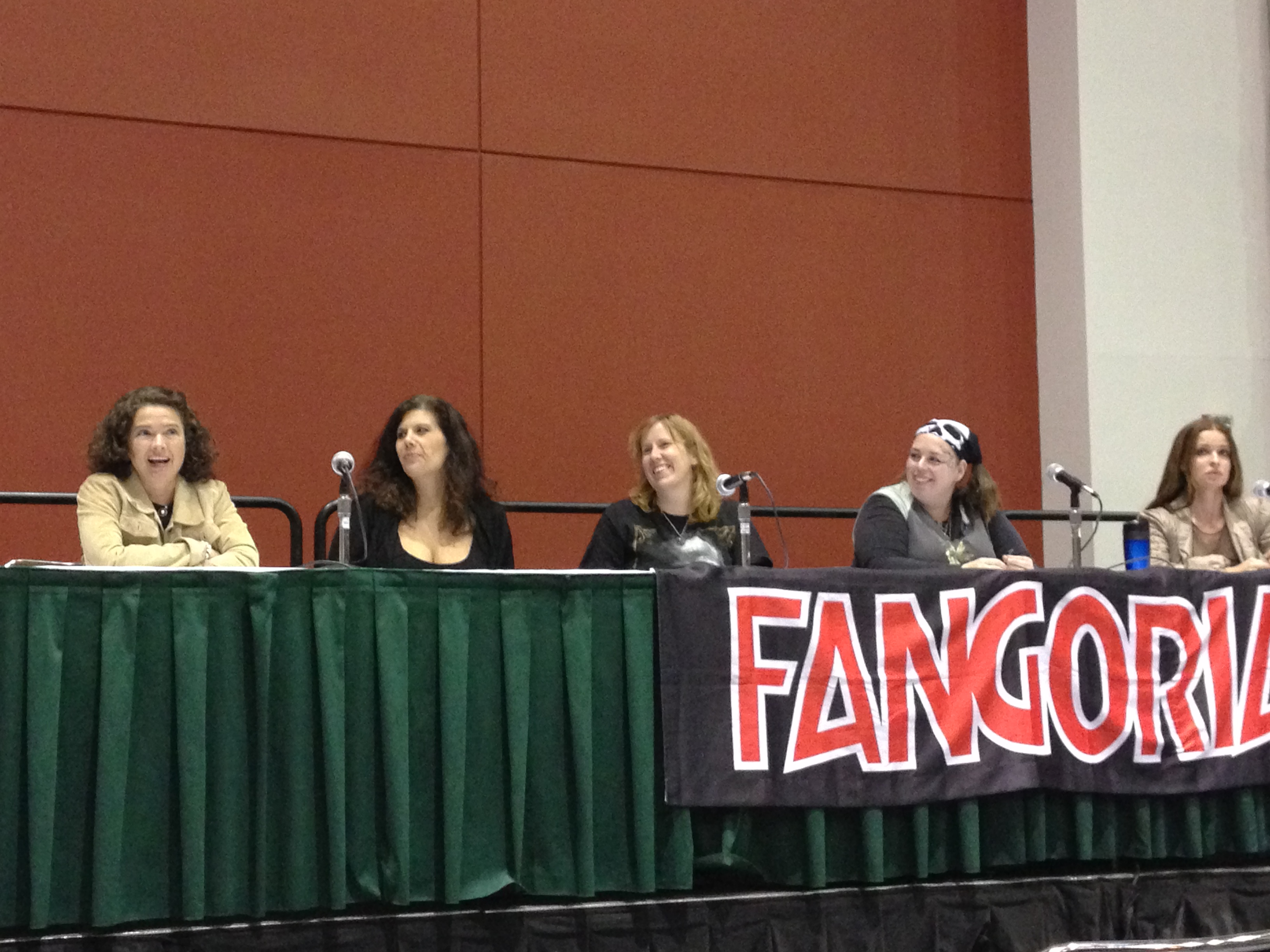
The Women of Horror panel: (from left to right) actress Heather Langenkamp, author Tracy Carbone, author Stacey Longo, author Trisha Wooldridge, and actress Lisa Marie. Photo by Jason Harris.

The Women of Horror panel: (from left to right) actress Heather Langenkamp, author Tracy Carbone, author Stacey Longo, author Trisha Wooldridge, and actress Lisa Marie. Photo by Jason Harris.

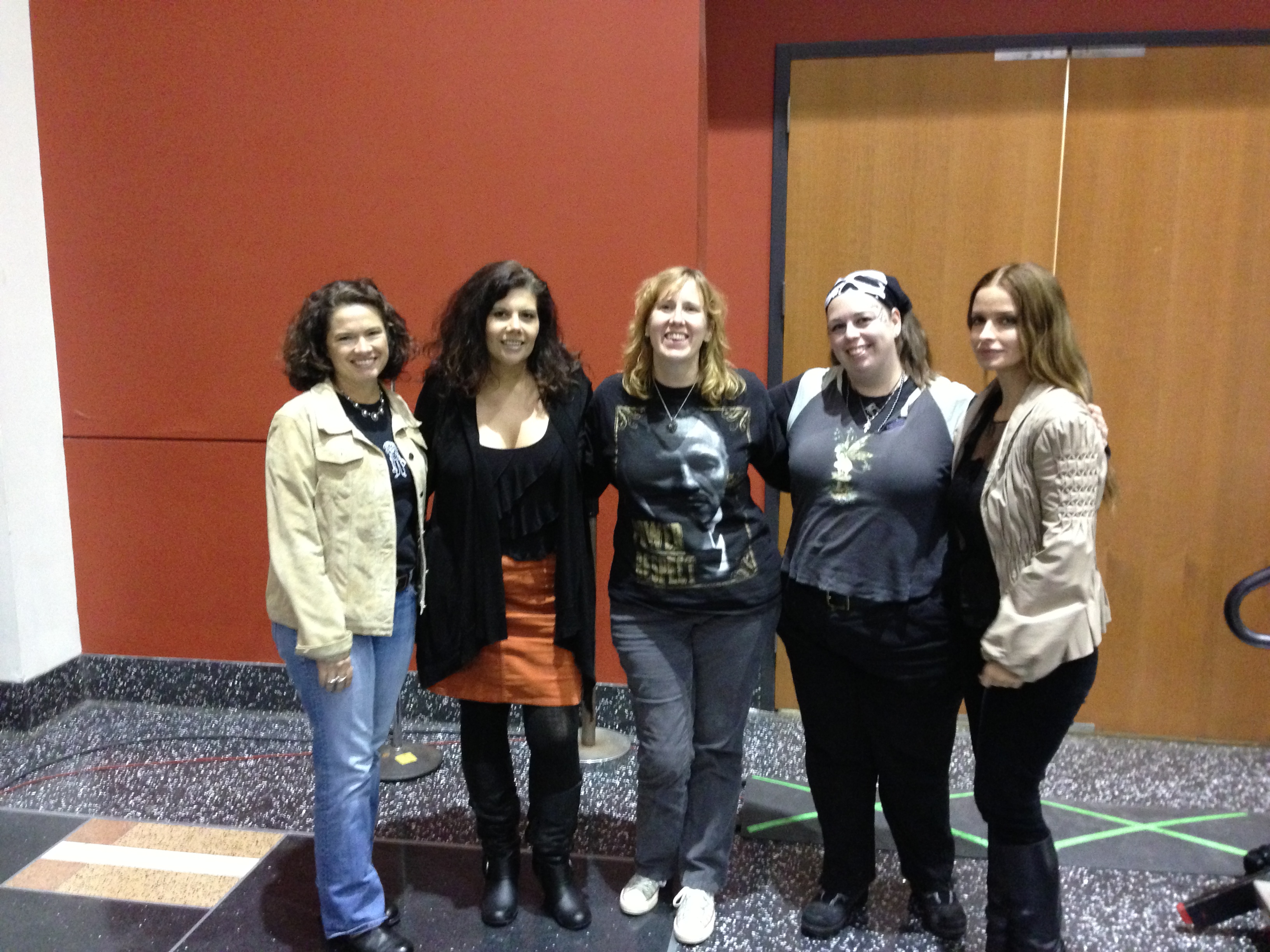
The Women of Horror after the panel. Photo by Jason Harris.

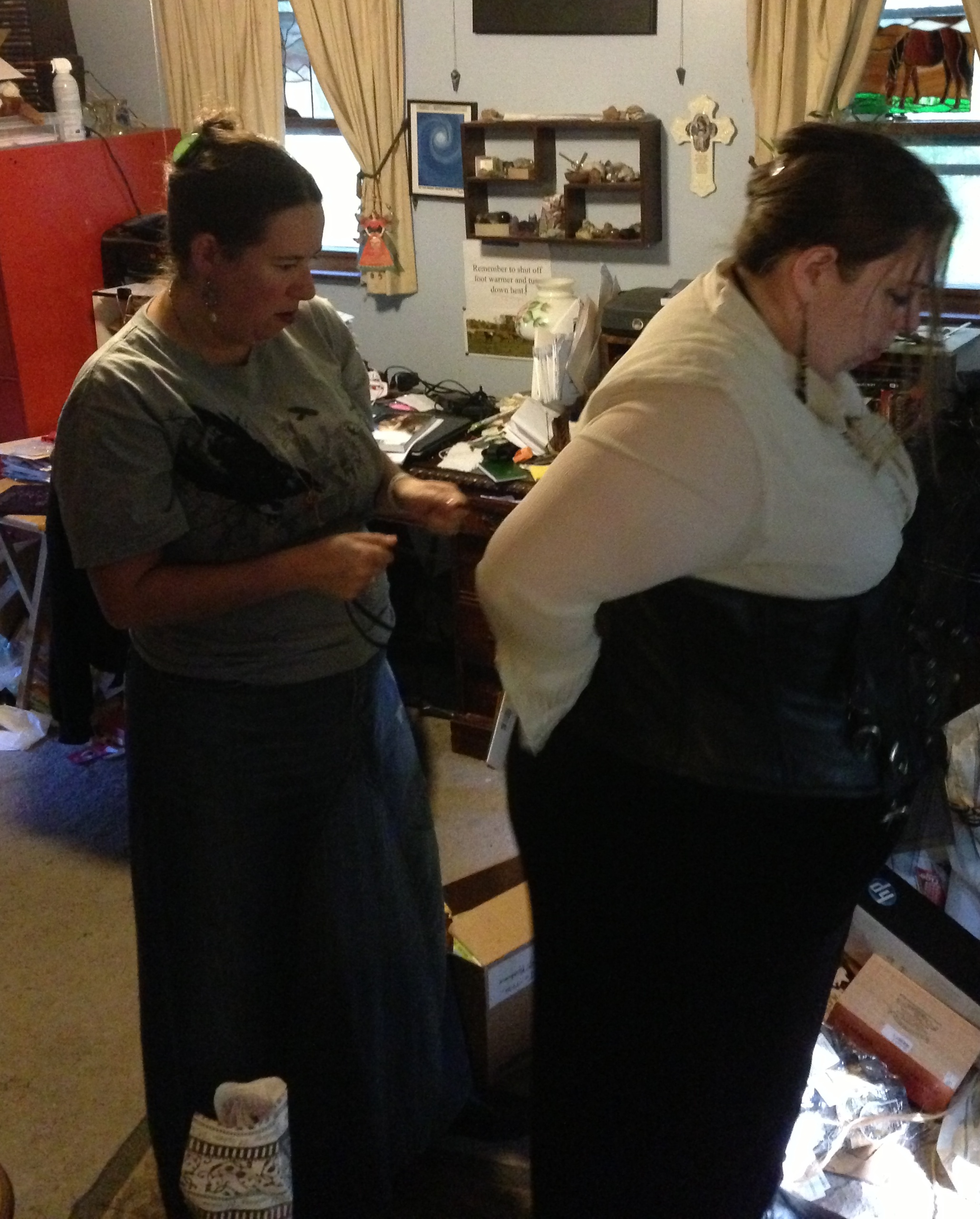
Author Kristi Petersen Schoonover helps fellow author Trisha Wooldridge with her corset for Rock and Shock. Photo by Jason Harris.

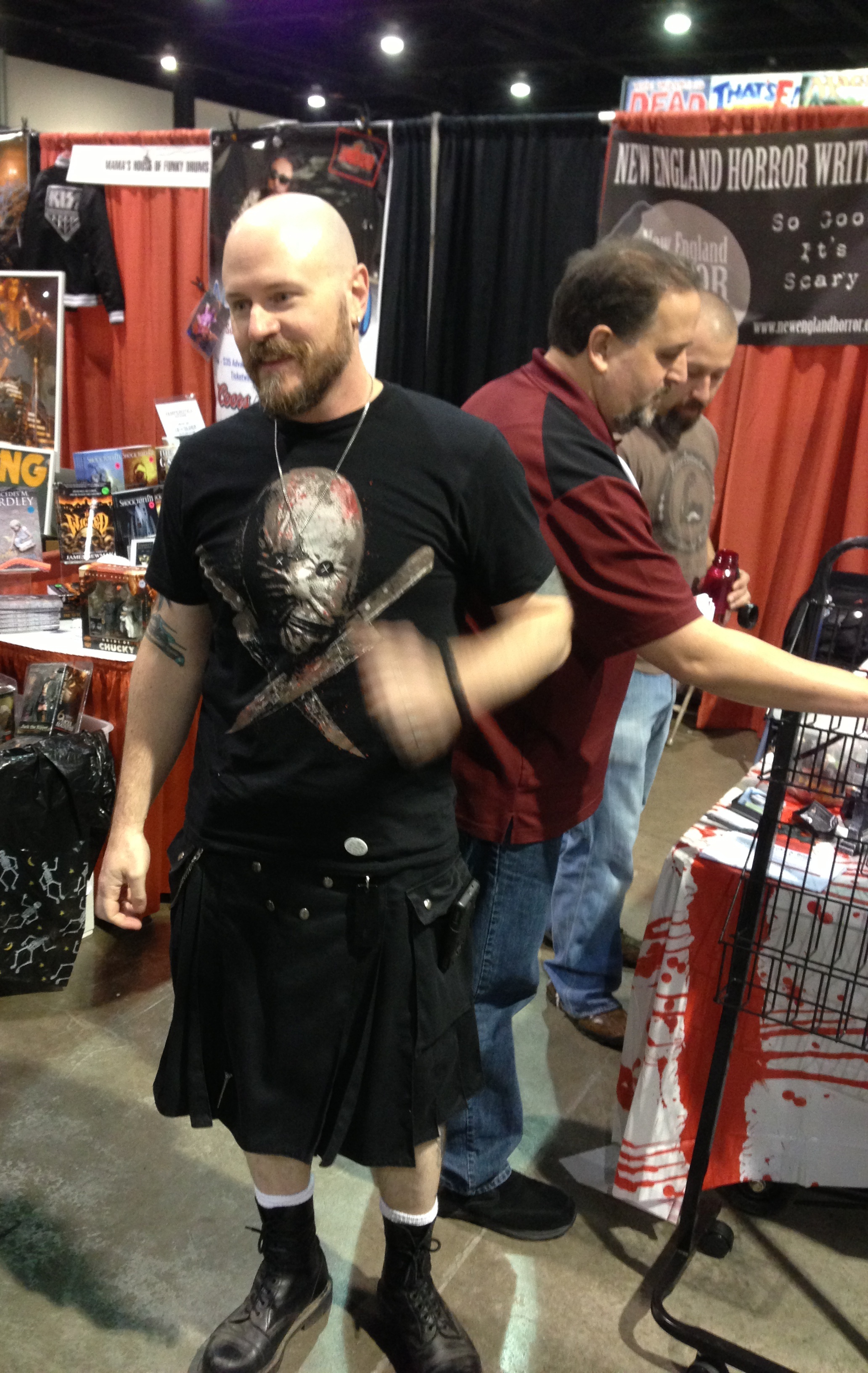
Author Bracken MacLeod is so excited to be at Rock and Shock; his left hand can’t stop moving. Photo by Jason Harris.

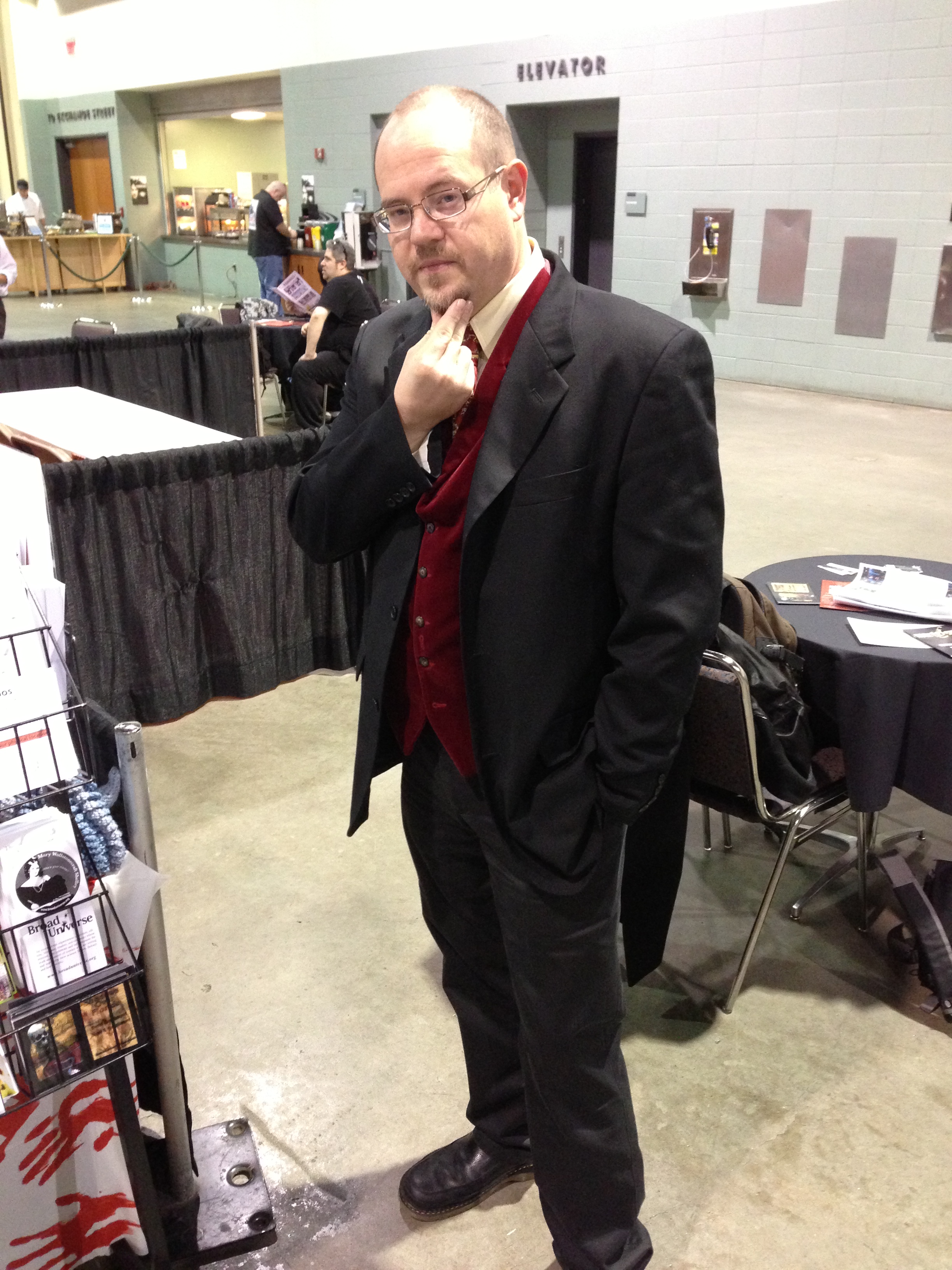
Author Jack Haringa. Photo by Jason Harris.

From left to right: NEHW members Stacey Longo, K. Allen Wood, and Sarah Gomes. Photo by Jason Harris.

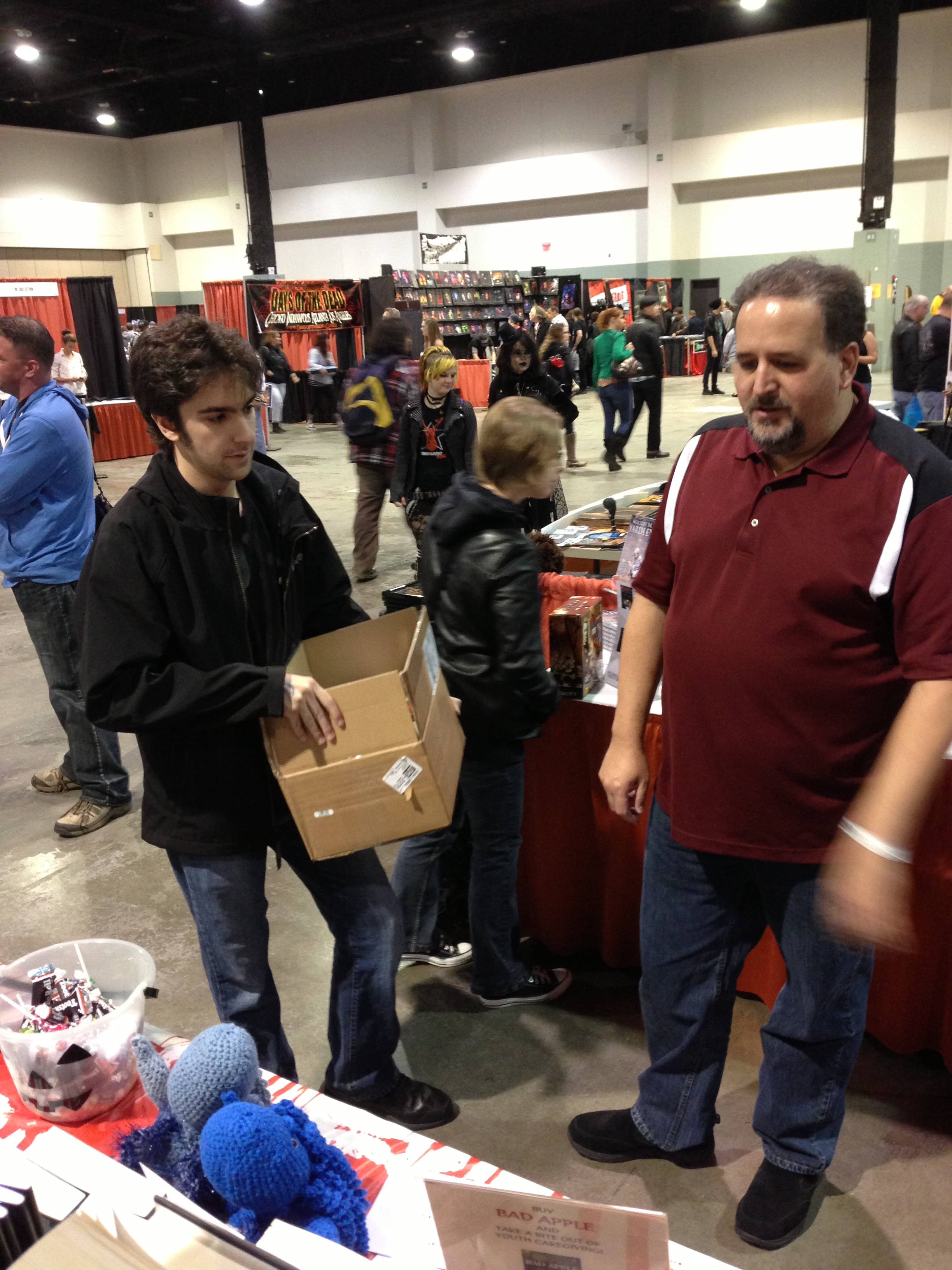
Authors Adam Cesare (holding a box of books) and Scott Goudsward. Photo by Jason Harris.

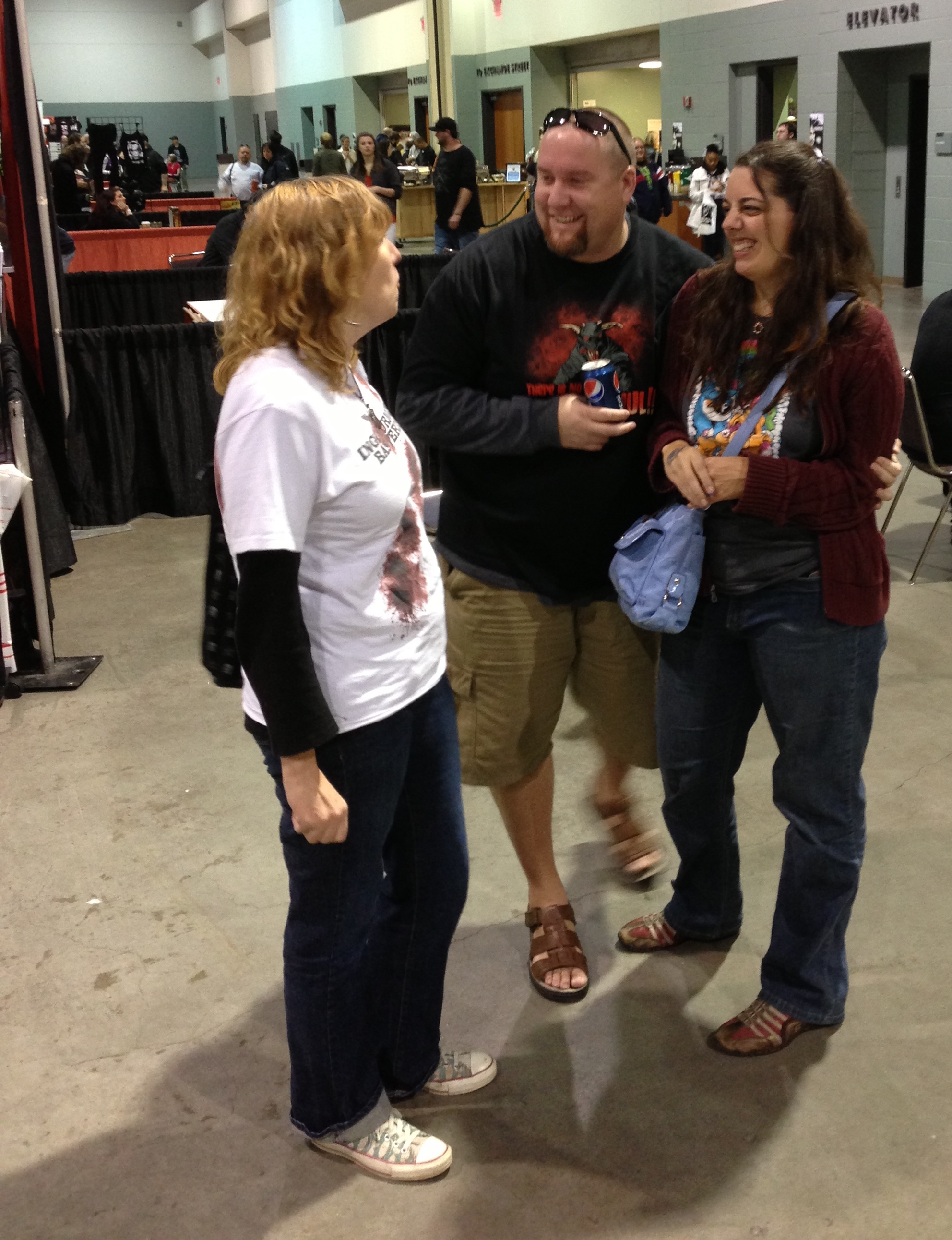
Authors Rob Watts and Kristi Petersen Schoonover talking at Rock and Shock. Photo by Jason Harris.

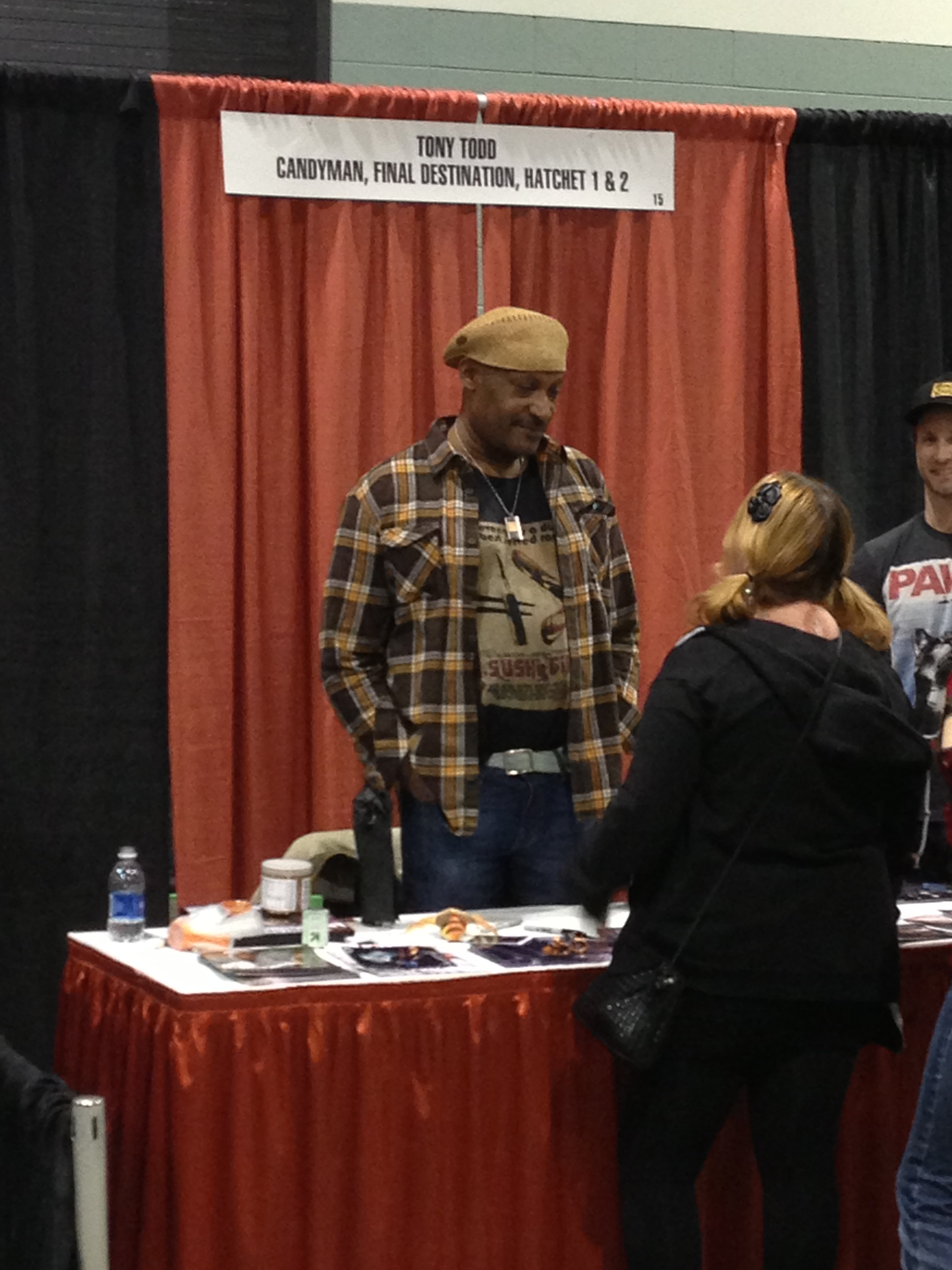
Candyman actor Tony Todd. Photo by Jason Harris.

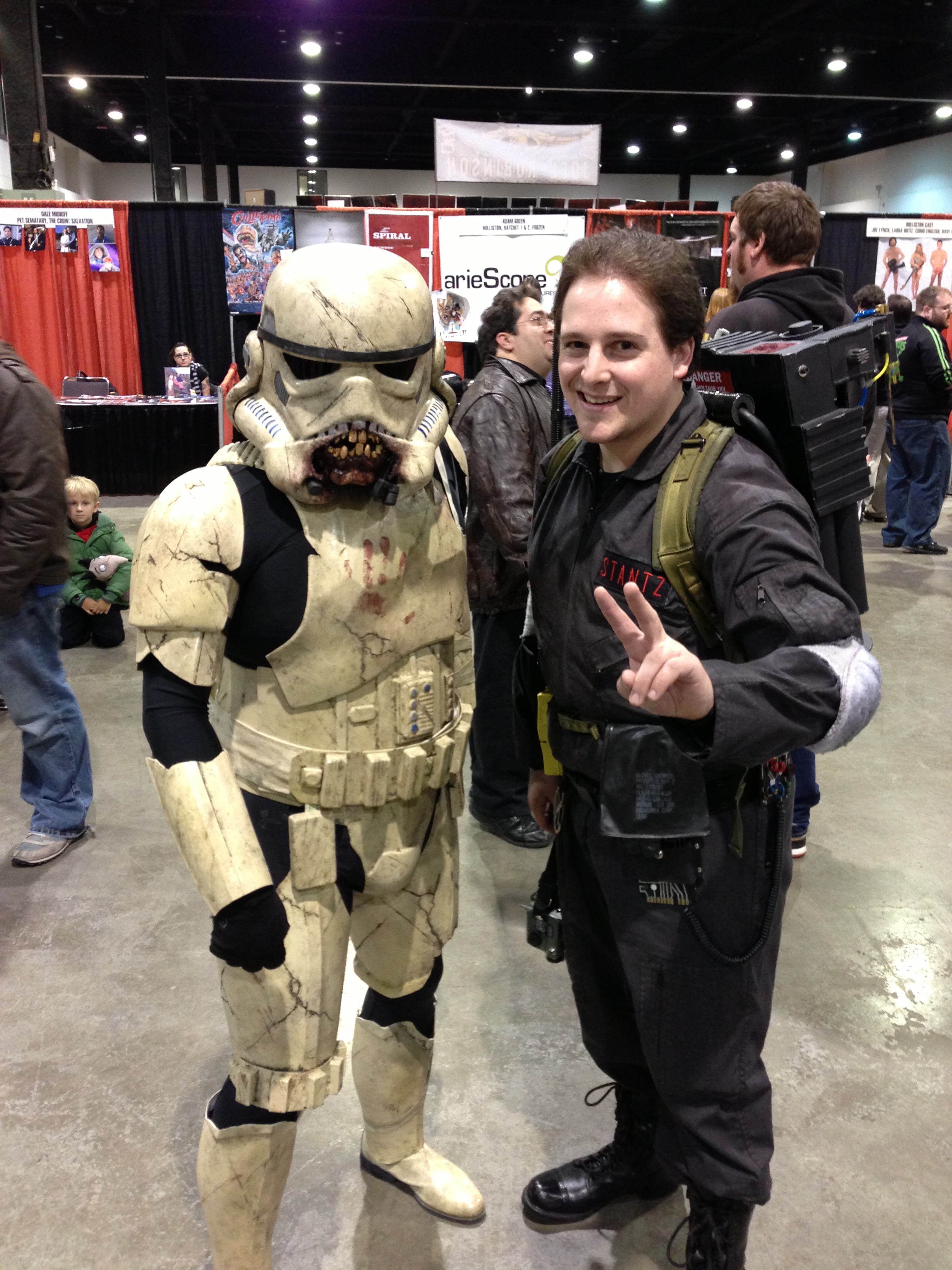
Brian Anderson, of Waltham, MA., as zombie stormtrooper and Ghostbuster Travis Smith, of Providence, RI. Photo by Jason Harris.

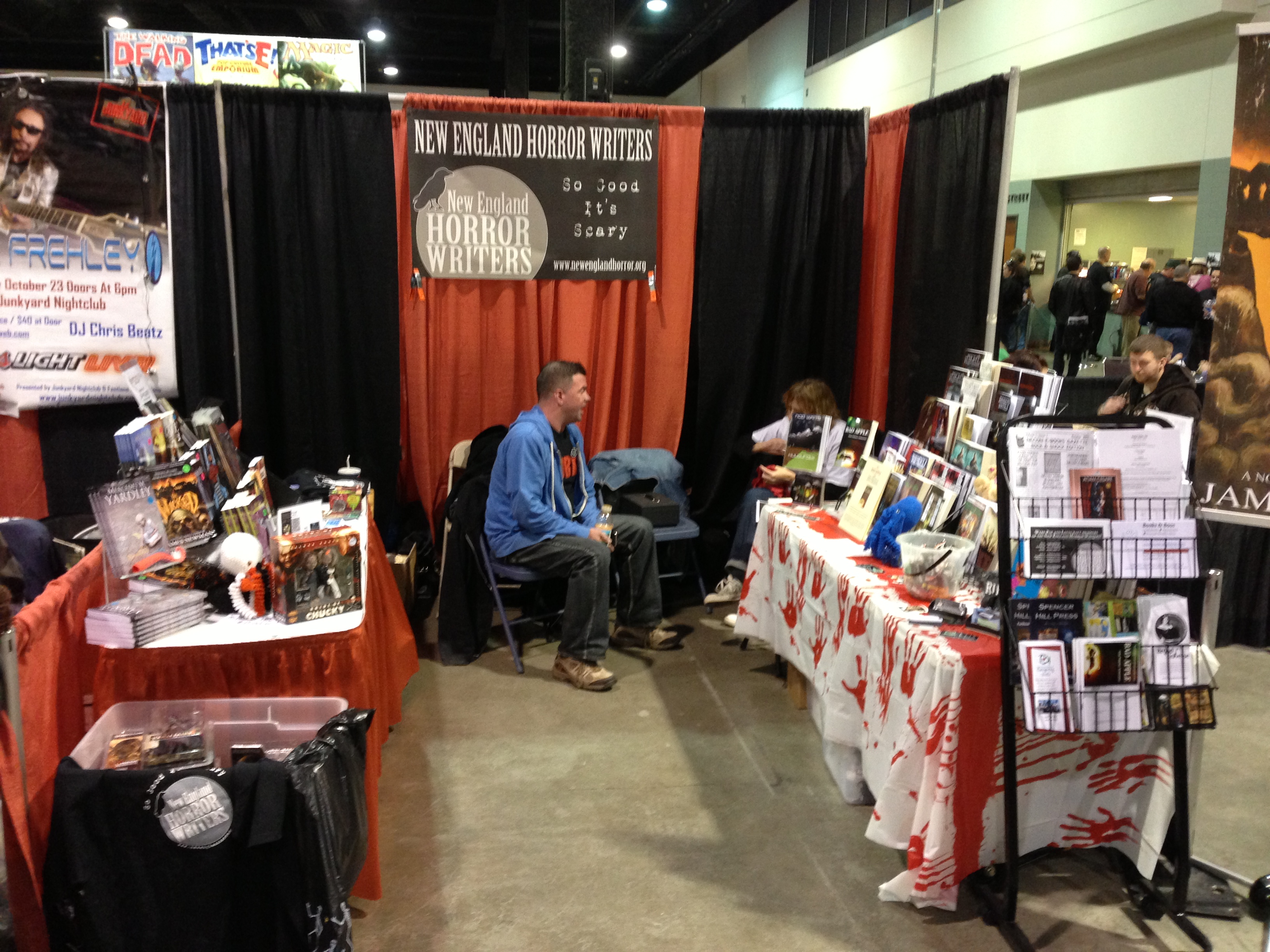
Author Rob Watts talking with author Stacey Longo in the NEHW booth at Rock and Shock. Photo by Jason Harris.

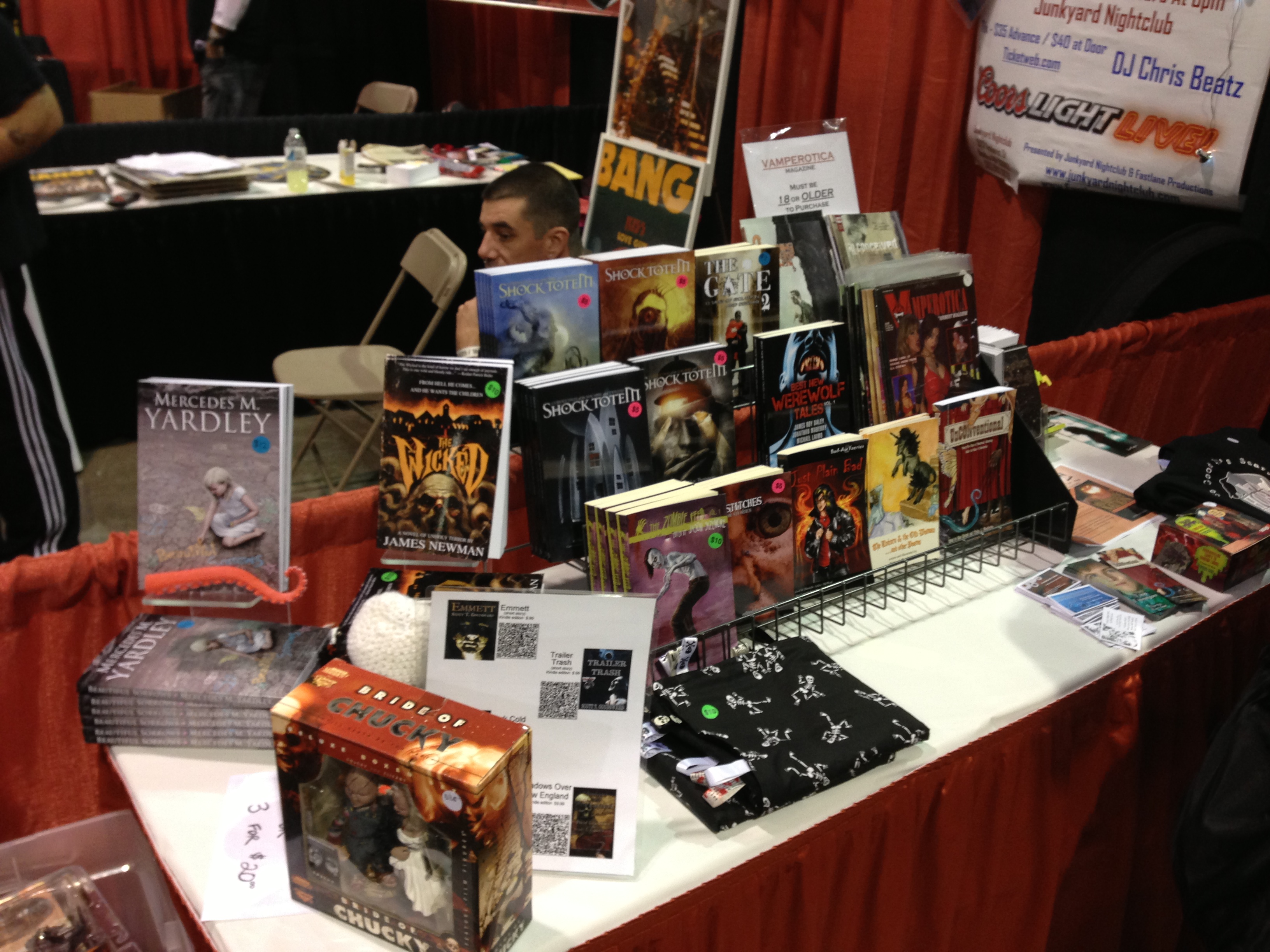
The other table in the NEHW booth. Photo by Jason Harris.

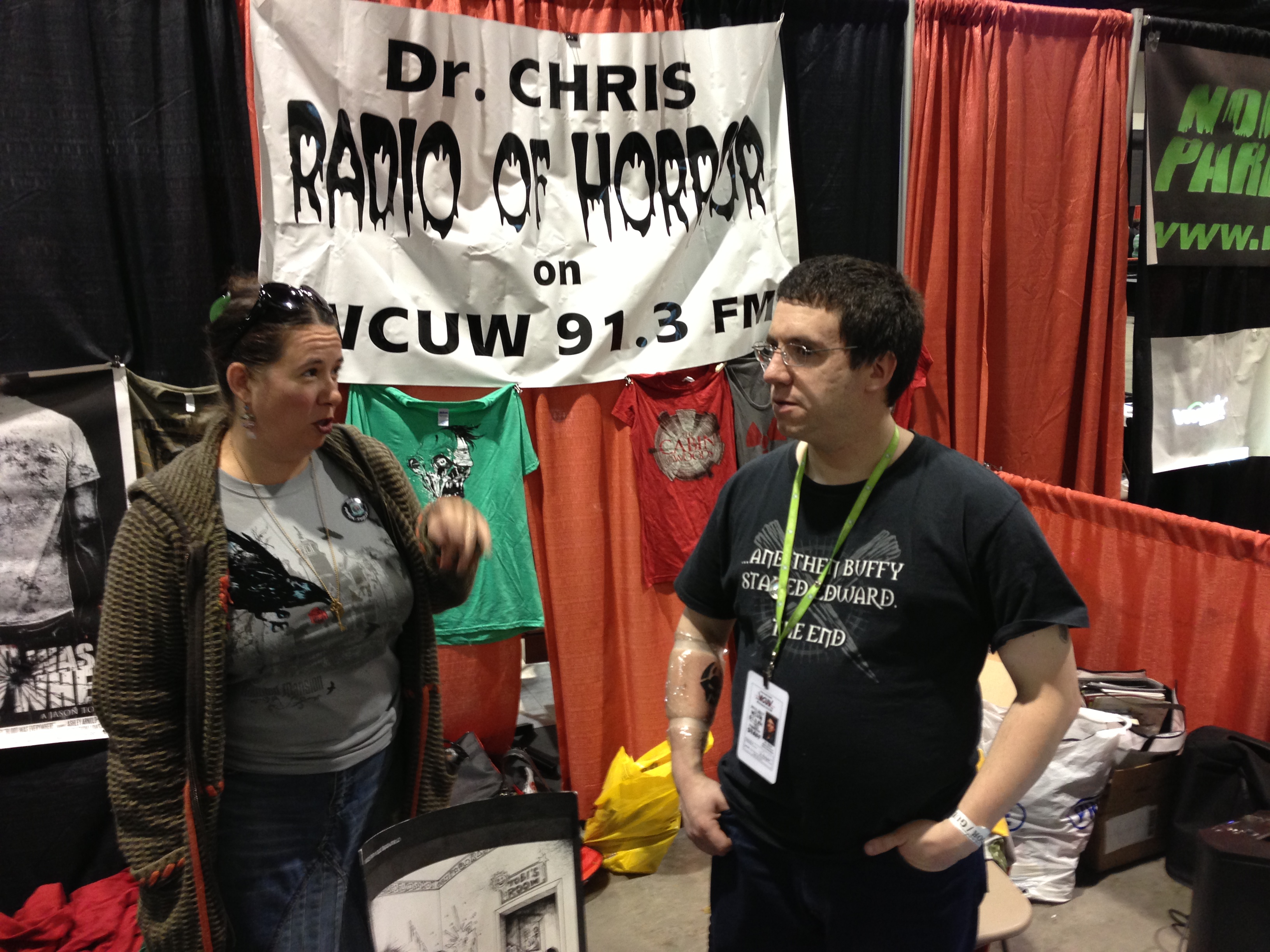
Author Kristi Petersen Schoonover talks to Dr. Chris. Photo by Jason Harris.

Author Stacey Longo. Photo by Jason Harris.

Rock and Shock 2012

My Experience at Rock and Shock 2012

by Jason Harris

Another Rock and Shock has come and gone. The New England Horror Writers were there once again. We have been there for the past four years. This year saw less atttendees then last year, but last year’s guest line-up included Robert Englund, whose line went on forever and never seemed to get any shorter, and Ace Frehley, former lead guitarist of KISS. This year had Heather Langenkamp, of Nightmare on Elm Street fame, Anthony Michael Hall, of televison series The Dead Zone and movies The Breakfast Club and Weird Science, and another former KISS member, Peter Criss.

Before getting to Rock and Shock, the wife and I went to fellow NEHW member Trisha Wooldridge’s house, where we were staying over the weekend. We were also going to be joined by another NEHW member Kristi Petersen Schoonover, who would be arriving later that night. It’s always a party when the NEHW members get together.

After leaving Trisha’s house, we drove to Annie’s Book Stop in Worcester to talk to the owner about her bookstore. The wife and I were picking her brain since we’re opening our own bookstore called Books and Boos in Colchester, CT. It was a very informative 40 minutes.

I was there the entire weekend and Saturday was the busiest day. Friday started off with Breakin’ into the Biz panel, which included myself, T.J. May, Matt Bechtel, and Kristi Petersen Schoonover, who ended up as moderator since there wasn’t anyone from Fangoria magazine there to do the job like there were for the other panels during the weekend. The panel went well and there were a lot of suggestions and advice given to the people in the audience.

Heather Langenkamp, Tracy Carbone, Stacey Longo, Trisha Wooldridge, and Lisa Marie on the Women in Horror panel. Photo by Jason Harris

The audience grew a little bit for the Women in Horror panel, but that was to be expected since Langenkamp and Lisa Marie (Ed Wood, Mars Attacks!) joined NEHW members Tracy Carbone, Stacey Longo, and Trisha Wooldridge. This panel had Jack from Fangoria, moderating the panel. One thing surprised me was that the audience didn’t asked two many questions when that time came. Four questions were asked of people on the panel and two of those questions came from me. I asked Heather how was it working on Just the Ten of Us and if she would do another television show. She said, she would love to do another tv series. It was also nice to hear that she will be in the next Star Trek movie titled Star Trek into Darkness, but she couldn’t say what character she’s playing. It was also great talking to her and Lisa Marie when the panel was over.

Tracy Carbone, Sean Whalen, and Stacey Longo. Photo by Jason Harris.

On Friday, it was great talking with Sean Whalen who was in The People Under the Stairs and Twister, and many other movies. Check out his credits on the Internet Movie Database by clicking here. He gave Carbone, Longo, and myself some good ideas.

I introduced myself to Doug Bradley, who portrayed Pinhead in most of the Hellraiser movies except the last one, since I conducted a phone interview with him a few weeks ago. You can read the article here.

I was hoping to interview Hall on Sunday since that was the day his manager, John Boitano, said would be the best day since it’s the slowest of the convention. On Friday, I had the feeling it wouldn’t happen since there was a sign on Hall’s table stating he wouldn’t be at the convention until 2 p.m. on Saturday. When Saturday came, he didn’t show up at his table until 3 p.m. Later on Saturday evening, he took a break and a sign said he would be back at 5:45 p.m. He didn’t get back from his break until 6:15 p.m. Seeing those signs, physical and figuratively, told me that Hall wasn’t going to keep an interview with me on Sunday. It would have been cool to interview him, but it wasn’t disappointing. I did interview another filmmaker, Ryan Convery, on Sunday about his movie Mourning Wood, which is about “humping zombies.” There will be an article and a movie review coming in the near future.

It was great meeting Tony Todd (Candyman), Brian O’Halloran (Clerks), and Sig Haig (House of 1000 Corpses) this weekend. I won’t get autographs since I am not paying $20 or more for an autograph unless they are selling a movie or a book. I will shake their hands and tell them I love their work.

There was a Horror in the Movies panel on Sunday, which Rob Watts, Bracken Macleod, myself, and Stacey Longo were on. Longo ended up being the moderator when Jack from Fangoria couldn’t do it since he had to do something else. It was attended by a good number of people.

There will be another post with pictures tomorrow.

The NEHW at Rock and Shock

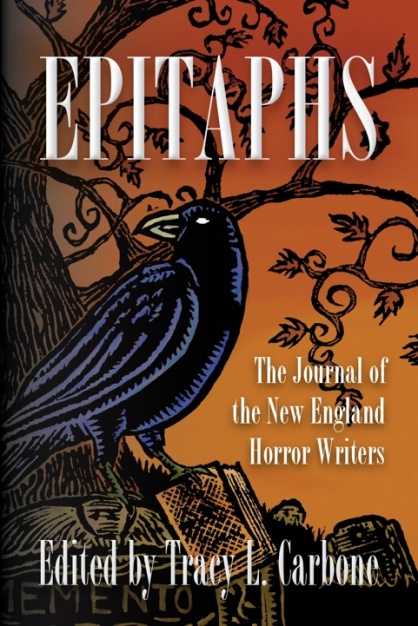
The New England Horror Writers will be appearing at Rock and Shock this weekend. There will be plenty of members manning the booth all weekend. They will be selling and signing their books.Epitaphs is one book in particular which will be on hand. It’s the first anthology produced by the NEHW. This Saturday marks the one-year anniversary of this collection being published. Here are the authors who have stories in Epitaphs that will be at the convention this weekend: Mike Arruda, Scott Goudsward, Stacey Longo, Paul McMahon, Kurt Newton, L.L. Soares, K. Allen Wood, and Trisha Wooldridge. Tracy L. Carbone, the editor of the anthology, will also be on-hand.

Other NEHW members, who will be at the convention, are Ashleigh Homon, Adam Cesare, Bracken Macleod, David Price, Gene Munson, Jason Harris, Jack Haringa, Jan Kozlowski, Kelli Jones, Kristi Petersen Schoonover, Matt Bechtel, Patrick Rahall, Rebekah Murphy, Rob Watts, T.J. May, Paul Tremblay, Bob Booth, and Jennifer Yarter-Polmatier.

They will also be four panels that the NEHW members will be involved in. This is the second year the organization has been on different panels. This year on the Women in Horror panel members , Carbone, Longo, and Wooldridge will be joined by Heather Langenkamp of Nightmare on Elm Street fame and Lisa Marie of Sleepy Hollow and Mars Attacks! fame.

The other panels will be “Breaking into the Biz” with Harris, May, Bechtel, and Schoonover, and “Horror in the Movies” with Harris, Longo, Soares, and Macleod.

A Hard Pen is Good to Find

A Hard Pen is Good to Find

by Bracken MacLeod

I indulge a couple of writerly affectations that do nothing to improve the quality or prolificacy of my writing. Still, they stimulate some reptilian aspect of my neurology that compels me to maintain their use. For example, I take abundant notes about random facts and story ideas in a Moleskine notebook. Even though there are cheaper notebooks out there and its entire function is made redundant by smartphone apps like Evernote, I love the feeling of the small leather hardbound book in my hands. I love the (probably contrived) history of it. And I love belonging to the subculture of people who modify and use them. But the sensual experience of the notebook is limited by the quality of the pen one uses to write in it.

My former profession required constant note-taking and I found that writing with cheap pens resulted in hand cramps and near constant frustration at their lack of both comfort and style. As a result, I switched to a semi-expensive fountain pen in the hope that A) the necessity of finesse in its use would result in less white-knuckle writing (and the attendant cramping), and B) its elegance would satisfy that part of me that seeks sensuality in small experiences. It did both. Sadly though, my pen required regular upkeep as the nibs would wear out with the kind of punishing use to which I put them. Despite that inconvenience, I gained an appreciation for writing with a precision pen. The feeling of taking hand-written notes is enhanced by using a pen designed for performance and comfort.

There is a certain amount of anxiety inherent in carrying a fountain pen around in one’s shirt or pants pocket (or even in a bag), however, as they can and do occasionally leak. I’ve been the victim of more than one unintended ink emission and it had convinced me that, despite the pleasure of writing with one, the hazard of a Deeptrouser Horizon spill was too much for me to bear. As luck would have it, the twin burdens of maintenance and betrayal were about to be lifted from my shoulders as the Great God Pen smiled down and blessed me with his inky munificence.

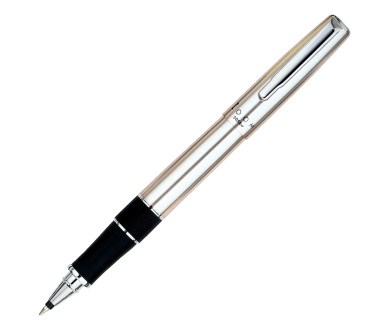
Tombow Ultra rollerball pen

One afternoon, as I was exiting a Barnes & Noble, I noticed a shiny beacon signaling me from a nearby bush. There I found a beautifully unadorned brushed chrome pen. Picking it up, the first thing I noticed was its weight. It had a pleasant heft and solidity that appealed to me. It was heavy–not a disposable thing, but significant–a potential weapon as well as a tool of creation. Not thinking that this was probably a moderately expensive pen that I should turn in to lost and found (thank you, greedy subconscious denial) I slipped my newly acquired Tombow Ultra rollerball pen into my pocket. An hour or so later I found myself presented with the opportunity to try it out. As I passed a horse trailer with a flat tire, a story title occurred to me and I desperately needed to record it before my capricious mental states robbed me of inspiration. I pulled over to the side of the road, opened my notebook, and set about writing down the two brilliant words that, once paired on paper, would open the flood-gates of further creative stimulation.

As ink slipped from pen onto paper, a jolt of exultation hit me like a liter of dopamine splashed in my face. The creative power of my stolen found pen flowed like Omar Khayyám’s proverbial moving finger. As the words took shape on the paper, I trembled in anticipation of their profound meaning awakening the Muse and sending me into a fury of automatic writing that would result in my literary magnum opus. I became one with the pen, feeling snug and comforted inside a brushed-chrome womb, floating in the black amniotic fluid of artistic creation. Drawing a final line beneath the words for emphasis, I slipped out of my trance. Holding my breath, I peered down at the title heralding my inevitable Stoker Award.

Corpse Rodeo

Oh well. It’s still better than writing with a Bic.

What to Look Forward to Next Week

Next week will bring reviews of the movies, Ruby Sparks and The Bourne Legacy, which will be on the site Friday and Saturday respectively.

Along with the Ruby Sparks movie review, there will be interview articles with the directors of the movie, Jonathan Dayton and Valerie Faris, along with its stars, Paul Dano and Zoe Kazan. Kazan is also the writer of the movie.

There will also be an article about pens from author and NEHW member Bracken MacLeod.

Readercon, My Favorite Speculative Convention

Readercon, My Favorite Speculative Convention

by Bracken MacLeod

This past weekend in Burlington, Massachusetts I attended Readercon, a conference as they describe it, devoted to “imaginative literature” — literary science fiction, fantasy, horror, and the unclassifiable works often called “slipstream.”
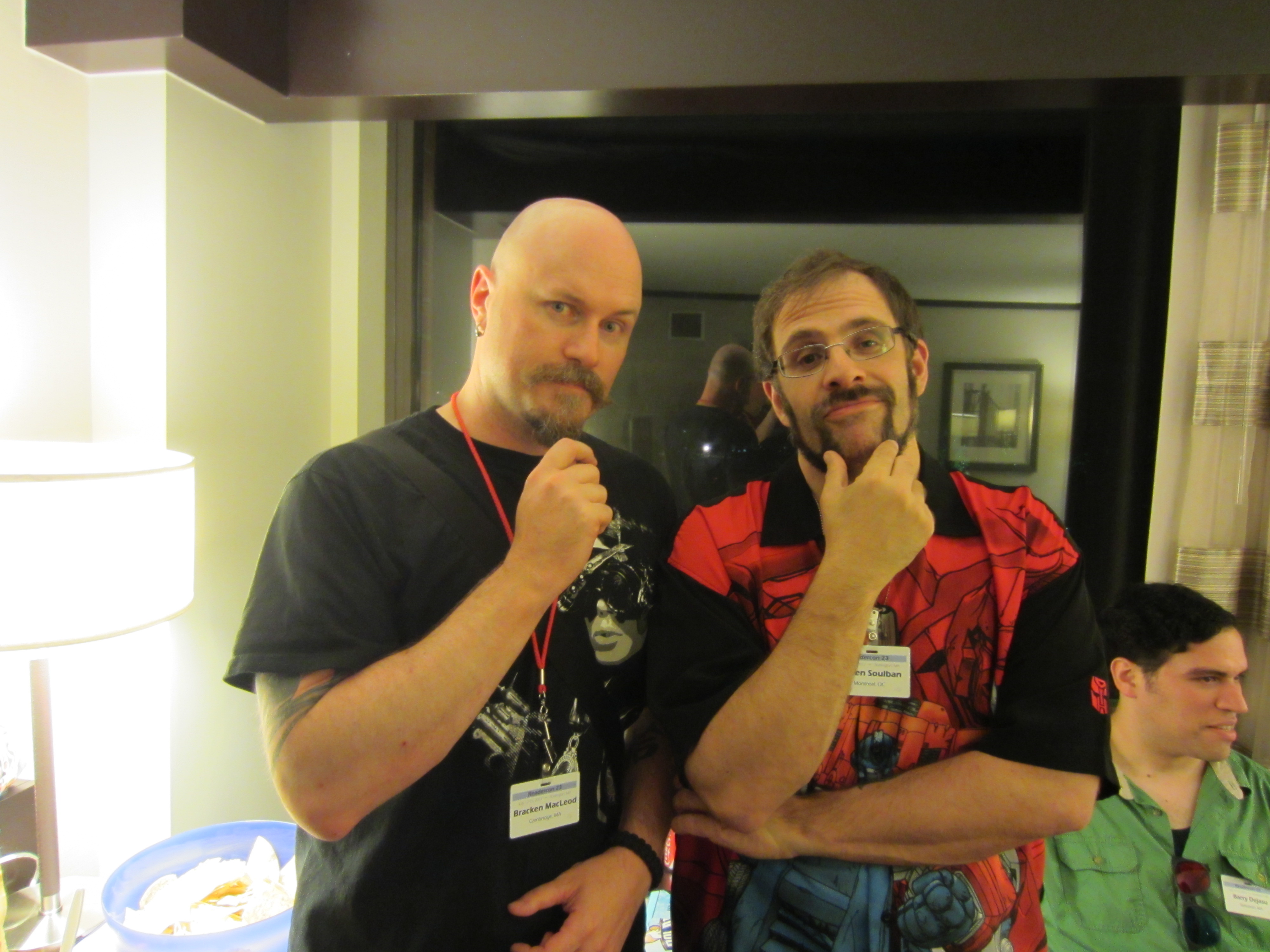
Bracken MacLeod and Lucien Soulban at Readercon 23.

This is one of my favorite speculative cons as it is devoted (like my other favorites, Necon and Anthocon) to literature–no cosplay, no gaming, and almost no media (there’s plenty of talk about movies in panels because movies can inform prose story-telling, but no movie panels). Although the conference is usually weighted a little more toward Sci-Fi and Fantasy than horror and slipstream, there are excellent horror writers in attendance like Gemma Files, Laird Barron, Nick Mamatas, to name only a few, and the guests of honor this year were dark fiction legends, Peter Straub and Caitlin Kiernan. Sadly, I will have to defer to other NEHW contributors for a recap of Mr. Straub’s contributions to the con as his panels and readings were concurrent with other panels I attended.1 Instead, let me give you a short recap of what were the high points from the panels I attended.

The dystopian fiction panel led by NEHW member Jack Haringa, “Through a Glass Dystopianly,” was an excellent deconstruction of the recent trend in YA literature to make everything The Hunger Games. I’m not being fair. There’s a lot of good YA (and adult) dystopian fiction out there. But there’s a lot of drek too. As a genre, Leah Bobet seemed to nail the intention of YA dys fic with her deliberate oversimplification of it as the literature of mom and dad (i.e., the repressive government) won’t let me have the car or stay out late, so I’m going to escape to the forest and drink and have sex as much as I want! Or if you prefer that idea to be unpacked, the idea being, that dys fic is a reasonably fertile ground for young readers to identify their own struggles with autonomy and authority by imagining themselves as potent agents struggling under the dystopian regime. When pressed on the issue of dystopia versus utopia versus post-apocalyptic setting, Haringa threw out my third favorite bon mot of the conference: “All science fiction is optimistic because it all assumes we have a future.”

Next on the list of favorites was the panel titled “Wet Dreams and Nightmares” about weird and transgressive erotica. This panel stayed blissfully distant from paranormal romance and actually addressed real erotica and transgressive sex in a mature and unflinching way. Would you expect anything different from a panel featuring Caitlin R. Kiernan? The give and take between Gemma Files and Kiernan regarding their distinct approaches to erotic body transformations and what they individually find sexy made this panel pure gold.

The panel on horror and the social compact (another one featuring Dear Leader Haringa) presented some interesting viewpoints on the scope of horror versus science fiction, wherein it was posited that it is actually very difficult to discuss horror in the context of a Hobbesian social contract. With a few exceptions (e.g., Soylent Green—which I’d say is both sci-fi and horror), most horror is about violation of trust and/or autonomy on a personal scale as opposed to a societal one.

This panel shared an interesting deconstructive quality with one on Sunday titled “Uncanny Taxonomies,” where the conclusion was also reached that taxonomies of speculative fiction (i.e., genres) weren’t all that helpful for anyone other than book marketers and possibly consumers. It was during this panel that Kiernan gave my second favorite line of the convention: “All [novels], by definition, are fantasy; they did not happen.”2

My second favorite session of the weekend was Dr. Laura Knight’s slideshow titled “Autopsy and Postmortem Primer for Writers,” which gave the audience a basic rundown of the process of a typical autopsy and human decomposition. The con organizers grossly underestimated the appeal of a dead body slideshow to fantasy and sci-fi (and a few horror) fans and about a quarter of the attendees to the session were left sitting on the floor or standing when all the seats filled up. One poor woman who was standing in the back of the hot room (possibly with her knees locked) fainted when Dr. Knight put up the slide of decompositional bloat and a little body degloving (I am sure the heat and having to stand were also contributing factors). Sadly, that attendee missed the next slide of the two people whose little yappy dogs had partially eaten their faces. (Cat lovers take note: Dr. Knight commented that in over 2,000 autopsies, she had yet to see a feline case of filiaphagia–but those nasty little dogs… they’ll turn on you in a minute.)

Finally, at the top of my list of favorite events at Readercon (unrelated to standing in a blacked out hotel bathroom staring at disintegrating atoms in a spinthariscope—look it up—and drunken yoga in the hotel lobby) was “A Story from Scratch.”

The basic conceit of the session (in several parts over three days) was that using models from the audience and props provided by celebrity guests, Hugo-winning writers Michael Swanwick and Elizabeth Bear will crowd source a story outline and write a short story to be professionally brought to life by photographer Kyle Cassidy and illustrator Lee Moyer. On Sunday, the story would be read aloud by Swanwick and Bear accompanied by a slide show of the work that Cassidy and Moyer produced. Bear provided a very condensed version of her course on effective fiction writing and the small crowd of participants began throwing out ideas for the story. What eventually took shape was the sad tale of a Chinese restaurant owner whose wife has been taken hostage by the Yakuza (I know), and must find the ransom before her wife (it is Massachusetts after all) loses all of her fingers and her entire memory (somehow stolen with each successive finger chop).

When the call was made for volunteers to be photographed by the amazing Mr. Cassidy, of course I volunteered. Given my cuddly and welcoming appearance, I was immediately cast as one of the Yakuza gangsters. The short version of the rest of the story is that, as one could predict, this became another instance of “and then Bracken took his shirt off” at a con. Fortunately, this bout of semi-nudity led to Cassidy and Moyer making me look like the coolest fucking American Yakuza since Viggo Mortensen and Bear and Swanwick crafting a Philip K. Dick style story containing my single favorite line of the entire Con: “Tom and Bracken were evil men, but not brutal.” (As soon as the story, titled “Dismemberance,” and photos are posted online I’ll be sure to link to them.)

The bottom line is, if you have a broad taste in genre literature, you could do a lot worse than attend a Readercon, but you’re going to be hard pressed to do better.
Cheers!

1 I know. I know. Revoke my horror fan card if you must.
2  Other excellent lines came from Michael Swanwick: “Wincing equals good fiction,” and Elizabeth Bear, “The worst reaction a reader can have to your story is ‘Fuck you!’”
A Promise of Violence

VOYANTS: The Promise of Violence in Seeing and Being Seen

by Bracken MacLeod

What I apprehend immediately when I hear the branches crackling behind me is not that there is someone there; it is that I am vulnerable, that I have a body which can be hurt, that I occupy a place and that I cannot in any case escape from the space in which I am without defense—in short, that I am seen. – Jean-Paul Sartre, Being and Nothingness

________________________________________________

Every story I read or write involves a promise. It is the pledge that an author makes to the audience that they will be rewarded for their faith in the story. In romance, the promise is love. Mysteries guarantee the satisfaction of the unraveling of a puzzle. In horror, the promise that the writer makes to the reader is the he or she will evoke fear.

I understand the attraction of “subtle” and “atmospheric” tales; well done (and how I love them when they’re well done), they can produce a wholly satisfying sense of fearful dread. But I’d also say that even in atmospheric horror, the dread the reader feels is the result of the promise of what is being subtly revealed. And that pledge is exactly the same as it is for extreme horror. The deepest root of fear is the threat of violence. Just because someone doesn’t have whip welts on their back don’t think there hasn’t been violence. That is to say, all horror assures violence of some kind: physical, psychological, spiritual, etc. Without it, what have you got? A ghost isn’t scary merely because it is a ghost. Neither is a man holding a knife. Both must offer something to the reader to evoke fear.

To expand on an example given by Alfred Hitchcock, a bomb underneath a table is more terrifying if the people in the café carry on their conversations unaware of its presence while we, the viewers, know it is there. But the bomb is only frightening in the first place if three conditions are met. First, we must understand the underlying concept of a bomb. Since most of us possess an understanding of a bomb’s only purpose (destruction), we can leap into the conceptual future and imagine the result of the ticking timer reaching zero. The second condition is the story-teller’s willingness to make us believe that the device might actually go off. If we know the bomb’s a dud or the hero will always defuse it at the last second, it is simply not scary. Finally, and most importantly, is our ability to put ourselves in the place of people in that setting—to be present at the table with violence and death. Fear exists is the moment of transformation from the known to the lived—bridging the gulf between academically understanding danger exists and being in danger. Thus, the sine qua non of good horror, as I see it, is the transformation of the reader from subject (i.e., conscious observer) to object (i.e., victim).

In a horror story we want the babysitter to hide because we are vicariously experiencing events from her perspective.[1] As long as she remains an observer hidden from view behind slatted closet doors, the tension dissipates and we relax. Until she is discovered. The scariest scene to me in John Carpenter’s Halloween (to stray again from the written word for a moment) is when Laurie Strode believes she has defeated the Shape and collapses in the doorway of the bedroom from which she has just escaped. Behind her, perfectly silent, Michael Myers sits up and turns his head toward her … and keeps going all the way toward us. In this subtle breaking of the fourth wall, Carpenter assures us that being seen is the onset of violence.

Halloween

Let me give a more concrete example. My wife and I are what I like to call shoe-leather tourists. That is, we like to see the cities we visit on foot, moving between neighborhoods without mediating our experience from behind the barrier of a cab or a rental car window. On a trip several years ago to Salvador, Bahia (Brazil), however, we were told that we could we not walk the neighborhoods between the hotel and the historic district without endangering ourselves. The hotel concierge assured us also, once at our destination, that we should stay on the main thoroughfares. As long as we could see shop signs, he explained, we were reasonably safe. Wander down a side street, however, and we would again be taking unnecessary risks with our well-being.

Taking his advice, we stuck to the main streets. But it is impossible to move in a city without at least passing those side streets. And it’s just as impossible (for us, anyway) not to look up them, curious what wonders or terrors await. Passing by a narrow alley in Cidade Alta, the Upper City, we paused. Half way down the alley, three men vigorously kicked and beat a fourth who lay motionless on the ground. It was a sobering experience until one of the men administering the thrashing looked up from the object of his wrath and made eye contact with me. Then the promise was made and it became a terrifying experience as I became an object in the gaze of another.[2]

Reflecting upon that moment, I came to understand in a visceral way (the known becoming the lived) the existential horror of a shift of perception. Years later and thousands of miles away, those men are still present with me. I’d had a direct experience dreading the shifting gaze of The Other. What was scariest about Salvador wasn’t its reputation for violence, but rather the actual in-context promise of it. The difference between being and not being a body in an alley for me was merely a matter of shifting observations and the promise of what may follow upon.

That experience, has helped me truly understand the blurring of lines between the observer and the observed and between voyeurism and engagement. Emotional and psychological detachment from someone else’s suffering—what Michel Foucault would call the “medical gaze,” the dehumanizing separation of the patient’s body from the patient’s identity—is anathema to good story telling and the frequent problem with all bad story-telling, extreme or atmospheric horror or in between. The beating heart of fear is found at the point where the wall between knowing and experiencing comes crashing down, leaving the observer exposed.

And it all begins with a look. I promise.


[1] The observer who identifies with the monster is either missing the point or is in it for a different kind of titillation.

[2] To finish the tale, we fled and found a sympathetic policeman with a smattering of English (not an easy task on either count) as quickly as we could, doing our best to describe what we saw and where we saw it before going on with our vacation.

Perfect Conditions

This entry came from NEHW member and author Bracken MacLeod’s website.

Perfect Conditions

by Bracken MacLeod

Recently Jonathan Franzen created quite a dust-up when he said that “the ‘impermanence’ of e-books is incompatible with enduring principles” (or something to that effect). I’ve already weighed in with my opinion of the Tastes Great/Less Filling debate when it comes to e-readers versus dead tree books and really am not interested in saying any more. However, Franzen did have something else to say which intrigued me enough to make further comment.

The acclaimed author … has said in the past that “it’s doubtful that anyone with an internet connection at his workplace is writing good fiction”. He seals the ethernet port on his own computer to prevent him connecting to the internet while he writes, also removing the card so he is unable to play computer games and wearing noise-cancelling headphones to prevent distraction. [emphasis added] source

I admire the luxury of being able to drop out entirely and simply be in the work. In the past I had a similar attitude toward distraction. I used to only be able to create when conditions were just right (that’s what I told myself anyway). You get the idea–fussing about with ideal setting as a means of procrastination. Distractions outside (or inside) could derail me for minutes or hours. Not any more, however. I’m done with all that. And since I’ve gotten rid of the perfect setting nonsense I’ve been much more prolific.

I wish I could say that my rejection of the Goldilocks conditions (not too noisy, not too hot,1 just right) for creativity was borne of discipline and a desire to just sit down and do the work, no matter what. But if I am to be honest, it was my son’s doing. Since adding a baby (nearly a toddler) to my life, all I need to be creative is enough time to open Scrivener and start clacking keys (or outlining, or editing, or whatever). And that’s the last remaining luxury of the full-time parent/writer. Fuck feng shui! All I need is time.

At this moment, time seems ample compared to when I was lawyering, for instance. The kid sleeps a few hours a day (I know that’ll change, don’t bother commenting about it) and I work. The sounds of the city buses and the gas station outside don’t bother me (most of the time), I don’t need to find the perfect mood music–although it does help me with “flow”–and most of all, if I only get to write for ten or fifteen minutes at a time instead of several uninterrupted hours I still feel like that was a success. It’s unclear to me whether being a stay-at-home parent has fragmented my ability to focus or solidified it. All I know is that my first book took four years to write and my new one only took two and a half months.2

The change came easier than I expected mainly because I was forced into it. Now, the only precursor to work that I absolutely require is coffee. I still can’t write in a cafe, however. I’m too busy eavesdropping, listening for dialogue.

1 I like the cold. It feels like being alive, where sweltering heat just reminds me of being ill.

2 I attribute the improved quality of my work to taking classes at Grub Street in Boston as well as the fantastic help of my writing circle. The speed is all the boy, however.

The Most Popular Stories of 2011

I want to thank the publicity committee members Stacey Longo, David Price, Doug Rinaldi, and Kristi Petersen Schoonover for their contributions to the NEHW website this year. I also want to thank Nick Cato, Bracken MacLeod, Kurt Newton, Kasey Shoemaker, Rob Watts, and Kate Laity for their contributions.

I want to thank all the readers who have come to the NEHW site. Thank you for reading. Hope to see you all in 2012.

Here are some of the most popular articles during 2011.

What Happens When a Horror Writer Goes to a Horror Convention https://jasonharrispromotions.wordpress.com/2011/10/19/what-happens-when-a-horror-writer-goes-to-a-horror-convention/

A Writer Discovers the Famous Dundee Cemetery https://jasonharrispromotions.wordpress.com/2011/12/26/a-writer-discovers-the-famous-dundee-cemetery/

Author’s Nightmare in Worcester https://jasonharrispromotions.wordpress.com/2011/10/17/authors-nightmare-in-worcester/

Horror Icons and Fans at Rock and Shock https://jasonharrispromotions.wordpress.com/2011/10/16/horror-icons-and-fans-at-rock-and-shock/

How Location Writing Worked for One Author https://jasonharrispromotions.wordpress.com/2011/09/26/how-location-writing-worked-for-one-author/

An Author’s Account of the Middletown Open Air Market https://jasonharrispromotions.wordpress.com/2011/10/26/an-authors-account-of-the-middletown-open-air-market/

Kurt Newton’s Encounter with the Blurry People at the Hebron Harvest Fair https://jasonharrispromotions.wordpress.com/2011/09/18/kurt-newtons-encounters-with-the-blurry-people-at-the-hebron-harvest-fair/

Have you Heard of Santas Traveling Companion, the Krampus? https://jasonharrispromotions.wordpress.com/2011/12/21/have-you-heard-of-santas-traveling-companion-the-krampus/

The NEHW Creeps into Sci-fi Saturday Night https://jasonharrispromotions.wordpress.com/2011/12/23/the-nehw-creeps-into-sci-fi-saturday-night/

Discovering Shock Totem https://jasonharrispromotions.wordpress.com/2011/12/29/discovering-shock-totem/

Author Dan Keohane’s Experience at the Hebron Harvest Fair https://jasonharrispromotions.wordpress.com/2011/09/14/author-dan-keohanes-experience-at-the-hebron-harvest-fair/

Dane Cook Talks about His New Movie and His Inspirations https://jasonharrispromotions.wordpress.com/2011/12/05/dane-cook-talks-about-his-new-movie-and-his-inspirations/

Get in on the Ground Floor at the First Annual Anthocon https://jasonharrispromotions.wordpress.com/2011/10/04/get-in-on-the-ground-floor-at-first-annual-anthocon-november-11-13/

The Southcoast Toy and Comic Show Write-up https://jasonharrispromotions.wordpress.com/2011/11/06/the-southcoast-toy-and-comic-show-write-up/

What to Do after Writing your First Novel https://jasonharrispromotions.wordpress.com/2011/12/20/what-to-do-after-writing-your-first-novel/

Breaking Out of the Vacuum https://jasonharrispromotions.wordpress.com/2011/11/15/breaking-out-of-the-vacuum/

Epitaphs is Back up on Amazon https://jasonharrispromotions.wordpress.com/2011/11/22/epitaphs-is-back-up-on-amazon/

Have You Heard of Santa’s Traveling Companion, the Krampus?

Have You Heard of Santa’s Traveling Companion, the Krampus?

by Bracken MacLeod

Being more of an every-day-is-Halloween kind of guy, you’d be correct in assuming that I’m not a big fan of Christmas. The enforced cheer, expected gift-giving, and seeming endlessness of the season all leave me feeling colder than a winter Nor’easter. With the renewed interest in an Alpine figure who used to be associated with the holidays, however, some of the cheer of the season has crept into my spirit.

We’re all aware that during this time of year Santa Claus is the figure held up as the arbiter of who has been naughty and nice. Where Santa used to leave bad little children a lump of coal in their stockings instead of presents, his role in children’s programming and as a spokesmodel for a variety of wholesome family products has left him toothless and passive-aggressive (the jolly old elf today simply rebukes unruly children for their wickedness by failing to stop at their houses on Christmas Eve). It wasn’t always so, however. For centuries in Europe, St. Nicholas (the precursor to Santa Claus) has been known to have had a variety of traveling companions entrusted with making sure evil children got their just desserts. In recent years, one in particular is standing head and shoulders above the rest, having made his way to Twenty-First Century America and into my heart.

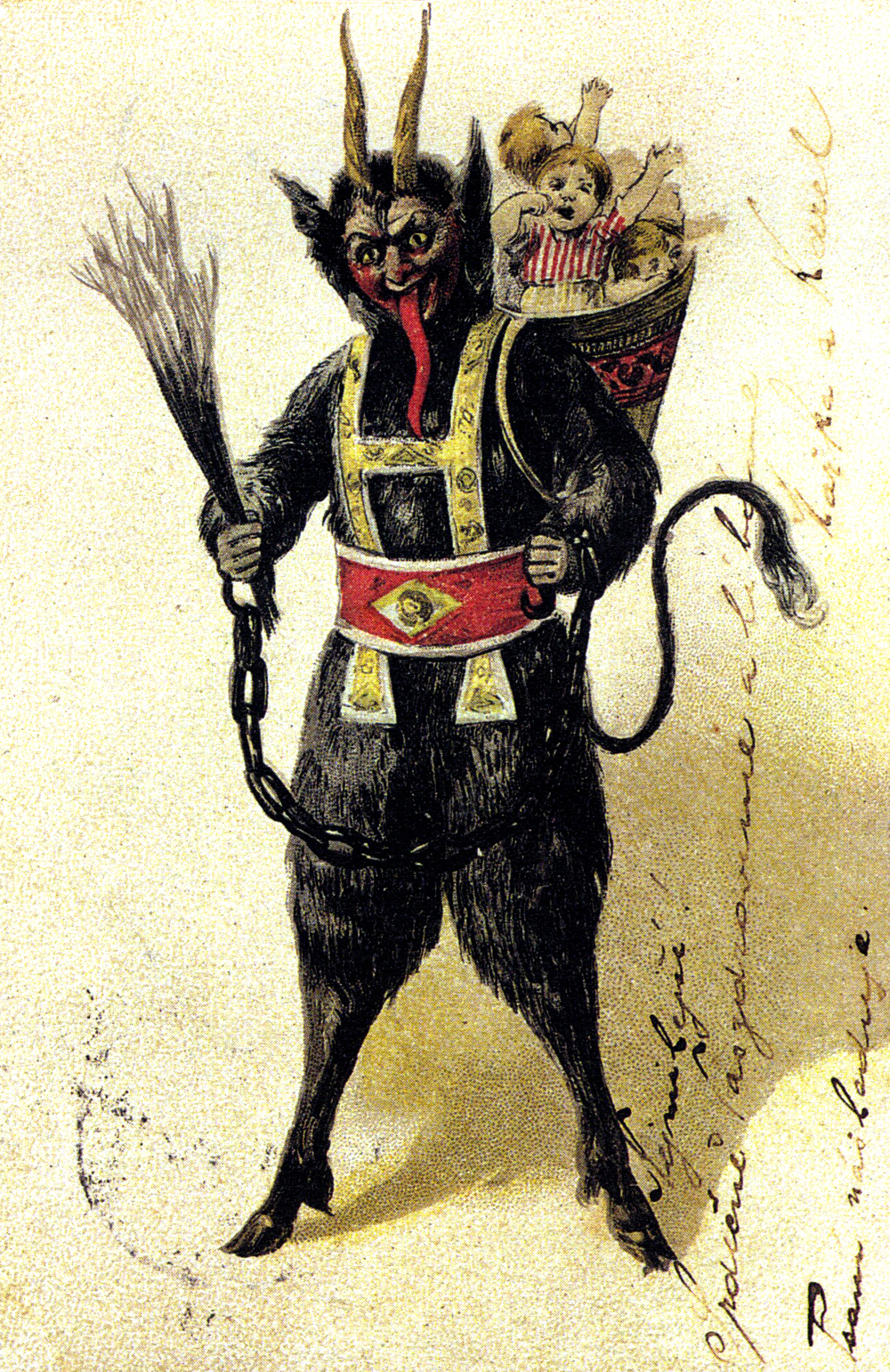
Picture courtesy of the Pushed Buttons Burning-in website

The Krampus is the ancient embodiment of accountability for wickedness balanced against St. Nicholas’ reward for virtue. He appears as a wild, bestial, goat-like figure wearing chains and bells that foretell his coming. As jolly old St. Nick is out leaving good children gifts and treats as a reward for good behavior, Krampus is prowling the night dishing out punishment for those who have fallen short of his exacting moral standards. He carries with him two fearsome instruments that should quicken the pulse of anyone who has been naughty more often than nice. First is a tied bundle of birch branches known as a “ruten” that he uses to whip naughty children (the beating is euphemistically called a “birching”). Second is a sack or a wooden tub that he wears on his back. Truly rotten children are stuffed in the sack to be taken away for further punishments that may include drowning in a river and/or inclusion in Krampus’ own Christmas dinner.

Unlike the modern Kris Kringle who doles out a half-assed punishment by failing to reward naughty kids (ostensibly making Christmas morning like any ordinary day), the Krampus does twice the work he needs to do just in case you were thinking of doing something bad later. Unwilling to let anyone become too comfortable with their own piety, Krampus still visits good families during the holidays, leaving them small gold-colored rutenas a reminder to remain morally upright. Krampus visits the good and bad alike — the holiday version of Scared Straight.

Although Krampusnacht is typically celebrated in parts of Europe on December 5 (the night before the Feast of St. Nicholas) with parades, elaborate Krampus costumes, and public birchings, I am as happy as a little school child to find that he has started to infiltrate the whole of the holiday season. Being a horror writer and fan, it really brings opens up the splendor and joy of the season to have my own Christmas demon waiting in the wings to inject a little horror into the holidays and scare the bejeepers out of everyone whether they need an attitude adjustment or not.

Gruβ vom Krampus!

Bracken MacLeod is a member of the NEHW.