Spring Craft Fair to Benefit Food Shelf

The NEHW will be at the Spring Craft Fair this Saturday in Hanover, Massachusetts.

NEHW members Stacey Longo, David Price, Kristi Petersen Schoonover, and Rob Watts will be at the event selling and signing their books.

Fair organizers will be raffling off items donated from local businesses to help raise money for the Hanover Food Pantry. There will also be a silent auction for a three-month membership to the YMCA.

The fair runs from 10 a.m. to 3 p.m. and is at Riley Hall located at 17 Silver Street in Hanover.

Epitaphs is Now Available as an E-book

Epitaphs is Now Available as an E-book

by Jason Harris

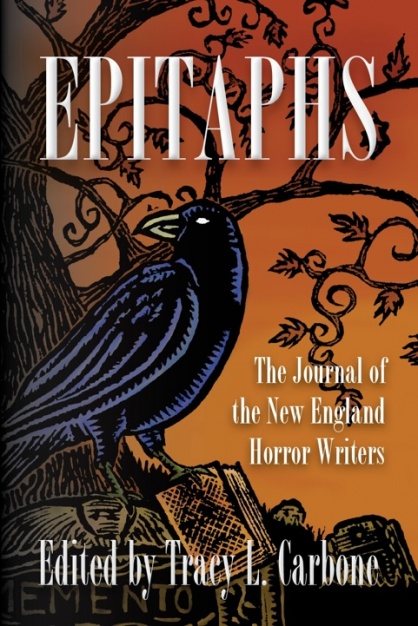
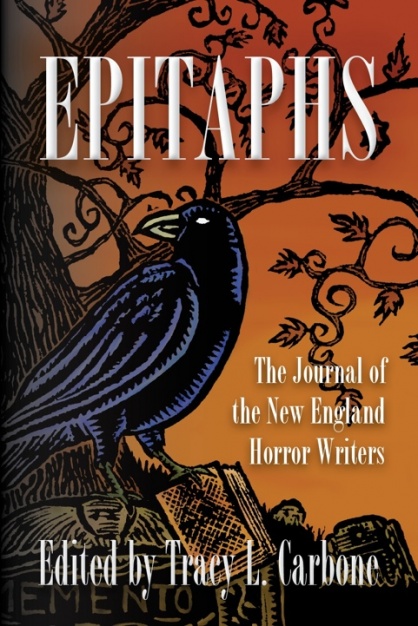
The New England Horror Writers’ organization’s first anthology is now available as an e-book.

Epitaphs became available in the Kindle store on Amazon today. This is the first time the collection has been available in e-book form.

The paperback edition of Epitaphs became a Stoker nominated collection this past Saturday. It’s on the final ballot of the Horror Writers Association’s Bram Stoker Awards for works published in 2011. The Awards will be presented at a gala banquet on Saturday, March 31, at the World Horror Convention in Salt Lake City, Utah.

“It’s a great achievement for the NEHW to have its first anthology get this far,” said Tracy L. Carbone, who is the editor of the collection, on her Facebook page. ”We all put in a tremendous amount of work in a short time to get this off the ground and I want to again thank the board and all the contributors.”

The book was released last October by Shroud Publishing then debuted at Anthocon with a book release party in November. At Anthocon, most of the writers in this collection were on hand to sign it.

The table of contents in this anthology is as follows:

Jeffrey C. Pettengill “To Sleep, Perchance to Die”

Paul McMahon “The Christopher Chair”

Kurt Newton “A Case of the Quiets”

Scott T. Goudsward “Build-a-Zombie”

John Goodrich “Not an Ulcer”

B. Adrian White “The Possesor Worm”

John M. McIlveen “Make a Choice”

Michael Allen Todd “The Death Room”

Rick Hautala “Perfect Witness”

Holly Newstein and Glenn Chadbourne “Stoney’s Boneyard”

Trisha J. Wooldridge “Kali’s Promise”

David Bernard “The Sequel”

David North-Martino “Malfeasance”

Stacey Longo “Private Beach”

Christopher Golden “All Aboard”

L.L. Soares “Holiday House”

Steven Withrow “Lines at a Wake”

K. Allen Wood “A Deeper kind of Cold”

P. Gardner Goldsmith “Alone”

Roxanne Dent “Pandora’s Box”

Michael Arruda “Chuck the Magic Man Says I Can”

T.T. Zuma “Burial Board”

John Grover “Windblown Shutter”

Stephen Dorato “Cheryl Takes a Trip”

Philip Roberts “The Legend of Wormley Farm”

Peter N. Dudar “Church of Thunder and Lightning”

To purchase a copy of Epitaphs in paperback for $12.99, click here.

To purchase in the e-book format for $4.99, click here.

Organization’s First Anthology Makes the HWA Final Ballot

Organization’s First Anthology Makes the HWA Final Ballot

by Jason Harris

It became official on Saturday, January 18, the New England Horror Writers’ first anthology is now a Stoker nominated collection.

Epitaphs is on the final ballot of the Horror Writers Association’s Bram Stoker Awards for works published in 2011. The Awards will be presented at a gala banquet on Saturday, March 31, at the World Horror Convention in Salt Lake City, Utah.

“It’s a great achievement for the NEHW to have its first anthology get this far,” Carbone, who is the editor of the collection, said on her Facebook page. “We all put in a tremendous amount of work in a short time to get this off the ground and I want to again thank the board and all the contributors.”

To purchase a copy of Epitaphs, click here.

Queen City Kamikaze Happens Saturday

The Queen City Kamikaze anime and video game convention happens this Saturday in New Hampshire. It’s only days away and the New England Horror Writers’ organization is preparing to be there.

Authors Stacey Longo, Tracy Carbone, K. Allen Wood, Alyn Day, Rob Watts, Kristi Petersen Schoonover and Scott Goudsward will be selling and signing books at the convention. The Demonhunter a.k.a. Nathan Schoonover will also be on hand to talk about being a paranormal investigator for almost 20 years.

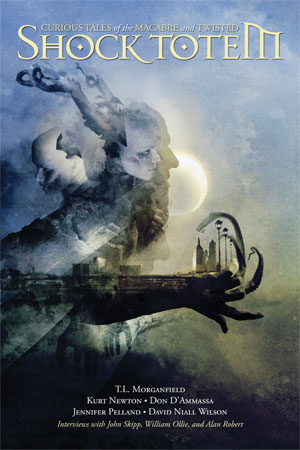
Here is the list of the books/magazines that will be available at the NEHW tables: Huldufolk, Shock Totem, Skeletons in the Swimmin’ Hole, Malicious Deviance, The Soul Collector, Trailer Trash, So Long And Thanks For All The Brains, Traps, Shroud magazine, Shadows over New England, The Zombie Feed, In Poe’s Shadow, Dark Things IV, Darkest Thirst, Shadows & Nightmares, Wake the Witch, Shadows over Florida, Daily Frights 2012, Nobody, Hell Hath No Fury, How the West Was Wicked, and 2012 Daily Bites of Flesh.

Epitaphs, the first NEHW anthology will also be available to buy. Longo, Wood, and Goudsward all have stories in this collection, which was edited by Carbone.

The Queen City Kamikaze Anime and Video Game convention takes place at the Manchester Memorial High School at 1 Crusader Way in Manchester, New Hampshire. It operates from 10 a.m. to 7 p.m.

For more information about the convention, click here.

The Trouble with Genres

This entry originally appeared on New England Horror Writer member, Kasey Shoemaker’s website.

The Trouble with Genres

by Kasey Shoemaker

Genre is truly a tricky thing. This all-important label helps not only to identify a novel but also the book’s intended audience. Without it, a book and its author could suffer a serious identity crisis. And, it was honestly one of the aspects of marketing my book that I struggled with the most. I’d written the entire first draft without much thought to its specific genre. Then, when left with the task of pigeonholing it, I ungracefully stumbled into calling it paranormal fiction. At my first fiction conference, I was told under no uncertain terms was it paranormal fiction. I often wonder how educated that assessment was coming from a distracted literary agent who half listened to my one-minute pitch. Nevertheless, she said paranormal fiction immediately brings to mind the genre’s sister, paranormal romance, and unless it was heavy on the romance, I was better off calling it urban fantasy. From then on, that was my book’s label.

However, a label can make an enormous impact on a book. Suddenly, my fiction novel, written before it was categorized, had an already established audience and with it a collection of expectations. Janice Hardy’s post addresses these expectations: “What readers expect. Fantasy is all about other worlds that can’t exist, mixed with magic, mysticism, or supernatural elements. These are the  defining characteristics of the fantasy genre. Just like spy thrillers  have their own characteristics and reader expectation. There were  aspects of the spy thriller I wanted to incorporate into my fantasy  story, but at its heart, it’s all about the magic and the fantastical world. When a reader picks up a book in a genre, they want certain traits.  Picture your favorite band. Now imagine going to their concert and hearing them play a totally different type of music. Country instead of  rock, rap instead of jazz. Even if you like the new type of music, odds are you’d be pretty unhappy at the bait and switch. Genre helps readers find the types of books they want to read. It also helps bookstores know where to shelve books, and what to suggest to their customers. Ditto for libraries.”

The publishing industry considered it a hot but overly saturated market. Readers had one of three reactions: strong interest (because they were long-time fans), rejection (usually due to thinking it was bloody, scary, or too steeped in fantasy), or confusion (typically a result of never having heard the term urban fantasy). The first group continued to ask questions about the plot and setting, all the while growing more and more interested. For the middle group, I would typically explain that it was bloody without being gory, suspenseful rather than frightening, and a fantasy set in our contemporary world. And, for the latter group, I stupidly found myself eloquently explaining the term urban fantasy and its roots instead of explaining my book, which didn’t necessarily fit neatly into the category. I did that only a few times. However, people still have preconceived notions about it based on the label. I have fielded questions, such as “Does it have vampires?” (no), “Is it like Twilight?” (um, big no on that one). “Will my teenager like it?” (absolutely), “Will adults like it?” (yes, more than the teenagers).

Essentially, the genre label, meant to be helpful to the publishing industry, has proven confusing to the readers. Some expect it to fit nicely on the bookshelf next to other urban fantasies where a barely clothed, well-endowed woman with a steely expression sits splay-legged in a graveyard. No offense to the character on that book cover, but when my Gabrielle Gayle sets out to demolish were-witches, she does so with all her parts covered and protected. She’s beautiful and sexy, but she will leave the lipstick at home in favor of packing her daggers. But, I have accidentally found myself on my soapbox about the over sexualization of female heroes in fantasy. Back to my point, for months, I trolled the aisles of bookstores and pulled countless titles off the shelves falling under the urban fantasy umbrella, lined them up to look at their covers, and asked myself how, and even if, my novel fit in with these. It does, mostly, but it also fit in with other books, novels that are a part of another sub-genre, dark fantasy. Dark fantasy has closer ties to horror than urban fantasy does, and poor horror has its own battles to fight when it comes to audience presumptions. After only a few months as a member of the New England Horror Writers, I have already been to some events where audience reaction was either excitement or blunt rejection. At least people know what it is to be classified as horror, for the most part. But, horror seems to be even more polarizing than fantasy. People either can’t get enough of it or steer clear of it, buying the books for that odd friend or family member who likes “that kind of stuff.”

With more and more novels being ones that cross genres, affixing a book with one specific genre label seems to be more troublesome than clarifying. Publishing companies can’t get by without the hard and fast categories and will at times allow new ones to spring up because every book simply must have a place. They revel in the preconceived notions held by audiences because it makes marketing that much easier.

But, what about the writer?

What happens to the unpublished writer spending thousands of dollars on fiction conferences who hears time and again that one particular element, while brilliant, simply isn’t found in that specific genre? One writer could hear from an agent that his or her science fiction book has too much science and not enough character while another agent could tell him science fiction is supposed to be more about the concept and less about the characters, all based on expectations of the genre. What’s to keep that writer from hacking at his or her work removing the book’s most poignant and well-crafted pages only to replace them with elements that, for no better reason, exist simply because they fit better in the genre? How much should a writer mold the book to fit the genre? Shouldn’t it be the other way around? After all, books are created by writers while genres are made by publishing companies to classify books?

Another issue is that there are likely too many genres for readers and writers to be aware of them all. Below is a genre map from Book Country. Notice that dark fantasy isn’t included? That’s because it’s only recently been recognized as its own sub-genre.

And, there’s no fixed formula or set of criteria for a book to meet before it’s labeled. And, an additional side effect of genres is that they often don’t settle with just the book. The labels attach themselves to the writer as well, like mold. Novelists aren’t simply writers once they’ve written a genre book.  They’re fantasy writers, mystery writers, romance writers, etc, leaving one to wonder the following:

Do writers themselves also conform to a specific genre to satisfy expectations of the audience and the industry? And, what does this mean for writing as a craft?

Another Notch in the Bedpost?

This entry originally appeared on New England Horror Writers’ member, K. Allen Wood’s website.

Another Notch in the Bedpost?

by K. Allen Wood

I’ve been contemplating—and worried about—writing this blog post for a long time now. My worry is a simple one: Will people be offended, take it the wrong way? I can’t answer that, but I hope not, because I’m compelled to discuss it.

So here goes…
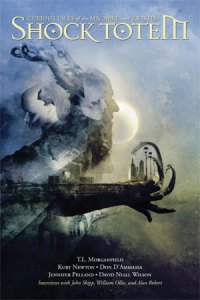
I started a small-press horror publication in the fall of 2008. I enlisted the help of some online friends, we dubbed it Shock Totem, and in July of 2009 we published our first issue. (Most of you know this.) Ever since we published that debut issue, I’ve had one question constantly rattling around my head:

Does an author owe his support to the publications that publish his work?

That question pertains not only to me as a publisher but as a writer as well. Through four issues of Shock Totem, we have gotten some amazing support from authors we’ve published. But not all of them. Some hardly mentioned us at all, even when the issue containing their work came out. On a selfish level, I can’t help but find that disappointing. On a rational level, I understand that I have no idea why an author does what he does. There are things at play here that I am simply not privy to. I can dig that.

But back to the selfish side of things… As a publisher, I find myself leaning toward the notion that writers should be supporting those who publish their work. Because if the publisher is doing it right (relative to that particular publisher, of course), and if they’re a publication like Shock Totem where every issue is still in print and actively promoted, then the publication is fully and continually supporting the authors.

Back to the rational side of things… As a published author—hell, as a lifelong creative type—I completely understand that the muse commands one to look forward, to move forward, and create, create, create, to not waste time looking back. I also know how little time most artistic people have to actually focus on their art. So maybe some people simply don’t have the time. But that leads to the one thing I can’t rationalize…

When I finish a new story, I move onto a new one. But when I have a story published, I never move on. (All this can be applied, as well, to my musician days.) I can’t move forward and not look back in that regard. Because I want people to read my work! Do I owe it to that particular publication to support them, promote them? That’s debatable. But I sure as hell owe it to myself to support and promote my work! So I make the time.

And that is precisely what baffles me. (This does not take into account the fact that some authors publish bad stories best left forgotten from time to time.) Why do certain writers choose to not actively promote their work? Is a publication credit just another notch in the bedpost for these authors? As a publisher, sometimes it feels that way.

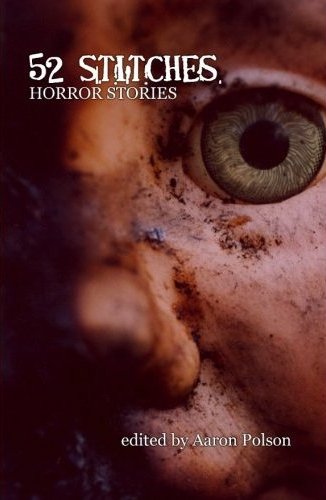
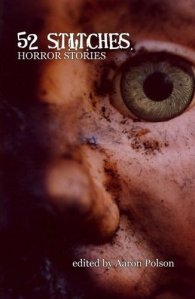
I have just three publication credits. The first was in 52 Stitches, Vol. 2. The publisher, Aaron Polson, essentially put Strange Publications to bed—at least for the time being—when this anthology was published. But this book is still available, and I promote the hell out of it…because I want people to read my work! “By the Firelight,” my story in this anthology, is a mere 457 words, but I still want people to read it. It doesn’t matter that the publication is inactive or perhaps permanently closed, because I like my story and, in my opinion, I owe it to myself to promote it.
My second published work, “Goddamn Electric,” was in The Zombie Feed, Vol. 1. I’ve sent out copies for review, I’ve posted about it here on this blog and on the Shock Totem blog. I will continue to do so as long as it’s available.

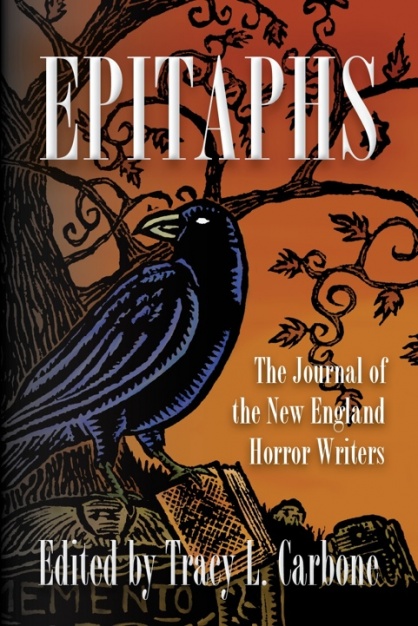
I’ve done the same thing, and will continue to do so, with Epitaphs: The Journal of New England Horror Writers, which contains my story “A Deep Kind of Cold.” In a certain, roundabout way, I’m promoting my work right now.

Which brings me to the revelation of things…

Since that first issue of Shock Totem came out in 2009, I’ve been asking myself should the author support the publisher? Again, the answer is debatable. But few would argue that an author shouldn’t promote his own work, right? And in promoting his own work, is that not, therefore, supporting the publisher? Is there a difference between promoting your own work and supporting the publisher?

I’m no longer sure you can have the former without the latter, but I know what I’m going to do. Always.

Editor’s Note:

Wood makes a lot of valid points. A creative person does look ahead, but to become well-known or even known, they need to promote their work. By authors’ promoting their stories, they are promoting the publisher of their work. How hard is it to write a Facebook status update or a tweet about your story being in an anthology, magazine, etc.

Wood promotes his magazine and any anthology his stories appear in. He does this through his website and his different twitter accounts. He also attends different conventions and fairs too. He will be at the NEHW tables at the Queen City Kamikaze Convention on Feb. 18 in Manchester, New Hampshire.
‘Scary Scribes’ Debuts Sunday Night

Scary Scribes Debuts Sunday Night

by Jason Harris

The Scary Scribes' Skeleton

Scary Scribes, a new podcast created by author Kristi Petersen Schoonover to share horror stories written by horror writers, airs this Sunday at 6 p.m. on the Paranormal Eh? Radio Network.

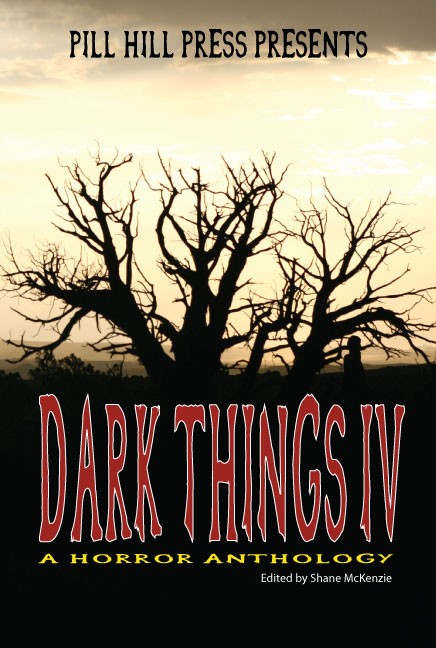
Author Stacey Longo will be Schoonover’s first guest on this new monthly podcast. They will be discussing Longo’s “People Person,” which was published in the anthology, Dark Things IV, published by Pill Hill Press. Besides sharing the writer’s story, Schoonover will talk with Longo about the idea behind the tale.

According to Schoonover’s website, the thing that “will make Scary Scribes a bit different is it won’t be just an interview; listeners will get to hear some of the writer’s work first — in most cases, a complete short story.”

The new podcast is a collaborative effort with Canada-based Paranormal, Eh? radio’s Terry Konig. Scary Scribes will be broadcast on the last Sunday of every month. For more information, check out the podcast’s website. There is also a Facebook page for Scary Scribes.

Both Schoonover and Longo are members of the New England Horror Writers’ organization.

Epitaphs on HWA’s Preliminary Ballot

It was announced last Saturday that Epitaphs, the first NEHW anthology is included in the preliminary ballot for the Bram Stoker Award for Anthology. According to the Bram Stoker Award rules on the Horror Writers Association’s website, Epitaphs will be on the final ballot, but cannot be called a “Stoker Nominated” collection until after the final ballot is announced on Feb. 18.

NEHW Members at Annual Author’s Night

Four NEHW Members to Appear at Winery’s Annual Author’s Night

by Jason Harris

The second annual Author’s Night at the Zorvino Vineyards in New Hampshire on Jan. 20 features four New England Horror Writers’ members, who will be signing their books, at the event.

The members are Tracy Carbone, Roxanne Dent, Karen Dent, John M. Mcllveen, and Scott Goudsward.

There will be copies of the first NEHW anthology, Epitaphs, which was released last October and debuted at Anthocon in November, will be available at the event. The anthology was edited by Carbone and features stories by Roxanne Dent, Mcllveen, and Goudsward.

According to the vineyards’ website, there will be over 75 New England authors at this charity event that goes from 6 p.m. to 9 p.m. This event will be “partnering with five New Hampshire Schools to help bring the joy of reading to all.” This year’s participating beneficiaries are the Timberlane District Elementary Schools. Each school, Pollard School (Plaistow), Atkinson Academy, Danville Elementary, Sandown Central, and Sandown North, will be holding a raffle, where the money generated will go towards reading in the classroom, the website said.

Everyone who signs up for the event on Zorvino’s website will be entered into a chance to win a “Private Wine Tasting and Tour For Up To 20 People,” which includes a cheese and cracker platter and a tour of their facility. Just sign up online, print your ticket and bring it to the book signing to be entered.

The event is free and there will be a cash bar at the event. The winery will be open all night for complimentary wine tasting as well. The vineyard wants people to be aware to bring cash since the authors won’t have access to a credit card machine.

For a list of the authors attending the event and their websites, check out Zorvino’s website. The vineyard is located at 226 Main St. in Sandown, New Hampshire.

The HWA Announces 2012 Recipients for Lifetime Achievement

The HWA Announces 2012 Recipients for Lifetime Achievement

by Jason Harris

The Horror Writers Association has announced the 2012 recipients of its Bram Stoker Award for Lifetime Achievement.

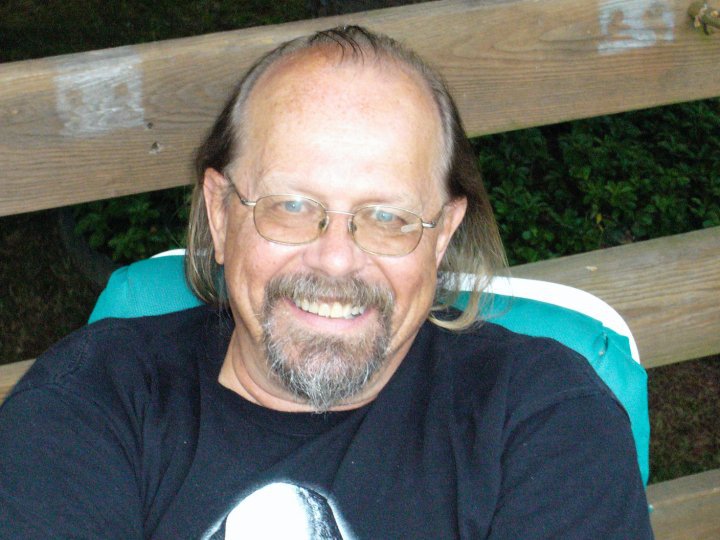
Rick Hautala (photo courtesy of his Facebook page)

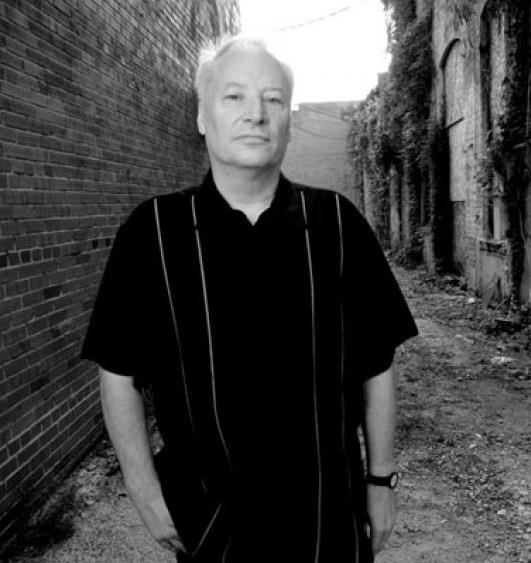
The two recipients of the award are NEHW member Rick Hautala and Joe R. Lansdale.

Hautala and Lansdale join previous recipients such as Stephen King, F. Paul Wilson, John Carpenter, Thomas Harris (no relation), Anne Rice, Charles L. Grant, Harlan Ellison, and Ramsey Campbell to name a just a few of the people who have been honored with this award.

Hautala, who recently had his first novel, Moondeath, rereleased by Evil Jester Press and is in the NEHW’s first anthology, Epitaphs, released last year, said that receiving the award was “unexpected.”

Lansdale’s novel, All the Earth, Thrown to the Sky and the e-book, Bullets and Fire, were released last year. His newest book, Edge of Dark Water, comes out March 25.

“Truthfully, I am more humbled than excited by it,” Hautala said. “There are so many other writers who, I think, are much more deserving. I feel like Carrie White at the prom.”

Lansdale “was surprised” and “maybe even shocked” when he heard about the honor, he said.

Joe R. Lansdale (photo courtesy of his Facebook page)

“It’s an honor to be given this award along with Rick,” Lansdale said.

According to the HWA website, “the Lifetime Achievement Award is the most prestigious of all awards presented by the HWA. It does not merely honor the superior achievement embodied in a single work. Instead, it is an acknowledgement of superior achievement in an entire career.”

A committee chooses the recipients for the lifetime achievement award instead of it being voted on by the entire associations’ active membership, the website said. By having an committee, it “prevents unseemly competition” and the “impression that there are any losers in this category.”

Hautala said, he will “accept the award with humility and — yes, a measure of pride.”

He feels better “sharing the stage with Lansdale, who has been a great friend” for many years.

“As Harlan Ellison says: ’Becoming a writer is easy. It’s staying a writer that’s hard.’ So this award should be an inspiration to young and aspiring writers everywhere … If you stick around long enough, eventually they have to notice you.” Hautala said.

Lansdale agrees with Hautala’s sentiment about having to be noticed when “you have been around long enough.”

“… I like to think we’ve contributed to the field of horror and dark suspense, and that there’s someone out there who became a fan, or writer of horror, because of something I wrote, or something Rick wrote,” Lansdale said. “Again, it’s a great and respected honor.”