Just Learn How To Do It Yourself

Just Learn How To Do It Yourself

by Rob Watts

Remember the old sayings “If you want something done right, you have to do it yourself” and “don’t pay someone to do something that you can do on your own?” Well those sayings are especially true when it comes to authors in today’s rapidly changing publishing climate. In this ever-expanding technology age that we’re living in, it almost seems senseless to me to even bother seeking out a publishing company to release our work. With all the resources readily available to us, there is no reason to take 100 percent control of the work you slaved over. After all, you gave up your free evenings and weekends, missed out on get-togethers with friends, perhaps broke up with girlfriends/boyfriends, wives/husbands in order to express your inner-workings on pages upon pages of your masterpiece. Why turn it over to anyone (except perhaps Random House or Harper Collins) when you can do a far better job at it? Of course, you might be working with a traditional publisher at the moment and could be perfectly happy with them. That’s awesome. If you’re not happy, read on.

I understand the appeal of seeing your name in print within a book which was released by a “publishing company” but I must point out that what most of these small presses are doing is profiting on your work while you get the short end of the stick. What the small genre presses do, between performing a half-assed editing job, hiring their buddy to do the cover art, printing copies and posting it to Amazon is the same thing you can do, only you can do a better job and guess what? You profit from the book sales, not them. By the way, just placing a book on Amazon and having it “listed” on B&N doesn’t count as full book distribution. Many small presses seem to think that’s the case but trust me, it’s not. Again, that’s something you can do yourself. Also, be cautious of publishers of anthologies. Or more to the point anthology mills. These are publishers who have very little credibility but they are seeking credibility by bulking up their publishing credits by churning out crappy collections one after another. They accept short stories from unsuspecting authors and give them very little in return, if anything at all. I’ve seen them all before, the editing is poor, the selection process is questionable, there is hardly any kind of distribution efforts and almost all the time, the publisher of that said anthology conveniently has their story included within the collection. Of course not all anthology publishers are sinister. But it’s like anything in life, for every pile of coal you stumble upon, you have to search hard for the diamonds.

If I can pull the curtain away from the wizard for just one moment, I’d like to point out that 99 out of 100 authors have the dreaded day job to contend with (even ones that you think have it made.) None of us by any means are rich and famous due simply to our writing craft (I can’t stand it when writers act as if they make their living off their books.) But even if we don’t find immediate fame and success with our writing, we shouldn’t be taken advantage of along the way from point A to point B. Having your work published under the imprint of anyone (other than the last of the big six publishing companies) is only costing you money in the long run. Unless of course you don’t mind only being paid in the form of one author/contributor copy and maybe if you’re lucky, a few pennies for every copy sold. As I mentioned above, you put the time into it and agonized over your story. Isn’t it worth a little more time to learn the new-school methods of independent publishing? Even though there are some reputable and highly regarded small presses out there, unfortunately for every one of those there are a thousand hucksters who will rip you off, devalue your work and never lose an ounce of sleep while doing it.

As I write this, there is an unsettling amount of bad word-of-mouth over an unfortunate non-fictional character named Anthony Giangregorio. He is the owner of Open Casket Press and Undead Press and has allegedly taken advantage of newcomers to the publishing world by way of mistreatment, misrepresentation, broken promises, less-than-crafty editing tactics and poor royalty delivery. I won’t dwell on that but it does illustrate my point immensely that you have to be careful and protect yourself from these sort of people.

Which brings me to my original point. Take a bigger chance on yourself and give your work the attention it deserves. It’s not that hard to create your own imprint to publish under. I’ve been doing it for years and quite frankly, I’m not interested in turning my work over to anyone for peanuts just to pad my bibliography resume’. My work is too valuable to me and every word I write means something. That’s not egotistical, it’s simply how I feel about something that I spend my free time doing. It should be just as important to you to not throw your work on just anyone’s lap. I had the misfortune of working with a couple of small traditional publishers in the 90s who in all seriousness left me with nothing but my underwear. I was intent on avoiding that experience again and decided to cut out the middleman by creating my own company to publish under. Self-publishing (or independent publishing) is no longer a dirty word. Just ask a very talented Canadian author named Cheryl Kaye-Tardif who recently self-published Children of the Fog last fall and has thus far made $47,000 in book sales from Kindle alone. Her print edition sales have been rather spectacular as well. Independent authors, with a little research and patience, can achieve greater heights more than ever in today’s consumer age. Without giving a seminar on the subject, I’ll just share with you a handful of things to keep in mind when setting out to go it alone. They seem like no-brainers but believe me, I’ve seen people crash and burn because they were lazy about self-publishing.

1- A catchy company name. Not one that screams self publisher. If your name is Joe Schmoe, don’t call your company Joe Schmoe Publishing. Perhaps come up with a name that revolves around your subject matter or genre. Be sure to register a dot-com site (avoid dot net if possible) for the company as well. Don’t rely on the freebie sites. look professional. be professional. Make sure that your website looks occupied. Keep it updated so a visitor doesn’t think you’ve abandoned ship. Especially if you are selling books from your site. Make it inviting looking so a potential customer isn’t afraid to click that Pay Now button. One more thing, don’t clutter your pages up with unnecessary nonsense. Keep it clean and simple. Less is more. More is a bore.

2- Kindle and Nook are great supplements, but you’ll want print copies of your work if you are releasing a full-length novel, etc. After all, no one ever said “when I grow up, I want to be a writer and see my name in print on a digital e-reader.” Research a quality printer. Find one that will print small runs of 50 to 100 copies per order. Yes, it’s a little costly to pay upfront for your books, but if you truly believe in your work, you will invest the time and energy it takes to sell books and recoup your initial investment. When you need reprints, they will be far less expensive because the layout, design and initial process has been done already. Usually you can find a printer who will print your books anywhere between 3.20-4.75 per unit. If you price your book (depending on size) between $10.00-$20.00, well you’ve made a nice profit for yourself. That’s much better than getting .73 cents per copy from a blood sucking publisher.

3- How much of a profit you make on the sale of each book depends on where you are selling it. There are several avenues one can take. Amazon, of course, is the first logical choice, especially with the advent of CreateSpace. I know I listed a success story above regarding Amazon and Kindle but I must point out that you simply cannot rely on the click and publish websites as your only source of bookselling. The chances of someone buying Stephen King’s new book and then seeing Joe Schmoe in the “People Who Bought Stephen King also bought Joe Schmoe” section are slim to none (and slim just left town.) Amazon and Barnes & Noble take a hefty cut from the sale of your (print) book so it’s worth it to get creative on how and where you sell your books. How well you promote yourself and your work is a large factor too. Ask yourself, has your publisher promoted you or your work to the best of their ability or to your liking? Probably not. Can you do a much better job? Probably yes. By the way, if you’re fortunate enough to have someone land on YOUR website, why would you want them to click a link that directs them to another site (such as Amazon?) You’ve got them so keep them. let them buy directly from you and while they are there, perhaps they will sign up for your newsletters, follow you on your social networking sites, etc. Don’t turn your book buying audience over to the corporate monsters if you don’t have to.

4- If you are going to maintain and control your inventory of books, as I do (I buy my inventory up front and control where, when and how it’s sold) then right off the bat you’ll want to make sure your website is e-commerce ready. If not, set up a PayPal account. It’s a simple process and you can cut and paste your checkout buttons right onto your site. Everyone uses PayPal today so when they see their logo in the Buy Now section, they will feel a level of confidence in purchasing your book(s). The only caveat to this is that you can’t afford to be lazy when it comes to being your own distributor online. If someone spends money on your book, you had better package that book up nicely and get it to the post office in a timely fashion. I can’t tell you how many times I’ve bought directly from someones website and got ripped off. As I mentioned above, keep your site updated so your customer feels confident in their purchase.

5- Get creative with how you publish your work. Make it stand out from all the assembly line products that are on the market today. I’m not just just talking about great cover art (although that is important … hire a good designer) I’m talking about standing out and creating a buzz around your work by offering your audience something they haven’t seen or read before. For instance, my last book Huldufolk was limited to only 250 print copies signed and numbered. It included a music soundtrack to the book which was performed by me. It has sold 212 copies since November at $15.99 a copy ($10.00 at events) so I’ve made my initial investment back and am able to put the profits made into the production of the next book. The New York Times Bestseller list isn’t going to be knocking at my door over this, but as an independent seller it’s significant. Whether or not it’s the greatest story ever told is not for me to judge or assume. This is by no means an advertisement for my work. It’s to illustrate the appeal that my book had to a certain book buying audience. I’ll give you another example unrelated to my work. A few years back, a friend of mine sold their book inside of a “writers survival basket” which included the book (on self-publishing), a coffee mug w/gourmet coffee packs, candy, note pads, etc, etc. It sold like hotcakes. So the point is, do something unique with your work. Come up with something special that says “I’m serious about what I do.” These little rinky dink publishers will never put that much thought into promoting your work. You can and you’ll be all the better for it.

I could rattle on-and-on about the various things I’ve picked up on over the years but honestly I’m not writing this to give a lecture on the do’s and don’ts on self-publishing. I’m merely suggesting that anyone who’s been left with a bad taste in their mouth from working with a less-than-reputable publisher should seriously consider doing it on their own. You will be in control of your work, you will become more business savvy as time goes on, you will discipline yourself as a writer because you’ll be aware of what it will take to generate book sales and most of all you will profit more from it in the end. I hate to hear horror stories (no pun intended) about writers being taken advantage of. Hopefully someday these stories will lessen over time, but I’m not prepared to hold my breath that long.

Watts wrote this article for the NEHW and also published it on his LiveJournal site.
NEHW at New Haven Craft Show Sunday

The New England Horror Writers and craft shows are becoming synonymous. This trend continues this Sunday when the NEHW participates in the East Coast Craft Fair in New Haven.

The craft show will be held at the Trolley Square Mall on Saturday and Sunday, but the NEHW will only be there Sunday.

NEHW members Kimberly Dalton, Stacey Longo, Kristi Petersen Schoonover, Kasey Shoemaker, Rob Watts, and Nathan Wrann will be there selling and signing their works.

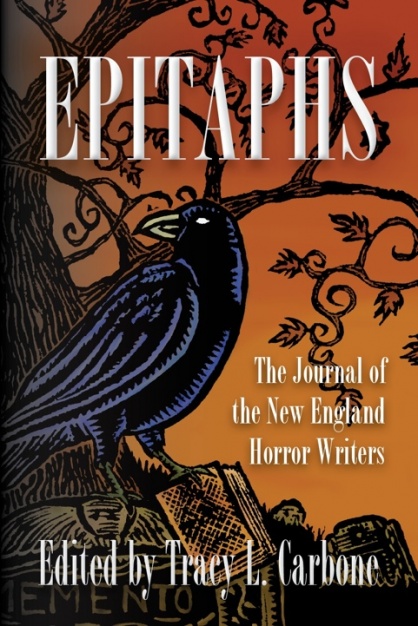
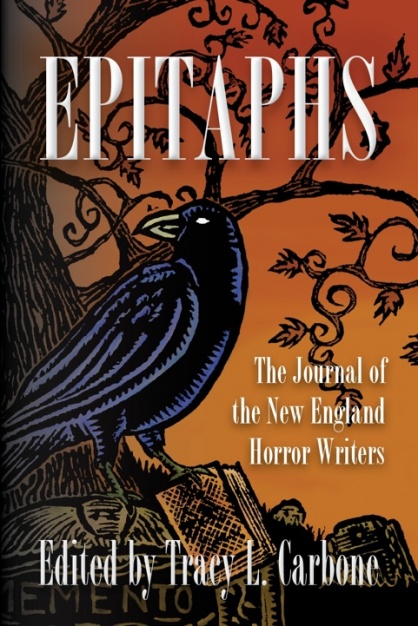
You can purchase Epitaphs, the first anthology created by the NEHW, which includes only stories by members. Longo’s story, “Private Beach,” which is reminiscent of Stephen King’s story, “The Raft,” is in this inaugural collection. This anthology also includes a story by Christopher Golden, who has written a number of Buffy the Vampire Slayer books, and Rick Hautala, the recent recipient of the Horror Writers Association’s 2012 Bram Stoker Award for Lifetime Achievement.

If you saw The Raven starring John Cusack last weekend and are still craving Poe, you could purchase a copy of In Poe’s Shadow, a collection of short stories inspired by the works of Edgar Allan Poe. Schoonover’s piece, “VanityVanity,” which was inspired by Poe’s “The Oval Portrait,” is in this anthology.

If Poe is not your style, maybe you’d like a trip to Iceland with newlyweds Jeffrey and Susie Hill in Huldufolk, which is based on Icelandic folklore, written by Watts. Along with the book, he is giving away a copy of The Traffic Lights CD, the band in Watts’ book, with each book purchase. Watts composed the music for his fictional band.

If you are a New Haven resident or work in the city, then Silver Vengeance, by Kasey Shoemaker, whose main character is an ambitious chef in one of New Haven’s trendiest restaurants in her urban fantasy novel featuring werewolves, witches, romance, and bloodshed, might be for you.

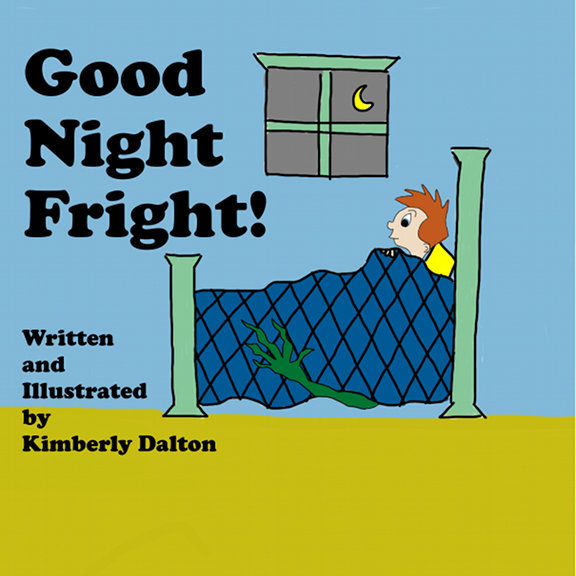
There will also be young adult novels by Nathan Wrann and a children’s book by Kimberly Dalton available.  Wrann will have his first two books in the paranormal thriller Dark Matter Heart trilogy at the NEHW table. In Good Night Fright, Dalton rhyming children’s book, John is afraid to go to sleep so he asks his friends how they handle the monsters in the closet. She also illustrated the book.

The show’s organizers will also have readings by Longo, Schoonover, and Watts in the middle of the mall at different times of the day.

Come hear the readings and stop by the NEHW table where there will be plenty of other books available to buy from these authors in addition to the ones mentioned above.

The craft show runs from 10 a.m. to 4 p.m. The Trolley Square Mall is located at 1175 State Street in New Haven.

An Outing to Boston Comic Con

An Outing to Boston Comic Con

By David Price

I had no intention to attend Boston Comic Con this year. My son’s girlfriend, Amy, had brought it up a few weeks ago, but no plans were made to go. On Friday night, however, she was over visiting and brought it up again. My son, Devon, had no desire to go either, so she was doing her best to convince him. Now, I haven’t been to a comic con in many years, but the prospect of going piqued my interest. I pulled up the website and checked out the details. There was going to be 74 featured guest artists there. 74! Wow, these things have gotten much bigger since the last time I went.

I use to collect comics. I stopped pretty much cold turkey back in the nineties, when all those endless crossovers became big. They drove me nuts, interrupting the ongoing story lines of your favorite series and also forcing you to buy books you didn’t want, just to keep up. It was a sales gimmick that I quickly grew to despise and drove me away from comics completely. I’m still a fan, of sorts. I see every comic book based movie that hits the screen and I’ve been pretty happy with Hollywood’s attempts to bring some of my old favorites to life. I still have probably thirty boxes of comics in storage. It’s like the fan in me is in hibernation, I guess, like my collection.

So when I looked over that list of 74 artists, I didn’t recognize quite a few of them. I’m guessing there are many who have entered the business since my comic collecting days. But still, there were a few that really caught my eye, like Bernie Wrightson, for instance. Wrightson is an artist I have admired since I started reading and collecting comic books. You see, what first drew me into comics were horror comics. I was reading them for a couple years before I even noticed the super hero books. Maybe it was growing up watching Creature Feature on Channel 56, but I’ve always had this fascination with monsters. Wrightson was of course, an illustrator on many of the horror comics that I grew up loving. These had titles like, House of Mystery, House of Secrets, Tales of the Unexpected, and Vampirella. Did I mention he was the co-creator of Swamp Thing? Yeah, that too.

Wrightson didn’t stop with comic books, though. He did an illustrated version of Frankenstein, which is absolutely beautiful. Later in his career, he went on to do some illustration for my favorite author, Stephen King. Mr. Wrightson illustrated The Cycle of the Werewolf, The Stand, and even did some work on the Dark Tower series. Needless to say, I was excited at the chance to meet him.

Also on the list of artists, I noticed the name Bill Sienkiewicz. Wow! There was another guy who had impressed the hell out of me with his art. You see, Sienkiewicz brought a style unlike any other I had ever seen when he entered the comic book industry. In 1984, Sienkiewicz took over as the artist for the X-Men spinoff, New Mutants and brought an expressionistic style that was mind-blowing. I’m not sure it was for everyone, but I know he gained quite a bit of recognition and managed to work with some of comicbook greats at that time like Frank Miller and Alan Moore.

There were a couple other names that stood out to me like Bob Layton of Iron Man, Kevin Eastman of the Teenage Mutant Ninja Turtles, and Simon Bisley whose work I remember from Judge Dredd and Lobo. It was enough for me to want to go. To top it all off, my twelve-year-old daughter, who to my knowledge has never read a comic book, begged to go. Between my son’s girlfriend and my daughter, they managed to convince Devon to give it a try. I was happy to drive, so the plans were made. My daughter invited her cousin, Roberta, so she would have someone the same age to tag along with her.

Saturday morning, I picked up Amy and brought her back to the house. She was carrying this trash bag full of costumes because apparently the three girls were determined to dress up. They had the idea that people went in costume to these cons and they wanted to participate. I certainly wasn’t going to put a costume on, but I didn’t mind if they did. There wasn’t a lot of planning involved here, so my daughter Kay ended up as Alice in Wonderland, Roberta was a sort of Victorian age vampire, and Amy wore a Pink Floyd shirt and flag as a cape. With the girls dressed up and ready to go, we headed off to the Hynes Convention Center in Boston.

The first problem encountered is that the Hynes is near Fenway Park, and the Yankees were playing the Red Sox that day. Finding parking was an adventure. As we passed the Convention center looking for a parking garage, we saw this ridiculously long line outside of the building. That couldn’t be the line to get in, we said. Spotting several people in line dressed as comic book characters confirmed our worst fears, though.

The line moved quickly, however, and we probably only waited thirty to forty minutes to get in the building. None of us were prepared for what we found inside. It was wall to wall with people. You really couldn’t get anywhere without fighting your way through the zombie-like horde of comic book fans. At first, this really bothered my daughter. She complained to me quite a bit. I reminded her that she begged me to bring them. After a while, we all just got used to it.

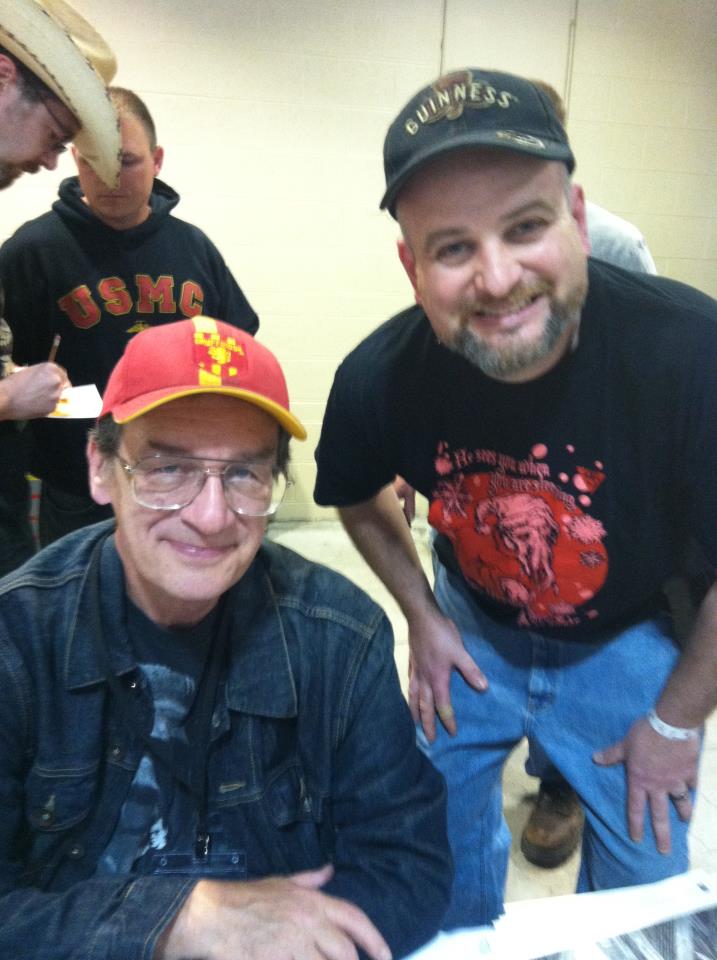
Devon and his girlfriend went right over to the Newbury Comics table to check out The Walking Dead books. My family is a fan of the show, but none of us have read the books. He grabbed the first few, which was okay with me, since I wanted to read them, too. Amy grabbed a few things that she was really excited about, including a Doctor Who book as a thank you present to me. We stopped at an artist who did a portrait of my daughter and niece in anime style. This put them both in happier moods. When we hit the back row, I saw the line for Bernie Wrightson. I stepped up and he asked if I had anything to sign. I knew I had forgotten something. Oh well, he had some prints from his work on Frankenstein, so I bought one of those. More importantly, I got a picture with him.

Bernie Wrightson and David Price at Boston Comic Con.

We fought our way through the mob and did our best to take in the whole thing. I had just about given up on finding Bill Sienkiewicz when we finally stumbled upon him. I got another cool picture and my daughter got an autographed Cat Woman print. We tried to find another vendor called Madknits, who had these handmade stuffed little monsters, on the way out, but after bumping our way up and down a bunch of aisles, we gave up and decided to call it a day. The kids were hot, tired, and feeling a bit claustrophobic.

All in all, Boston Comic Con was very cool, but it definitely needs to find a bigger venue. The Boston Convention and Exhibition center on the waterfront is much bigger and more suited to something that attracts as many people as comic con does. They should probably consider upgrading, even though I heard that this was an upgrade from previous years. We all had fun, which was the most important thing. Well done, Boston Comic Con.

Stoker Award-Winning Compilation Now an E-Book

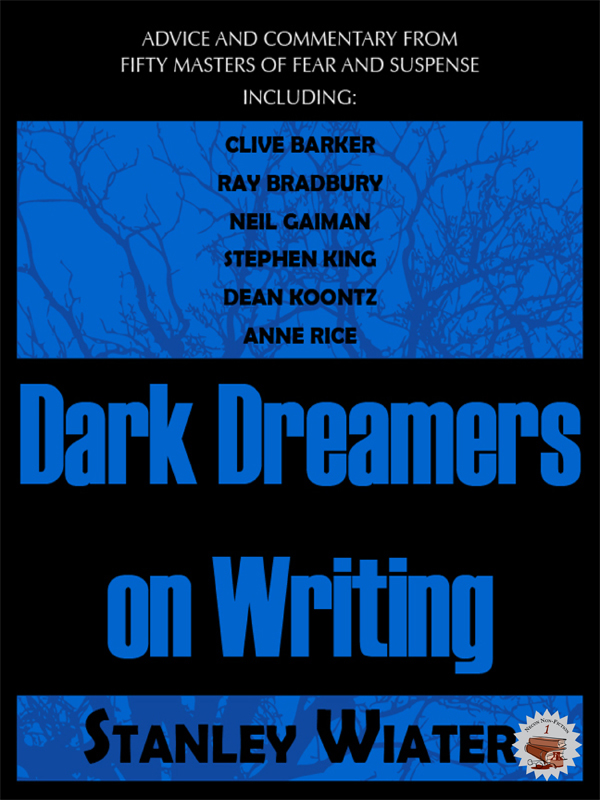
Author Stanley Wiater’s Bram Stoker Award-winning compilation, Dark Dreamers: On Writing, has been republished as an e-book by Necon E-Books. It is subtitled, “Advice and Commentary from Fifty Masters of Fear and Suspense.”

It is a collection of how-I-did-it quotes from such talents as Stephen King, Dean Koontz, Anne Rice, Clive Barker, Ray Bradbury, Jack Ketchum and many more. Wiater has “culled well-selected quotations from his interviews with horror’s creators. These include major influences; the day-to-day work of writing; choosing a form; fame and fortune; the game of making movies; sex and death; censorship; personal fears; surprising advice; and the function of horror.”

Check out the e-book here.

A Conversation with Author Jan Kozlowski

This entry appeared on author and NEHW member Kate Laity’s website.

Writer Wednesday: Jan Kozlowski

by Kate Laity

My pal and fellow Horror in Film and Literature lister, Jan Kozlowski, first fell in love with the horror genre in 1975 when the single drop of ruby blood on the engraved black cover of Stephen King’s Salem’s Lot hypnotized her into buying it. She sold her first story, Psychological Bacchanal to the EWG E-zine in 1997. Her short story, Parts is Parts, won awards in both the International Writing Competition sponsored by DarkEcho’s E-zine and Quoth the Raven’s Bad Stephen King contest. Another short story, Stuff It, was sold to an independent film producer and went into production as a movie short called Sweet Goodbyes. Her short stories have appeared in: Remittance Girl’s A Slip of the Lip anthology, Lori Perkins’ Hungry for Your Love: An Anthology of Zombie Romance and Fangbangers: An Erotic Anthology of Fangs, Claws, Sex and Love.

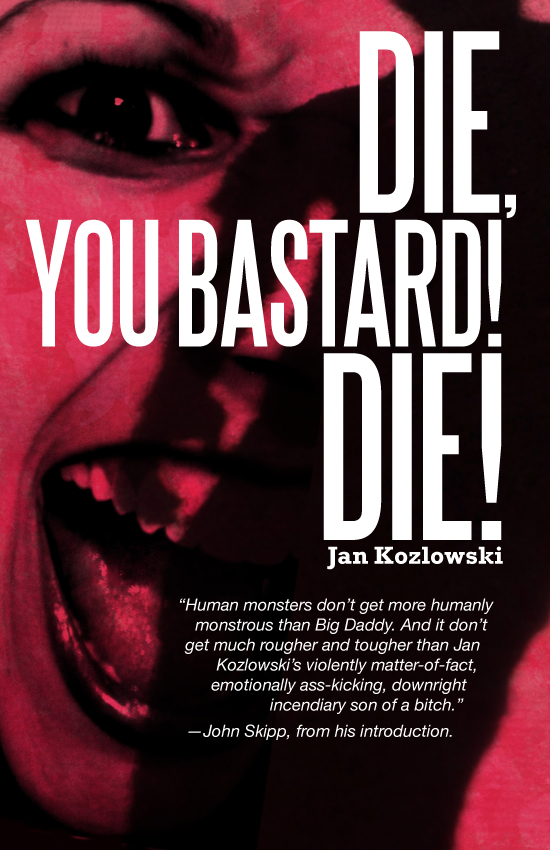
She is extremely proud and excited to announce that her first novel, Die, You Bastard! Die! debuted February 7, as part of Lori Perkins’ new horror line, Ravenous Shadows, edited by the legendary John Skipp.

Q: What do you write on? Computer, pad o’ paper, battered Underwood? Give us a vivid picture.

I do the majority of my writing on my cherished MacBook Pro laptop. I tend to turn my MacBook on at 6:30 a.m. and don’t shut down until 9 p.m. or later most days [Ed: Hmmm, you can shut them down?]. If I either get stuck or get a jones to feel pen against paper, I’ll pull out my old white L&M Ambulance Company clipboard loaded with scrap paper and start scribbling. The board is a souvenir of my days as an urban EMT in Hartford, CT and I keep it around as a reminder of what I COULD be doing for a living.

Q: Do you listen to music while you write? Does it influence what you write?

I almost always listen to my local Dinosaur (Classic) Rock radio station when I’m working. Since Die, You Bastard! Die! is such an ultra violent story, I tried putting together a play list of heavier metal like Avenged Sevenfold (my granddaughter’s favorite band), Testament, Broken Hope, Disturbed, but I ended up distracted by the unfamiliar songs. Listening to the rock I grew up with in the 70’s like Bob Seger, The Eagles, Bruce Springsteen and Aerosmith, with a little Tom Waits, Frank Zappa, Nathan & the Zydeco Cha-Chas, Bon Jovi and Bacon Brothers thrown in via iTunes works best for me.

Q: Do you write in short bursts or carve out long periods of time to work? Is it a habit or a vice?

For me, writing is a business. I’ve been freelancing since I was about 12 and sold articles about raising tropical fish to my hometown newspaper. For the past 15 years or so I’ve run my own freelance writing shop doing all sorts of business and web related writing, editing and research work. Over the past two years, I’ve slowly been moving away from the business projects in order to focus on my horror fiction, but whether I’m writing fiction or non-fiction my work style is the same….commit to the project and write until the client, the editor or I’m happy with the finished product.

Q: What writer would you most want to read your work? What would you want to hear them say?

That’s already happened…on one of the drafts of Die, You Bastard! Die! I think I managed to gross out my editor, legendary Splatterpunk King, John Skipp! Now if I can, one day, pay Dean Koontz back for the creeps he gave me with his novel Whispers, I’ll die a happy writer.

Q: On the days where the writing doesn’t go so well, what other art or career do you fantasize about pursuing instead?

When I was a little girl my grandfather used to tell me stories about his adventures working for a funeral home during the pre-embalming fluid days. I always thought I would have loved working in mortuary sciences, but when I was going to school women weren’t exactly welcomed into the funeral services industry. Now that times have changed and we have a first class Mortuary Sciences degree program at our local college, I’ve always thought that would make a fabulous Plan B, even now at age 50+.

Q: What do you read? What do you re-read?

I try to read a little bit of everything. I get some great ideas from newspapers and magazines. I just discovered and am now devouring Mad Money Wall Street guru, Jim Cramer’s books. I try and read as much classic horror like Robert Bloch, M.R. James, Fritz Leiber, H.P. Lovecraft, Richard Matheson, Edgar Allan Poe and J.N. Williamson as possible. I also try to keep up with who’s publishing today beyond Bestsellersaurus Rexes Stephen King and Dean Koontz. I’m a huge fan of Edward Lee, Neil Gaiman, Joe Hill, Joe R. Landsdale, Jonathan Maberry, Elizabeth Massie, Yvonne Navarro, Weston Ochse, Monica O’Rourke, John Skipp and Andrew Vachss.

I rarely find time to re-read anything unless I’m researching a specific writing technique, like how Jonathan Maberry handled the fight scenes in his Pine Deep trilogy or how Dean Koontz ramped up to the reveal of the cockroaches in Whispers.

Q: Where did the idea for Die,You Bastard! Die! come from? Do you have a surefire way of sparking inspiration? And is that an awesome title or what?!

The idea for Die, You Bastard! Die! came out of a lovely dinner Ravenous Shadows publisher Lori Perkins and I had during the 2011 Northeast Writer’s Conference, known as NECON. Lori mentioned she was looking for a story about an adult child coming home to take care of her abusive parent and it matched up with a story I had been kicking around for years about a survivor of childhood sexual abuse coming home to deal with her past. After the conference I got home, wrote up the proposal, Skipp green-lighted it and we took off from there. I realize that’s not the way most writers get a book deal but it goes to prove that if you consistently put the hard work in, you WILL find yourself at the right place, at the right time with the right story.

Writing inspiration and story/character/plot ideas are everywhere if you’re open to them…and my motivation for being open to them usually is based on my memories of being paid $5 an hour to be projectile vomited on as an EMT or waitressing at Friendly’s for .60 below minimum wage.

John Skipp raves about this book:

Die, You Bastard! Die! is one hard-as-nails crime story indeed, with a crime at its core so heinous it boggles both mind and soul. That said, it is also a horror story, a mystery, and an insanely taut suspense thriller. Categories are funny like that.

But human monsters don’t get more humanly monstrous than Big Daddy. And it don’t get much rougher and tougher than Jan Kozlowski’s violently matter-of-fact, emotionally ass-kicking, downright incendiary son of a bitch.
I love this book, and stand behind it 100%. Hope it blows you away, as it did me. And has you coming back for more.

Drop by Jan’s blog or website and follow her on Twitter. Find her on Facebook and check out her Amazon author page. Thanks, Jan!

Amanda Hocking, the Writer Who Made Millions by Self-publishing Online

This article originally appeared on The Guardian website.

Amanda Hocking, the Writer Who Made Millions by Self-publishing Online

by Ed Pilkington

A couple of years ago, Amanda Hocking needed to raise a few hundred dollars so, in desperation, made her unpublished novel available on the Kindle. She has since sold over 1.5m books and, in the process, changed publishing forever

Woman makes millions from self published books

Amanda Hocking: 'I didn't have a lot of hope invested in ebooks'. (Photograph courtesy of Carlos Gonzalez/Polaris)

When historians come to write about the digital transformation currently engulfing the book-publishing world, they will almost certainly refer to Amanda Hocking, writer of paranormal fiction who in the past 18 months has emerged from obscurity to bestselling status entirely under her own self-published steam. What the historians may omit to mention is the crucial role played in her rise by those furry  wide-mouthed friends, the Muppets.

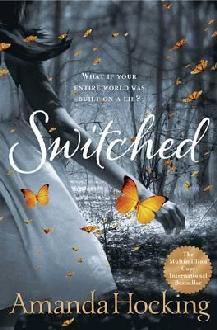
Switched: Book One in the Trylle Trilogy

To understand the vital Muppet connection we have to go back to April 2010. We find Hocking sitting in her tiny, sparsely furnished apartment in Austin, Minnesota. She is penniless and frustrated, having spent years fruitlessly trying to interest traditional publishers in her work. To make  matters worse, she has just heard that an exhibition about Jim Henson, the creator of the Muppets, is coming to Chicago later that year and she can’t  afford to make the trip. As a huge Muppets’ fan, she is more than willing to drive eight hours but has no money for petrol, let alone a hotel for the night. What is she to do?

Then it comes to her. She can take one of the many novels she has written over the previous nine years, all of which have been rejected by umpteen book agents and publishing houses, and slap them up on Amazon and other digital e-book sites. Surely, she can sell a few copies to her family and friends? All she needs for the journey to Chicago is $300 (£195), and with six months to go before the Muppets exhibition opens, she’s bound to make it.

I’m going to sell books on Amazon,” she announces to her housemate, Eric.

To which Eric replies: “Yeah. OK. I’ll believe that when it happens.”

Let’s jump to October 2010. In those six months, Hocking has raised not only the $300 she needed, but an additional $20,000 selling 150,000 copies of her books. Over the past 20 months Hocking has sold 1.5m books and made $2.5m. All by her lonesome self. Not a single book agent or publishing house or sales force or marketing manager or bookshop anywhere in sight.

So let the historians take note: Amanda Hocking does get to Chicago to see the Muppets. And along the way she helps to foment a revolution in  global publishing.

I’ve come to Austin, legendary birthplace of Spam (the canned as opposed to the digital version), to find out what this self-publishing revolution looks like in the flesh. I can report that, from the outside, it’s surprisingly conventional. Hocking no longer lives in that pokey apartment, but then she’s no longer a struggling would-be author. She’s bought herself her own detached home, the building block of the American dream, replete with gables and extensions, its own plot of land, and a concrete ramp on which to park the car.

But step inside and convention gives way to a riot of colour. It is just before Christmas, and Hocking has decorated the house with several plastic trees bedecked in lights and two large Santa stockings pinned expectantly over the mantelpiece. The sofa is scattered with animals, some of the cuddly toy variety and others alive, notably Elroy the miniature schnauzer and Squeak the cat (apparently they get on very well).

She greets me at the door and, without preamble, we talk for the next two hours about her extraordinary rags-to-riches tale and what it means for the future of the book. At 27, and with only a few months in the limelight, she is patently new to the fame game. She seems nervous at first, answering my questions in short bursts and fiddling with her glasses; but gradually she relaxes as we discuss what for her has been the central passion of her life since an infant.

She was brought up in the Minnesota countryside on the outskirts of Blooming Prairie about 15 miles north of Austin. Her parents divorced when she was young, money was tight and there was no cable TV to wallow in. “So I read a lot. I would go to the library, or get books at rummage sales. I got through them so quickly I started reading adult books because they were longer. I remember my mom giving me a box set of five books to last me all summer; I devoured them all in two weeks.”

By the age of seven she was reading Jaws by Peter Benchley and anything by Stephen King. Michael Crichton, JD Salinger, Shakespeare, Jane Austen, Mark Twain, Jack Kerouac, Kurt  Vonnegut and many others fed an insatiable appetite.

It was a way, she now thinks, of coping with the depression that troubled her childhood. “I was always depressed growing up. There wasn’t a reason for it, I just was. I was sad and morose. I cried a lot, I wrote a lot, and I read a lot; and that was how I dealt with it.”

What went in had to come out. The child Hocking began telling her own stories before she could walk. She was forever inventing make-believe worlds, so much so that the counsellor to whom she was sent for depression concluded that her incessant storytelling was an aberration that had to stop. Fortunately for Hocking, and for her many fans, her parents took her side in this argument, and she was never sent back to see him.

At 12 she had already begun to describe herself as a writer and by the end of high school she estimates she had written 50 short stories and started countless novels. The first that she  actually completed, Dreams I Can’t Remember, was written when she  was 17. She was very excited by the  accomplishment, and printed it out for friends and family, as well as sending it to several publishers.

“I got rejection letters back from all of them. I don’t blame them – it wasn’t very good,” Hocking says.

Hocking went on to develop an intimate relationship with rejection letters. She has somewhere in her new house a shoebox full of them.

Yet she would not give up. She wrote unpublished book after unpublished book. “Sometimes I’d say: ‘I’m done, I’m never going to write another book,’ but then a couple of months later I’d have another idea and I’d start again. This time it was bound to work.”

In 2009 she went into overdrive. She was frantic to get her first book published by the time she was 26, the age Stephen King was first in print, and time was running out (she’s now 27). So while holding down a day job caring for severely disabled people, for which she earned $18,000 a year, she went into a Red Bull-fueled frenzy of writing at night, starting at 8 p.m. and continuing until dawn. Once she got going, she could write a complete novel in just two or three weeks. By the start of 2010, she had amassed a total of 17 unpublished novels, all gathering digital dust on the desktop of her laptop.

She received her last rejection letter in February 2010. Hocking says she hasn’t kept the letter, which is a crying shame because it would surely have been an invaluable piece of self-publishing memorabilia. As far as she can remember, the last “thanks-but-no-thanks” came from a literary agent in the UK. If that agent is reading this article, please don’t beat yourself up about this. We all make mistakes …

April 15 2010 should also be noted by historians of literature. On that day, Hocking made her book available to Kindle readers on Amazon’s website in her bid to raise the cash for the Muppets trip. Following tips she’d gleaned from the blog of JA Konrath, an internet self-publishing pioneer, she also uploaded to Smashwords to gain access to the Nook, Sony eReader and iBook markets. It wasn’t that difficult. A couple of hours of formatting, and it was done.

“I didn’t have a lot of hope invested in it,” she says. “I didn’t think anything would come of it.” How wrong she was.

Within a few days, she was selling nine copies a day of My Blood Approves, a vampire novel set in Minneapolis. By May she had posted two further books in the series, Fate and Flutter, and sold 624 copies. June saw sales rise to more than 4,000 and in July she posted Switched, her personal favourite among her novels that she wrote in barely more than a week. It brought in more than $6,000 in pure profit that month alone, and in August she quit her day job.

By January last year she was selling more than 100,000 a month. Being her own boss allowed her to set her own pricing policy – she decided to charge just 99 cents for the first book in the series, as a loss leader to attract readers, and then increase the cover price to $2.99 for each sequel. Though that’s cheap compared with the $10 and upwards charged for printed books she gained a much greater proportion of the royalties. Amazon would give her 30% of all royalties for the 99-cent books, rising to 70% for the $2.99  editions – a much greater proportion than the traditional 10 or 15% that publishing houses award their authors. You don’t have to be much of a mathematician to see the attraction of those figures: 70% of $2.99 is $2.09; 10% of a paperback priced at $9.99 is 99 cents. Multiply that by a million – last November Hocking entered the hallowed halls of the Kindle Million Club, with more than 1m copies sold – and you are talking megabucks.

The speed of her ascent has astonished Hocking more than anyone. She was so elated to receive her first cheque from Amazon, for $15.75, that she didn’t cash it and still has it pinned up on a noticeboard above her desk. “It went from zero to 60 overnight,” she says. “Everybody was buying my books and it was overwhelming.”

In internet-savvy circles she has been embraced as a figurehead of the digital publishing revolution that is seen as blowing up the traditional book world – or “legacy publishing” as its detractors call it – and replacing it with the e-book, where direct contact between author and reader, free of the mediation of agent and publishing house, is but a few clicks away. There is certainly something to that argument. The arrival of Hocking onto the Kindle bestseller lists in barely over a year is symptomatic of a profound shift in the book world that has happened contiguously. Her rise has occurred at precisely the moment that self-publishing itself turned from poor second cousin of the printed book into a serious multi-million dollar industry. Two years ago self-publishing was itself denigrated as “vanity publishing” – the last resort of the talentless. Not any more.

A survey carried out last year by the book blog Novelr found that of the top 25 bestselling indie authors on Kindle, only six had ever previously enjoyed print deals with major book publishers. With e-book sales reaching $878m in the US in 2010, an almost fourfold increase from the year before, some 30 authors have already sold more than 100,000 copies through Kindle’s self-publishing site. That’s the kind of statistic that made Penguin’s chief executive, John Makinson, say recently that he saw “dark clouds” gathering in 2012.

But Hocking’s new-found stature as self-publishing vanguardista is not something she welcomes. “People built me up as a two-dimensional icon for something I was not. Self-publishing is great, but I don’t want to be an icon for it, or anything else. I would rather people talk about the books than how I publish them.”

She also resents how her abrupt success has been interpreted as a sign that digital self-publishing is a new way to get rich quick. Sure, Hocking has got rich, quickly. But what about the nine years before she began posting her books when she wrote 17 novels and had every one rejected? And what about the hours and hours that she’s spent since April 2010 dealing with technical glitches on Kindle, creating her own book covers, editing her own copy, writing a blog, going on Twitter and Facebook to spread the word, responding to emails and tweets from her army of readers? Just the editing process alone has been a source of deep frustration, because although she has employed own freelance editors and invited her readers to alert her to spelling and grammatical errors, she thinks her e-books are riddled with mistakes. “It drove me nuts, because I tried really hard to get things right and I just couldn’t. It’s exhausting, and hard to do. And it starts to wear on you emotionally. I know that sounds weird and whiny, but it’s true.”

In the end, Hocking became so burned out by the stress of solo publishing that she has turned for help to the same traditional book world that previously rejected her and which she was seen as attacking. For $2.1m, she has signed up with St Martin’s Press in the US and Pan Macmillan in the UK to publish her next tranche of books. The deal kicks off this month with a paperback version of Switched. It’s a fast-paced romance featuring changeling trolls called Trylle who are switched at birth with human babies. The novel cannot be classed as literary, but then it makes no pretensions to be so. It is precision-targeted at a young-adult audience, and is surprisingly addictive. Once the Trylle trilogy is out, Hocking’s new series of four novels, Watersong, revolving around two sisters who get caught up with sirens, will be released from August in hardback and e-book simultaneously.

Hocking’s editors on both sides of the Atlantic point to the deal as evidence that traditional and solo digital publishing can live in harmony. “There’s a lot of talk about publishers being left out of the loop,” says Jeremy Trevathan, Macmillan’s fiction editor. “But this whole thing is an opportunity for writers and publishers to find each other.” Or as Matthew Shear, publisher of St Martin’s Press, puts it: “It’s always been the same since the days when people self-published from the back of their car – cream will rise to the top.”

There’s something peculiar about all this: one of the leading figures in the self-publishing revolution is now being vaunted by major book houses in London and New York as evidence that traditional publishing is alive and kicking. Hocking is very aware of the paradox, which she observes with a wry writer’s eye. “A lot of people are saying publishing is dead,” she says. “I never did, and I don’t think it is. And they want to use me to show it isn’t.”

Switched, the first in the Trylle Series by Amanda Hocking, is out now in paperback and e-book formats, featuring previously unseen extra material. Published by Pan Macmillan in the UK and St. Martin’s Griffin in the USA. For further information, see www.worldofamandahocking.com.

Some of the other Kindle Million Club members

Stephen Leather

Widely hailed as Britain’s most  successful “independent” writer, two years ago Leather took three novellas that had been turned down by Hodder & Stoughton and issued them for the Kindle through Amazon. Last year, he put his monthly income from ebooks at around £11,000.

Joe Konrath

The Chicago-based author is both prolific – he has written seven thrillers, a horror series, and a sci-fi novel, each under a different pseudonym – and candid about the benefits of self-publishing. “One hundred grand – that’s how much I’ve made on Amazon in the last three weeks,” he boasted on his blog last month.

HP Mallory

The “urban fantasy and paranormal romance” author sold around 70,000 copies of her e-books in two months last year, and signed a three-book contract with traditional publisher Random House. She sums up her appeal thus: “If you’re all about fairies and witches and vampires (oh my!) … and you like men who get a little hairy during a full moon, I got the goods.”

John Locke

Last summer, the one-time insurance salesman from Kentucky became the first self-published author to sell 1m Kindle e-books. Alongside his lurid thrillers fans can download an advice book entitled How I Sold 1 Million eBooks in 5 Months!.

Oliver Pötzsch

German novelist and film-maker Pötzsch has reached the highest echelons of the Kindle bestsellers list with the English translation of his historical novel The Hangman’s Daughter. It’s a big success story for AmazonCrossing, which identifies books selling well in other languages, and republishes them in English.

Author’s First Novel Being Rereleased by Evil Jester Press

Author’s First Novel Being Rereleased by Evil Jester Press
by Jason Harris

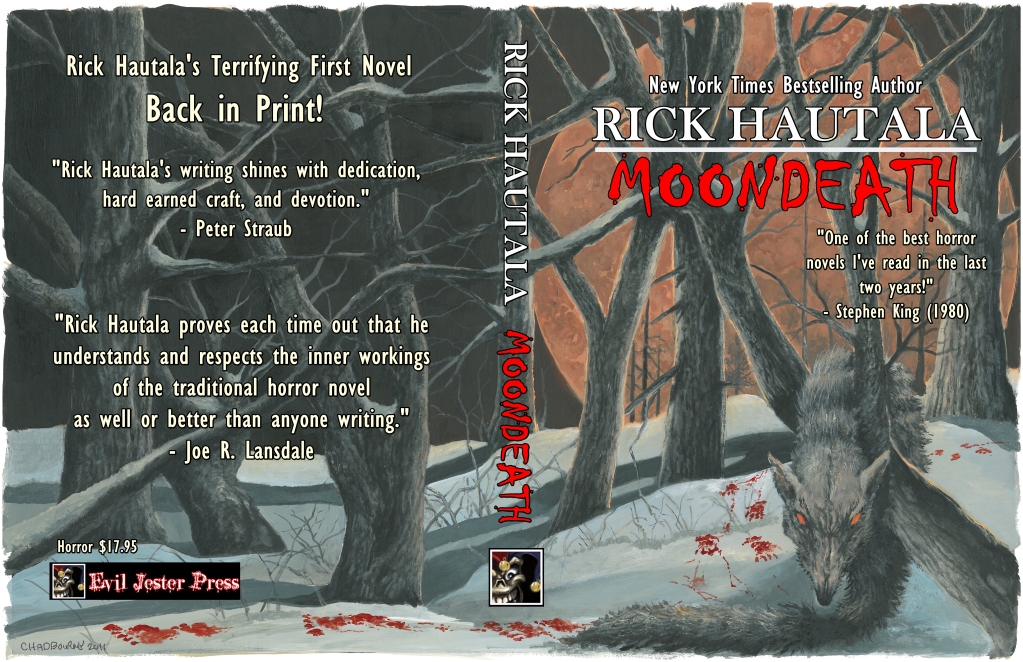
NEHW member Rick Hautula’s classic horror novel, Moondeath, is being rereleased by Evil Jester Press on Jan. 2. Publisher Charles Day said the novel has a new cover by “renown artist” Glen Chadbourne and the introduction was written by Christopher Golden.

Evil Jester Press’s Executive Editor Peter Giglio said on the Goodreads’ website that this was Hautala’s first book and was originally published in 1980. Moondeath is a werewolf and witchcraft tale set in Cooper Falls, New Hampshire, a small New England town, he said.

Stephen King said in 1980 that Hautala’s novel was “One of the best horror novels I’ve read in the last two years!,” Giglio said on Goodreads.

Click on Amazon to order the book.

Click on Evil Jester Press for more information about them and their books.

NEHW Authors in Charity Anthology to Benefit HWA President

NEHW Authors in Charity Anthology to Benefit HWA President

by Jason Harris

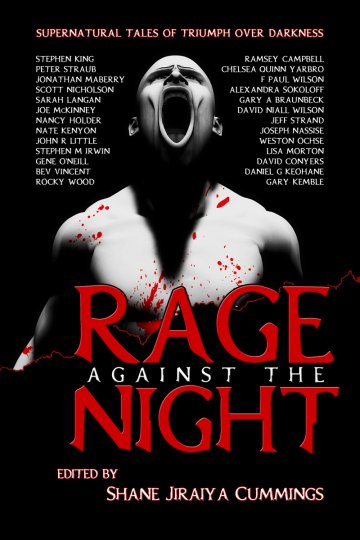
Daniel Keohane and Nate Kenyon, both NEHW members, have stories in the new collection, Rage Against the Night.

Keohane’s zombie story, “Two Fish to Feed the Masses” is appearing in “an amazing charity anthology,” he said.

Kenyon’s story is called “Keeping Watch.”

All the proceeds from Rage Against the Night will go to the Rocky Wood, an author and current President of the Horror Writers Association, who is battling motor neurone disease.

According to the Wikipedia website, “motor neurone diseases (or motor neuron diseases) (MND) are a group of neurological disorders that selectively affect motor neurones, the cells that control voluntary muscle activity including speaking, walking, breathing, swallowing and general movement of the body. They are generally progressive in nature, and can cause progressive disability and death.”

Amazon states the stories in this anthology detail the brave men and women who stand up to “the darkness, stare it right in the eye, and give it the finger.” These people are under the onslaught of supernatural evil and their good acts can seem insignificant.

The anthology was edited by Shane Jiyaiya Cummings and also features stories by Stephen King, Peter Straub, Jonathan Maberry, Ramsey Campbell, F. Paul Wilson, Nancy Holder and Scott Nicholson to name only a few of the authors in this charity collection.

Vincent’s story, “The View from the Top” is reprinted in this anthology, he said on his website. As of right now, it is only available in e-book format, but there will be a print copy in January, Vincent said.

The e-book is $3.99 through Amazon.

Necon E-Books will be at Anthocon

Bob Booth and Matt Bechtel, of Necon E-books, will be at the New England Horror Writers’ table at Anthocon this coming weekend. Check out the convention’s website and read previous articles about Anthocon on this site just click on the “Anthocon” category.

Along with digital copies of the individual titles they sell, the company also offers print editions. Necon E-books will soon be offering the Complete Short Fiction of Charles L. Grant. There will be eight volumes in this series. Volume 1: Nightmare Seasons, Volume 2: The Orchard, Volume 3: Dialing the Wind, Volume 4: The Black Carousel, Volume 5: The Collected Oxrun Stories, Part 1, Volume 6: The Collected Oxrun Stories, Part 2, Volume 7: The Collected Horror Stories, and Volume 8: The Collected Science Fiction Stories.

Volume 1 through 4 will be coming out this year. Volume 5 though 8 will be released in 2012.

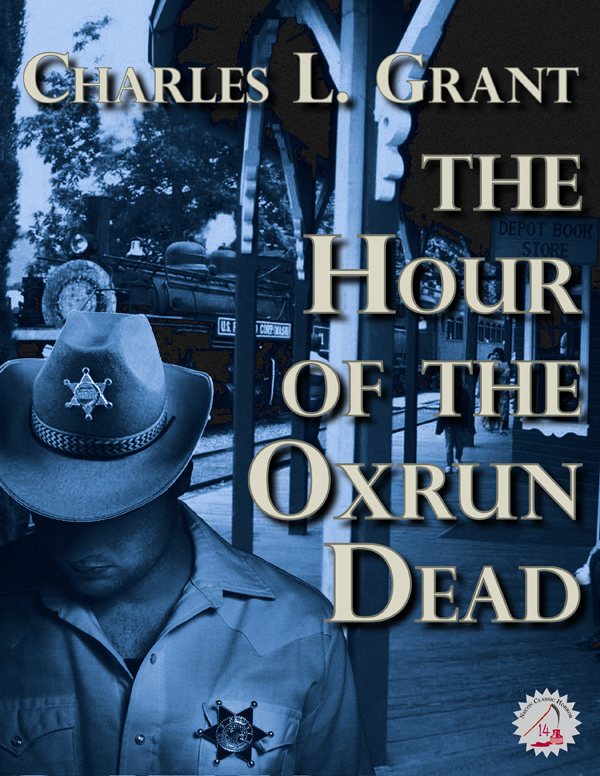
Grant’s novel, The Hour of the Oxrun Dead, is now available for $4.99. According to the site, “The Hour of the Oxrun Dead was a breakthrough novel for Charles L. Grant. It was the first of many books dealing with Oxrun Station, his invented, cursed locale that is probably only surpassed by Lovecraft’s Arkham and King’s Castle Rock in the minds of horror fans. First appearing in 1977, it helped usher in the golden age of horror fiction in the 1980s.”

The site said the novel is “character-driven and emotionally wrenching, The Hour of the Oxrun Dead’s subtlety stands in sharp contrast to the “gore galore” style that would come to dominate horror fiction.

Check out Necon E-Books blog which has an entry written about Brian Keene, a guest at Anthocon, by Booth. There are also entries written by authors James A. Moore and Jeff Strand.

The company also has books by Christopher Golden and Rick Hautala available. These two authors will also be at Anthocon this weekend. They also both have stories in Epitaphs, the first anthology by the NEHW, which is published by Shroud Publishing. There is going to be a book release party for this inaugural anthology at the convention and most of the authors in the collection will be on hand to sign the book.

Author Talks about the Writing Craft

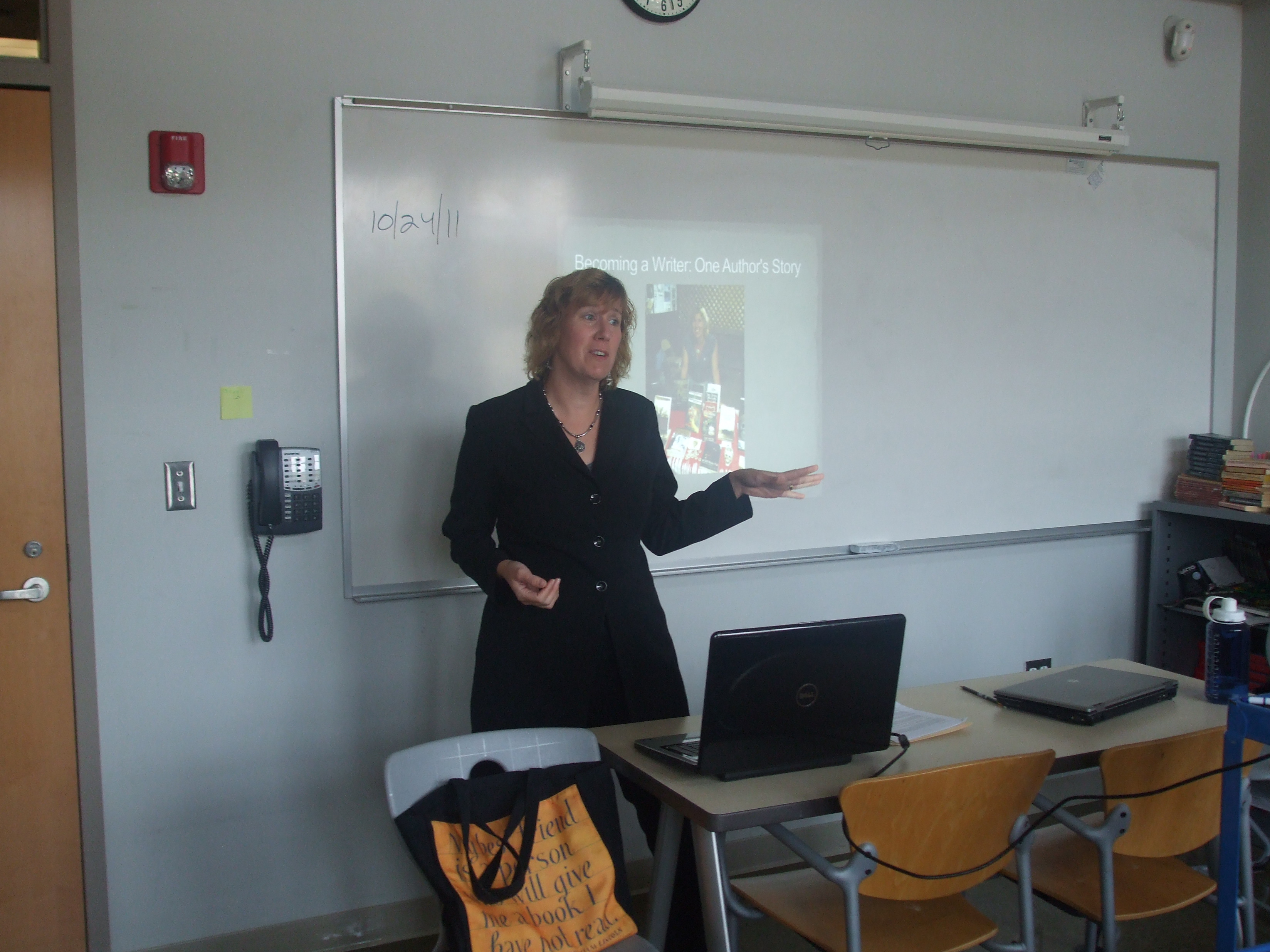
Stacey Longo’s account of speaking to a high school class about writing.

Stacey Longo talking about writing to a class of students (photo courtesy of Kim Kane)

On October 24th, I had the opportunity to speak at the ACT Arts Magnet High School in Willimantic, CT. The topic was Writing as a Craft and an Industry. I opened with a little background about my own writing career and my roots as a humor columnist. After listing my credentials, I explained how hearing Shroud publisher Tim Deal present at a Poe Celebration two years ago inspired me to jump from humor to horror. I also admitted that while I sell short stories about zombies, decapitations, and carnivorous beach dunes, my blog focuses on the humor to be found in every day life, from the perils that come with trying to raise two cats to the agony of eliminating the fish smell in the house two days after you’ve cooked cod for dinner.

My advice to these kids was simple:

1. Write all the time, about anything that strikes your fancy.
2. Read more than you write.
3. Read On Writing by Stephen King.
4. Know your market and what’s selling.
5. Read submission guidelines and follow them.
6. Keep your day job to support your writing habit.
7. Never, ever mistake the Twilight series for quality writing.

We held a short Q&A session in which the students had several questions, such as “Have you really met Nathan Schoonover?” and “Where does Nathan Schoonover live?” followed by the more serious question, “How serious is Nathan Schoonover’s relationship with his significant other?” I had foolishly forgotten how popular this paranormal investigator is with the teenage female demographic before
including him in my ‘Look at all the Cool People You Will Meet’ portion of my PowerPoint.

I left the kids with a short story I’d written about them and a stress ball with my website (www.staceylongo.com). And at the very end of class, one shy girl named Sam asked me if she could send me a short story she’d written about a lonely disemboweled zombie for feedback.

It makes me proud to see the youth of America so inspired!