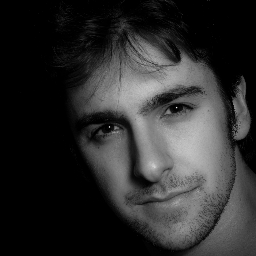
A Conversation with Author Adam Cesare

By Jason Harris


b55f3206ed747f885cd18d60591387401. You have written a novel, novella, and a short story collection. What are you working on now?

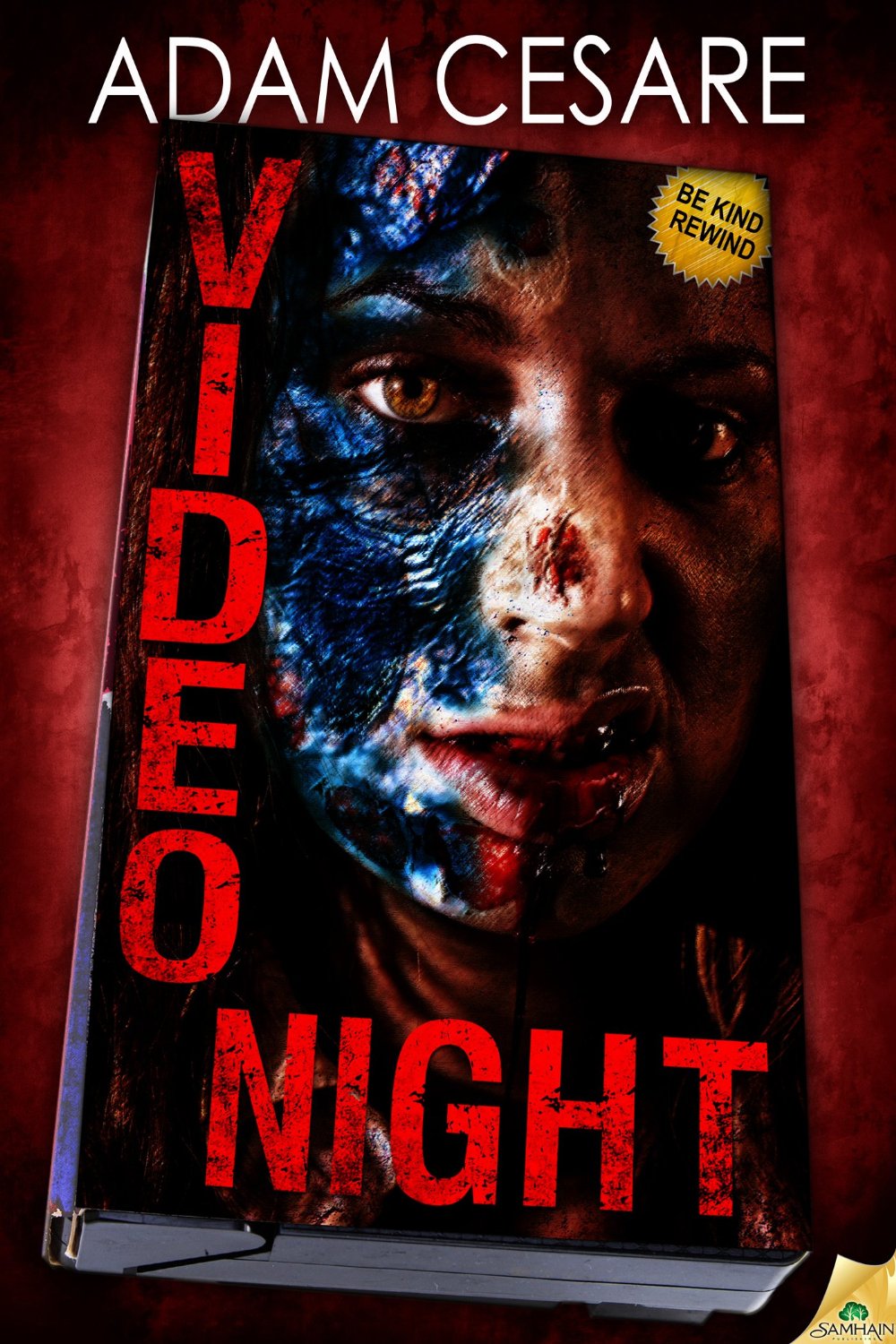
Next up will be another full-length novel. That one will be from Samhain (they put out Video Night, as well) and it’s my take on the satanic cult subgenre. All the longer pieces I’ve written have all been set in specific periods (the 1980s, 1960s, etc.) I didn’t want to become known as the “throwback” horror guy, so The Summer Job is set in our time. The characters have iPhones. I’m all done with that one and right now I’m working on a novella for a to-be-named publisher. I’m super excited about both of these.

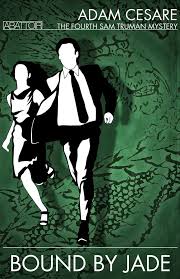
2. On Amazon, it has you credited with Bound by Jade (the Fourth Sam Truman Mystery). Is this true and were you involved with any of the other mysteries in the series? I only ask since you don’t have this book listed on your website.

There are a couple of posts about it on the site, but I think they’ve been pushed off the front page over the last few months. It should be on the website; I’m just the world’s worst webmaster, so it’s not up there. I’ll fix that.

The series was created by writer/publisher Ed Kurtz. Sam’s a disgraced P.I. who just happens to get the city’s strangest cases (the books are supernatural noirs). I didn’t write the first three, but they all share the same character. The series is something special and I’m very proud of my entry. They’re dirt cheap, so everyone should give the Sam Truman books a try.

My installment is a novella called Bound by Jade. It can stand on its own, but reading the whole series is the best way to go.Bound by Jade
3. You have written about movies in Tribesmen and Video Night. Would you say, you have been influenced by movies? What movies have influenced you?

Yeah. Even from a young age, movies were my everything. Not to get lame with the “write what you know” adage, but I use the world of film as a jumping off point in those books. Video Night is based on the phenomenon of watching movies, especially the social aspect of that, while Tribesmen is more about making movies and what goes in (and shouldn’t go in) to getting what you need on camera.

The Summer Job doesn’t explicitly connect to the world of film, but it is my attempt to write in the genre of folk horror. To the best of my understanding, folk horror is predominately a film term and it describes the subgenre that films like The Wicker Man, Blood on Satan’s Claw and Kill List belong in. Those are all British films, and I am nowhere near British enough to try and write about the location, so mine’s a New England folk horror story. 91w2nxklemL__SL1500_
4. You were a film studies major in college. What made you decide on that degree?

I studied both English and Film. When you’re a film studies major (as opposed to a film production major) the two fields of study are actually very similar. They’re both a lot of reading, writing, and analytical thinking. That kind of stuff interests me and I think that being a critical consumer of media (no matter if it’s Re-animator or The Canterbury Tales) makes you a better writer.

5. What did you envision doing with your life with a Film Studies degree?

I went to grad school for a year and picked up a Masters in Education. So I’m qualified to teach, which is also something I find worthwhile/enriching.

6. Who are some of your favorite writers?

Oh boy. This is one of those questions I could spend all night on. For horror, let’s go with Aaron Dries, Sarah Langan, Laird Barron, Stephen Graham Jones, Shane McKenzie, and Jeff Strand.

7. Who are you reading at the moment?

I’ve got Joe Hill’s latest, NOS4A2 almost finished. I’m right now in the process of choosing what goes next. I try to put my genre consumption on rotation, so since I’m just finishing reading something that’s horror I’ve got three different genres all vying for the title: N.K. Jemisin’s The Killing Moon (fantasy, I think), James S.A. Corey’s Abaddon’s Gate (science fiction) and Duane Swiercynski’s third Charlie Hardie book, Point & Shoot (crime).

TribesmenCover8. You have a blurb from Jeff Strand for Tribesmen. How did you feel when you received that blurb? Did you seek him out for one?

Jeff and I had only met once very briefly before I asked him to take a look at the book, so I was really surprised how nice he was about the whole thing. His blurb is amazing and now that I’ve seen him a couple more times at conventions, he and his wife (author Lynne Hansen) are two of my favorite people.

9. Would you like to see Tribesmen or Video Night made into a movie?

Yes, please.

10. If they were made into a movie, who would you like to see direct it and why?

Some aspects of the books would probably have to change either way, but I like to think that they’re both pretty adaptation-friendly.

Lexi Alexander would be a good choice for Video Night, in my opinion. She knows how to work with actors and gore in equal measure as evidenced by the criminally underrated Punisher: War Zone.

The dynamic directing-duo of John Skipp and Andrew Kasch would be my choice for Tribesmen. They’ve done some incredible short work that’s both hilarious and disgusting. They would get the tone EXACTLY.

I mean. There are no films in the works or anything, so why don’t we throw P.T. Anderson and Kathryn Bigelow and [Martin] Scorsese in the running?

11. What made you stay in Boston after college?

I love it. It’s been my home for seven years. It’s a movie-loving town, for one thing. The Coolidge and the Brattle are two of the best theaters in the country and they’re both walking distance from me.

12. Are there any plans to put Bone Meal Broth out in paperback? What inspired that collection of work?

I had the rights back to a bunch of stories that had been previously published, so I picked out the best of them and put out a short (20,000 word) collection. I’m quite proud of it, but I’m not sure it’ll ever be in paperback. It’s the only time I’ve self-published something and I really enjoyed the experience. Maybe in a few years I’ll bump up the word count by adding some stories to the roster and then find a publisher that would tangle with it.

13. What has your nonfiction work been about?

It’s all film essays. I’ve written guest posts for a few blogs and my articles have seen print in Paracinema Magazine. They’re amazing, by the way, if you haven’t read that magazine I highly recommend it.

14. Your work has been featured in Shroud and Fangoria. How did it feel being in Fangoria, a horror magazine that I think every person who is or has been into reading/watching horror has read?

That was just a quick book review I wrote freelance for them, but it got my name on the contributor page and I thought I would faint. For the whole month I was going to newsstands, thumbing to my page and giggling like a madman.

15. You had a blog, Brain Tremors. I love that name by the way. Why choose that name? Did the name come to you right away? Is there history behind the name?

Yeah, Brain Tremors. That was my old page, but I still use the banner over at www.adamcesare.com. I kind of knew what I wanted the insignia to look like, and what’s creepier than an involuntary shaking of the brain?

16. What would be your advice for wannabe writers?

Ha. I’m too low-level to be handing out advice. My advice would be to take writing advice from Joe Lansdale, as he hands it out occasionally on his Twitter/Facebook feed.

One thing that does bug me is the idea of an “aspiring” writer. There are a lot of people on twitter that label themselves that way. Fake it till you make it, guys and gals. There’s no room on the internet for low self-esteem, it’s too full of cat pictures and lackluster writing advice.

Self-Promotion – Be Shameless

Self-Promotion – Be Shameless

by Erin Thorne

The importance of self-promotion cannot be overestimated, especially for new writers. You’ve spent a great deal of time and energy creating your work. However, if you stop there, you’ve only done half the job. Arranging book events and being proactive in your approach to marketing is crucial to getting your name out there, and to building your audience.

There are several steps you can take that are free, and only minimally time consuming. One is creating Author’s Pages on Facebook and Amazon. These can be customized with pictures of yourself and/or your book(s), a brief bio, videos, and links to your website and Twitter account. Another is looking up and contacting newspapers and libraries in and around the town in which you’ll be doing a signing. This ought to be done a few weeks in advance, to allow enough time for the public to both become aware of your scheduled appearance, and to mark their calendars. Many free templates for crafting press releases are available online, which you can use to promote your event, and even the book itself. Try sending one to your local paper, and in addition to generating publicity for the signing, you may secure an interview.

Of course, you need to book an event before you can promote it. While large chain bookstores can be somewhat hesitant in inviting little-known authors to appear, independent bookstores tend to be more gracious. I’ve looked up ones within a reasonable driving distance and sent them press releases, or simply called them, with very satisfying results. Other hospitable venues include libraries and cafés; you’ll likely have to do your own promotion, such as printing flyers and notifying the press, but it’s worth it.

Once you’ve got a date, you can also create an event on Facebook to inform your friends, family, and co-workers about what you’re doing. From personal experience, I’ve found that personally inviting Facebook friends to signings isn’t as effective as one would think, and can irritate those who’ve been asked to attend an event that occurs at a locale far from their home. You’re better off creating it and posting it as a status update a couple of times a week, starting two to three weeks before the signing takes place. However, if you create a promotion event that takes place entirely online, such as a book giveaway, feel free to invite your friends, and ask them to share the link on their own pages.

The more effort you put forth, the more results you’ll see. I have two children, one of whom is an attention-requiring two-year old, and I’m working on other writing projects as well. My time and money are both limited; while life’s circumstances can make self-marketing a bit more challenging, it is nonetheless essential to one’s writing career, and can serve as a stepping-stone to landing an agent and enjoying some degree of success.

For examples of what I’ve done, and continue to do, please see my Author’s Pages on Facebook, www.facebook.com/authorerinthorne, and Amazon, www.facebook.com/authorerinthorne.

Good luck, and happy writing!

Doug Bradley Talks about Pinhead, Masks, and Clive Barker

Doug Bradley Talks about Pinhead, Masks, and Clive Barker

By Jason Harris

Doug Bradley

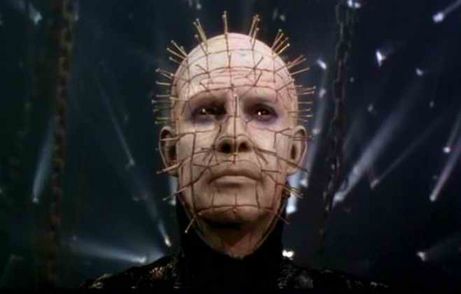
Doug Bradley, best known for the role of Pinhead in the Hellraiser movies, doesn’t think of himself as a horror icon. He jokingly said it sounds like there was a morning where there was a letter on his doorstep stating, “Dear Mr. Bradley, you are now a fully accredited horror icon with a membership card enclosed.”

He credits his appearances at conventions for helping him become known to his fans since he isn’t recognizable with the make-up on.

“I have always said that every actor’s biggest enemy is anonymity.”

Pinhead

He is known more as Pinhead then the character of Lylesburg in Nightbreed.

There’s always an interest in Nightbreed and that interest has been raised recently with the attempt to restore it back to the movie Clive Barker intended to have released in 1990, Bradley said.

Bradley and Barker became friends in high school in Liverpool back in the 60s when they were in a play together. He describes his friend as “the most extraordinary person I’ve met.” He says he “tries not to throw the word genius around lightly,” but he does apply it in Barker’s case.

Bradley said people expect Barker “to be weird and fucked up and sacrificing virgins [and] biting the heads off live chickens. For all I know, he may do all of that,” he jokingly said.

He considers Barker, “very funny, very witty” and a person with an “extraordinary imagination to be able to produce the movies that he has, the short stories, the novels, and his artwork.” He’s “a person with a tremendous sense of the absurd and the ridiculous.”

“For all these decades, it has been a privilege to be close to that process,” Bradley said.

Barker is one of the reasons he turned down portraying Pinhead in the ninth installment of the franchise, Hellraiser: Revelations, which came out last year.

“I didn’t feel like the movie was in anyway, shape, or form a serious attempt to move the franchise forward nor reinvigorate it in any way, shape, or form. I felt it was something of an insult to the franchise, to Clive, to me, to all the people who had worked so hard on the series over the years.”

Bradley hasn’t seen the movie, which had a microscopic budget and a brief shooting schedule, he said. He has heard about the movie from fans and nothing of what he is hearing about it is good, he said.

When he first became Pinhead, it took him five to six hours in the make-up chair, but it was shortened to about three to four hours by the time he made the eighth movie in the franchise. The longest time he was in the make-up for was 18 hours. It all depended on what was needed of him, he said. He could be needed for one scene or for several.

These days he is enjoying just acting and doesn’t have any aspirations to direct.

“I wouldn’t shy away from the possibility of directing, but it’s not something I have a desire to do necessarily.”


Besides acting, he has written a screenplay and a book. The impetus for his book, Behind the Mask of a Horror Actor, “goes back to his relationship with Clive” and how they were always working together for ten years in the theater before Hellraiser.

“We were always using masks one way or another as part of our work. I always had a fascination for it before I came to Pinhead so I guess I just had the ideas in my head …”

When asked about writing an autobiography, he isn’t thinking about writing one because it feels to him if you write one “your life and career are over,” which he feels he is nowhere near that point yet.

“If you are writing your autobiography, you want to make yourself sound as interesting as possible. You want to make your life story as interesting as possible. I don’t know if we’re necessarily capable of telling the truth about ourselves.”

Bradley recently read Lance Henriksen’s autobiography, Not Bad for a Human.

“He has an amazing story to tell particularly in terms of his early life and his journey into the profession. I truly enjoyed reading it.”

Bradley will be attending Rock and Shock this weekend at the DCU Convention Center & The Palladium in Worcester, MA.

Massachusetts Native Talks about Writing and Hollywood

Massachusetts Native Talks about Writing and Hollywood

by Jason Harris

J.P. Ouellette

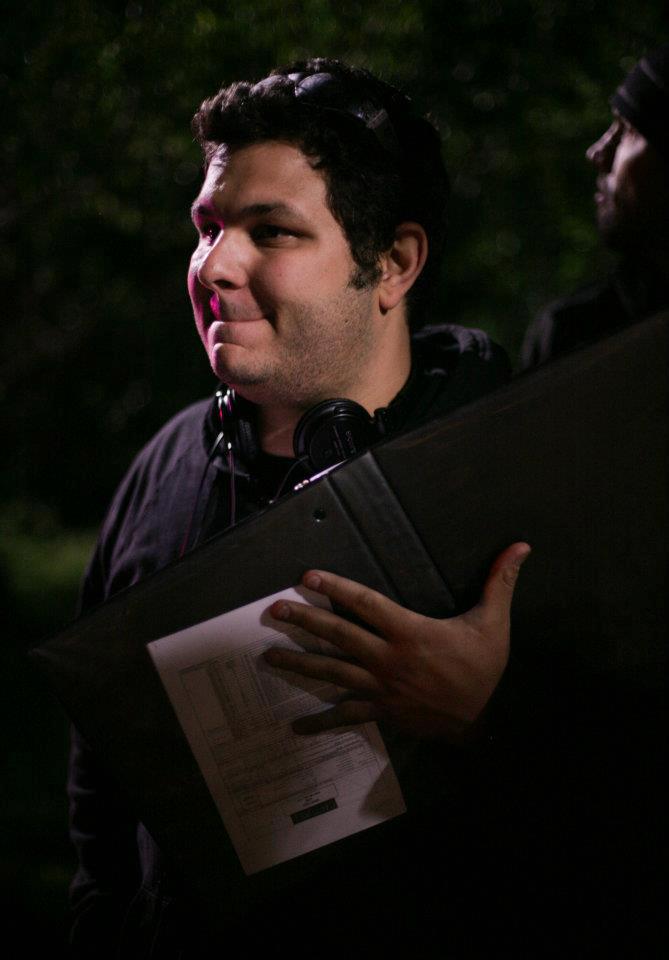
J.P. Ouellette has worked on a number of films in Boston such as The Box and The Fighter. Working in the city allowed him to “learn filmmaking from some of the best crews around” while being at home.

“The mix of local and Hollywood talent brought my knowledge of film to the next level,” Ouellette said. Being an assistant to great storytellers like Richard Kelly was better than grad school.”

Kelly was the writer and director of such movies as The Box and Donnie Darko.

Ouellette started working in Hollywood after taking a risk in order to pursue his writing career. He states that “Los Angeles is the best place to be for an emerging writer.”

“The whole city is dedicated to the film business, and there are endless opportunities here to build your resume.”

His latest film, Captured, which he produced, wrapped in June and is scheduled for release in October of 2013, which is “a perfect time” to release it, Ouellette said. It’s about a rock band that goes off to shoot a music video where an escaped convict becomes obsessed with them.

“It is a classic slasher flick with a lot of psychological twists. It blends genres, and is made for the true horror fan who is tired of the same old thing.”

Ouellette became involved with Captured when writer and director Joe Arias hired him to write new drafts of the script.

“It took us (a lucky) 13 drafts to get the shooting script ready. It was the hardest writing sessions either one of us has been apart of, but it was worth it, this story will blow your mind!”

Captured took three weeks to film, but it was in the works for two years since Arias came up with the film’s concept, Ouellette said. He is in the process of working on the sound editing, special effects, and the score now.

“It’s been quite a labor of love. It’s all very exciting to see something you help create come together.”

Along with finishing up Captured, he is producing another horror movie, Do Not Watch.

“Due to the high-concept of this project, the synopsis is being kept under wraps.”

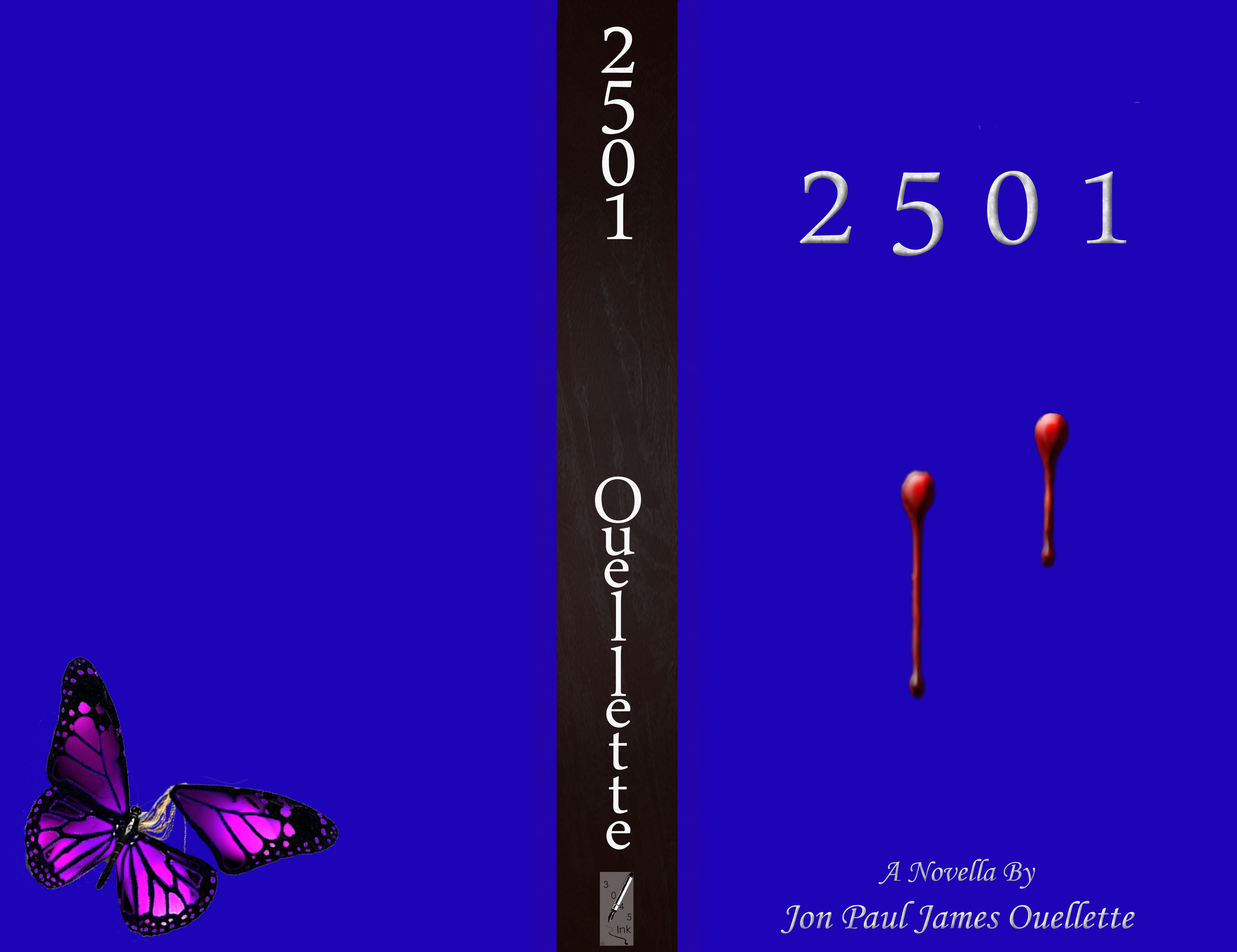
Not only has Ouellette worked on more than 20 movies in his career, you can take a look at his Internet Movie Database profile, http://www.imdb.com/name/nm1965594/ to see everything that he has worked on, but he has also found the time to write a novel, 2501. His writing and this story’s style was inspired by Arthur C. Clarke and George Orwell. Its “hard science-fiction blended with political overtones is something everyone can get behind.” The e-book can be purchase on Amazon by clicking here.

It originally started out as a script idea, but “it was way too involved for the screen at that time.”

“I really had to dig into the characters and the science in order to find my story. Funny enough, the book now represents the outline for the proposed film version.”

He is still looking for the right Hollywood screenwriter to adapt 2501. He could adapt it himself, but he wants to step back and let someone else take care of it.

“The projected budget for this Blockbuster is over $50 million, and that is not in my price range … yet.”

He “would love Steven Spielberg to direct [2501] because of the Stanley Kubrick feel of the story.” If that happens he would love to be on-set, which he would consider “a dream project for sure.”

He does have an outline for another book, but his screenwriting schedule is keeping him from working on it.

“With 2501, I had to isolate myself while traveling in Mexico, writing the first draft freehand while sitting on the steps of the Mayan Ruins. It is the only way to get a novel done in this distracting day and age.”

Ouellette has a number of directors such as John Carpenter, J.J. Abrams, Duncan Jones, and Kelly, who has influenced him. He says that Kelly’s film, Donnie Darko, is the reason he went to film school, he said.

He has worked with many directors and actors, and wants to work with many more.

“They all have their own style to this art, and I love learning from them.”

He doesn’t have a dream project. All he wants to do is “to keep making great movies, and create opportunities to make more of them.”

The man behind the ‘Guy Who Kills People’ talks about what inspired his screenplay

The Man Behind the ‘Guy Who Kills People’ Talks about What Inspired His Screenplay

by Jason Harris

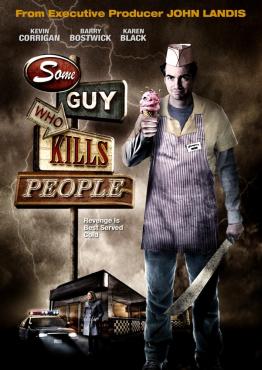
Screenwriter Ryan A. Levin’s script for Some Guy Who Kill Peoplewas inspired by his short film, “The Fifth.” His short film only came about because he had written it for fun and wanted to avoid it becoming just another file on his computer, he said.

“I wanted to see it come to life.  I had no aspirations to be a director, and still don’t, but I ended up writing, producing and directing the short film.”

Some Guy Who Kills People

As he traveled around the festival circuit and saw the positive reactions, he started thinking about an everyday guy who happens to be a serial killer and wondered if he could expand the main character’s world. Through brainstorming, he slowly developed his character’s background, family life, friends, and motives for killing. By developing his short into a movie, his character changed and it allowed him to let go of the character from the short film.

“Ultimately, while the short and the feature bear little to no resemblance to each other, there would be no Some Guy Who Kills People without “The Fifth.”  Fortunately, our distributor, Anchor Bay, was cool enough to include “The Fifth” on the Some Guy Who Kills People DVD.”

The movie contains bullying, which came about because of “creative need.”

“Ken, the killer in Some Guy Who Kills People, needed a reason to kill his victims.  In early drafts, he was just a serial killer who chose victims at random.”

The script shifted to Ken focusing on victims who treated others poorly, and then, ultimately, he began killing people who had done him wrong, Levin said.

“News about childhood bullying and suicides just started popping up on the news as we were in pre-production on this film, so while it was not intentional, I knew I hadn’t gone too far in scripting the often sad ramifications of bullying.”

Levin wrote the screenplay between 2007 and the end of 2009. It took about two and a half years to write the script, but it wasn’t a constant writing effort. There were many breaks “as other things came up” which caused him not to look at the script for six months or more.

“Ultimately, this worked to my benefit, as it allowed me to come to the script with fresh eyes each time.”

The movie stars Kevin Corrigan, Barry Bostwick, and Karen Black.

“It was, and continues to be, surreal,” Levin said about Corrigan, Bostwick, and Black being in the movie. “Kevin was someone we approached immediately for the lead role, and we just crossed our fingers he would find something in the script he liked enough to say ‘yes.’  He knew he would essentially be working for free, not to mention working in LA, away from his family in NYC. I imagine it’s a lot easier to take those few weeks off and live elsewhere when you’re making real money, but he wasn’t getting that from us. ”

Levin never pictured Bostwick and Black in their roles and was shocked that they auditioned for the movie considering “their credits and experience.”

“It was perfectly clear to Jack Perez (the director), Lisa Essary (casting director) and myself that we wanted them, and that if we did indeed land them, our movie was headed in the right direction.”

These actors took their characters and elevated them to levels beyond anything that was on the page, he said.

“They are three fearless actors who gave everything they had to this movie, and I can’t thank them enough.”

He was living in New York City when he decided to wanted to write for television and knew he had to get a production assistant job to be able to do that. These “jobs are actually quite hard to come by, as they are essentially the jobs that get you in the door on a production.”

“I sent resumes to every single show imaginable, super-eager to work for any of them. Through sheer good fortune, I ended up knowing someone who knew someone who got me an interview to be a PA on Scrubs, my favorite show at the time.”

When he got the production assistant job, he thought he had “made it” even though he considers “being a PA sucks.”

“I was on the show, I was writing in my free time, but I just wanted to move up the ladder as quickly as I could.  I became the writers’ PA, then writers’ assistant then script coordinator. I knew the show runner would never promote me to a full-time writer because of a policy he had against doing so.  But I also knew that if I could prove to him I was a capable writer, I could write an episode.  Fortunately, that’s what happened.  I wrote one episode in season 5, and was told I could return as script coordinator the following season to write another one.”

He didn’t return to work on the sixth season of Scrubs instead he went out looking for a full-time writing position.

“It took a couple of years of close-calls, of working on web series and pitching ideas, but, ultimately, I got a job on a Disney show called I’m In The Band, which ran for two years, and was far better, funnier and more creative than a lot of shows on network TV, which I’m allowed to say because I didn’t create the show.”

The writing staff for The Simpsons, seasons three through seven, and the playwright/screenwriter Martin McDonagh are writers that have inspired Levin. He loves McDonagh’s film, In Bruges.

“I’ve always been drawn to the darker content – always loved horror films and dark comedies, Fargo and Better Off Dead – and I was blown away by how [McDonagh] took these seemingly morbid stories and injected them with some of the funniest characters, situations and dialogue I’d ever heard.  McDonagh’s ability to find the comedy in such dark material through characters with very specific points-of-views and his ability to seamlessly blend such different tones is what I can only dream of being able to accomplish.”

Levin is working on another Disney show and developing several features.

“The features are in various stages – from third drafts to basic outlines – and I keep moving back and forth between them.  The great thing is I have several ideas about which I’m very excited; however, I really need to just focus on one of them, see it to completion, and then move on.  If I don’t, none of them will ever get completed.”

The Some Guy Who Kills People DVD can be purchased through Amazon, click here.

A Hard Pen is Good to Find

A Hard Pen is Good to Find

by Bracken MacLeod

I indulge a couple of writerly affectations that do nothing to improve the quality or prolificacy of my writing. Still, they stimulate some reptilian aspect of my neurology that compels me to maintain their use. For example, I take abundant notes about random facts and story ideas in a Moleskine notebook. Even though there are cheaper notebooks out there and its entire function is made redundant by smartphone apps like Evernote, I love the feeling of the small leather hardbound book in my hands. I love the (probably contrived) history of it. And I love belonging to the subculture of people who modify and use them. But the sensual experience of the notebook is limited by the quality of the pen one uses to write in it.

My former profession required constant note-taking and I found that writing with cheap pens resulted in hand cramps and near constant frustration at their lack of both comfort and style. As a result, I switched to a semi-expensive fountain pen in the hope that A) the necessity of finesse in its use would result in less white-knuckle writing (and the attendant cramping), and B) its elegance would satisfy that part of me that seeks sensuality in small experiences. It did both. Sadly though, my pen required regular upkeep as the nibs would wear out with the kind of punishing use to which I put them. Despite that inconvenience, I gained an appreciation for writing with a precision pen. The feeling of taking hand-written notes is enhanced by using a pen designed for performance and comfort.

There is a certain amount of anxiety inherent in carrying a fountain pen around in one’s shirt or pants pocket (or even in a bag), however, as they can and do occasionally leak. I’ve been the victim of more than one unintended ink emission and it had convinced me that, despite the pleasure of writing with one, the hazard of a Deeptrouser Horizon spill was too much for me to bear. As luck would have it, the twin burdens of maintenance and betrayal were about to be lifted from my shoulders as the Great God Pen smiled down and blessed me with his inky munificence.

Tombow Ultra rollerball pen

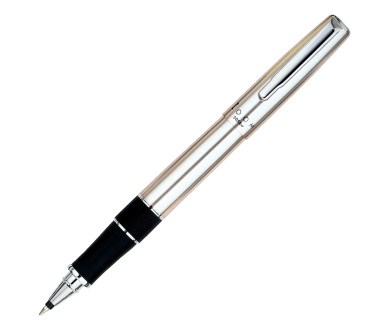
One afternoon, as I was exiting a Barnes & Noble, I noticed a shiny beacon signaling me from a nearby bush. There I found a beautifully unadorned brushed chrome pen. Picking it up, the first thing I noticed was its weight. It had a pleasant heft and solidity that appealed to me. It was heavy–not a disposable thing, but significant–a potential weapon as well as a tool of creation. Not thinking that this was probably a moderately expensive pen that I should turn in to lost and found (thank you, greedy subconscious denial) I slipped my newly acquired Tombow Ultra rollerball pen into my pocket. An hour or so later I found myself presented with the opportunity to try it out. As I passed a horse trailer with a flat tire, a story title occurred to me and I desperately needed to record it before my capricious mental states robbed me of inspiration. I pulled over to the side of the road, opened my notebook, and set about writing down the two brilliant words that, once paired on paper, would open the flood-gates of further creative stimulation.

As ink slipped from pen onto paper, a jolt of exultation hit me like a liter of dopamine splashed in my face. The creative power of my stolen found pen flowed like Omar Khayyám’s proverbial moving finger. As the words took shape on the paper, I trembled in anticipation of their profound meaning awakening the Muse and sending me into a fury of automatic writing that would result in my literary magnum opus. I became one with the pen, feeling snug and comforted inside a brushed-chrome womb, floating in the black amniotic fluid of artistic creation. Drawing a final line beneath the words for emphasis, I slipped out of my trance. Holding my breath, I peered down at the title heralding my inevitable Stoker Award.

Corpse Rodeo

Oh well. It’s still better than writing with a Bic.

Three Reasons to Attend Necon

Three Reasons to Attend Necon

by Jason Harris

I have been going to the Northeastern Writers’ Conference (Necon) for over 13 years. I can’t believe it’s been over a decade since my first one. Since I started going in the late 90s, I haven’t missed a year. I have been going to this convention longer than I have known my wife, who I have gotten hooked on Necon as well. It’s funny that it took a friend from Florida to introduced me to Necon since this convention is based in New England; a place I have lived my entire life.

1. The first reason to become a Necon camper is to meet fellow writers or fellow readers if you are not a writer. Here are a few writers that have attended the convention in the past: Stephen King, F. Paul Wilson, Peter Straub, Rick Hautala, Christopher Golden, Neil Gaiman, Craig Shaw Gardner, Tracy L. Carbone, Stacey Longo, Dan Keohane, Wraith James White, Brian Keene, Simon Clark, James A. Moore, Weston Ochse, and Jack Ketchum.

2. The second reason is to learn about the publishing industry and upcoming trends. Every Necon, there are always panels with varying topics such as e-books, young adult horror, trends in horror, vampires, zombies, and movies to name a few that have been held at this convention. The e-book topic is fitting since Necon E-Books was announced at Necon 30. Check out the selection of e-books here.

3. The third reason is to pick up more books and have the authors sign it. On Friday night during Necon, there is a “Meet the Authors” event. This is the time where you can get books that you brought signed. Or you can buy a book direct from the author. There is no better way to potentially meet the next Stephen King. And when they do become famous, you can tell your friends that you met and talked with the author at Necon. Your friends will be very jealous.

The NEHW table at Necon’s Authors’ Night. Photo by Jason Harris.

There are more reasons to attend Necon, but the main three are found above. Once you attend, you will find out the other reasons why this convention is so great. When you decide to go, just write on the registration form that Jason Harris referred you. You won’t regret it.

Necon happens in Rhode Island every July. For more information, click here.

Online Horror Writing Workshop Begins Soon

NEHW member Paul Tremblay is one of four horror authors teaching a four-week online horror writing workshop, Master the Elements for Constructing a Better Horror Story. The other three teachers are authors F. Brett Cox, John Langan, and Sarah Langan.

The workshop is from June 4 through 30. The price is $397. There is a 15 student maximum for the workshop.

The authors, who are currently members of the Shirley Jackson Awards’ Board of Trustees, are donating their proceeds to support the Shirley Jackson Awards.

For more information about the teachers and the course or to sign-up, click here.

Support versus Tolerance

This entry originally appeared on Alex Laybourne’s website.

Support versus Tolerance

by Alex Laybourne

As writers, we seek the approval of others for what we do. We may say that we write for fun, or because we love it, and that is all true. A writer writes because they have to, but we publish because we want to share our work, and in doing so we hope for good great reviews and the respect of our peers.

If you talk to any successful person, they will invariably say that they have a wonderful family who supported them the entire way. Just watch any Oscar speech and you will see what I mean. This is also true, and say what you like about successful businessmen or actors. I cannot see another profession that takes quite the toll on friends and family as that of a writer.

We live in worlds inside our head, worlds that not even our nearest and dearest – unless they happen to be writers themselves – could ever understand. We are moody and brooding when writing because we want to write more or need to work out a particular kink in the mechanics or arc of the story, or we are grumpy and moody because we are not writing at that moment in time. We write down and take a sometimes perverse interest in the crazy things that happen around us because it could be a good story idea at some point down the line. Yet our loved ones stick by us. They support us every step of the way.

I have a friend who is really into these self-help books… or as I like to call them – common freaking sense. However, one point that comes across again and again is to surround yourself with people who love and support you. It is supposedly some big secret to success  (sorry the RANT will stop and I’ll get back on topic now).

What got me thinking was, how can you tell the difference between support and tolerance. Those loved ones that smile and nod their heads when you talk about your writing or sit there plotting, writing and editing. Yet on the inside, just below the surface they are  thinking… “You fool. Oh well, at least it keeps them quiet. Stops them from causing trouble”

Can you still count that as support? Are they a positive influence in your life? They support your writing, but when it comes to promotions, and you want to invest some money or a chunk of time during the day to promoting, they put their foot down and refuse. Where does that leave you?

I am lucky enough to have the important people in my life supporting me, but there are a few that I know merely tolerate my dalliances with the written word, and view my attempts to carve a name for myself as nothing more than folly. They are waiting for me to grow up, to start pushing myself hard in other avenues… whatever they may be… please, send all answers to me on a postcard, because I draw a blank here.

This post is dedicated to these people. The silent partners who suffer us writers and support our every step, without ever truly understand what it is we do, and why. It is also a swipe at those who merely tolerate our actions. You all know who you are, and fellow writers, you probably know who they are too. You may not understand why we do it, and you don’t have to. You should support us unconditionally. We are not asking you to do it for us, nor are we demanding you buy 500 copies of our book to make us feel good and give us a rankings boost. We are merely asking that you believe in us. Smile and nod when we talk about our work, even if it is just like the approach taken by John Wemmick with the Aged P in Great Expectations. We are the ones putting ourselves out there, you have absolutely nothing to lose.

Practical PR in Five Steps or Fewer

Practical PR in Five Steps or Fewer Or, I just joined the NEHW … now what?

by Kristi Petersen Schoonover

There’s strength in numbers, and that’s what the New England Horror Writers Association is all about. Through membership, you’ll have access to promotional opportunities—such as selling your books at conference tables and getting yourself out there on the web through the NEHW website—that you wouldn’t otherwise.

That said, we’re all busy people: today’s writers and artists are expected to blog, social network, teach, lecture, promote, critique—never mind create, and that’s on top of our “normal” lives. If you’re in a time crunch, how do you take advantage of yet another opportunity?

You can. In not even five minutes a day. Here’s how!

1. FOLLOW THE NEHW ON TWITTER AND RE-TWEET.

Follow the NEHW at @NEhorrorwriters. We’ll follow you back. We often re-tweet your tweets—and you can re-tweet ours. It’s especially helpful when you’ve got nothing to put out on your feed—and a heck of a lot of news goes everywhere and all it cost you was one second.

2. JOIN THE NEHW FACEBOOK GROUP AND PARTICIPATE.

The NEHW Facebook Group is an easy way to stay informed of upcoming opportunities— and is another place to post your own news and gain exposure. In addition, some pretty interesting posts pop up over there. It’s a cinch to click “Share” or “Comment.”

3. FRIEND OTHER MEMBERS ON FACEBOOK AND HIT THE SHARE BUTTON.

Friend other NEHW members on Facebook—plenty of our members are active and have lots to share. If they post something interesting, that’s your cue to click “Share” and/or “Comment.”

4. IN A BLOG JAM? DIRECT FOLLOWERS TO NEWS ON THE NEHW WEBSITE OR TO OTHER MEMBERS’ WEBSITES.

There’s a near-constant newsfeed—and even older helpful articles—on the NEHW website; in addition, other members’ blogs are pretty active. If I’ve got nothing to post on my blog, I head over, grab a link to something interesting, write a two-line introduction— and voila! Instant post. Just be sure you’re not copying anything verbatim from anyone’s website without their permission; if you’ve got WordPress and so does the poster, you can hit “Reblog” and add a comment, and WordPress will merely show a truncated version and provide the link.

5. ADD US TO YOUR E-MAIL SIGNATURE.

You can add “Member New England Horror Writers Association~www.newenglandhorror.org” to your permanent e-mail signature. You only have to do it once and it’s there until you take it off. How does that benefit you? Clout, of course. It shows you’re a member of a writing organization and that you’ve got a passion for what you do— especially great for when you’re submitting to editors.

If every member of our group did this, think of how much coverage we’d have…and that’s just the beginning. By participating in these five activities when you can, you’ll help yourself—and our organization—gain the exposure we all deserve.