Rebecca Rosenblum: Oh my God, my friend is a writer! What do I do?

This article originally appeared in the National Post’s section, The Afterward, back in December.

Rebecca Rosenblum: Oh my God, my friend is a writer! What do I do?

Rebecca Rosenblum’s fiction has been short-listed for the Journey Prize, the National Magazine Award and the Danuta Gleed Award. Her first collection of stories Once (2008) was one of Quill & Quire’s 15 Books that Mattered. Her latest collection is titled The Big Dream (2011). Rosenblum lives, works and writes in Toronto. She will be guest editing The Afterword all this week.

Don’t panic—this is something most adults will eventually have to deal with, if only until they can find a way to leave the bar. Maybe it’s a new friend, that great guy or gal from work or the gym, who suddenly blurts it out as if you should have somehow known from his or her lack of dress sense and unfocused stare. Or maybe it’s a friend you’ve known for years, a trusted confidante who you’d never have suspected harboured such a secret. But now here you are, where you never expected to be—a person with a writer in your life.

Ok, so calm down, take a deep breath and think. Is this a friend you want to keep? Because if you’ve been dreaming of ditching him/her, now is your chance; writers are used to rejection.

But say you like your friend enough to overcome this objectionable habit. How then to keep on spending time together, sanely, safely, without undo melodrama or romantic-poetry intake (which can be one and the same)? Here is my handy FAQ below—how to be friends with a writer.

Will my writing friend drink during the day/be surely at dinner parties/refuse to hold down a job?

Actually, that’s not a writer you’re describing; that’s a midlife crisis. Most writers support themselves and their families adequately, try to be kind to their friends and their partners, and many have jobs or at least some unliterary human interaction in their lives in addition to their writing. Sure, there might be a modest amount of nihilism, but this more usually takes the form of a third beer on a Tuesday rather than a 2-week bender. The Hunter S. Thompson-style shenanigans are largely the stuff of fantasy…or two-week vacations.

Do we have to talk about writing all the time? Because I don’t know whether truth is beauty or beauty, truth—and I don’t care, either. Is my friend going to be boring from now on?

Maybe; many people are boring. But writers don’t seem to turn up in this category any more or less than any other group of folks. We definitely like talking about books—if you happen to be into it, bring on the literary discussion. But depending on the writer, he or she may enjoy discussion of television, war, ethics, celebrity sex scandals, low-fat recipes, this weather we’ve been having, all of the above or countless other things. And writers who wish only to speak of their own work are as cloddish as lawyers, doctors, and anyone else who wishes to speak only of themselves. Disown immediately.

Should I read my friend’s writing? What if it’s bad? What if it’s really good, but I don’t understand it? What if I just don’t bloody want to?

I’ve found that the only folks in a writer’s life who need feel any pressure to read their work are fellow writers; the rest of you lucky ducks are off the hook. Writers like to give each other their manuscripts for shoptalk and advice; laypeople should only ask, offer, or agree to read manuscripts if they think they can contribute a serious opinion that would help improve the text, or else a cheerful one that might improve the writer’s mood. I never offer to read other writers’ unpublished work unless I’m clear on what sort of feedback they are looking for, and we set a timeline. The same is true for when kind friends offer to read mine. I have found that generally otherwise such impulses go into an abyss where, except for bimonthly protestations of guilt and insane busyness on the part of the (non) reader, it is never discussed again.

All that applies to unpublished work, of course. If a writer publishes something in a journal or a book, all friends except those who have recently declared bankruptcy are expected to purchase one copy each (multiple copies for gifting optional). This wanes with subsequent publications, but at the beginning, the support is so terribly valued and appreciated. When my first book came out, everyone I knew bought one, including those whom I knew to dislike reading short stories, reading fiction, or reading period. It was so terribly kind of them, and a pleasant surprise for us all when a few informed me that they’d read and liked some of my stories. I was truly touched. However, many of these friends have never mentioned their experience of the book, except to proudly point it out on the shelf when I visit. Did they read it and hate it? Never touch it at all? I don’t ask and they don’t tell; that’s what friends are for.

Experiencing Arisia

Experiencing Arisia 2012

by David Price

When did steampunk become so popular, would someone tell me? I went to Arisia for the first time this year, which, for those who don’t know, is a yearly science fiction and fantasy convention in Boston. Now, admittedly, my convention-going experience is limited. When I was a kid, I used to go to some of the local comic book and Star Trek conventions, but that was over twenty years ago. Last year, I went to a horror convention called Rock and Shock, in Worcester, Massachusetts, and a horror writers’ convention called Anthocon in Portsmouth, New Hampshire. Neither one of those prepared me for the spectacle I would find at Arisia.

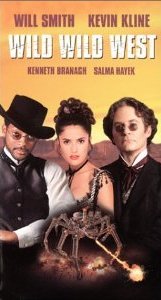
I had expectations for Arisia. I’ve seen these kinds of things on tv, so I thought I would find a bunch of people dressed up like Starfleet officers, Klingons, Jedi, Hobbits, Elves, and Battlestar Galactica pilots. My expectations were, however, blown out of the water. Instead, it seemed like every science fiction fan woke up one morning and said, “Hey, I finally get that 1960s television show, The Wild Wild West. You know the show, right? Robert Conrad and Ross Martin were James West and Artemus Gordon. These two were a couple of James Bond types during the time of the Old West. It was half science-fiction, half western. The gadgetry they employed was far in advance of what you would expect for the period, with things like cyborgs, force fields, flamethrowers, and batman-style grappling hooks. The 1999 version starring Will Smith and Kevin Kline really sucked, but they played up the whole steampunk angle even more than the series. So that’s what steampunk is, this blending of Old West and Victorian era time period with science fiction elements.

If the the Arisia I attended is representative of what it is usually like, they could just call it a steampunk convention. There were plenty of people dressed up in costume, that’s true, but most of it had that steampunk theme. I saw one Starfleet uniform, one hobbit, and a couple of guys who might have been Jedi, but they didn’t have light sabers, so I couldn’t be sure. Dressing for the occasion seems to be the way to go at one of these things too, as I would say a good three quarters of the convention-goers showed up in costume. I was in the minority. It was fun to go there and people watch, though. Let me tell you something; nerd girls dress up in some of the, ah, *ahem*, most appealing costumes you could imagine. I’ll admit they surpassed what I expected. There may not have been any Slave Leias, but there was a scantily clad elven archer from the Lord of the Rings or Skyrim, a seductive assassin from the video game Assassin’s Creed, and a very revealing Poison Ivy from Batman wrapped in only, you guessed it, ivy.

All right, so I still decided I would go in there and enjoy myself. I like Doctor Who, Star Wars, Star Trek, Battlestar Galactica and Babylon Five as much as the next geek. Stepping into the dealer room was like entering some alternate universe, where geeks didn’t even know who the Doctor, Captain Kirk, Han Solo or Starbuck were. I wandered around and checked out everything they had to offer, but nothing really jumped out at me. I’m amazed to say that I walked out of Arisia without purchasing a single thing. When I went into the dealer room, however, it seemed the dealers got the same memo that everybody else did. It was Steampunk Central in there. I’m an introvert by nature and I have to admit that I found the place to be a bit overwhelming. I think I could have settled in better if I found some of the familiar Harry Potter and Star Wars elements that I expected to, but those things were almost non-existent, except for one notable exception. One of the highlights of the day was a life-sized stormtrooper cake that was on display. Towards the end of the day, it was sliced up and served to a very long line of hungry Star Wars fans. I passed on that, because hey, how good could it really be? If it was Darth Vader cake, maybe, but stormtrooper? It was probably just a cloned recipe, anyway.

The biggest lesson I learned from this convention, was that I should have made myself familiar with the schedule before I even walked in the door. There were hundreds of events that included movies, seminars, discussion groups, and even combat sword training. I know I would have enjoyed a bunch of those, and next time I intend to have a plan of attack. I missed the discussion I had planned to attend, which was a panel of critics wrapping up the science fiction movies from 2011. A friend of mine, Woody Bernardi, had what they call a “fan table.” Woody started a group called the Boston Science Fiction Association, which is really just a bunch of fans who get together and hangout sometimes. He got the fan table to drum up some more interest in the group. So far we’ve mainly been getting together for lunch at the Tavern at the End of the World, in Charlestown, Massachusetts. I agreed I would take a turn watching the fan table for Woody so he could go to some of the discussion groups that interested him. I think he was particularly interested in a tribute to Anne McCaffrey. I was happy to sit down and unwind a bit. I actually talked to more people sitting at that table than I had wandering around the crowded dealer room.

I look forward to the next one, though, now that I’ve had a chance to process the experience. As a writer, I dream of a day when people will be dressing up as characters from my fantasy novels. That would be something to see. Would I go in costume? I don’t think I’m ready for that yet. Of course, my ultimate goal is to be one of those guys sitting behind a table with a long line of people waiting to see me. I’ll be serving the Darth Vader cake, of course.

Experiencing the iPhone

My New iPhone

by David Price

I was born two years before man landed on the moon. My earliest memory is actually watching the moon landing on a static-filled black and white television, up at our cottage in New Hampshire. I have grown up in the age of hand-held electronic gadgets, and I have seen them all. The very first has to be the transistor radio, followed by those nifty electronic calculators that we used to write “ShELL01L” upside down. I guess I have always been intrigued by these devices, because I can remember owning all of them. Digital wrist watches were cool, with their glow-in-the-dark faces and their nifty electronic beeps. Remember the first hand-held electronic video games? I had this “football” game which was really just a bunch of red dots on a screen. You controlled one electronic light and had to evade all the others on your way to scoring a touchdown. In eighth grade, I even remember having a digital watch that had a scaled down version of Space Invaders on it.

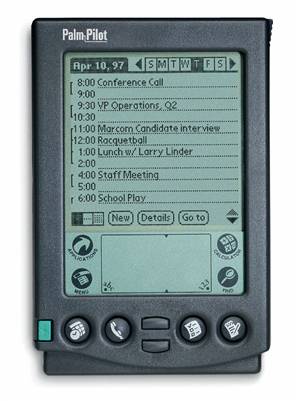
There was some electronic innovation in the eighties, of course. The eighties gave birth to some of the technology which today practically runs our lives, like the cell phone and the personal computer. There were some cool gadgets too, like the Walkman. Everybody had to have one of those. This was also the time of the birth of the Compact Disc, which would go a long way to revolutionizing music. I bought my first VCR in the eighties, too. Then in the nineties, cell phones started to catch on and become an affordable technology. The Palm Pilot was a nice digital replacement for

those hefty day planners some people used. Personal computers and video games took a giant leap, and the internet was born. It’s all gone crazy since then, hasn’t it? Now we have technology that looks like it is straight out of science fiction. Star Trek even seems a bit short-sighted, doesn’t it?

What if I were to tell you that there is a device that can replace just about every hand-held device you have ever owned, except for possibly the Taser gun? That device is, of course, the iPhone. I purchased my iPhone about six weeks ago and I am constantly amazed at how useful it is. The keys are the apps. You have to find the right apps, but once you do, you find out what an amazing little device this is. Where do I begin? Last week, my wife had to travel to a bridal shower in an unfamiliar town. She was going to just use the GPS, but couldn’t find the power cord. I pulled up the GPS app on my iPhone, programmed in her destination, and sent her on her merry way, with my iPhone, unfortunately. But hey, at least the emergency was solved. When she returned from the shower she told me it was a good thing I had given her the iPhone, because the directions she had received from my mother were wrong.

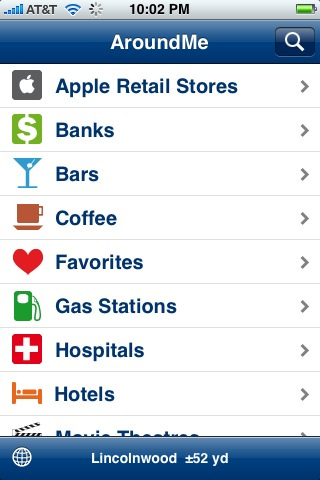
Another app I particularly enjoy is called “Around Me.” This is another one that uses the GPS feature, and will show you just about any kind of business in the area that need. Around Me lists stores, banks, atms, bars, coffee shops, gas stations, hospitals, movie theaters, and, well, you get the picture. It is very useful. As a contractor by trade, I travel to wherever the jobs take me. Sometimes we find ourselves in unfamiliar cities looking for a bank, or someplace to grab lunch. Problem solved. With the Xfinity TV app, I can set up the DVR to record a show from anywhere. I also have a local news app, which has proven useful with traffic and news alerts. I like sports, so I have a few of those apps that keep me updated with scores and information. Do you like space? I have two NASA apps; one for regular news, and one for NASA TV. There are also cool sky map apps like Sky Safari and Star Walk. With Star Walk, you can point your iPhone at the sky and it will identify constellations and satellites for you. If you are one of those people who has all those rewards club tags hanging from your key ring, there is an app called, you guessed it, Key Ring, which will scan all of those into your phone so you don’t have to carry them around anymore. If you just can’t live without your social media there are apps for Facebook and Twitter.

Is going green important to you? Thanks to the iPhone, paper and pencils are now obsolete. The iPhone is a notebook and a calendar. With the Stitcher app, you can link to magazine articles that interest you. Combine this with the Nook and Kindle apps and you have the ability to carry around a small library. Add a crossword puzzle, Sudoku, and word search app, and time spent sitting in a waiting room flies by. You actually have access to what you want to read, not what the dentist office sees fit to provide (like two years of Golf Digest or Woman’s Day). If you are a comic book geek, you can even get some cool comic book apps like Comixology, DC Comics, Marvel Comics, and Dark Horse Comics. Comic books delivered right to your phone. Who knew? Last month, I attended a science fiction convention in Boston called Arisia. An app called Guidebook took the place of a paper program and listed every event available at the con.

I have tried to show how this amazing little device can take the place of every other device you own. The iPhone was based on the iPod touch, so saying it plays all your music goes without saying, but I also added the Pandora radio app, because I don’t like to clog up the phone with too much music. I am always trying to improve myself or learn something new, so I like to rotate an audiobook through there. I would rather leave enough space for any cool apps that come along. Flixster is great if you like to go to the movies. I’ll never call Movie Phone again. You can even watch movies and TV on your phone with either Netflix, Hulu, or iTunes. I’m not really one for watching video on the small screen, but my kids seem to like it. One app that looks cool, but I haven’t had a chance to try yet, is called Bump. If you and another person both have this app, you can just touch phones and it exchanges contact info. I like to get little bits of inspiration once in a while, so I also have the Notes from the Universe app by Mike Dooley. I’ve saved the games for last because I’m sure most of you are familiar with many of the addictive games that are available. In case you are not, many of the favorites are Angry Birds, Fruit Ninja, Cut the Rope, Tetris, Bejeweled, Doodle Jump and Words with Friends. That’s pretty much everything I have experienced with the iPhone so far. Six months or a year from now, who knows what else I will be doing with this amazing little device? To sum up, it’s awesome.

‘Breaking Dawn’ Actress Talks Twilight

‘Breaking Dawn’ Actress Talks Twilight

by Jason Harris

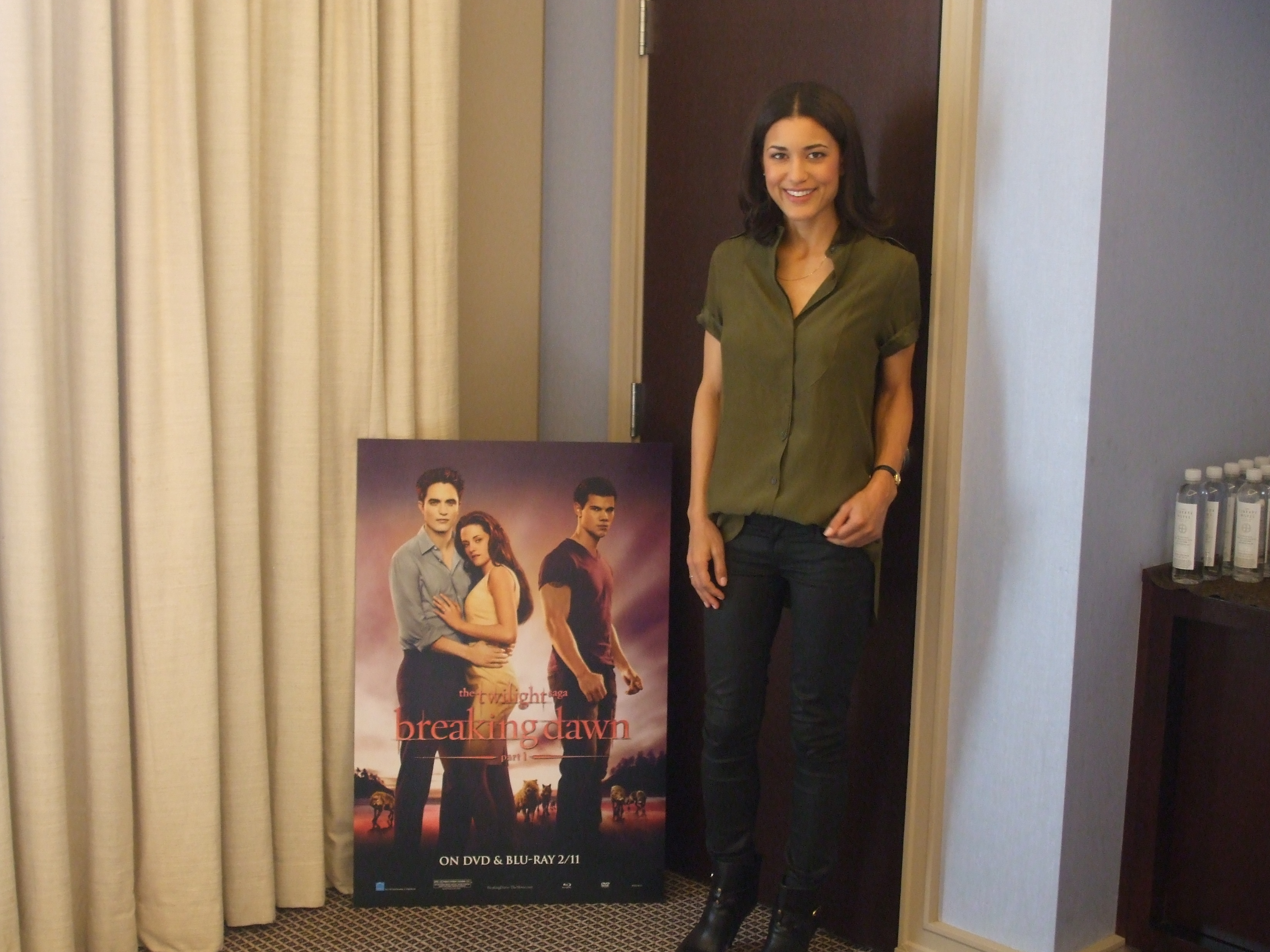
Julia Jones at the Liberty Hotel (Photo by Jason Harris)

Actress Julia Jones has dabbled in television, movies, and plays, and this week she was in her home state of Massachusetts promoting the DVD release of The Twilight Saga: Breaking Dawn, Part 1 (2011).

Jones, 31, spent Thursday at the Liberty Hotel in Boston talking about the series. The latest chapter debuts on DVD this Saturday, Feb. 10. Jones portrays Leah Clearwater, who first appears in The Twilight Saga: Eclipse (2010), the third movie in the popular series.

When Jones got the initial phone call to audition for the movie, she never thought about not doing the movie. She considers the series a “cultural phenomenon.”

Her friend, who is a huge Twilight fan, thought she would be perfect for the character of Leah Clearwater and this helped her with the “daunting” task of bringing the character to the big screen, Jones said.

“When you are playing a character based on a book, let alone a widely popular book, you are playing a character that belongs to the world.”

Jones was aware of the “Twihards,” who are die hard fans of Twilight, when filming the movies.

“One of the most unique parts of the experience is just being part of something that so many people feel so passionate about, and that’s an energy you take with you. It’s pretty powerful.”

The Twilight fans’ excitement “is palpable,” Jones said. “There is no way to know what you’re getting into because it’s such a unique thing.”

Jones recounted some fan stories. Recently, she started tweeting and a fan sent a picture of her daughter dressed up as Jones’ character.

“She was so cute,” Jones said about the fan’s daughter.

The craziest costume she has seen was a fan who dressed up in a nightgown and had bruises and feathers all over her. The fan was dressed as the ‘Morning After’ Bella from Breaking Dawn, Part 1.

Jones has been on the television series ER, and has an upcoming appearance on the series In Plain Sight.

“I got to do stunts and work with guns,” Jones said about her In Plain Sight experience. “It was really fun.”

ER was executive produced by John Wells and Jones would love to be on his new show, Southland.

“It would be so exciting to do anything that he’s involved with,” Jones said about Wells.

Jones said there are a lot of good shows on cable like The Killing and An American Horror Story, which are two series she would like to act on, she said.

Along with being on the silver and small screens, she has also performed on the stage. Jones likes “dabbling” in film, television, and the theatre, and it is one of her favorite parts, she said. She considers these separate venues like “having different jobs.”

“I think part of the reason I’m an actor because I couldn’t see myself going to a desk every day and doing the same sort of thing.”

Jones would love to work with actresses Jessica Lange (The Vow) and Marion Cotillard (Inception, Contagion) and directors Quentin Tarantino (Pulp Fiction), Terrance Malick (The Thin Red Line), and Nick Cassavetes (John Q).

She met with Malick a few times when she was auditioning for a role in The New World and thinks “he’s magical” and considers Cassavetes an “actor’s director.”

Jones was “impressed to death” with Tarantino when she was working on Larry Bishop’s Hell Ride, for which Tarantino was the executive producer.

“I would do anything to work with him as a director,” Jones said about Tarantino. “Hell Ride was a trip.”

She considers her time in the three Twilight movies a “rewarding” experience.

“It’s kind of lucky in a way to be a supporting character in the franchise.”

The Twilight Saga: Breaking Dawn, Part 2 comes out in theaters in November.

The Trouble with Genres

This entry originally appeared on New England Horror Writer member, Kasey Shoemaker’s website.

The Trouble with Genres

by Kasey Shoemaker

Genre is truly a tricky thing. This all-important label helps not only to identify a novel but also the book’s intended audience. Without it, a book and its author could suffer a serious identity crisis. And, it was honestly one of the aspects of marketing my book that I struggled with the most. I’d written the entire first draft without much thought to its specific genre. Then, when left with the task of pigeonholing it, I ungracefully stumbled into calling it paranormal fiction. At my first fiction conference, I was told under no uncertain terms was it paranormal fiction. I often wonder how educated that assessment was coming from a distracted literary agent who half listened to my one-minute pitch. Nevertheless, she said paranormal fiction immediately brings to mind the genre’s sister, paranormal romance, and unless it was heavy on the romance, I was better off calling it urban fantasy. From then on, that was my book’s label.

However, a label can make an enormous impact on a book. Suddenly, my fiction novel, written before it was categorized, had an already established audience and with it a collection of expectations. Janice Hardy’s post addresses these expectations: “What readers expect. Fantasy is all about other worlds that can’t exist, mixed with magic, mysticism, or supernatural elements. These are the  defining characteristics of the fantasy genre. Just like spy thrillers  have their own characteristics and reader expectation. There were  aspects of the spy thriller I wanted to incorporate into my fantasy  story, but at its heart, it’s all about the magic and the fantastical world. When a reader picks up a book in a genre, they want certain traits.  Picture your favorite band. Now imagine going to their concert and hearing them play a totally different type of music. Country instead of  rock, rap instead of jazz. Even if you like the new type of music, odds are you’d be pretty unhappy at the bait and switch. Genre helps readers find the types of books they want to read. It also helps bookstores know where to shelve books, and what to suggest to their customers. Ditto for libraries.”

The publishing industry considered it a hot but overly saturated market. Readers had one of three reactions: strong interest (because they were long-time fans), rejection (usually due to thinking it was bloody, scary, or too steeped in fantasy), or confusion (typically a result of never having heard the term urban fantasy). The first group continued to ask questions about the plot and setting, all the while growing more and more interested. For the middle group, I would typically explain that it was bloody without being gory, suspenseful rather than frightening, and a fantasy set in our contemporary world. And, for the latter group, I stupidly found myself eloquently explaining the term urban fantasy and its roots instead of explaining my book, which didn’t necessarily fit neatly into the category. I did that only a few times. However, people still have preconceived notions about it based on the label. I have fielded questions, such as “Does it have vampires?” (no), “Is it like Twilight?” (um, big no on that one). “Will my teenager like it?” (absolutely), “Will adults like it?” (yes, more than the teenagers).

Essentially, the genre label, meant to be helpful to the publishing industry, has proven confusing to the readers. Some expect it to fit nicely on the bookshelf next to other urban fantasies where a barely clothed, well-endowed woman with a steely expression sits splay-legged in a graveyard. No offense to the character on that book cover, but when my Gabrielle Gayle sets out to demolish were-witches, she does so with all her parts covered and protected. She’s beautiful and sexy, but she will leave the lipstick at home in favor of packing her daggers. But, I have accidentally found myself on my soapbox about the over sexualization of female heroes in fantasy. Back to my point, for months, I trolled the aisles of bookstores and pulled countless titles off the shelves falling under the urban fantasy umbrella, lined them up to look at their covers, and asked myself how, and even if, my novel fit in with these. It does, mostly, but it also fit in with other books, novels that are a part of another sub-genre, dark fantasy. Dark fantasy has closer ties to horror than urban fantasy does, and poor horror has its own battles to fight when it comes to audience presumptions. After only a few months as a member of the New England Horror Writers, I have already been to some events where audience reaction was either excitement or blunt rejection. At least people know what it is to be classified as horror, for the most part. But, horror seems to be even more polarizing than fantasy. People either can’t get enough of it or steer clear of it, buying the books for that odd friend or family member who likes “that kind of stuff.”

With more and more novels being ones that cross genres, affixing a book with one specific genre label seems to be more troublesome than clarifying. Publishing companies can’t get by without the hard and fast categories and will at times allow new ones to spring up because every book simply must have a place. They revel in the preconceived notions held by audiences because it makes marketing that much easier.

But, what about the writer?

What happens to the unpublished writer spending thousands of dollars on fiction conferences who hears time and again that one particular element, while brilliant, simply isn’t found in that specific genre? One writer could hear from an agent that his or her science fiction book has too much science and not enough character while another agent could tell him science fiction is supposed to be more about the concept and less about the characters, all based on expectations of the genre. What’s to keep that writer from hacking at his or her work removing the book’s most poignant and well-crafted pages only to replace them with elements that, for no better reason, exist simply because they fit better in the genre? How much should a writer mold the book to fit the genre? Shouldn’t it be the other way around? After all, books are created by writers while genres are made by publishing companies to classify books?

Another issue is that there are likely too many genres for readers and writers to be aware of them all. Below is a genre map from Book Country. Notice that dark fantasy isn’t included? That’s because it’s only recently been recognized as its own sub-genre.

And, there’s no fixed formula or set of criteria for a book to meet before it’s labeled. And, an additional side effect of genres is that they often don’t settle with just the book. The labels attach themselves to the writer as well, like mold. Novelists aren’t simply writers once they’ve written a genre book.  They’re fantasy writers, mystery writers, romance writers, etc, leaving one to wonder the following:

Do writers themselves also conform to a specific genre to satisfy expectations of the audience and the industry? And, what does this mean for writing as a craft?

Another Notch in the Bedpost?

This entry originally appeared on New England Horror Writers’ member, K. Allen Wood’s website.

Another Notch in the Bedpost?

by K. Allen Wood

I’ve been contemplating—and worried about—writing this blog post for a long time now. My worry is a simple one: Will people be offended, take it the wrong way? I can’t answer that, but I hope not, because I’m compelled to discuss it.

So here goes…

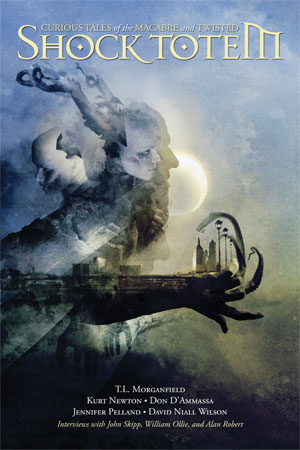
I started a small-press horror publication in the fall of 2008. I enlisted the help of some online friends, we dubbed it Shock Totem, and in July of 2009 we published our first issue. (Most of you know this.) Ever since we published that debut issue, I’ve had one question constantly rattling around my head:

Does an author owe his support to the publications that publish his work?

That question pertains not only to me as a publisher but as a writer as well. Through four issues of Shock Totem, we have gotten some amazing support from authors we’ve published. But not all of them. Some hardly mentioned us at all, even when the issue containing their work came out. On a selfish level, I can’t help but find that disappointing. On a rational level, I understand that I have no idea why an author does what he does. There are things at play here that I am simply not privy to. I can dig that.

But back to the selfish side of things… As a publisher, I find myself leaning toward the notion that writers should be supporting those who publish their work. Because if the publisher is doing it right (relative to that particular publisher, of course), and if they’re a publication like Shock Totem where every issue is still in print and actively promoted, then the publication is fully and continually supporting the authors.

Back to the rational side of things… As a published author—hell, as a lifelong creative type—I completely understand that the muse commands one to look forward, to move forward, and create, create, create, to not waste time looking back. I also know how little time most artistic people have to actually focus on their art. So maybe some people simply don’t have the time. But that leads to the one thing I can’t rationalize…

When I finish a new story, I move onto a new one. But when I have a story published, I never move on. (All this can be applied, as well, to my musician days.) I can’t move forward and not look back in that regard. Because I want people to read my work! Do I owe it to that particular publication to support them, promote them? That’s debatable. But I sure as hell owe it to myself to support and promote my work! So I make the time.

And that is precisely what baffles me. (This does not take into account the fact that some authors publish bad stories best left forgotten from time to time.) Why do certain writers choose to not actively promote their work? Is a publication credit just another notch in the bedpost for these authors? As a publisher, sometimes it feels that way.

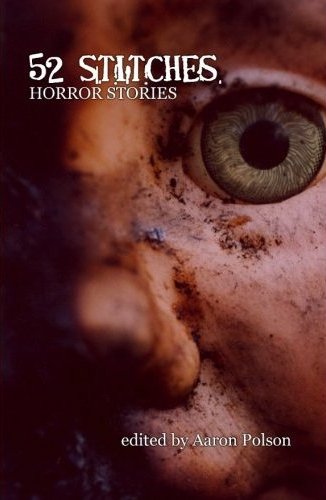
I have just three publication credits. The first was in 52 Stitches, Vol. 2. The publisher, Aaron Polson, essentially put Strange Publications to bed—at least for the time being—when this anthology was published. But this book is still available, and I promote the hell out of it…because I want people to read my work! “By the Firelight,” my story in this anthology, is a mere 457 words, but I still want people to read it. It doesn’t matter that the publication is inactive or perhaps permanently closed, because I like my story and, in my opinion, I owe it to myself to promote it.

My second published work, “Goddamn Electric,” was in The Zombie Feed, Vol. 1. I’ve sent out copies for review, I’ve posted about it here on this blog and on the Shock Totem blog. I will continue to do so as long as it’s available.

I’ve done the same thing, and will continue to do so, with Epitaphs: The Journal of New England Horror Writers, which contains my story “A Deep Kind of Cold.” In a certain, roundabout way, I’m promoting my work right now.

Which brings me to the revelation of things…

Since that first issue of Shock Totem came out in 2009, I’ve been asking myself should the author support the publisher? Again, the answer is debatable. But few would argue that an author shouldn’t promote his own work, right? And in promoting his own work, is that not, therefore, supporting the publisher? Is there a difference between promoting your own work and supporting the publisher?

I’m no longer sure you can have the former without the latter, but I know what I’m going to do. Always.

Editor’s Note:

Wood makes a lot of valid points. A creative person does look ahead, but to become well-known or even known, they need to promote their work. By authors’ promoting their stories, they are promoting the publisher of their work. How hard is it to write a Facebook status update or a tweet about your story being in an anthology, magazine, etc.

Wood promotes his magazine and any anthology his stories appear in. He does this through his website and his different twitter accounts. He also attends different conventions and fairs too. He will be at the NEHW tables at the Queen City Kamikaze Convention on Feb. 18 in Manchester, New Hampshire.

The NEHW at the Queen City Kamikaze Convention

NEHW Members Appearing at Anime and Video Game Convention

by Jason Harris

On Saturday, Feb. 18, members of the New England Horror Writers’ organization will be appearing at the Queen City Kamikaze Anime and Video Game convention at the Manchester Memorial High School in Manchester, New Hampshire.

The NEHW will have three tables where authors’ Stacey Longo, Rob Watts, Tracey L. Carbone, K. Allen Wood, Kristi Petersen Schoonover, Alyn Day, and Scott Goudsward will be selling and signing their books. The Demonhunter a.k.a. Nathan Schoonover will be on hand to talk about being a paranormal investigator for almost 20 years.

Some of these members will be on two panels: Trends in Horror: From the Apocalypse to Zombies: Where is Horror Heading? and Women in Horror. These panels will happen from 4 p.m. to 5:30 p.m. More information about who will be on these two panels will be announced soon.

The convention starts at 10 a.m. and runs into 7 p.m. For more information about the convention, click here.

New E-books from NEHW Members

In the last few weeks, members of the New England Horror Writers’  organization have published new stories in e-book form.

Author Tracy L. Carbone, editor of Epitaphs, recently released The Folks, her first venture into the e-book market place.

In The Folks, Valerie and her young daughter are relieved to stumble upon Hardscrabble Farm after their car gets a flat tire late at night. “The farm is surrounded by an army of scarecrows, but the warm safe house beckons to them.” Once arriving, “they discover that the horrible secrets kept by the farm’s owner Clara Rantoul are far more sinister than they could have imagined.”

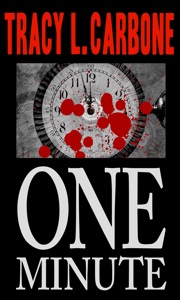
Her second offering, One Minute, is a Twilight Zone-esque tale about three people in a love triangle discovering “the cruel irony that all life can change in just one minute.”

Her current offering is Pretty Pig Let Me In, which tells the story of Paula, whose “gluttony has always served her well, has driven her hunger for success and wealth. But when she sets her sights on winning over a rich man, ‘be careful what you wish for’ takes on a gruesome new meaning.”

Paula’s gluttony has always served her well, has driven her hunger for success and wealth. But when she sets her sites on winning over a rich man, “be careful what you wish” for takes on a gruesome new meaning.

Carbone hopes to have a large collection of stories and a couple of novels available on Amazon in the coming months.

According to the description on Amazon, Mark Edward Hall’s Apocalypse Island is about young women being stalked and slaughtered in Portland and how Danny Wolf is witnessing these crimes in his dreams. “Wolf, a gifted musician and newly released from prison, has no memory of his early childhood, but discovers that he spent his first eight years in a Catholic orphanage on a mysterious island off the coast of Maine. Soon the killings become more bold and gruesome, as members of the church begin to die. Enter Police Lieutenant Rick Jennings and his young assistant Laura Higgins. They discover a government conspiracy involving the Catholic Church, and a cold war mind control program known as MK-Ultra. Danny Wolf becomes the number one suspect in the murders, but no one, not even Wolf, is prepared for what they discover on Apocalypse Island, a mind blowing secret that was supposed to stay hidden forever.”

Hall also released Feast of Fear, which contains four horrifying tales and the first four chapters of his upcoming novel, Soul Thief.

John Grover’s Echo Lake-A Short Story is a sample of his work.  Amazon’s description said, “Ryan didn’t know why he’d come back. He just had to see it one more time. Echo Lake waited for him, looking exactly the same after all these years. The tragedy that happened there was still alive and well in Ryan’s mind. His little sister drowned in that damned lake. She was not the first, probably wouldn’t be the last. He’d come back because of her, because of that day. See, there was something else there. Something in the lake. Something in the water. He couldn’t see it. He couldn’t hear it but Ryan knew. The drowning was no accident. Something took her.”

The Self-epublishing Bubble

This article originally appeared on the Guardian website.

The self-epublishing bubble

In August 2011,  Ewan Morrison published an article entitled Are Books Dead and Can Authors Survive?. Here, he tracks the self-epublishing euphoria of the last five months and argues that we are at the start of an epublishing bubble

by Ewan Morrison
The internet is full of ironies. I, for one, could never have guessed that writing about the end of books would generate more income for me than actually publishing the damn things. I’ve been on an End of Books reading tour since August and it turns out that what the internet gurus say about consumers being more willing to pay for events, speeches and gigs, rather than buying cultural objects, is now becoming true.

At the other end of the political spectrum from me, among the epublishing enthusiasts and digital fundamentalists, similar ironies are playing out: there is now a boom industry in “How to get rich writing e-books” manuals, as well as a multitude of blogs offering tips and services, and a new breed of specialists who’ll charge you anything from $37 to $149 to get your e-book into shape.

This all seems like a repeat of the boom in get-rich-quick manuals and “specialists” that appeared around blogs and e-trading. Did anyone actually get rich from writing blogs, you may ask? Well, according to Jaron Lanier (author of You are not a Gadget) there are only a handful of people in the world who can prove that they make a living from blogging: it’s entirely possible that more money was made by those who wrote and sold the how-to manuals than by the bloggers themselves. But who cares, right? It’s all part of the euphoria of digital change, and technological innovation is as unstoppable a force as fate. Reports show that paper book sales are “tanking” – down a massive 54.3% while e-book sales are up triumphantly by 138%. The revolution will be e-published, and we’re all going to be part of it.

All of this e-book talk is becoming a business in itself. Money is being made out of thin air in this strange new speculative meta-practice: there are seminars, conferences and courses springing up everywhere, even at the Society of Authors (a writers’ union which, until recently, was largely against e-publication). Television and radio programmes are being made about self-epublishing (I’ve personally been asked to speak about it on 12 occasions since August). Everyone can be a writer now: it only takes 10 minutes to upload your own e-book, and according to the New York Times “81% of people feel they have a book in them … And should write it”

But all of this gives me an alarming sense of deja vu. There’s another name for what happens when people start to make money out of speculation and hype: it’s called a bubble. Like the dotcom bubble, the commercial real estate bubble, the subprime mortgage bubble, the credit bubble and the derivative trading bubble before it, the DIY epublishing bubble is inflating around us. Each of those other bubbles also  saw, in their earliest stages, a great deal of fuss made over a “new” phenomenon, which was then over-hyped and over-leveraged. But speculation, as we’ve learned at our peril, is a very dangerous foundation for any business. And when the e-pub bubble bursts, as all previous bubbles have done, the fall-out for publishing and writing may be even harder to repair than it is proving to be in the fields of mortgages, derivatives and personal debt. Because this bubble is based on cultural, not purely economic, grounds.

How do we know if we’re in a bubble?

To answer that we have to turn to respected economist Hyman Minsky. Minsky (1919-1996) studied recurring instability in markets and developed the idea that there are seven stages in any economic bubble (the following terminology is adapted from his Financial Instability Hypothesis [PDF]):

Stage One – Disturbance

Every financial bubble begins with a disturbance. It could be the invention of a new technology; it may be a shift in laws or economic policy, or a reduction in interest rates or prices, or the expansion of a market into an area that has not been open before. Usually several factors come together to make the change – and as a result, one sector of the economy goes through a dramatic transformation.

This has certainly occurred with epublishing. Over the last decade, Amazon has undercut the big global publishing houses through a radical new structural approach to storage and distribution and grown so quickly that it forced them to renegotiate their pricing policies. Then in opening up the long tail market and making hundreds of thousands of lost titles available again for resale, it reinvented bookselling. The creation of Kindle led to a new generation of e-readers which, with Apple, launched an economic boom in a previously non-existent market. It has already become a cliché in all media that digital self-publishing is a revolution comparable to the invention of the printing press. That is a lot of disturbance in a short space of time.

Stage Two – Expansion/Prices Start to Increase

Following the disturbance, prices in that sector start to rise. Initially, the increase is barely noticed. Usually, these higher prices reflect some underlying improvement in fundamentals. As the price increases gain momentum, more people start to notice. Speculation thrives.

On first inspection, e-publishing doesn’t appear to fit the model here, as it’s clear that the prices of ebooks are falling drastically (in the week of Jan 1, 28% of the top 100 e-books on Amazon were 99p or under, and 48% were under £2.99). But that’s because we’re looking at this the wrong way round – from the perspective of the consumer. The e-book explosion is coupled with the rise of the e-reader, and the profits there are in the hands of the manufacturers. There has also been a fast turn around in these new technologies from Kindle to Kindle Fire, from iPad to iPad 2; and a brand new market of consumers for these products has appeared from nowhere. The change to cheap ebooks and self-published ebooks is a “change in underlying fundamentals”.

Stage Three – Euphoria/Easy Credit

1. Increasing prices/sales do not, by themselves, create a bubble. Every financial bubble needs fuel; cheap and easy credit is that fuel. Without it, there can be no speculation and the sector returns to a normal state. Speculation takes over and there is a rush to “get in” as newcomers become involved “cheaply” 2. When a bubble starts, the sector involved pushes stories into the media,  and is suddenly inundated by outsiders; people who normally would not be there.

1. “Easy credit” in this case relates to the plummeting costs of digital content. In fact, there is an inverse correlation between the cheapness of digital content and the high cost of e-readers and smart technology. The more ‘free’ or nearly-free content is available online, the more appealing expensive e-reader and iPad technologies have become. Furthermore, “cheaply” here refers to the ease with which someone can now self publish. A decade ago, self publishing could costs thousands of pounds for a mere 100-book print run. Now it is free or almost free.

2. The whole point of self-epublishing is that the market “brings in people who would not normally be there”. Like the promise that we can all have an affordable home with a cheap mortgage, we are being told constantly by digital businesses and the media that we can all be writers and even be successful as writers. Even the tabloids are generating hype, telling the masses that they each can make millions through self-epublishing.  The more traffic there is in self-epublishing the more the hype has ‘evidence’ to support it. According to USA today, “it’s a gold rush…get out there”.

Stage Four – Over-trading/Prices Reach a Peak

1. As the effects of cheap and easy credit dig deeper, the market begins to accelerate. Overtrading lifts up volumes and spot shortages emerge. Prices start to zoom, and easy profits are made. This brings in more outsiders, and prices run out of control. 2. This is the point that amateurs – the foolish, the greedy, and the desperate – enter the market. Just as a fire is fed by more fuel, a financial bubble needs a mass of people involved in mass behaviour to fuel it.

1. Since epublishing started, the race to undercut competitors has accelerated at unforeseen speed. Blogs now give advice to start-up writers, telling them to give their work away for free to gain audience share and get reviews, and only then attempt  to raise their prices. The zooming prices here refers to the zooming down of prices. For example self-epublishers are now giving books away for free – see the Kindle Top 100 Free books. Furthermore, in this ecstatic push to self-epublish, there are hundreds of thousands of new ebooks for which there are almost no readers at all because they have zero visibility.

2. Over the last six months there has been a huge growth in the number of people with no former experience who have entered self-epublishing. Taking myself as a representative slice of the public, I can attest, from recent personal experience, to the following: People I know who have been rejected by mainstream publishers have brought out their first ebooks on Kindle; people I didn’t even know had novels under their beds have done the same; friends of friends on Facebook have announced that they too have novels and short stories available on Kindle, Nook, Kobo, iPad and Sony Reader. Locally, I have seen two new digital publishing houses born from nothing and paying no advances, operating on “spec” writing. And all of these people are self-promoting their work on what platforms they have: Twitter, Facebook and their blogs. All of this is evidence of a “desperation to enter the market”. I know this because I also felt the pressure to try it (and did: I self re-epublished what was my first book).

People who are self-epublishing for the first time are also buying their first iPads and Kindles, so as to better understand the e-pub technologies and to further promote their ebooks. They may be giving their ebooks away for free but they’re spending between £100-400 on single items of new technology – more than they ever actually spent on books in a year.

Stage Five – Market Reversal/Insider Profit Taking

Warnings sound that the boom will turn to bust; that the models on which success is based are unrealistic and overblown. These arguments are ignored by those who justify the now insane prices with the euphoric claim that the world has fundamentally changed and cannot change back. The fact is that insiders have been pulling the strings all along, capitalising on the hype created by the ill-informed newcomers to the market. 

The model of e-book success that’s held up for everyone to copy is based on half-truths. Even those who are seen as e-book stars are actually transitional figures straddling the digital self-publishing and the mainstream camps.

Take for example digital guru, free culture activist (former European director of the Electronic Frontier Foundation) and author Cory Doctorow – an SF celebrity and aggressive exponent of self-epublishing who gives his books away for free under a creative commons license (with optional payment). It turns out that Doctorow isn’t just any old novelist: the subjects he and his characters talk about are file sharing, the digital revolution, digital rights management and the oppressive old gatekeepers of the mainstream. His kudos comes from the fact that we are in a transitional period in which “free digital culture” is still an issue. Ironically, if and when self-epublishing becomes the norm, his subject matter will no longer seem so radical and no doubt his reader base will diminish.

Or take Amanda Hocking, the paradigmatic example of epublishing success, who has made $2.5m from selling her own ebook. Hocking writes about the supernatural and teenagers, and her success is due in no small part to what the industry calls “piggybacking” on a mainstream success. Without Twilight, and the popularisation of the teen-romantic-horror genre,  it is doubtful that Hocking would have a foothold in the industry, or that many people beyond her internet friends would have bought My Blood Approves (retailing at £0.72 on Amazon).

The models of Doctorow or Hocking are misleading to say the least. For the hundreds of thousands of newcomers to self-epublishing to believe that they can become as successful as these role models is a dangerous delusion, and one capitalised on by companies who have an interest in maximizing internet traffic and selling e-readers and internet advertising.

The crisis that’s looming is that while the price of e-books is pushed to almost zero by the rush of frantic amateur self-publishing activity, the established publishing businesses will be forced into life-saving cost-cutting.  Again, this is something from which those who have an interest in maximizing internet traffic and selling e-readers and internet advertising will benefit. For a while, all those new Kindle owners will find it liberating to see the prices of all e-books fall, allowing them to vastly expand their libraries, while at the same time, paradoxically, they will wait anxiously for someone to buy their own literary e-offerings online.

Stage Six – Financial Crisis

Just as the euphoria consumes the outsiders, the insiders see the warning signs, lose their faith and begin to sneak out the exit. Whether the outsiders see the insiders leave or not, insider profit-taking signals the beginning of the end.

Already the stars of self-epublishing are leaving the system that launched them. Hocking signed a deal with Macmillan that gave her a $500,000 advance on four separate books in a series – a total reversal from the way self publishing is done (with zero advances being paid and all work being done on “spec”). The self-epublished author has left the glass-ceiling world of .79 cents e-book sales (to embrace the old mainstream model, believing that it is the only system that can elevate her to a higher profile and bring her into an arena where her books can by “synergised” with tie-in products such as films, TV serials, even toys) and the door of opportunity closes behind her as she exits, leaving hundreds of thousands of self-epublishing authors without a model to aspire to.

Meanwhile the mainstream publishing houses have suffered huge losses and now can only publish authors who seem to offer a guaranteed return.  The entire field of publishing has shrunk, beneath what seemed on the surface like an infinite expansion. Publishers have been forced to launch their own e-publishing sites in the attempt to join in the bubble and gain kudos, but they are too late and are wasting resources, and further undermine their old status as market leaders. They in fact turn to the new model of the self-epublishing “star” to get them out of the doldrums. This is the point at which self-epublishing becomes a hall of mirrors and speculation runs in circles.

And what has happened to all those new authors who were told they could make money from e-publishing? Well, they are working entirely for free (on spec) on the promise of those big 70% royalties on future sales. They write their books, they blog, they net-network and self-promote; they could put in as much as a year’s work, all without payment. So much writing-for-free is going on that it upsets the previous paradigm: people start to ask, why should any writers get paid at all? Why should “professional” writers get a wage or advance, when I’ve had to do all this work on my self-published e-book for free?

And then comes the collapse – if you work for free and have to slash your costs to be competitive – to, say, undercut the vast 99p market by going down to 45p or 15p – then your chances of ever seeing a return on all the free labour you’ve put in diminish accordingly. Add to this the fact that hundreds of thousands of others are competing with you in this pricing race to the bottom and the possibility of any newcomers making any money from self-epublishing vanishes. The bubble bursts.

Stage seven – Revulsion/Lender of Last Resort

Panic starts and euphoria is replaced with revulsion. Outsiders start to sell, but there are no buyers. Panic sets in, prices start to tumble downwards, credit dries up, and losses start to accumulate. The market is forced back to pre-bubble levels, with major destruction to its infrastructure. The “Lender of the Last Resort” may step in to save what is left.

1. After a long year of trying to sell self-epublished books, attempting to self-promote on all available networking sites, and realising that they have been in competition with hundreds of thousands of newcomers just like them, the vast majority of the newly self-epublished authors discover that they have sold less than 100 books each. They then discover that this was in fact the business model of Amazon and other e-pub platforms in the first place: a model called “the long tail”. With five million new self-publishing authors selling 100 books each, Amazon has shifted 500m units. While each author – since they had to cut costs to 99p – has made only £99 after a year’s work. Disillusionment sets in as they realise that they were sold an idea of success which could, by definition, not possibly be extended to all who were willing to take part.

The now ex-self-epublished authors decide not to publish again (it was a strain anyway, and it was made harder by the fact that they weren’t paid for their work and had to work after hours while doing another job – and they realised that self-promoting online would have to be a full-time job.) They come to see self-epublishing as a kind of Ponzi scheme – one created by digital companies to prey on the desires of an expanding mass of consumers who also wanted to be believe they could be “creative”. They also become disillusioned with their e-readers, which are now out of date anyway. And so they return to the mainstream publishers to look for culture. Unfortunately, as a result of the e-book market implosion it is impossible for publishers to push their prices back up to pre-bubble levels (from 99p to £12.99), and so their infrastructure continues to decline. And since they have decided to look for new talent in self-epublishing, they are trapped in the very same bubble that everyone else is trying to get out of.

2. The “Lender in the Last Resort” cannot really step in to save the “investors”, as these are the hundreds of thousands of hopeful and now-disappointed first-time e-publishers. Instead, the government (if we’re lucky) steps in to bail out the publishing industry, and to regulate the digital companies that created the bubble in the first place. Or the government could continue to subsidise these companies, as it does just now, and in so doing create the next bubble.

Of course, none of this might come to pass. Perhaps self-epublishing wont take off, and perhaps people will continue to pay more than 99p for ebooks and paper books. And perhaps hundreds of thousands of new writers will actually taste success. But this, again, is mere speculation.

Great Barrington teen Matthew Whalan writes about ‘freedom’ on death row

This article originally appeared on the website, www.masslive.com.

Great Barrington teen Matthew Whalan writes about ‘freedom’ on death row

By Jenn Smith, The Berkshire Eagle

GREAT BARRINGTON, Mass. (AP) — Monument Mountain Regional High School junior Matthew Vernon Whalan wasn’t even born when Jimmy Davis Jr. was sentenced to death row for murder in the state of Alabama in 1994.

But Whalan, 16, has grown up with Davis’ story, as told by Whalan’s grandfather, Jack Lahr.

Lahr, a retired Washington, D.C. attorney, took on Davis’ case in 1999, with the belief that Davis did not receive a fair trial.

Today, Davis still sits on death row, and Lahr is still working on the man’s case.

Now, Whalan, an aspiring writer who has only written fiction and poetry until this point, is working on a book about the lives of the two men, and the topic of what it means to be free.

“I really wanted to write about freedom, philosophy and forgiveness as well,” he said. “It’s about the idea of whether someone can be free in the mind, even though they’re trapped in a prison cell.”

With full support of his parents and guidance counselor, and with the legal advice of his grandfather, Whalan has been corresponding with Davis through letters. The Monument student says he’s already written 40 pages of what will be a non-fiction narrative.

In December, Whalan also has plans, through the help of a grant, to travel to Alabama to where Davis grew up and allegedly committed the crime; and to Toledo, Ohio, where his grandfather studied and was raised.

Whalan has already written a preliminary article, “Jimmy Davis Jr. and My Grandfather,” which was published in a Berkshire-produced online news publication called “Red Crow News.”

In it, Whalan tells readers that Jimmy Davis Jr. is an African-American man who was charged with capital murder for the 1993 shooting and killing of a service station attendant named Johnny Hazel, during an attempted robbery.

Whalan also details how there is a lack of physical evidence and eyewitness accounts linking Davis to the crimes, aside from the plea bargains of three other men arrested in the case. Davis, who was 22 years old at the time of his arrest, tested at an IQ of 77. He has been sitting on death row in Holman Correctional Facility in Atmore, Ala. for the past 17 years.

Whalan’s work shows a great amount of research and thought, and the high schooler concedes that the time he’s committed to it may have put a damper on his regular course work. He says he also knows the legal implications of writing about Davis.

“Anything I write is going to end up on a prosecutor’s desk,” he said. “I know it’s really risky.”

During this interview, Whalan took a few silent moments to thumb through about a dozen, neatly hand-written pages on which Davis disclosed details of his life. Their exchanges have been more about childhoods, football and faith than about Davis’ case.

“It amazes me how free he seems, despite his circumstances,” he said.

Which is why, he said, he will continue to write the stories of Davis and Lahr.

In the Red Crow News, Whalan wrote, “For all of this time my grandfather’s moral compass has led him to fight for honesty and to preserve human life, and that too, is an original form of freedom.”