‘The Apocalypse’ Happened June 1

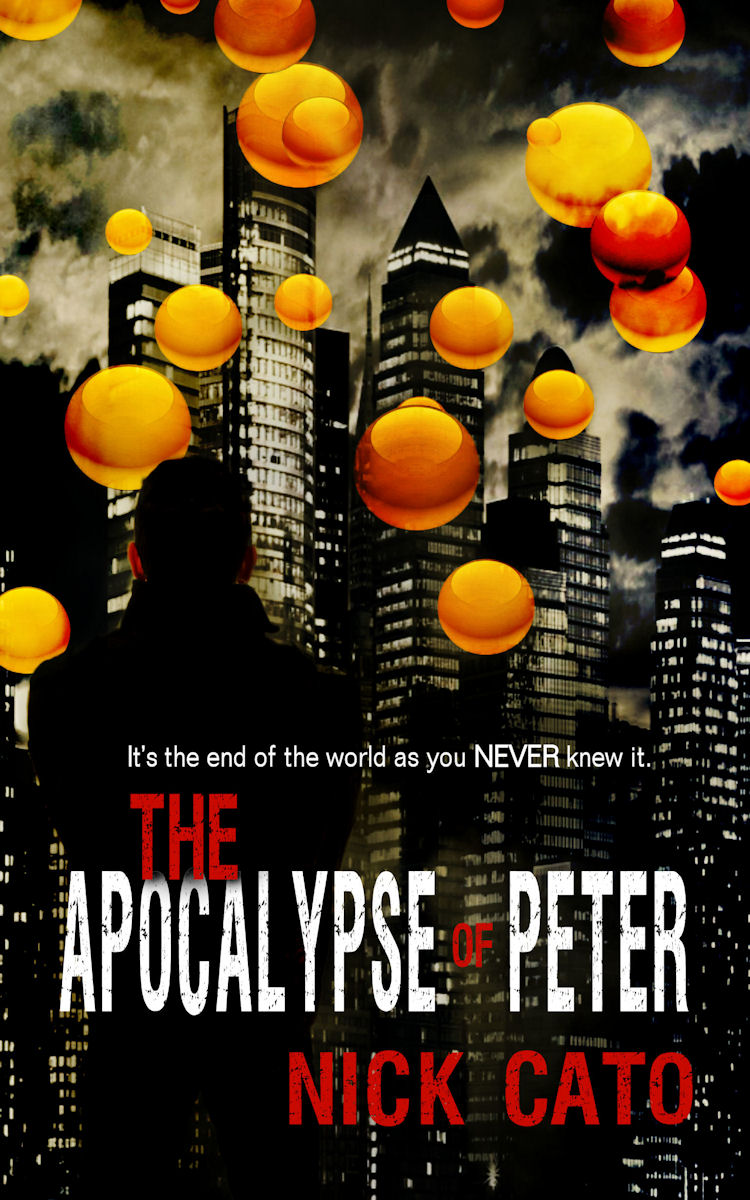
Author Nick Cato’s novella, The Apocalypse of Peter, was released June 1 by Damnation Books. It was edited by Tim  Marquitz and the cover art was done by Dawné  Dominique.

The book’s synopsis: “It’s the end of the world as you newer knew it. Seminary student Peter Barnes and his senior friend, Harvey Connor didn’t expect the last days to include neon meteor showers, unexplainable mutated creatures, or that they’d be housing an all-girl rock band.  Thinking they must be the last people on Earth, Peter’s understanding of all he had been taught becomes rapidly overthrown…especially when a young, ghost-like figure calls him and an offbeat army on a mission to go up against a most unusual foe.  Peter’s faith is thrown through the ringer as he gets closer to discovering just what it is that has turned the planet into a festering eye-sore of theological chaos.

Cato’s novella is available on e-book for $4.50 and in paperback for $12.89 on Amazon.

Just Learn How To Do It Yourself

Just Learn How To Do It Yourself

by Rob Watts

Remember the old sayings “If you want something done right, you have to do it yourself” and “don’t pay someone to do something that you can do on your own?” Well those sayings are especially true when it comes to authors in today’s rapidly changing publishing climate. In this ever-expanding technology age that we’re living in, it almost seems senseless to me to even bother seeking out a publishing company to release our work. With all the resources readily available to us, there is no reason to take 100 percent control of the work you slaved over. After all, you gave up your free evenings and weekends, missed out on get-togethers with friends, perhaps broke up with girlfriends/boyfriends, wives/husbands in order to express your inner-workings on pages upon pages of your masterpiece. Why turn it over to anyone (except perhaps Random House or Harper Collins) when you can do a far better job at it? Of course, you might be working with a traditional publisher at the moment and could be perfectly happy with them. That’s awesome. If you’re not happy, read on.

I understand the appeal of seeing your name in print within a book which was released by a “publishing company” but I must point out that what most of these small presses are doing is profiting on your work while you get the short end of the stick. What the small genre presses do, between performing a half-assed editing job, hiring their buddy to do the cover art, printing copies and posting it to Amazon is the same thing you can do, only you can do a better job and guess what? You profit from the book sales, not them. By the way, just placing a book on Amazon and having it “listed” on B&N doesn’t count as full book distribution. Many small presses seem to think that’s the case but trust me, it’s not. Again, that’s something you can do yourself. Also, be cautious of publishers of anthologies. Or more to the point anthology mills. These are publishers who have very little credibility but they are seeking credibility by bulking up their publishing credits by churning out crappy collections one after another. They accept short stories from unsuspecting authors and give them very little in return, if anything at all. I’ve seen them all before, the editing is poor, the selection process is questionable, there is hardly any kind of distribution efforts and almost all the time, the publisher of that said anthology conveniently has their story included within the collection. Of course not all anthology publishers are sinister. But it’s like anything in life, for every pile of coal you stumble upon, you have to search hard for the diamonds.

If I can pull the curtain away from the wizard for just one moment, I’d like to point out that 99 out of 100 authors have the dreaded day job to contend with (even ones that you think have it made.) None of us by any means are rich and famous due simply to our writing craft (I can’t stand it when writers act as if they make their living off their books.) But even if we don’t find immediate fame and success with our writing, we shouldn’t be taken advantage of along the way from point A to point B. Having your work published under the imprint of anyone (other than the last of the big six publishing companies) is only costing you money in the long run. Unless of course you don’t mind only being paid in the form of one author/contributor copy and maybe if you’re lucky, a few pennies for every copy sold. As I mentioned above, you put the time into it and agonized over your story. Isn’t it worth a little more time to learn the new-school methods of independent publishing? Even though there are some reputable and highly regarded small presses out there, unfortunately for every one of those there are a thousand hucksters who will rip you off, devalue your work and never lose an ounce of sleep while doing it.

As I write this, there is an unsettling amount of bad word-of-mouth over an unfortunate non-fictional character named Anthony Giangregorio. He is the owner of Open Casket Press and Undead Press and has allegedly taken advantage of newcomers to the publishing world by way of mistreatment, misrepresentation, broken promises, less-than-crafty editing tactics and poor royalty delivery. I won’t dwell on that but it does illustrate my point immensely that you have to be careful and protect yourself from these sort of people.

Which brings me to my original point. Take a bigger chance on yourself and give your work the attention it deserves. It’s not that hard to create your own imprint to publish under. I’ve been doing it for years and quite frankly, I’m not interested in turning my work over to anyone for peanuts just to pad my bibliography resume’. My work is too valuable to me and every word I write means something. That’s not egotistical, it’s simply how I feel about something that I spend my free time doing. It should be just as important to you to not throw your work on just anyone’s lap. I had the misfortune of working with a couple of small traditional publishers in the 90s who in all seriousness left me with nothing but my underwear. I was intent on avoiding that experience again and decided to cut out the middleman by creating my own company to publish under. Self-publishing (or independent publishing) is no longer a dirty word. Just ask a very talented Canadian author named Cheryl Kaye-Tardif who recently self-published Children of the Fog last fall and has thus far made $47,000 in book sales from Kindle alone. Her print edition sales have been rather spectacular as well. Independent authors, with a little research and patience, can achieve greater heights more than ever in today’s consumer age. Without giving a seminar on the subject, I’ll just share with you a handful of things to keep in mind when setting out to go it alone. They seem like no-brainers but believe me, I’ve seen people crash and burn because they were lazy about self-publishing.

1- A catchy company name. Not one that screams self publisher. If your name is Joe Schmoe, don’t call your company Joe Schmoe Publishing. Perhaps come up with a name that revolves around your subject matter or genre. Be sure to register a dot-com site (avoid dot net if possible) for the company as well. Don’t rely on the freebie sites. look professional. be professional. Make sure that your website looks occupied. Keep it updated so a visitor doesn’t think you’ve abandoned ship. Especially if you are selling books from your site. Make it inviting looking so a potential customer isn’t afraid to click that Pay Now button. One more thing, don’t clutter your pages up with unnecessary nonsense. Keep it clean and simple. Less is more. More is a bore.

2- Kindle and Nook are great supplements, but you’ll want print copies of your work if you are releasing a full-length novel, etc. After all, no one ever said “when I grow up, I want to be a writer and see my name in print on a digital e-reader.” Research a quality printer. Find one that will print small runs of 50 to 100 copies per order. Yes, it’s a little costly to pay upfront for your books, but if you truly believe in your work, you will invest the time and energy it takes to sell books and recoup your initial investment. When you need reprints, they will be far less expensive because the layout, design and initial process has been done already. Usually you can find a printer who will print your books anywhere between 3.20-4.75 per unit. If you price your book (depending on size) between $10.00-$20.00, well you’ve made a nice profit for yourself. That’s much better than getting .73 cents per copy from a blood sucking publisher.

3- How much of a profit you make on the sale of each book depends on where you are selling it. There are several avenues one can take. Amazon, of course, is the first logical choice, especially with the advent of CreateSpace. I know I listed a success story above regarding Amazon and Kindle but I must point out that you simply cannot rely on the click and publish websites as your only source of bookselling. The chances of someone buying Stephen King’s new book and then seeing Joe Schmoe in the “People Who Bought Stephen King also bought Joe Schmoe” section are slim to none (and slim just left town.) Amazon and Barnes & Noble take a hefty cut from the sale of your (print) book so it’s worth it to get creative on how and where you sell your books. How well you promote yourself and your work is a large factor too. Ask yourself, has your publisher promoted you or your work to the best of their ability or to your liking? Probably not. Can you do a much better job? Probably yes. By the way, if you’re fortunate enough to have someone land on YOUR website, why would you want them to click a link that directs them to another site (such as Amazon?) You’ve got them so keep them. let them buy directly from you and while they are there, perhaps they will sign up for your newsletters, follow you on your social networking sites, etc. Don’t turn your book buying audience over to the corporate monsters if you don’t have to.

4- If you are going to maintain and control your inventory of books, as I do (I buy my inventory up front and control where, when and how it’s sold) then right off the bat you’ll want to make sure your website is e-commerce ready. If not, set up a PayPal account. It’s a simple process and you can cut and paste your checkout buttons right onto your site. Everyone uses PayPal today so when they see their logo in the Buy Now section, they will feel a level of confidence in purchasing your book(s). The only caveat to this is that you can’t afford to be lazy when it comes to being your own distributor online. If someone spends money on your book, you had better package that book up nicely and get it to the post office in a timely fashion. I can’t tell you how many times I’ve bought directly from someones website and got ripped off. As I mentioned above, keep your site updated so your customer feels confident in their purchase.

5- Get creative with how you publish your work. Make it stand out from all the assembly line products that are on the market today. I’m not just just talking about great cover art (although that is important … hire a good designer) I’m talking about standing out and creating a buzz around your work by offering your audience something they haven’t seen or read before. For instance, my last book Huldufolk was limited to only 250 print copies signed and numbered. It included a music soundtrack to the book which was performed by me. It has sold 212 copies since November at $15.99 a copy ($10.00 at events) so I’ve made my initial investment back and am able to put the profits made into the production of the next book. The New York Times Bestseller list isn’t going to be knocking at my door over this, but as an independent seller it’s significant. Whether or not it’s the greatest story ever told is not for me to judge or assume. This is by no means an advertisement for my work. It’s to illustrate the appeal that my book had to a certain book buying audience. I’ll give you another example unrelated to my work. A few years back, a friend of mine sold their book inside of a “writers survival basket” which included the book (on self-publishing), a coffee mug w/gourmet coffee packs, candy, note pads, etc, etc. It sold like hotcakes. So the point is, do something unique with your work. Come up with something special that says “I’m serious about what I do.” These little rinky dink publishers will never put that much thought into promoting your work. You can and you’ll be all the better for it.

I could rattle on-and-on about the various things I’ve picked up on over the years but honestly I’m not writing this to give a lecture on the do’s and don’ts on self-publishing. I’m merely suggesting that anyone who’s been left with a bad taste in their mouth from working with a less-than-reputable publisher should seriously consider doing it on their own. You will be in control of your work, you will become more business savvy as time goes on, you will discipline yourself as a writer because you’ll be aware of what it will take to generate book sales and most of all you will profit more from it in the end. I hate to hear horror stories (no pun intended) about writers being taken advantage of. Hopefully someday these stories will lessen over time, but I’m not prepared to hold my breath that long.

Watts wrote this article for the NEHW and also published it on his LiveJournal site.

Author’s Take on Jack the Ripper

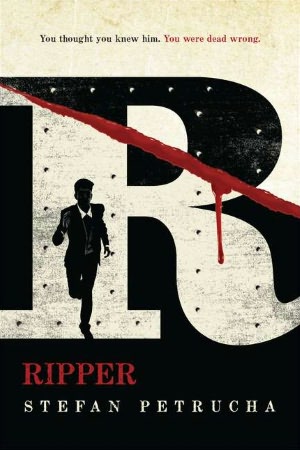
Stefan Petrucha’s new book, Ripper, was released in March.

The author is currently running a contest on Goodreads, where he will give away six copies of Ripper. Click here to enter the contest, which ends April 28.

Here is the book’s description from Amazon, “Carver Young dreams of becoming a detective, despite growing up in an orphanage with only crime novels to encourage him. But when he is adopted by Detective Hawking of the world famous Pinkerton Agency, Carver is given not only the chance to find his biological father, he finds himself smack in the middle of a real life investigation: tracking down a vicious serial killer who has thrown New York City into utter panic. When the case begins to unfold, however, it’s worse than he could have ever imagined, and his loyalty to Mr. Hawking and the Pinkertons come into question. As the body count rises and the investigation becomes dire, Carver must decide where his true loyalty lies. Full of whip-smart dialogue, kid-friendly gadgets, and featuring a then New York City Police Commissioner Teddy Roosevelt, Ripper challenges everything you thought you knew about the world’s most famous serial killer.”

Check out the trailer for Ripper here.

Check out the author’s Amazon page here or order Ripper here.

The Traveling Writer: Ten Things You Should Own for Promotional Events

The Traveling Writer: Ten Things You Should Own for Promotional Events

by Kristi Petersen Schoonover

I’ve been doing events for ages, and my first few weren’t easy. No one had a must-have list, and I had to learn by doing. Today I’m sparing you all of that. So, here are the ten things every writer should have in his “Traveling Promotional Toolkit” (other than, obviously, your books/product). If you’re with the NEHW, there’s a good chance you won’t have to worry about some things on this list, like the table and tablecloths. But you should own them anyway, because at some point, you will probably be going solo. Interestingly enough, these ten items won’t break your bank—in fact, if you buy everything at once, your investment is going to be well under $100 and most of that you’ll never have to replace—but they’re absolutely essential if you’re going to take your show on the road.

Table/Chair: Card tables aren’t that expensive. Pick one up and keep it in your basement. If you don’t use it for going on the road, believe me, you’ll find some other use for it the next time you throw a party. A decent card table can run you anywhere from $20 and up. Some come with four or five chairs and start at about $50—but as far as chairs go, anything from home will do. Even those fold-up lawn chairs are fine. But you should have one in case the venue doesn’t.

Tablecloth: You can bring a cloth one from home that you already own, but since I’m a horror writer I like to get funky and use something appropriate. Plastic tablecloths, which you can get at any party store and start at, like, a buck, are the best choice, because you can customize them to the event (you might not want to bring your blood-spatter design to a hospital benefit, for example), and you can toss them when they get worn out. I have a few different ones with different designs on hand especially during October when I’m doing four or five events in a row and want to change it up. I usually get several uses out of them before having to discard them. You’ll find you also won’t mind loaning out the plastic ones, either. These are the most frequent things you’ll replace other than your handouts (see below).

Plastic Tubs: A must. All your books and materials stay dry and in mint shape. The tubs are also easy to carry, and make for a great “table” to put your drinks and food so they don’t go on your signing table, putting your product at risk.

Photo by Jason Harris.

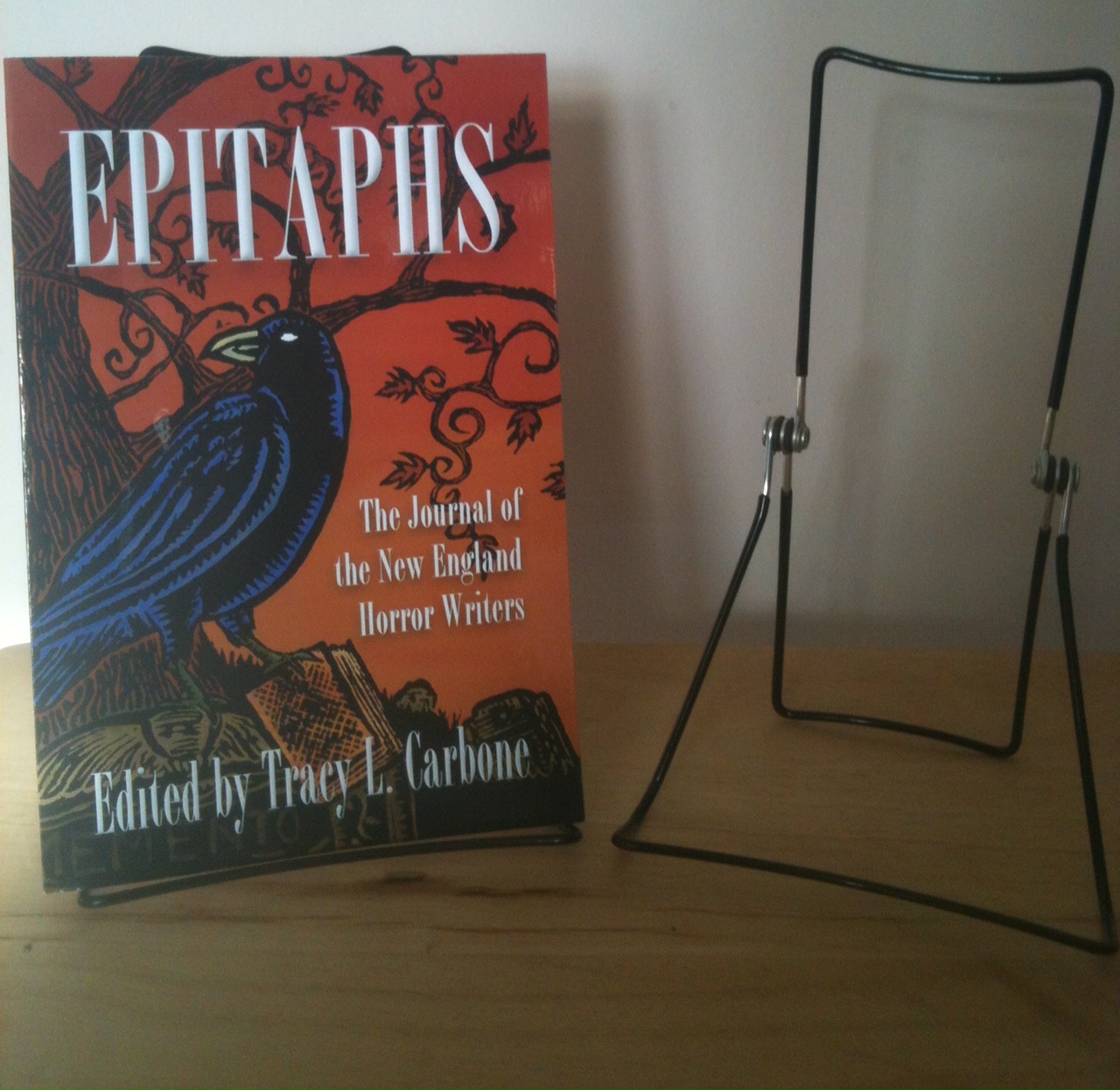
Book Stands: Sure, you can lay your books down on the table, but if they’re standing up, they’re easier to spot, plus they instantly look serious. You don’t have to spend a fortune to own an industrial book stand: these are the poor man’s POP (point-of-purchase) displays. All you have to do is visit Michael’s Crafts and head down the framing/photo aisles; they’re referred to as easels, they’re portable, and they’re cheap. The ones pictured above fold easily. At Michaels, they are about $3.99 each, and if you get the store’s coupons in the weekly paper, then they’re even less. If you wanna go nuts, they have some pretty cool wrought-iron ones. Those are on my Christmas list. Book stands are also available through Amazon.

Handouts/Flyers: The idea with a handout or flyer is to provide something of value: Content your readers will take home and possibly keep for awhile or use—this is the idea behind what today we refer to as “swag” (years ago when I worked for a firm we called them CM’s–“collateral materials”) such as magnets, bottle openers, and pens. The good news is, since you’re a writer, you don’t have to spend the bucks on promotional items if you can’t afford them. An easy, better, and less expensive way to market your work is to take a short story (preferably one that’s published) or a sample from one of your books and copy it. You can then staple your business card, postcard – or simply a flyer with your website and where people can purchase the book – to those copies and hand them out. You may not think it works, but it does result in at least a few residual sales (a residual sale is when a person purchases your work after the show is over).

Pens/Markers/Paper: Don’t laugh. This may seem like a no-brainer, but I’ve been to book signings at big box retailers (Barnes & Noble, Costco, and the like) and the author didn’t have pens that worked. Invest in a box of Bics. And while you’re at it, pick up a few Sharpies, too. Also make sure you have a notepad or extra paper – it comes in handy if you need to make notes, keep sales records, or make a sign. Just keep them in your travel tub.

Sign Holders: These are those plastic one-offs that stand on their own into which you can insert your own flyer, sign, photo, or whatever and the beauty is you can prepare one and use it over and over; you can also change them out frequently but keep a file of different ones on hand and avoid having to print new sheets every time you need something different. They add to your professional appearance and come in a multitude of vertical and horizontal styles and sizes. The best place to get them is at Staples, and you can spend as little as $4.00 each.

Duct Tape: One word: MacGyver.

Plastic Shopping Bags: To offer to customers who purchase your product, and to use for just about anything else, including those empty Dunkin’ Donuts coffee cups and Tab cans. One box of 100 costs about $13 at Staples or Office Max, and it’ll take you awhile to go through them.

Decorations/Candy: Something festive to dress up your table is always helpful because it broadcasts I have passion for what I do, and a bowl of individually-wrapped candies is always pretty, especially around Halloween, because it shows you have a sense of fun. And after all, who doesn’t want to Trick or Treat?

‘Body Enhancements Gone Bad’ Anthology Available on Amazon

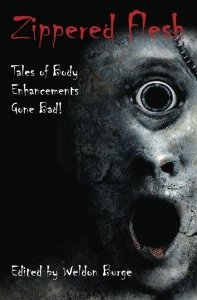
Author and NEHW member L.L. Soares’ story, “Sawbones,” appears in the anthology, Zippered Flesh: Tales of Body Enhancements Gone Bad! edited by Weldon Burge.

According to Amazon, this collection contains monstrous transplants, appalling amputations, bizarre implants and nightmarish forms of body enhancements. These “stories are not for those who are faint of heart or squeamish, or who are easily offended by nasty language, bloody violence, and freakish body augmentations.”

This collection also includes stories by Graham Masterton, John Shirley, Scott Nicholson, Lisa Mannetti and Burge.

Burge’s collection is available in paperback for $14.95 and in e-book for $2.99 on Amazon.

New E-books from NEHW Members

In the last few weeks, members of the New England Horror Writers’  organization have published new stories in e-book form.

Author Tracy L. Carbone, editor of Epitaphs, recently released The Folks, her first venture into the e-book market place.

In The Folks, Valerie and her young daughter are relieved to stumble upon Hardscrabble Farm after their car gets a flat tire late at night. “The farm is surrounded by an army of scarecrows, but the warm safe house beckons to them.” Once arriving, “they discover that the horrible secrets kept by the farm’s owner Clara Rantoul are far more sinister than they could have imagined.”

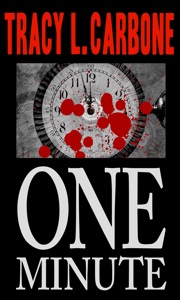
Her second offering, One Minute, is a Twilight Zone-esque tale about three people in a love triangle discovering “the cruel irony that all life can change in just one minute.”

Her current offering is Pretty Pig Let Me In, which tells the story of Paula, whose “gluttony has always served her well, has driven her hunger for success and wealth. But when she sets her sights on winning over a rich man, ‘be careful what you wish for’ takes on a gruesome new meaning.”

Paula’s gluttony has always served her well, has driven her hunger for success and wealth. But when she sets her sites on winning over a rich man, “be careful what you wish” for takes on a gruesome new meaning.

Carbone hopes to have a large collection of stories and a couple of novels available on Amazon in the coming months.

According to the description on Amazon, Mark Edward Hall’s Apocalypse Island is about young women being stalked and slaughtered in Portland and how Danny Wolf is witnessing these crimes in his dreams. “Wolf, a gifted musician and newly released from prison, has no memory of his early childhood, but discovers that he spent his first eight years in a Catholic orphanage on a mysterious island off the coast of Maine. Soon the killings become more bold and gruesome, as members of the church begin to die. Enter Police Lieutenant Rick Jennings and his young assistant Laura Higgins. They discover a government conspiracy involving the Catholic Church, and a cold war mind control program known as MK-Ultra. Danny Wolf becomes the number one suspect in the murders, but no one, not even Wolf, is prepared for what they discover on Apocalypse Island, a mind blowing secret that was supposed to stay hidden forever.”

Hall also released Feast of Fear, which contains four horrifying tales and the first four chapters of his upcoming novel, Soul Thief.

John Grover’s Echo Lake-A Short Story is a sample of his work.  Amazon’s description said, “Ryan didn’t know why he’d come back. He just had to see it one more time. Echo Lake waited for him, looking exactly the same after all these years. The tragedy that happened there was still alive and well in Ryan’s mind. His little sister drowned in that damned lake. She was not the first, probably wouldn’t be the last. He’d come back because of her, because of that day. See, there was something else there. Something in the lake. Something in the water. He couldn’t see it. He couldn’t hear it but Ryan knew. The drowning was no accident. Something took her.”

The Self-epublishing Bubble

This article originally appeared on the Guardian website.

The self-epublishing bubble

In August 2011,  Ewan Morrison published an article entitled Are Books Dead and Can Authors Survive?. Here, he tracks the self-epublishing euphoria of the last five months and argues that we are at the start of an epublishing bubble

by Ewan Morrison

The internet is full of ironies. I, for one, could never have guessed that writing about the end of books would generate more income for me than actually publishing the damn things. I’ve been on an End of Books reading tour since August and it turns out that what the internet gurus say about consumers being more willing to pay for events, speeches and gigs, rather than buying cultural objects, is now becoming true.

At the other end of the political spectrum from me, among the epublishing enthusiasts and digital fundamentalists, similar ironies are playing out: there is now a boom industry in “How to get rich writing e-books” manuals, as well as a multitude of blogs offering tips and services, and a new breed of specialists who’ll charge you anything from $37 to $149 to get your e-book into shape.

This all seems like a repeat of the boom in get-rich-quick manuals and “specialists” that appeared around blogs and e-trading. Did anyone actually get rich from writing blogs, you may ask? Well, according to Jaron Lanier (author of You are not a Gadget) there are only a handful of people in the world who can prove that they make a living from blogging: it’s entirely possible that more money was made by those who wrote and sold the how-to manuals than by the bloggers themselves. But who cares, right? It’s all part of the euphoria of digital change, and technological innovation is as unstoppable a force as fate. Reports show that paper book sales are “tanking” – down a massive 54.3% while e-book sales are up triumphantly by 138%. The revolution will be e-published, and we’re all going to be part of it.

All of this e-book talk is becoming a business in itself. Money is being made out of thin air in this strange new speculative meta-practice: there are seminars, conferences and courses springing up everywhere, even at the Society of Authors (a writers’ union which, until recently, was largely against e-publication). Television and radio programmes are being made about self-epublishing (I’ve personally been asked to speak about it on 12 occasions since August). Everyone can be a writer now: it only takes 10 minutes to upload your own e-book, and according to the New York Times “81% of people feel they have a book in them … And should write it”

But all of this gives me an alarming sense of deja vu. There’s another name for what happens when people start to make money out of speculation and hype: it’s called a bubble. Like the dotcom bubble, the commercial real estate bubble, the subprime mortgage bubble, the credit bubble and the derivative trading bubble before it, the DIY epublishing bubble is inflating around us. Each of those other bubbles also  saw, in their earliest stages, a great deal of fuss made over a “new” phenomenon, which was then over-hyped and over-leveraged. But speculation, as we’ve learned at our peril, is a very dangerous foundation for any business. And when the e-pub bubble bursts, as all previous bubbles have done, the fall-out for publishing and writing may be even harder to repair than it is proving to be in the fields of mortgages, derivatives and personal debt. Because this bubble is based on cultural, not purely economic, grounds.

How do we know if we’re in a bubble?

To answer that we have to turn to respected economist Hyman Minsky. Minsky (1919-1996) studied recurring instability in markets and developed the idea that there are seven stages in any economic bubble (the following terminology is adapted from his Financial Instability Hypothesis [PDF]):

Stage One – Disturbance

Every financial bubble begins with a disturbance. It could be the invention of a new technology; it may be a shift in laws or economic policy, or a reduction in interest rates or prices, or the expansion of a market into an area that has not been open before. Usually several factors come together to make the change – and as a result, one sector of the economy goes through a dramatic transformation.

This has certainly occurred with epublishing. Over the last decade, Amazon has undercut the big global publishing houses through a radical new structural approach to storage and distribution and grown so quickly that it forced them to renegotiate their pricing policies. Then in opening up the long tail market and making hundreds of thousands of lost titles available again for resale, it reinvented bookselling. The creation of Kindle led to a new generation of e-readers which, with Apple, launched an economic boom in a previously non-existent market. It has already become a cliché in all media that digital self-publishing is a revolution comparable to the invention of the printing press. That is a lot of disturbance in a short space of time.

Stage Two – Expansion/Prices Start to Increase

Following the disturbance, prices in that sector start to rise. Initially, the increase is barely noticed. Usually, these higher prices reflect some underlying improvement in fundamentals. As the price increases gain momentum, more people start to notice. Speculation thrives.

On first inspection, e-publishing doesn’t appear to fit the model here, as it’s clear that the prices of ebooks are falling drastically (in the week of Jan 1, 28% of the top 100 e-books on Amazon were 99p or under, and 48% were under £2.99). But that’s because we’re looking at this the wrong way round – from the perspective of the consumer. The e-book explosion is coupled with the rise of the e-reader, and the profits there are in the hands of the manufacturers. There has also been a fast turn around in these new technologies from Kindle to Kindle Fire, from iPad to iPad 2; and a brand new market of consumers for these products has appeared from nowhere. The change to cheap ebooks and self-published ebooks is a “change in underlying fundamentals”.

Stage Three – Euphoria/Easy Credit

1. Increasing prices/sales do not, by themselves, create a bubble. Every financial bubble needs fuel; cheap and easy credit is that fuel. Without it, there can be no speculation and the sector returns to a normal state. Speculation takes over and there is a rush to “get in” as newcomers become involved “cheaply” 2. When a bubble starts, the sector involved pushes stories into the media,  and is suddenly inundated by outsiders; people who normally would not be there.

1. “Easy credit” in this case relates to the plummeting costs of digital content. In fact, there is an inverse correlation between the cheapness of digital content and the high cost of e-readers and smart technology. The more ‘free’ or nearly-free content is available online, the more appealing expensive e-reader and iPad technologies have become. Furthermore, “cheaply” here refers to the ease with which someone can now self publish. A decade ago, self publishing could costs thousands of pounds for a mere 100-book print run. Now it is free or almost free.

2. The whole point of self-epublishing is that the market “brings in people who would not normally be there”. Like the promise that we can all have an affordable home with a cheap mortgage, we are being told constantly by digital businesses and the media that we can all be writers and even be successful as writers. Even the tabloids are generating hype, telling the masses that they each can make millions through self-epublishing.  The more traffic there is in self-epublishing the more the hype has ‘evidence’ to support it. According to USA today, it’s a gold rush…get out there”.

Stage Four – Over-trading/Prices Reach a Peak

1. As the effects of cheap and easy credit dig deeper, the market begins to accelerate. Overtrading lifts up volumes and spot shortages emerge. Prices start to zoom, and easy profits are made. This brings in more outsiders, and prices run out of control. 2. This is the point that amateurs – the foolish, the greedy, and the desperate – enter the market. Just as a fire is fed by more fuel, a financial bubble needs a mass of people involved in mass behaviour to fuel it.

1. Since epublishing started, the race to undercut competitors has accelerated at unforeseen speed. Blogs now give advice to start-up writers, telling them to give their work away for free to gain audience share and get reviews, and only then attempt  to raise their prices. The zooming prices here refers to the zooming down of prices. For example self-epublishers are now giving books away for free – see the Kindle Top 100 Free books. Furthermore, in this ecstatic push to self-epublish, there are hundreds of thousands of new ebooks for which there are almost no readers at all because they have zero visibility.

2. Over the last six months there has been a huge growth in the number of people with no former experience who have entered self-epublishing. Taking myself as a representative slice of the public, I can attest, from recent personal experience, to the following: People I know who have been rejected by mainstream publishers have brought out their first ebooks on Kindle; people I didn’t even know had novels under their beds have done the same; friends of friends on Facebook have announced that they too have novels and short stories available on Kindle, Nook, Kobo, iPad and Sony Reader. Locally, I have seen two new digital publishing houses born from nothing and paying no advances, operating on “spec” writing. And all of these people are self-promoting their work on what platforms they have: Twitter, Facebook and their blogs. All of this is evidence of a “desperation to enter the market”. I know this because I also felt the pressure to try it (and did: I self re-epublished what was my first book).

People who are self-epublishing for the first time are also buying their first iPads and Kindles, so as to better understand the e-pub technologies and to further promote their ebooks. They may be giving their ebooks away for free but they’re spending between £100-400 on single items of new technology – more than they ever actually spent on books in a year.

Stage Five – Market Reversal/Insider Profit Taking

Warnings sound that the boom will turn to bust; that the models on which success is based are unrealistic and overblown. These arguments are ignored by those who justify the now insane prices with the euphoric claim that the world has fundamentally changed and cannot change back. The fact is that insiders have been pulling the strings all along, capitalising on the hype created by the ill-informed newcomers to the market. 

The model of e-book success that’s held up for everyone to copy is based on half-truths. Even those who are seen as e-book stars are actually transitional figures straddling the digital self-publishing and the mainstream camps.

Take for example digital guru, free culture activist (former European director of the Electronic Frontier Foundation) and author Cory Doctorow – an SF celebrity and aggressive exponent of self-epublishing who gives his books away for free under a creative commons license (with optional payment). It turns out that Doctorow isn’t just any old novelist: the subjects he and his characters talk about are file sharing, the digital revolution, digital rights management and the oppressive old gatekeepers of the mainstream. His kudos comes from the fact that we are in a transitional period in which “free digital culture” is still an issue. Ironically, if and when self-epublishing becomes the norm, his subject matter will no longer seem so radical and no doubt his reader base will diminish.

Or take Amanda Hocking, the paradigmatic example of epublishing success, who has made $2.5m from selling her own ebook. Hocking writes about the supernatural and teenagers, and her success is due in no small part to what the industry calls “piggybacking” on a mainstream success. Without Twilight, and the popularisation of the teen-romantic-horror genre,  it is doubtful that Hocking would have a foothold in the industry, or that many people beyond her internet friends would have bought My Blood Approves (retailing at £0.72 on Amazon).

The models of Doctorow or Hocking are misleading to say the least. For the hundreds of thousands of newcomers to self-epublishing to believe that they can become as successful as these role models is a dangerous delusion, and one capitalised on by companies who have an interest in maximizing internet traffic and selling e-readers and internet advertising.

The crisis that’s looming is that while the price of e-books is pushed to almost zero by the rush of frantic amateur self-publishing activity, the established publishing businesses will be forced into life-saving cost-cutting.  Again, this is something from which those who have an interest in maximizing internet traffic and selling e-readers and internet advertising will benefit. For a while, all those new Kindle owners will find it liberating to see the prices of all e-books fall, allowing them to vastly expand their libraries, while at the same time, paradoxically, they will wait anxiously for someone to buy their own literary e-offerings online.

Stage Six – Financial Crisis

Just as the euphoria consumes the outsiders, the insiders see the warning signs, lose their faith and begin to sneak out the exit. Whether the outsiders see the insiders leave or not, insider profit-taking signals the beginning of the end.

Already the stars of self-epublishing are leaving the system that launched them. Hocking signed a deal with Macmillan that gave her a $500,000 advance on four separate books in a series – a total reversal from the way self publishing is done (with zero advances being paid and all work being done on “spec”). The self-epublished author has left the glass-ceiling world of .79 cents e-book sales (to embrace the old mainstream model, believing that it is the only system that can elevate her to a higher profile and bring her into an arena where her books can by “synergised” with tie-in products such as films, TV serials, even toys) and the door of opportunity closes behind her as she exits, leaving hundreds of thousands of self-epublishing authors without a model to aspire to.

Meanwhile the mainstream publishing houses have suffered huge losses and now can only publish authors who seem to offer a guaranteed return.  The entire field of publishing has shrunk, beneath what seemed on the surface like an infinite expansion. Publishers have been forced to launch their own e-publishing sites in the attempt to join in the bubble and gain kudos, but they are too late and are wasting resources, and further undermine their old status as market leaders. They in fact turn to the new model of the self-epublishing “star” to get them out of the doldrums. This is the point at which self-epublishing becomes a hall of mirrors and speculation runs in circles.

And what has happened to all those new authors who were told they could make money from e-publishing? Well, they are working entirely for free (on spec) on the promise of those big 70% royalties on future sales. They write their books, they blog, they net-network and self-promote; they could put in as much as a year’s work, all without payment. So much writing-for-free is going on that it upsets the previous paradigm: people start to ask, why should any writers get paid at all? Why should “professional” writers get a wage or advance, when I’ve had to do all this work on my self-published e-book for free?

And then comes the collapse – if you work for free and have to slash your costs to be competitive – to, say, undercut the vast 99p market by going down to 45p or 15p – then your chances of ever seeing a return on all the free labour you’ve put in diminish accordingly. Add to this the fact that hundreds of thousands of others are competing with you in this pricing race to the bottom and the possibility of any newcomers making any money from self-epublishing vanishes. The bubble bursts.

Stage seven – Revulsion/Lender of Last Resort

Panic starts and euphoria is replaced with revulsion. Outsiders start to sell, but there are no buyers. Panic sets in, prices start to tumble downwards, credit dries up, and losses start to accumulate. The market is forced back to pre-bubble levels, with major destruction to its infrastructure. The “Lender of the Last Resort” may step in to save what is left.

1. After a long year of trying to sell self-epublished books, attempting to self-promote on all available networking sites, and realising that they have been in competition with hundreds of thousands of newcomers just like them, the vast majority of the newly self-epublished authors discover that they have sold less than 100 books each. They then discover that this was in fact the business model of Amazon and other e-pub platforms in the first place: a model called “the long tail”. With five million new self-publishing authors selling 100 books each, Amazon has shifted 500m units. While each author – since they had to cut costs to 99p – has made only £99 after a year’s work. Disillusionment sets in as they realise that they were sold an idea of success which could, by definition, not possibly be extended to all who were willing to take part.

The now ex-self-epublished authors decide not to publish again (it was a strain anyway, and it was made harder by the fact that they weren’t paid for their work and had to work after hours while doing another job – and they realised that self-promoting online would have to be a full-time job.) They come to see self-epublishing as a kind of Ponzi scheme – one created by digital companies to prey on the desires of an expanding mass of consumers who also wanted to be believe they could be “creative”. They also become disillusioned with their e-readers, which are now out of date anyway. And so they return to the mainstream publishers to look for culture. Unfortunately, as a result of the e-book market implosion it is impossible for publishers to push their prices back up to pre-bubble levels (from 99p to £12.99), and so their infrastructure continues to decline. And since they have decided to look for new talent in self-epublishing, they are trapped in the very same bubble that everyone else is trying to get out of.

2. The “Lender in the Last Resort” cannot really step in to save the “investors”, as these are the hundreds of thousands of hopeful and now-disappointed first-time e-publishers. Instead, the government (if we’re lucky) steps in to bail out the publishing industry, and to regulate the digital companies that created the bubble in the first place. Or the government could continue to subsidise these companies, as it does just now, and in so doing create the next bubble.

Of course, none of this might come to pass. Perhaps self-epublishing wont take off, and perhaps people will continue to pay more than 99p for ebooks and paper books. And perhaps hundreds of thousands of new writers will actually taste success. But this, again, is mere speculation.
Author’s ‘Aftershocks’ Available in New Anthology

Author’s ‘Aftershocks’ Available in New Anthology

by Jason Harris

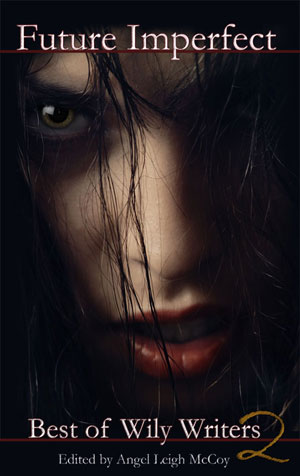
Author and New England Horror Writer member, Craig D.B. Patton’s story, “Aftershocks,” appears in the new anthology, Future Imperfect: The Best of Wiley Writers 2. The collection is edited by Angel McCoy.

According to Patton’s website,  the anthology “contains the best science fiction, horror, and fantasy work published by Wily Writers in 2010.”

Find out about the Wiley Writers on its website.

Future Imperfect can be ordered from Amazon. The e-book version of the book can be purchased through Smashwords.

The Pros of Publishing Short Stories on Amazon

This entry originally appeared on NEHW member Mark Edward Hall’s website.

The Pros of Publishing Short Stories on Amazon

by Mark Edward Hall

I get asked a lot, mostly by newbies, how I can make money by publishing .99 cent Ebooks on Amazon. First, my .99 cent books are all short stories. I make .35 on a short story that would otherwise be lost in my computer forever. I have twelve of my shorts out there now with more to come and it actually amounts to a tidy bit of extra income each quarter. Most all of my shorts have been previously published, so anything I make on them now is a bonus and welcome extra income. By the way, I also publish these same stories on Smashwords and Barnes & Noble.

All my novel-length works are 2.99 or above. On Amazon you receive 70% of anything priced above 2.99. On a 2.99 Ebook I receive 2.05. Not too bad when you consider that the stuff I have with a publisher (three books to be exact) only nets me 17.5% of list. The publisher likes to word it as 40% of net, which doesn’t sound too bad when you sign the contract, but in reality it figures to just about 17.5% of the purchase price.

I’m not here to trumpet the virtues of independent publishing over legacy publishing, although I might do that in a future post. Writers have to make up their own minds about what’s best for them. I only know what works best for me. I have two new novels coming early next year and I can tell you this, they will both be independent books. I hire my own editor, commission the cover art from some very good artists, and I’m pretty good at doing the formatting. (Better than my publisher actually) So when you take into consideration the profit difference between doing it yourself and putting it in the hands of a publisher it seems like a no-brainer to me. I wish I’d thought that way years ago.

By the way, I also offer some of those same .99 cent short stories as a collection entitled, Servants of Darkness, for $2.99. Readers who want to sample my work can buy a .99 cent short and if they like what they read they can buy an entire collection for 2.99. In this digital age I think writers are nuts if they don’t use every opportunity available to them.

Also, I am in the process of offering all of those same short stories on my website for free. Yes, you heard me right, FREE! If someone wants to save the .99 cent kindle fee and doesn’t mind reading on the computer, they can read my short stories without paying anything. Maybe I’m nuts but I believe it’s the right thing to do.

But to answer the original question: How can you make money by publishing .99 cent Ebooks on Amazon? Just ask John Locke. If you’re a writer and you haven’t yet heard of John Locke, then you’ve been living under a rock. John Locke writes the Donovan Creed book series and he prices all his novel-length books at .99 cents. He sold a million of them in five months and they’re selling at the rate of one every seventeen seconds.

In summary I think the future is very bright for those writers who have the courage to be creative.

———

Mark Edward Hall has worked at a variety of professions including hunting and fishing guide, owner of a recording studio, singer/songwriter in a multitude of rock n’ roll bands. He has also worked in the aerospace industry on a variety of projects including the space shuttle and the Viking Project, the first Mars lander, of which the project manager was one of his idols: Carl Sagan. He went to grammar school in Durham, Maine with Stephen King, and in the 1990s decided to get serious with his own desire to write fiction. His first short story, Bug Shot was published in 1995. His critically acclaimed supernatural thriller, The Lost Village was published in 2003. Since then he has published five books and more than fifty short stories. His new novel, a thriller entitled Apocalypse Island is due out in early 2012.

Epitaphs is Back Up on Amazon

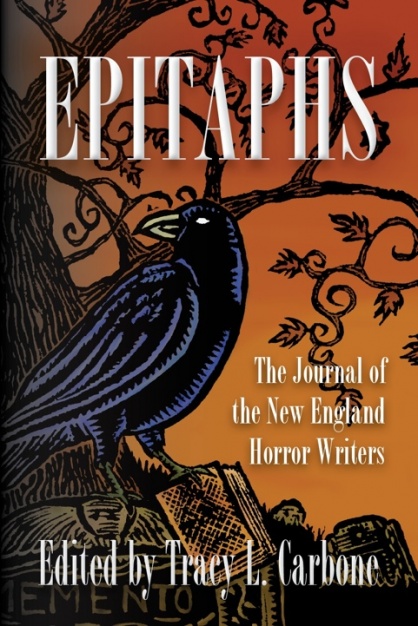
Epitaphs: The Journal of the New England Horror Writers, edited by Tracy L. Carbone and published by Shroud Publishing, is once again available on Amazon. The first NEHW anthology had been taken down from the website to fix some technical issues with the book.