An Interview with Author Joe Knetter

By Jason Harris

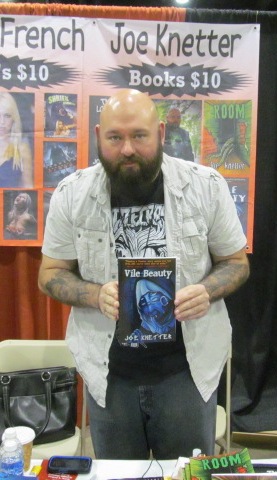
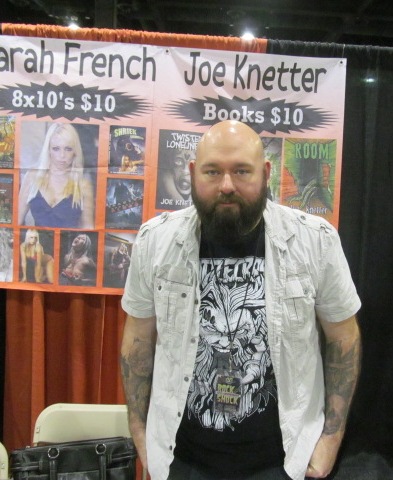
Author Joe Knetter holding Vile Beauty.

Author Joe Knetter holding Vile Beauty.

Author Joe Knetter started writing ten years ago after being a lifelong horror fan. His start came when he was online and found a publisher who was looking for stories.

“I thought it would be fun to give it a shot, so I wrote four and sent them in.”

All four of his stories were accepted, he said. Since then, he has written many more stories with interesting titles. His favorite title is “For the Love of Orson Welles’ Fat Black Ejaculate,” which can be found in his collection, Vile Beauty.

“It doesn’t make any sense whatsoever,” Knetter said about the title. “I was stoned one night. I just randomly said that. I can’t remember what about.”

He ended up writing that story for a gross-out contest. After submitting it and people started reading it, the contest organizers changed the rules so that his story was excluded, Knetter said.

Vile Beauty is really nasty. It’s more for shock value and over-the-top stuff. The other stuff is a little more mellow. Zombie Bukkake is obviously pretty out there.”

There are times Knetter will come up with the title first, then work the story around it.

He has a new story, “Crack in the Sarcophagus,” appearing in Canopic Jars: Tales of Mummies and Mummification, which debuts this month at Anthocon.

“I think it’s going to be a fun book.”

He loves attending horror conventions, and attends quite a few. When he first started out, he would attend up to 14 a year. This year he has only been to three, including Rock & Shock.

“Being that there are so many shows across the country, it kind of gets oversaturated a little bit.”

At his first convention, his goal was to sell one book. At one of the many conventions he has attended since that first one, he met his girlfriend of four years, Sarah French.

“The goal is always to make money, but it’s just as important for me to network,” Knetter said about conventions. “The shows are fun. It’s great to meet people.”

He did have a fan come to a show once whom he later found out was disturbed. This fan later arrested for putting bombs in vibrators, which is what Knetter used in one of his stories, he said. The fan was caught before anyone got hurt. He would have felt bad if someone had gotten hurt, but realized that if the fan didn’t react to something he wrote, he would have reacted to someone else’s work.

“Lucky enough, he was stupid enough not to do it right. Thank god. Horror fans are good people generally. They’re not troublemakers.”

He did have another fan buy one of his books that was poorly edited early on in his career. This fan highlighted his mistakes in the book then brought it back and gave it to him, Knetter said. “That was pretty comical, actually.”

Inspiration strikes Knetter everywhere. He has used an old mental hospital his mother worked at as a setting in a few stories. He has also written about a haunted hotel his girlfriend lived in while growing up. His story, “Room 17,” describes what happened at that hotel.

“I had to change the name of the hotel by one letter. Legally, I’m good to go now.”

He has been inspired by the early work of Clive Barker and is a huge Stephen King fan. His work has been compared to Wrath James White and Edward Lee.

His advice to writers is to just write, but don’t expect to make money, because writers don’t make much.

“Write because you have to tell the story and hope that you get lucky enough that it finds someone who likes it. You have to keep writing.”

You can find out more about Knetter on his website, click here.

Jennifer Jostyn: From Dancing to Acting


by Jason Harris

Jennifer Jostyn. Photo by Jason Harris.

Jennifer Jostyn. Photo by Jason Harris.


Jennifer Jostyn started out dancing before becoming an actress in movies like The Brothers McMullen, Deep Impact, and House of 1000 Corpses.

“I thought I wanted to be a ballet dancer.”

Jostyn studied ballet from a young age up until she was 22 or 23. She stopped when The Brothers McMullen won at the Sundance Film Festival and her career shifted from dancing to acting.

“I tried to sort of follow where I thought I was going to get work,” Jostyn said about changing careers.

There are moments that make her feel sad. These happen when she is watching live musical theater. This is when she misses ballet.

“I will see a show and I’ll think I would have loved to have done that. I like to try to never use the word regret in my life.”

She is appreciative of the work she has gotten and for working with two directors,

Edward Burns and Rob Zombie, both of whom she considers great directors and enjoys working with them.

She first met Burns through Michael McGlone, who was a co-worker at the restaurant where she was waitressing when she was 20 years old. McGlone told her one night when it was slow that he was working on a movie with “a cool guy who lives down in the West Village.”

McGlone also told her that Burns had no money, but was going to make something interesting. She received the role of Leslie 20 minutes after meeting with Burns. She spent the next couple of weekends going out to Burns parents’ house to shoot the movie.

She worked with Rob Zombie on House of 1000 Corpses. She didn’t realize at the time of her audition how big a deal it was being in a Rob Zombie movie.

Jostyn has also worked in television. She prefers movies, though, since she gets a little more time and freedom to play around with the role.

“Television shows usually happen pretty quickly, and there’s a lot of pressure to get it done quickly. You’re on a different kind of schedule.”

Her first starring role was in Milo, which she received two days before the film started shooting. She was first scheduled to play a much smaller role until she received the lead after being called into the director’s office. This happened on the day she had come to the production offices for a wardrobe fitting.

“I really loved that role and was excited to be able to go through the whole course of a 90 minute film. I’d never done that before.”

Jostyn is drawn to acting because she likes everything about it and being around creative people.

“I find it very exciting to watch great minds like Rob [Zombie] and Eddie [Burns] and other people I have had the pleasure to work with. I think they’re so smart and interesting and unique … I just wanted to be near it. I really don’t care in what capacity. It’s exciting to me to get to pretend to be different people. I can’t imagine who wouldn’t want to do that.”

Along with acting, Jostyn has also written and produced a movie, The Life Coach, back in 2005. She describes it as a mockumentary in the vein of a Christopher Guest movie, and it’s about a Hollywood life coach to the stars.

More Book Vendors at 10th Rock and Shock

by Jason Harris


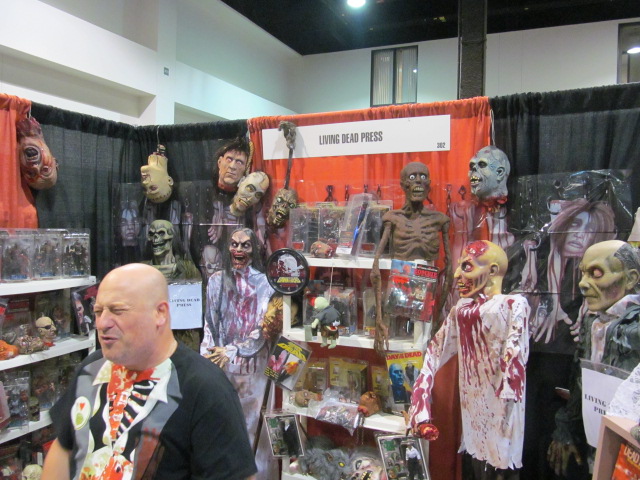
The 10th anniversary of Rock & Shock seems to have been the year for booksellers having a presence at the convention. In previous years, there were only Shock Totem, Sideshow Press, and the New England Horror Writers at the event.  Only the NEHW has been consistently representing its members there year after year for more than five years.

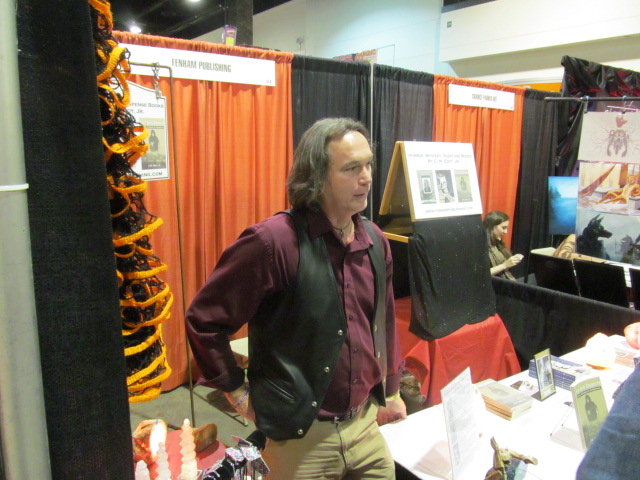
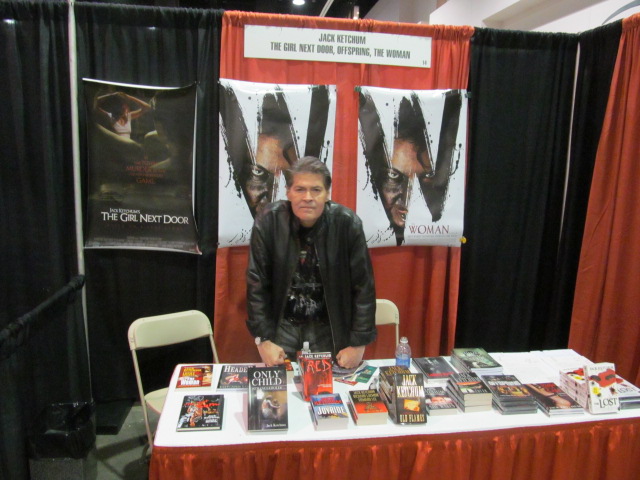
This year saw the NEHW joined by the returning representatives of Sideshow Press and Shock Totem, who both haven’t been at the convention in a couple years. The new booksellers at the event were Fenham Publishing and Living Dead Press. Click here to read a previous article on Fenham Publishing. There were also two authors, Jack Ketchum and Joe Knetter, in the celebrity area of Rock and Shock selling their books.

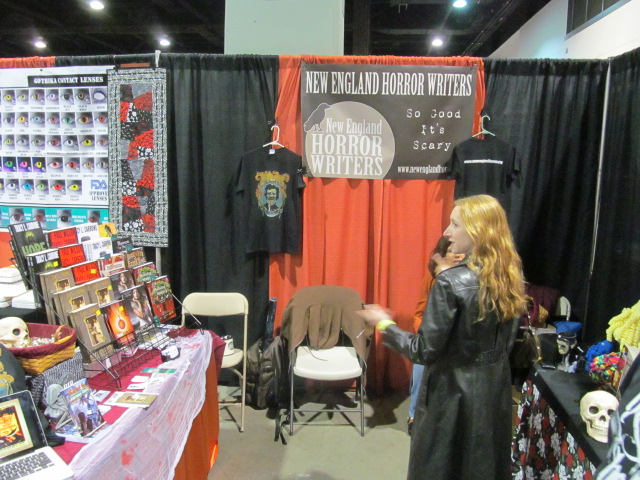
The New England Horror Writers (NEHW). Photo by Jason Harris.

The New England Horror Writers (NEHW). Photo by Jason Harris.

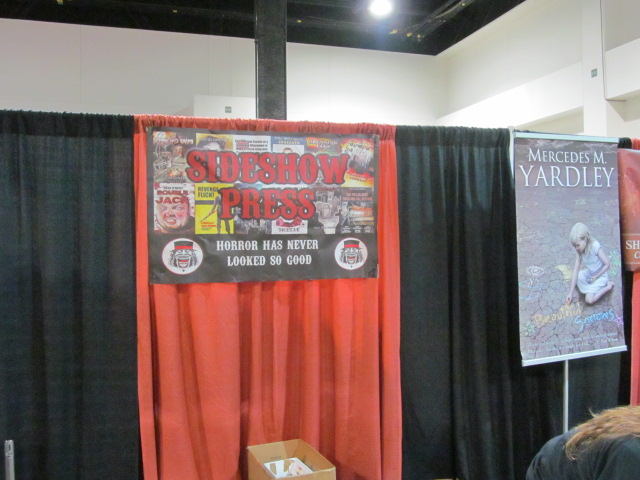
Sideshow Press

Sideshow Press. Photo by Jason Harris.

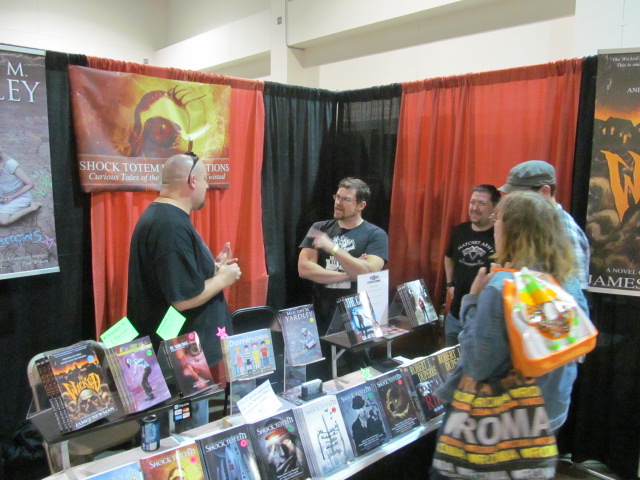
Shock Totem

Shock Totem. Photo by Jason Harris.

Living Dead Press. Photo by Jason Harris

Living Dead Press. Photo by Jason Harris.

Fenham Publishing. Photo by Jason Harris

Fenham Publishing. Photo by Jason Harris.

Jack Ketchum. Photo by Jason Harris.

Author Jack Ketchum. Photo by Jason Harris.

Author Joe Knetter. Photo by Jason Harris.

Author Joe Knetter. Photo by Jason Harris.


Lew Temple Talks about ‘The Walking Dead,’ Rob Zombie, and Baseball

By Jason Harris

Lew Temple. photo by Jason Harris

Lew Temple. photo by Jason Harris

Lew Temple’s time on The Walking Dead has ended, but he’s still proud of the work he did on the series, even though he thinks his character Axel had more to do in the show.

“I was obviously disappointed,” Lew Temple said. “I thought he was going to be serviceable to the group.”

Temple was given the news three weeks in advance that his character was going to die. He was in denial at first, but after some time he had to commit to it, he said.

“My intent is to always serve the story and that was my job. I wanted to do the best job possible.”

Temple did feel “disappointed for Axel,” though. As an actor, he will go on and work, but Axel is gone forever, he said.

The character of Axel will live on in The Walking Dead comic books and in reruns.

Temple did use the comic book character of Axel as a blueprint. Since comic books are one-dimensional, he had to make the character three-dimensional.

“I’m certain that we were able to use some of Robert [Kirkman’s] characteristics of Axel, but also brought some of my own to it as well.”

The producers on the zombie series knew of Temple before he came on in season three since he had been in to see them for the pilot.

“They looked at me for the role of Merle, originally, and then after that they hired Michael Rooker. Then they needed Merle’s brother, Daryl, who at that time was not even named.”

Temple auditioned for Daryl by reading Merle’s lines differently, which he was asked to do by the producers.

“Thankfully, they hired Norman Reedus. So when Axel came around they came to me and we were able to make that work.”

Temple was aware of the popularity of The Walking Dead, but not of the cross-cultural phenomenon it has become.

“I would say it hasn’t hurt me,” Temple said about Hollywood recognizing him from the popular series. “I would say prior to The Walking Dead I had a certain body of work Hollywood was aware of, and I was working prior to The Walking Dead …”

He admits that the series has elevated his visibility, which has helped him. He doesn’t know if his time on the series has defined him, which only “time will tell.”

“I like to do diverse stuff. I’m certainly proud of the work I did on The Walking Dead and to be part of that show. It’s been such an incredible hit.”

Temple has worked with writer and director Rob Zombie on Halloween and The Devil’s Rejects. He has “a really great relationship beyond a working relationship” with Zombie.

“I adore working with him because he knows what he wants and wants what he knows so there’s not a lot of grey area in-between. He is an absolute perfectionist and he does whatever it takes to make the day work, and if that means he needs to provide something on set, he does so.”

He does expect to work with Zombie again because he thinks they work well together. He just doesn’t know when that will happen.

“I think that I bring something to his story that he appreciates. It wouldn’t be a surprise to see Lew Temple in a Rob Zombie production yet again.”

Along with acting, Temple is “an incredible baseball fan.” He adores the game and it has been his first passion since he was a little boy. He’s even played it all the way up until the minor leagues with the Seattle Mariners and Houston Astros. When he couldn’t play the game, he worked as a baseball scout for the New York Mets. Now he roots for the Atlanta Braves.

“I would say I’m excited for the Red Sox, but rooting for the [Detroit] Tigers.”

Temple also writes music.

“I think that I am a pretty interesting songwriter. I think that I am able to spin a tune, at least in my head.”

He has a record deal with Universal through the Rob Zombie production, Banjo and Sullivan.

An Interview with Author A.J. O’Connell

By Jason Harris


pressphoto

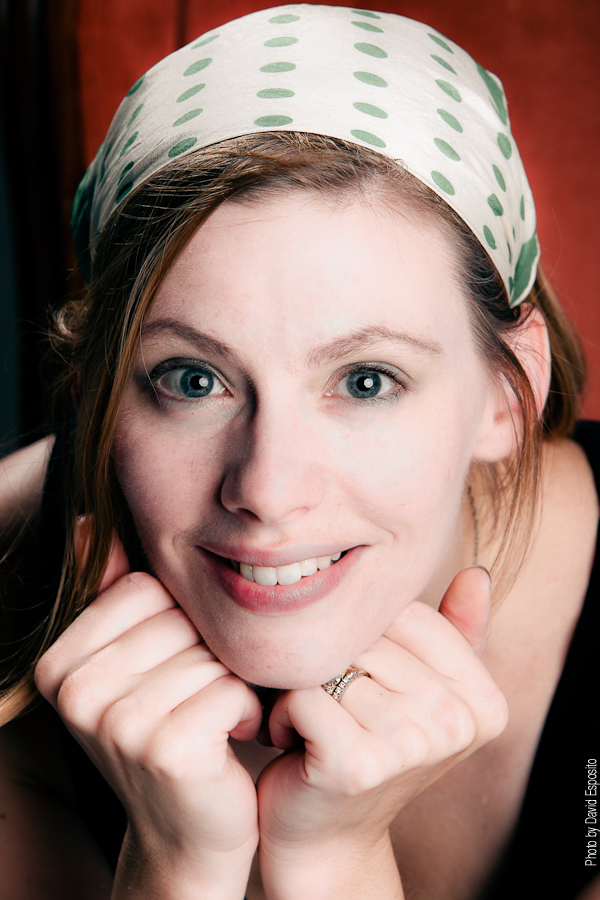
A.J. O’Connell


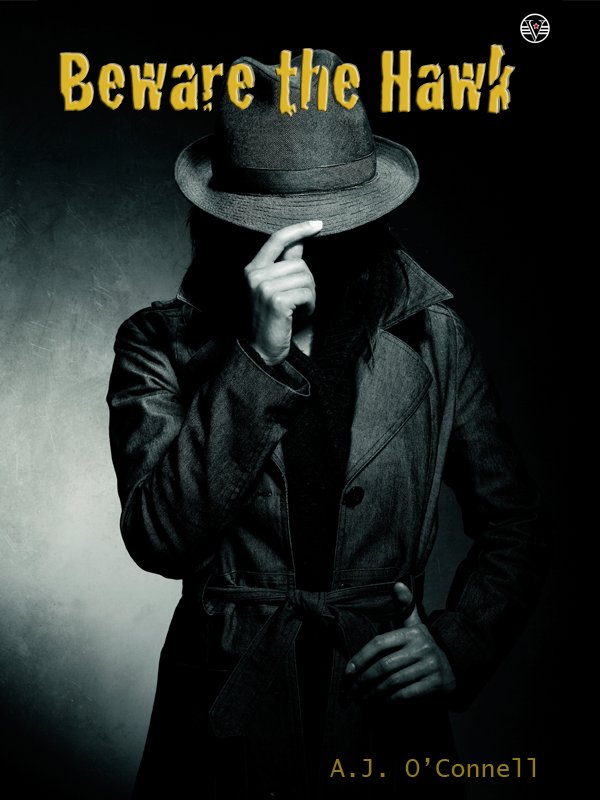
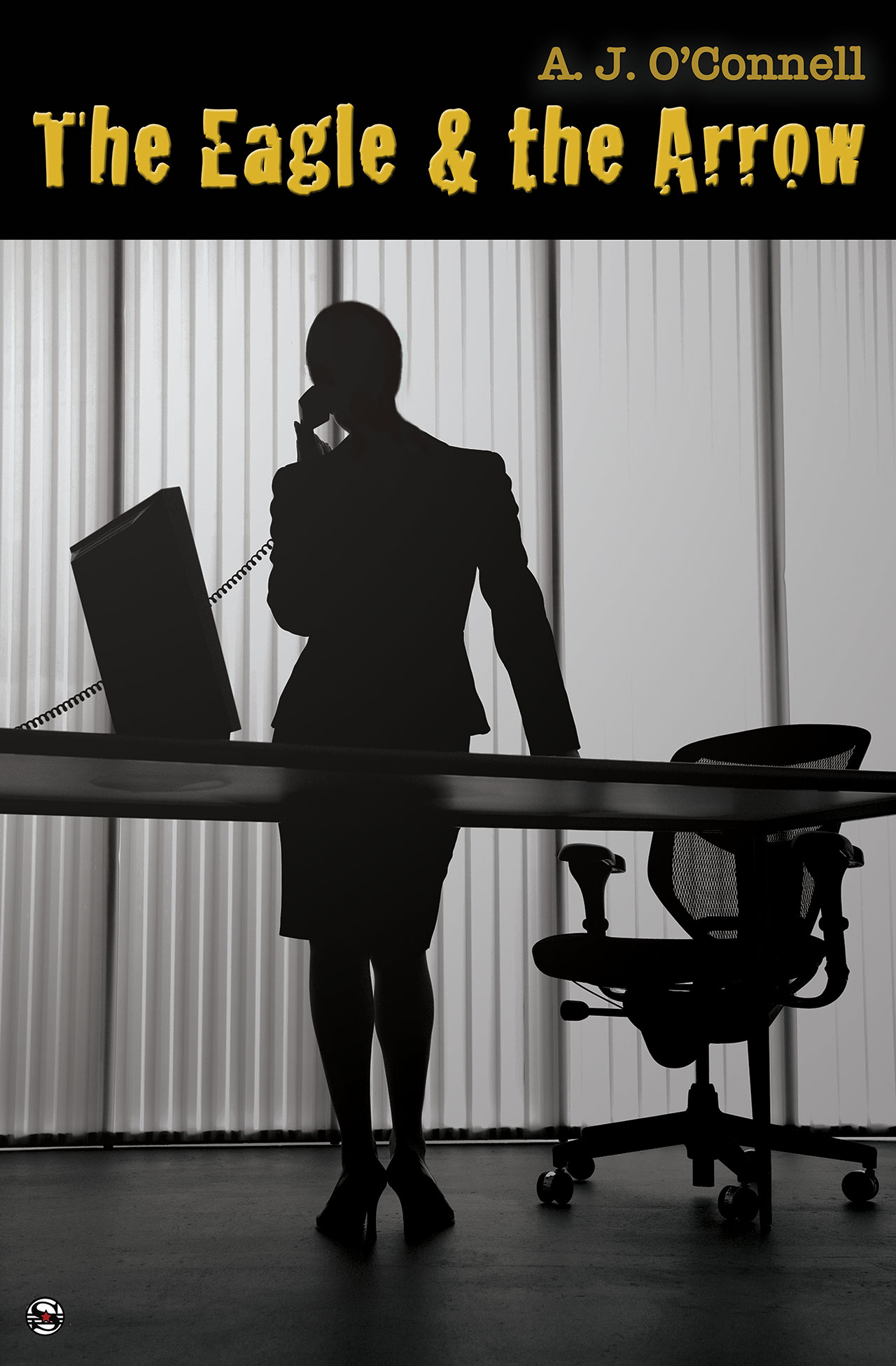
Q: Your newest book The Eagle & The Arrow is a sequel to Beware the Hawk. What are they about?

A: Beware the Hawk followed a couple of spectacularly bad days in the life of a young woman who was a courier for a secret organization called The Resistance.

The Eagle & The Arrow takes place about six months afterward, and features the young woman’s boss, a bureaucrat named Helen, who is tasked with cleaning up the mess created in the first book while keeping her decaying agency a secret and keeping her own career afloat.

Q: Did you always envision Beware the Hawk to be part of a trilogy of novellas?

A: I didn’t. Originally, my publisher contacted me about Beware the Hawk, because Vagabondage Press was putting together a series of novellas, and my editor remembered Beware the Hawk from a writers’ group we were both members of in 2003. It was only after Beware the Hawk was released that we decided to go ahead and make the book into a trilogy.

Q: Is the third one planned out already?

A: Well, no. I have some notes and outlines put together, but I haven’t figured out every step of the story.

Q: When did you start the series?

BewareTheHawkCoverArt A: I wrote the first draft of Beware the Hawk 10 years ago, although I dreamed up the premise earlier. At the time I was a 25-year-old journalist, in my first writing group ever. When I didn’t have to cover a Tuesday night school board meeting for work, I went to writing group meetings in a local Barnes & Noble. Eventually, I needed some work to share with the group, so I started writing Beware the Hawk down.

Q: Will the series go beyond the three novellas?

A: I don’t know. Right now, the plan is to stick to a trilogy. I’d like the three books to form a neat little unit of storytelling. But you never know – I might revisit some of the characters with stories or books devoted to their character arcs later.

Q: What was the inspiration for the two books?

A: I started thinking up Beware the Hawk in 1999 and 2000. At the time, I was working in Boston and regularly visited friends who lived in New York and Connecticut at the time. I did a lot of traveling by public transit and I had a lot of time to think on those trips. It occurred to me that anyone on the bus could be carrying anything. This was before Sept. 11, and security wasn’t so tight, so I’d spend bus trips thinking about the sort of things a person could get away with.

The Eagle & The Arrow was inspired by recent events as much as by the original novella. I’m intrigued by the phenomenon of WikiLeaks as much as I am horrified by prison camps like Guantanamo Bay. I thought that, when the time came to write the second book, it would be appropriate to look at the first book in terms of terrorism, because although the word “terrorism” never occurred to me when I was writing Beware the Hawk, that’s what it’s about.

Q: When did you start writing?

A: I’ve been writing since childhood. My mother tells a story about me as a toddler, playing with my toys and trying to explain what a plot was, but I don’t remember that. I do remember writing my EagleAndArrowFinalCoverRGB96dpifirst novel as a freshman in high school. It was awful, but the hours I spent on it were the happiest of my day, and I used to read chapters to my friends over the phone. The fact that they put up with this proves that they were true friends.

Q: Has your occupation as a journalist helped with writing your books or writing fiction in general?

A: Now that I don’t work at a daily, yes, I think my experience helped me. As a reporter you learn to economize your language, and that can only strengthen writing. When I was writing for work every day, however, journalism took away from my fiction. I was too exhausted at the end of a day of writing to write anything creative.

Q: What newspaper do you work at and what have you done there and what do you do there currently?

A: I haven’t worked for a paper for a while, although I freelance when I can and both write and edit for a website. I worked for the Hour Newspapers in Norwalk from 2001 to 2010. I was education reporter, mostly, covering schools in several communities, but I also covered municipal business in Stamford, and I worked for a year or so covering entertainment for the features section. That was fun.

Q: You’re a teacher? What do you teach, where and how long have you taught?

A: I’m an adjunct at Norwalk Community College. I’ve taught journalism there since 2008. I advise the student newspaper, and developed our digital journalism course, which I also teach.

Q: You are an editor at the online magazine, Geek Eccentric. When did you start there and what drew you to the magazine?

A: I started at Geek Eccentric this past spring, after being recruited by John Hattaway, our publisher. John went to grad school with me at the Fairfield University MFA program and knew that I was into science fiction, fantasy and comics, so he asked me to join.

I was drawn to the site because it was a chance to continue work I enjoyed. When I worked for the Hour’s features section, I loved writing about entertainment. Geek Eccentric offered me a chance to write news and opinion blog posts about entertainment that appeal to me, so naturally I jumped at it.

Q: Do you have a writing routine?

A: When I’m not teaching, I try to write at least 500 words a day in the morning. I set writing goals weekly with another writer so that we have some accountability. We send each other our goals for the next week on the weekend, and then check in at the end of the week to see if we’ve made progress. It helps.

Q: You belong to the New England Horror Writers (NEHW) and Sisters in Crime. Do you belong to any other writing organizations? What drew you to these organizations?

A: This might sound odd, but my mother, who used to be a librarian (and who loves her a mystery) is the reason I joined Sisters in Crime. She picked up a pamphlet at an event and then made sure I couldn’t miss it. And of course a conversation I had with you and Stacey [Longo] are the reason I joined the NEHW.

Q: What has been one of the best experiences/conversations since becoming a published author?

A: Running into people who have read my book. On the street. While I was lugging groceries from the car to the house. That was pretty amazing; I felt like a celebrity. Also, hearing from people I don’t know on the Internet that they loved my book.

Q: Any advice for writers who are about to be published? Or just advice to writers in general?

A: Yes, and this is advice I have to take myself sometimes: Make the time to sit down and write. Don’t worry about what you’ll write or if it will be any good or not, just sit down and write as often as you can.

Q: Who are some of your favorite authors?

A: Margaret Atwood, John Steinbeck, Virgina Woolf, Flannery O’Connor and Graham Greene are some of my favorite literary authors, but I also love Terry Pratchett, George R.R. Martin, Frank Herbert and J.R.R. Tolkien. Despite his elvish poetry, I’ve loved Tolkien since I read The Hobbit in the fourth grade.

Q: What are some of your favorite books?

A: Oh, this could turn into a Top 50 list. Let me see if I can pick out a few. Rebecca by Daphne du Maurier is a favorite of mine. So is The Sparrow by Mary Doria Russell. Graham Greene’s The Quiet American is another favorite. So is the original Dune, and Silence of the Lambs, both of which I’ve read over and over. Right now, however, I am most excited about A Song of Ice and Fire. I read all the books this spring, and George R.R. Martin cannot get The Winds of Winter published quickly enough. There’s an author who knows how to build suspense.

Thanks to A.J. for taking the time to do this interview for Jason Harris Promotions. You can find out more about her on her website here. You can purchase signed copies of her books at Books and Boos or through its website here.

Granite State Comic Con, a Glimpse Into Another World

By Dale T. Phillips

WelcomeOnce in awhile you get to do something really interesting, like get a glimpse into another world where people are nice, intelligent, and having fun in a different way. I had that experience this weekend at Granite State Comicon, a convention held in Manchester, NH, for people to meet who enjoy a variety of things: comics, costume play (cosplay), science fact and science fiction, fantasy, horror, anime, manga, and just hanging out with like-minded people.

This particular annual gathering began ten years ago, and Chris Proulx, co-owner of Manchester’s Double Midnight Comics, organizes the event. The show has proven popular, and grown to be a two-day event, with roughly 3000 people attending. It’s such a rush for those attending there were already people trying to register for next year, while the event was going on.

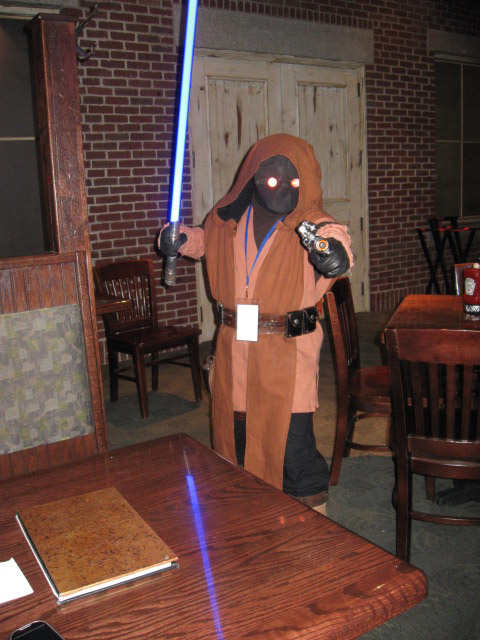
There was a great deal to see: panel discussions on various subjects, Ghostbusters, the only privately-held Delorean from the “Back to the Future” movies, R2-D2 and Imperial stormtroopers, vampires, pirates, superheroes and villains of all stripes, and even a place to play working arcade games from the past.

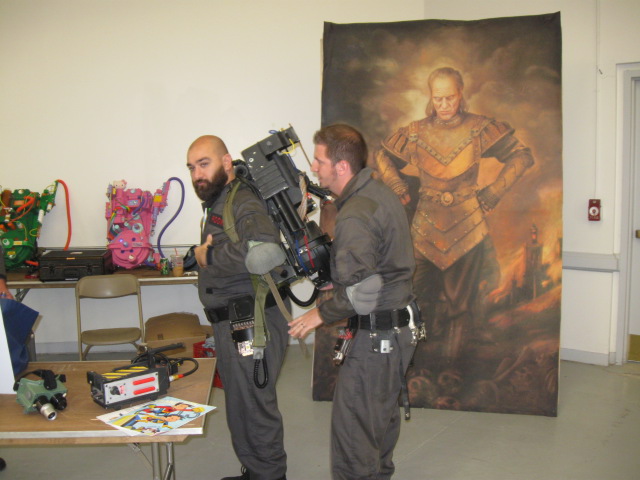
The Ghostbusters of New Hampshire

The Ghostbusters of New Hampshire

R2-D2

R2-D2

Stormtropper

Stormtrooper

Pirate_Elvira

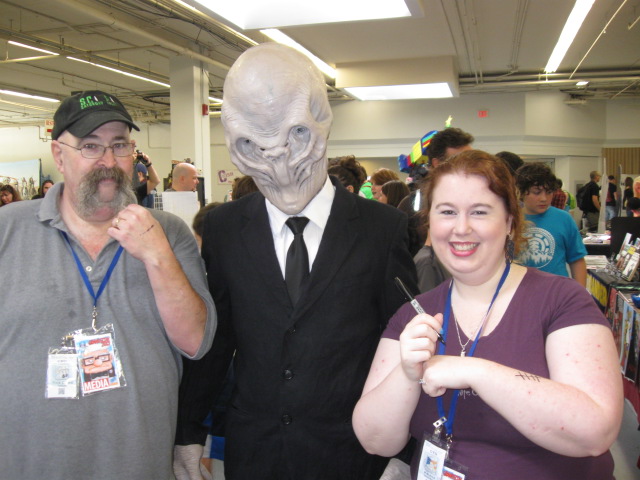
Jack Sparrow, the Silence from Dr. Who, and Elvira.

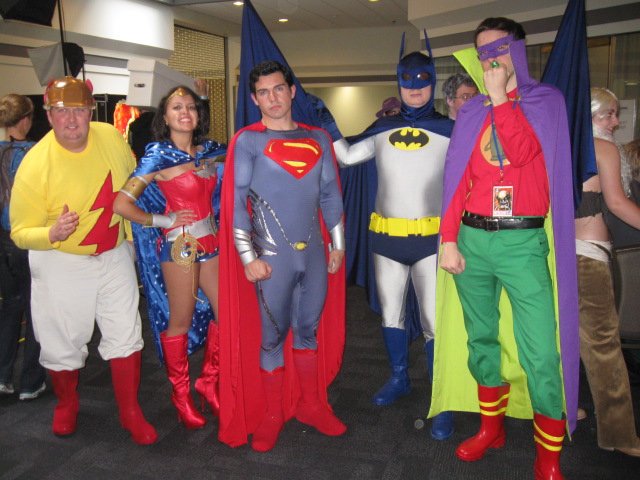
The Justice League

The Justice League

Arcade

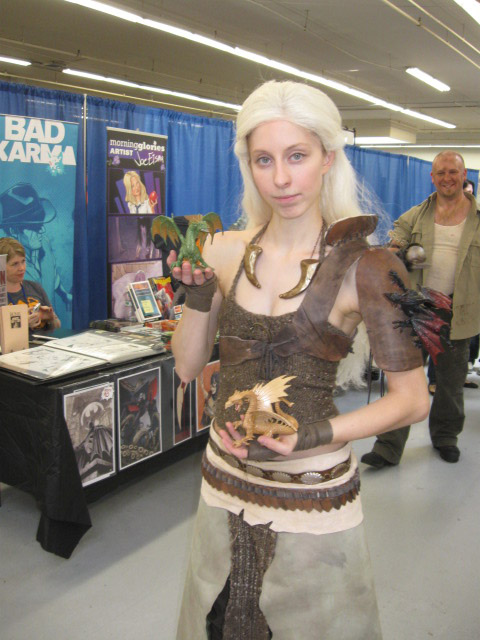
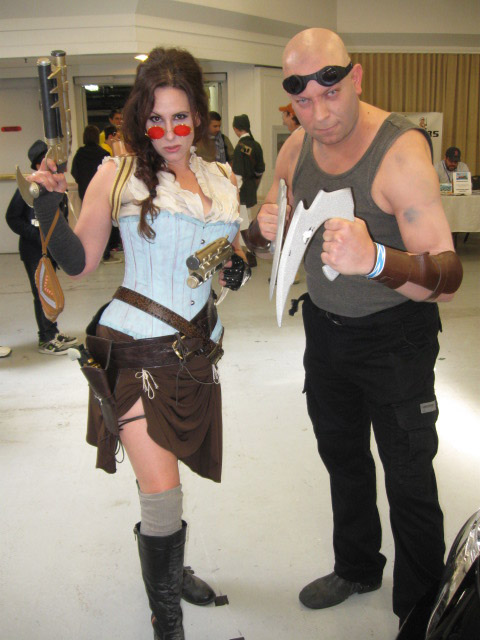
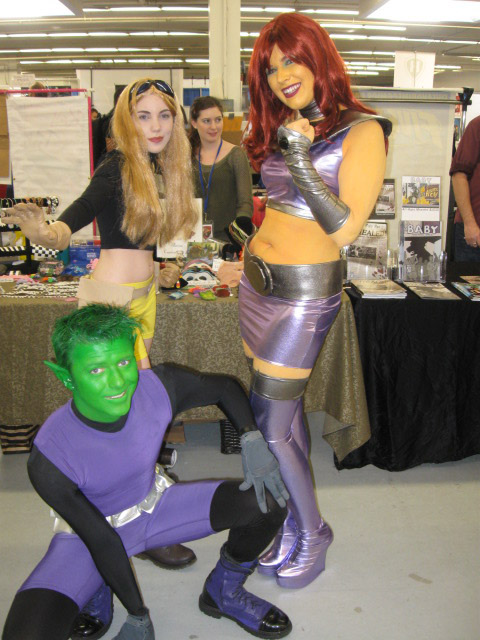
The people who come to the con love the stories and characters they find in graphic novels, movies, television, podcasts, and online. Many of them enjoy dressing up as a particular character they find appealing, and there are contests for best costumes in many different categories. But these are no mere outfits grabbed off the rack at a party store, they are meticulously researched and hand-crafted designs of ingenuity and creativity.Ladies_Cos

You may have seen a television show about people who cosplay and enter these contests, but in true television fashion, it shows many participants in a less-than-attractive light, editing to make them seem as if they are nasty competitors. Those in the costume contest I saw were nothing but supportive of each other, cheering each announced prize and high-fiving each category winner. I spoke with one participant who had a costume that included beautiful, hand-crafted armor. Having made armor myself, I know how difficult and time-consuming the process is, and complimented him on a stunning display. Though he was completely passed over for any prizes (an oversight, to say the least), he had no words of disparagement for his fellow competitors, no whining or complaining like you might see on television. A true hero of cosplay, and one who embodies the completely positive spirit of the whole event.

Winners

Winners

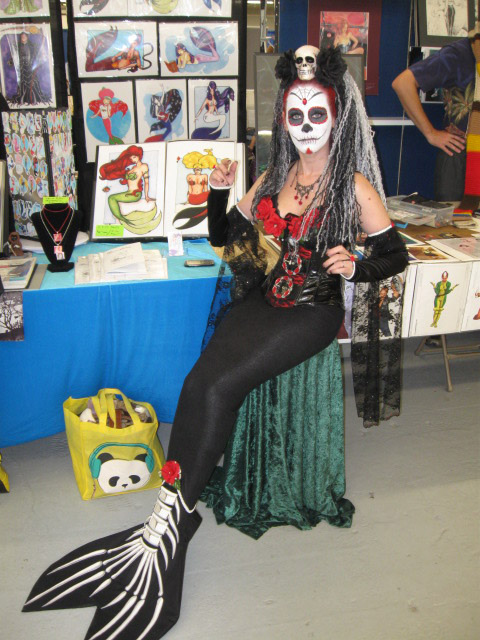
One costumer (cosplayer) who really goes above and beyond is artist Amy Fletcher, who over the years has become well-known for a series of striking mermaid costumes: steampunk mermaid, goth mermaid, even Ariel (from a well-known animated film). She’s back at cons after a hiatus, and what she does is more performance art than just dressing up. A true mermaid costume restricts ones movements, and she sits for hours at a time on display, where fascinated folk come to take pictures and marvel at the attention to detail on the current incarnation. Amy says she enjoys meeting people and being an inspiration to others, and loves to push creativity. Her attitude is: “Have fun, be yourself, and don’t care what others think!” Check out her website for great art and all things mermaid: http://sinicallytwisted.bravehost.com/.

Goth Mermaid

Goth Mermaid

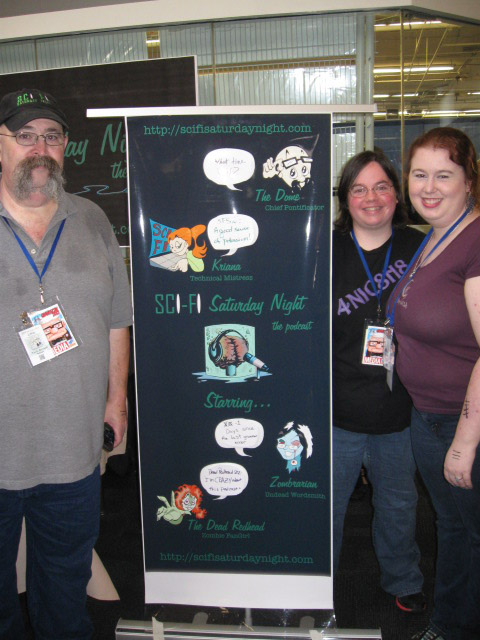
One place that encourages and educates this convention audience (and the world beyond) is Sci-Fi Saturday Night, a wicked cool podcast of all things science fiction. Check out their site and listen in on Thursday nights for news, interviews, and commentary by a talented cast of characters and guests from film, TV, and the writing world. Yeah, when I can tune in and hear classic writers like Spider Robinson and Harlan Ellison, you’ve got me without anything else. Then they’ll bring on someone like actor Lance Henriksen from the Aliens movie, just for good measure!

The Sci-fi Saturday Night crew

The Dome, Zombrarian, and Kriana of Sci-fi Saturday Night

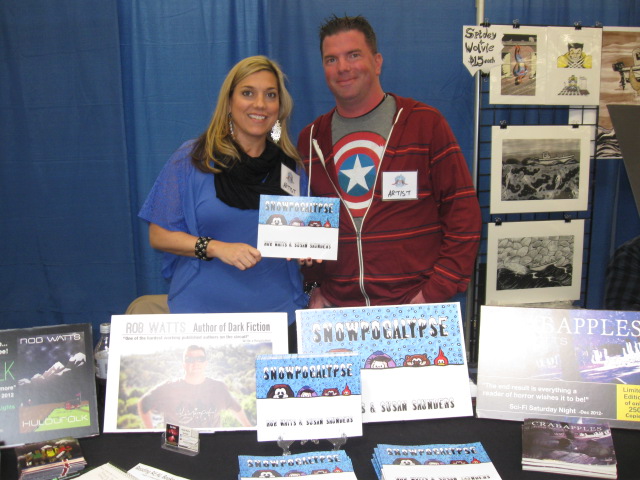
And there are illustrators by the score, vending their artwork in various forms. Many have created graphic novels or other books, such as Susan Saunders, who was at her first convention, selling her children’s book Snowpocalypse, co-written with well-known horror writer Rob Watts. With a background as a schoolteacher, she’s now interested in creating literature for children. She enjoyed the people-watching element of the show, and was getting inspiration from the many other artists on display.

 Susan Saunders and Rob Watts holding their book,  Snowpocalypse.

Susan Saunders and Rob Watts holding their book, Snowpocalypse.

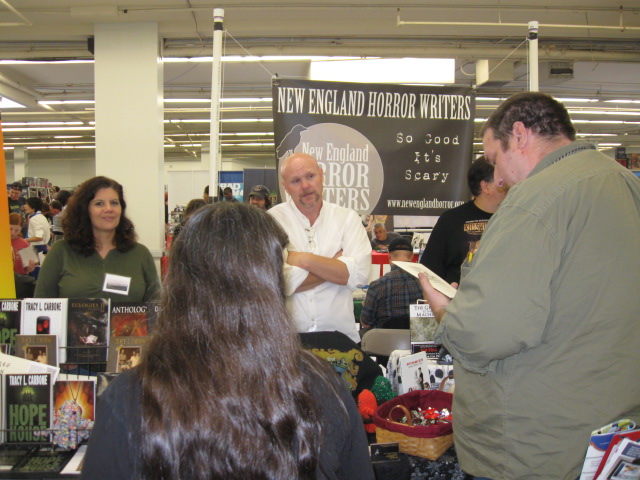
There were other writers as well, most notably a contingent of the New England Horror WritersRob Smales, one of those selling books with the group, said that there were “a metric butt-ton of good writers in the New England area– some seriously creative people.” Earlier in the day, he’d gone around the event with a death mask on to scare up some business.

Authors and members of the New England Horror Writers Tracy L. Carbone and Rob Smales.

Authors and members of the New England Horror Writers Tracy L. Carbone and Rob Smales.

From left to right: authors Tracy L. Carbone, Rob Smales, Scott Goudsward, and Tony Tremblay.

From left to right: authors Carbone, Smales, Scott Goudsward, and Tony Tremblay.

Author Scott Goudsward in front of the New England Horror Writers sign.

Goudsward in front of the New England Horror Writers sign.

You see a lot of good ideas here, such as raising money for charities– for example, the Ghostbusters of New Hampshire, who go to cons as their favorite movie characters, complete with heavy packs and gear for dealing with paranormal occurrences. They pay their own way, and make appearances and accept donations from attendees which all go to a specified charity. At the event, they were raising money for the victims of the Boston Marathon bombing. The Delorean Time Machine is doing something similar, and making appearances to raise money for the Michael J. Fox Foundation.

The Delorean

The Delorean

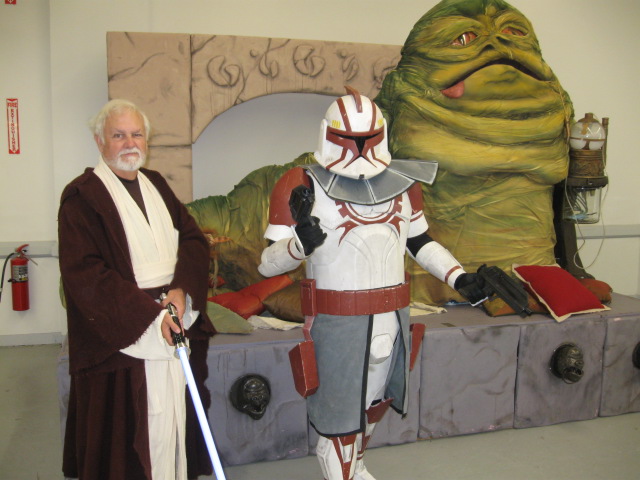
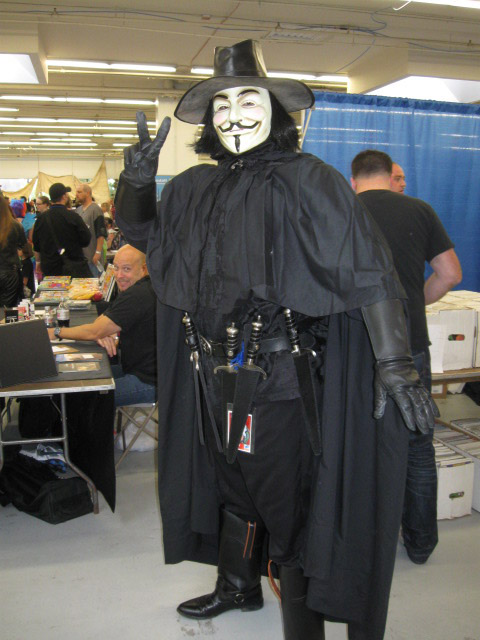
So it was a great time, talking to filmmakers, photographers, and fans. Artisans creating accessories and vendors selling items from favorite shows and comic lines. Enthusiastic people having a ball, enjoying themselves and learning about many creative venues while meeting people from all over. If this sounds like your thing, there’s a slew of shows throughout the year, and New England hosts a number of them.ObiWan_jabba

Silence_SciFiSat

Vendetta

Warrior_lady
Raider
Danearis
Lara_Rhyddick
Lady_Cosplay
Young Justice
Editor’s note: All pictures in this article were taken by Dale T. Phillips

Writer Talks about His New Movie, ‘Ain’t Them Bodies Saints’

By Jason Harris

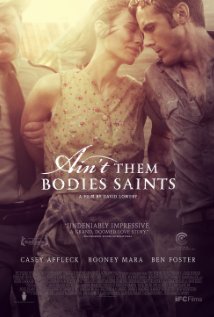
MV5BMjg2MjI1OTU2M15BMl5BanBnXkFtZTcwODc3MzM5OQ@@__V1_SY317_CR2,0,214,317_Writer and director David Lowery has been a fan of westerns since he was seven when he moved to Texas, where he thought all the streets were going to be dusty and guys would be wearing big hats.

When he wrote Ain’t Them Bodies Saints, a movie about an outlaw portrayed by Casey Affleck who escapes from prison and sets out across the Texas hills to reunite with his wife and the daughter he has never met, he wanted to do something that dealt with the archetypes of the western and outlaw genres.

“I wanted to pay homage to those archetypes. I didn’t want to do anything too complex. I didn’t want to reinvent the wheel. I wanted to let them be what they have always been throughout the history of this type of storytelling.”

The movie’s title came from some misheard song lyric to an old song. They just spun around in his head, he said.

“I thought they make a good title for a movie,” Lowery said. “When it came to writing the script, I very quickly remembered that title and thought that this movie would be a fine movie for that title.”

Lowery wanted the movie to feel like an old folk song with that quality, resilience, and mentality to it. He also thinks it is very thematic since a person will not find that phrasing in any other language.

He thinks titles can prepare people for what they are going to see, which he believes his title does.

The movie is set in the 70s because it wouldn’t work in the 80s, 90s or now because of technology. It also allows it to take on grandeur tones and have a mythological and timeless feel to it, he said.

“I don’t think the story would work as well or worked at all if there were such things as cellphones or the Internet.”

He chose the outlaw genre because he wanted to play around in a genre he really liked. He wanted to do something that dealt with the archetypes of the western and outlaw genres.

This type of storytelling goes beyond the movie and goes all the way back to folk songs, American folklore, and history itself, he said.

“It was a really wonderful process to write it because I felt like I was participating in the tradition of storytelling.”

Lowery didn’t do a lot of research for Ain’t Them Bodies Saints, but relied on other movies and how they used these tropes and ideas, he said. He trusted what other people have done on film in the past.

“I didn’t feel the need to tie this movie down to reality.”

That being said, Lowery did mention he had a police advisor on the film set to explain how the police would approach a farmhouse. What the advisor told him is exactly what he expected since he had seen it in other movies so many times, he said.

Even though Lowery didn’t do a lot of research for the movie. He did ask Ben Foster, one of the three main stars in the movie, to do research about how sheriff’s in Texas go about their jobs and performing their duties. Foster got to know what it was like to have that job and what that job meant.

“He brought a lot of that to the table and a lot of information I didn’t know so that was really helpful as well,” Lowery said. “He brought a lot of realism to that part that wouldn’t have otherwise been there.”

Ain’t Them Bodies Saints opens in theaters Friday, Aug. 30.

Getting to Know Author Georgina Morales


By Jason Harris


Nuevo Blog2_1Georgina Morales started writing when she was nine.

“I wrote poems in Spanish, mostly, and never thought I was any good. I got busy building a career in medicine and forgot about writing for 15 years. After some insistence from my husband, I started writing fiction 4 years ago, and I’ve never been happier.”

Since she started writing fiction, Morales has published a horror novella, Perpetual Night, which has been described as YA even though the subject matter may be a bit dark. She has also written, “Francis,” a short story published in the horror anthology, Isolation. Her most recent published work, “Broken Promises,” appears this month in Heater magazine. It’s her first endeavor into crime/mystery writing, which she finds exciting.

Morales’ not resting on her laurels, but instead is working on two short stories at the moment. The first one, “Tamam Shud,” is a noir mystery scheduled to be part of the anthology, Lucky 13, which will be published by Padwolf Publishing. It’s about an old man who becomes disenchanted with life after the death of his wife, and his kids pay the price.

There is an unnamed horror story Morales is working on for a themed anthology that she won’t name so as not to jinx it, she said.

She is also working on a paranormal mystery, Deliverance. “I’ve been working on it for some time now, but it is still far from completed, thanks to my recent commitments to write other pieces.”

Morales is grateful for the commitments, even though they have kept her from working on her mystery.

She does have a few habits when she starts writing.

“I usually sit at my desk in my office about 10 or 11 a.m., I answer emails and play—I mean, promote—on Facebook for about an hour, and from then on, I’m a mean writing machine.”

She stops around 3 or 4 p.m. so she can go pick up her girls from school. She tries to stick with this schedule because she finds that without specific goals she’s less productive. The use of sticky notes reminds her of these goals, she said.

Morales belongs to a critique group and must post at least 1500 words every Sunday, which is what keeps her “ass in line” and “very productive.”

“Deadlines are gold for me.”

The best advice she has received covers writing and editing.

“Don’t edit while you write or you’ll never move forward. When you write, write. When you edit, edit. I don’t remember where I read that but it speaks to the quintessential need of a writer. We want our words to be gold from the moment we set them on paper. If the sentence is not perfect, if the feeling is absent, if the atmosphere is not exactly what we envision, we don’t move forward. We tend to correct ourselves every second, but the truth is that all first manuscripts are shit.”

She doesn’t use the word “shit” for shock value, but that first manuscripts are that, Morales said. “This is why writers edit and edit.”

As writers should, Morales reads whenever she isn’t writing or taking care of her family.

“I read a lot of horror and try to read at least a couple of new or modern voices in the genre every other month.”

For the last year, she’s been focusing on the true classics of horror, but not Bram Stoker or Mary Shelley. She’s been reading Joseph Sheridan Le Fanu, Daphne Du Maurier, Algernon Blackwood, and Thomas Ligotti.

Morales hates procedurals and isn’t quite a fantasy girl, but is trying the Harry Potter series. She isn’t above the Twilight books, but not the movies, she said.

“I grew up reading Edgar Allan Poe and Stephen King, so you will see a lot of their influence in my stories. However, I love Latin American literature. I strive to achieve a personal style similar to the poetic prose of Gabriel Garcia Marquez, or the bluntness of Paz, the yearning of Federica Garcia Lorca. All of these great voices have formed me, and that is why my style is different from other horror writers. Or at least, it will be; one never stops to improve.”

She doesn’t have any promotional events coming up, but is working to change that. Until that happens, visit her blog, her Goodreads page, her Facebook page, or her Amazon page.

Editor’s Note:

Here is Heater magazine’s Facebook page.

Getting to Know Author Rachelle Bronson

By Jason Harris


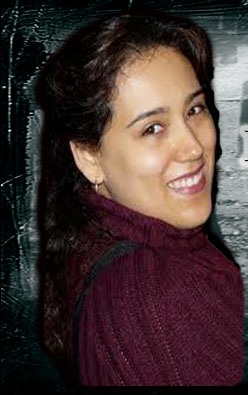
Author Rachelle Bronson started writing when she was very young. It was around the age of 6 or 7.

“I would fill those school notebooks full of drawings and stories. I’ve always had a good imagination, and seeing those ideas turn into reality struck a chord.”

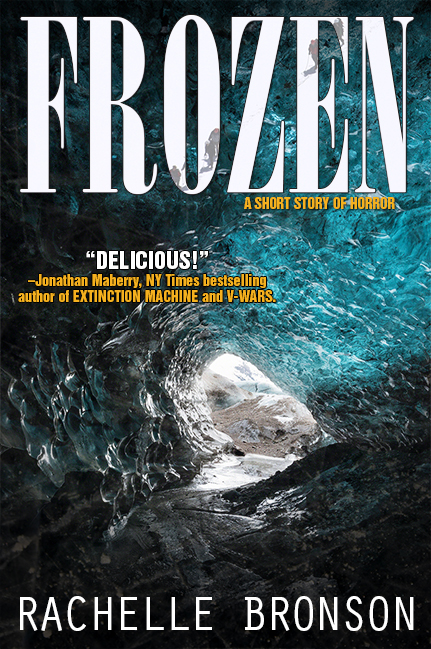
Her newest work, Frozen, was released last month.

“It’s about a group of scientists that trek high into the Himalayas to dissect a newly discovered breed of humanoid,” Bronson said about Frozen.frozen-72

Her previous story, “Lulabelle,” was published in the Hersham Horror Books anthology, Alt-Zombie. This collection includes stories by William Meikle and Joe McKinney.

The story was shortened from its original version, Bronson said. She would like to see the whole story published someday.

Before she begins writing, she does a lot of research. She also makes sure to have well-developed character and plot outlines before beginning.

“I like to know where I’m going, which helps me avoid writer’s block. Many times however, the characters and story take on a life of their own and always surprise me in the end.”

Her published short stories aren’t the only works she has written. She has a few unpublished novels, Legends: The Bleeding Door, which will launch next year, and Tarzwell, which doesn’t have a release date at the moment.

Her first novel, Legends: The Bleeding Door, is based on an urban legend she researched and turned into fiction. It was conceived when she was in high school. Legends is what got her involved with Invictus Films, who wanted in 2007 to turn the novels into a television series after her pitch was received favorably by NBC and HBO. Unfortunately, the recession in 2008 killed the project’s momentum.

“I reacquired the rights in 2012 and am planning to launch the series, as intended, in book format, with The Bleeding Door being the first of a series of 13.”

Outside of the Legends series, she also has her novel, Tarzwell, which takes place between 1992 and 1996 and is based on actual events.

“Talk about a confusing time, going through high school and living in a house that has paranormal activity. It was a tough time for everyone. My mother was ill, my father was forced to work out of town to support us, so I was there many times alone, taking care of my mother, dealing with teenage angst and spirits.  I never believed in ghosts until I lived in this house.  It changed me profoundly.”

She considers living in the house “a major learning experience” and considers herself stronger for it.

“It definitely reminds you that life is about mind, body and spirit.”

The best writing advice she has ever received is to “never quit.”

“There are many obstacles to becoming published. But if you want it bad enough, hone your craft, lick your wounds and just keep going. Oh, and get yourself a good editor. They can make or break you.”

She is currently the chief reviewer at The Novel Blog website, which was conceived in 2008 by Daniel Boucher and Peter Mark May. She joined shortly after that and they have had a blast publishing news, reviews and interviews of authors ever since, she said.

“We wanted to do a book review site, one that included both up-and-comers and established authors to help get out awareness of their works and grow the community.  It also gives authors of other genres that may not be in the fiction literary mainstream a place to get the word out about their work.”

Bronson doesn’t have a website, but she hopes to remedy that by the end of this year or the beginning of 2014. She does have a Facebook page (https://www.facebook.com/?ref=tn_tnmn#!/rachelle.bronson.9?fref=ts) and a Twitter account (@rachellegagne).

She and her publisher, Hive Collective, are looking at different promotional opportunities for her, which she will announce on her two social media accounts.

She loves reading the classic authors such as Stephen King, Agatha Christie, Robin Cook, and H.P. Lovecraft. She also has had great pleasure exploring new writers such as Kane Gilmour, Daniel Palmer, JT Ellison, Jonathan Maberry and Peter Mark May.

Bronson looks up to all writers, who stay true to themselves and their craft, but doesn’t want to emulate them.

“I want to be me, being original and trusting in my own pool of knowledge and creativity in order to produce something new, entertaining and inspiring to horror fans everywhere.”

Interview with the ‘You Gonna Die, Fly’ Creators

By Jason Harris

935211_392473287538359_169053195_n

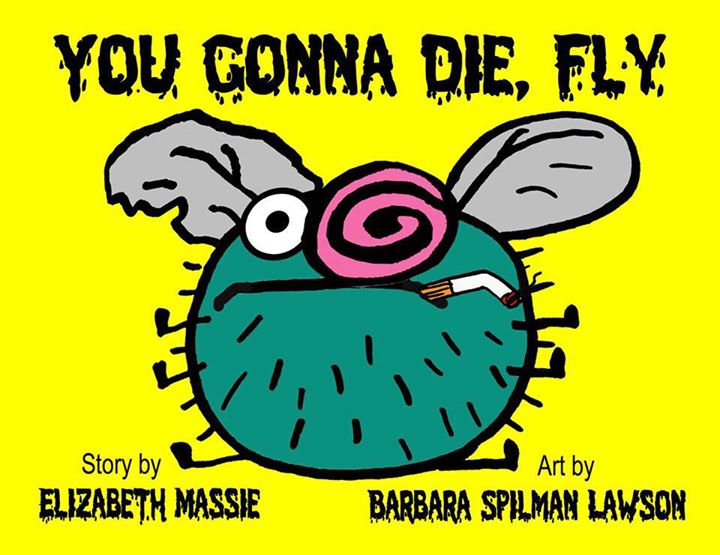
You Gonna Die, Fly was released last month. It was my pleasure to talk to Elizabeth Massie and Barbara Spilman Lawson about their creation. Massie wrote the story while Barbara illustrated this cute book.

JH: When did you come up with the concept/idea of You Gonna Die, Fly? Did you two come up with it together? What inspired it?

Elizabeth: A couple years ago, while at NECON (a great July convention in Rhode Island), I bought a copy of It’s Okay to Be a Zombie by Nathaniel Lambert and Danny Evarts. It’s a total hoot, wild and over-the-top, and is marketed as an “unchildren’s book.” I started thinking about how much I get a kick out of books with bright, insane artwork, especially if they illustrate stories that are equally crude, fun, and crazy. I also was aware that summer of how many flies there seemed to be – buzzing around my car, some of the bushes in the yard, and banging into the windows and into me inside the house. I started jotting down ideas for a short tale featuring a fly and his life. Then I showed it to my sister Barb, whose cartoony artwork I adore. She agreed to create the illustrations. We pretty much forgot about it for almost two years, and then we talked it over again during one of our long road trips together (Barb is a professional storyteller, and I often travel with her to help out.)

Once Barb created the character of Fly, with his one little eye/one big eye and ball-shaped body, the rest flowed like fine wine. Or cheap wine. Or stinky swamp water. Okay, like something wet that pours.

Barbara: After Beth wrote the book, she asked me if I’d like to illustrate it. My art style is bold, colorful and cartoony, so a picture book was the perfect idea. And I loved the idea of a “NOT-for kids” picture book. I write and illustrate my own picture books (actually FOR kids – I was a Kindergarten teacher for over 20 years and a professional storyteller now) but I love the chance to illustrate for a different genre. (Is a totally tacky and rude not-for-kids picture book an actual genre? If not, it should be.)

JH: Was Fly going to be the main character all along or did it start out as something else?

Elizabeth: Fly was always going to be the main character. Flies in real life drive me crazy, all buzzy in my ears and hair and banging around and crawling on stuff, but I do have a bit of sympathy for them with their itty-bitty short lives and being flies and all. So I imagined what it might be like for a fly who wanted to search for the meaning of his life, even though he only had two weeks to make it happen.

JH: Barbara, is this the first book you have been the illustrator for? If not, what else have you illustrated?

Barbara: I wrote a children’s book with Beth (Jambo Watoto: Hello, Children, Creative Arts Press, 1998), which was illustrated by artist, Marsha Heatwole. It’s a beautiful art book for kids. But that’s not what you asked, is it? I am just finishing writing and illustrating my own picture book, How Many Words Does It Take To Write A Book? It will be available in September, but not published under the Fucked Up Folktales Publishing line. ‘Cause you know, since it actually is for kids. Thought that was good move. It will be published under Stories With A Twist Books publishing.

Elizabeth: Barb forgot to mention that she has also written and illustrated a number of entertaining picture books toward the Virginia Standards of Learning for public schools under her Fun Stuff Publications imprint. These books have been a hit with kids and lifesaver for teachers needing clear, fun, practical, and memorable materials to teach the standards.

JH: Elizabeth, you have worked with Cortney [Skinner] before? Why not on this book?

Elizabeth: Cortney has been hired to do the artwork and cover designs for a number of my novels and collections – such as the ones for Afraid, Sineater, The Fear Report, Sundown, Naked On the Edge, Homegrown –and he is incredibly talented! However, I’d wanted to collaborate with my sister Barb for a while, and You Gonna Die, Fly seemed like the perfect project. I knew her light-hearted and sometimes insane illustrative style and was sure she would push it over the edge where it belonged!

JH: How long did it take to write and illustrate You Gonna Die, Fly?

Elizabeth: It took me a little over a week, to write the story. Then I let it sit and went over it again for some tweaking. Then it sat and sat and then Barb got her hands on it.

Barbara: When I finally started working on the pictures (a couple of years after Beth first wrote the story), it took about six weeks to get everything finished and ready for printing. As I completed each picture, I sent it to Beth and she checked it out and gave some input. “I really like this one!” or “Well, that sucks the big one.” You know, helpful, constructive input.

JH: You just started Damn You, Demon. When do you think the public will be able to get their hands on it?

Elizabeth: Barb had drawn a round, red, ball-shaped demon picture for another project we have in the works and we realized that the style would be perfect for a second book in the Fucked Up Folktales line. We just came up with the idea a week or so ago, and we’re working on that as we speak. Or will get back to it after we speak here, in this interview. Anyway, I’m guessing it will be ready to order by early September.

Barbara: What she said.

JH: Is there a timetable for the publishing of your books?

Barbara: There is no set timetable for publishing, but hopefully we’ll get all our books published before we’re dead.

Elizabeth: I like selling things before I’m dead. And yes, we have ideas for books beyond Fly and Demon. Oh, we do indeed ….
JH: I loved the first one. It was informative and funny. I actually looked-up online to see if flies only lived two weeks. I didn’t want the story or Fly’s life to end. Did you do research for the book before writing or illustrating?
Barbara: I looked up pictures of flies to see what they are supposed to look like. Then I drew a ball with wings. I also gathered pictures of stinkbugs, ticks, bowl weevils, beetles and lightning bugs for reference (for the insect orgy page).

Elizabeth: Thanks, Jason! We didn’t want Fly’s life to end, either, but damn it, there ya go. As to flies’ lifespans, we checked to see how long they live. Some live just a couple weeks. Some live a month or a little more. Hey, we want our rude, crude, over-the-top, not-for-kids picture books to be based in facts!

JH: You named your publishing company, Fucked Up Folktales. How long did it take to come up with the name? Is there any significance to the name?

Elizabeth: It took about ten seconds to decide the name. I’d recently been hired to write retellings of folktales for a major educational publisher. I researched a lot of folktales and geez louise, a lot of them are messed up. In one country, about 80% of the folktales end with some dude getting his head cut off. Happy-happy folktales! So anyway, while Barb and I were driving into town for some errand or other (did I tell you we live next door to each other, out in the country, so we run errands together fairly often?) I was telling her about the crazy-ass stories. I blurted out, “Those are some fucked up folktales!” Barb got this look on her face and said, “That the name for our line of not-for-kids picture books! Perfect!” And, you see, since folktales are tales made up by and told by folks, and Barb and I like to think of ourselves as folks, we figure ours could be new folktales. Perhaps our little stories will live on into the future, told and retold, read and re-read, like those lovely ones where dudes get their heads cut off.

Barbara: Once we decided on the publishing company name, we got together with our web designer. She hesitated, angled her head a little and asked, “With that name, what if you get some people looking for porn?” And I asked, “Do they buy books?”

JH: How has the response been for the book?

Barbara: Fantastic! Here are excerpts from a few early reviews: “It’s freakin’ hilarious and adorable.” “I honestly thought it was one of the most clever and funniest things I’ve read in a long time!!!” “This book is the poop!” “I LOVE “You Gonna Die, Fly”!!!!! It’s dark and irreverent and … stinky. Perfect!”

JH: How would you describe it to people. A children’s book for adults?

Elizabeth: We purposely call it a “not-for-kids picture book.” We put the “not-for-kids” first for people who can only read and comprehend a few words at a time. Otherwise, they’ll be giving it away to babies to enjoy, and can you imagine the mayhem when babies start acting likes flies, cussing, smoking, drinking, emulating their favorite character? I shudder at the thought.

Barbara: We don’t want it mistaken in any way for a children’s book. We put a picture of Fly smoking a cigarette on the front cover, we described the book as the “Not-for-Kids” book on the back cover so we hope adults will take a little time to flip through it and see it is NOT a kid’s book. We hope it is very clear. We hope adults are that smart.

JH: Besides the website, are there any other places to purchase the book?

Elizabeth: At the moment, the only place to order them is either through our Fucked Up Folktales website, the You Gonna Die, Fly page (http://fuckedupfolktales.com/you-gonna-die-fly/) or through the You Gonna Die, Fly Facebook page (instructions are on the page.) Eventually, we’ll look into putting it on Amazon. After we figure how to do that.

Barbara: Yep, we’re working on it ….