Experiencing the iPhone

My New iPhone

by David Price

I was born two years before man landed on the moon. My earliest memory is actually watching the moon landing on a static-filled black and white television, up at our cottage in New Hampshire. I have grown up in the age of hand-held electronic gadgets, and I have seen them all. The very first has to be the transistor radio, followed by those nifty electronic calculators that we used to write “ShELL01L” upside down. I guess I have always been intrigued by these devices, because I can remember owning all of them. Digital wrist watches were cool, with their glow-in-the-dark faces and their nifty electronic beeps. Remember the first hand-held electronic video games? I had this “football” game which was really just a bunch of red dots on a screen. You controlled one electronic light and had to evade all the others on your way to scoring a touchdown. In eighth grade, I even remember having a digital watch that had a scaled down version of Space Invaders on it.

There was some electronic innovation in the eighties, of course. The eighties gave birth to some of the technology which today practically runs our lives, like the cell phone and the personal computer. There were some cool gadgets too, like the Walkman. Everybody had to have one of those. This was also the time of the birth of the Compact Disc, which would go a long way to revolutionizing music. I bought my first VCR in the eighties, too. Then in the nineties, cell phones started to catch on and become an affordable technology. The Palm Pilot was a nice digital replacement for
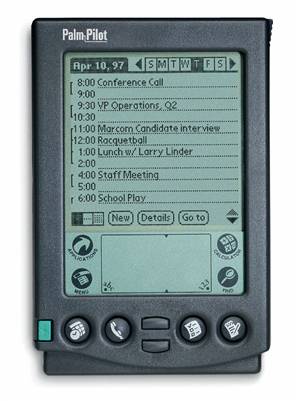
those hefty day planners some people used. Personal computers and video games took a giant leap, and the internet was born. It’s all gone crazy since then, hasn’t it? Now we have technology that looks like it is straight out of science fiction. Star Trek even seems a bit short-sighted, doesn’t it?

What if I were to tell you that there is a device that can replace just about every hand-held device you have ever owned, except for possibly the Taser gun? That device is, of course, the iPhone. I purchased my iPhone about six weeks ago and I am constantly amazed at how useful it is. The keys are the apps. You have to find the right apps, but once you do, you find out what an amazing little device this is. Where do I begin? Last week, my wife had to travel to a bridal shower in an unfamiliar town. She was going to just use the GPS, but couldn’t find the power cord. I pulled up the GPS app on my iPhone, programmed in her destination, and sent her on her merry way, with my iPhone, unfortunately. But hey, at least the emergency was solved. When she returned from the shower she told me it was a good thing I had given her the iPhone, because the directions she had received from my mother were wrong.

Another app I particularly enjoy is called “Around Me.” This is another one that uses the GPS feature, and will show you just about any kind of business in the area that need. Around Me lists stores, banks, atms, bars, coffee shops, gas stations, hospitals, movie theaters, and, well, you get the picture. It is very useful. As a contractor by trade, I travel to wherever the jobs take me. Sometimes we find ourselves in unfamiliar cities looking for a bank, or someplace to grab lunch. Problem solved. With the Xfinity TV app, I can set up the DVR to record a show from anywhere. I also have a local news app, which has proven useful with traffic and news alerts. I like sports, so I have a few of those apps that keep me updated with scores and information. Do you like space? I have two NASA apps; one for regular news, and one for NASA TV. There are also cool sky map apps like Sky Safari and Star Walk. With Star Walk, you can point your iPhone at the sky and it will identify constellations and satellites for you. If you are one of those people who has all those rewards club tags hanging from your key ring, there is an app called, you guessed it, Key Ring, which will scan all of those into your phone so you don’t have to carry them around anymore. If you just can’t live without your social media there are apps for Facebook and Twitter.

Is going green important to you? Thanks to the iPhone, paper and pencils are now obsolete. The iPhone is a notebook and a calendar. With the Stitcher app, you can link to magazine articles that interest you. Combine this with the Nook and Kindle apps and you have the ability to carry around a small library. Add a crossword puzzle, Sudoku, and word search app, and time spent sitting in a waiting room flies by. You actually have access to what you want to read, not what the dentist office sees fit to provide (like two years of Golf Digest or Woman’s Day). If you are a comic book geek, you can even get some cool comic book apps like Comixology, DC Comics, Marvel Comics, and Dark Horse Comics. Comic books delivered right to your phone. Who knew? Last month, I attended a science fiction convention in Boston called Arisia. An app called Guidebook took the place of a paper program and listed every event available at the con.

I have tried to show how this amazing little device can take the place of every other device you own. The iPhone was based on the iPod touch, so saying it plays all your music goes without saying, but I also added the Pandora radio app, because I don’t like to clog up the phone with too much music. I am always trying to improve myself or learn something new, so I like to rotate an audiobook through there. I would rather leave enough space for any cool apps that come along. Flixster is great if you like to go to the movies. I’ll never call Movie Phone again. You can even watch movies and TV on your phone with either Netflix, Hulu, or iTunes. I’m not really one for watching video on the small screen, but my kids seem to like it. One app that looks cool, but I haven’t had a chance to try yet, is called Bump. If you and another person both have this app, you can just touch phones and it exchanges contact info. I like to get little bits of inspiration once in a while, so I also have the Notes from the Universe app by Mike Dooley. I’ve saved the games for last because I’m sure most of you are familiar with many of the addictive games that are available. In case you are not, many of the favorites are Angry Birds, Fruit Ninja, Cut the Rope, Tetris, Bejeweled, Doodle Jump and Words with Friends. That’s pretty much everything I have experienced with the iPhone so far. Six months or a year from now, who knows what else I will be doing with this amazing little device? To sum up, it’s awesome.
‘Breaking Dawn’ Actress Talks Twilight

‘Breaking Dawn’ Actress Talks Twilight

by Jason Harris

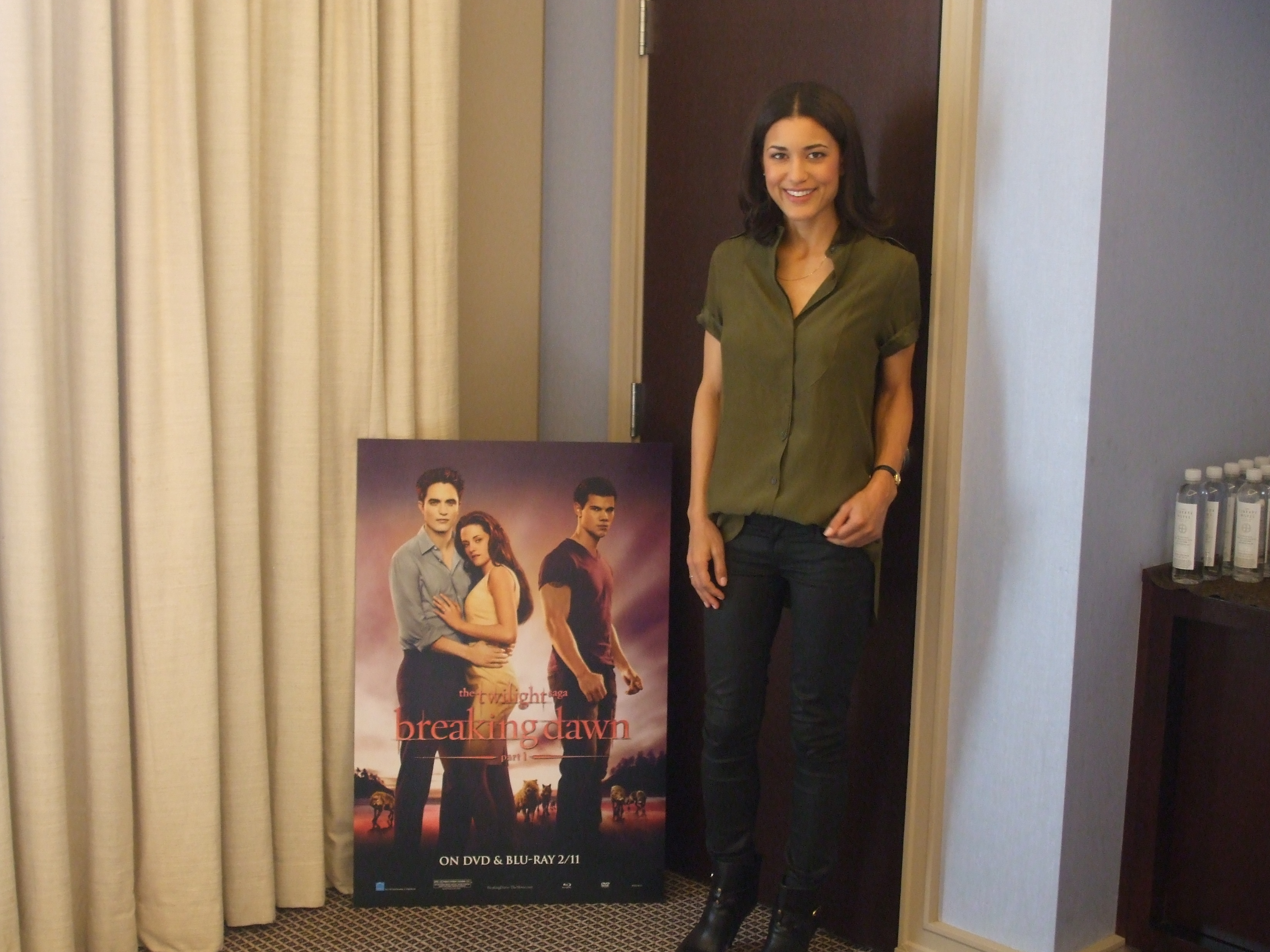
Julia Jones at the Liberty Hotel (Photo by Jason Harris)

Actress Julia Jones has dabbled in television, movies, and plays, and this week she was in her home state of Massachusetts promoting the DVD release of The Twilight Saga: Breaking Dawn, Part 1 (2011).

Jones, 31, spent Thursday at the Liberty Hotel in Boston talking about the series. The latest chapter debuts on DVD this Saturday, Feb. 10. Jones portrays Leah Clearwater, who first appears in The Twilight Saga: Eclipse (2010), the third movie in the popular series.

When Jones got the initial phone call to audition for the movie, she never thought about not doing the movie. She considers the series a “cultural phenomenon.”

Her friend, who is a huge Twilight fan, thought she would be perfect for the character of Leah Clearwater and this helped her with the “daunting” task of bringing the character to the big screen, Jones said.

“When you are playing a character based on a book, let alone a widely popular book, you are playing a character that belongs to the world.”

Jones was aware of the “Twihards,” who are die hard fans of Twilight, when filming the movies.

“One of the most unique parts of the experience is just being part of something that so many people feel so passionate about, and that’s an energy you take with you. It’s pretty powerful.”

The Twilight fans’ excitement “is palpable,” Jones said. “There is no way to know what you’re getting into because it’s such a unique thing.”

Jones recounted some fan stories. Recently, she started tweeting and a fan sent a picture of her daughter dressed up as Jones’ character.

“She was so cute,” Jones said about the fan’s daughter.

The craziest costume she has seen was a fan who dressed up in a nightgown and had bruises and feathers all over her. The fan was dressed as the ‘Morning After’ Bella from Breaking Dawn, Part 1.

Jones has been on the television series ER, and has an upcoming appearance on the series In Plain Sight.

“I got to do stunts and work with guns,” Jones said about her In Plain Sight experience. “It was really fun.”

ER was executive produced by John Wells and Jones would love to be on his new show, Southland.

“It would be so exciting to do anything that he’s involved with,” Jones said about Wells.

Jones said there are a lot of good shows on cable like The Killing and An American Horror Story, which are two series she would like to act on, she said.

Along with being on the silver and small screens, she has also performed on the stage. Jones likes “dabbling” in film, television, and the theatre, and it is one of her favorite parts, she said. She considers these separate venues like “having different jobs.”

“I think part of the reason I’m an actor because I couldn’t see myself going to a desk every day and doing the same sort of thing.”

Jones would love to work with actresses Jessica Lange (The Vow) and Marion Cotillard (Inception, Contagion) and directors Quentin Tarantino (Pulp Fiction), Terrance Malick (The Thin Red Line), and Nick Cassavetes (John Q).

She met with Malick a few times when she was auditioning for a role in The New World and thinks “he’s magical” and considers Cassavetes an “actor’s director.”

Jones was “impressed to death” with Tarantino when she was working on Larry Bishop’s Hell Ride, for which Tarantino was the executive producer.

“I would do anything to work with him as a director,” Jones said about Tarantino. “Hell Ride was a trip.”

She considers her time in the three Twilight movies a “rewarding” experience.

“It’s kind of lucky in a way to be a supporting character in the franchise.”

The Twilight Saga: Breaking Dawn, Part 2 comes out in theaters in November.

Another Notch in the Bedpost?

This entry originally appeared on New England Horror Writers’ member, K. Allen Wood’s website.

Another Notch in the Bedpost?

by K. Allen Wood

I’ve been contemplating—and worried about—writing this blog post for a long time now. My worry is a simple one: Will people be offended, take it the wrong way? I can’t answer that, but I hope not, because I’m compelled to discuss it.

So here goes…

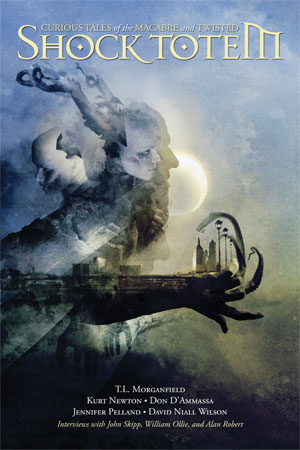
I started a small-press horror publication in the fall of 2008. I enlisted the help of some online friends, we dubbed it Shock Totem, and in July of 2009 we published our first issue. (Most of you know this.) Ever since we published that debut issue, I’ve had one question constantly rattling around my head:

Does an author owe his support to the publications that publish his work?

That question pertains not only to me as a publisher but as a writer as well. Through four issues of Shock Totem, we have gotten some amazing support from authors we’ve published. But not all of them. Some hardly mentioned us at all, even when the issue containing their work came out. On a selfish level, I can’t help but find that disappointing. On a rational level, I understand that I have no idea why an author does what he does. There are things at play here that I am simply not privy to. I can dig that.

But back to the selfish side of things… As a publisher, I find myself leaning toward the notion that writers should be supporting those who publish their work. Because if the publisher is doing it right (relative to that particular publisher, of course), and if they’re a publication like Shock Totem where every issue is still in print and actively promoted, then the publication is fully and continually supporting the authors.

Back to the rational side of things… As a published author—hell, as a lifelong creative type—I completely understand that the muse commands one to look forward, to move forward, and create, create, create, to not waste time looking back. I also know how little time most artistic people have to actually focus on their art. So maybe some people simply don’t have the time. But that leads to the one thing I can’t rationalize…

When I finish a new story, I move onto a new one. But when I have a story published, I never move on. (All this can be applied, as well, to my musician days.) I can’t move forward and not look back in that regard. Because I want people to read my work! Do I owe it to that particular publication to support them, promote them? That’s debatable. But I sure as hell owe it to myself to support and promote my work! So I make the time.

And that is precisely what baffles me. (This does not take into account the fact that some authors publish bad stories best left forgotten from time to time.) Why do certain writers choose to not actively promote their work? Is a publication credit just another notch in the bedpost for these authors? As a publisher, sometimes it feels that way.

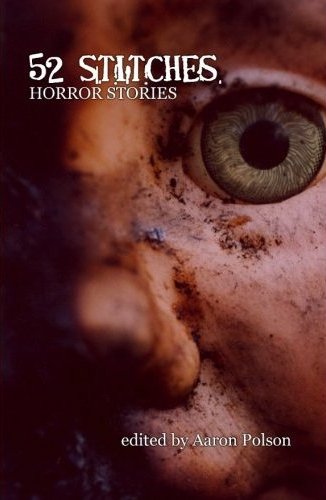
I have just three publication credits. The first was in 52 Stitches, Vol. 2. The publisher, Aaron Polson, essentially put Strange Publications to bed—at least for the time being—when this anthology was published. But this book is still available, and I promote the hell out of it…because I want people to read my work! “By the Firelight,” my story in this anthology, is a mere 457 words, but I still want people to read it. It doesn’t matter that the publication is inactive or perhaps permanently closed, because I like my story and, in my opinion, I owe it to myself to promote it.

My second published work, “Goddamn Electric,” was in The Zombie Feed, Vol. 1. I’ve sent out copies for review, I’ve posted about it here on this blog and on the Shock Totem blog. I will continue to do so as long as it’s available.

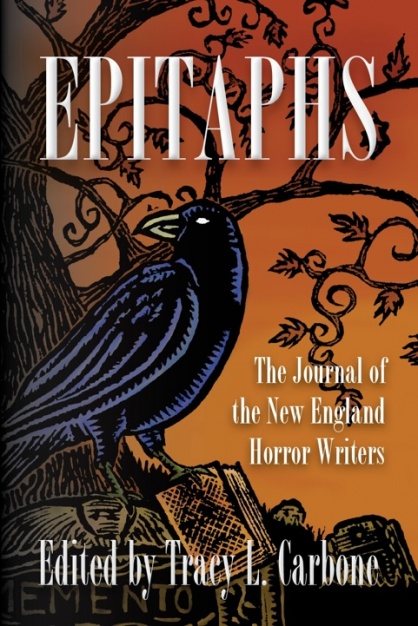
I’ve done the same thing, and will continue to do so, with Epitaphs: The Journal of New England Horror Writers, which contains my story “A Deep Kind of Cold.” In a certain, roundabout way, I’m promoting my work right now.

Which brings me to the revelation of things…

Since that first issue of Shock Totem came out in 2009, I’ve been asking myself should the author support the publisher? Again, the answer is debatable. But few would argue that an author shouldn’t promote his own work, right? And in promoting his own work, is that not, therefore, supporting the publisher? Is there a difference between promoting your own work and supporting the publisher?

I’m no longer sure you can have the former without the latter, but I know what I’m going to do. Always.

Editor’s Note:

Wood makes a lot of valid points. A creative person does look ahead, but to become well-known or even known, they need to promote their work. By authors’ promoting their stories, they are promoting the publisher of their work. How hard is it to write a Facebook status update or a tweet about your story being in an anthology, magazine, etc.

Wood promotes his magazine and any anthology his stories appear in. He does this through his website and his different twitter accounts. He also attends different conventions and fairs too. He will be at the NEHW tables at the Queen City Kamikaze Convention on Feb. 18 in Manchester, New Hampshire.

The NEHW at the Queen City Kamikaze Convention

NEHW Members Appearing at Anime and Video Game Convention

by Jason Harris

On Saturday, Feb. 18, members of the New England Horror Writers’ organization will be appearing at the Queen City Kamikaze Anime and Video Game convention at the Manchester Memorial High School in Manchester, New Hampshire.

The NEHW will have three tables where authors’ Stacey Longo, Rob Watts, Tracey L. Carbone, K. Allen Wood, Kristi Petersen Schoonover, Alyn Day, and Scott Goudsward will be selling and signing their books. The Demonhunter a.k.a. Nathan Schoonover will be on hand to talk about being a paranormal investigator for almost 20 years.

Some of these members will be on two panels: Trends in Horror: From the Apocalypse to Zombies: Where is Horror Heading? and Women in Horror. These panels will happen from 4 p.m. to 5:30 p.m. More information about who will be on these two panels will be announced soon.

The convention starts at 10 a.m. and runs into 7 p.m. For more information about the convention, click here.

Great Barrington teen Matthew Whalan writes about ‘freedom’ on death row

This article originally appeared on the website, www.masslive.com.

Great Barrington teen Matthew Whalan writes about ‘freedom’ on death row

By Jenn Smith, The Berkshire Eagle

GREAT BARRINGTON, Mass. (AP) — Monument Mountain Regional High School junior Matthew Vernon Whalan wasn’t even born when Jimmy Davis Jr. was sentenced to death row for murder in the state of Alabama in 1994.

But Whalan, 16, has grown up with Davis’ story, as told by Whalan’s grandfather, Jack Lahr.

Lahr, a retired Washington, D.C. attorney, took on Davis’ case in 1999, with the belief that Davis did not receive a fair trial.

Today, Davis still sits on death row, and Lahr is still working on the man’s case.

Now, Whalan, an aspiring writer who has only written fiction and poetry until this point, is working on a book about the lives of the two men, and the topic of what it means to be free.

“I really wanted to write about freedom, philosophy and forgiveness as well,” he said. “It’s about the idea of whether someone can be free in the mind, even though they’re trapped in a prison cell.”

With full support of his parents and guidance counselor, and with the legal advice of his grandfather, Whalan has been corresponding with Davis through letters. The Monument student says he’s already written 40 pages of what will be a non-fiction narrative.

In December, Whalan also has plans, through the help of a grant, to travel to Alabama to where Davis grew up and allegedly committed the crime; and to Toledo, Ohio, where his grandfather studied and was raised.

Whalan has already written a preliminary article, “Jimmy Davis Jr. and My Grandfather,” which was published in a Berkshire-produced online news publication called “Red Crow News.”

In it, Whalan tells readers that Jimmy Davis Jr. is an African-American man who was charged with capital murder for the 1993 shooting and killing of a service station attendant named Johnny Hazel, during an attempted robbery.

Whalan also details how there is a lack of physical evidence and eyewitness accounts linking Davis to the crimes, aside from the plea bargains of three other men arrested in the case. Davis, who was 22 years old at the time of his arrest, tested at an IQ of 77. He has been sitting on death row in Holman Correctional Facility in Atmore, Ala. for the past 17 years.

Whalan’s work shows a great amount of research and thought, and the high schooler concedes that the time he’s committed to it may have put a damper on his regular course work. He says he also knows the legal implications of writing about Davis.

“Anything I write is going to end up on a prosecutor’s desk,” he said. “I know it’s really risky.”

During this interview, Whalan took a few silent moments to thumb through about a dozen, neatly hand-written pages on which Davis disclosed details of his life. Their exchanges have been more about childhoods, football and faith than about Davis’ case.

“It amazes me how free he seems, despite his circumstances,” he said.

Which is why, he said, he will continue to write the stories of Davis and Lahr.

In the Red Crow News, Whalan wrote, “For all of this time my grandfather’s moral compass has led him to fight for honesty and to preserve human life, and that too, is an original form of freedom.”

Author’s ‘Aftershocks’ Available in New Anthology

Author’s ‘Aftershocks’ Available in New Anthology

by Jason Harris

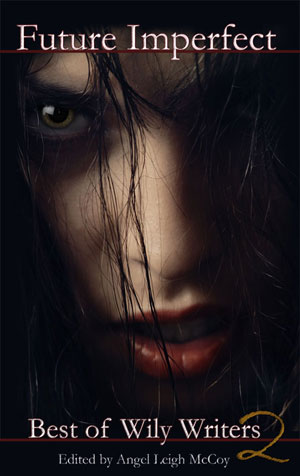
Author and New England Horror Writer member, Craig D.B. Patton’s story, “Aftershocks,” appears in the new anthology, Future Imperfect: The Best of Wiley Writers 2. The collection is edited by Angel McCoy.

According to Patton’s website,  the anthology “contains the best science fiction, horror, and fantasy work published by Wily Writers in 2010.”

Find out about the Wiley Writers on its website.

Future Imperfect can be ordered from Amazon. The e-book version of the book can be purchased through Smashwords.

‘Scary Scribes’ Debuts Sunday Night

Scary Scribes Debuts Sunday Night

by Jason Harris

The Scary Scribes' Skeleton

Scary Scribes, a new podcast created by author Kristi Petersen Schoonover to share horror stories written by horror writers, airs this Sunday at 6 p.m. on the Paranormal Eh? Radio Network.

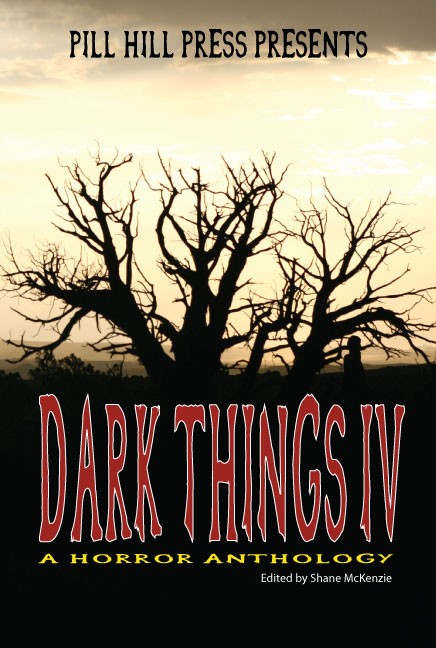
Author Stacey Longo will be Schoonover’s first guest on this new monthly podcast. They will be discussing Longo’s “People Person,” which was published in the anthology, Dark Things IV, published by Pill Hill Press. Besides sharing the writer’s story, Schoonover will talk with Longo about the idea behind the tale.

According to Schoonover’s website, the thing that “will make Scary Scribes a bit different is it won’t be just an interview; listeners will get to hear some of the writer’s work first — in most cases, a complete short story.”

The new podcast is a collaborative effort with Canada-based Paranormal, Eh? radio’s Terry Konig. Scary Scribes will be broadcast on the last Sunday of every month. For more information, check out the podcast’s website. There is also a Facebook page for Scary Scribes.

Both Schoonover and Longo are members of the New England Horror Writers’ organization.

Epitaphs on HWA’s Preliminary Ballot

It was announced last Saturday that Epitaphs, the first NEHW anthology is included in the preliminary ballot for the Bram Stoker Award for Anthology. According to the Bram Stoker Award rules on the Horror Writers Association’s website, Epitaphs will be on the final ballot, but cannot be called a “Stoker Nominated” collection until after the final ballot is announced on Feb. 18.

Up Close with Author Daniel Pearlman

This article originally appeared on the Go Local Prov website.

Up Close with Author Daniel Pearlman

by Anthony Faccenda, GoLocalProv Contributor

Author Daniel Pearlman

Simply labeling Daniel Pearlman a “fantasy writer” would be doing this multi-talented author a great disservice. Pearlman’s unique brand of fantasy fiction often includes elements of irony, satire, magic realism and speculative fiction. Aside from fiction, Pearlman, a professor emeritus of English at the University of Rhode Island, has also written everything from literary criticism to student writing handbooks.Despite his demanding schedule, GoLocal got Pearlman put down his prolific pen to discuss his latest effort, A Giant in the House & Other Excesses, published by The Merry Blacksmith Press(Warwick).

Your new book A Giant in the House & Other Excesses contains twelve different short stories and novelettes. Can you briefly describe what readers can expect to find in this collection?

The word “excesses” implies the over-the-top nature of my stories, and not only in this collection, which is my third. Here is a thumbnail of each of the twelve stories:

A Giant in the House: A boy grows up with a violent father who progressively shrinks in the young man’s imagination—or is it only in his imagination?

The Death Club: A secret Death Club guarantees its members wealth and power—until reaching age eighty, after which they will be euthanized in some unpredictable way, leaving all their worldly goods to the Club. Rich old Anton Malevitch, however, on the verge of eighty, has won the love of a beautiful and much younger woman, and is determined not to honor his contract.

Hannibal’s Victory: Two women who live together, one old and one young, take out their growing mutual hostility indirectly, through the medium of their respective opinionated cats.

Facedowns: A group of friends tell each other stories during Friday night poker games at which each takes turns with the host’s obliging wife.

The Fetal Position: A young man receives warnings from a mysterious female voice that professes concerns for his safety but is bent on crushing his identity.

Lyonel Unbound:  An English professor on his way to class, where his teaching is to be evaluated to determine whether he is worthy of tenure, suddenly finds himself unable to hold up his pants.

Two-Time Losers: A young night-school teacher is assigned a class of failures, a collection of the worst students in the program, whom he is under administrative pressure to pass.

Double Occupancy: An aging couple find their home invaded nightly by alluring refugees from the sixties who themselves have never aged.

With Arms Outstretched: A man demands sexual freedom from his grossly overweight wife.  She, fearing to lose him, complies in an astounding manner.

Refrigerator Blindness: Not long married, the egocentric young husband cannot seem to find the most ordinary things around the house. His exasperated wife eventually contrives to use his “disability” to her own personal advantage.

Mariah My Soul-Mate: A teenage girl forms a self-destructive relationship with a beautiful, fashionably dressed manikin.

Great White Hope: In the early sixties a recently married young man, on vacation with his wife in Mexico, finds himself in sexual rivalry with a septuagenarian ex-boxer, a still-powerful Frank Moran, one of a string of “great white hopes” who once challenged Jack Johnson for the world heavyweight title.

This last story has an autobiographical basis, since I did meet Frank Moran in Mexico, and the first part of the story is almost a literal transcription of our conversation, as noted in my diary.

Several of the stories in A Giant in the House & Other Excesses have never been available to the public, including “Lyonel Unbound,” which was drafted decades ago. How important was it for you to finally release stories such as these?

Ten of the twelve stories have seen previous journal publication–over the course of the past dozen years.  “Lyonel Unbound,” published in Spectrum in 2010, is the only “trunk” story I’ve rescued from the really distant past because I could never forget its basic narrative punch. But the setting needed updating to make it contemporary.

Prior to embarking on a career in writing fiction, you wrote a literary critique of poet Ezra Pound’s writings. Did you ever think of exclusively writing literary criticisms or similar works of non-fiction?

Literary criticism, though I’ve found it enjoyable, was only a diversion necessary to establish an academic career that has paid all the bills. I’ve always written fiction, my first love, and it’s always been for love, because the money it’s earned me has been negligible. As a matter of fact, the only book that has garnered respectable bucks for me over many years through eight editions is my still-in-print college writing handbook, Guide to Rapid Revision.

Do Pound’s themes or stylistic approaches ever find their way into your works of fiction?

Allusions to his work and certain of his themes do enter, in an ironical fashion, into some of my stories–especially in my first novel, Black Flames (White Pine Press, 1997).

Compared to writing a novel, short story authors run the inevitable risk of having limited time to develop character or setting. How do you confront these challenges or are they challenges to be embraced?

They are challenges to be embraced.  In a short story or novella a few telling details are enough to establish, for the reader, a living, recognizable, believable, already fully-formed “character.” A novel provides the opportunity to show how that character is formed.

Aside from short stories, you have also written novels. Do you prefer writing one to the other?

If I devoted myself more to the novel, I’d be far more productive in terms of sheer word count and of daily or weekly output. If I’m lucky, I put in a few months planning a novel, and then for the next year, more or less, I’ve got a steady writing schedule to keep me productive. But if I devote myself to shorter fictions, as I’ve done for many years, I usually have to spend a couple of months dreaming up a worthy idea and fleshing it out before I can sit down and write. The writing itself goes reasonably fast, gets done in a couple of weeks, but my overall yearly productivity suffers.

Why, then, don’t I focus on writing novels rather than stories? I’ve had bad luck in the marketplace for two major novels still sitting in my drawer. As tough as it is even to get good shorter work published–in journals and anthologies–I’ve had much better luck with those shorter pieces. Literary journals are far more open to new and unusual writers than are the major book publishers, who are less and less inclined to take risks. When I completely run out of hope of ever seeing my novels accepted by a “big” publisher, I’ll go the small-press route. I still dream of getting a decent literary agent (I’ve had several lousy ones) whose initial enthusiasm for my work translates into a long-term marketing commitment. I’ve found that if an agent hasn’t sold you in six months your book gets shunted to the back burner, and the agent won’t be honest enough to tell you so. Nowadays finding a good agent is as hard as finding a good publisher.

For you, what better qualifies some stories as short story candidates and others for novels?

Usually, the idea for a story comes to me along with an intuitive sense of its probable length.  Once, though, I was happily mistaken. The novel Black Flames started out as an idea for a longish short story but soon demanded expansion because the extraordinary combat experiences of my protagonist, a veteran of the Spanish Civil War, demanded inclusion. The novel is loosely based on the life of a strange but real person I knew.

Are you ever tempted to transform one of your short stories into a novel?

No. Unfortunately, too many writers–as seen in the science-fiction field, for instance–pad out a short-story idea with enough fluff to balloon it into a novel–because novels are what make the real money.

Lastly, what are you currently working on?

I have just finished a “novel-in-stories,” the adventures of an inter-dimensional detective named Merkouros, stationed in our New York to catch criminal trespassers from his own parallel New York. The series of a dozen science-fiction stories (I always confine myself to a dozen, for some reason) plays with cultural contrasts between our own relatively laid-back social order and a parallel America run by a harshly conservative autocracy. My detective often finds himself torn between these differing value systems. Several of these stand-alone stories have already appeared in print, and in addition there exists a separately published paperback Merkouros novella called Brain and Breakfast (Sam’s Dot Publishing, 2011). The series legitimately constitutes a novel because the main characters develop throughout, as do the forces endangering their world. Ever since reading Winesburg, Ohio by Sherwood Anderson, I’ve been fascinated by the idea of a novel-in-stories, and I didn’t know I was writing one till I got about halfway through my series.

Pearlman will read from A Giant in the House & Other Excesses at the Rochambeau branch of the Providence Public Library Jan. 23 at 7 p.m. The library is located at 708 Hope St., Providence. The reading is free and open to the public.

If you would like to purchase A Giant in the House & Other Excesses visit The Merry Blacksmith Press. For more information about Pearlman visit his website at ddpearlman.com.

‘Ghoul’ Arises Back in Print and on Film

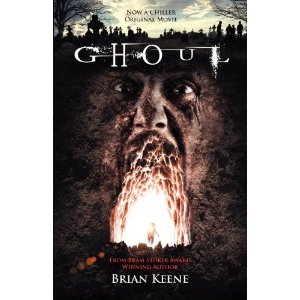
Two-time Bram Stoker Award-winning author Brian Keene’s Ghoul has recently been released with a new edition by Deadite Press. It tells the story of Timmy Graco and his two friends who risk their lives to stop a rash of disappearances in town, happening in the town in the summer of 1984.  It’s a great novel that is hard to put down. It will make you nostalgic for the songs and toys Keene mentions that were popular during that time.

Ghoul cover (courtesy of Brian Keene's website)

The movie based on the novel premieres at the Slamdance Film Festival on Jan. 22 at 4 p.m. and Keene will be in attendance. It will also be shown at the Sundance Film Festival. The movie is directed by Greg Wilson (The Girl Next Door) and the screenplay was written by William M. Miller (Headspace).

The movie comes to the Chiller channel in April.

Find out more about Keene on his website.