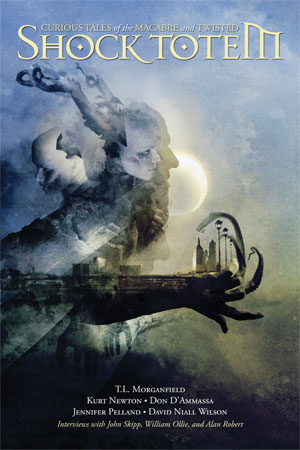
Shock Totem #5 Debuting in July

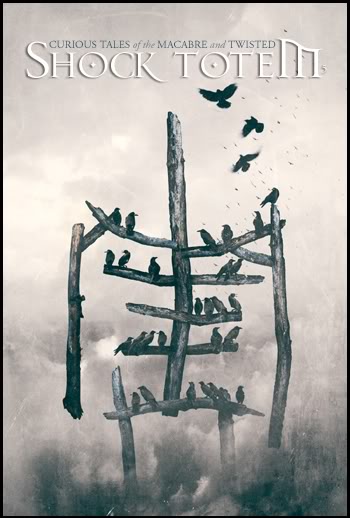
It was announced this week that the fifth issue of Shock Totem will be arriving in July. It was supposed to be released in January, but problems arose. According to Publisher K. Allen Wood, the delay was caused by the lack of good submissions. You can read about it here.

The cover for the July issue was also revealed. Check it out below. The cover was done by Mikio Murakami, who has done all the artwork for Shock Totem since issue #3.

Shock Totem #5

Shock Totem #5

Here is the Table of Contents:

* Taking Root by Mercedes M. Yardley (Editorial)

* In Deepest Silence by Ari Marmell

* Girl and the Blue Burqa by D. Thomas Mooers

* Digging in the Dirt: A Conversation with Jack Ketchum by John Boden

* Hide-and-Seek by F.J. Bergmann (Poem)

* Eyes of a Stranger by Nick Contor (Essay)

* Postmortem by Kurt Newton (5-Part Illustrated Micro-Serial)

* Jimmy Bunny by Darrell Schweitzer

* Strange Goods and Other Oddities (Reviews)

* Little Knife Houses by Jaelithe Ingold (2011 Shock Totem Flash Fiction Contest Winner)

* Canon by Anaea Lay

* Bloodstains & Blue Suede Shoes, Part 3 by John Boden and Simon Marshall-Jones (Article)

* The Catch by Joe Mirabello

* Three Strikes by Mekenzie Larsen

* To ‘Bie or Not to ‘Bie by Sean Eads

* Howling Through the Keyhole (Author Notes)

The issue will be available in print and digital formats. You can preorder the issue here.

Author Robert J. Duperre Talks about Zombies and Writing

Author Robert J. Duperre Talks about Zombies and Writing

by Jason Harris

Zombies are still lumbering around in pop culture after since George Romero’s Night of the Living Dead arrived on the silver screen in 1968. Romero is considered to be the father of all zombie movies. They can even be seen on the small screen thanks to the AMC series, The Walking Dead. The Resident Evil zombies are still finding success on the big screen and the next incarnation, Resident Evil: Retribution, arrives in theaters this year.

Zombies are so popular that a London-based game developer, Six to Start, has created an app that has merged fitness and zombies, “Zombies, Run!”

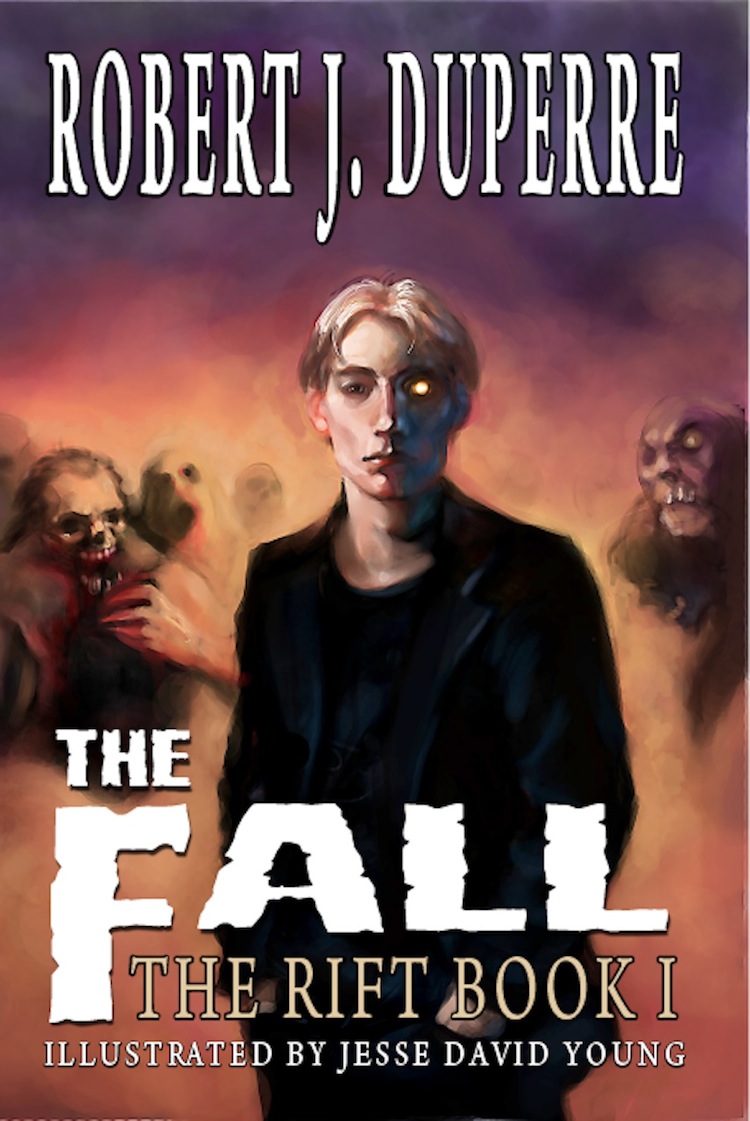
Author and New England Horror Writer member Robert J. Duperre is continuing to give zombie fans their fix with his four-book series The Rift, which opens with a zombie apocalypse triggered by an evil buried deep in a Mayan ruin in the first volume, The Fall, the three books that follow are Dead of Winter, Death Springs Eternal, and The Summer Son, which is due out in July.
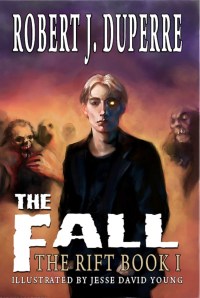
The Fall: The Rift Book I

The Fall: The Rift Book I

In his series, the origin of the apocalypse is the Mayan Ruins, which he chose because of the fact “the Mayans were so advanced, not only for their time, but for all time.” Even with their advancement, Duperre considers the Mayans as “somewhat primitive.”

“In that way their culture sort of mirrors our own—complex and sophisticated, yet clinging to some rather archaic ideals.  So what if the same mysterious events that brought down their culture brought down our own?  Poetic justice, right?  Yeah, a bit of a stretch I know, but trust me, it works in my head.”

The author wasn’t planning on The Rift being a series. He thought it would be a simple zombie tale.

“It was supposed to be a humorous novella.”

Once it was over 400,000 words, he decided to split it into four books and completely rewrote it.

“The story had already been sectioned off into seasons, so I figured that was as good an idea as any to act as natural segues between volumes.  The only problem is the first three books all end in cliffhangers because of this, which I’m sure can be a little irritating to readers.”

Duperre thinks there are “a couple of layers” to the zombie-apocalyptic trend.

“For me, [zombies are] the perfect tool for storytelling—they represent humanity in its most primal form, in many ways reflecting conventional and homogametic nature of our culture,” Duperre said. “Literature in the zombie genre forces a return to the basics by the survivors, in effect exploring that which made them human in the first place.”

He assumes the zombie-apocalyptic trend is popular because people are “obsessed with being scared, and nothing is as frightening as the prospect of the end-of-times.”

“A zombie apocalypse is, strangely enough, the most convenient and readily available outlet for that kind of fantastic exploration.”

He has never seen this “particular scenario play out before,” which he figured was a good point in his favor. This allowed him “to move away from traditional zombie lore and present some different scenarios and outcomes.”

Duperre considers his endeavor with The Rift series risky and knows he has annoyed more than one reader by straying from the typical zombie formula.

“I’m happier doing things my own way than sticking to a script someone else wrote.”

There are some prevalent motifs running through Duperre’s series such as isolation, personal tragedy, and social injustice, which he considers “the single greatest theme” that runs through all four volumes. The social injustices that he tackles are the treatment of women and the complexities of race relations.

“At heart, I’ve always considered myself a progressive and a bit of a social activist, and this series allows me to explore these themes in a no-holds-barred manner, sometimes disturbing manner.”

Duperre’s work has been influenced by a number of writers throughout his career including Clive Barker, John Skipp, Stephen King, and George Romero, whose original Dead trilogy is “the single biggest influence” in his life.

“It was the first time I realized that monsters could be used as metaphors, and I ran with it,” Duperre said. “Clive Barker has also been a huge influence, in particular his fascination with the concept of worlds within worlds. Though you certainly can’t write a good book without talent, the style any writer develops is always dependent on the authors they’ve read and loved over the span of their lifetimes.  I’m no different, and to all the writers who’ve spurred me on over the years, I say a great big thank you.”

The Rift series is a collaboration between Duperre and fellow NEHW member, artist Jesse David Young, who has done all the series’ covers.

They had discussed as far back as 2006 about Young doing illustrations for him, but nothing came of it. Three years later in the summer of 2009, Young called about working on a comic book they could pitch to DC comics. Duperre was working on final rewrites on the first book in the series and asked Young if he wanted to do what they talked about so long ago, he said.

“We’ve been working together ever since, and it’s been one of the most rewarding experiences of my life.  It’s nice to have a partner to share in the stress, after all.  I wouldn’t have been able to get as much work done as I have without him by my side.”

His series is self-published, which allows Duperre to take risks, but not something he couldn’t have done through a traditional publishing company, he said. He doesn’t hold any “real love for self-publishing” since “it’s difficult and time-consuming.”

Duperre considers self-publishing “a means to an end” and doesn’t think he would be where he is today without it. He thinks the changing publishing world is “exciting and dangerous at the same time.”

“For the release of a book to be as simple as a click of a mouse, the possibilities are endless for success and failure. I experienced a bit of both.”

Duperre rushed The Fall to publication which resulted in the release of a poorly edited book, he said. It was full of plot holes, which he had to go back and fix post-publication. The same mistakes happened with Dead of Winter, but to “a lesser extent.”

“Thankfully for me, my sales didn’t really start to take off until after they were fixed which is a very good thing.  It could have ruined my reputation something fierce had the lesser-quality work taken center stage.”

He considers this a huge problem since there are a lot of books on the market that are not good. These books are lacking “plot and characterization, are poorly executed, or simply put out there by someone who doesn’t have a clue about how to write.”

These problems have created a stigma for being a self-published author “that is rightly deserved.” This stigma has even put more pressure on authors like Duperre, he said.

“I need to work extra hard to make sure the work we put out is of professional quality, is edited, and cohesive.  It’s a good thing I enjoy doing this, otherwise I might have walked away by now.”

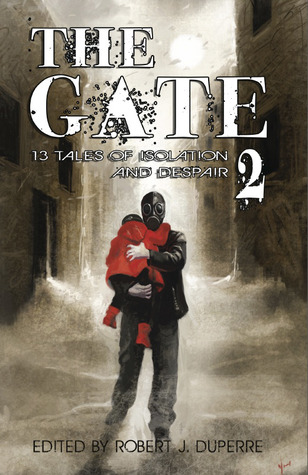
Along with writing his zombie series, Duperre has published two anthologies, The Gate: 13 Dark and Odd Tales and The Gate 2: 13 Tales of Isolation and Despair. The first one was released in November 2010 and contains stories by him and a few writer friends. Each story contains an illustration by Young.

“After [the first anthology was released], I thought it would be a novel idea if the anthology became a yearly/bi-yearly event.”

The Gate’s sequel was released this past February. It contains stories from K. Allen Wood, David Dalglish, Steven Pirie and Mercedes Yardley.
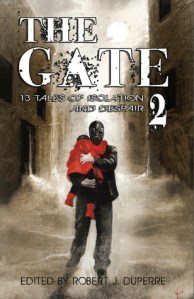
The Gate 2: 13 Tales of Isolation and Despair

The Gate 2: 13 Tales of Isolation and Despair

He wants to publish a third volume next February entitled The Gate 3: 13 Creature Features.

“The goal is to have it be an actual paying anthology this time around, featuring some of my old-time and new favorites in horror and dark fantasy. I’m not entirely certain if I’ll be able to pull it off given the state of finances at the moment, but I’m dedicated to it, and I’ve found over the years that if I’m dedicated to something, I somehow find a way to pull it off.”

Duperre has been writing since childhood, he has been “obsessed” with it from “the process, the imagination involved, [and] the outcome.”

 “My high school term papers were behemoths, and I decided that my life’s goal would be to teach English and write novels for a living.”

Life did get in his way back in his early to mid twenties until Jessica, his wife, told him to pick up his pen again. There would be “a gigantic hole” in his soul if he wasn’t writing, he said.

He began a website, Journal of Always, back in 2009 with the idea he would blog about what he thought was important, what bothered him, and maybe even discuss his own experiences during the writing process. It didn’t happen that way though, he said.

“I ignored it for far too long and eventually it was all but forgotten. Then, halfway through 2010, I decided I would start reading my fellow self-published authors and use the JOA as an outlet for reviews.”

The website has progressed nicely for the past two years until the past few months of this year when he had deadlines looming on other projects.

“I haven’t posted a review since February, even though I have a backlog of more than fifteen to write.”

He plans on adding more reviews soon.

Duperre’s advice to up and coming writers is the same as what other writers like King has told people. It is too read and write. He also goes farther and adds a person has to edit and rewrite too. A writer also has to “be open to criticism.”

“The only way any artist improves is by trial and error.  There is no first draft of any book that is fit for publishing.  Make sure you realize that and learn everything you can before putting yourself out there.”

Here is Duperre’s bibliography:

April 2010 – The Fall: The Rift Book I (novel)
July 2010 – Feeding the Passion (short story), Darker Magazine #2
November 2010 – The Gate: 13 Dark and Odd Tales (collection)
November 2010 – The One That Matters (short story), A Land of Ash (edited by David Dalglish)
December 2010 – Dead of Winter: The Rift Book II (novel)
June 2011 – Silas (novel)
September 2011 –  Chorus (short story), Dark Tomorrows, Second Edition (edited by J.L. Bryan)
October 2011 – 39 Days (short story), Unnatural Disasters (edited by Daniel Pyle)
December 2011 – One Good Turn (short story), Shock Totem Holiday Issue
January 2012 – Death Springs Eternal: The Rift Book III (novel)
February 2012 – The Gate: 13 Tales of Isolation and Despair (collection)

Duperre will be at the NEHW booth at the South Windsor Strawberry Fest on June 16 in Nevers Road Park , South Windsor, CT. from 9 a.m to 5:30 p.m.
NEHW at the Foxboro Jaycees Spring Fair this Saturday

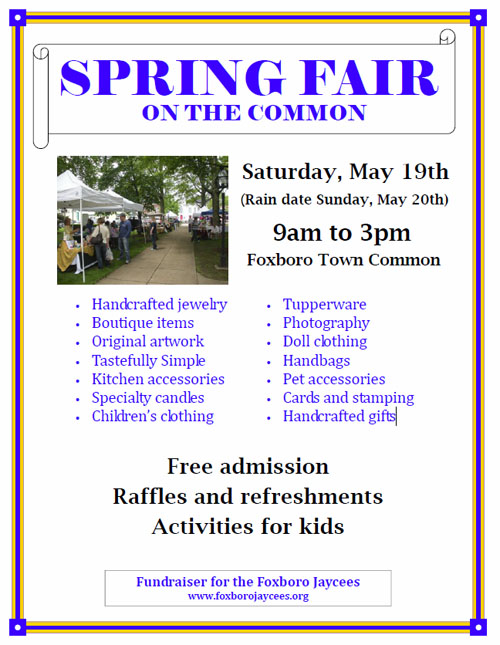
The weather is going to be perfect this Saturday for the Foxboro Jaycees Spring Fair on the Common.

According to the forecast, it will be in the 70s and what better way then to come check out the New England Horror Writers, who will be selling and signing books, at an outdoor craft fair. Along with our books, there will be other vendors selling items like handcrafted jewelry, original artwork, doll cloths, handbags, and many other gifts.

If you are a reader and love meeting authors, you will want to stop by the NEHW tents. Yes, you read that right. We will have two tents right next to each other where you can meet authors, Tracy L. Carbone, Scott Goudsward, Stacey Longo, David Price, Rob Watts, Morven Westfield, and K. Allen Wood.

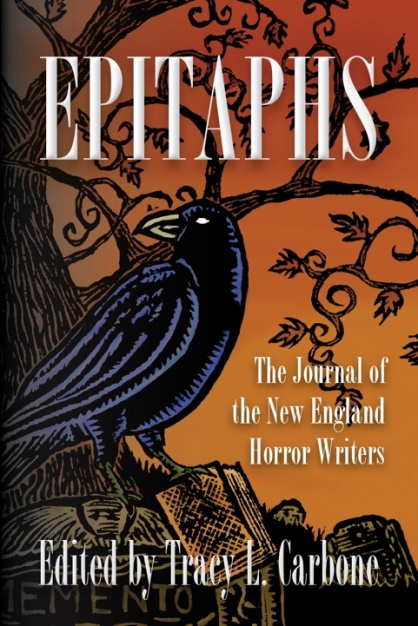
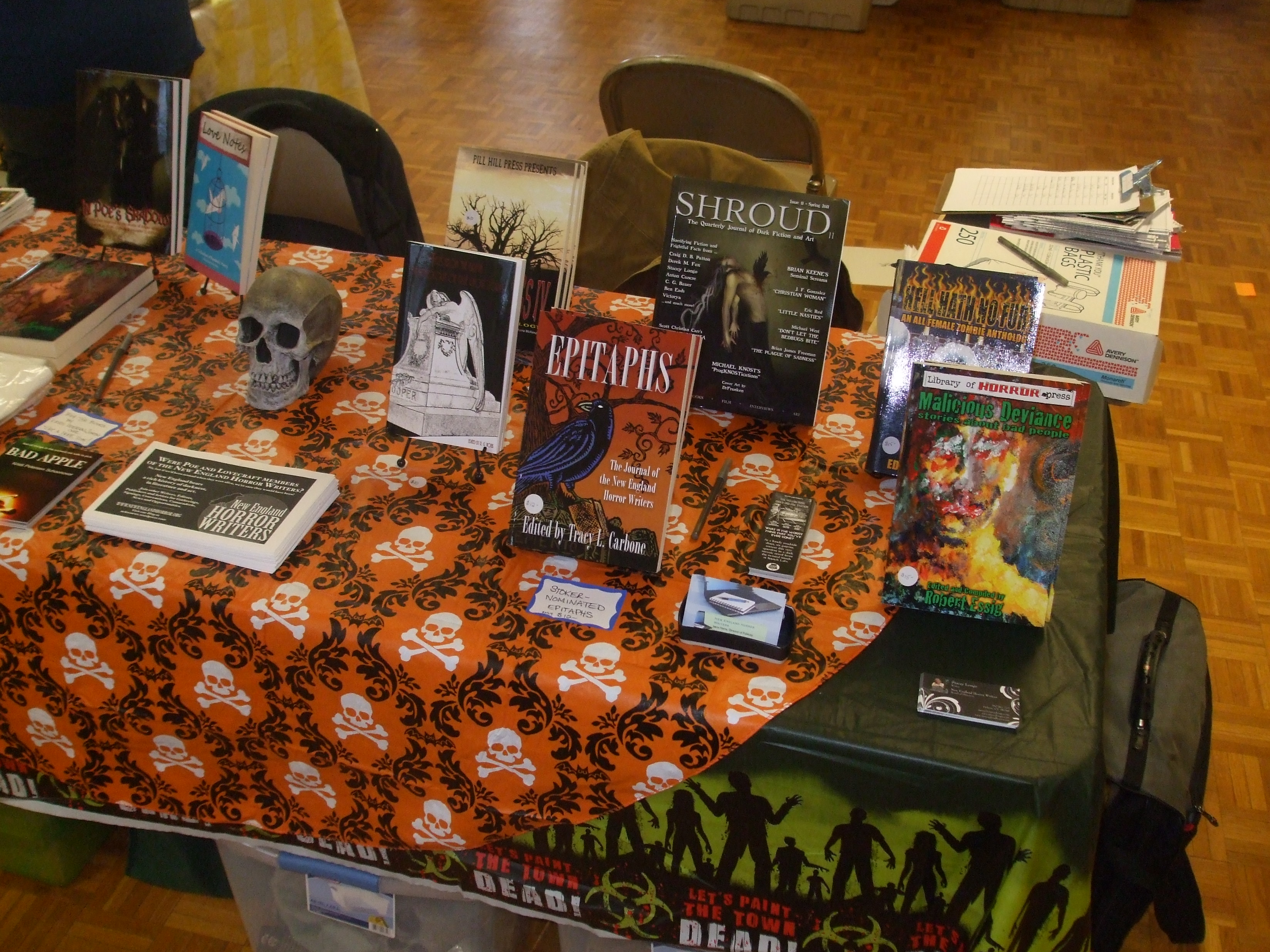
At this event, there will be three authors with stories in Epitaphs and the anthology’s editor. Epitaphs is the New England Horror Writers’ first anthology. Goudsward, Longo, and Wood all have stories in this collection while Carbone was its editor. The anthology is $12 and the authors’ signatures are free.Cover of the New England Horror Writers' first anthology, Epitaphs.

Along with Epitaphs, these writers will have other books on hand that they have written or it contains a story written by them.

If a story collection is not want you are into, but folklore is then Watt’s book, Huldufolk, may be your cup of tea. His book is based on Icelandic folklore. Along with the book, he is giving away a copy of The Traffic Lights CD, the fictional band in Watts’ book, with each book purchase. Watts composed the music himself.

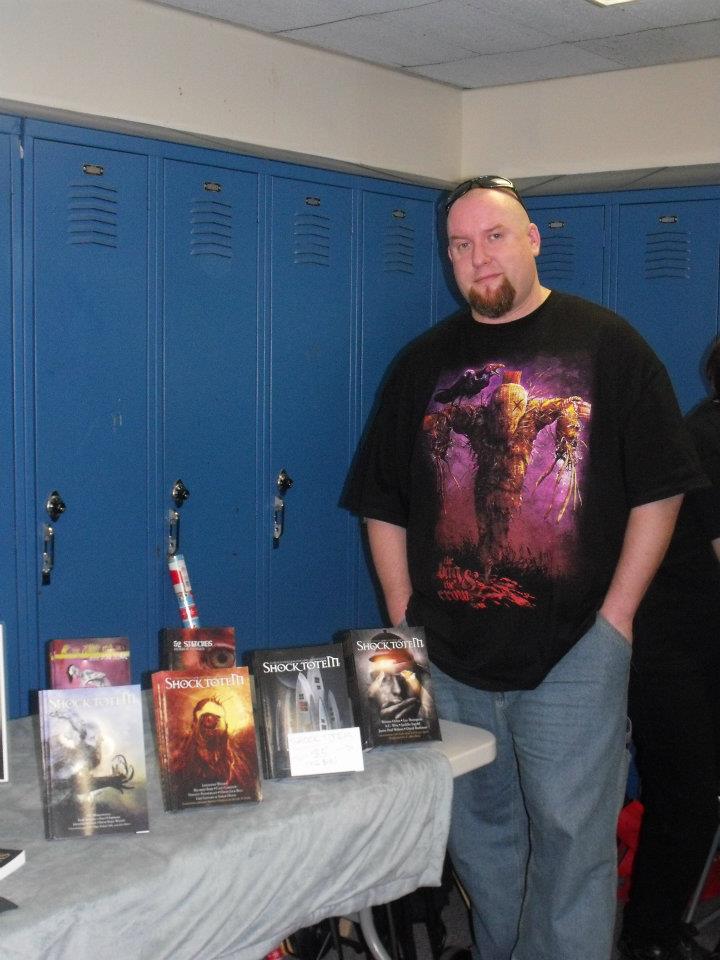
Wood will have copies of his magazine, Shock Totem, on hand. Each issue contains stories, interviews, and reviews.

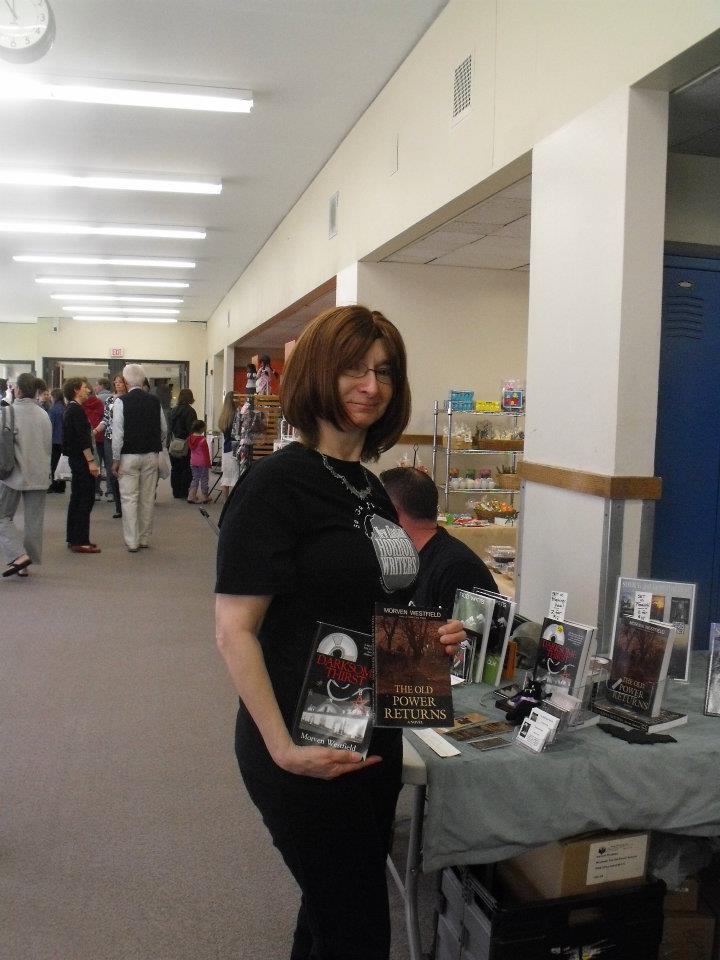
In you love vampires, Westfield will be the person to talk to since she will have two vampire books on hand, Darksome Thirst and Old Power Returns, which take place in Framingham, Massachusetts.

You can also find out about Price’s first published story in Tales from the Grave, which will be on hand.

The Spring Fair happens from 9 a.m. to 3 p.m. on the Foxboro Common.

The Journey to an Author’s First Autograph

The Journey to an Author’s First Autograph

by David Price

In March, I finally got to see my name in print. I have a story in the book, Tales from the Grave: An Anthology of True Ghost Stories. This is a big turning point for me. I joined the New England Horror Writers last August. Since then, I have attended some of the events from time to time, but only as a spectator, never as a participant. I like the people who I have met so far in the NEHW, and I was really looking forward to the day I could hang out with them at one of these conventions or fairs. That day was finally here when I was published in that anthology of ghost stories.

The story itself is called “Tucker’s Court” and it is about the house I grew up in, from the age of nine to twenty-five. My family moved in with my father’s parents when I was a kid, because their health was failing. Both of my grandparents died while I was living with them. There was always a presence in that house after that and many odd things happened to me. Maybe it wasn’t your typical horror movie kind of haunting, but to me it seemed worthy of a story. To my great pleasure, it was accepted by editor Rod Nojek and I made the transition from writer to author. Baby steps, first, you could say.

Naturally after I got the word that the book was in paperback, I emailed NEHW’s Director of Publicity Jason Harris and got my name on the list for the next event, which was the 39th Heritage Craft Fair in Framingham, Massachusetts, on March 24.  I had a couple weeks, so I thought I had plenty of time to get some books to sell at the fair. I placed my order with the publisher, only to be told that the books would not arrive in time. This was very disappointing and I immediately emailed Jason again, to let him know that my participation was in doubt. He told me to tell the publisher that I needed the books for an event and ask for rush delivery. I tried that, to no avail. The books were not going to arrive in time.

Two days before the fair, I went online to see if there was any chance of getting a few books on time from Amazon. It turned out I could get them with the rush delivery option, if I ordered in the next forty minutes. As an added bonus, since the books sell for less than ten dollars, they were included in Amazon’s “Buy four books for the price of three” promotion. So I ordered four books and the website told me I could get free rush delivery if I was an Amazon Prime member. Free one month trial, it told me. What the heck, now I’m an Amazon Prime member, too. I was meaning to sign up for that anyway.

Now, before I place d the order, it said that they were guaranteed to arrive by Friday. After I placed it, however, it said that they were estimated to arrive on Friday. Maybe it’s the English major in me, but there’s a big difference between guaranteed and estimated. A guarantee means that yes, it will be there, you can count on it. An estimate falls more into the, well; you’ve got a fifty-fifty shot. That’s not too bad, right?  That made me nervous. My nerves were not calmed when 6 p.m. passed and the UPS truck failed to arrive. That truck drives down my street every night between 6 and 6:15 p.m. I checked the Amazon website and it said the package was out for delivery. What happened then? 7 p.m. passed and still, no package. I pretty much gave up at that point, figuring the driver somehow missed me. But, to my surprise, at 7:15 p.m. the UPS guy showed up on my doorstep with a package that contained the four books with my very first published story in them. Yes!

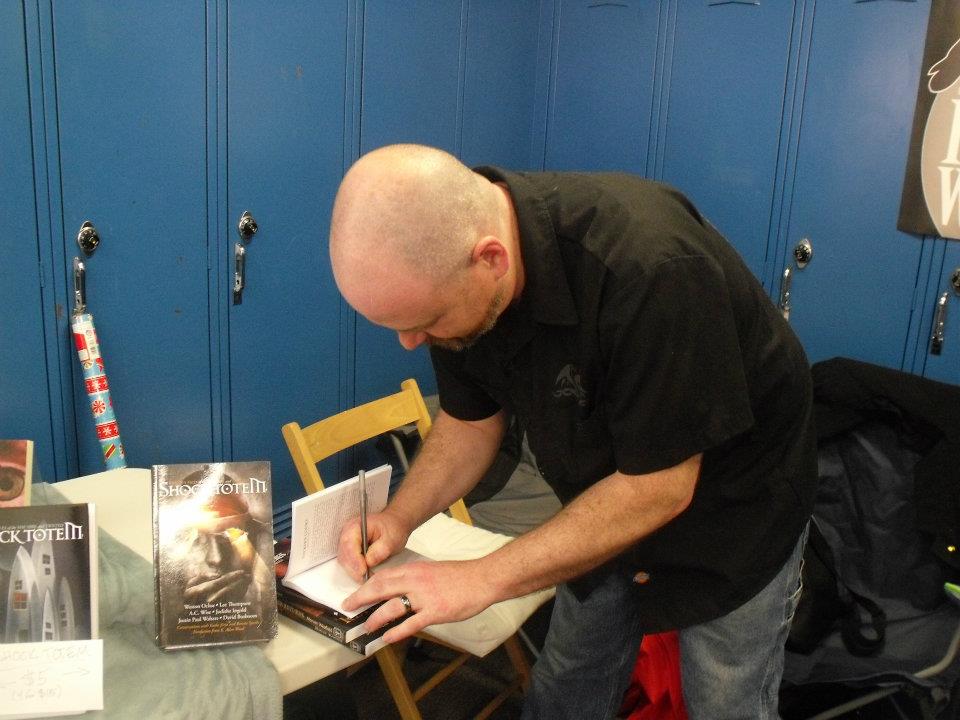
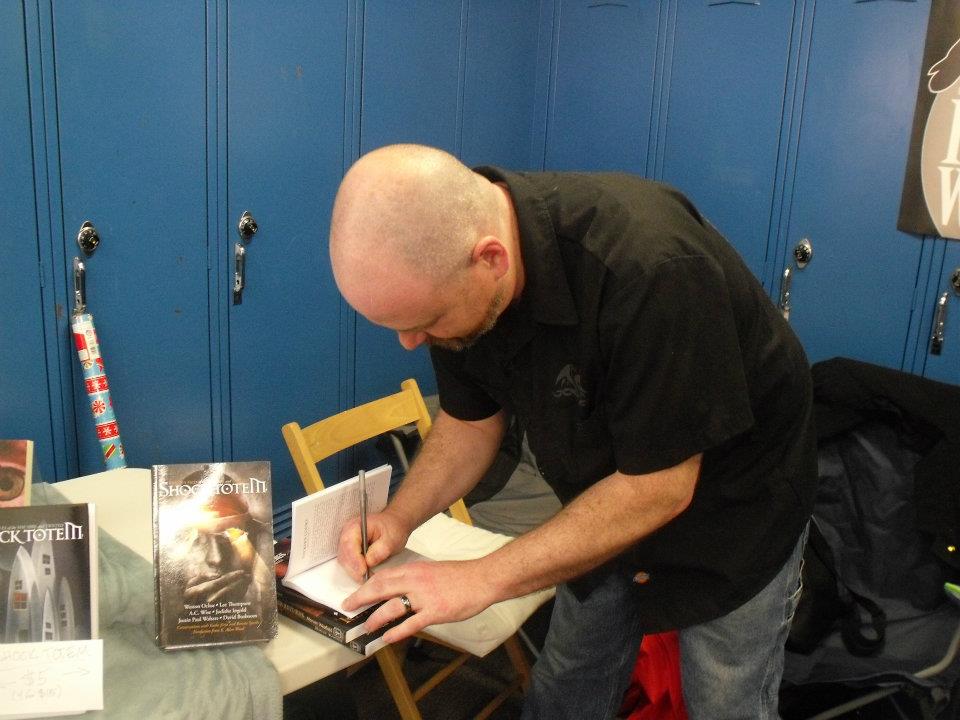
Author David Price signing first autograph. Photo by Pauline Price.

I woke up the next morning and headed out to the fair with my wife, Pauline and my daughter, Kayleigh.  Pauline probably won’t be able to come to many of these things with me, since she usually works on Saturdays, but we had a wedding to go to later that afternoon so she had the day off. After an hour or so drive, we got to the fair and Stacey Longo had a bookstand I could use to put my books on. I was so proud. It might sound silly, but every step towards my dream of a writing career is exciting, even the small ones.

The Heritage Craft fair was held at the Keefe Technical School, in Framingham.  That place is huge! I was expecting, I don’t know, a gymnasium maybe, but this was set up in a seemingly endless corridor. There was room for vendors on each side of the corridor to face each other, with a walkway for the patrons down the middle. The NEHW had its banner hung proudly at the site and I had a book for sale. How cool is that?

The day was made even more enjoyable by the other NEHW members in attendance. These included, the aforementioned Stacey, Morven Westfield, K. Allen Wood and Rob Watts. Morven is, I assume, from Framingham, since her two books, Darksome Thirst and The Old Power Returns were set in Framingham. As the day went on, this became something of a running joke. My wife works in a retail store and she clearly had more experience with customers then the authors who attended. She did her best at greeting all the people walking by and managed to draw quite a few in by telling them that we had some horror stories available that were actually set in Framingham. This was great for Morven’s sales.

It was an interesting day. We had some moderate interest at times and I managed to sell my first two books. When you sell at one of these events and the author is present, they want you to sign the book. Seems obvious, right? Well, I had the nerve-wracking experience of having to autograph my two books. My hands were shaking the whole time. It doesn’t seem like a big deal, I know, but it was to me. It was pretty cool. I also remembered that authors usually write some quick one liner that goes with the story. Since I have shadow people in my story I think I wrote something like “Watch out for the shadows!” If you were at the event and purchased one of my books, you should know those are the first two autographs I ever gave. Hold on to them, they’ll be worth something, some day.

In addition to Morven’s plethora of sales, I believe Ken Wood, who is the publisher of Shock Totem magazine had a decent day in sales as well. Rob Watts was selling his book, Huldufolk, at the fair. It means “Hidden People” in Icelandic and he was even including a free CD that went along with it from The Traffic Lights, the band that is mentioned in the story. I picked up a copy of Rob’s book and one of Stacey’s anthologies before we had to leave for the wedding. It was a fun and slightly nerve-wracking day. It was a great experience. Any fledgling authors out there could do themselves a world of good joining an organization like the New England Horror Writers, which offers a great support system filled with amazing people. It also provides plenty of opportunities to sell your stuff at events including fairs and conventions. Join the NEHW now, you won’t be sorry.

Pictures from the Last Two NEHW Events

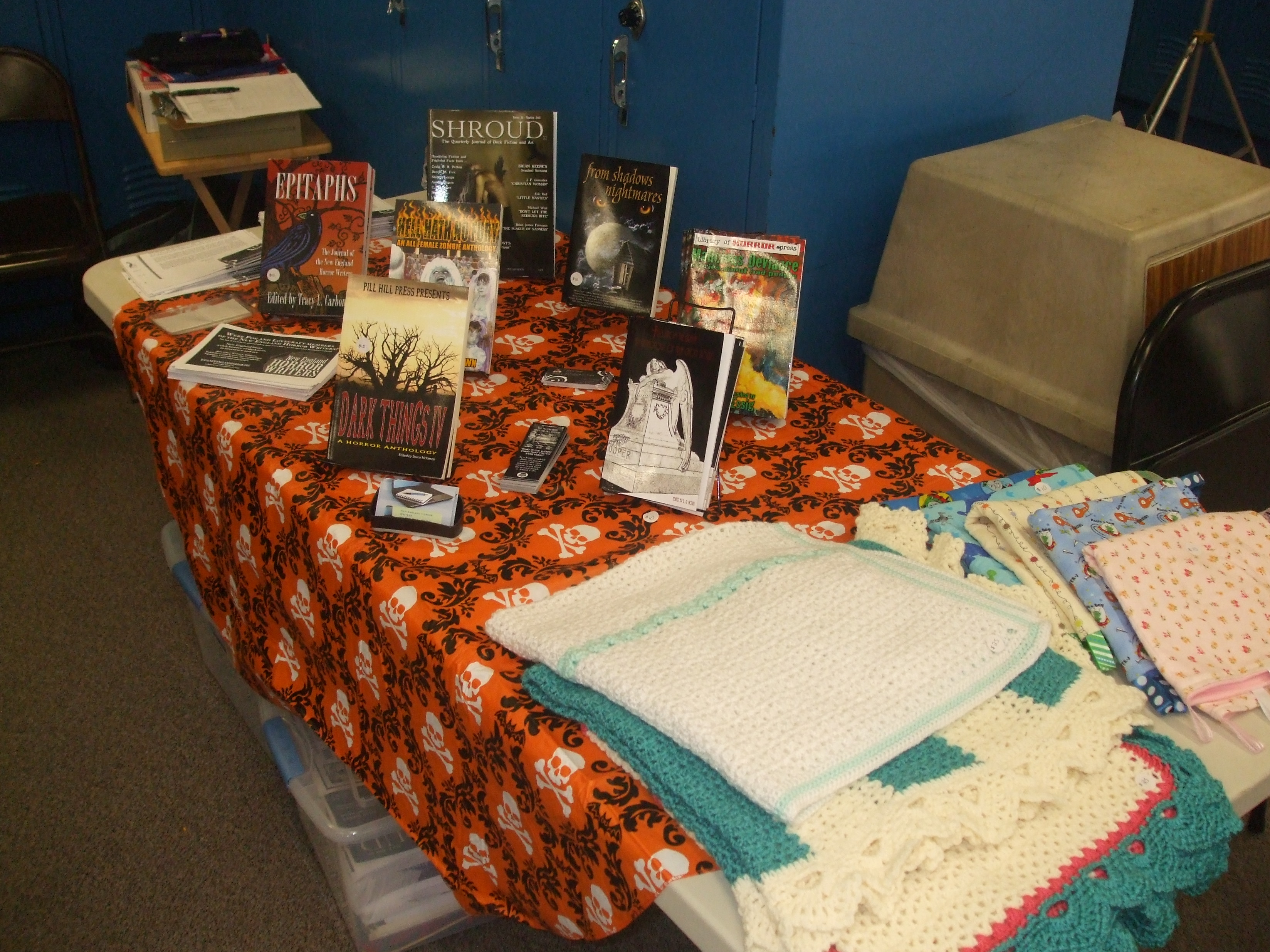
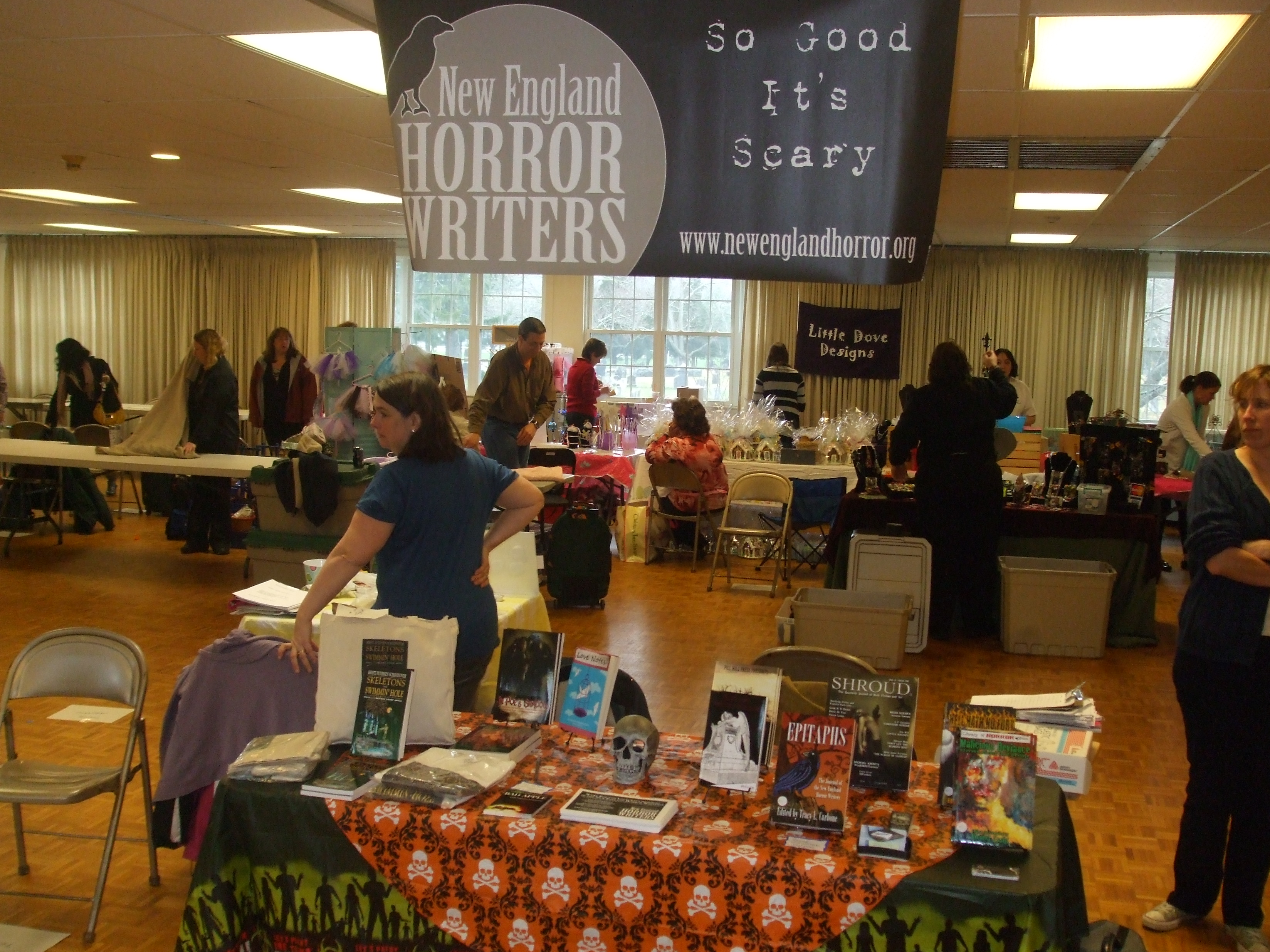
The NEHW Table at the Heritage Craft Fair at the Keefe Technical School in Framingham, MA. Photo by Jason Harris

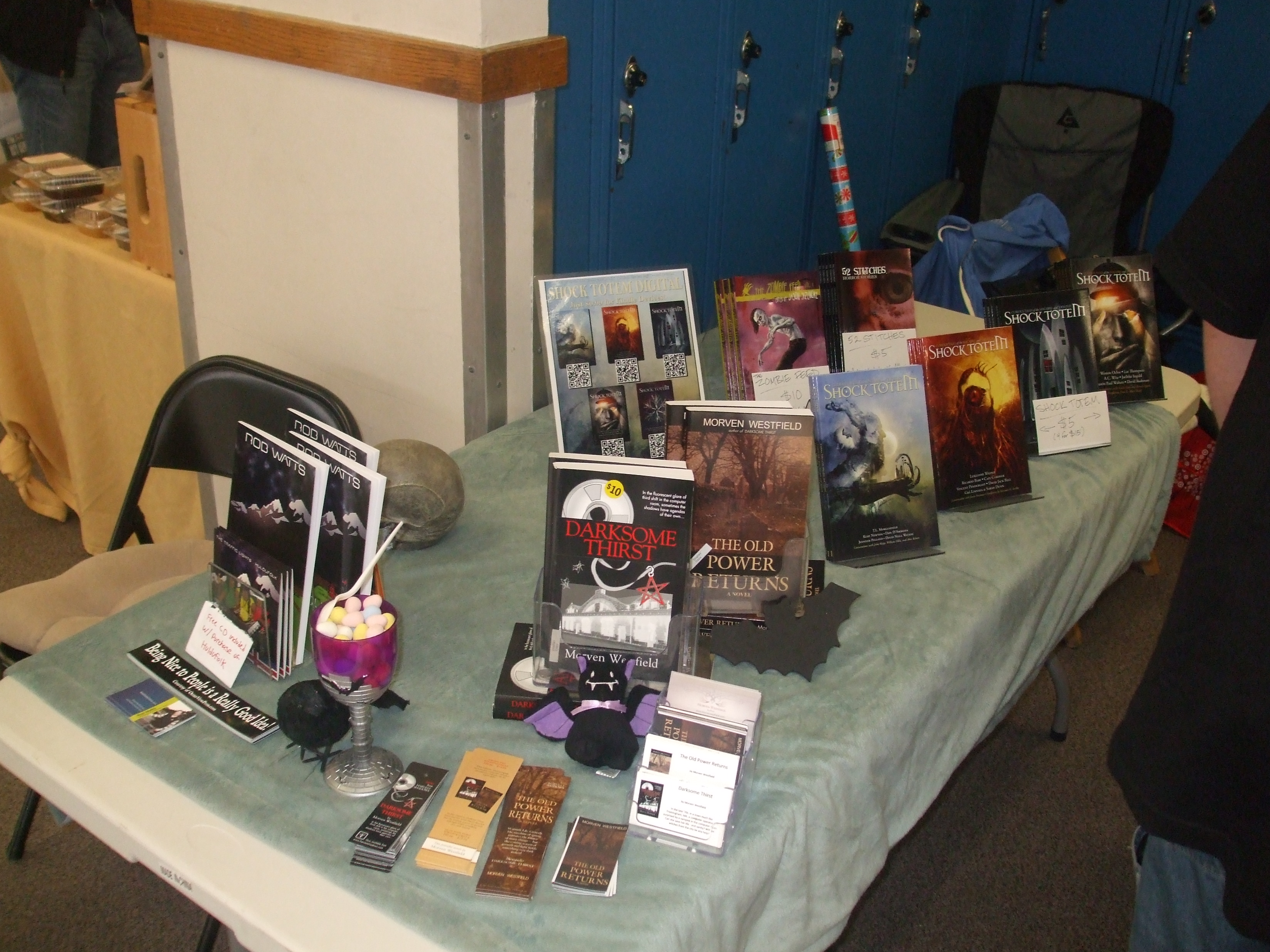
The other NEHW table at the Framingham event. Photo by Jason Harris

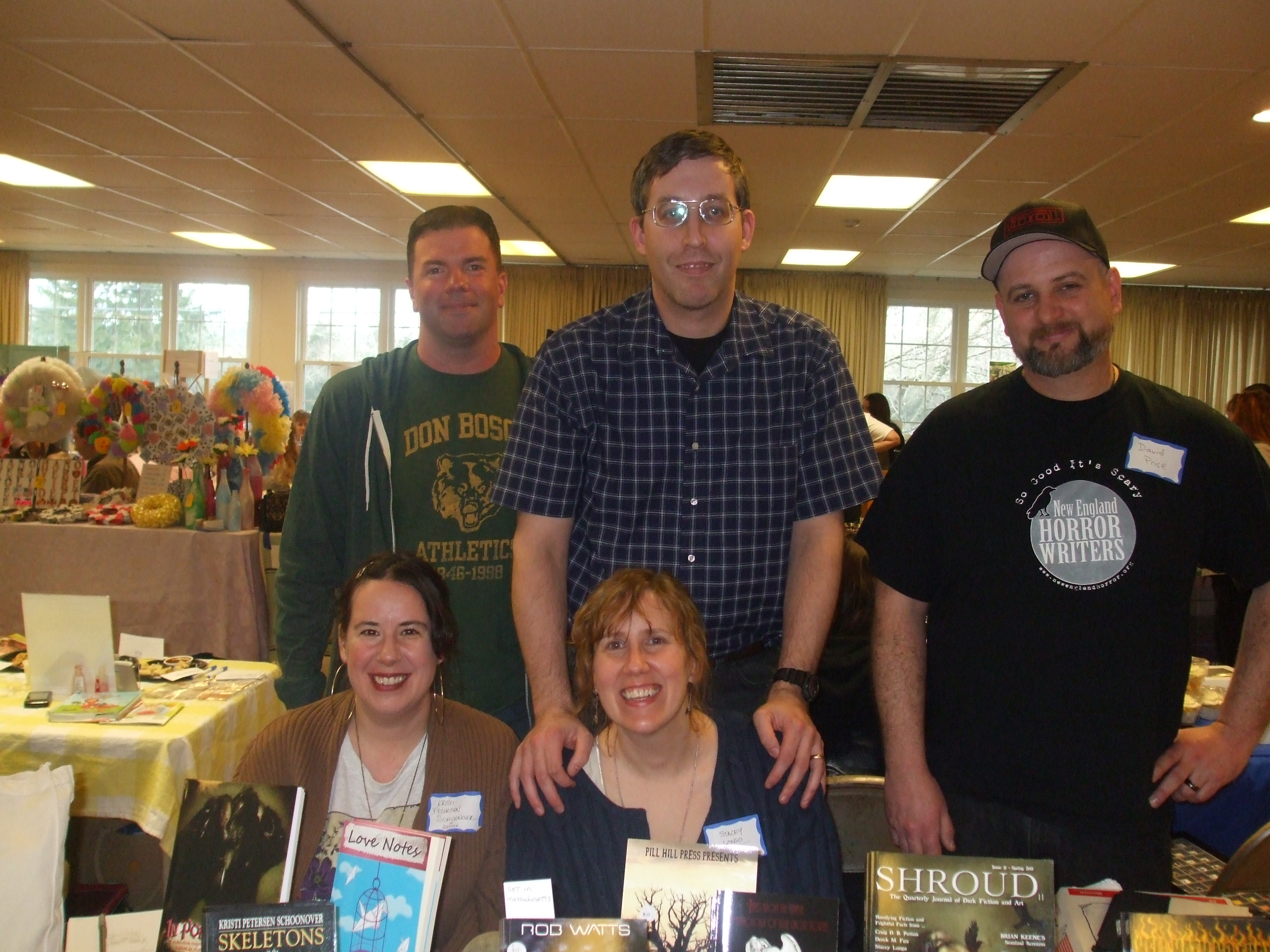
From left to right: (front row) Kristi Petersen Schoonover and Stacey Longo, (back row) Rob Watts, Jason Harris, and David Price. Photo by Kayleigh Price.

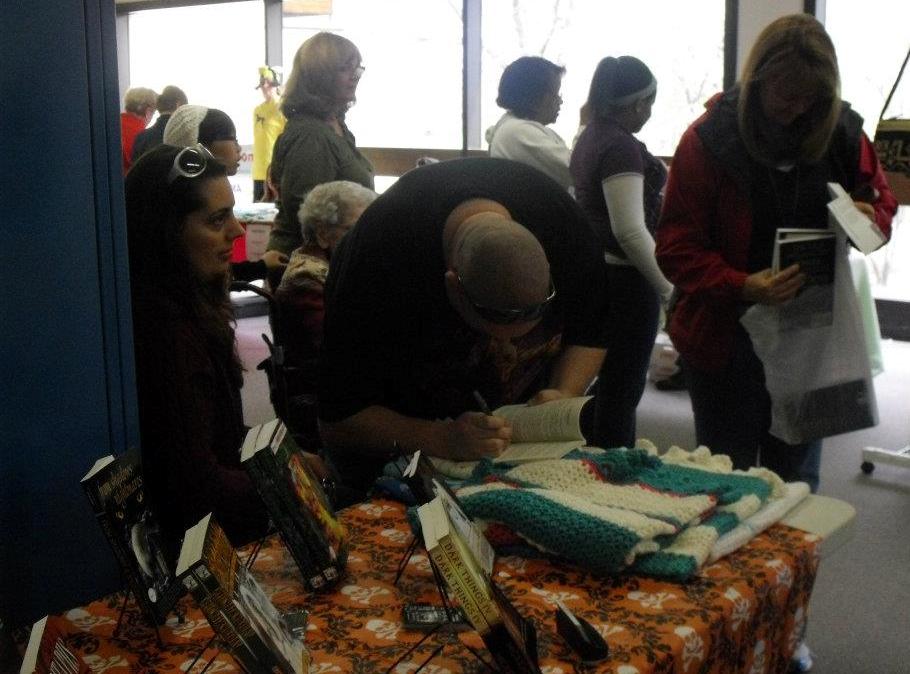
Author David Price signing his first autograph at the Keefe Technical School in Framingham. Photo by Pauline Price.

Author Morven Westfield holding her books at the Heritage Craft Fair. Photo by Pauline Price.

Author K. Allen Wood in Framingham. Photo by Pauline Price.

Author K. Allen Wood autographs a story for a fan as Sarah Gomes looks on in Framingham. Photo by Pauline Price.

Our space at the Hanover Craft Fair. Photo by Jason Harris.

A close-up view of the Hanover NEHW table. Photo by Jason Harris.

The NEHW will be at the 39th Heritage Craft Fair this Saturday (updated 3/21)

The NEHW will be at the 39th Heritage Craft Fair this Saturday.

There will be a number of members selling and signing their books. Come and meet Stacey Longo, David Price, Rob Watts, Morven Westfield, and K. Allen Wood.

The fair is held at the Keefe Technical School from 10 a.m. to 4 p.m. It’s sponsored by the Heritage Chorale. According to the fair’s website, the fair “provides income to support our musical mission, from booth rental fees, sale of food and  beverages, and modest admission fees. This popular fair features more than 100 crafters selling their own creations including glassware, clothing, toys, jewelry, woodworking, leather goods, quilts, metalwork, paintings, and many other arts and crafts.”

According to the fair’s flyer, there will also be food at the event . The price of admission is $3 and $2.50 for seniors.

The fair’s location is 750 Winter St. in Framingham, Massachusetts.

Your Cover Art Sucks

This entry originally appeared on author and NEHW member, K. Allen Wood’s website.

Your Cover Art Sucks

by K. Allen Wood

Let’s talk about cover art.

There has been a self-publishing boom as of late. Once a surefire way to garner scorn from so-called professional writers, now even those dingleberries of the upper crust are self-publishing their work. With its rapidly growing popularity, there are those in the industry whom suggest there is a bubble…and that it’s about to burst. But I disagree. I think things are just getting started.

And that means more self-published books flooding the market.

There is an oft-used quote out there, which goes like this: “Just because you can doesn’t mean you should.”

A few years ago, when I started Shock Totem, a well-known author told me that cover art “isn’t that important.” The argument being that it’s the content that matters more. It’s hard to argue with that. However, I think, in a certain regard cover art matters more. The expression “never judge a book by its cover” exists because everyone judges a book by its cover.

First impressions matter. That initial connection between cover art and potential reader is intimate, and it matters more than you and the masterpiece you think is a page turn away.

I won’t buy your book if the cover art sucks. I won’t download it for free. I won’t do more than laugh derisively like a too-cool uptowner and walk on. Haughtily.

I fully understand that the majority of writers doing this sort of thing are, to put it bluntly, bad writers; but many are quite good, in fact. And to them I say this: If you truly care about your work, seek out the work of professionals in areas where you are not King Dingaling. Dig deep. It doesn’t cost much.

In other words, don’t do this…

[ click any photo to enlarge ]

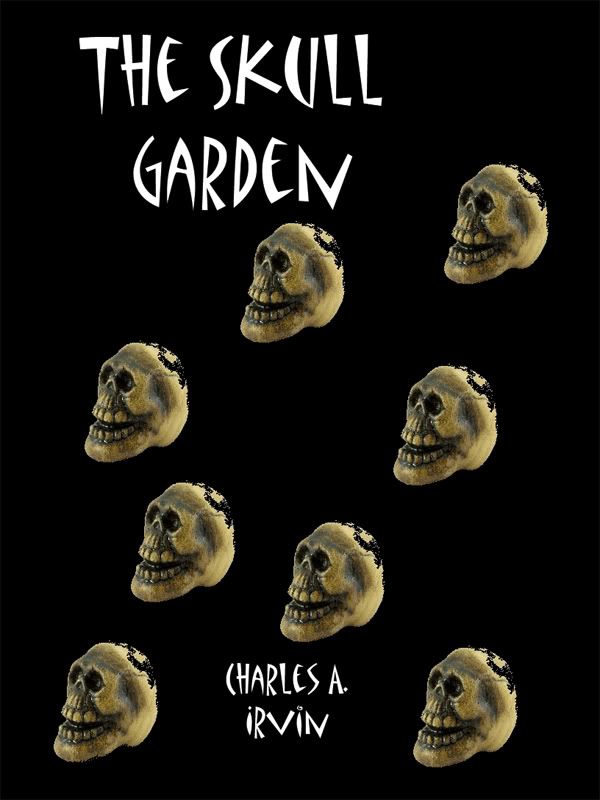
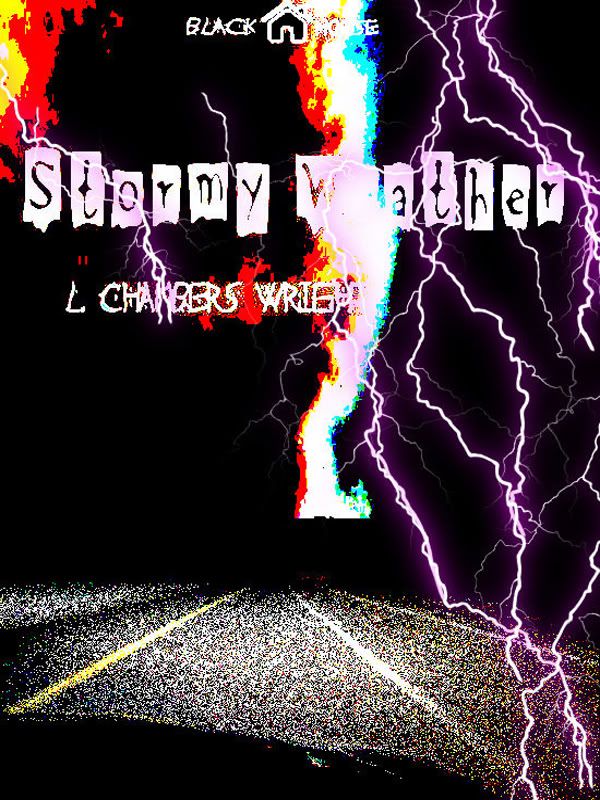
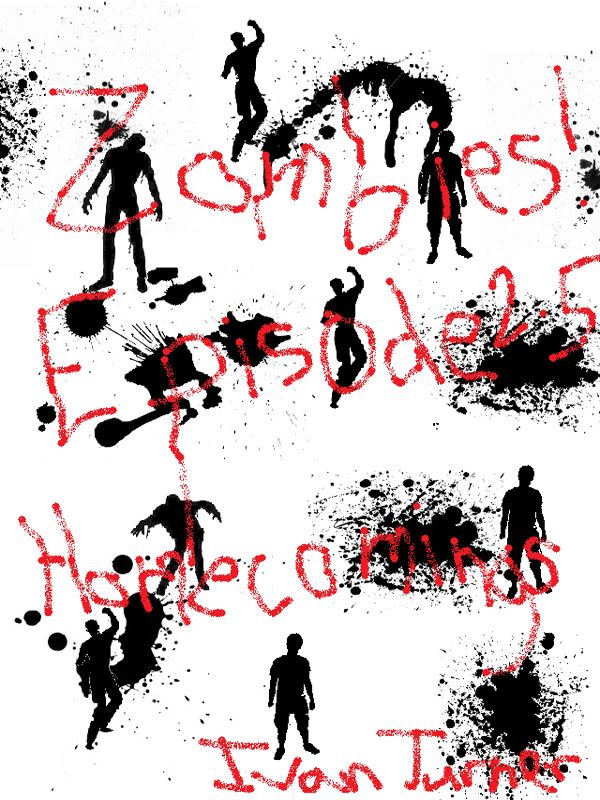
Above are four actual book covers not designed by a 4-year-old.

Trapped inside the social-media matrix, I am bombarded daily with similar fruits of so many would-be writers’ half-assed labor. You, as well, I imagine.

I see authors posting bad cover art all the time, constantly asking for opinions (which people freely give but which equates to little more than smoke up the ass), often readily admitting that he or she has little skill in Photoshop or design, of any sort.

Thus, I question: If you are that person, why the fuck are you creating cover art?

Another Notch in the Bedpost?

This entry originally appeared on New England Horror Writers’ member, K. Allen Wood’s website.

Another Notch in the Bedpost?

by K. Allen Wood

I’ve been contemplating—and worried about—writing this blog post for a long time now. My worry is a simple one: Will people be offended, take it the wrong way? I can’t answer that, but I hope not, because I’m compelled to discuss it.

So here goes…

I started a small-press horror publication in the fall of 2008. I enlisted the help of some online friends, we dubbed it Shock Totem, and in July of 2009 we published our first issue. (Most of you know this.) Ever since we published that debut issue, I’ve had one question constantly rattling around my head:

Does an author owe his support to the publications that publish his work?

That question pertains not only to me as a publisher but as a writer as well. Through four issues of Shock Totem, we have gotten some amazing support from authors we’ve published. But not all of them. Some hardly mentioned us at all, even when the issue containing their work came out. On a selfish level, I can’t help but find that disappointing. On a rational level, I understand that I have no idea why an author does what he does. There are things at play here that I am simply not privy to. I can dig that.

But back to the selfish side of things… As a publisher, I find myself leaning toward the notion that writers should be supporting those who publish their work. Because if the publisher is doing it right (relative to that particular publisher, of course), and if they’re a publication like Shock Totem where every issue is still in print and actively promoted, then the publication is fully and continually supporting the authors.

Back to the rational side of things… As a published author—hell, as a lifelong creative type—I completely understand that the muse commands one to look forward, to move forward, and create, create, create, to not waste time looking back. I also know how little time most artistic people have to actually focus on their art. So maybe some people simply don’t have the time. But that leads to the one thing I can’t rationalize…

When I finish a new story, I move onto a new one. But when I have a story published, I never move on. (All this can be applied, as well, to my musician days.) I can’t move forward and not look back in that regard. Because I want people to read my work! Do I owe it to that particular publication to support them, promote them? That’s debatable. But I sure as hell owe it to myself to support and promote my work! So I make the time.

And that is precisely what baffles me. (This does not take into account the fact that some authors publish bad stories best left forgotten from time to time.) Why do certain writers choose to not actively promote their work? Is a publication credit just another notch in the bedpost for these authors? As a publisher, sometimes it feels that way.

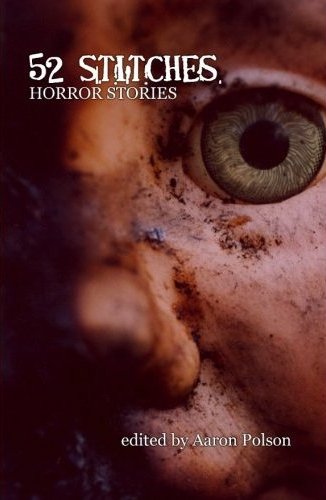
I have just three publication credits. The first was in 52 Stitches, Vol. 2. The publisher, Aaron Polson, essentially put Strange Publications to bed—at least for the time being—when this anthology was published. But this book is still available, and I promote the hell out of it…because I want people to read my work! “By the Firelight,” my story in this anthology, is a mere 457 words, but I still want people to read it. It doesn’t matter that the publication is inactive or perhaps permanently closed, because I like my story and, in my opinion, I owe it to myself to promote it.

My second published work, “Goddamn Electric,” was in The Zombie Feed, Vol. 1. I’ve sent out copies for review, I’ve posted about it here on this blog and on the Shock Totem blog. I will continue to do so as long as it’s available.

I’ve done the same thing, and will continue to do so, with Epitaphs: The Journal of New England Horror Writers, which contains my story “A Deep Kind of Cold.” In a certain, roundabout way, I’m promoting my work right now.

Which brings me to the revelation of things…

Since that first issue of Shock Totem came out in 2009, I’ve been asking myself should the author support the publisher? Again, the answer is debatable. But few would argue that an author shouldn’t promote his own work, right? And in promoting his own work, is that not, therefore, supporting the publisher? Is there a difference between promoting your own work and supporting the publisher?

I’m no longer sure you can have the former without the latter, but I know what I’m going to do. Always.

Editor’s Note:

Wood makes a lot of valid points. A creative person does look ahead, but to become well-known or even known, they need to promote their work. By authors’ promoting their stories, they are promoting the publisher of their work. How hard is it to write a Facebook status update or a tweet about your story being in an anthology, magazine, etc.

Wood promotes his magazine and any anthology his stories appear in. He does this through his website and his different twitter accounts. He also attends different conventions and fairs too. He will be at the NEHW tables at the Queen City Kamikaze Convention on Feb. 18 in Manchester, New Hampshire.

The NEHW at the Queen City Kamikaze Convention

NEHW Members Appearing at Anime and Video Game Convention

by Jason Harris

On Saturday, Feb. 18, members of the New England Horror Writers’ organization will be appearing at the Queen City Kamikaze Anime and Video Game convention at the Manchester Memorial High School in Manchester, New Hampshire.

The NEHW will have three tables where authors’ Stacey Longo, Rob Watts, Tracey L. Carbone, K. Allen Wood, Kristi Petersen Schoonover, Alyn Day, and Scott Goudsward will be selling and signing their books. The Demonhunter a.k.a. Nathan Schoonover will be on hand to talk about being a paranormal investigator for almost 20 years.

Some of these members will be on two panels: Trends in Horror: From the Apocalypse to Zombies: Where is Horror Heading? and Women in Horror. These panels will happen from 4 p.m. to 5:30 p.m. More information about who will be on these two panels will be announced soon.

The convention starts at 10 a.m. and runs into 7 p.m. For more information about the convention, click here.

Discovering Shock Totem

Discovering Shock Totem

By Jason Harris

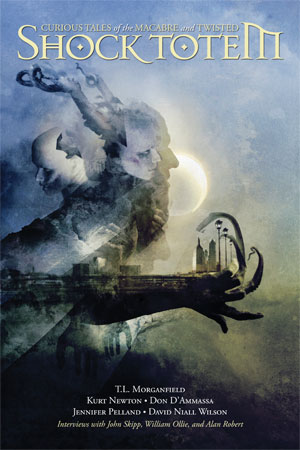
Shock Totem: Volume 1

I recently read the first issue of Shock Totem: Curious Tales of the Macabre and Twisted. I had picked up the first four issues at the NEHW booth at the Hebron Harvest Fair in September.

The magazine was first published in 2009 and Publisher K. Allen Wood explains in the editorial how the magazine was created and the different names they had for the magazine before settling on Shock Totem.  It’s a lot better than Papercut Stigmata or Bleeding Penis Pens.

Volume one includes stories about vengeance meted out by childhood toys (“The Music Box”). Author T.I. Morganfield captures the magic of those special toys a person has as they grow up. As you read about Snowflake, you can’t help but think about a darker version of Toy Story. Morganfield even mentions in the “Howling Through the Keyhole” section of the magazine that he took the conflict between the toys in the Pixar movie in a “darker direction.”

In “Murder for Beginners,” the reader is lost as the story begins with a woman holding a shovel as she stands over the body of a dead man. As the tale continues, you find out there is another woman with her. By the end of this interesting story, the reader finds out about these two women plus what connections they have to the guy they are standing over. You are not lost by the end of the story. What Mercedes M. Yardley does with her tale is keep the reader interested and reading. Who wants to stop reading after a story begins with two women standing over a dead body? At that point, you want to know why they killed him or even if they killed him. There are so many questions the reader wants to find the answers to, and Yardley answers those questions.

Baseball fans will enjoy David Niall Wilson’s story, “Slider.” It involves a tale of a ball that has a bloody and cursed history. You don’t even have to enjoy the game of baseball to become engrossed in the story about the death of pitcher Jeb Rabinowicz.

One other story I will mention is Kurt Newton’s “Thirty-Two Scenes from a Dead Hooker’s Mouth,” which tells the story of a prostitute’s life from her death to her birth. It will remind you of the movie Memento, which inspired Newton when he wrote this story. He states, “knowing the outcome of events doesn’t necessarily remove the mystery.”

Shock Totem has a section “Strange Goods and Other Oddities,” which deals with reviews of books, movies, music, and more written by the magazine’s staff. This section reminds me of a similar section within the pages of Fangoria magazine.

The magazine also offers interviews with authors and artists in the horror community such as John Skipp and William Ollie. Those interviews make one want to go to the nearest bookstore and find the books these authors were discussing in these articles.

The “Howling Through the Keyhole” section is great if you want a peek into the writer’s mind. Well, that is if the writer wants to give you a glimpse into their dark playground. Each author has a little blurb about their story and the inspiration behind their story.

I am looking forward to reading the other volumes of the magazine that I own. Click on Amazon or Shock Totem to go to either site to buy any issue of the magazine. The issues are available in print and digital formats except for the Holiday issue, which is only available as an e-book.